Jewelry changes how a body moves through the world. The late sartorial genius Iris Apfel once called it “the most transformative thing you can wear.” Artist and jewelry designer Dorothea Prühl has spent decades proving that point through form, material and motion.
The Jewelry of Dorothea Prühl, which is on view at the Museum of Fine Arts, Houston through January 3, 2027, introduces Prühl’s sublime jewelry designs to Houston audiences. The exhibition draws from a major donation from the Rotasa Collection Trust. With this gift, MFAH now holds the largest collection of Prühl’s jewelry in the world.

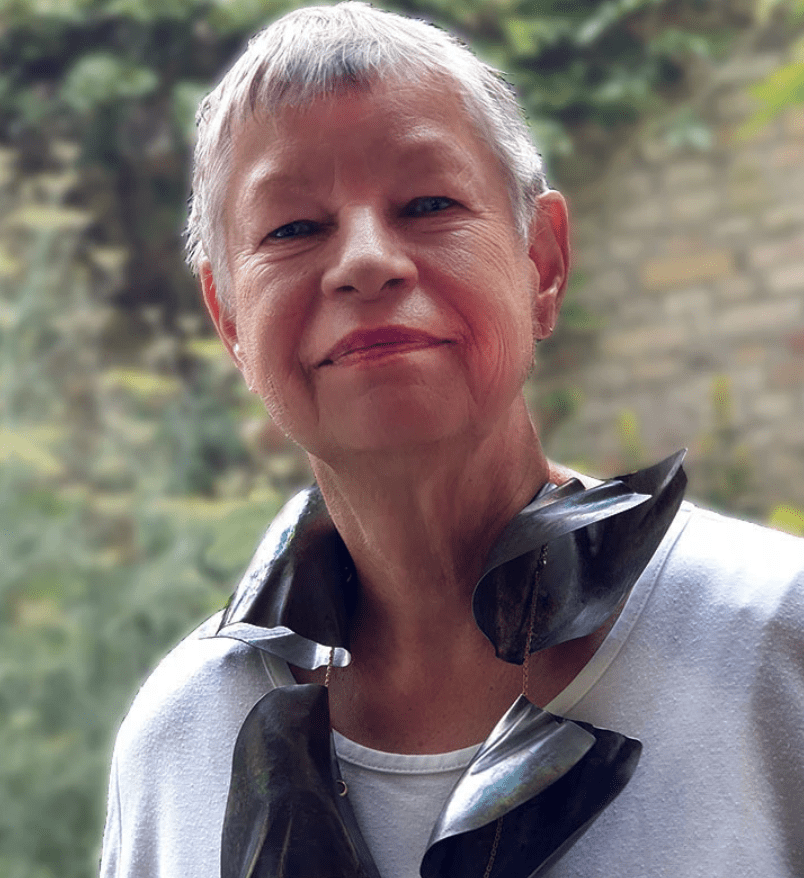
Dorothea Prühl Before the Work
Born in 1937 in Breslau, Germany (now Wroclaw, Poland), Prühl embraces both the allure of jewelry and its transformative power. “Jewelry is fundamentally positive,” she says. “It suggests strength, wealth, splendor and beauty.”
For Prühl, this understanding isn’t commonplace. She sees jewelry as a way to satisfy an archaic yearning — a yearning she shares with the viewer and the wearer. That shared instinct, she believes, creates connection. It’s a perspective shaped her work from the very beginning.
Prühl studied at the Burg Giebichenstein Kunsthochschule Halle in former East Germany. She later taught there for many years. Founded in 1915, the school is considered Germany’s second-most important art institution after the Bauhaus.
Rooted in Nature and Place
Prühl’s works possess an abstract, biomorphic quality. They reflect her interest in Germany’s farms, fields and forests. That relationship begins with place.
During an exhibition preview, MFAH curators Cindi Strauss and Elizabeth Essner discussed Prühl’s jewelry-making process. Both recently visited the artist at her studios in Germany.
“She only works in wood or metal,” Strauss says. “Her Halle studio is dedicated to metal. Her second studio sits in Augustenberg, about 90 minutes north of Berlin.” The old stone house and workspace are surrounded by open fields, a setting that mirrors the natural forms running through her work.
That sense of place also shapes how Prühl thinks about memory. One example appears in Flowers in Augustenberg (Blumen aus Augustenberg), 1989, made of alder wood and string. Essner describes the work as a garland rather than a necklace, since it doesn’t rotate on an axis. “For her, it’s a kind of Proustian moment. It’s a way of looking back at her own childhood in nature,” Essner says.

Materials, Form and the Language of Making
Spanning several decades, the exhibition highlights how Prühl regularly returns to form through a focused range of materials. Works presented include Golden Leaf (Goldenes Blatt), 1984, Wind Flowers (Windblumen), 1989, Water Flowers II (Wasserblumen II), 1989 and Grass (Gras), 1992. These pieces rely on materials used without disguise or surface embellishment. Metals dominate, including gold, silver, stainless steel and aluminum.
Describing Wind Flowers (Windblumen), 1989, Prühl emphasizes movement and responsiveness. “Forms that follow the movement of water and wind are large, light and open,” she says. She compares the pieces to windsocks that inflate as air currents pass through them.
Each bell-shaped pendant of Wind Flowers begins as a cylinder of silver sheet. The top retains its original thickness and it widens dramatically toward the bottom. The metal becomes paper-thin, like a membrane with scars and bumps. The form reacts to light touch, yet remains stable through volume and folded edges.

When Form Begins to Move
Many of Prühl’s works suggest flight. Others evoke animal presence through motion and silhouette.
Strauss describes Night Birds (Nachtvogel), 2017, a piece made of titanium and gold, as fluid. “They aren’t structurally fixed,” she says. “They move.” Through abstraction, the pieces convey the feeling of birds flying through the air.
Similar references appear in Ravens in a Circle (Raben im Kreis), 2020, Two Large Birds (Zwei große Vögel), 2020, Birds in Winter (Vögel im Winter), 2016 and Hawk (Habicht), 2005.
Prühl’s biomorphic designs are also evocative of animal life. Watching cows relaxing in a field inspired the necklace Animals with Chains (Tiere mit Kette), 1999. Big Cats (Große Katzen), 2007, draws from the energy of cats leaping.
“The impressive silhouette of the lithe, taut movement of cats is represented in this necklace as an upright band,” Prühl shares.
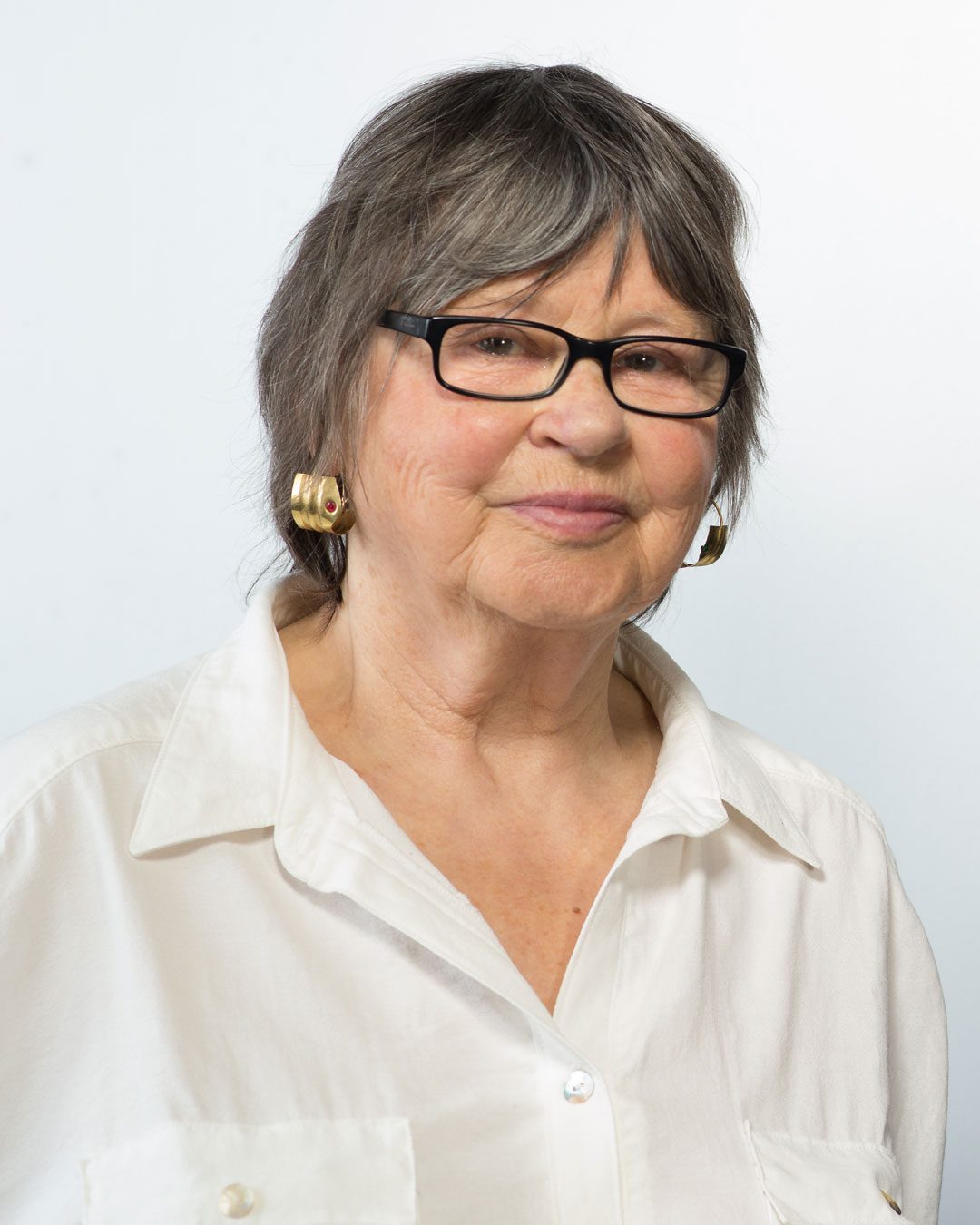
For Prühl, creating jewelry out of wood or metal is tied inextricably to the idea of form. “If I need words for it, then the form isn’t good enough,” she says.
“Form can express more than an entire story, however small it may be.”
“The Jewelry of Dorothea Prühl” is on view through January 3, 2027 at the Museum of Fine Arts, Houston. For more information, go here.