In one of the most revered sites in Christendom, gifts from Europe’s monarchs accumulated over centuries at the Church of the Holy Sepulcher, their historical and artistic significance not fully understood until relatively recently. Over the past few decades, art historians have begun cataloging that trove of objects, from solid-gold chalices and silver lamps to richly embroidered vestments. Those liturgical works are now on display at Fort Worth’s Kimbell Art Museum in The Holy Sepulcher: Treasures from the Terra Sancta Museum, Jerusalem — one of only two venues in North America it’s traveling to.
“Around 40 years ago, European scholars began finding references in historical documents to objects being sent to Jerusalem,” George Shackleford, deputy director of the Kimbell Art Museum, tells PaperCity Fort Worth. “In Jerusalem, they didn’t realize that they had a record of art history in their cupboards.”
The exhibition showcases sixty objects that reflect the height of seventeenth- and eighteenth-century artistry and craftsmanship, marking the first and possibly only time these works will be seen in the region. Its initial stop was at The Frick Collection in New York last fall.
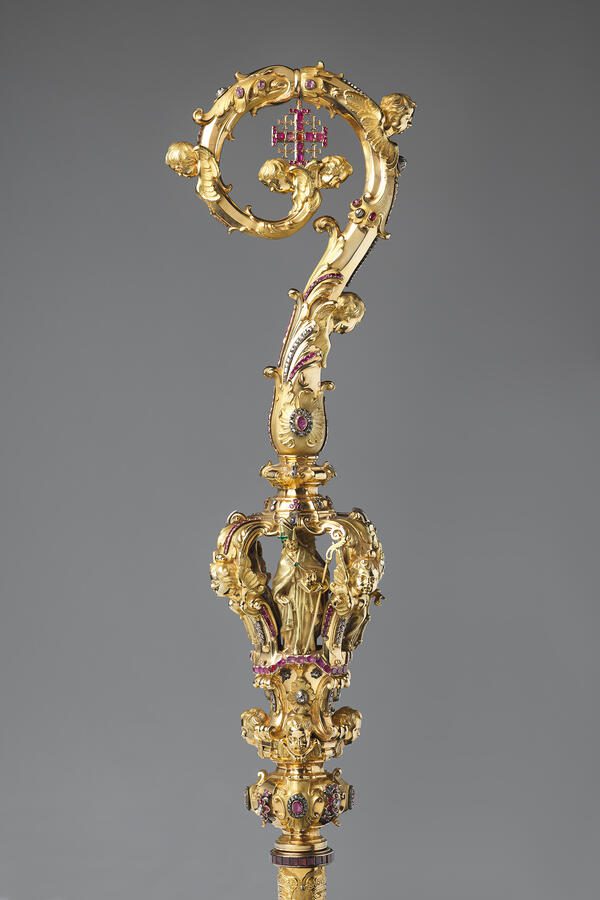
Gifts from Europe’s Most Powerful Royal Families
Among the most intricate objects at the Kimbell Art Museum is a Neapolitan monstrance from 1746, a radiant burst of gold, rubies, emeralds, and diamonds designed to display the consecrated host at its center. Several pieces are meant to be worn during religious ceremonies, including a crimson dalmatic from a 1619 vestment set commissioned under Louis XIII. Woven in silk and layered with gold and silver embroidery, the garment reflects how European rulers used these gifts to assert both devotion and identity.
“The color red signifies Pentecost,” Shackleford says, noting the vestment was originally white before its gold embroidery was removed and reapplied to red fabric.
One of the most sculptural works in the exhibition, The Resurrection, depicts Christ rising from the tomb with a striking sense of movement and depth. Combining casting and hammered repoussé techniques, the piece reflects the technical range of metalwork in the 18th century.
“The death, sacrifice, and resurrection are really told in this amazing silver sculpture,” Shackleford says. “This is one of the biggest objects in the show. It was made from an amazing combination of different techniques. It was cast like a bronze sculpture would be cast, but the background on which the sculpture is placed was shaped by hammering.”
As with many of the works shown in The Holy Sepulcher, historians do not know who or what group created The Resurrection. In certain cases, there is documentation detailing which country and studio created the work, but not who crafted the piece, while other records note when an object was received in Jerusalem but not who sent it. The research and scholarship, Shackleford says, is ongoing.
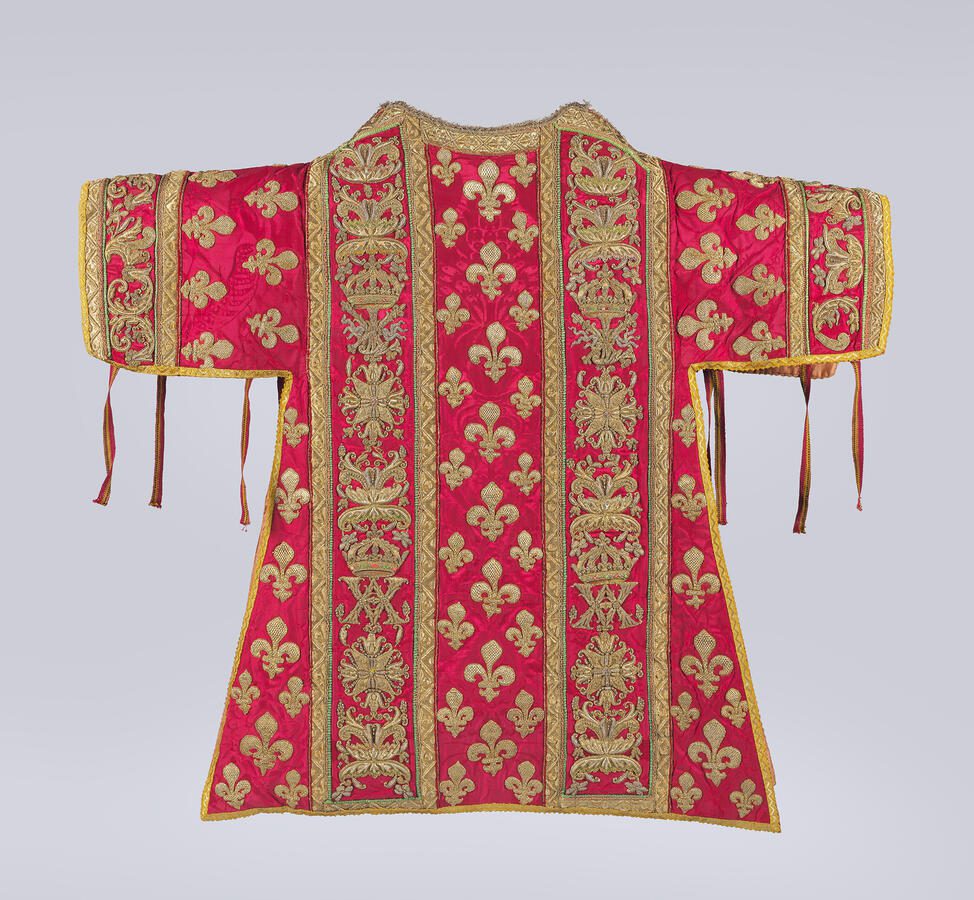
Where Politics, Craft, and Devotion Converge
The Holy Sepulcher explores the religiosity of Europe, the politics behind royal gift-giving, and the steady advancements in textiles and metallurgy that shaped the objects sent from Europe to the Holy Land roughly four centuries ago.
The church that was built by early Christians to protect the site where Jesus is believed to have been crucified and resurrected, then as now, attracts devout followers from every Christian sect and denomination. While there is no shortage of resplendently beautiful works crafted from gold, silver, and gems, some of the most striking objects we viewed on a recent tour are the hand-sewn tapestries.
Shackleford notes that, while textiles are ubiquitous today, they represented the most expensive and indulgent materials one could possess centuries ago.
“In the 18th century, for instance, if you owned a Chippendale chair, the wooden chair would have been a lot less expensive than the fabric on it,” he says. “It is hard for us to imagine it that way today. It was a real donation to give this much silk with gold.”
Many of the works include imagery that identifies their place of origin and the benefactor who funded them. One element that sets the exhibition apart is the remarkable level of preservation, something Shackleford attributes to the fact that the pieces were spared the ravages of successive wars in Europe.
“These types of artifacts would have been stolen or melted down in Europe,” Shackleford says. “In Jerusalem, they were, relatively speaking, protected because they no longer belonged to the countries that they came from.”
The Holy Sepulcher: Treasures from the Terra Sancta Museum, Jerusalem runs through June 28, 2026, at the Kimbell Art Museum.