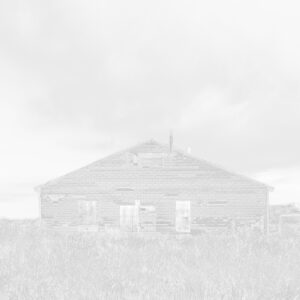
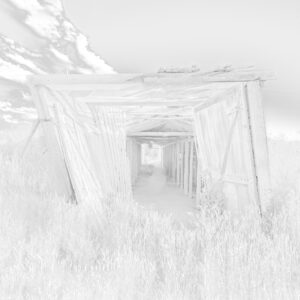
What the Trees Remember — Osamu James Nakagawa’s Haunting Images Examine Japanese American Incarceration at FotoFest
When Silence Becomes the Loudest Voice in the Frame
BY Alison Medley //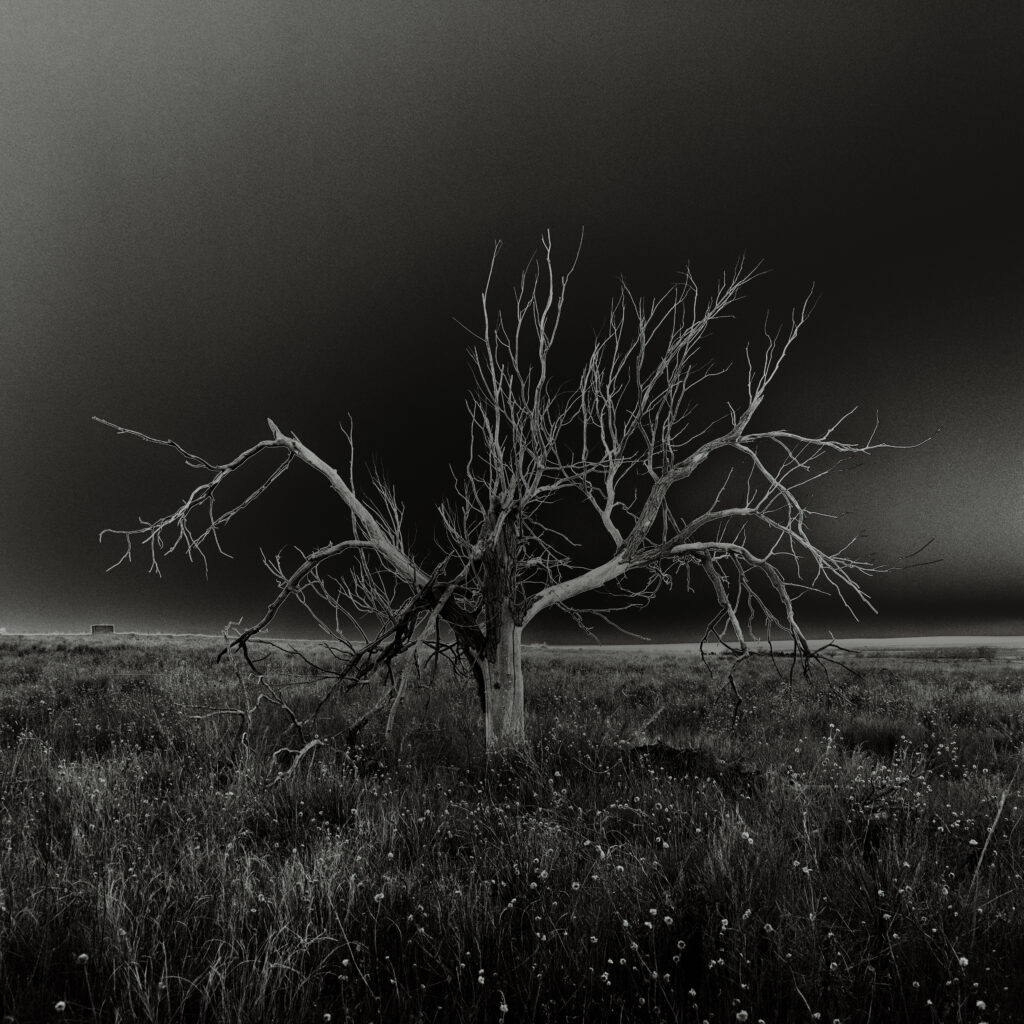
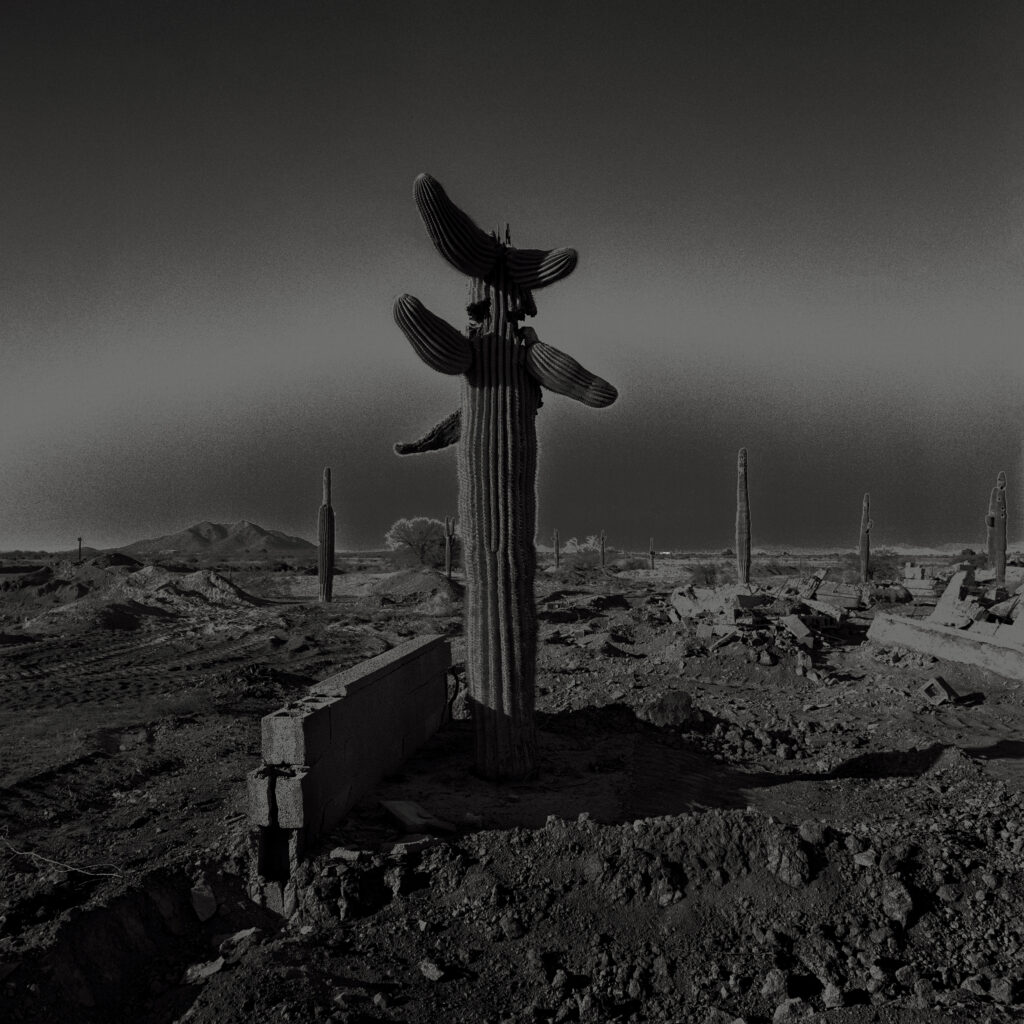
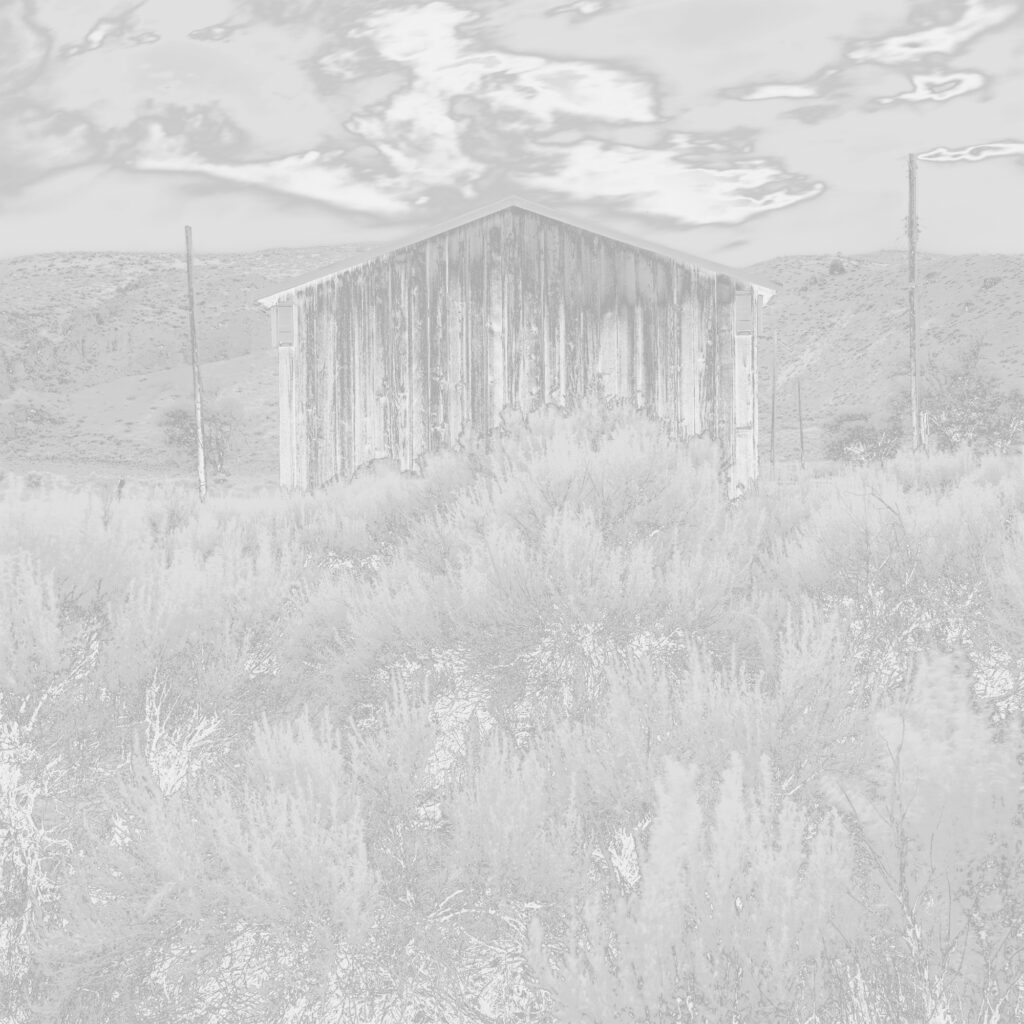
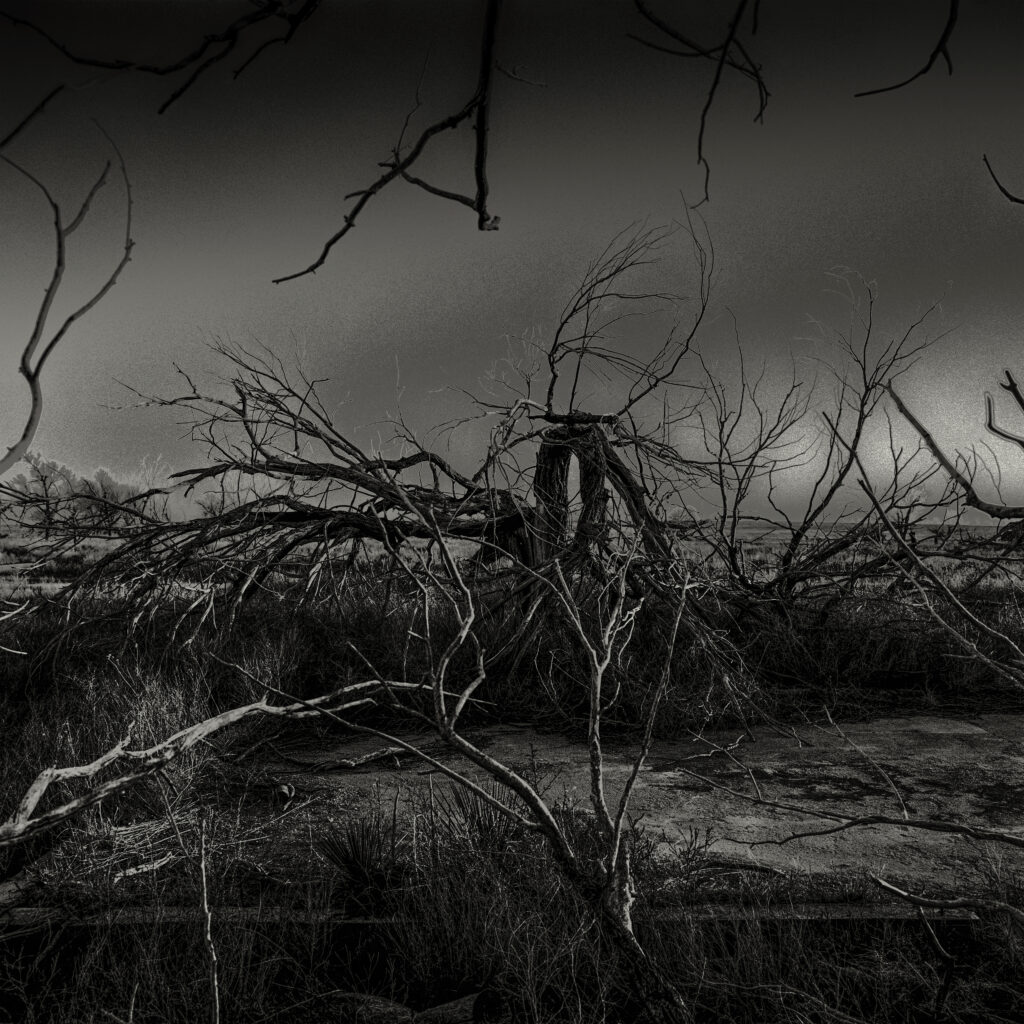
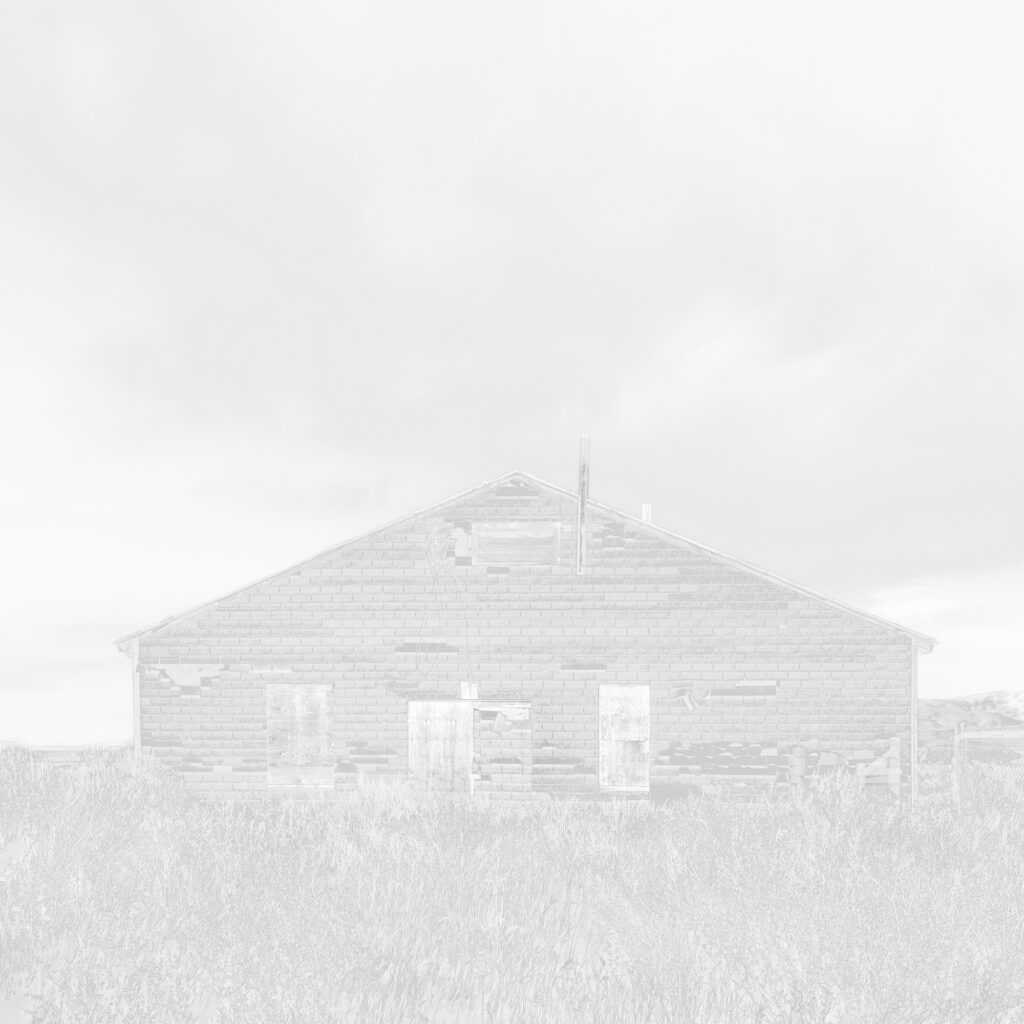
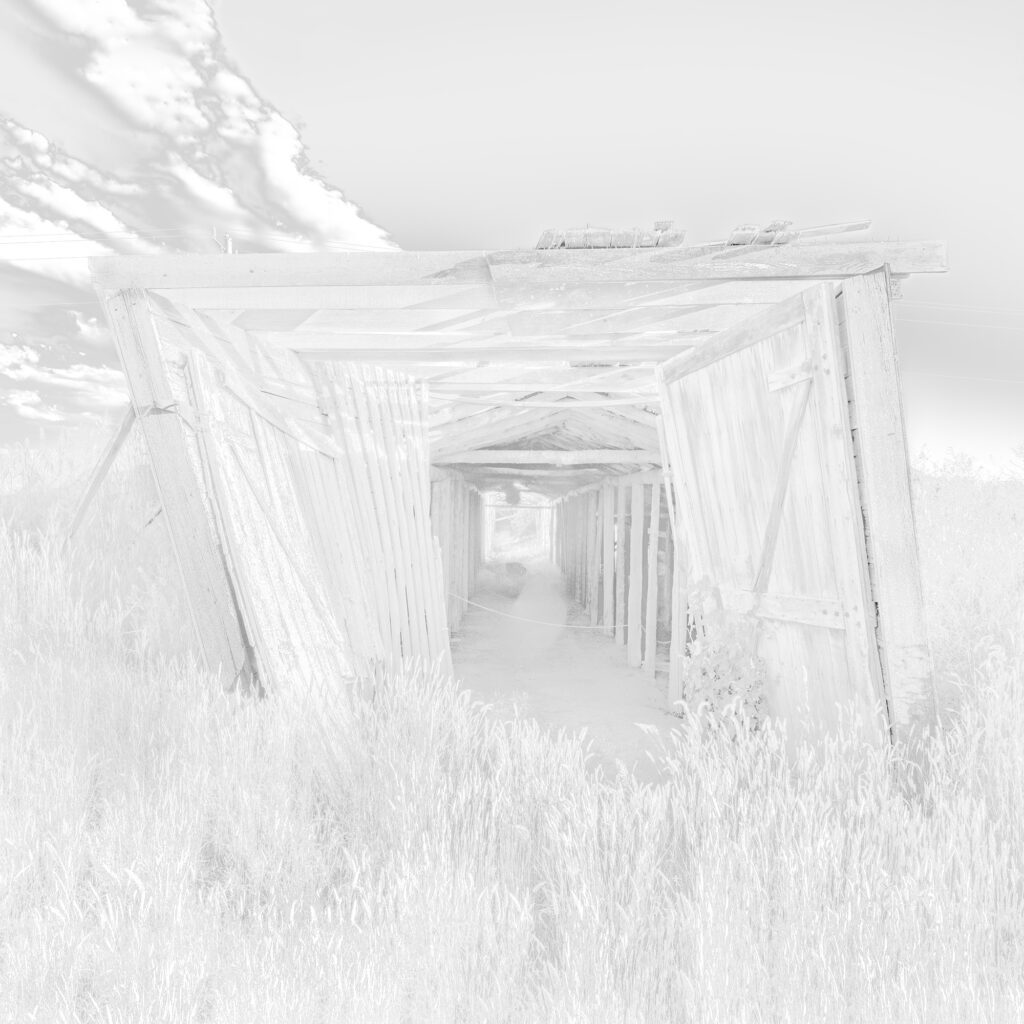
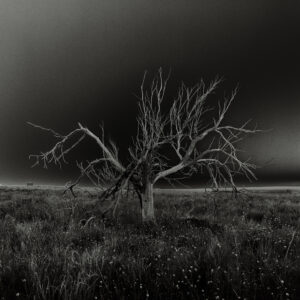
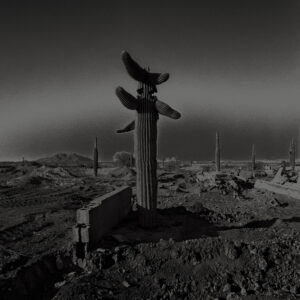
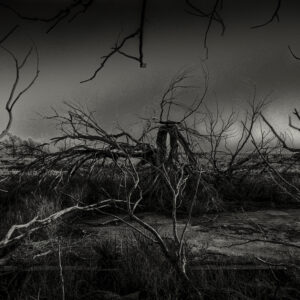
Amache 03, Granada, Colorado (from the series Witness Trees, 2022–2023)
In Osamu James Nakagawa’s photographs, a tree is never just a tree. It becomes a witness with a long memory. Its roots hold soil that absorbed the quiet architecture of harm — foundation lines, scattered glass catching first light and wind that keeps moving even when history insists it has passed. Yet the most important subject is rarely visible at all.
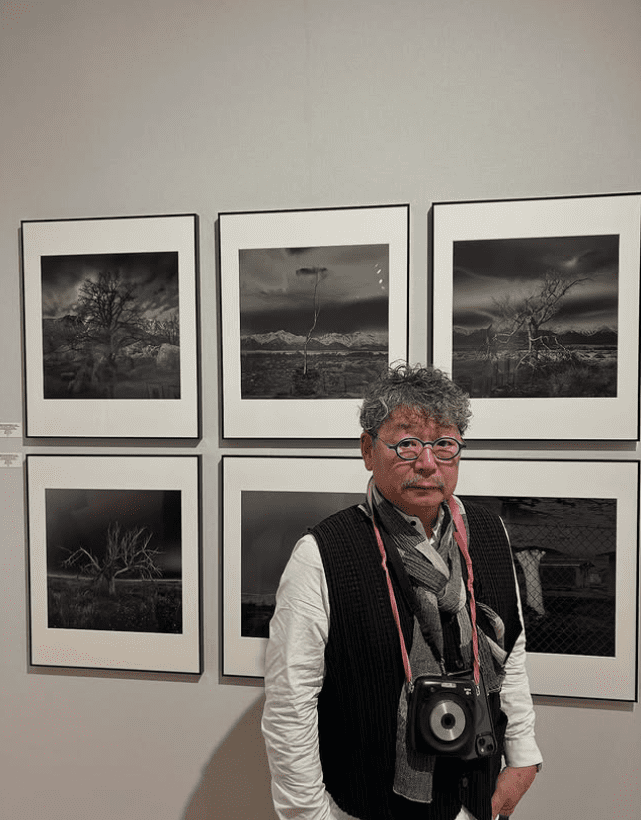
The internationally-acclaimed Nakagawa returns to landscapes tied to Japanese American incarceration during World War II in his haunting FotoFest series titled “Witness Trees + Indelible Structures,” which is on view at Houston’s Ellio Fine Art gallery. He asks a question photography is famously ill-equipped to answer: How do you picture what’s no longer there — but refuses to leave?
Picturing the Unseen
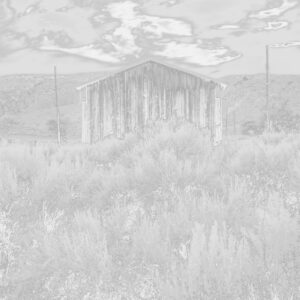
A tree stands alone in winter, its branches spare and skeletal. A water tank rises from an empty horizon. A length of barbed wire interrupts the sky. These are modest things, documentary things. Yet Nakagawa insists they are charged with presence: memory, grief and the residue of policy made flesh.
“I’m always trying to visualize things you cannot see,” Nakagawa says. “Photography shows what’s in front of you. But I’m interested in the unseen.”
It’s an ambitious proposition. It’s also risky.
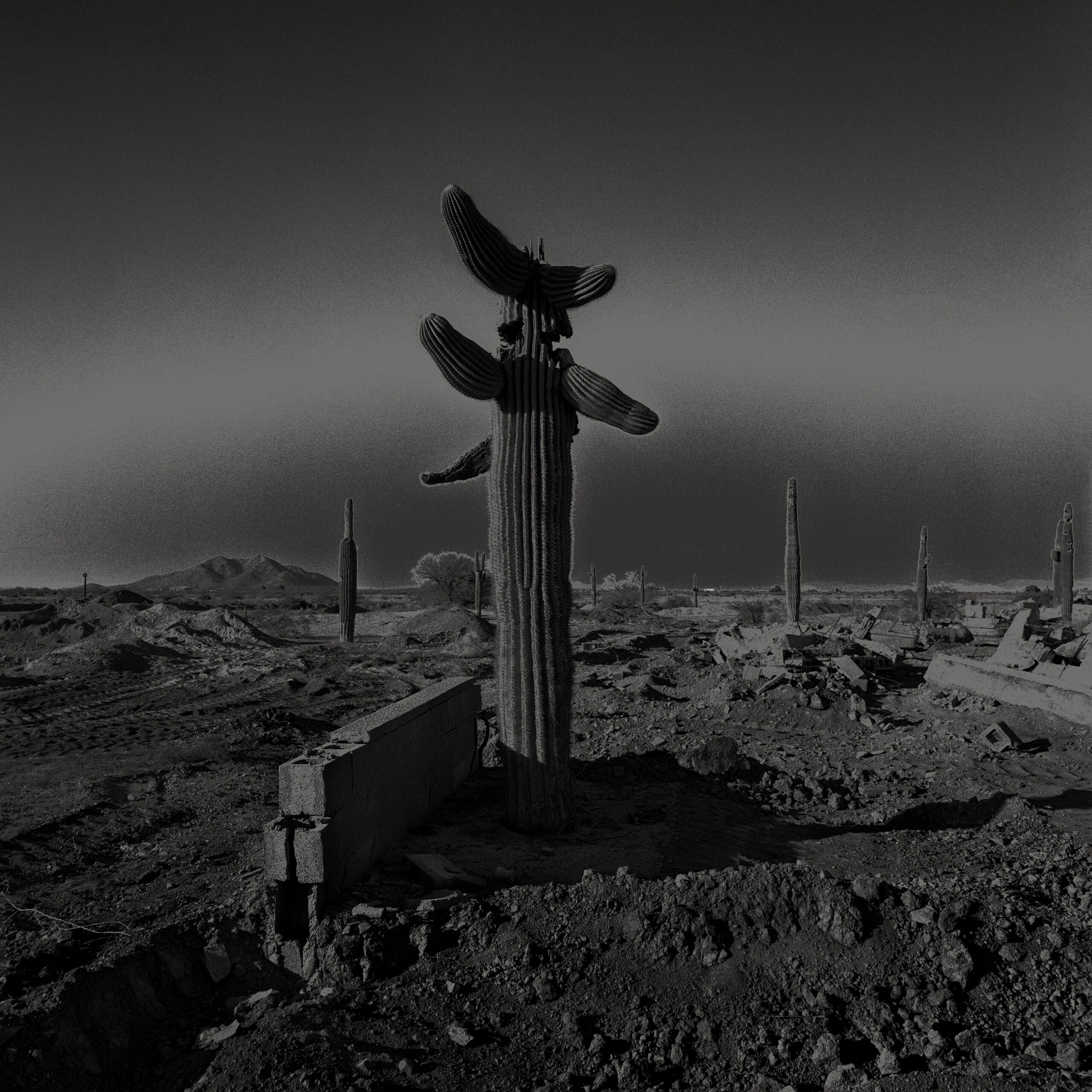
Photography has long claimed a particular authority: evidence, fact, the sharp-edged record of what was there. Nakagawa’s work has hovered between documentary practice and conceptual inquiry. He does not reject that authority — he stretches it. He asks the photograph to carry emotion and history that refuse easy depiction.
The Allen






The result is work that feels less like reportage than like a slow conversation with the land itself.
“I was photographing these sites — desolate places, not much there,” Nakagawa says. “But if you spend time — early morning or late afternoon — you start to pick up details: concrete debris, foundations, broken glass sparkling in the light.”
It was wintertime. The sites were empty. And the trees caught his attention. “I noticed them and thought, ‘Oh my God, that’s interesting,’ ” Nakagawa says.
Landscapes That Refuse to Forget
Nakagawa travels to former sites of Japanese American incarceration during World War II — McGehee, Jerome, Rohwer and Manzanar — places that can appear unremarkable at first glance. He stays, watching the light shift. The search is patient, honed in on debris, foundations and broken glass. He waits for a tree to emerge, stripped of leaves, suddenly anthropomorphic against the winter sky.
The winter trees stop him cold — bare-branched, skeletal-like shapes in the landscape. “I felt I wasn’t alone,” Nakagawa notes. “Those trees were standing there like figures watching me work.”
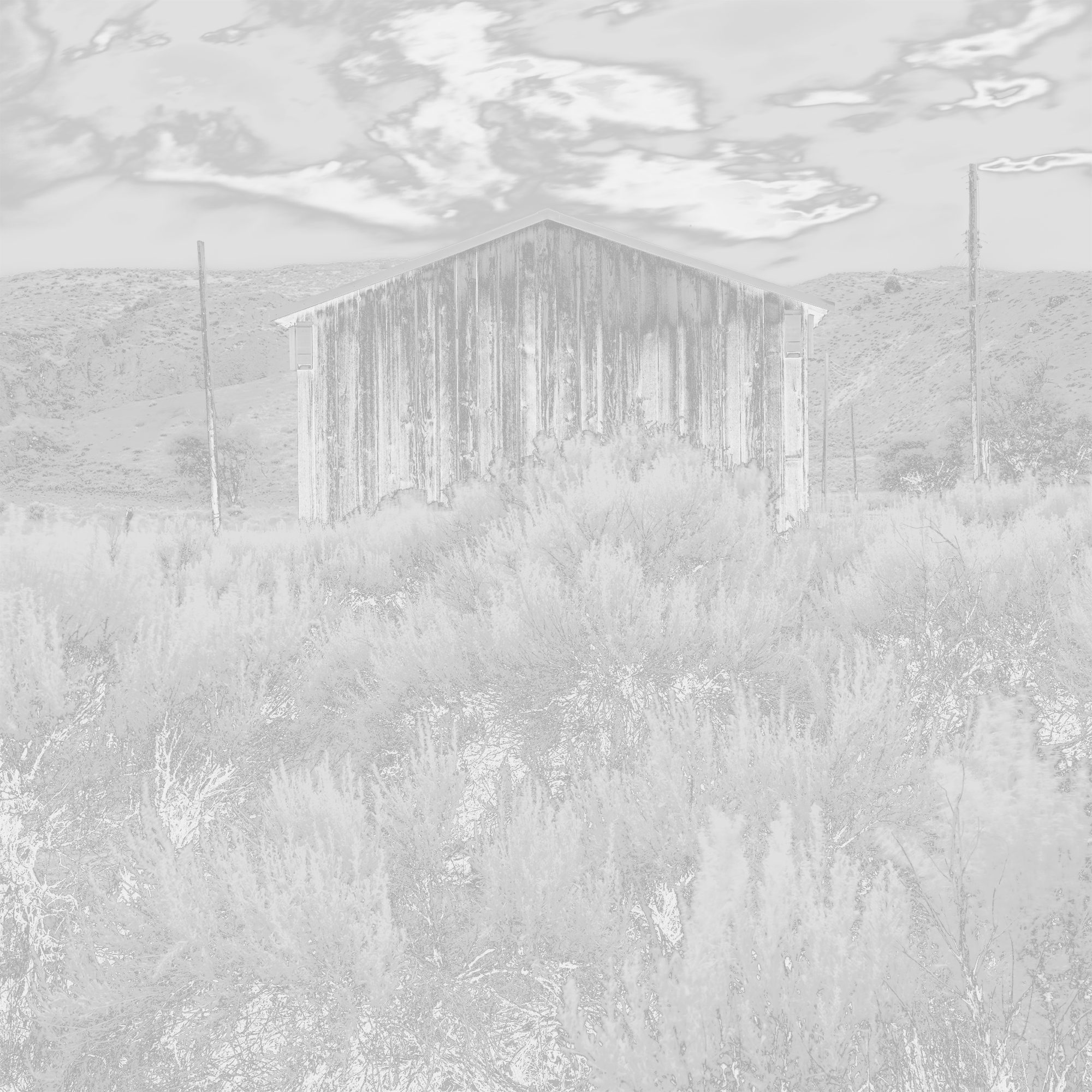
The photographs that follow are methodical, almost austere: the tree centered, horizon consistent, distance carefully measured. Yet he pushes the nuanced range into shadow and glow, negative and positive bleeding together. The image begins to feel less like a document than like a memory trying to surface.
A straightforward photograph didn’t carry the emotional weight Nakagawa felt standing in those places. So he intervened — not to beautify, but to make the weight of absence visible.
“At first it was just a record, topographic,” Nakagawa says. “But the transformation became necessary — bringing atmosphere and weight. Dark images, heavy feeling, sense of time.”
The Weight of Absence
This is, in many ways, the ethical core of his project. Nakagawa understands that the internment camps — often sanitized in textbooks — were landscapes of systematic racism. They were remote and harsh by design, meant to discipline and isolate.
“The more I visited, the more I realized it was systemic racism,” Nakagawa says. “I felt I had to do something, to record something. But it’s hard to visualize history.”
Rather than staging reenactments or inserting narrative captions, Nakagawa leans into atmosphere. He darkens skies. Details hover on the edge of disappearance. He photographs infrastructure: tanks, barracks remnants, engineered systems meant to sustain confinement. Then he titles them “Indelible Structures,” insisting on a stubborn permanence even as the sites themselves are sold, repurposed or forgotten.
In an era when public memory can feel fragile — subject to political editing or historical amnesia — his strategy is pointed.
“History is complex, multi-layered. Don’t simplify,” Nakagawa says.
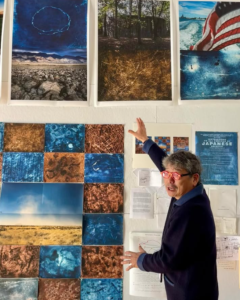
Nakagawa’s own biography quietly animates the work. Born in New York and raised in Tokyo, he came to Houston at age 15, speaking no English. He discovered that drawing communicated faster than a dictionary.
“Visual language was quicker,” Nakagawa says. “That realization stayed with me.”
Houston became his artistic home. He attended Memorial High School, then studied at the University of St. Thomas and earned an MFA at the University of Houston. He spent years teaching and working within the city’s photography community. But his identity remained, as he puts it, “in-between.”
“I waited until I was 60 to face this Japanese Americanness,” Nakagawa observes. “I think age matters. A late bloomer — there’s beauty in it. It takes courage and time to get beyond the livelihood struggle.”

That lateness is palpable in the work. Nakagawa approaches the internment camps not as a historian ticking boxes, but as someone circling a question that has lived quietly inside him for decades. What does it mean to belong to a country that once imprisoned people who looked like you? What does it mean to call that country home?
“Now that I no longer have a home to return to,” he says. “I have no other choice but to call this country my home.”
A Paragraph, Not a Frame
The photographs are not answers. They are invitations to stand inside uncertainty. Nakagawa speaks of his series in linguistic terms.
“A single image is like a word,” he says. “A body of work becomes a paragraph.” The camps require paragraphs — volumes, even — because their meaning cannot be condensed into a single frame.
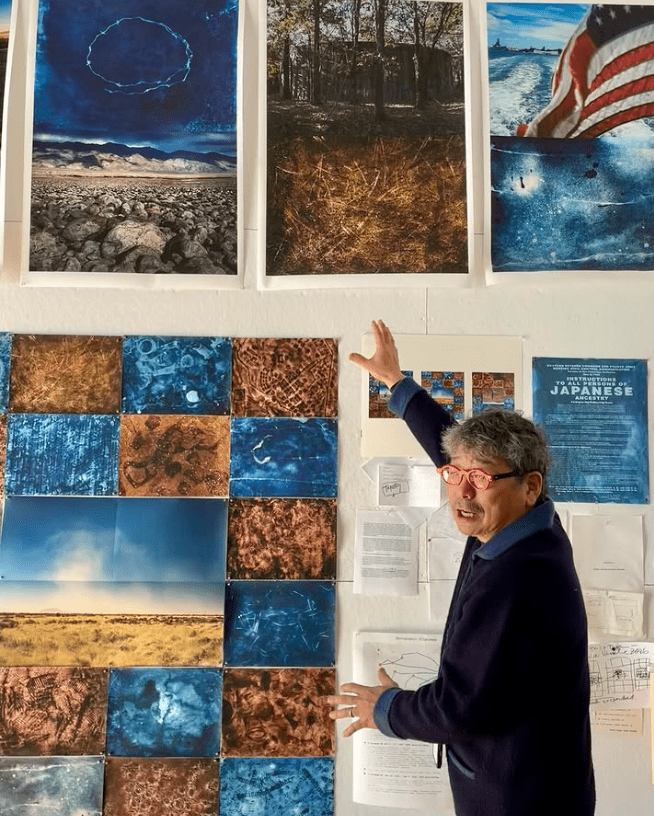
Sometimes, Nakagawa inserts himself into those paragraphs. In a later body of work, he creates self-portraits at each site. He stands quietly in the landscape, an aging Japanese American man confronting the ground beneath his feet. These images are deliberately unresolved.
“I cannot resolve it,” Nakagawa says. “It’s complex.”
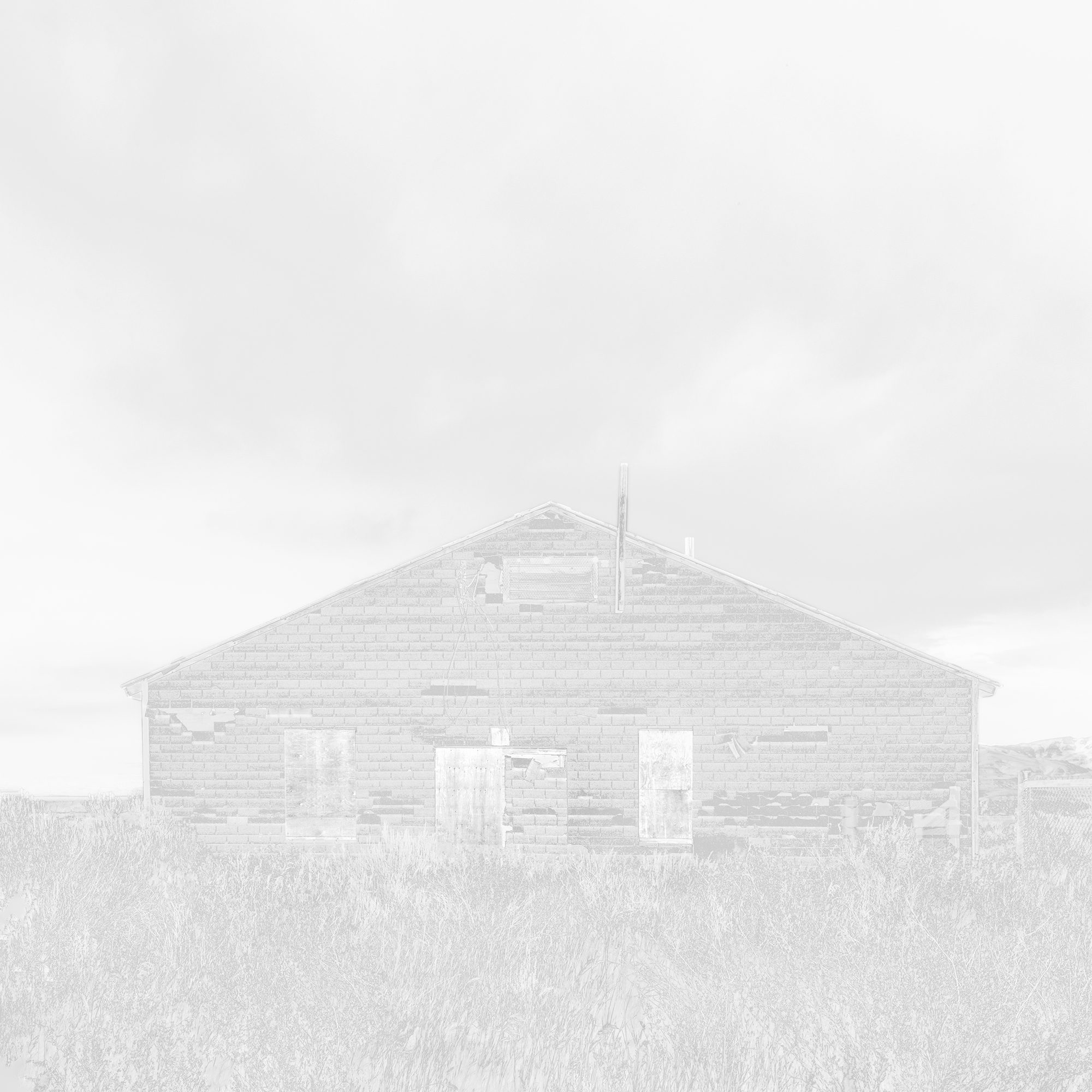
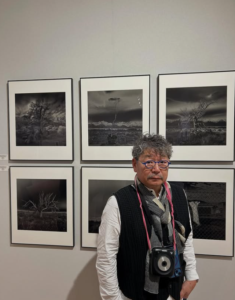
Osamu James Nakagawa’s Dialogue With the Land
The humility of that admission may be his most compelling artistic gesture. In an art world that often prizes certainty — clear statements, declarative politics — he offers ambiguity grounded in care. He doesn’t claim to speak for the incarcerated or to reconstruct their suffering. Nakagawa stands nearby and listens, letting the trees and the infrastructure hold their own testimony.
“I’m trying to quietly point out and share what I saw and felt,” he says. “And hope dialogue comes out of it.”
Houston, with its layered immigrant histories and its own evolving sense of belonging, becomes an apt site for that dialogue. Nakagawa arrived here as a teenager who could not yet speak the language. He returns as an artist asking the city to consider what language fails to express: how landscapes absorb injustice, how memory lingers in soil, how absence can feel heavier than presence.
In the end, Nakagawa’s photographs ask viewers to do something deceptively simple. Stand still. Look longer. Notice what isn’t there.
Because the unseen, he suggests, is often what matters most. And history, like a winter tree, keeps its shape long after the leaves are gone.
Osamu James Nakagawa’s series, “Witness Trees + Indelible Structures,” is on view at Ellio Fine Art through Saturday, April 4. A gallery reception will take place this Friday, March 20 from 6 pm to 8 pm. For more information, go here.

_md.png)