
Reckoning With Democracy, Race and the Vote — It Starts With a Purse Full of Marble Dust For Houston-Born Artist Tomashi Jackson
Across the Universe at CAMH
By Ericka Schiche //
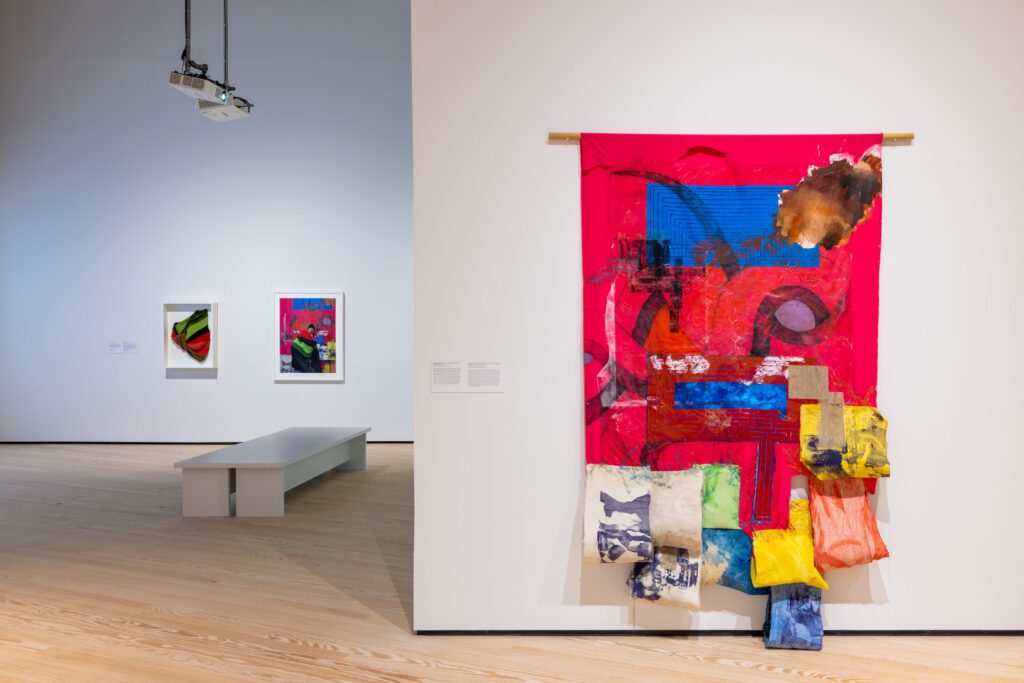
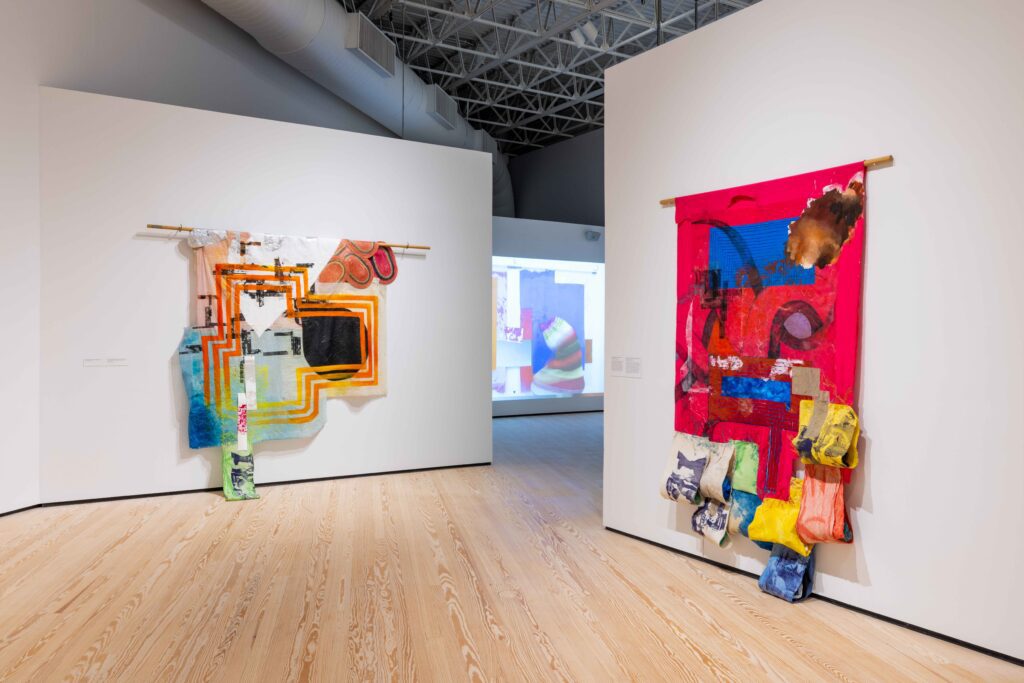
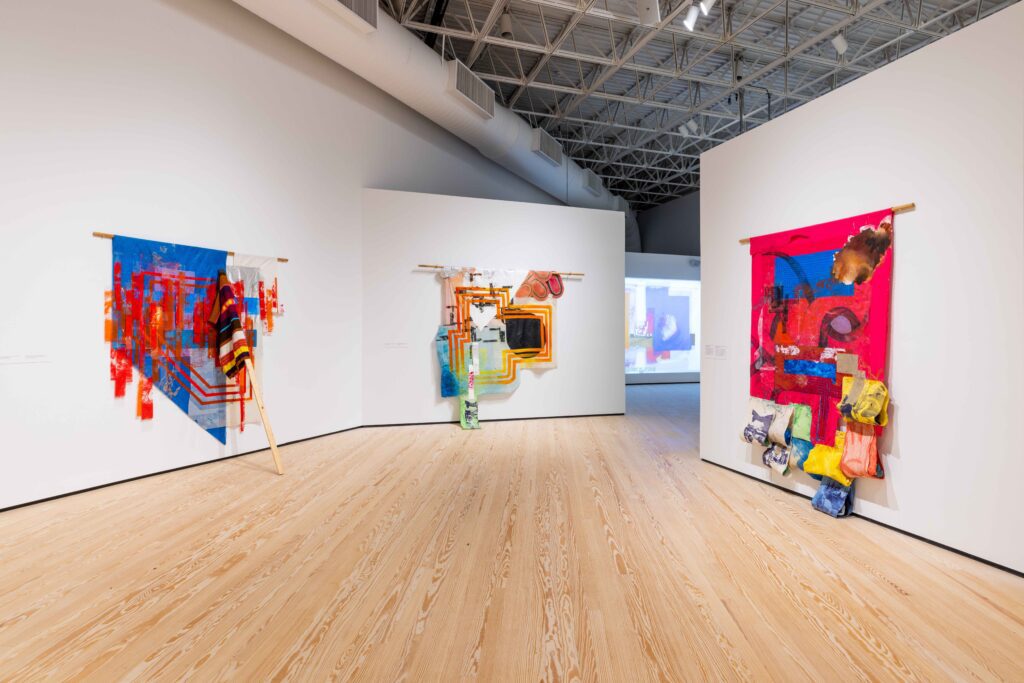

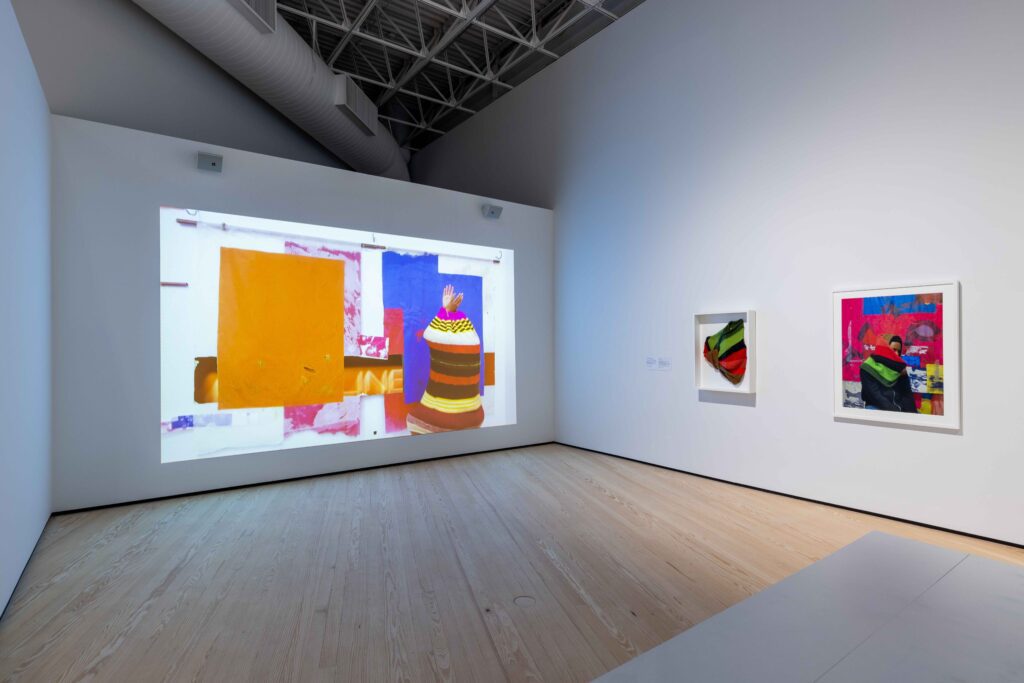

During an art residency in Greece, Houston-born artist Tomashi Jackson stood at a quarry near Mount Pentelicus and stuffed as much Pentelic marble dust into her purse as she could. The dust — a metaphorically charged symbol of democracy embedded in monuments worldwide — tells you everything you need to know about what drives her work.
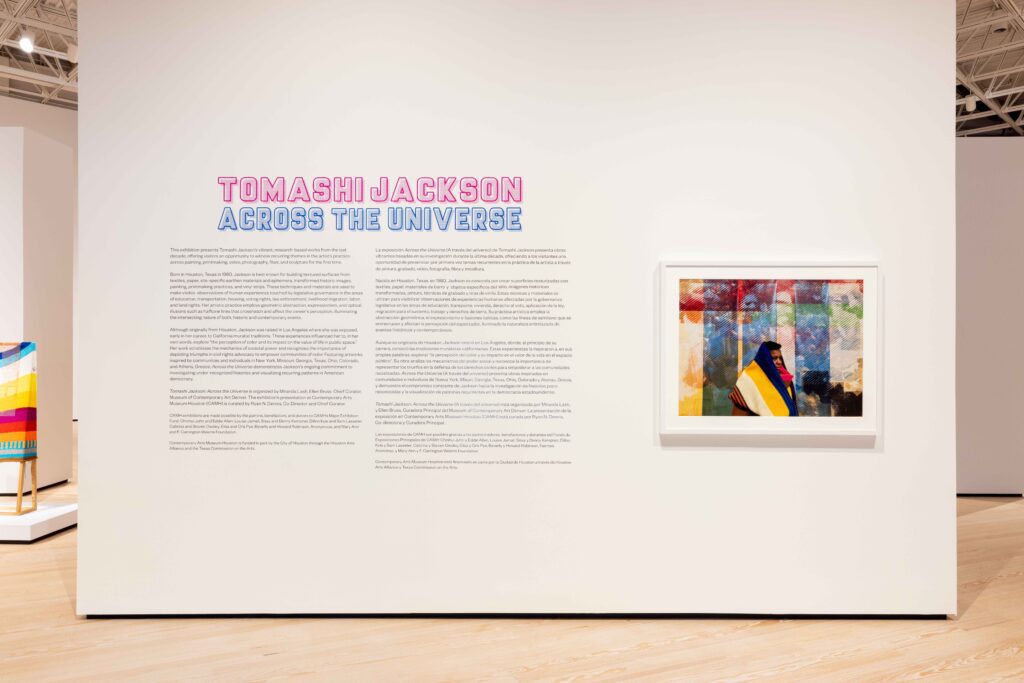
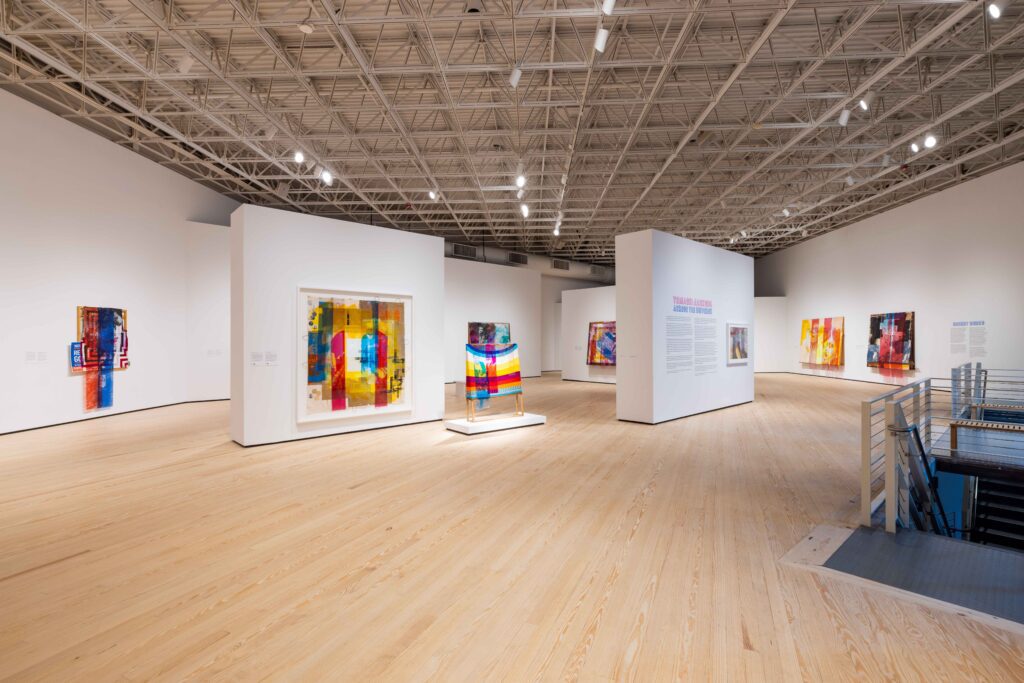
Curator Miranda Lash channeled that same spirit into “Tomashi Jackson: Across the Universe,” now on view at Contemporary Arts Museum Houston through next Sunday, March 29, as a profound statement on the virtues of democracy and interrogated history.
Jackson — who now lives and works between NYC and Cambridge, Massachusetts — infuses her artistic work with an indefatigable spirit and reverence for community, history, democracy and socio-political discourse. Her practice involves examining history — especially the ongoing struggle for voting rights — and democracy during an era of authoritarianism.
The Ballot and the Canvas
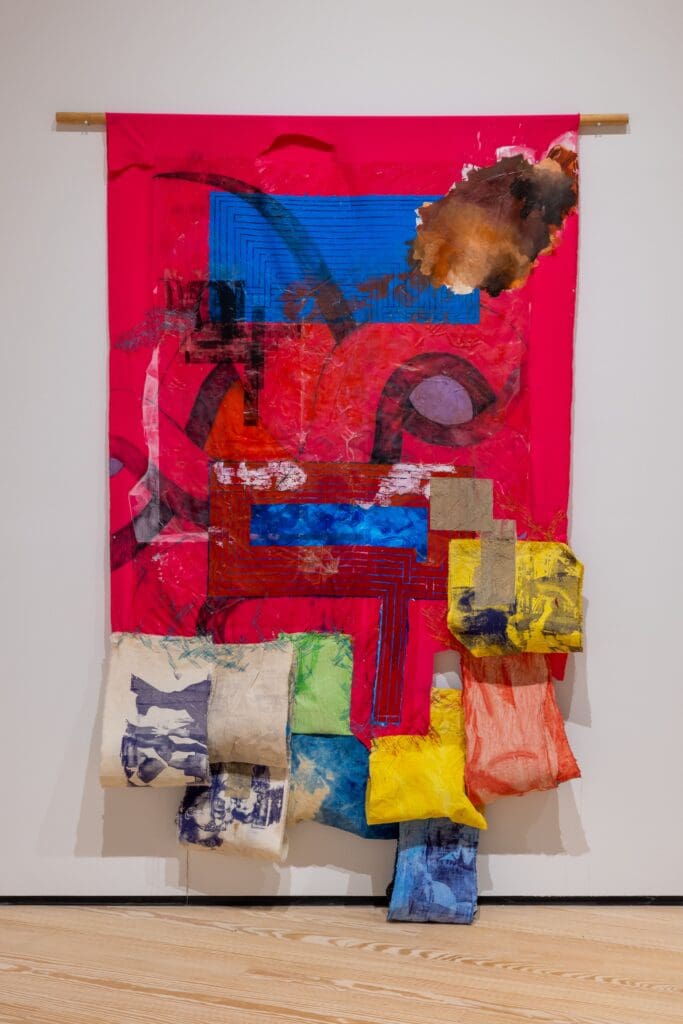
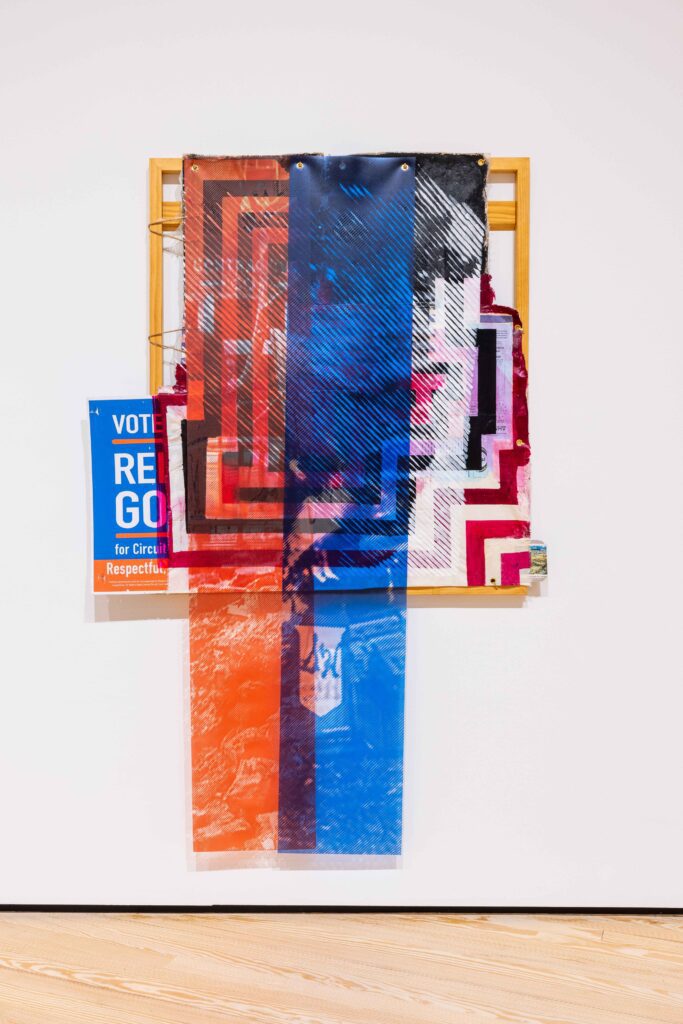
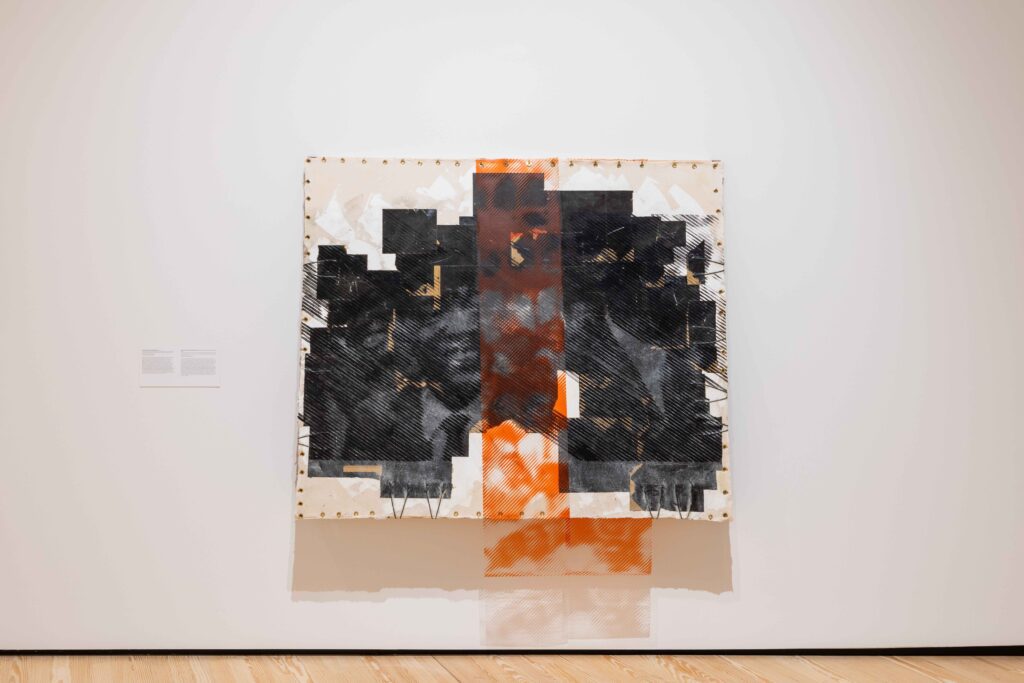
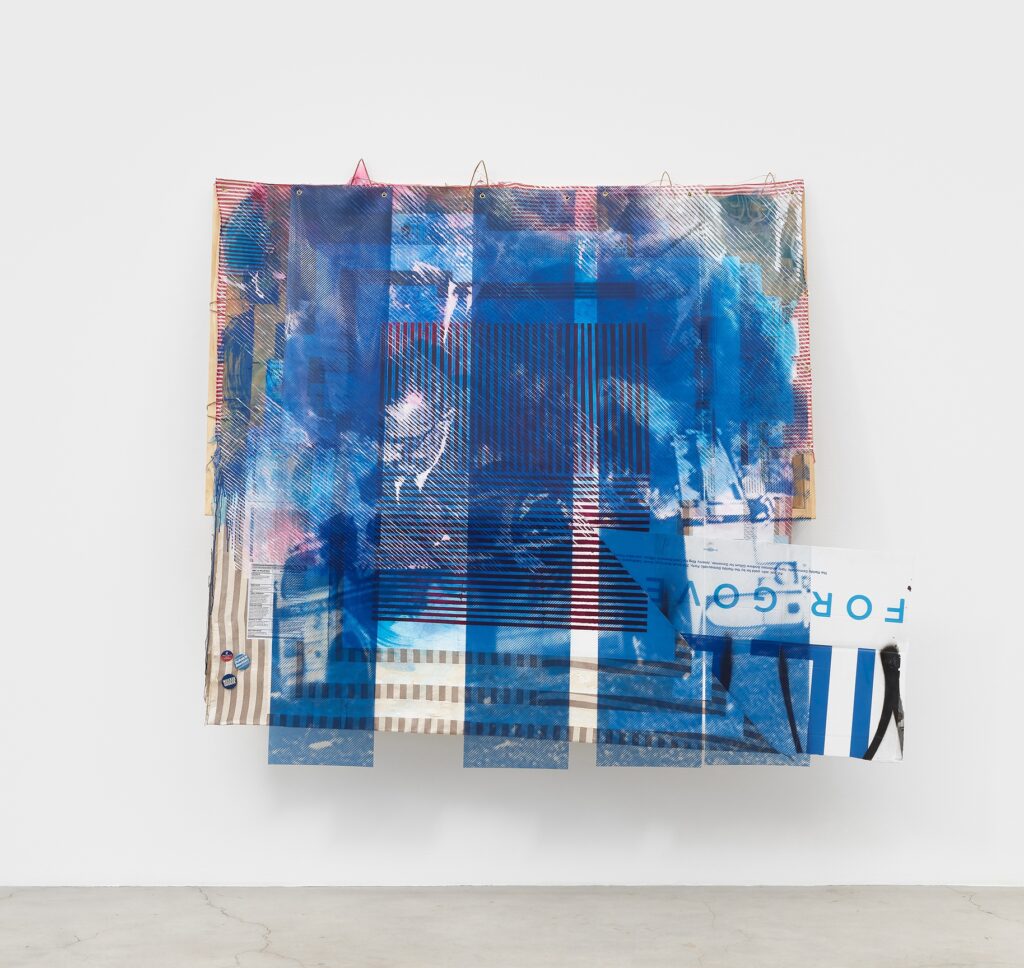
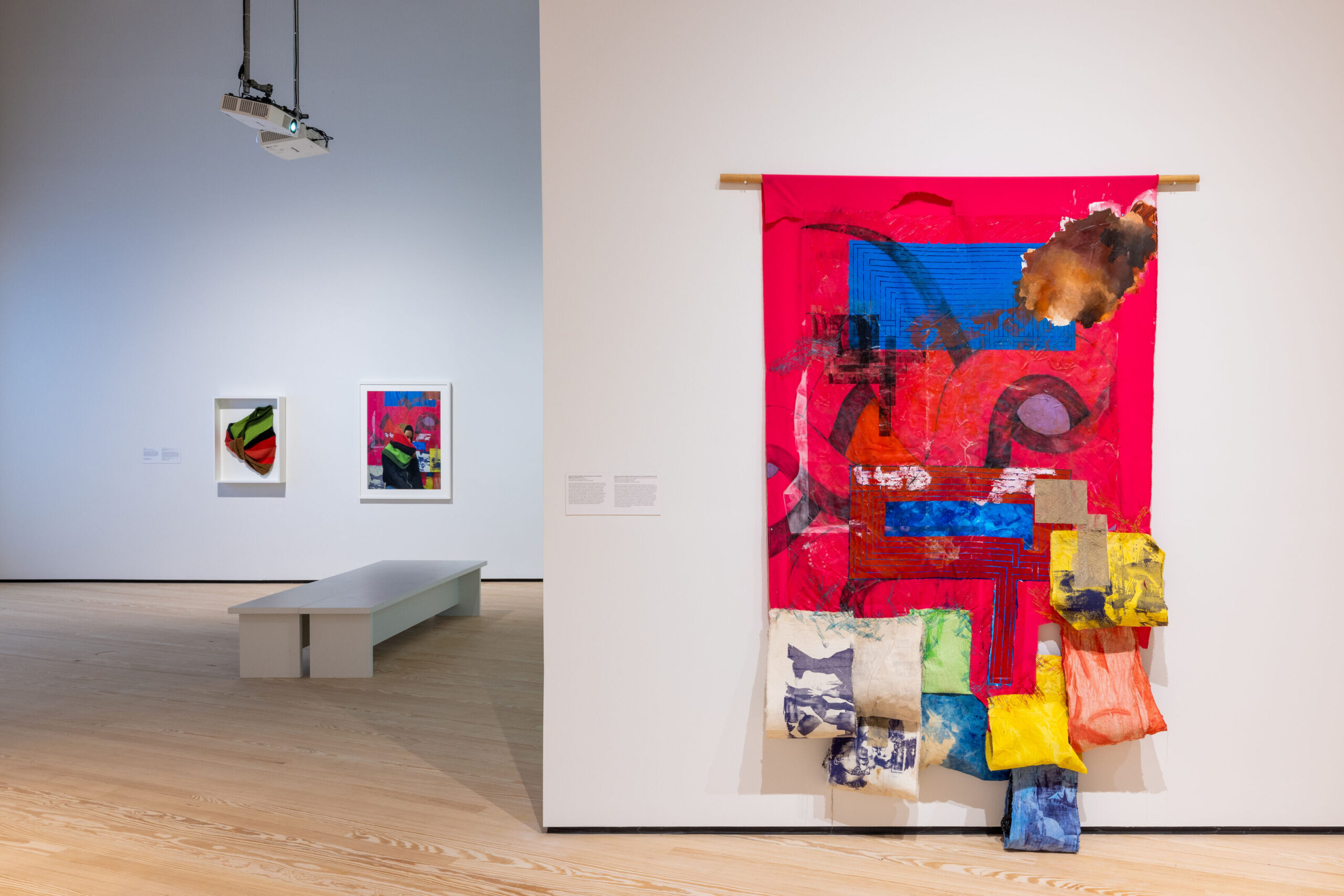
The timeliness and prescience of “A Pnyx for Crystal Mason in Fort Worth, TX,” 2020, is striking. Current political discourse focuses on the possible evisceration of the Voting Rights Act of 1965 via the Louisiana v. Callais Supreme Court case and the SAVE Act. Jackson pays homage to Crystal Mason, who was disenfranchised while voting by provisional ballot in 2016.
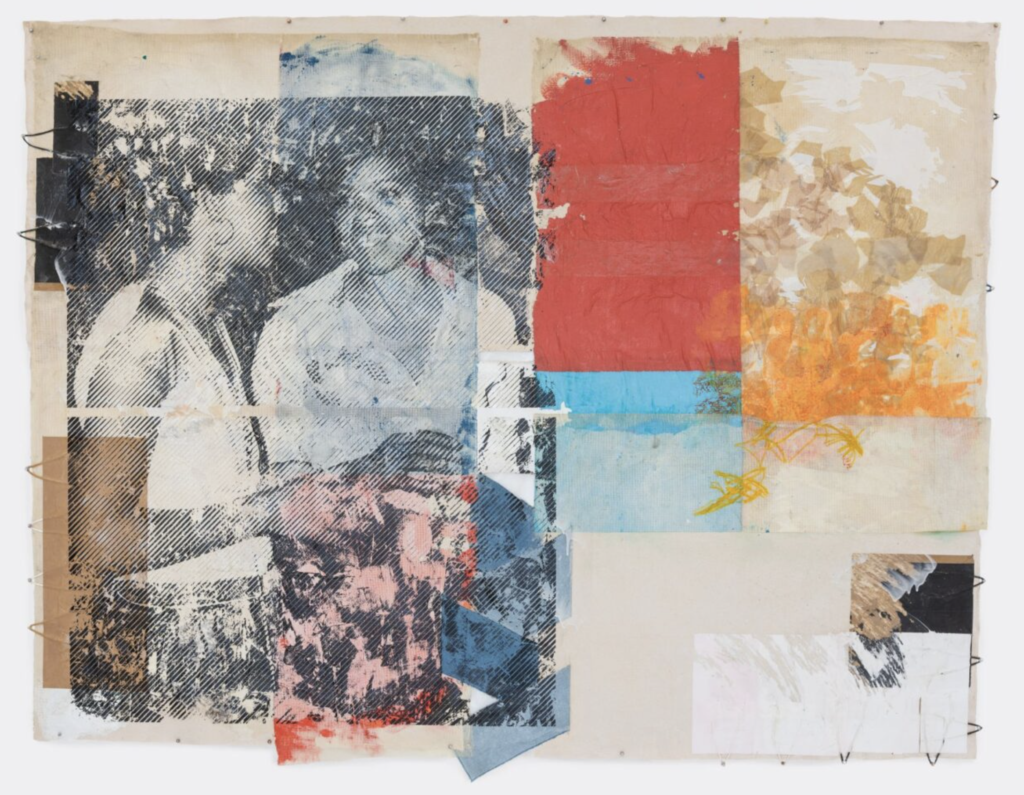
Dominated by red, white, blue, black and Jackson’s signature halftone line, the archival print includes political ephemera and Pentelic marble dust. Within the work, Jackson references the 1962 destruction by arson of Shady Grove Baptist Church in Leesburg, Georgia, where voter registration efforts were previously held. The Pnyx in the title is the hill in Athens where voting assemblies met, originating in 507 B.C. during the era of pro-democracy Athenian leader Cleisthenes.
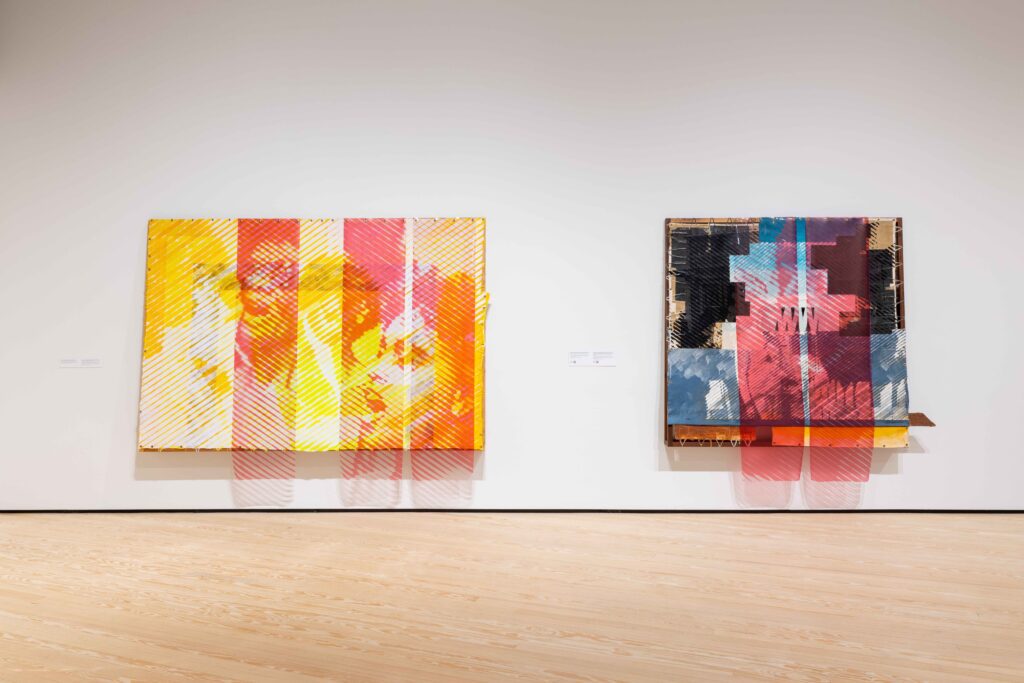
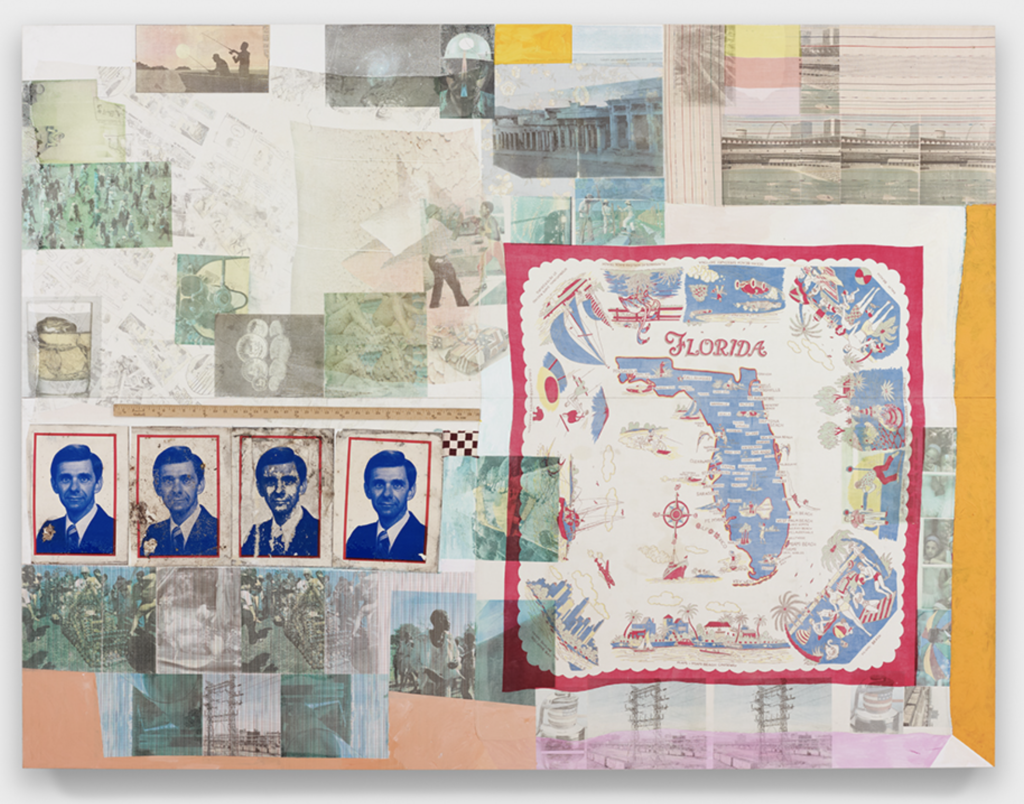
This layering of history is often found throughout Jackson’s oeuvre. “Ecology of Fear (Abrams for Governor of Georgia) (Negro Women wait to congratulate LBJ),” 2020 presents different facets of Black women’s political efforts — as candidates and, more collectively, as grassroots leaders working toward change.
SHOP


Another work, “States’ Rights (Brown, et al. v. The Board of Education of Topeka, Kansas) (Limited Value Exercise),” 2017, addresses a recurring topic: school desegregation. Jackson references the 1950 Sweatt v. Painter case, an important precursor to Brown v. Board of Education. The case concerned the denial of Houston-born Black postal worker Heman Marion Sweatt‘s application to the University of Texas, challenging the “separate but equal” doctrine.
A Houston Connection
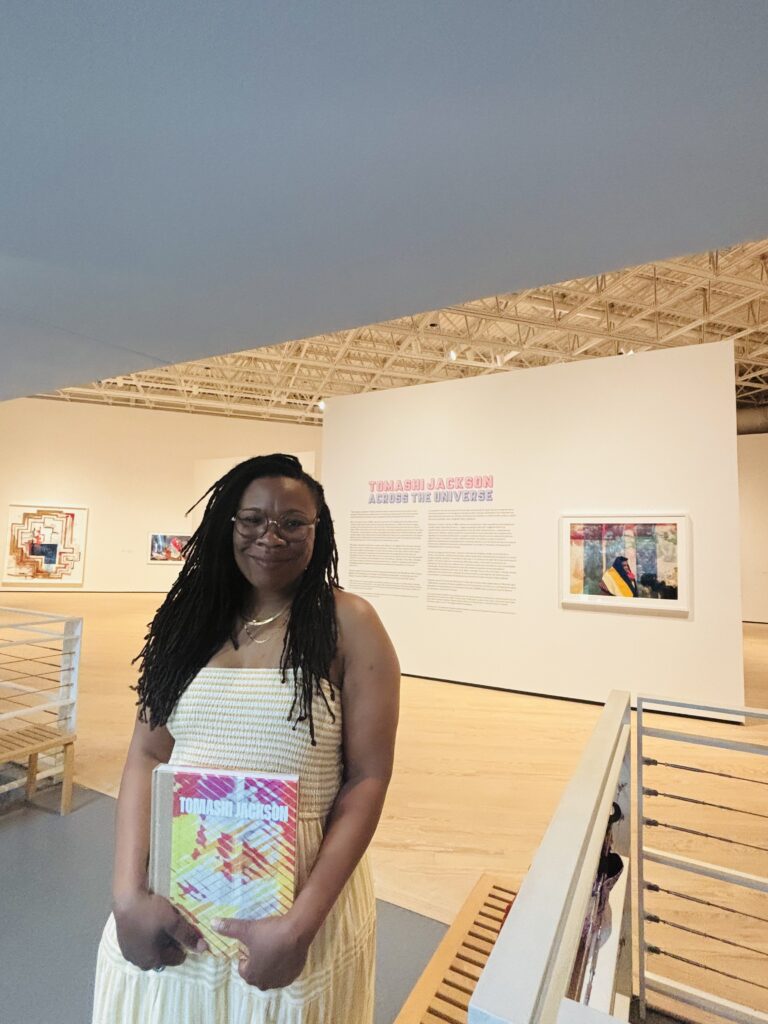
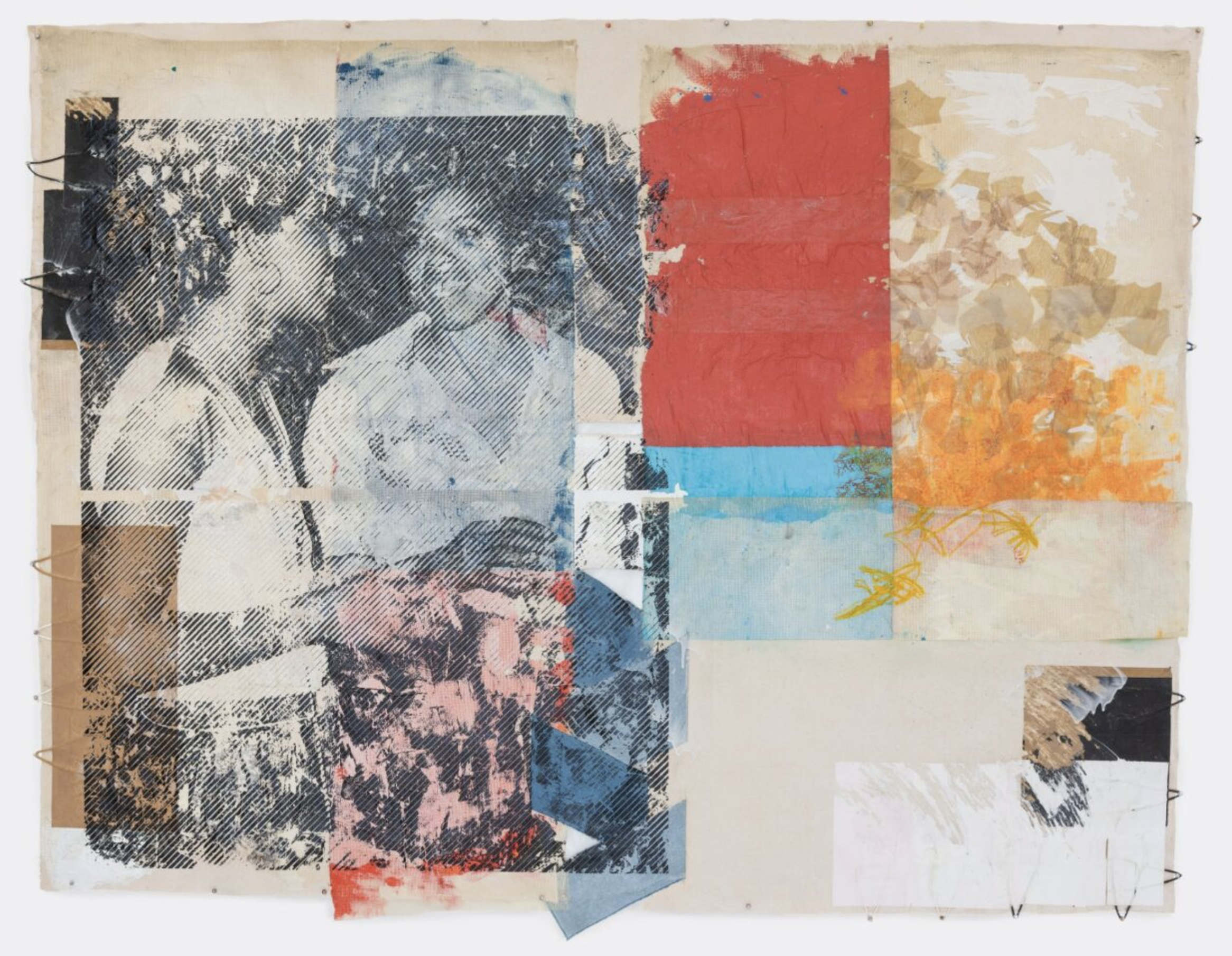
During an opening day talk at CAMH, Jackson referenced Josef Albers’ Interaction of Color. The book influenced her reverence for color field painting, pioneered by Mark Rothko, Barnett Newman and Clyfford Still. A visit to The Rothko Chapel a decade ago — during her Project Row Houses residency, spurred by CAMH co-director and chief curator Ryan Dennis — proved equally influential.
Recalling a trip to the Museum of Modern Art, Jackson says: “I saw a Barnett Newman zip painting for the first time, and I was brought to my knees by it.”
Jackson chronicles various injustices, particularly systemic racism and police brutality. “I’m relearning, optically, this language of teaching color and seeing color,” she says. “Optical illusions appear when certain colors are interacting with each other.”
Take the stunning, brightly hued “Dajerria All Alone (Bolling v. Sharpe (District of Columbia)) (McKinney Pool Party),” 2016. “If we were to stare at this long enough and close our eyes, we’ll see an after-image,” Jackson notes.
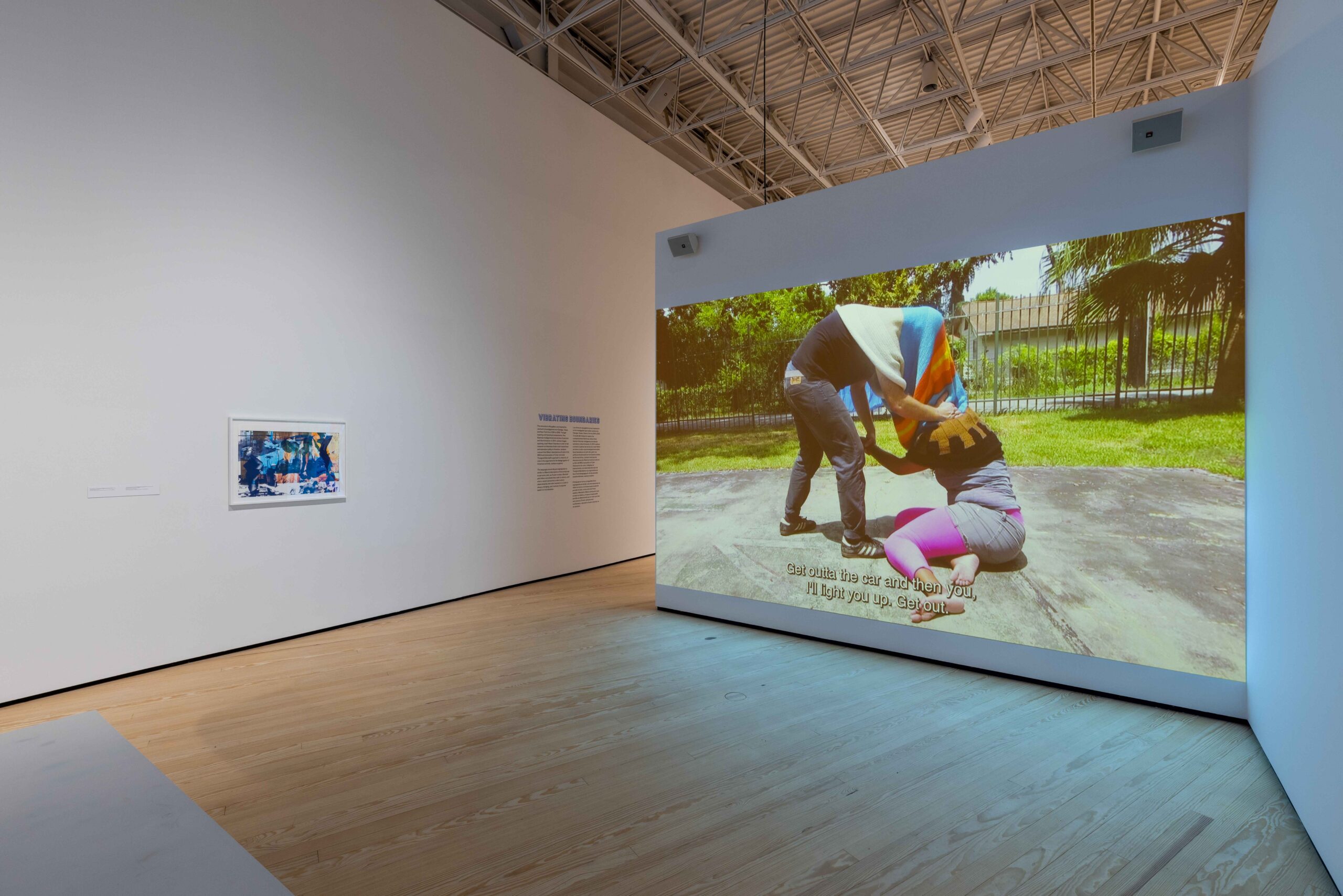
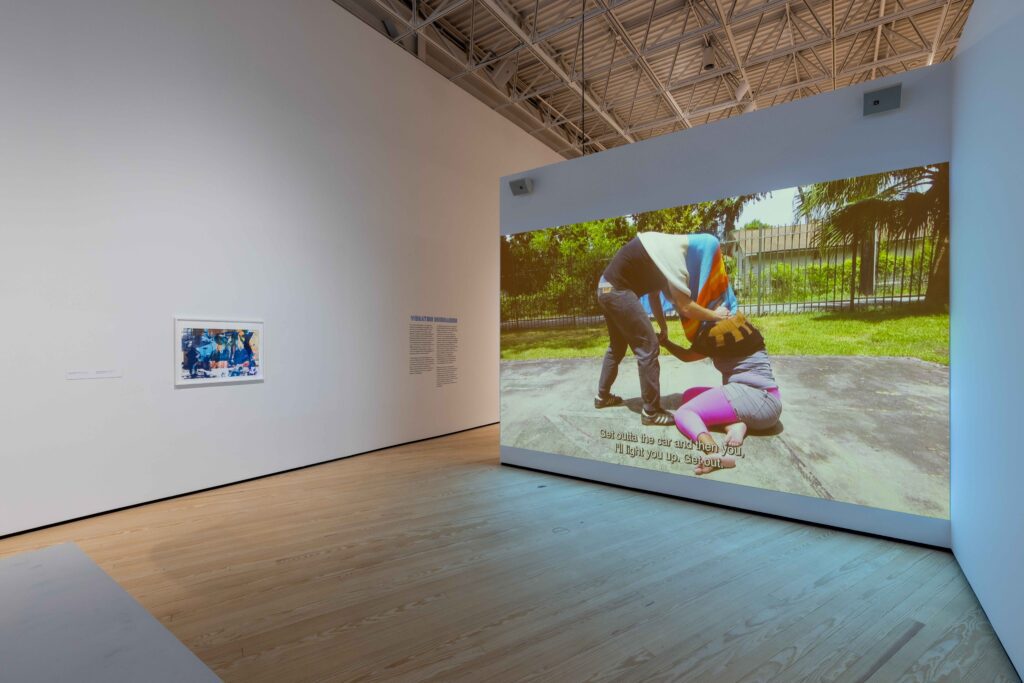
Jackson tells the poignant stories of Sandra Bland, Tatyana Rhodes and Dajerria Becton in the video “Vibrating Boundaries (Law of the Land) (Self Portrait as Tatyana, Dajerria & Sandra),” 1962-2015, 2020. Bland defends herself during the fateful traffic stop three days before her death on July 13, 2015. The chilling audio reminds viewers how knowledgeable she was of the law and her rights.
Also in 2015, Rhodes organized a pool party attended by Becton. There, Becton endured excessive force by former police officer Eric Casebolt in McKinney, Texas.
As Dr. Robin D.G. Kelley says in his catalogue essay: “I approach Jackson’s oeuvre not as an art critic, but as a historian. I was struck by how virtually all of her work explores five themes: labor, land, state violence, education and democracy.”
Grief, Drag and D’Talentz
Also poignant are Jackson’s references to culture. Embedded within “Minute by Minute (Juneteenth in Five Points Denver, CO 2023/Leaves Study by my Mother in Covid Isolation, CA 2020),” 2023, the comforting voice of Michael McDonald sings the Doobie Brothers’ song of the same name. Jackson and her late mother cherished listening to their 1979 album.
The artwork reflects the beauty of their connection to music. It also honors her mother, who passed away during the COVID-19 pandemic while isolated from family in Bakersfield, California.
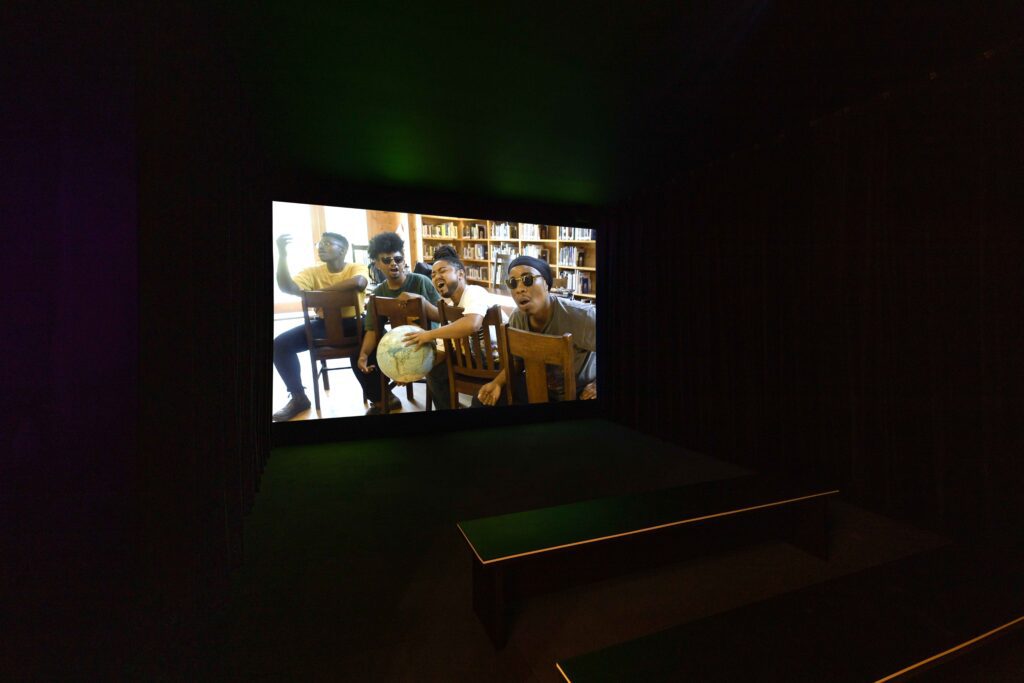
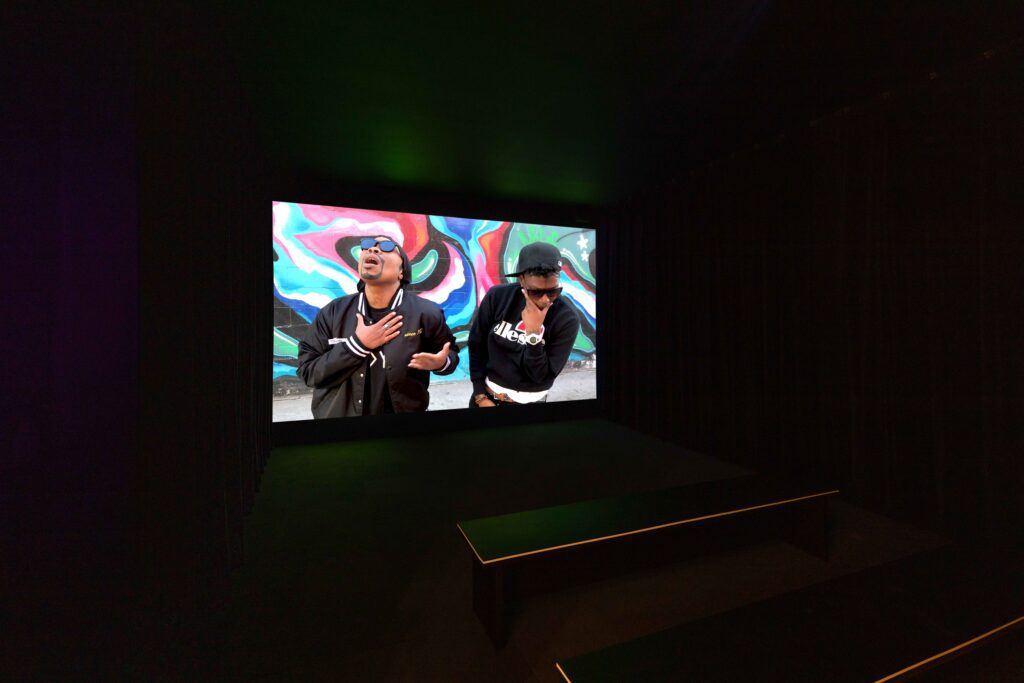
It sits near the entrance to a cinema room, where short films featuring drag group D’Talentz are shown. The collective’s name serves as an homage to science fiction writer Octavia Butler’s prescient novel “Parable of the Talents,” 1993.
D’Talentz consists of Jackson — performing as male R&B singer and alter ego Tommy Tonight — and artists she met at Skowhegan, including Aryel Rene Jackson, Nikita Gale and Ashley Teamer.

Jackson channeled her grief over her mother’s death into her drag performance. The group lip-syncs to R&B classics, including Quincy Jones’ “The Secret Garden” and Troop’s “Spread My Wings.”
During her museum talk, Jackson mentioned professor Kareem Khubchandani. His book Decolonize Drag helped her explore the connection between drag culture and grief. “He helped me understand that the art historical context of drag performance is born of grief, mourning, kinship and celebration,” Jackson says.
“Tommy Tonight emerges out of this compulsion to get a break from the wildly overwhelming feeling of grief, anticipatory and real.”
A Universe Worth Changing
Jackson’s Across the Universe takes its title from a Beatles’ classic. The artwork references another culturally significant moment — Nina Simone singing “To Be Young, Gifted and Black” to an audience at Morehouse College in 1969. It also references President Lyndon B. Johnson’s concept of “The Great Society,” which called for an end to racial injustice.
While Lennon sings “Nothing’s gonna change my world” in “Across the Universe,” Jackson begs to differ. For her, art is the instrument of change.
“Tomashi Jackson: Across The Universe” is on view through next Sunday, March 29 at Contemporary Arts Museum Houston. Learn more here.
Trending
- A Tearful Last $100,000 Pushes Houston’s Best Dressed To $1.5 Million, the Junior League Kicks Off and Camp Gets a Boost
- Houston’s Big Western Night Puts Mothers and Daughters In the Spotlight, Heralding a Dec My Room Leadership Change
- Willie Fritz and Conner Weigman Believe UH Can Push For a National Championship This Season — Why Is So Much Of Houston Still Sleeping On This Team
- Dallas’ Best Holiday Tea Services — From The Nutcracker-Themed to Storied Mansion Experiences
- Dallas Lands One of Two First-Ever Porsche Design Concours in the U.S. — A New Kind of Private Club for the Car Collector



