The Lost Art of Broomcraft — Aspen Golann Shakes Up The Idea of Witches With Her Houston Moment Here
Taking Woodworking In a Wholly Original Direction
BY Catherine D. Anspon //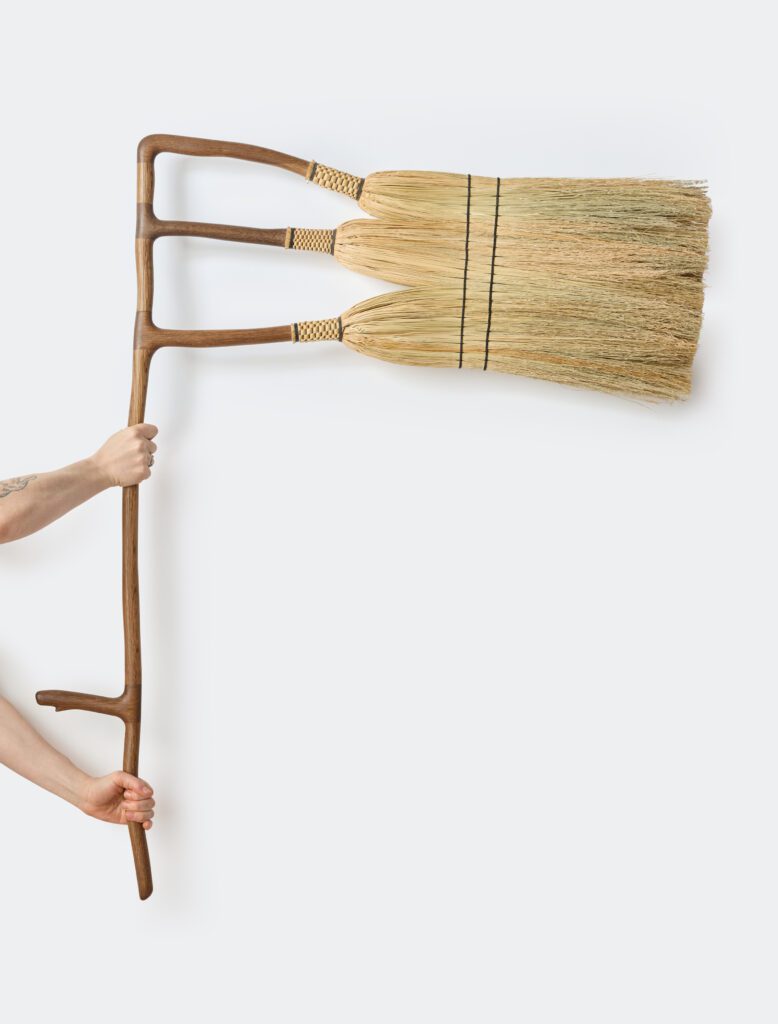
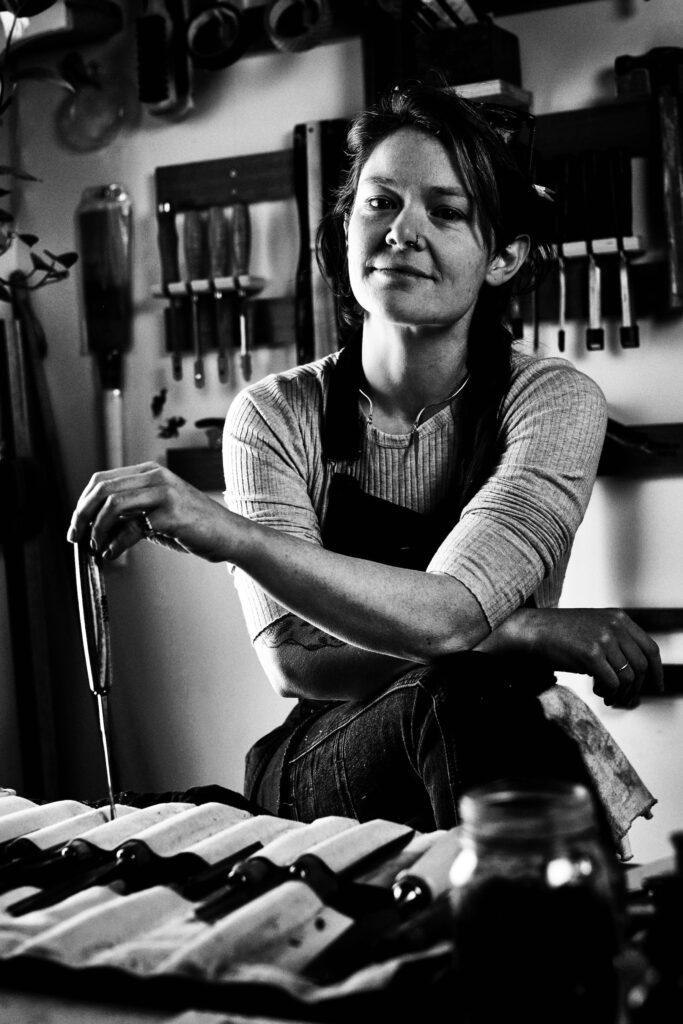
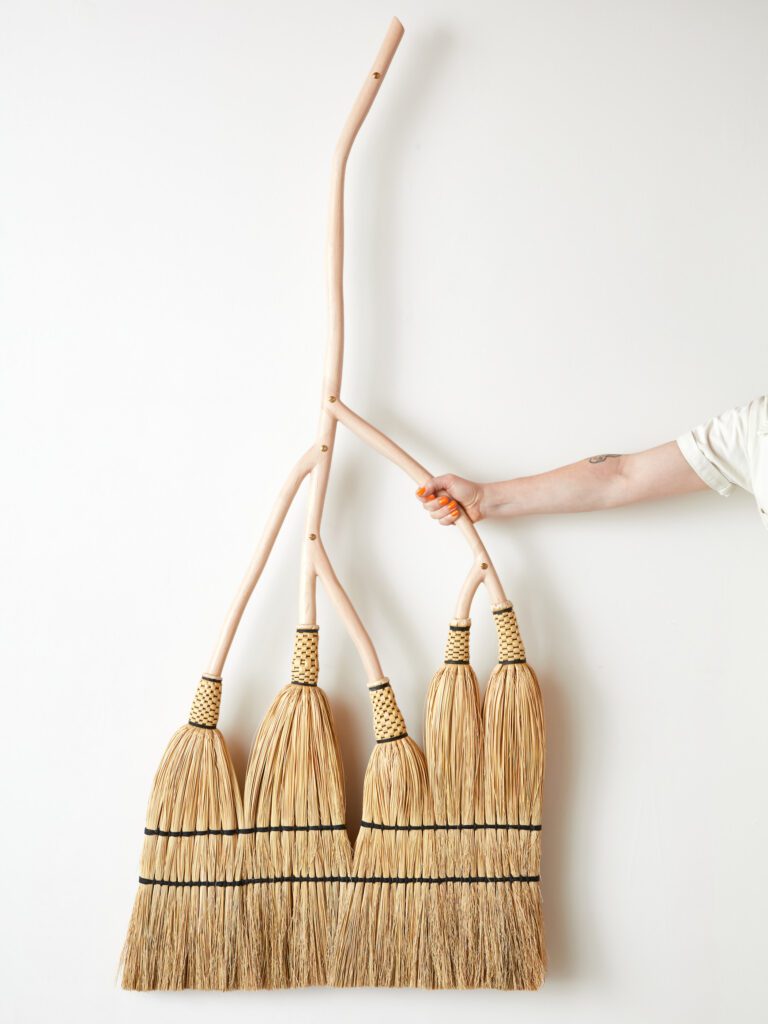
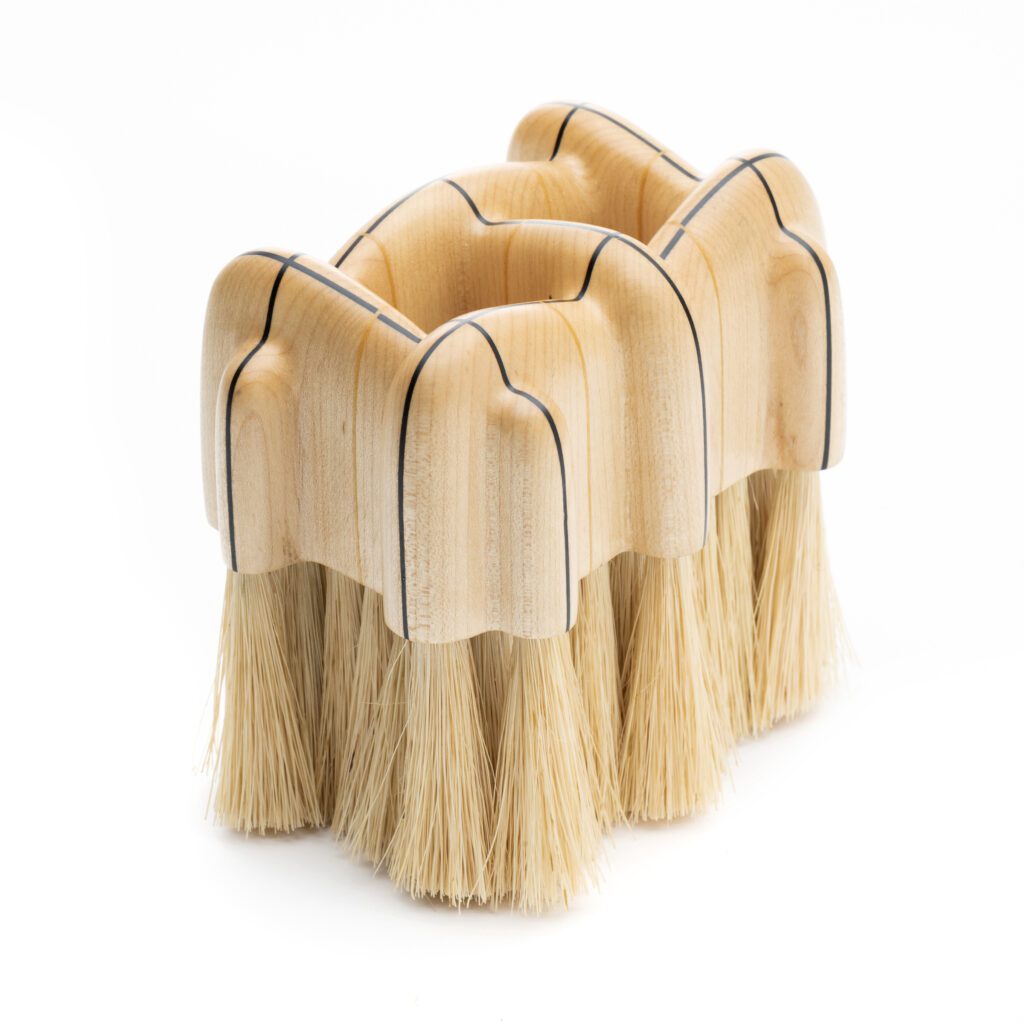
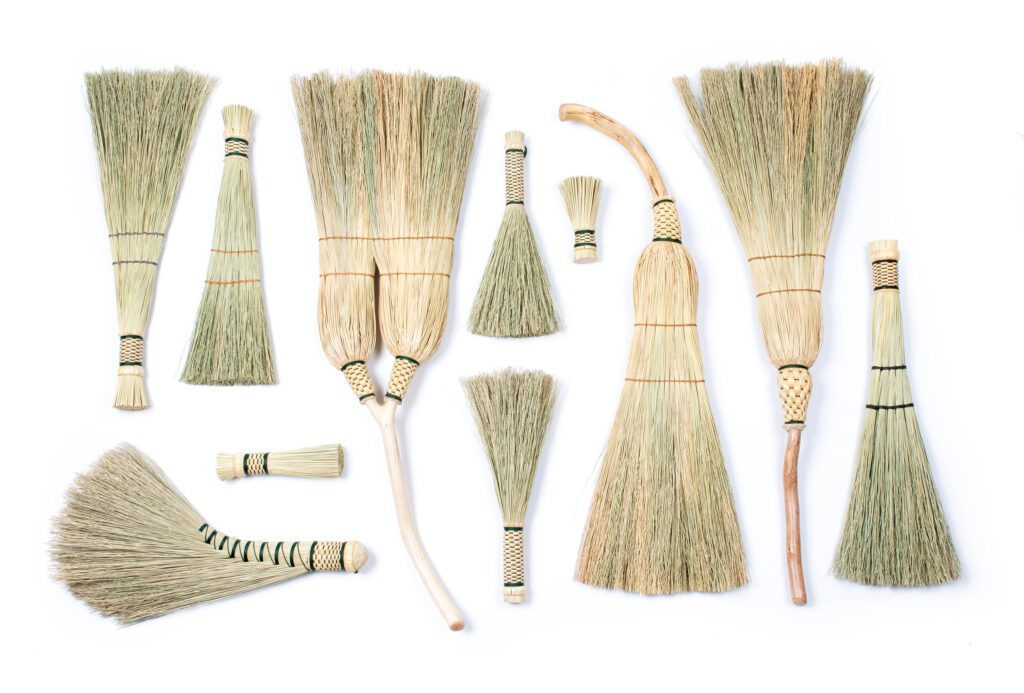
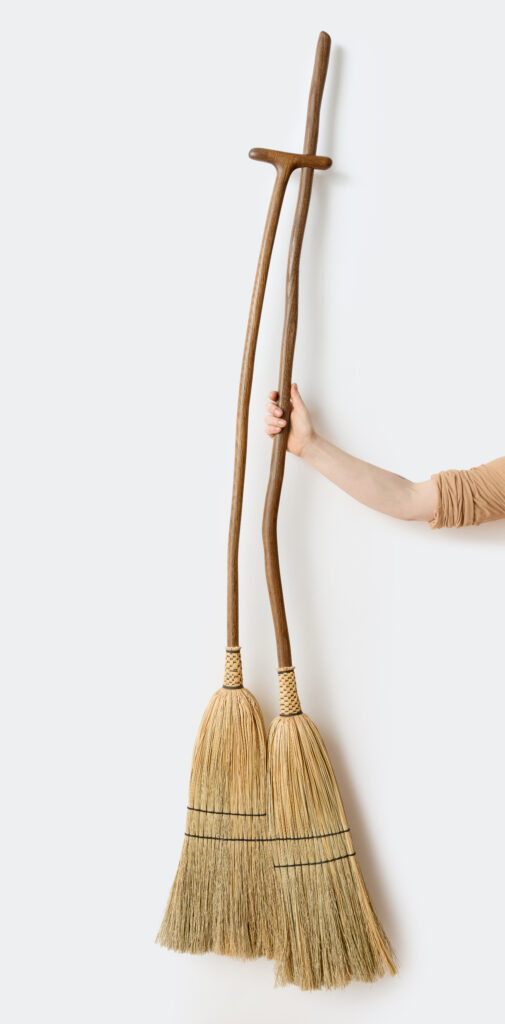

Aspen Golann, "Fruiting Bloom," 2025. Hear the Loewe Foundation Craft Prize finalist in her artist talk “Aspen Golann: Tools for the Future," Thursday, March 12, 6:30 pm, at the Lynn Wyatt Theater, Kinder Building, MFAH. (Photo by Kate Benson)
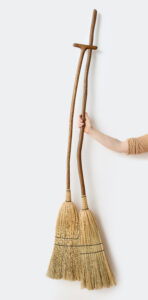
Amidst world-class painting, sculpture, photography and installations at Art Basel Miami Beach and its pendant fair Design Miami, one artist’s work made me stand still. It consisted of two humble but exquisitely wrought brooms.
After scanning carefully curated booths while navigating a throng of collectors at Design Miami, the early Americana vibe of Friends Artspace was a palette cleanser, garnering Best of Show — Thematic Expression for its quirky group exhibition dubbed “Quartersawn.” The brooms came from Aspen Golann — who will be a speaker this Thursday, March 12 at the Museum of Fine Arts, Houston, and fêted in a private cocktail hosted by Loewe.
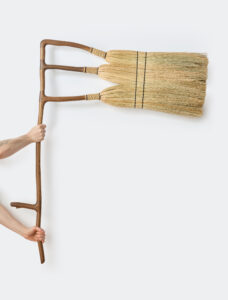
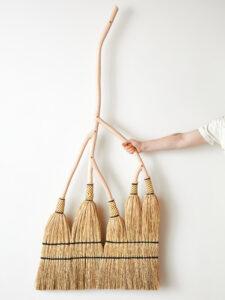
Golann is a 2025 finalist for the international Loewe Foundation Craft Prize for Group Work, 2024, a startling and slightly surreal five-piece broom she fashioned from hard maple, brass, broomcorn and waxed linen.
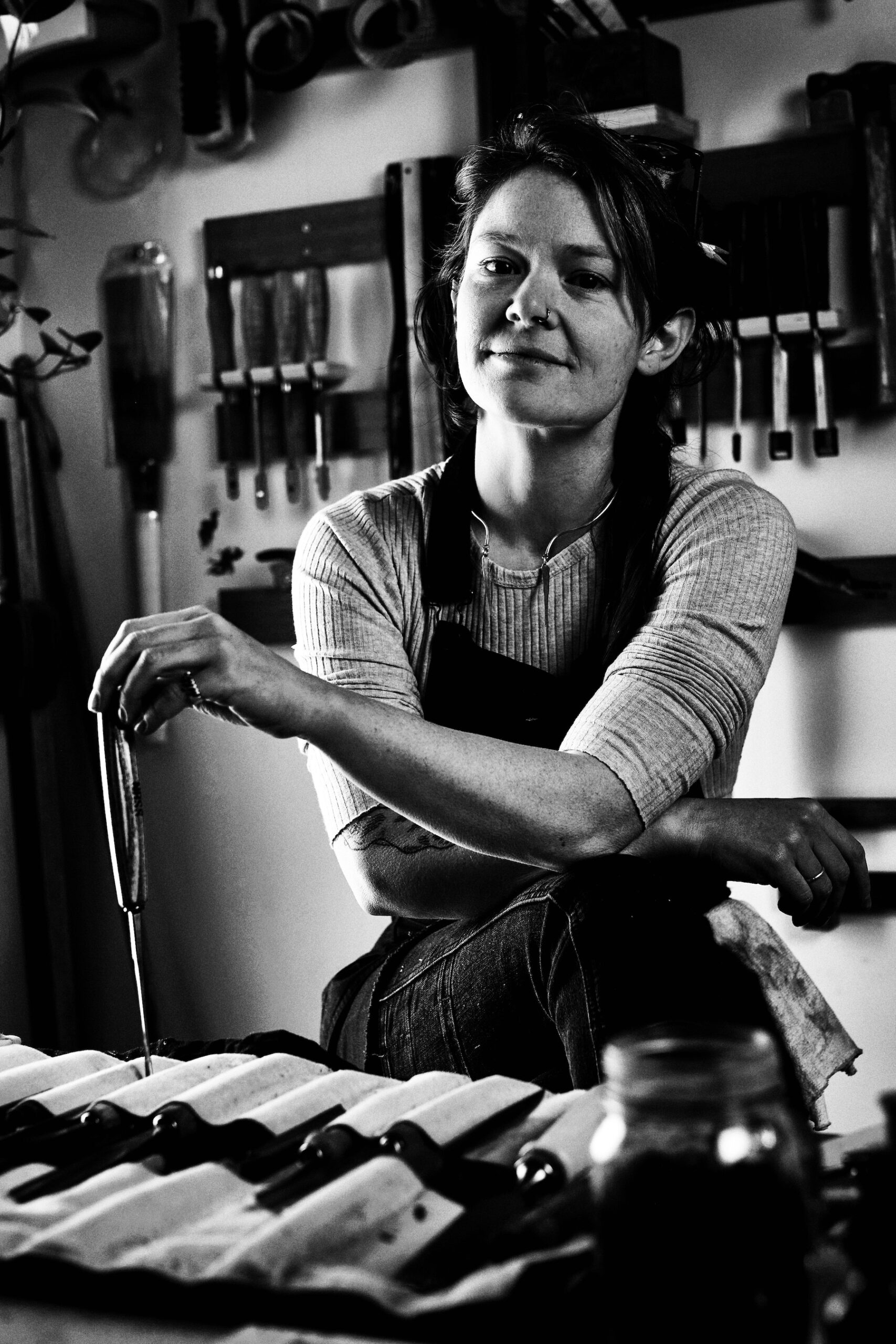
Besides the high-profile Loewe honor, it’s been a banner time for Golann. She is one of three international talents selected for the inaugural Metropolitan Museum of Art x Vacheron Constantin 18-month artisan residency program (through October). In 2023, she was one of five United States-based honorees receiving a $100,000 unrestricted craft award from the Maxwell/Hanrahan Foundation.
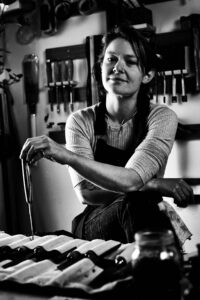
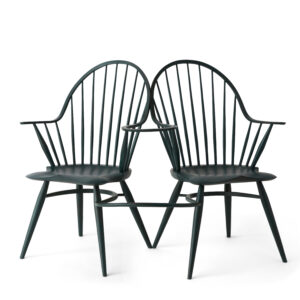
She’s a graduate of Boston’s heritage North Bennet St. School, founded 1881, which has taught generations of woodworkers. Golann is also known for her staunch devotion to her craft and generosity of knowledge sharing, including teaching workshops — Windsor chair-making and brooms are her specialty — around the globe, in addition to a primary teaching gig at RISD. In 2020, she founded The Chairmaker’s Toolbox “to create pathways for marginalized makers into traditional craft practices,” she says.
“Brooms became identified with witches because they were a symbol of female power — their way of breaking out and leaving the house (by flying away). It’s impossible to ignore the connection between women’s power and women’s oppression in this common object that we use and is everywhere.”
The Allen








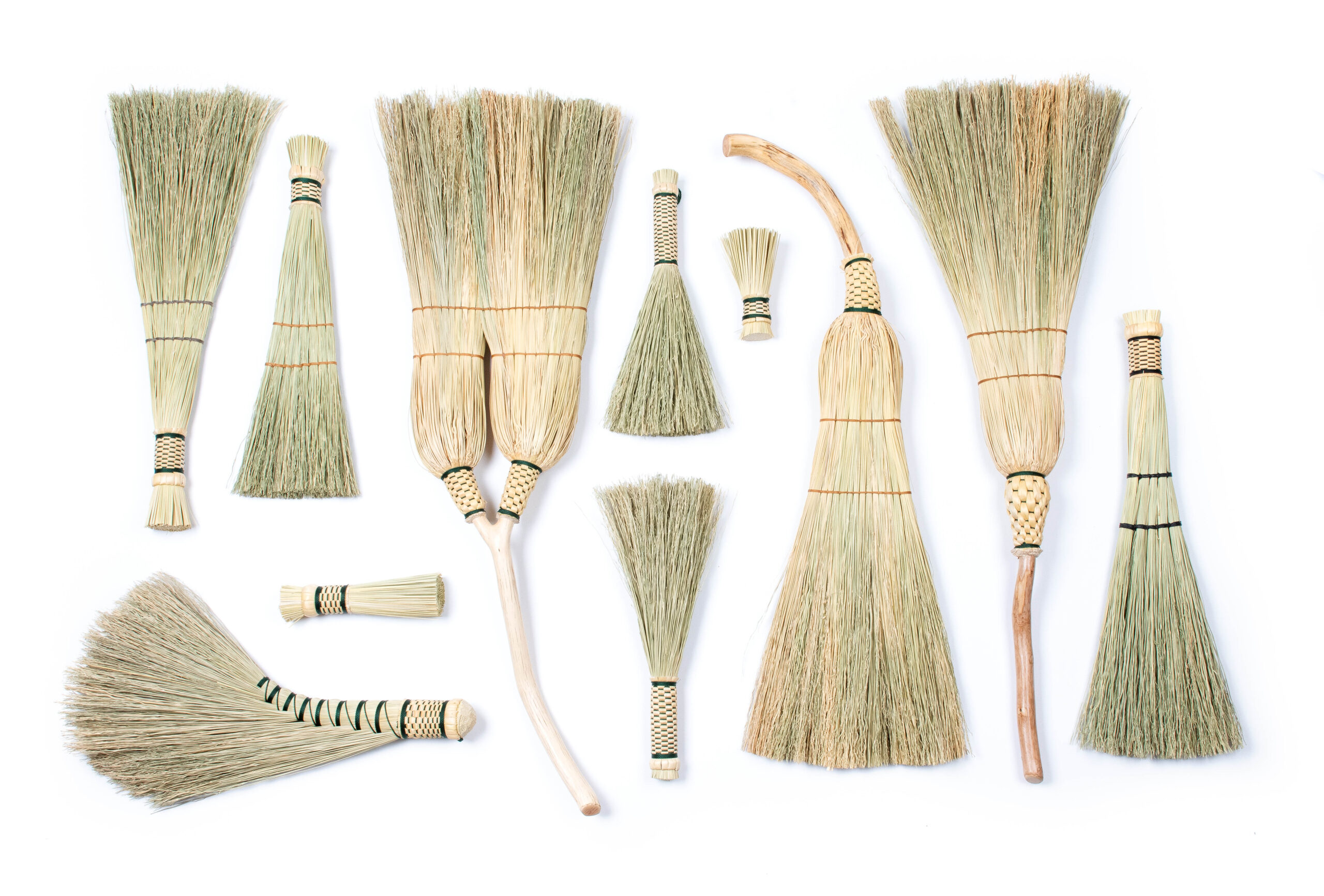
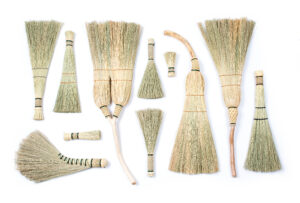
Golann follows Appalachian traditions, eschewing electricity in the practice of making, then elevates her brooms via advanced furniture joinery.
“They’re highly sculptural and more than a tool or implement. I think of these brooms as objects of fine craft,” she says.
Golann will talk with MFAH associate curator of craft Elizabeth Essner in “Aspen Golann: Tools for the Future” this Thursday, March 12 at 6:30 pm in the Lynn Wyatt Theater, Kinder Building (the talk is included in any museum admission).
Aspen Golann and the Love Of Brooms
Golann’s improbable ascent from high school teacher with no wood chops to one of the rising stars of American craft and design is a story worth hearing. She tells us more.
PaperCity: What type of wood do you work with for your brooms?
Aspen Golann: I use a variety, but I always work with furniture-grade domestic hardwoods. I think of these brooms as objects of fine craft, so I use the same materials I would choose for fine furniture. Most commonly that means white oak, ash, hard maple and sometimes hickory.
These materials are ideal for their strength and beauty. I’m drawn to domestic hardwoods that are high quality but grow locally, rather than exotic species. These are the same kinds of woods people would have chosen historically, before brooms were mass-produced in America, when they were making their own tools from what grew around them.
PC: On sourcing your wood?
AG: Sometimes I use offcuts from my fine furniture work. Sometimes I go into the woods to find green material, then season it in my shop and join it once it has dried. And sometimes I purchase a high-quality board specifically with the intention of turning it into a broom.
Going into the woods is a beautiful, meditative practice that connects me to the source of the material. And, it’s historically how broom handles were sourced. While so much of our world has changed, trees are still dropping branches, and saplings are still popping up in places where they’ll soon be cut down. There’s no better material for a broom handle than that.
Once I bring wood in from outdoors, I let it dry in my shop for about a year. I joke that it needs time to get used to domestic life before becoming a broom. If you join it too soon, it will fracture or fall apart.
PC: On the process of broom making?
AG: Some brooms come together beautifully and quickly, and others fight me. The longest I’ve spent on joinery and tying is probably four weeks. But occasionally I’ll be struck by inspiration and a particularly willing branch, and one will come together in just a few days.
I almost always have more than one piece going at the same time. I don’t like to force an object to completion before it’s ready. So having multiple brooms in progress lets me move between them without pushing any one piece too hard.
PC: Do you have rituals while you work?
AG: I’m one of those people who works almost entirely in silence, which I suppose is a ritual in itself. One of the great pleasures of broom-making, as opposed to furniture-making, is how quiet it is. You’re just listening to sharp hand tools cutting across bark and fiber, which is a really beautiful sound.
PC: What tools do you use to make your brooms?
AG: Broom making doesn’t require many tools, which is part of what I love about it. A broom knife, which is essentially a large butcher’s knife sharpened on both sides, used to trim the broomcorn before and after tying. A foot brake, which is like a large sewing bobbin held under your feet while you tie. A bodkin, a large flat dull needle made specifically for broom making, which usually must be commissioned from a blacksmith. I also use a sharp knife and pruning shears for fine manipulation of fiber and thread.
All of it fits into a basket or backpack, which makes broom-making a very nimble craft.
These are the same tools that would have been used historically, and many of mine are antique and were actually used in early Appalachian broom-making, including my bodkin. They’ve been functioning for around 200 years and will continue to function long after I’m gone.
Remarkably, there’s no electricity involved, in either my broom making or my chair making. Broom making is entirely hand-powered (unless you include the stove for heating water for bending and soaking fibers).
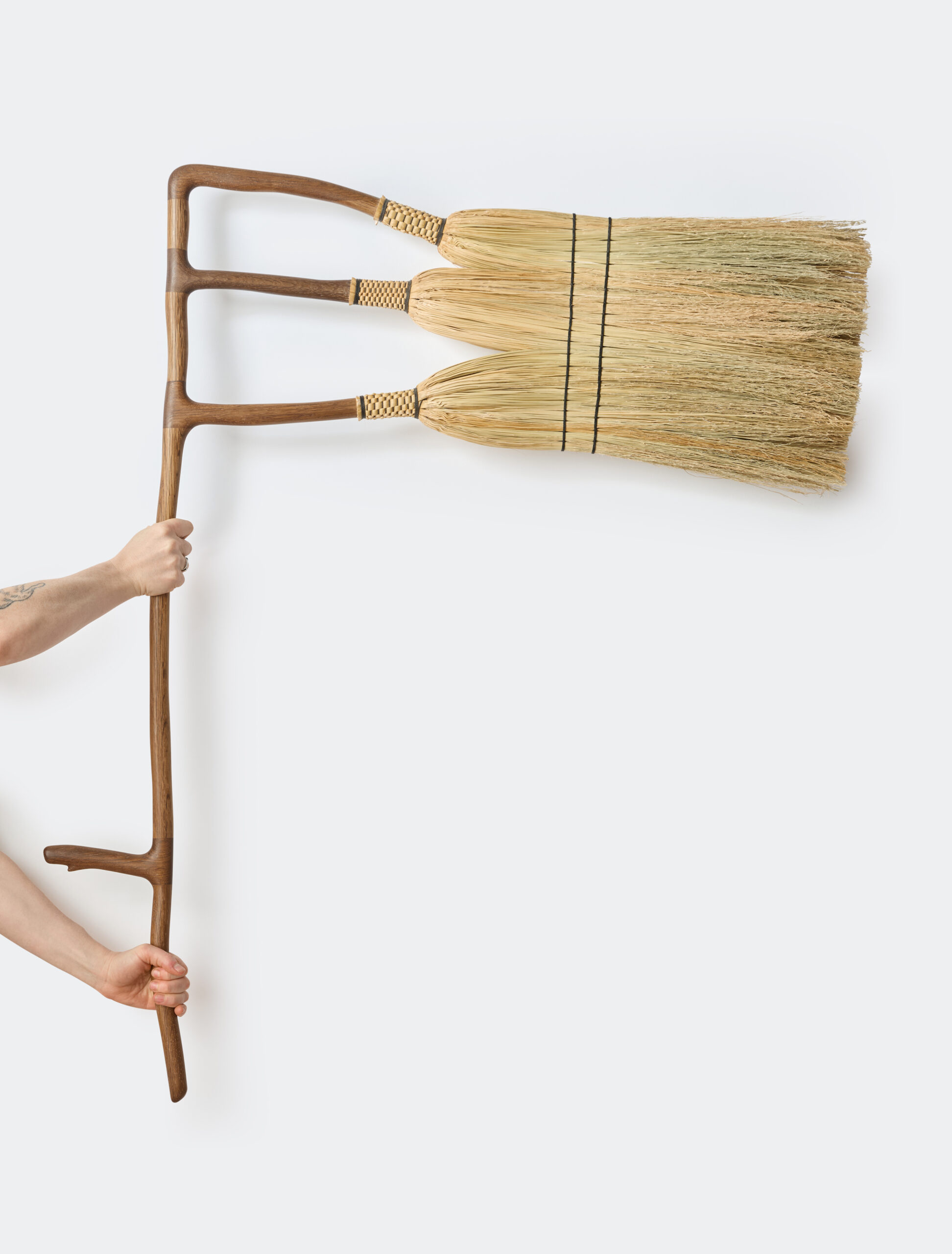
PC: Some of your brooms have brass circles where the limbs join. Why is that?
AG: Those are made so the brooms can theoretically be disassembled. The metal elements are rivets that hold the broom together, and they highlight the duality between an organic branch and an object clearly constructed by furniture joinery. They draw attention to the fact that these are “made” things as well as “found” things.
The metal doesn’t add extra strength in the way a glue joint would, but it’s more than strong enough for the job. What I like about it is that it allows for the idea of disassembly. I’m not convinced anyone has ever actually taken one of my brooms apart. But I love the idea that they could be disassembled, and then reassembled somewhere else.
Artist talk “Aspen Golann: Tools for the Future” is set for this Thursday, March 12 at 6:30 pm in the Lynn Wyatt Theater, located in MFAH’s Kinder Building. The talk is free with any museum admission. For more information, go here.


_md.jpg)


