Three different exhibitions at thee different Houston art galleries show the depth and variety of art you can find in the nation’s fourth largest city. One never knows what material will take centerstage. How about collage, clay and aluminum. Let’s take a closer look at what you can see in Houston art this week:
Collage Lessons
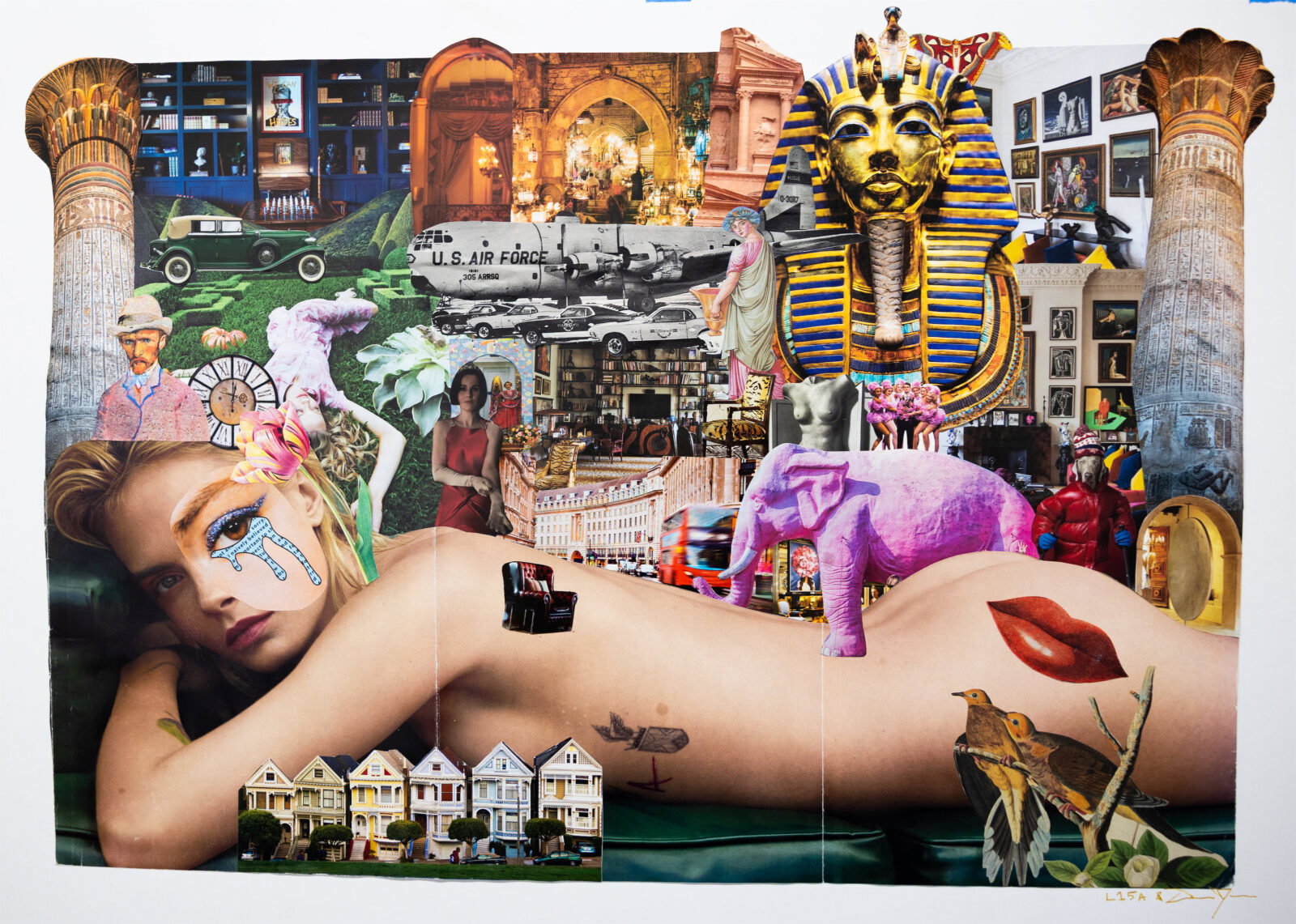
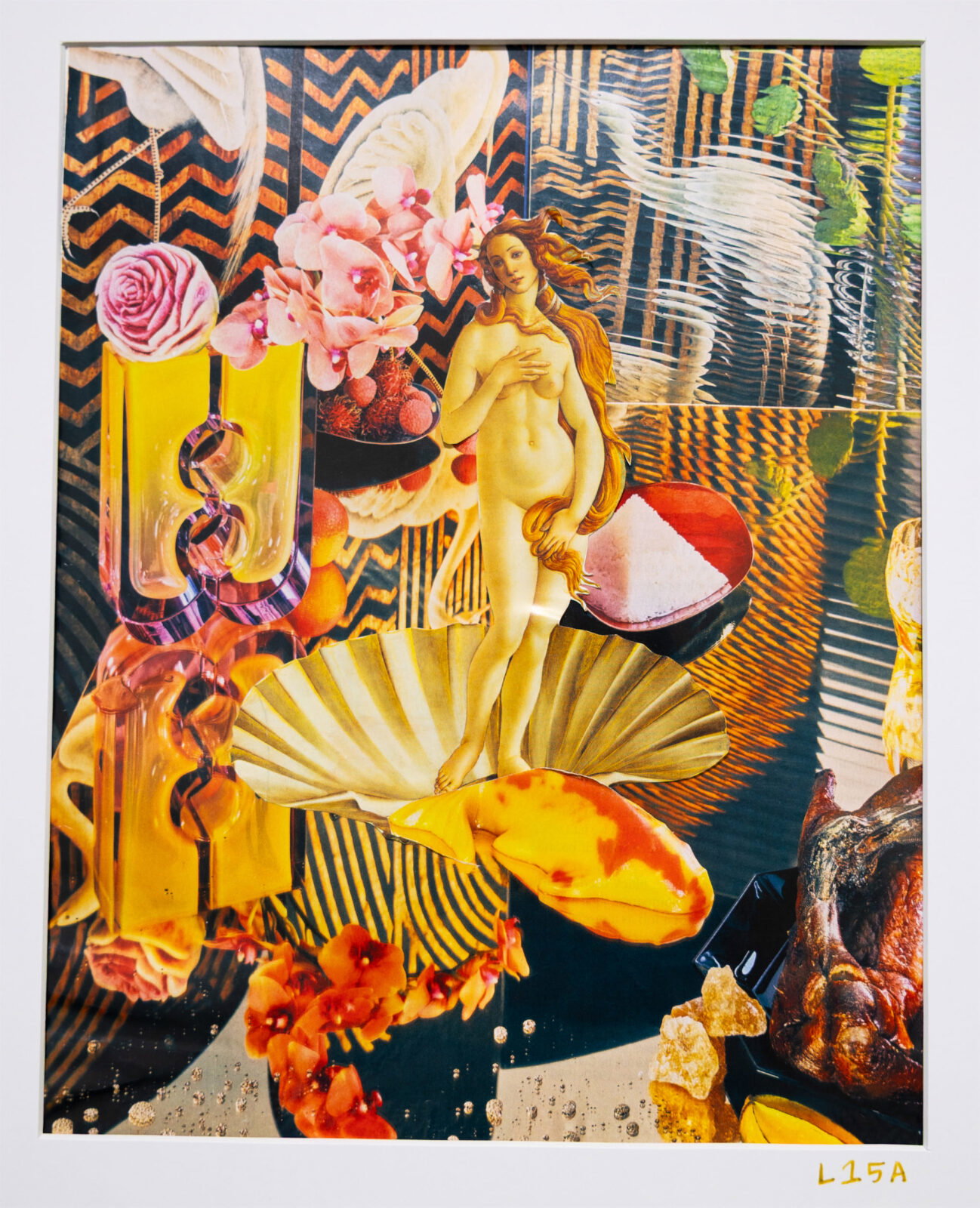
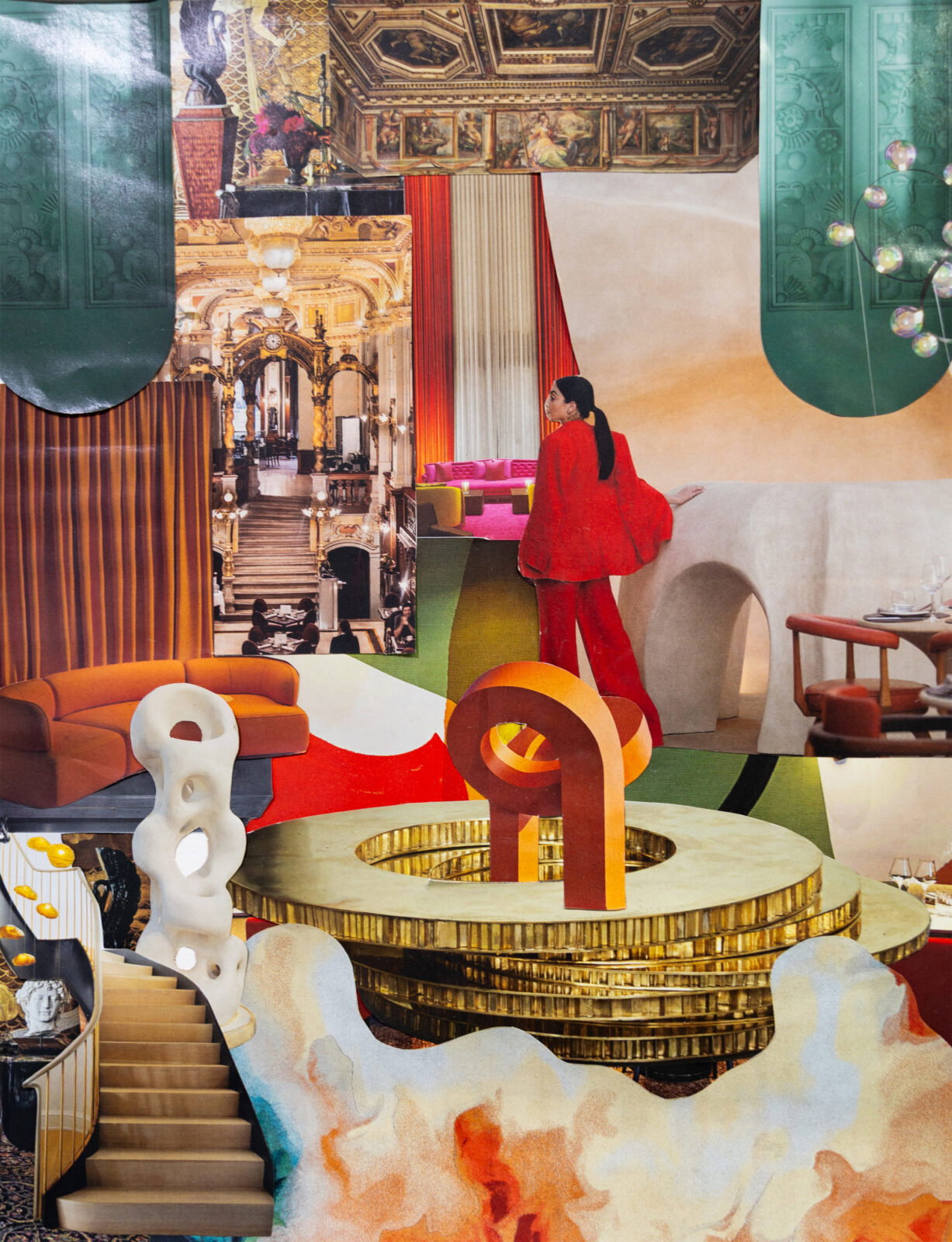
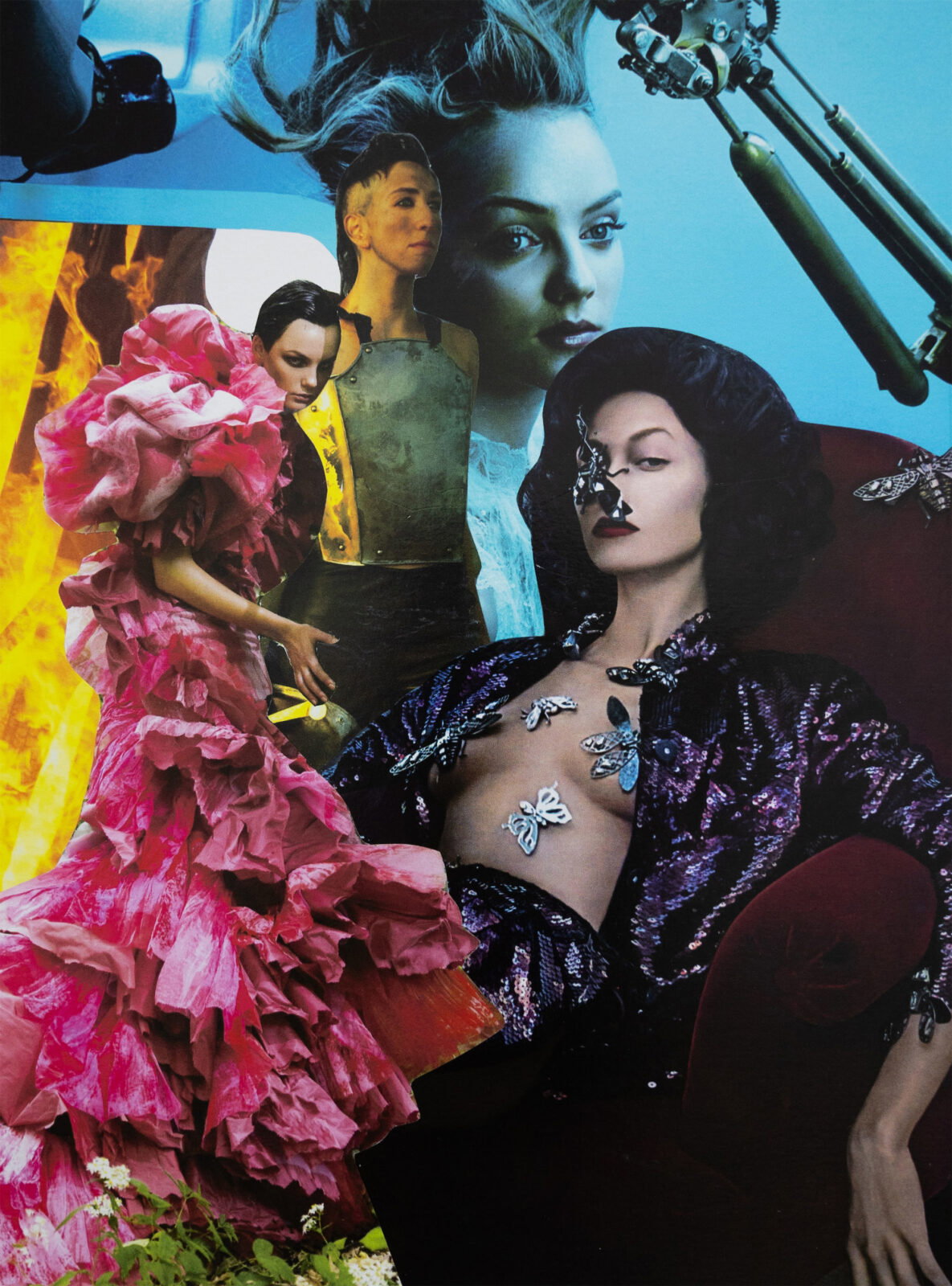
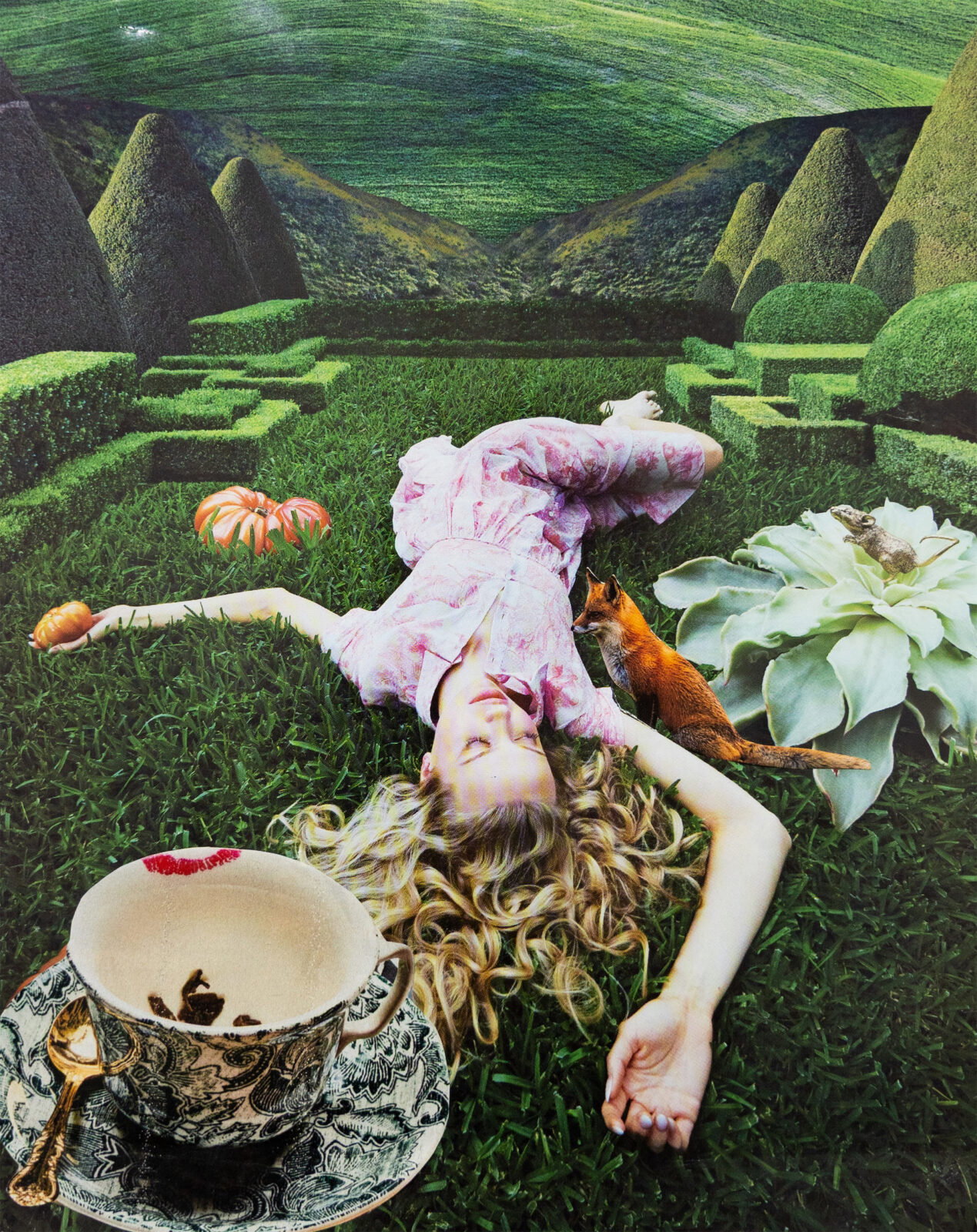
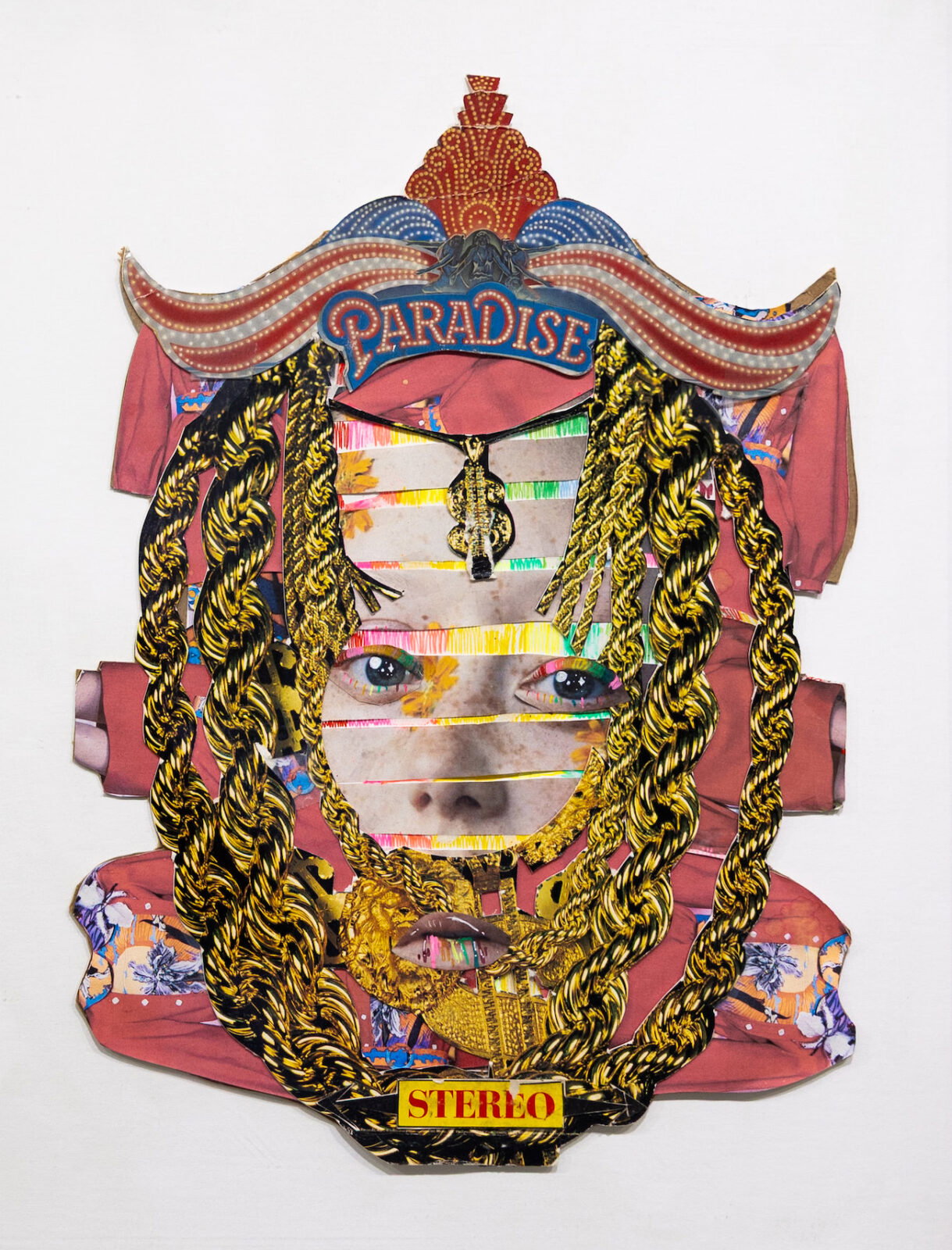
Collage begins with an act of trespass. One image enters another’s territory, and suddenly the original arrangement no longer holds. At Sabine Street Studios, Kim Pham turns that small disruption into a generous proposition. “Destiny’s Print: A Collage Art Show” gathers 111 community-created collages alongside works by Pham, Robert Leroy Hodge and Donald Jones, challenging the quiet authority of who gets to make art.
Students working with images from PaperCity print magazines produce an exuberant wall of collisions. Faces interrupt advertisements, animals wander into improbable settings, and fragments of commercial polish acquire unruly new lives. Their compositions sometimes resist tidiness. Good.
Collage has never needed permission to misbehave.

Pham’s towering collage operates at another register. Beneath a star-studded darkness, an avalanche of architecture, bodies, animals and printed matter gathers into a personal cosmology. Inspired by her late father’s philosophy examination, the work transforms a question about remembrance into an architecture of accumulated images. Memory refuses chronology. It stacks.
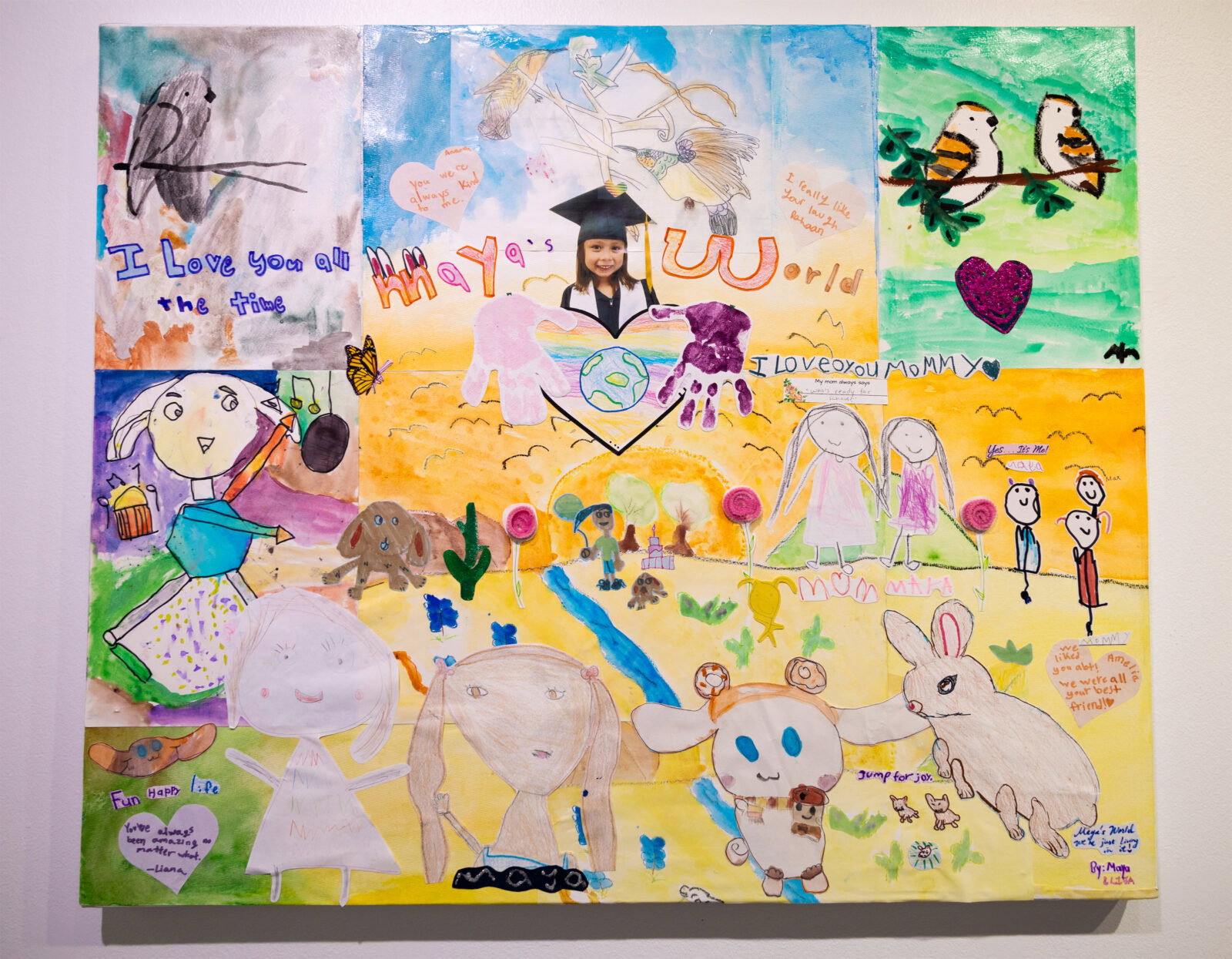
Elsewhere, Maya’s World introduces a more intimate form of preservation. Drawn birds hover above a graduation photograph, while rabbits, hearts, handprints and handwritten declarations of love populate an impossibly cheerful landscape. Assembled from the original artwork of a young Vietnamese-American girl whose life ended due to domestic violence, its innocence acquires extraordinary gravity. Every mark preserves a gesture. Every affectionate inscription holds a voice.
Hannah Höch understood collage as a means of interrupting the authority of mass imagery. Pham extends that interruption toward authorship itself, allowing personal histories and community expression to occupy the same institutional space as established artists.
The exhibition ultimately concerns more than rearranging images. It concerns what survives their original circumstances. Sometimes a fragment carries an entire life.
“Destiny’s Print: A Collage Art Show” is on view through this Saturday, November 7 at Sabine Street Studios, 1907 Sabine Street. Find more details here. Discover Pham’s upcoming workshops via her nonprofit on Instagram @allgirls.love.
Three Ladies of Clay
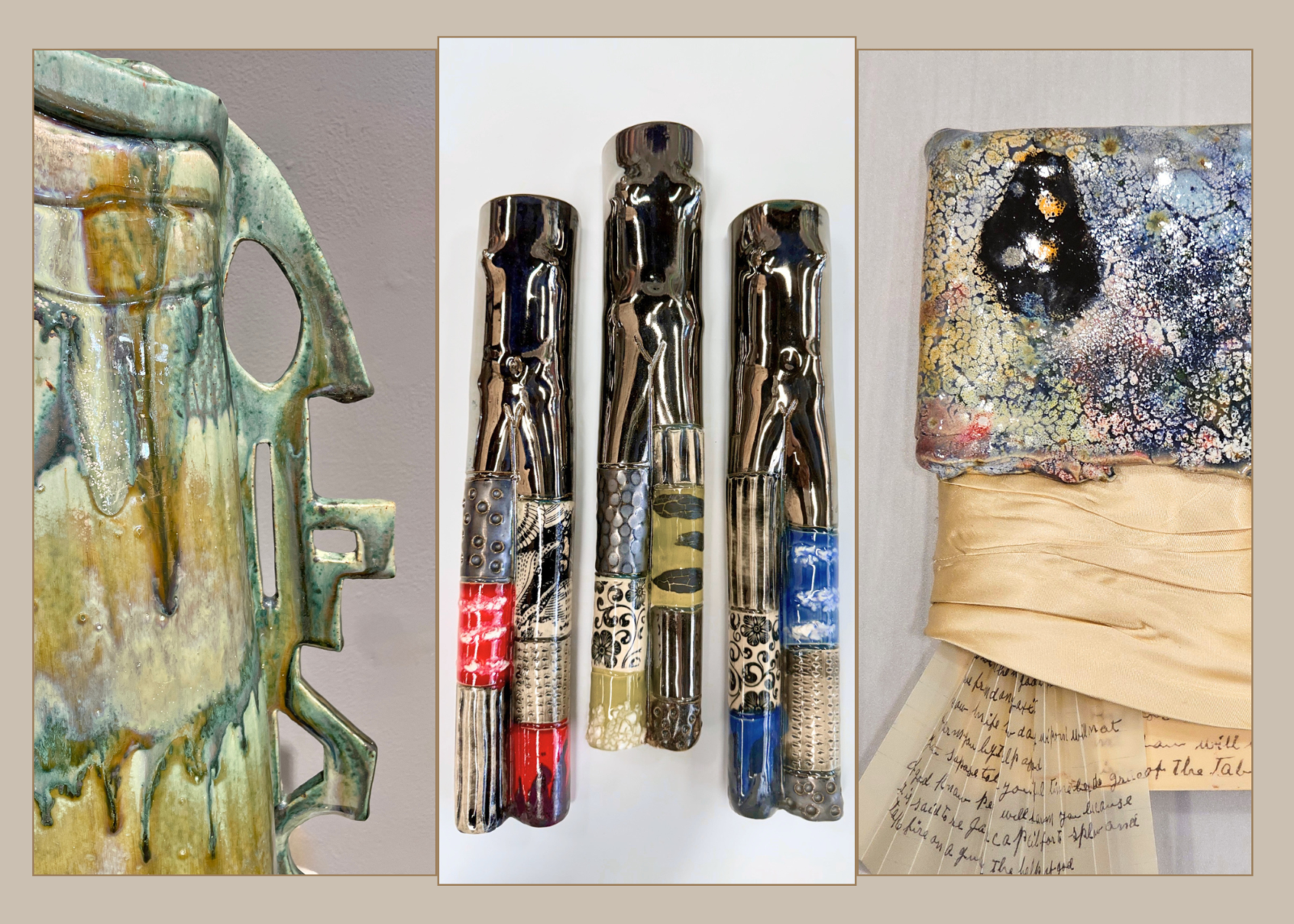
Clay remembers every hand that touches it. Before fire fixes its shape, the material yields to pressure, water, hesitation and revision. “Shared Ground,” at Foelber Pottery Gallery, approaches this transformation as a model for human connection. But the most interesting exchanges occur between clay and the bodies, histories and architectures its artists ask it to carry.
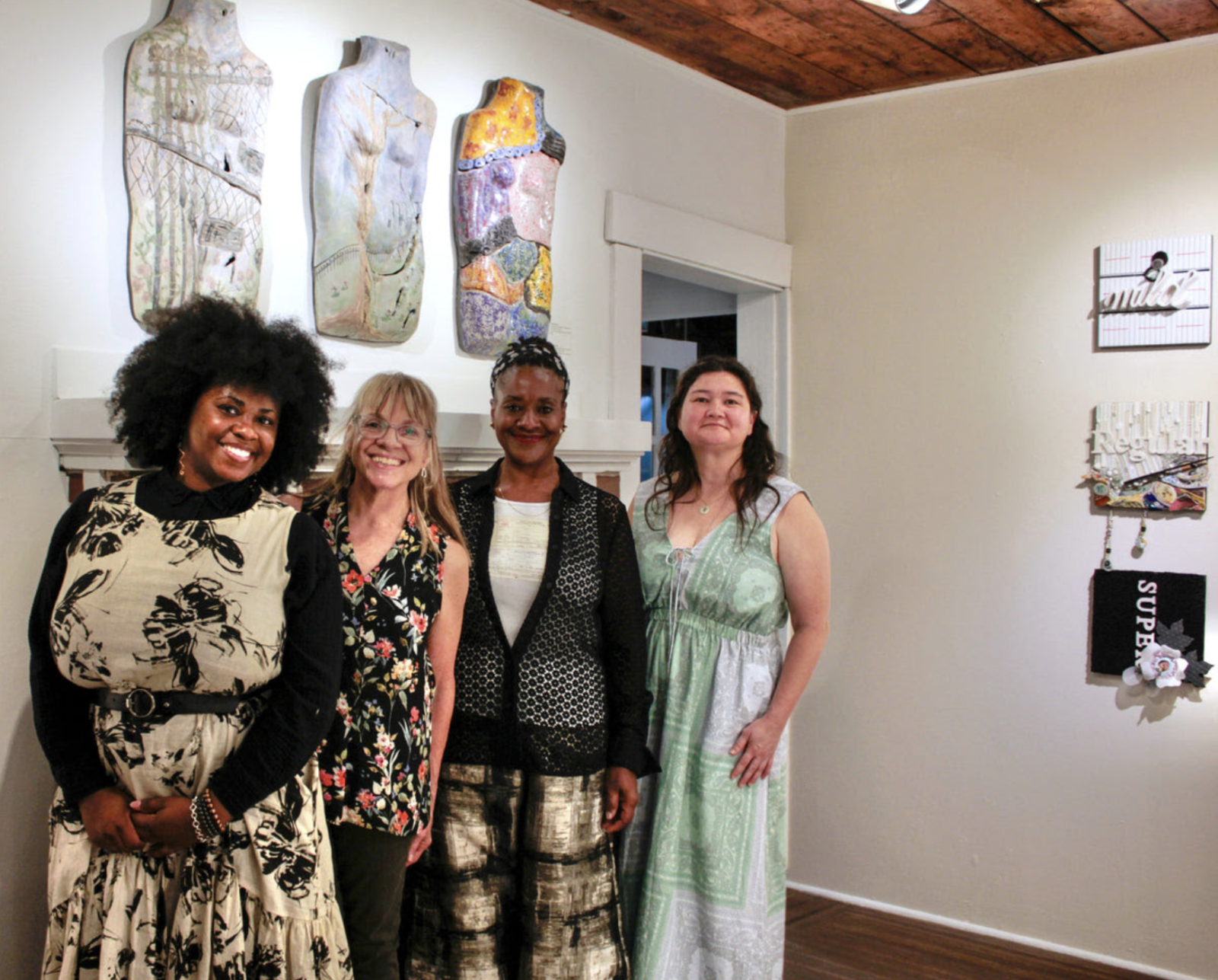
Judy Adams’s three wall-mounted ceramic torsos refuse the simple distinction between skin and landscape. Barriers and Gate to the City, both from her 1993 “Take the Country out of the Girl” series, join Comforter (2006) in a procession of headless, armless bodies. Unlike classical torsos, these figures carry their histories not through anatomical idealization but across painted surfaces. Chain-link fencing and rural scenery cross one torso; a leafless tree branches across another; the third wears a riot of patterned color. Their surfaces resemble maps of experience, each mark an encounter impressed upon an absent body. What might appear decorative acquires the pressure of biography.

Lotus Bermudez gives clay a more theatrical existence. Her densely ornamented, shrine-like construction surrounds miniature forms with sculpted blossoms, intricate patterns and saturated color. Ornament here refuses its usual subordinate role. It crowds the object, commands attention and offers a nearly ceremonial invitation to look closer.
Marsha Dorsey-Outlaw’s mosaic pushes in another direction. A red oval burns inside concentric circles, surrounded by blue tesserae and studded with protruding cylindrical elements. Part target, part planetary diagram, the work complicates the distance between image and relief. Its surface reaches toward the viewer.
The exhibition’s title suggests common origins, but its achievement lies in divergent destinations. Adams turns torsos into sites of memory; Bermudez makes a theater of embellishment; Dorsey-Outlaw lets an image acquire sculptural force. Their shared material refuses a shared identity. Clay hardens in the kiln. Its meanings remain stubbornly unfixed.
“Shared Ground” is showing through this Saturday, November 7 at Foelber Pottery Gallery, 706 Richmond Avenue. Find more information here. After the exhibition closes, Foelber stocks works by Judy Adams, Marsha Dorsey-Outlaw, and Lotus Bermudez year-round.
Two Talents With Aluminum
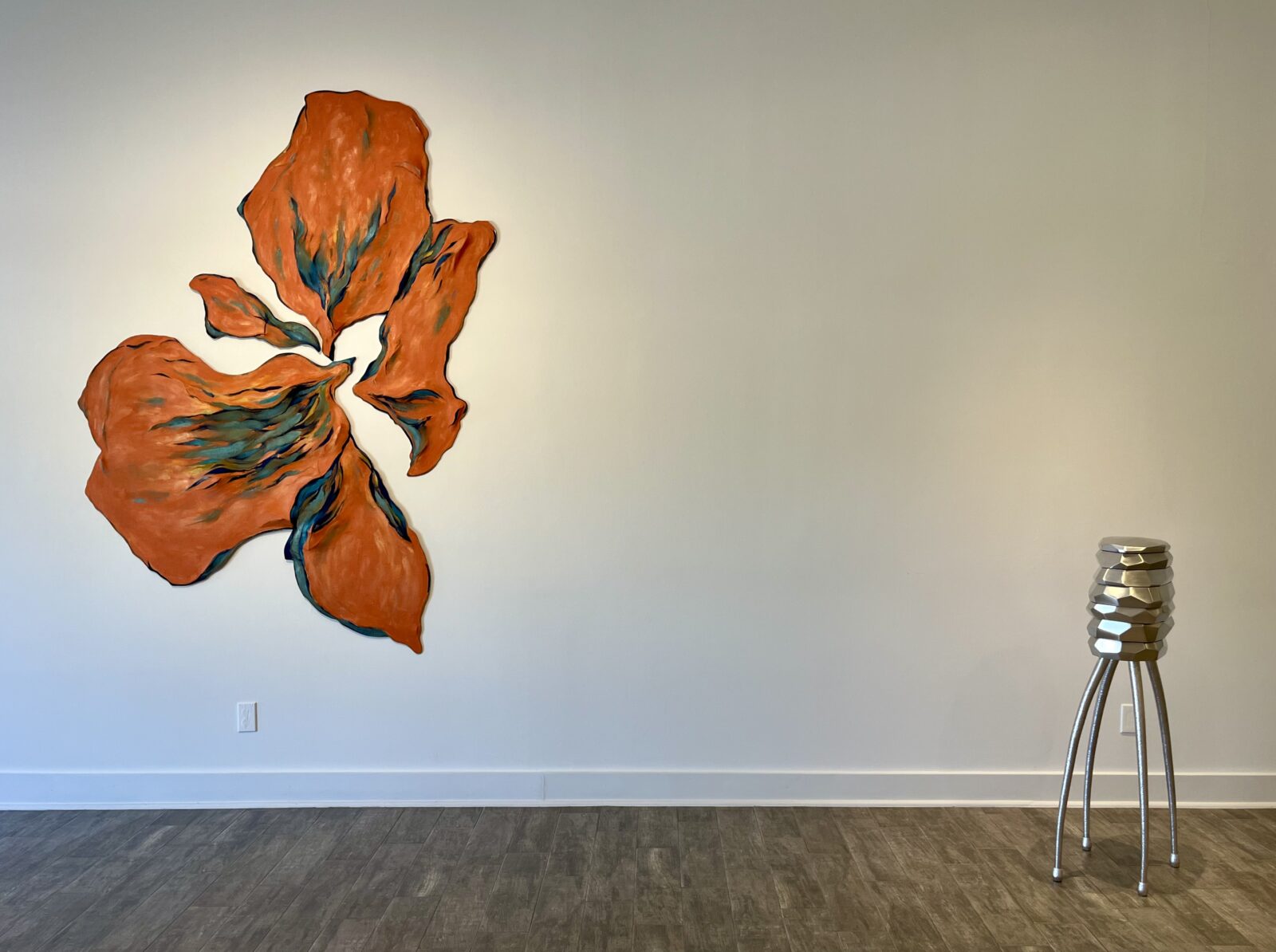
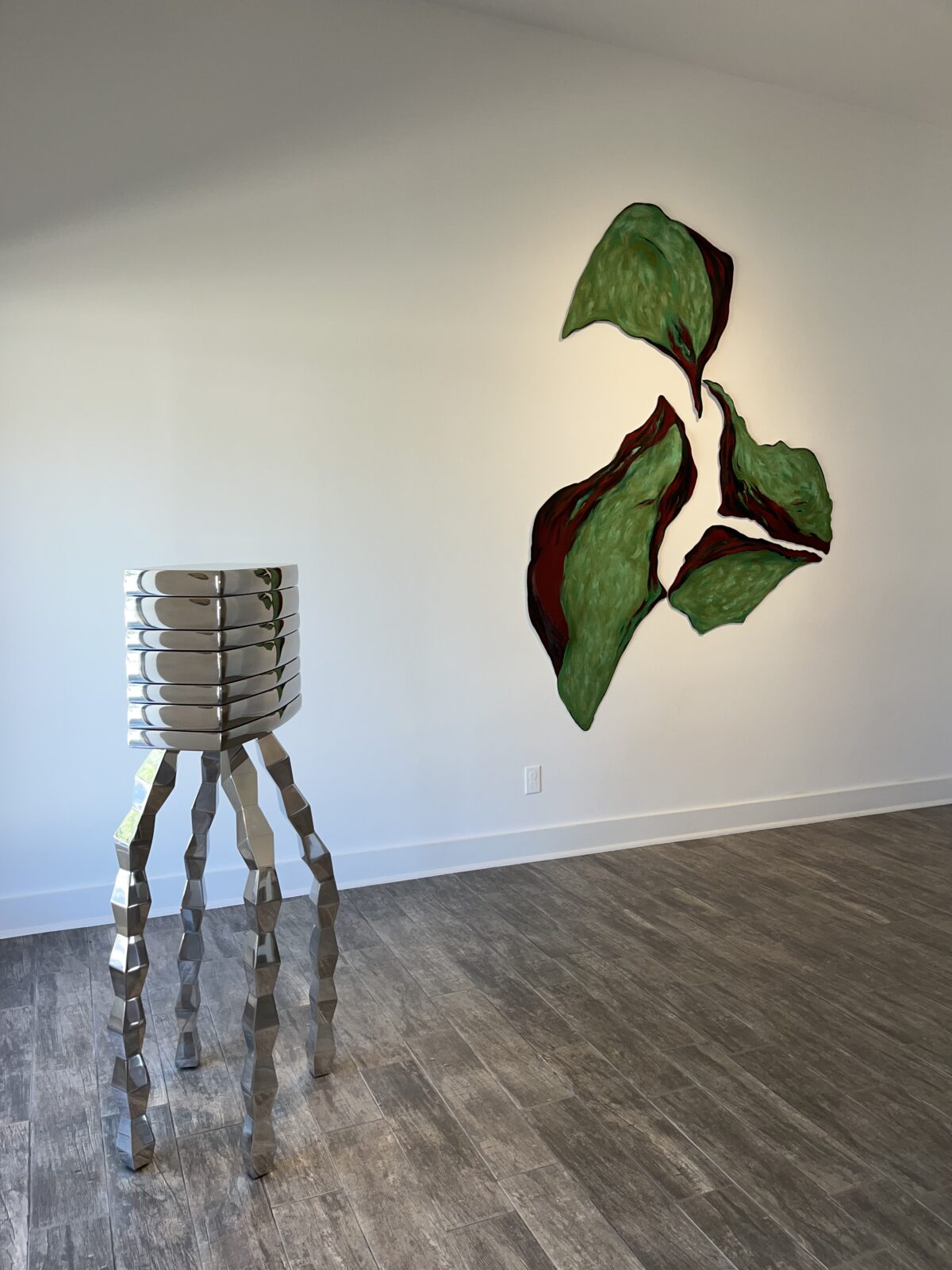
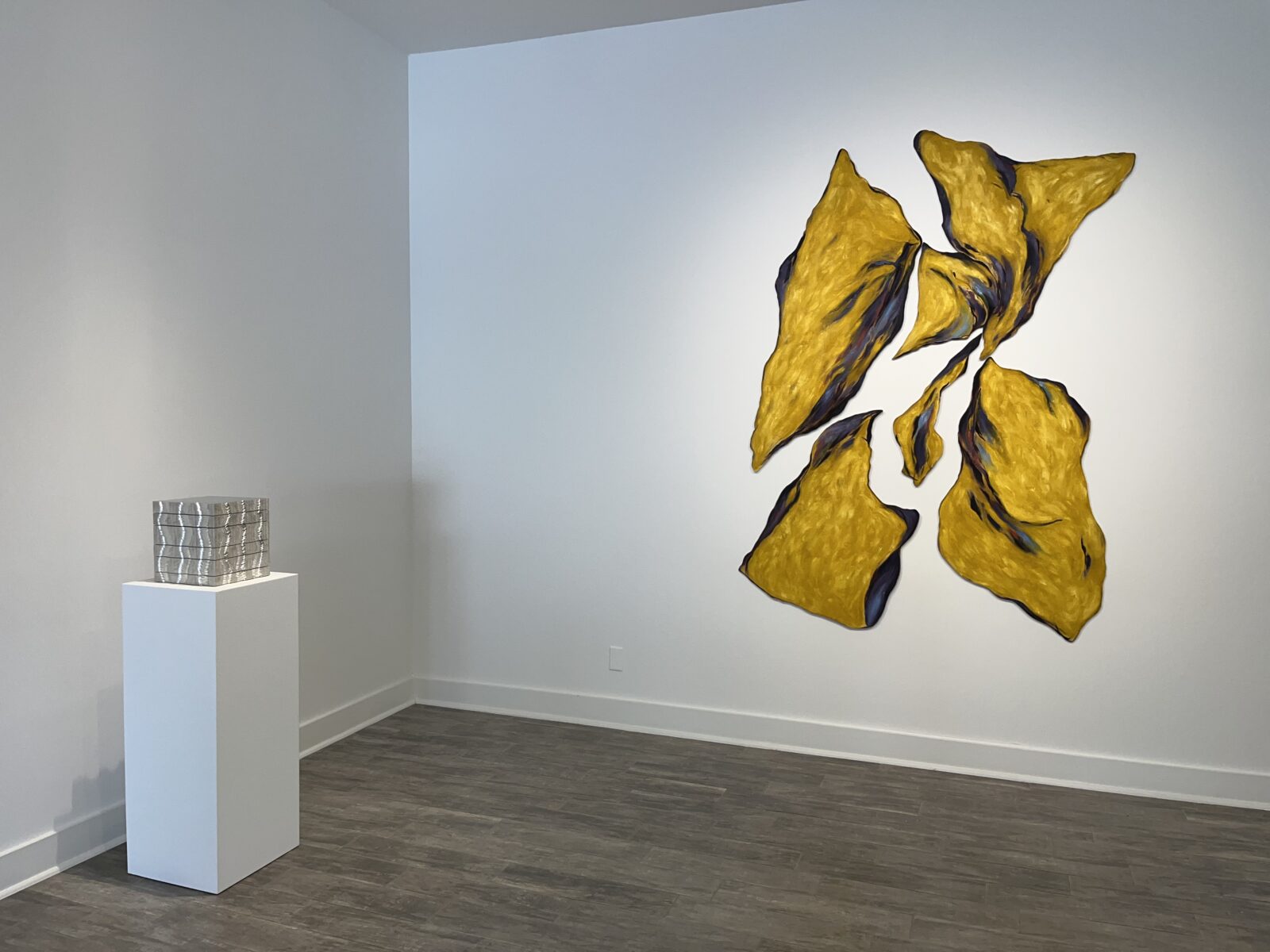
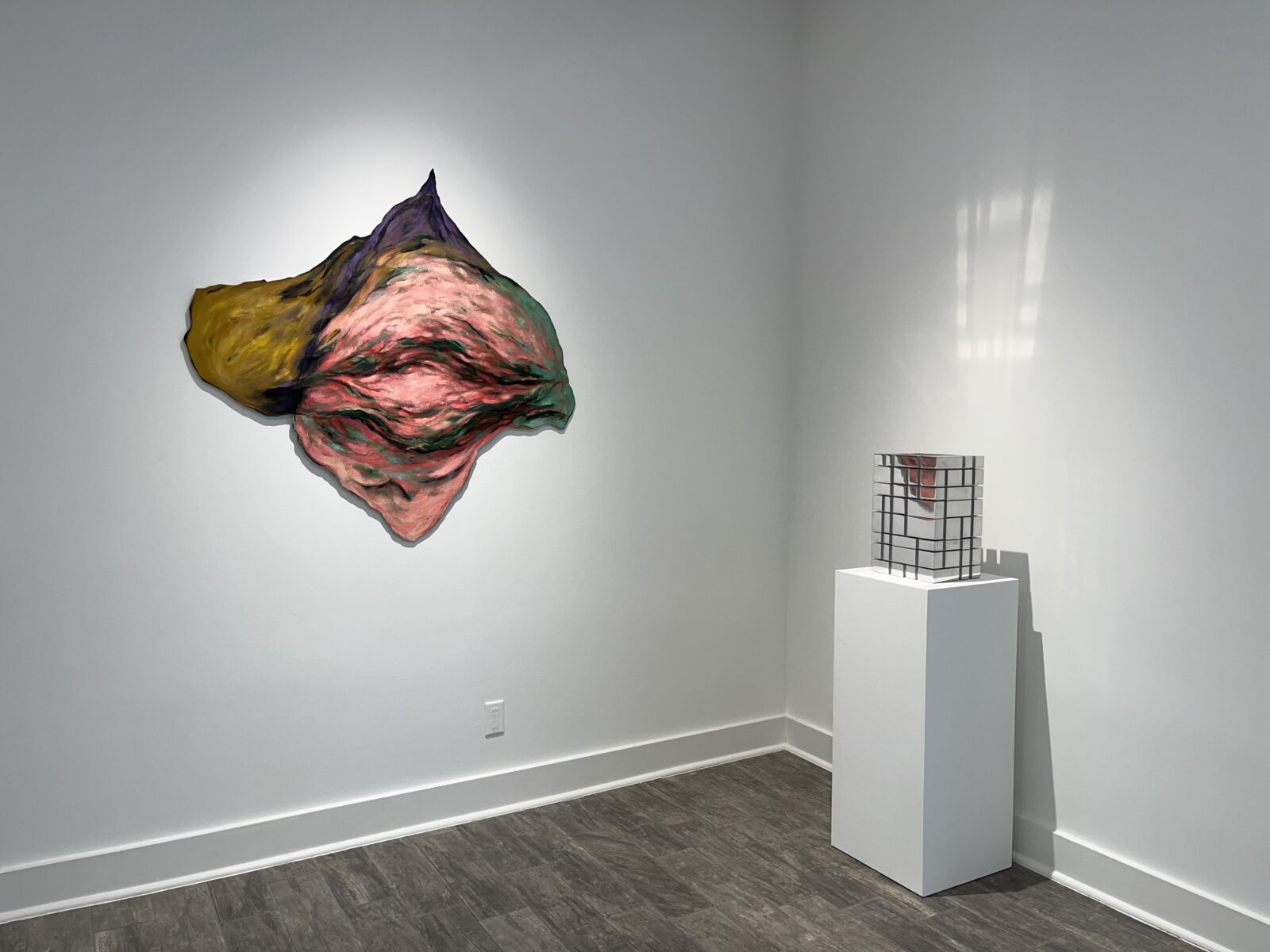
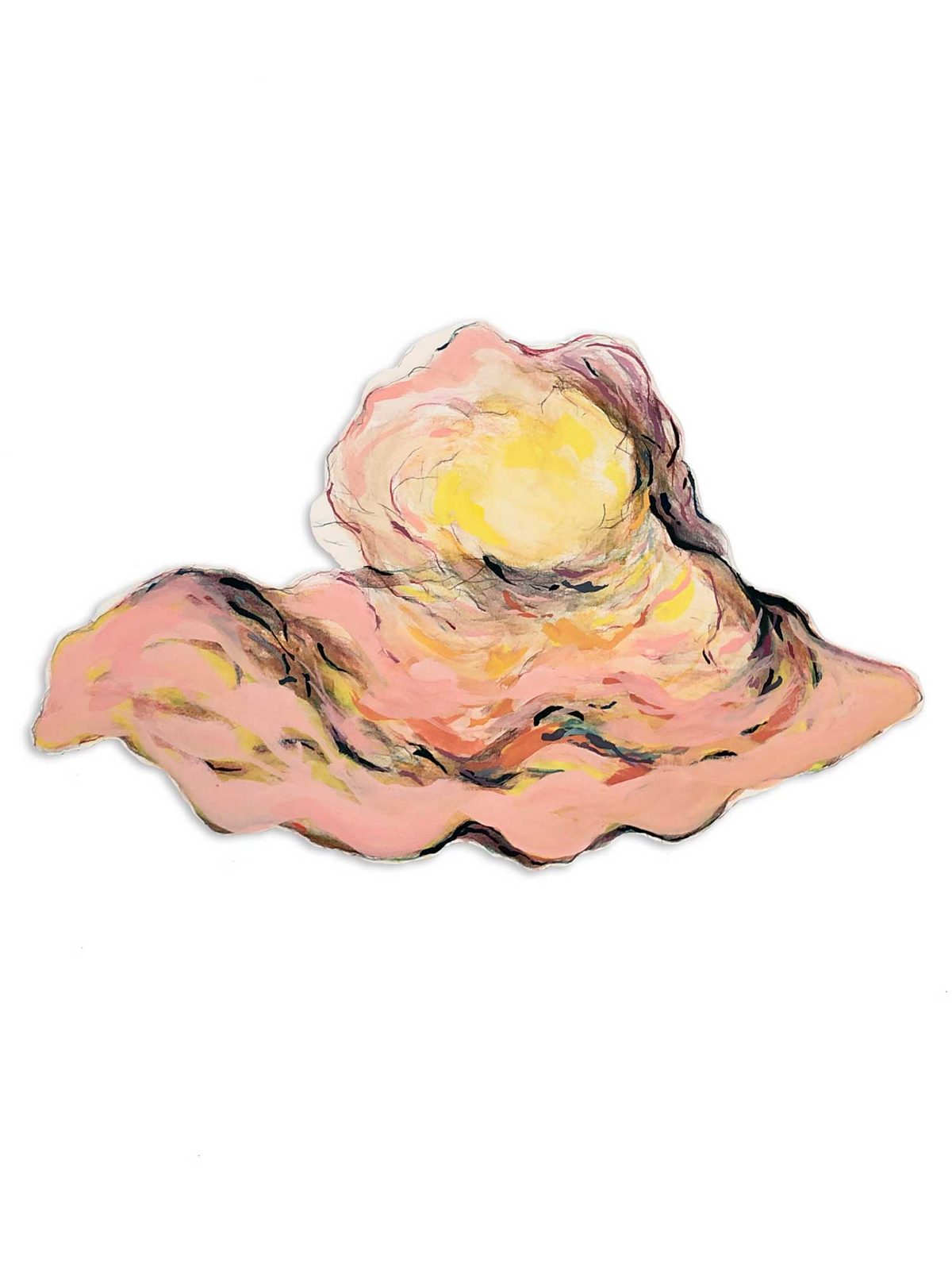
Becky Newsom’s paintings appear to have escaped their frames and taken some of the wall with them. Pink, yellow, turquoise and deep red curl into irregular silhouettes, closer to petals, exposed tissue, or drifting fabric than conventional canvases. At Andrew Durham Gallery, “Enigmatic Objects” pairs Newsom with Scott Madison, two artists who share a material yet seem determined to make it tell opposing stories.
Newsom begins with drawings, then plasma-cuts aluminum into shapes that bend away from the picture plane. Canvas stretches across those armatures, receiving traditional oil paint. The wall participates, too. The resulting forms possess an oddly vulnerable physicality. Color suggests softness. The hidden metal insists otherwise.
Frank Stella’s shaped canvases offer a useful precedent, though Newsom trades their geometric certainty for something more fugitive, almost biological.
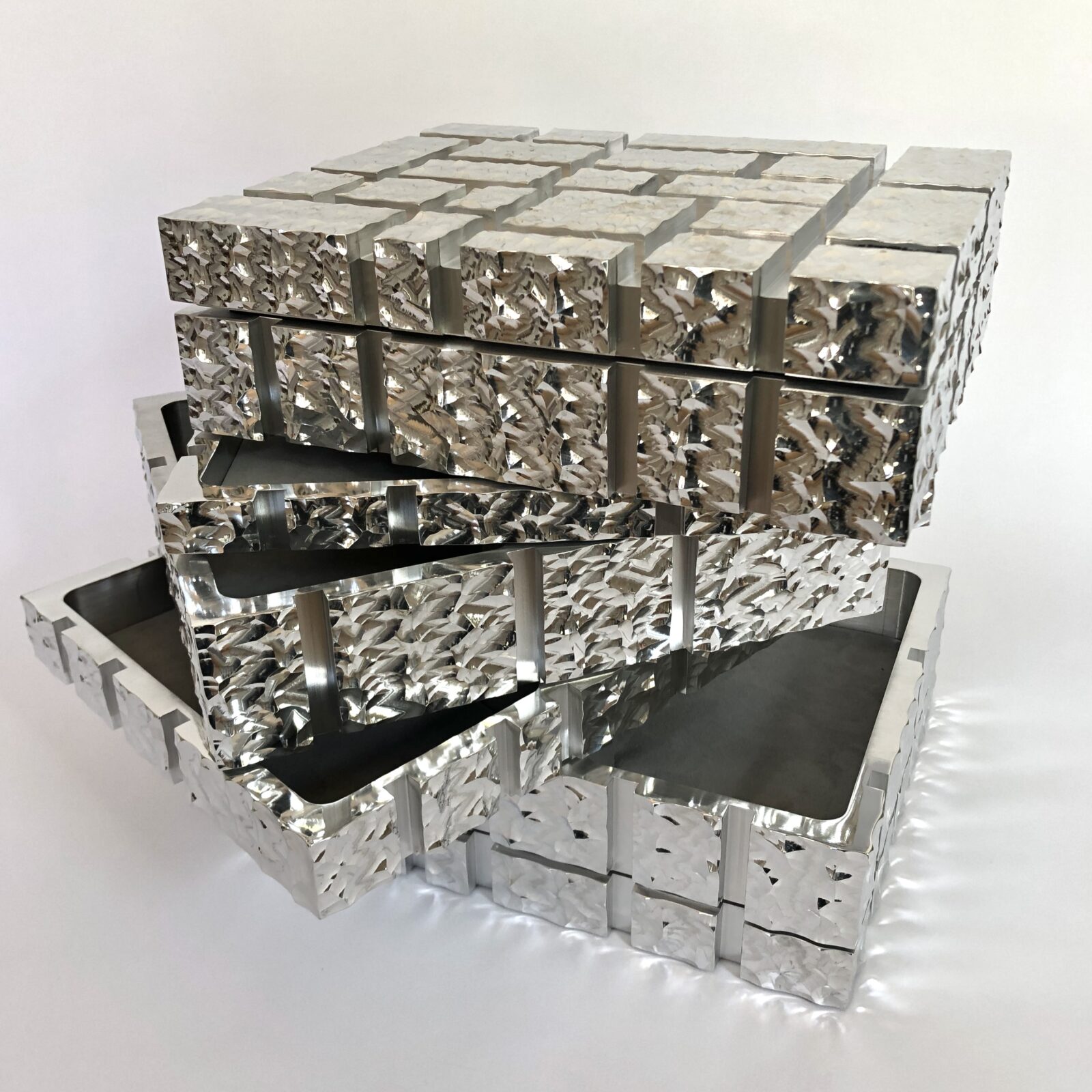
Madison exposes the material Newsom conceals. His polished aluminum cabinets and boxes gleam with the immaculate self-possession of industrial objects, their faceted surfaces catching light in hard, shifting intervals. One rounded construction balances on attenuated legs; another resembles a stack of miniature architectural facades. These objects contain drawers that rotate around internal shafts, yet their function hardly announces itself. Furniture, perhaps. But furniture reluctant to behave.
Where Newsom makes painting protrude into sculpture, Madison makes sculpture flirt with domestic utility. That reversal supplies the exhibition’s real tension. Donald Judd famously brought sculptural rigor to furniture. Madison instead introduces ornament, withheld access, and an almost mischievous excess of fabrication. Neither artist permits the material to dictate a single identity.
The title “Enigmatic Objects” sounds coy until the work explains its precision. Newsom’s surfaces conceal an armature; Madison’s exteriors conceal movement. Both offer things that seem immediately legible, then quietly withdraw their instructions. The mystery arrives not through obscurity, but through the strange distance between what an object shows and what it does.
“Enigmatic Objects,” featuring Becky Newsom and Scott Madison is showing through this Saturday, November 7 at Andrew Durham Gallery, 1821 West Alabama Street. Find more information here. After the show wraps, find works by Becky Newsom and Scott Madison year-round at Andrew Durham Gallery.
Trending
- New Supper Club To Highlight the Hobby Center’s Sweeping $45 Million Makeover — Creating a Dynamic Scene Worthy of Lincoln Center
- A First Look at Beverly’s Downtown — Fort Worth’s Highly Anticipated New Underground Mexican Restaurant
- Fort Worth’s Lone Star Film Festival To Premiere Jimmy Stewart WWII Biopic
- 12 Visionary Houstonians Win Don Quixote Awards and the Julia Ideson Building Serves as the Perfect Stage
- Willie Fritz and Conner Weigman Can Make Houston Football History Without Any Big 12 Help — And Ted Pardee Thinks That Makes Fritz the Clear Coach of the Year










_md.jpg)















_md.jpg)


