
From Spectacle to Silence — Houston’s Powerful “Chinese Lady” at Stages Reckons With 14-Year-Old Girl the U.S. Put on Display
Lloyd Suh's Unsettling Play Asks Who Gets to Be Human
BY Adrienne Jones //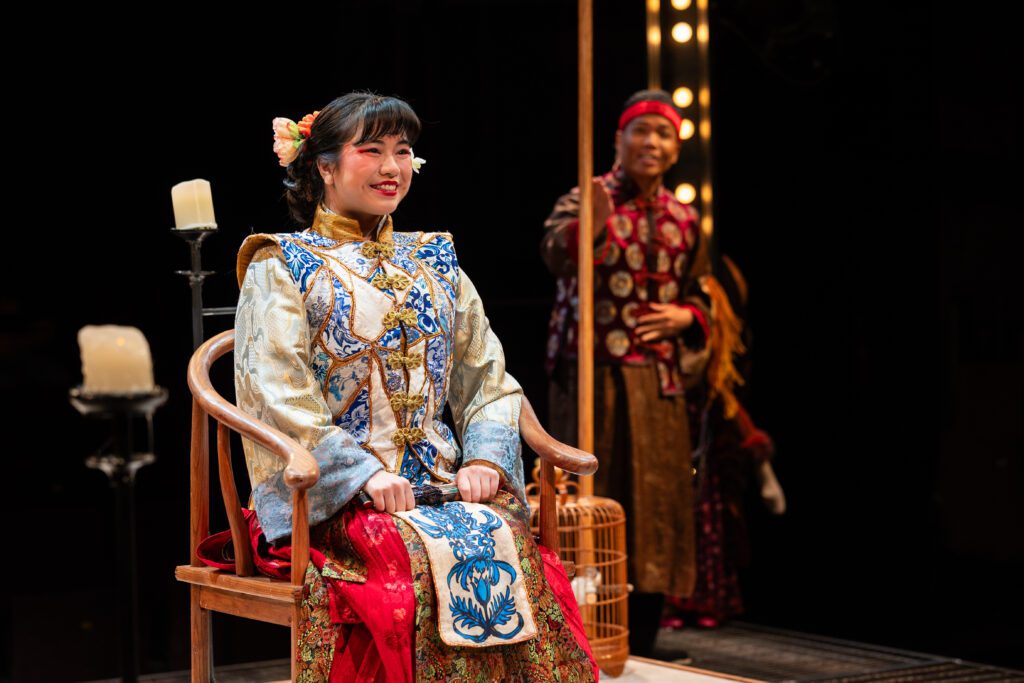
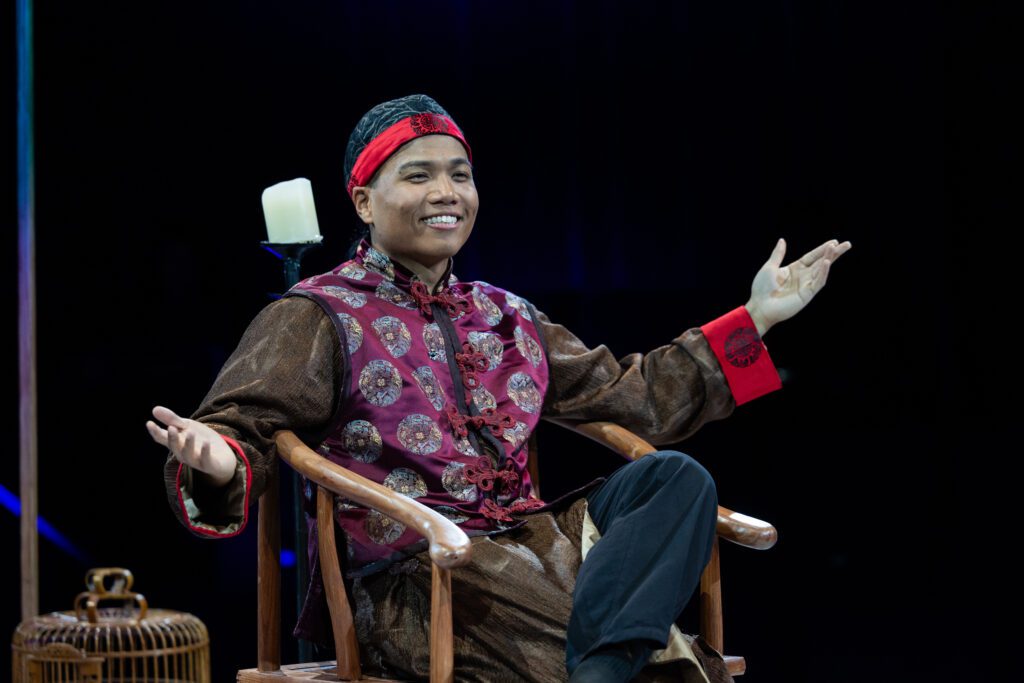
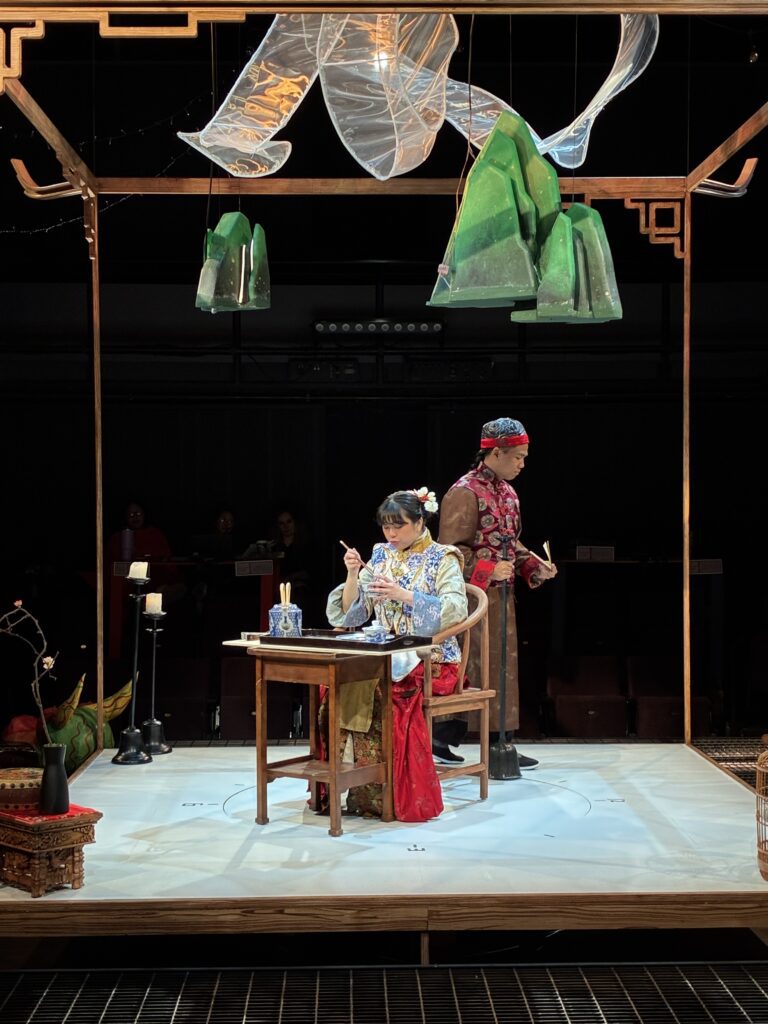
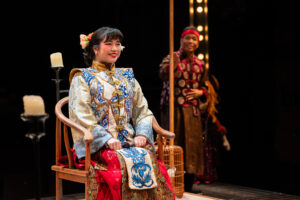
Alexandra Szeto-Joe as Afong Moy and Lloyd Wayne Taylor as Atung in Stages’ “The Chinese Lady.” (Photo by Melissa Taylor)
Almost 200 years ago, the United States turned a 14-year-old Chinese girl into a spectacle and called it entertainment — then discarded her just as easily as it fetishized her. “The Chinese Lady,” running at Houston’s Stages through this Sunday, March 22nd, brings that uncomfortable but necessary history back into focus.
In 1834, the United States was already unraveling. Andrew Jackson was president. Anti-abolitionist rallies broke out in New York City. Anti-Catholic rioters burned the Ursuline Convent in Boston. Meanwhile, the Mexican government imprisoned Stephen Austin in Mexico City, heightening tensions that led to the Texas Revolution the following year.
That same year, 14-year-old Afong Moy arrived in the U.S. with two merchants. Their plan was simple: They would exhibit her to advertise Chinese wares like tea, porcelain and silk. As she entered the roiling amalgam of religion, sectarianism and race that defined North America at the time, she also became the first female Chinese immigrant to the U.S. In 1840, the United States census counted only 11 Chinese people in the entire country.
A Story Told in Stillness at Stages
Playwright Lloyd Suh tells Afong Moy’s story in a taut production of “The Chinese Lady” at Stages. A second-generation Korean American, Suh often explores forgotten Asian and Asian American history in his work. He asks what it means to be seen — or misseen — across cultures.
Instead of a sweeping theatrical display, Suh gives us quiet encounters. The storytelling gradually reveals tensions of identity, belonging and the burden of being seen as the “other.”
“The Chinese Lady” is sparely constructed for two actors: Afong Moy and her male interpreter Atung. Atung serves as a foil, easing the demands of what might otherwise feel like a one-person performance.
The Allen








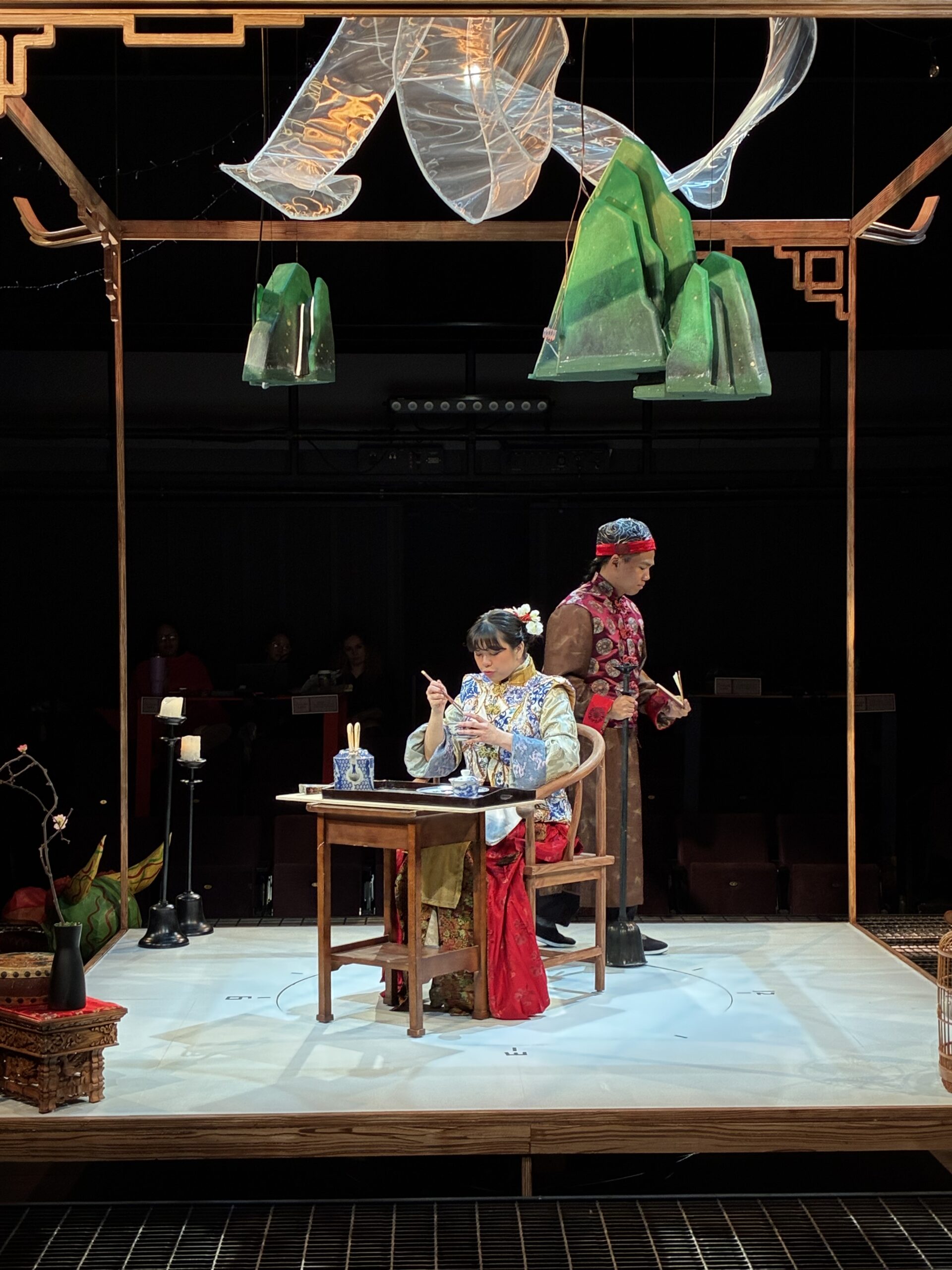
With little scenic action and no supporting cast, the production depends almost entirely on Alexandra Szeto-Joe. As Afong Moy, she sustains the energy and subtlety required across the 100-minute performance without intermission.
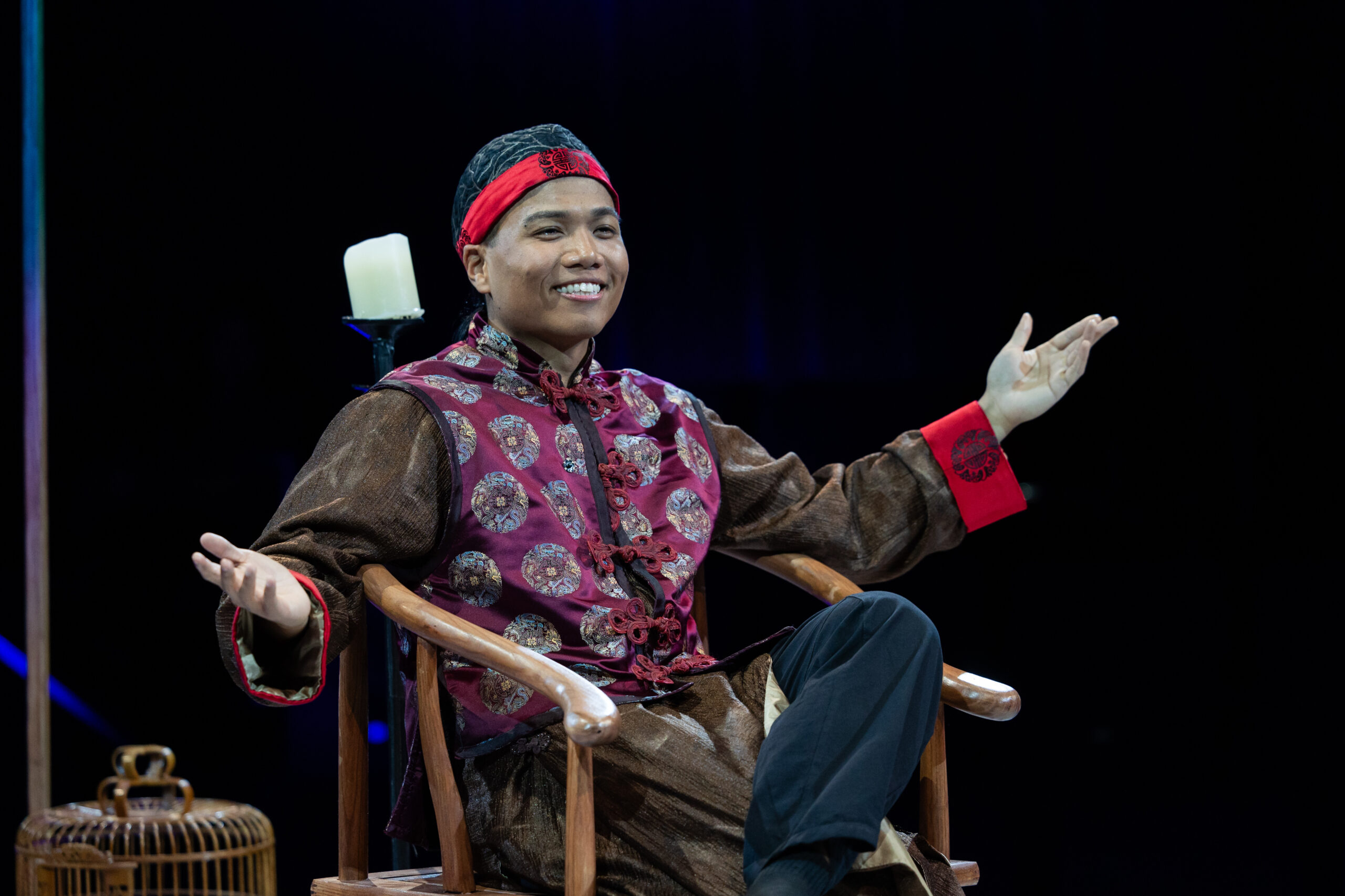
Lloyd Wayne Taylor, as Atung, delivers a quiet master class in professionalism. He takes on one of acting’s most difficult tasks: doing very little while revealing an inner life through understated authority and carefully calibrated restraint.
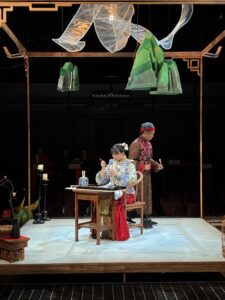
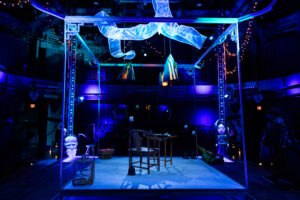
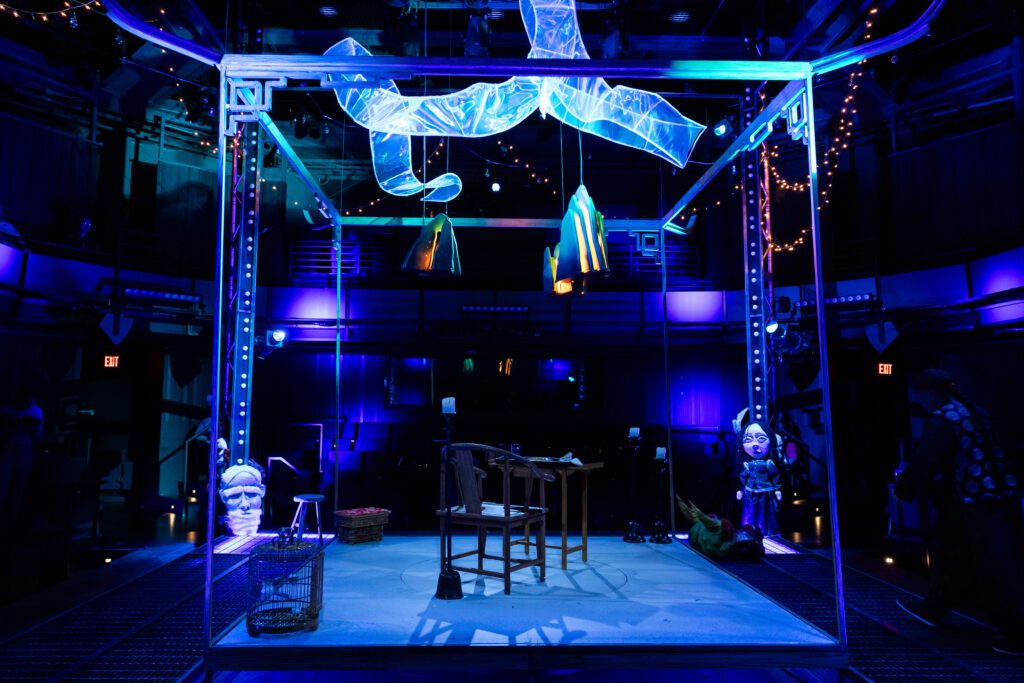
The play moves from Boston to Baltimore to Pittsburgh to Cincinnati. The production places Afong Moy inside a wooden, four-poster box, framing her like an exotic doll. There, she demonstrates eating with chopsticks and walking on bound feet. The structure becomes both stage and cage.
What follows is a tightly constructed interior monologue. It traces her shift from hopeful girlhood to lonely, disappointed womanhood.
The Double Gaze
Suh’s script creates a double gaze. It is both portrait and reflection, like a two-way mirror. While the audience is invited to watch Afong Moy as an other, she looks out at a culture where she is foreign and alone. The effect is unsettling.
At first, Houston audiences may be surprised by her initial acceptance — even enthusiasm — for what she sees as her job.
“It is useful work,” she says. Day after day, she repeats the routine that the U.S. audience pays to see. Over time, it becomes clear that Afong Moy possesses a quiet but unmistakable ambition.
“These white people think I’m simple,” Afong Moy tells herself. “It is my responsibility to show them.”
When the Illusion Breaks
But that control does not last. Soon, something darker emerges: the unsettling realization that the young woman on display is both performer and prisoner. The illusion begins to crack.
With the hindsight of history, we wait for the veil to fall from her eyes. It happens soon enough. Afong Moy’s progression from excitement to disillusionment to struggle becomes the story — and our hearts follow along with her.
“I’m a human being,” she says. “What am I doing here? What do they see when they see me? Maybe we do not belong here.”
Even so, Atung provides a moment of relief from the ever-darkening intensity. He appears to have quietly fallen in love with her. He offers the only moment of natural human tenderness we see. Afong Moy falls into his arms and they walk offstage together.
Yet the moment is uncertain. Was it real? What happened then? We are left to wonder.
“In this dream, my demands are met,” Atung says. “I have no desire for her. Her life depends on that gaze. My dream ends with the physical act of love with Moy.”
The line lingers, casting doubt on the tenderness the audience just witnessed.
A good playwright knows a play cannot remain a tone poem. In an abrupt shift from the growing melancholy restraint, Afong Moy suffers two blows in a system of power where she has none.
By then, she is 29. Word arrives that P.T. Barnum has taken over her management. The theater responds with silent revulsion. Accompanied by Atung, she becomes a curiosity among the sideshow exhibits at Barnum’s American Museum.
At this point, the audience is fully on her side. Still, will something good happen? Will someone come for her? Or might she find a way out?
Instead, years pass, and Afong Moy learns that a younger woman will replace her. She is discarded.
Atung remains. He is not replaced. His usefulness, unlike hers, does not expire.
“It was the honor of my life to serve her for 30 years,” he tells the audience. He bows and exits. The moment raises questions. Did he betray her? Or did he just decide to survive?
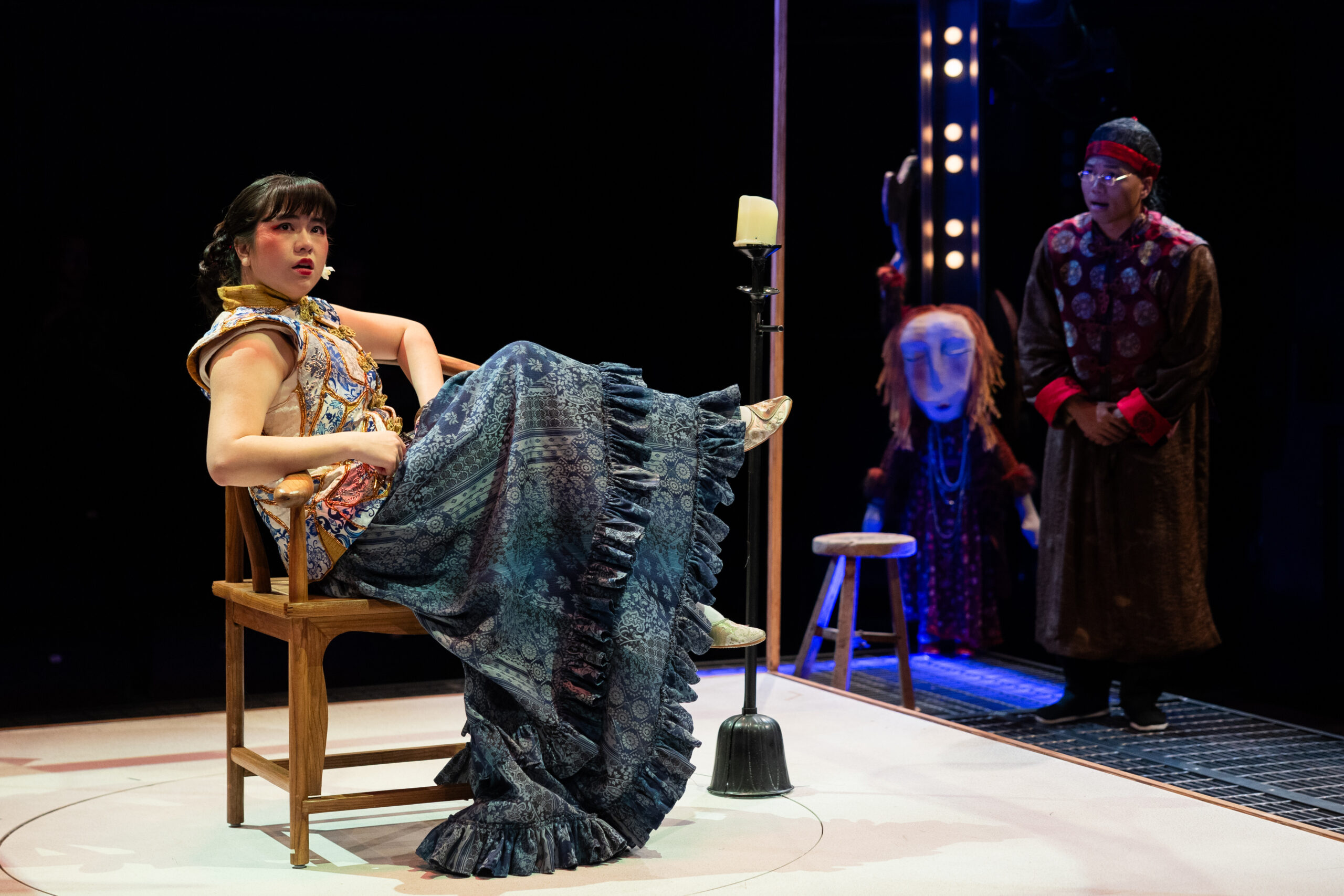
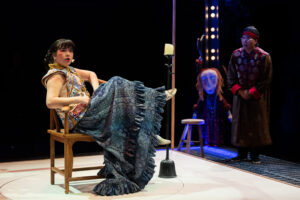
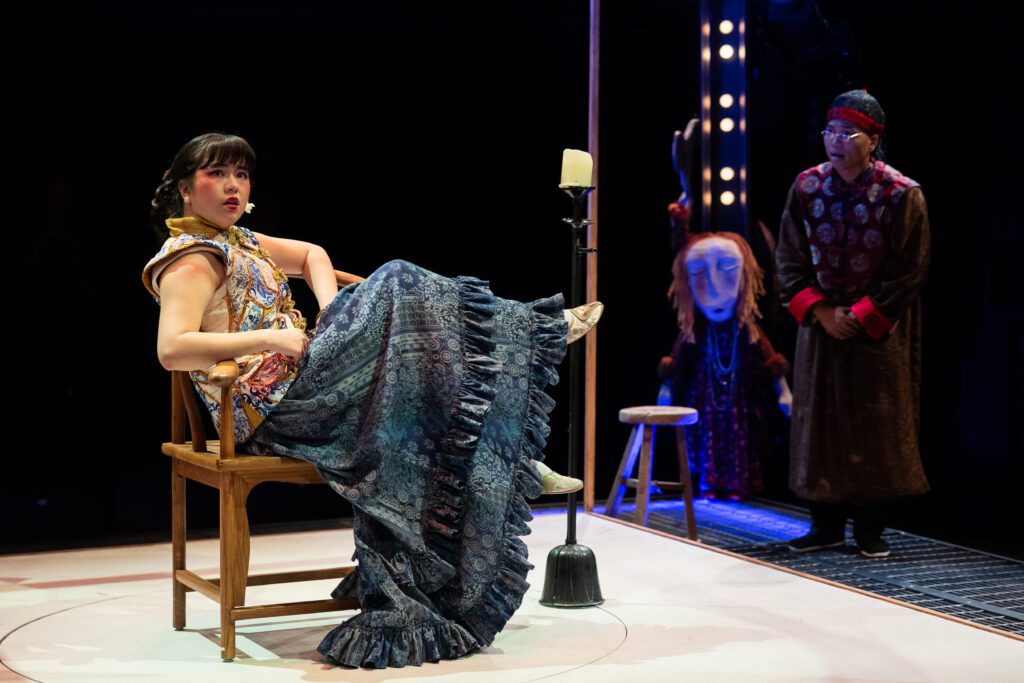
At last, as the play prepares for its final argument, Suh broaches hard questions and makes hard points. Afong Moy is no longer an exhibit. She lounges in Western clothes, a leg draped over the arm of a chair. Her English is fluent, barely accented.
Sandra Zhihan Jia’s stunning costumes demonstrate how powerfully wardrobe can shape character. That shift, made visible onstage, signals the drama building toward its conclusion.
“Thank you for coming to see me, for trying again,” Afong Moy says. “It is easy to forget the past. I don’t want you to forget me.”
Then comes Suh’s last appeal. It lands simply: “Really look at each other.”
After the Curtain
Afong Moy’s story is nearly 200 years old. She declared, “I will walk to Philadelphia where I will ring the bell.” Knowing her feet were bound to just four inches, the image carries weight. You cannot help but root for her.
The Liberty Bell last rang for George Washington’s birthday in 1846. Too cracked to ring again, it is now symbolically tapped 13 times each Fourth of July for the original colonies.
Perhaps one day, it will be tapped a fourteenth time, for all who have come since. For people like Afong Moy, who could be seen but never allowed to belong.
“The Chinese Lady” by Lloyd Suh runs at Houston’s Stages through this Sunday, March 22. Performances are Saturday at 2 pm and 7 pm, with a 2 pm matinee on Sunday. For more information, go here.

_md.png)