
Houston’s New Ismaili Center Is a Stunning Cultural Wonder That’s Open To All — Inside a United States First
Building Bridges In the Community
BY Catherine D. Anspon //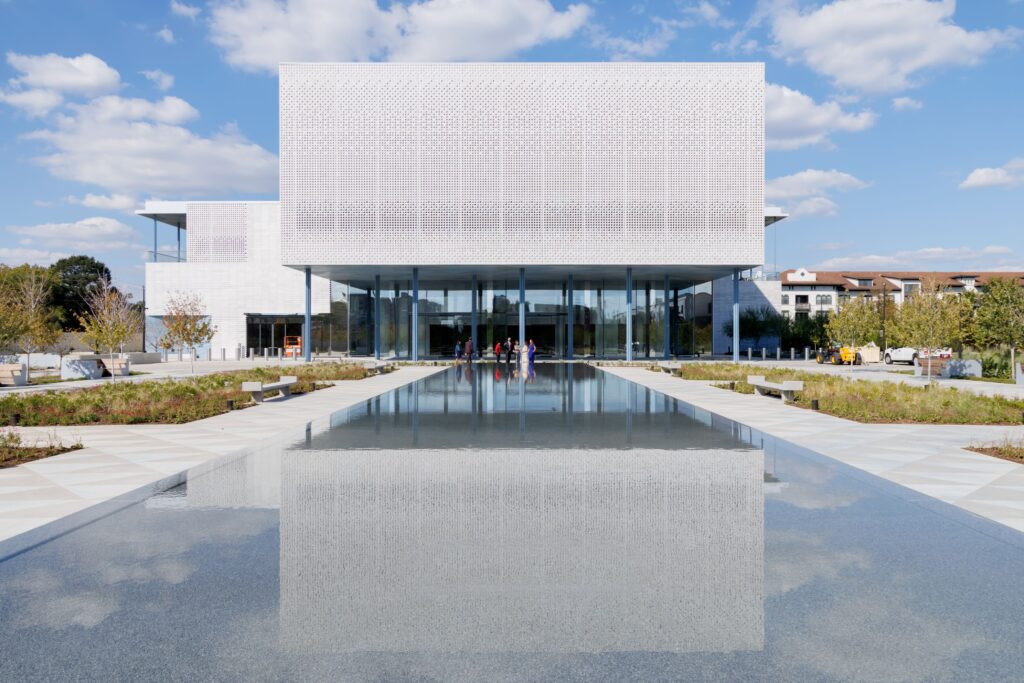
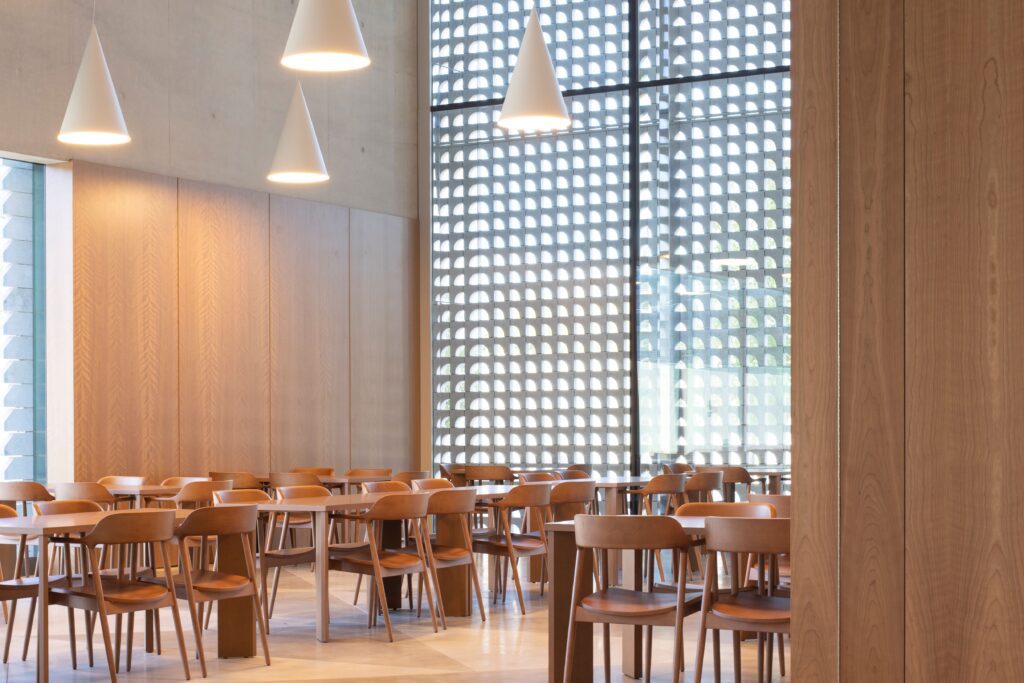
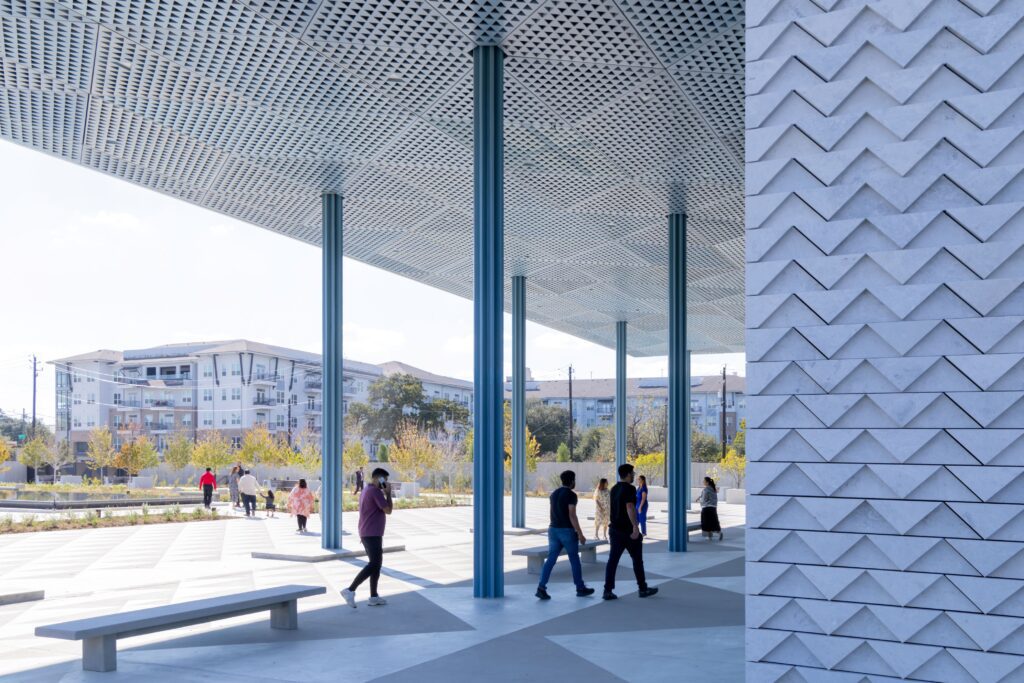

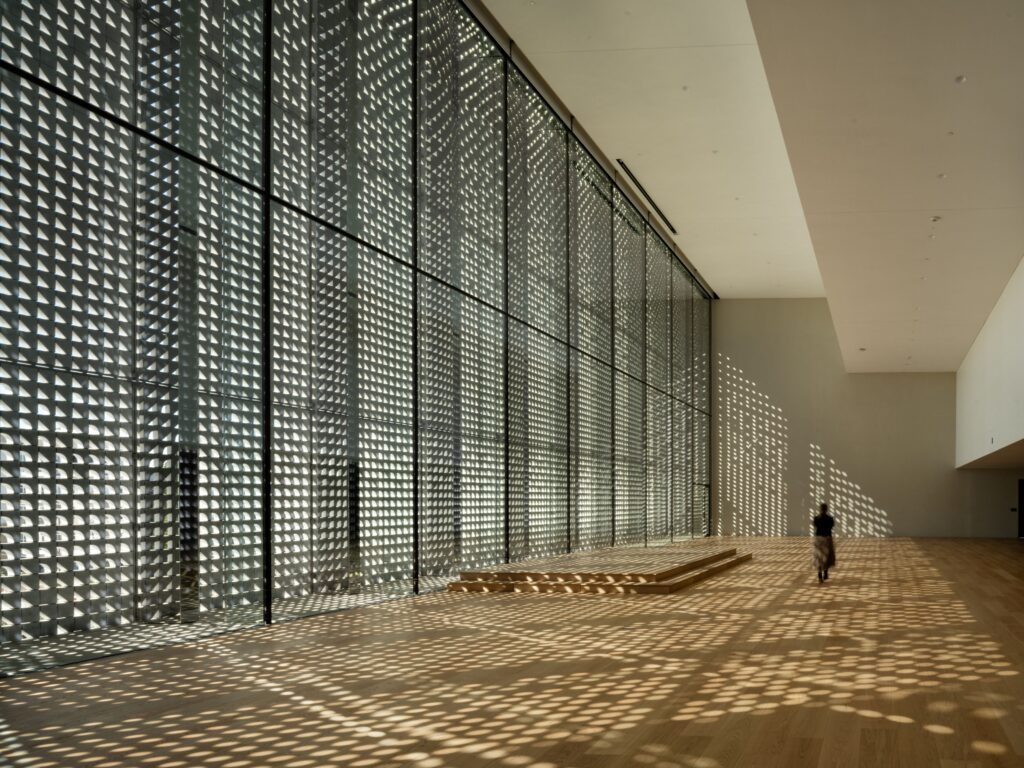

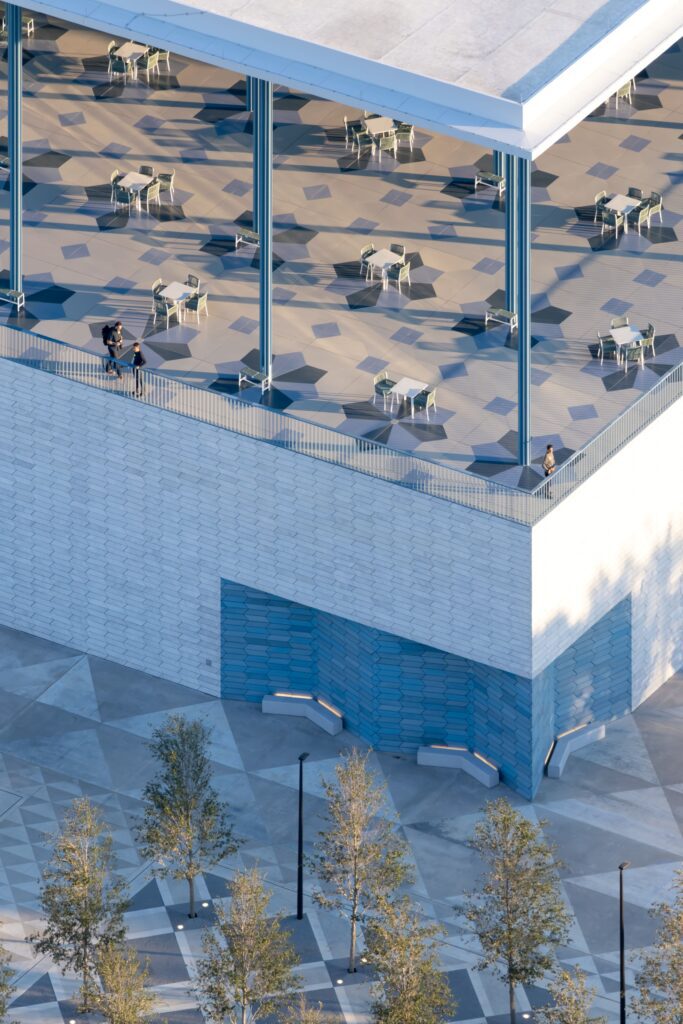
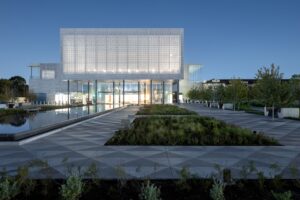
The Reflection Fountain at Ismaili Center, Houston sets the scene for a reflective place. (Photo by Iwan Baan)
A stunning new addition to Houston’s cultural landscape is set to open to the public this Saturday, December 13 — the double-decades-in-the-making Ismaili Center, a grand architectural project led by the late Prince Karim Aga Khan IV (1936 to 2025). The center is coming to life under the leadership of Khan’s son and successor Prince Rahim Aga Khan V. Funding, no doubt a princely —yet undisclosed — sum, came from The Ismaili Imamat, the office occupied by Aga Khan, with some support from the local Ismaili community.
Ismaili Center, Houston — the first such center in the United States and the seventh worldwide — stands as a powerful and graceful emblem of pluralism and connection at 2323 Allen Parkway. While it will serve a place of worship for those of the Shia Ismaili Muslim faith, the center is open to the public.
That includes the elaborate grand opening ceremony set for this Saturday.

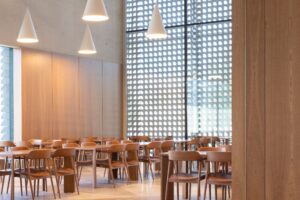
More than 90 percent of its 150,000-square-foot five-story edifice is devoted to building bridges to the community. Plans call for cultural programming, rotating exhibitions (Vanderbilt professor Raheleh Filsoofi, an artist of ceramics and sound, is the inaugural featured artist, in collaboration with his partner Reza Filsoofi, with their exhibition running through spring/summer 2026), a cafe, black-box theater, social hall, classrooms and a permanent art collection assembled by a team of global curators.
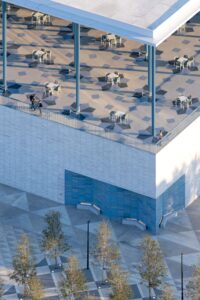
These functions are deployed in an airy and light-filled structure that appears to levitate on its slender columns as it rises on 11 acres south of Buffalo Bayou Park. London-based Farshid Moussavi Architecture won this commission, and its Iranian-born principal has brought forth a work that nods to Islamic architecture while breaking free of tradition in its expansive sense of space and wide, welcoming eivans (verandas).
These verandas, three in number, radiate out from the building, and provide vistas onto America’s fourth largest city while also shielding the visitor from noise and traffic.
The Allen


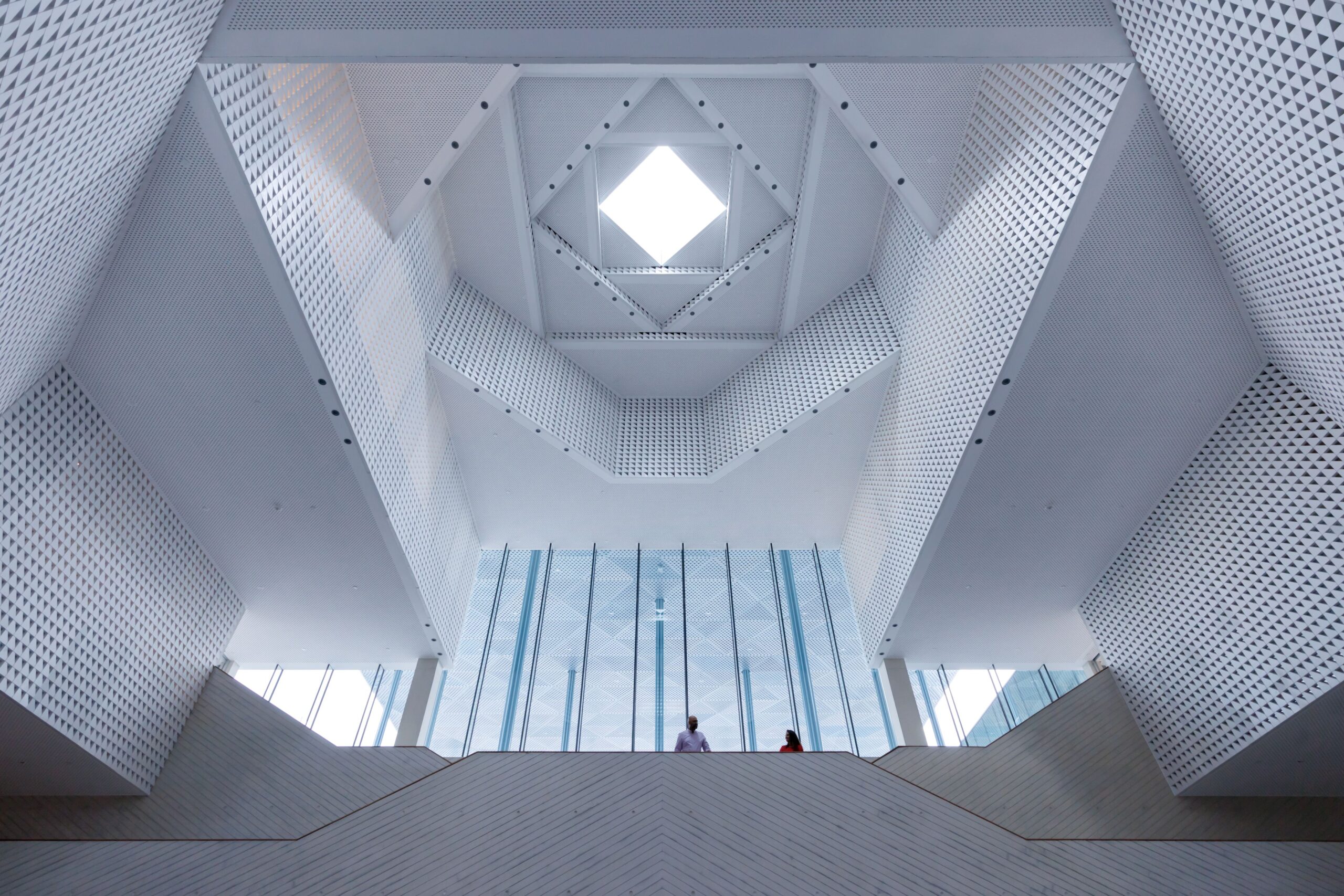
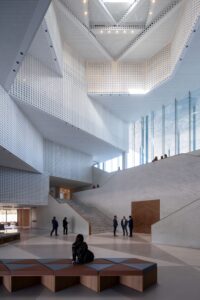
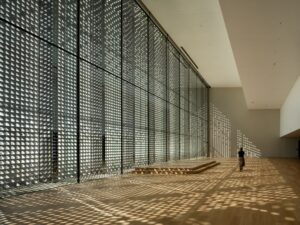
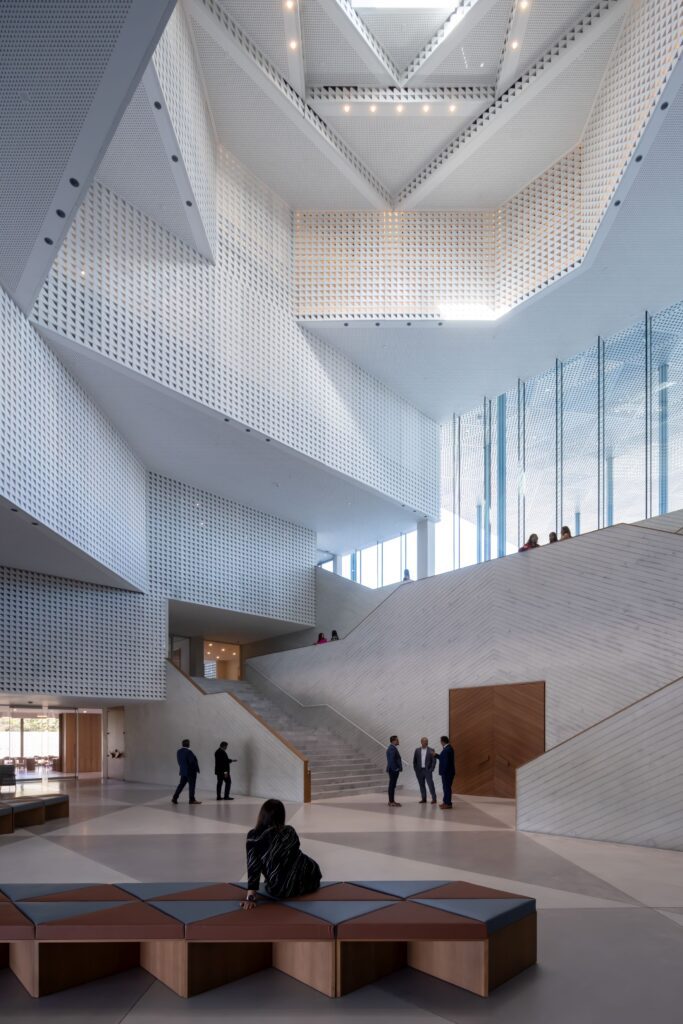
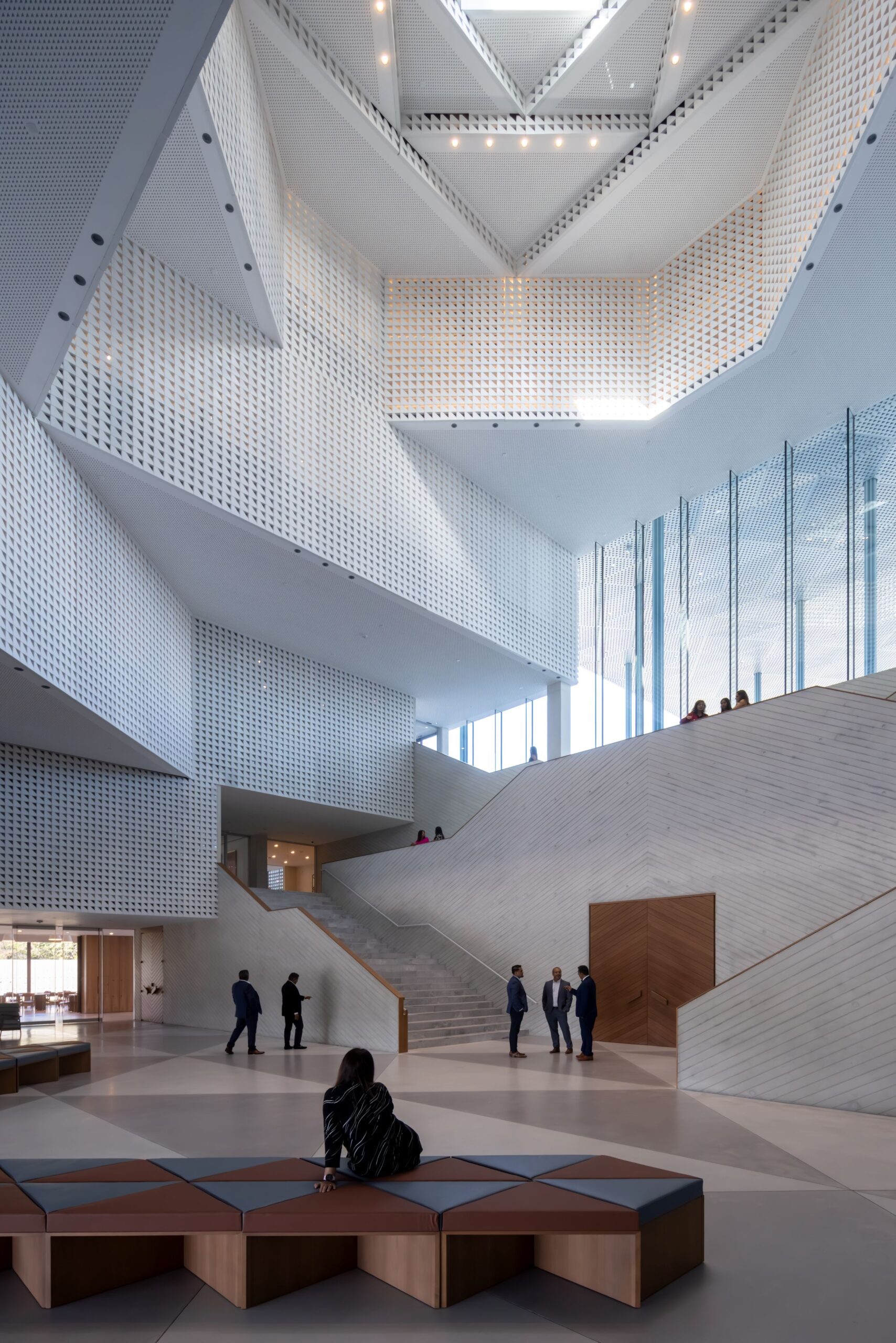
A filigree of patterning — a predominant motif — begins with the Ismaili Center’s façade, which is punctuated by intricate stone tiles that enliven and articulate the surface. The interiors continue this interplay of light, establishing a dialogue between solid and void while balancing the generous public areas with private zones. Subtle details abound, including the highly carved panels bearing calligraphy in the Jamatkhana (prayer hall), one of the final projects of Houston custom millwork firm Brochsteins.
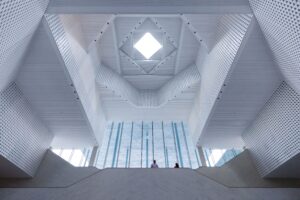
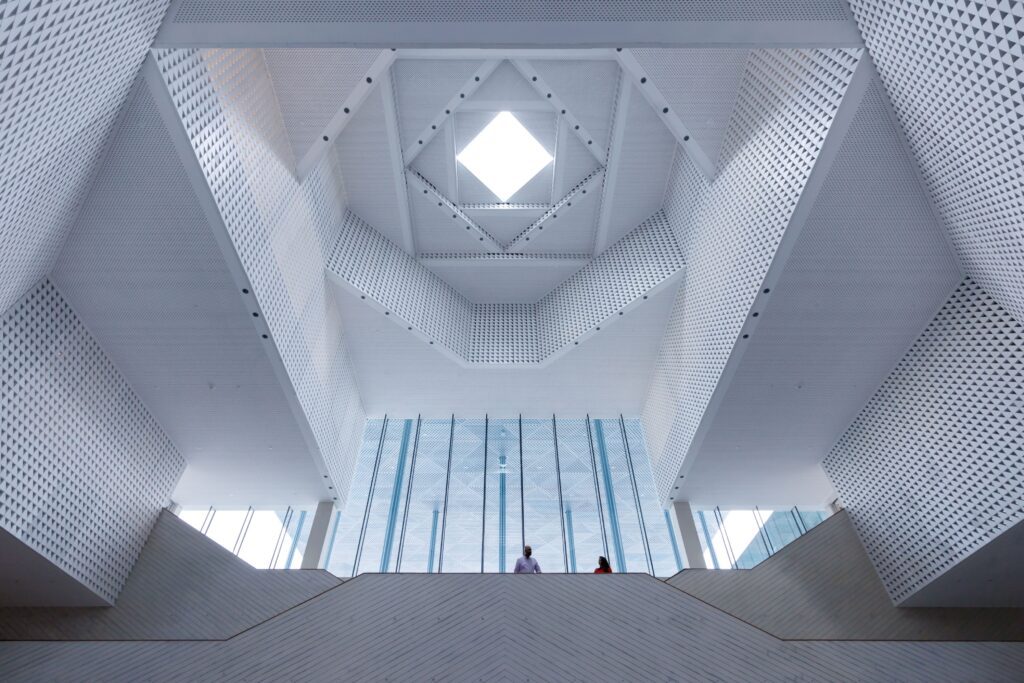
A literal high point of Ismaili Center, Houston is the soaring atrium, capped by a dramatic oculus that suffuses the interiors below with radiance. The center is also an engineering marvel, realized in collaboration with London-headquartered AKT II structural engineers.
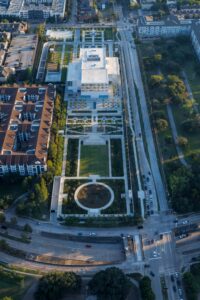
The finishing flourishes of the Ismaili Center are its gardens, distinguished by courtyards, fountains, reflecting pools, promenades and terraces that gently drop in elevation to the plain of the Buffalo Bayou Park. Internationally noted landscape architect Thomas Woltz of Nelson Byrd Woltz (Memorial Park, Rothko Chapel, Rice University) was tapped for this high-profile project, marking his fourth commission for the Aga Khan Development Network.
The relationship began 14 years ago when His Highness Prince Karim Aga Khan IV asked the firm to study storied Islamic gardens from Spain to Egypt and India.
For the Ismaili Center, Houston, Woltz looks to place incorporating elements from Texas’ desert, prairie and Gulf Coast into the mix. Paddle cactus and agaves, the Texas redbud, Southern live oak and Sweet Bay magnolia are among the species. In the coming months and years, when the trees and plantings take root, and the creeping fig climbs over garden walls, Woltz’s vision will provide an oasis from which to experience Moussavi’s elegant, and uplifting architecture.
Houston’s never had anything quite like this before.
Ismaili Center Houston is opening this Saturday, December 13, with guided tours from 9 am to 4 pm, and activities from 10 am to 2 pm. Get more information here.

_md.png)