
For the Love Of Cheese — How To Make Your Own Ricotta at Home
Now We're Cooking
BY James Brock //

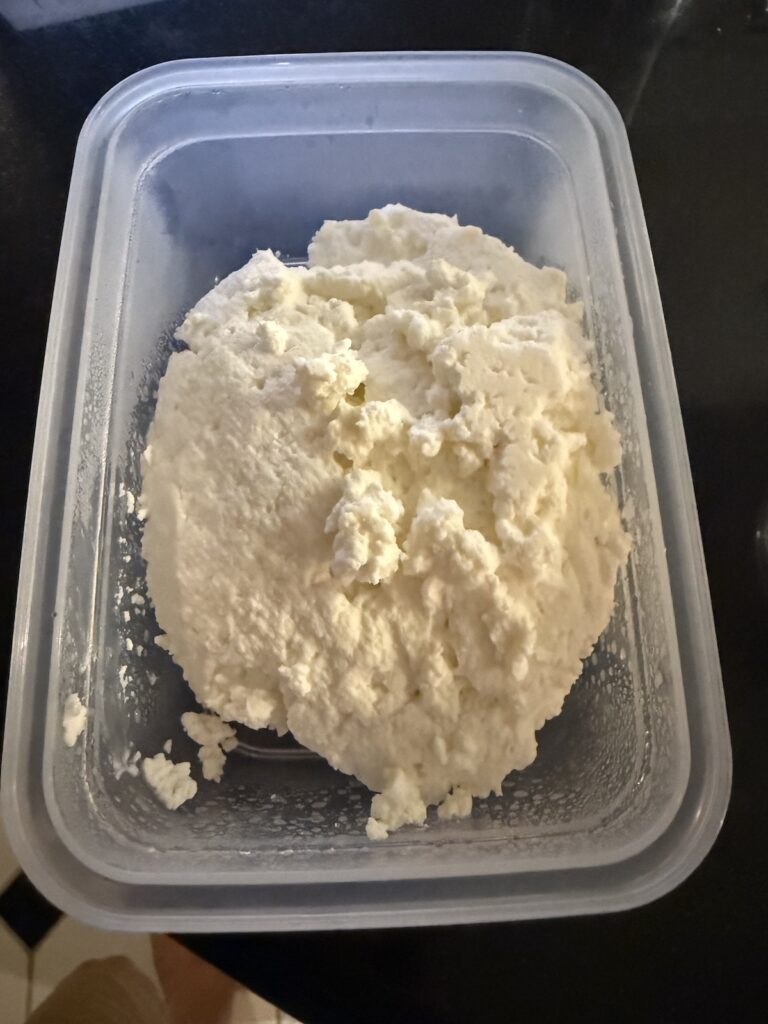
Ricotta is versatile and easy to make. Here is my preparation for a pasta filling.
Cheese is one of life’s wonders and necessities. Many are the foods I love, but cheese? I am nothing but passionate about this wonder, this culinary miracle that comes in a multitude of shapes and sizes and textures, not to mention flavor profiles and countries and regions of origin.
My study of and appreciation for “honest” cheese began when I was a teen living in Germany and put a piece of Cambozola in my mouth. The creaminess melded with the distinct tangy flavor (there in part due to the combination of Penicillium camemberti and Penicillium roqueforti that goes into this creation), and I was forever hooked.
From there, wherever I have traveled or called home, cheese has been a constant. France, of course, offers me much, as do Italy and Switzerland. Germany — where I attended high school and where my serious cheese journey began — will always be one of the centers of my tasting adventures. I recall still a piece of rauchkäse, a smoky, salty, semi-soft cow’s milk cheese that hails from Bavaria, I tasted near Munich years ago. Smoked with juniper and birch, it was delicious.
Culinary Curds
Ricotta is another cheese (technically, it is not a true cheese, because it is made from whey, not curdled milk) I love. But at first glance it is nothing about which to get excited, at least visually. No color except white, no visible mold or veining. And most ricotta available in regular grocery stores in the United States is bland and rather pedestrian, lacking in complexity and nuance. Unless you have access to a small, mom-and-pop cheesemaker whose inventory includes fresh ricotta, there is a good chance that you’ve never had a quality batch of it.
But you don’t have to venture to Italy or make a special trip to your local cheesemonger (though do visit your cheesemonger) to get your hands on decent ricotta. Instead do as I do and make it yourself. It’s not difficult, and you can control every aspect of the process, including creating your bespoke texture, adding flavor notes and choosing the type of milk used.
First, a note. Traditional cheesemakers — in this case I am referring to those who plied (and ply) their trade in Italy — have for centuries used the whey left over from the production of, say, a pecorino or mozzarella, to make ricotta. The whey naturally contains a slight amount of acid, which is necessary to make the cheese. Ricotta means, literally, re-cooked, and that’s how it’s done. For a look at one such cheesemaker read Nancy Harmon Jenkins’ profile of Massimiliano Mungilli, whose family has been making raw-milk cheese in northern Tuscany for generations.
The Allen








At home, of course, most of us do not make fresh pecorino or mozzarella, so that whey will be lacking. However, you can make a cheese that is very similar to ricotta, one perfect for, among other things, a pizza topping, a breakfast dish served with fruit and honey, a sandwich spread, or a salad ingredient, not to mention cannoli, lasagna and cheesecake. I’ve made hundreds of batches this way over the years, and it’s simple and fun and results in a great product, suitable for both savory and sweet dishes.
Note: Some refer to this cheese as riccottone, and it does taste different from traditional ricotta, but it is delicious nonetheless.

According to most sources, ricotta has been made in Italy since the Bronze Age (3300 BC to 1200 BC). Some historians speak of ancient Egyptian influence, and it appears that Arabs in Sicily also appreciated the cheese. In the literary-myth world, once imagined we can’t forget the sight of Polyphemus’ cave splendidly stocked with cheese, milk and wicker baskets used to strain curds:
“Soon we came to the cave, and found him absent, he was grazing his well-fed flocks in the fields. So we went inside and marvelled at its contents. There were baskets full of cheeses, and pens crowded with lambs and kids, each flock with its firstlings, later ones, and newborn separated. The pails and bowls for milking, all solidly made, were swimming with whey. At first my men begged me to take some cheeses and go, then to drive the lambs and kids from the pens down to the swift ship and set sail. But I would not listen, though it would have been best, wishing to see the giant himself, and test his hospitality. When he did appear he proved no joy to my men.”
No matter its origins, ricotta has proved popular, versatile and beloved. I use it to make cheesecakes, and I use it on pizza night, and it has gone into myriad other dishes I’ve made. I’ve modified my method of making it over the years, and have settled on one that satisfies my guests and me every time.
Delicious Simplicity
How’s this for simplicity: You need a milk (not ultra-pasteurized) and an acid. That’s it. Salt is optional, though I use it often, depending on what the cheese is destined for. Start with half a gallon of whole milk. Add it to a heavy-bottomed pot and, over medium heat, raise the milk’s temperature to around 180 degrees Fahrenheit, stirring occasionally.
When your milk reaches that temperature it’s time to add the acid, which can be in the form of distilled white vinegar or fresh lemon juice. The former is more neutral, while the latter can impart a touch of sweetness and/or citrus flavor. The amount for both types of acid is around 42 milliliters, or two tablespoons plus 2.5 teaspoons. Add whichever you chose and stir for 20 seconds to mix. The second curds begin forming is when you stop stirring.
Now for the important step: Don’t stir again for 20 minutes, and maintain the temperature of your creation between 175 degrees and 185 degrees. Do not panic if you stray outside of that zone by a few degrees, but do endeavor to stay within that area. My method involves turning off the heat when I hit the sweet spot, then, using an instant-read thermometer, turning it back on when the temperature nears 175 to maintain my envelope. Do this for 20 minutes and you are close to making your first batch of homemade cheese.
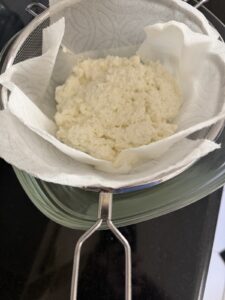
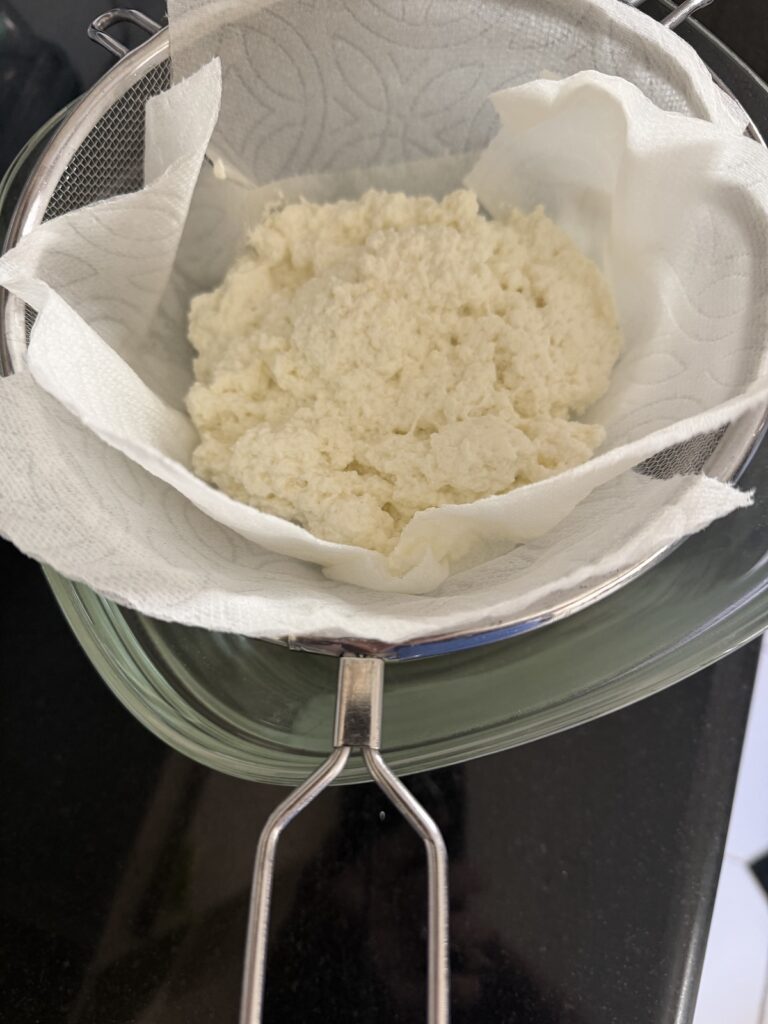
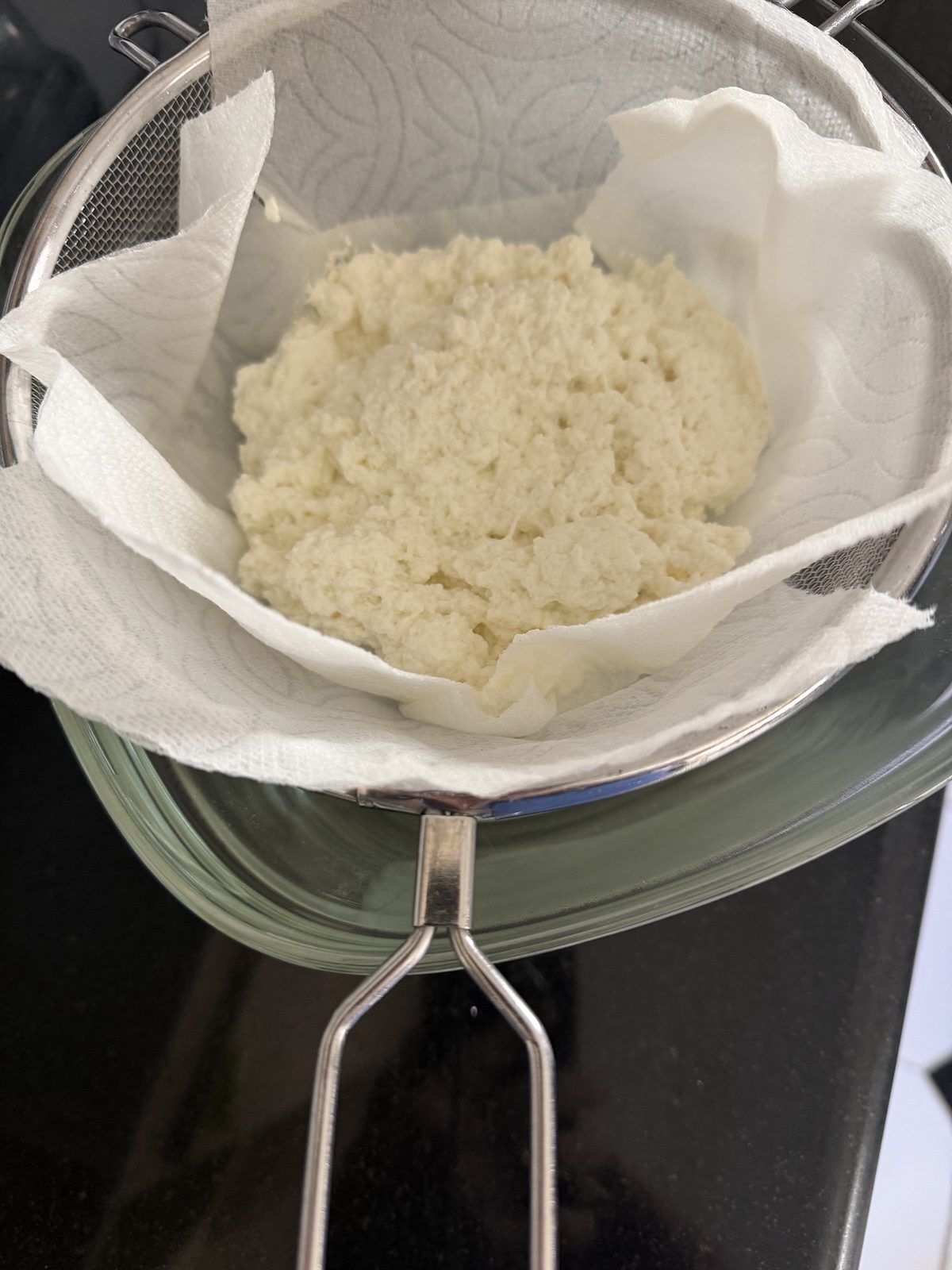
Next, get a slotted spoon and lift the curds from the pot of milk and place them gently into a strainer lined with cheesecloth or paper towels. Make sure to not leave any curds behind, and strain for as long as you desire. If a drier product is your goal, strain longer. I find that 15 to 20 minutes is a good time. Use your intuition, and keep in mind how you plan to use the batch. Click here for a video of the process.
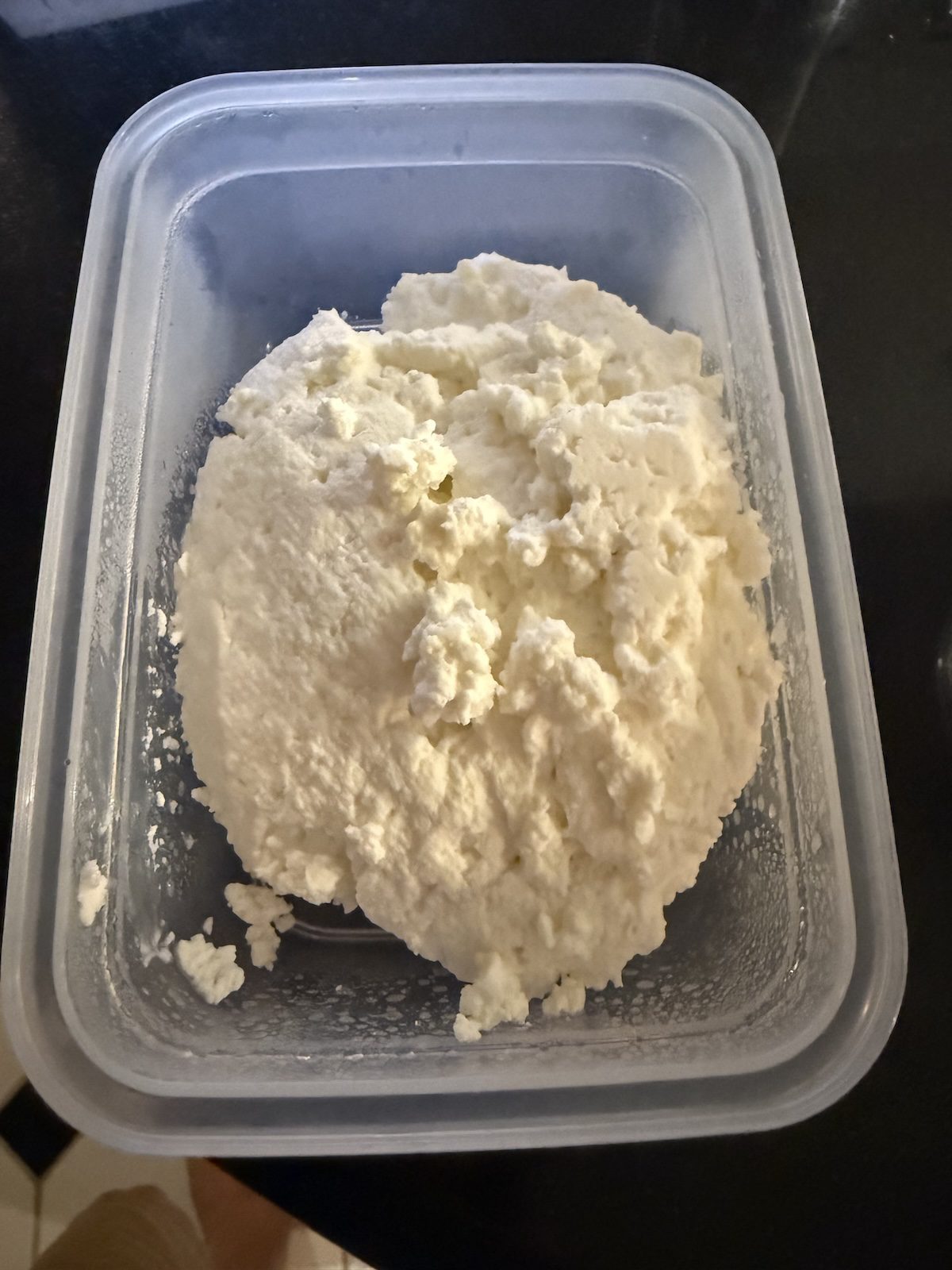
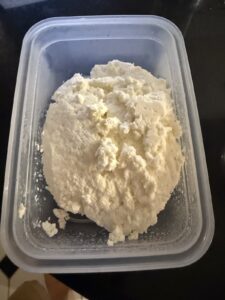
I most often use my cheese on the same day I cook it, but you can make it in advance and keep it in an airtight container in your refrigerator. It is best consumed within two days.
Homemade Ricotta
1/2 gallon whole milk
2 tablespoons plus 2.5 teaspoons distilled white vinegar or fresh lemon juice
pinch salt (optional)
1. Bring milk to 180 degrees Fahrenheit in heavy-bottomed pot over medium heat, adding salt if using. When milk reaches 180 degrees add acid and stir for 10 seconds. Once curds form — and this happens quickly — stop stirring.
2. Do not stir again. Maintain the temperature of your cheese between 175 and 185 degrees for 20 minutes.
3. Line a strainer with cheesecloth or paper towels and transfer curds to the strainer using a slotted spoon. Drain to your desired moisture level, depending on how you intend to use your cheese. Keep for 2 days in an airtight container in the refrigerator.
James Brock is a writer, journalist and cook. More of his work can be found at Mise en Place.