The Billionaires’ Wine Maker — Jordan Jeffries Makes the Most Of His Settings and Knows Special Bottles Aren’t Just For Saving
Lewis Cellars' Wines With Big Personalities
By James Brock //
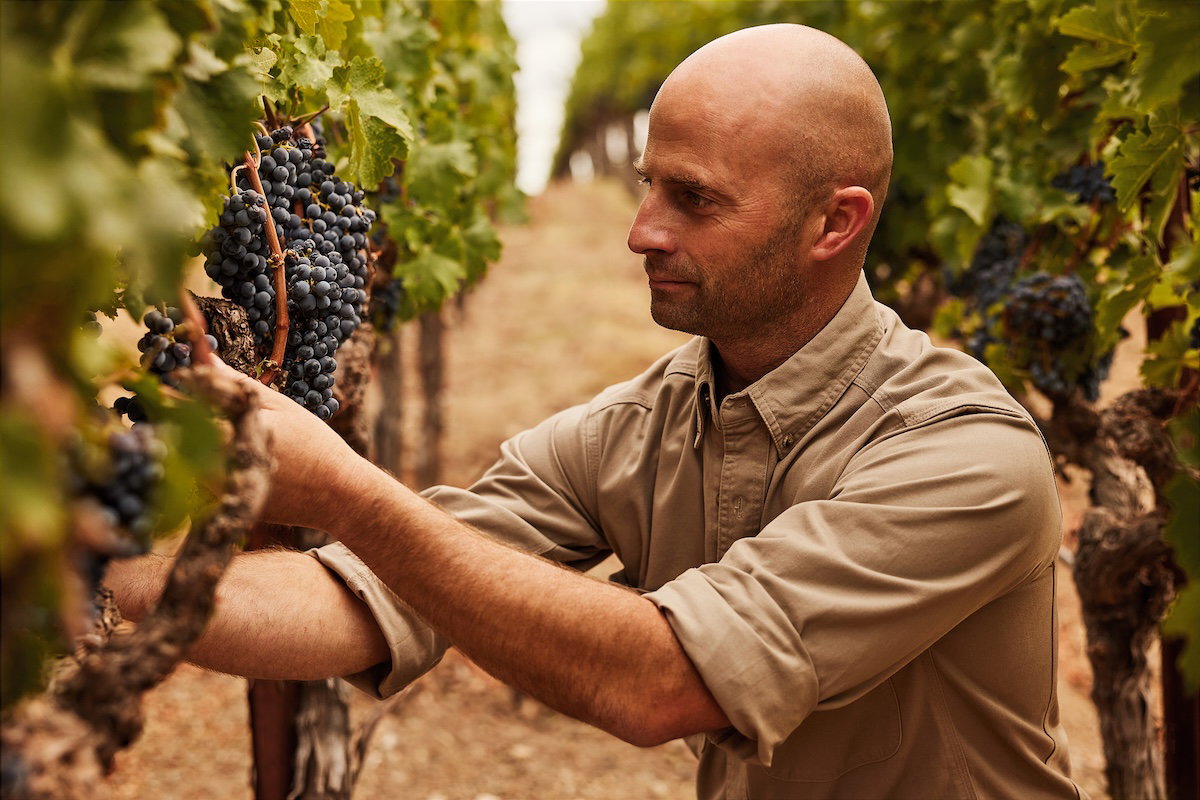
I love talking about wine with people who share my passion for it. We open bottles, we trade stories about travel and soil types, terroir and residual sugar, and we talk of taste and food and restaurants. We recommend wines to one another, we drink, and we learn a lot.
In Wine Talk, I introduce you to friends, acquaintances, and people I encounter as I make my way around the world, from Houston to Mexico City, Los Angeles to Burgundy, and other locales far and near, individuals who love and respect wine as much as I do, who live to taste, who farm and make wine. Whether my subject is a collector, a winemaker, a chef, a sommelier, a buyer, a grower, or simply an enthusiastic drinker of wine, you’ll appreciate their insight. I hope you’ll learn something from them as well.
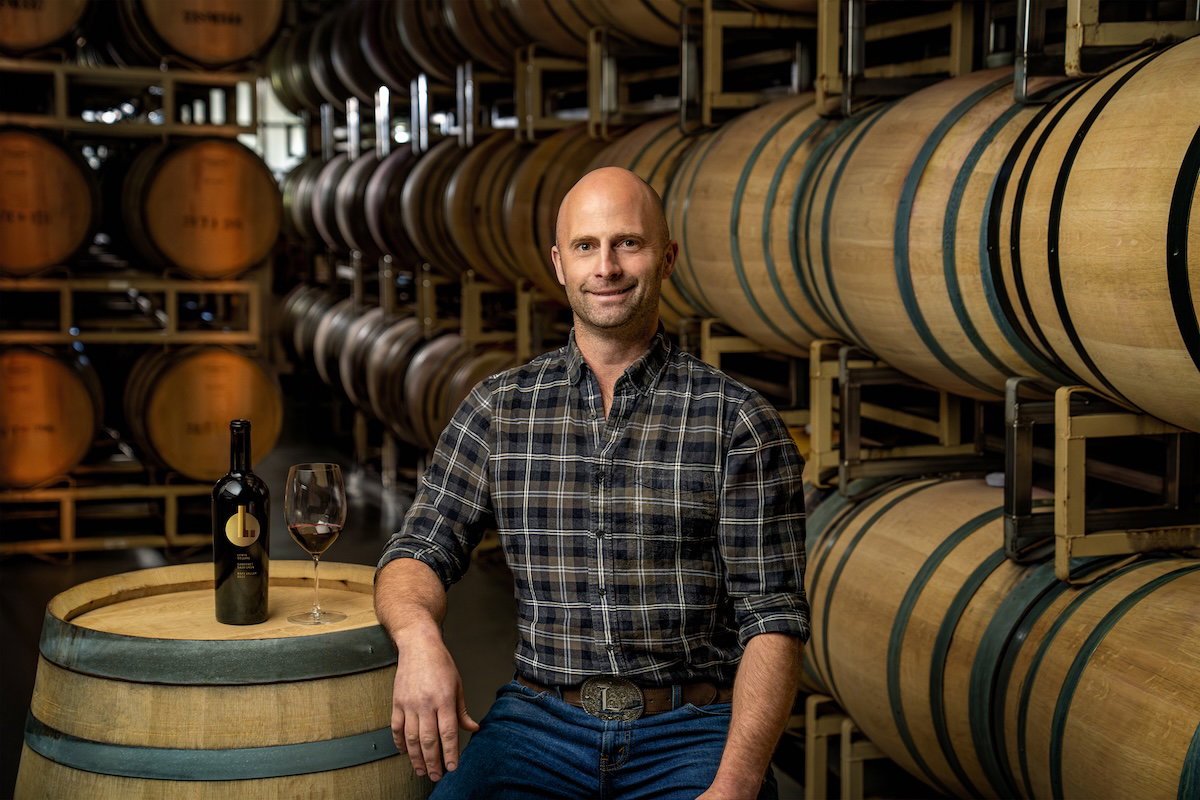
Jordan Jeffries grew up Eugene, Oregon, and graduated from UC Davis in 2008, where he studied viticulture and enology. He began his career and spent time at Duckhorn, Merry Edwards, Brasswood Cellars and Tamber Bey, among other estates. He has been the head winemaker at Lewis Cellars since 2023.
Jeffries’ family owned a golf course and that became the center of his upbringing. His parents designed it, built it and ran it as a business, and the family lived on the property as well. Working with the land was part of the family’s daily life, and that sparked a passion that eventually led to his career in wine.
When he was 17 Jeffries interned at a winery near Eugene. After graduating from UC Davis he headed to Napa for a harvest internship, which he followed with a harvest in Stellenbosch, South Africa. With his wife Ciji Rich Jeffries, he founded Lúnasa, a Napa-based producer of cabernet sauvignon and viognier in 2021.
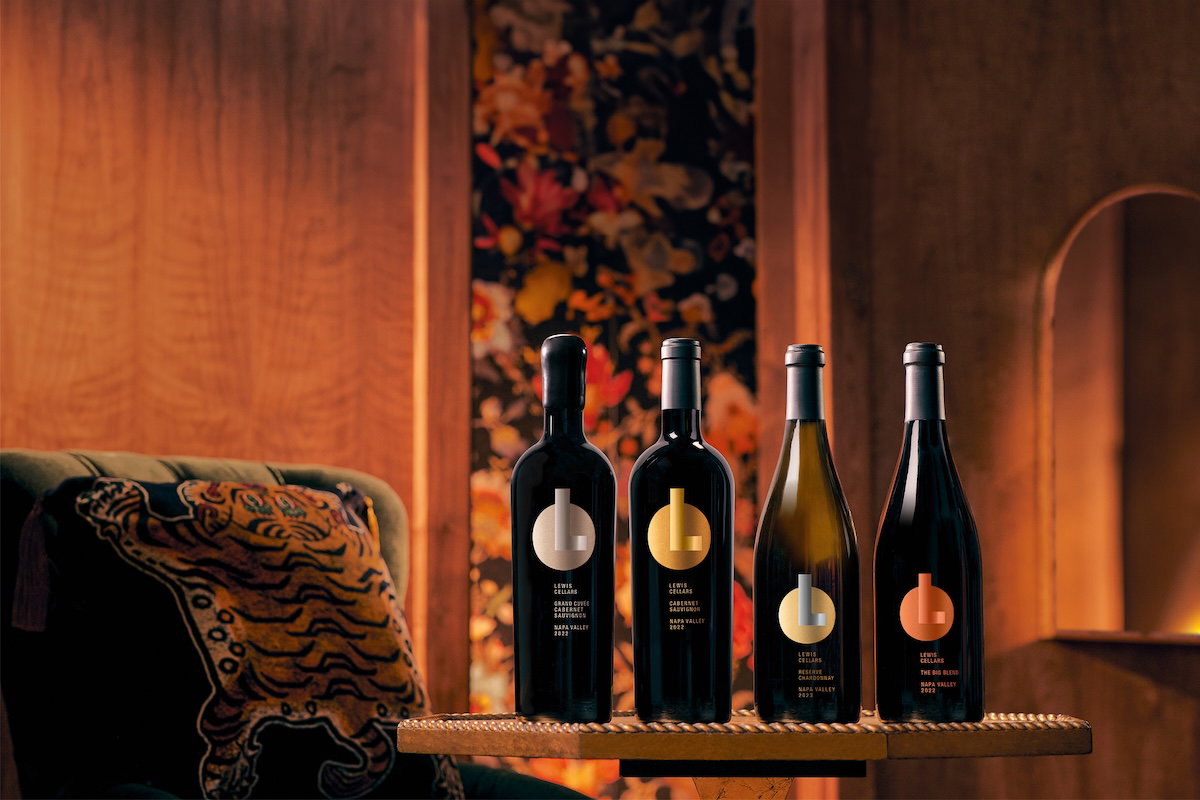
Lewis Cellars was established in 1992 by Randy Lewis and his wife Debbie Lewis. Wine Spectator’s 2016 Wine of the Year was the 2013 Lewis Cellars Napa Valley cabernet sauvignon. Lewis, a former race car driver who finished 14th in the Indianapolis 500 in 1990 and 1991, is now, along with Dennis Bell, Debbie Lewis’ son, running the estate, which was purchased by The Wonderful Company in 2021 through subsidiary Justin Vineyards & Winery. Debbie Lewis passed away in 2017.
SHOP


While the owners of The Wonderful Company, Stewart and Lynda Resnick, have faced criticism for water practices and usage during periods of drought and the removal of oak trees from a Paso Robles property they own, they are billionaires. Something that is certainly beneficial to Jeffries.
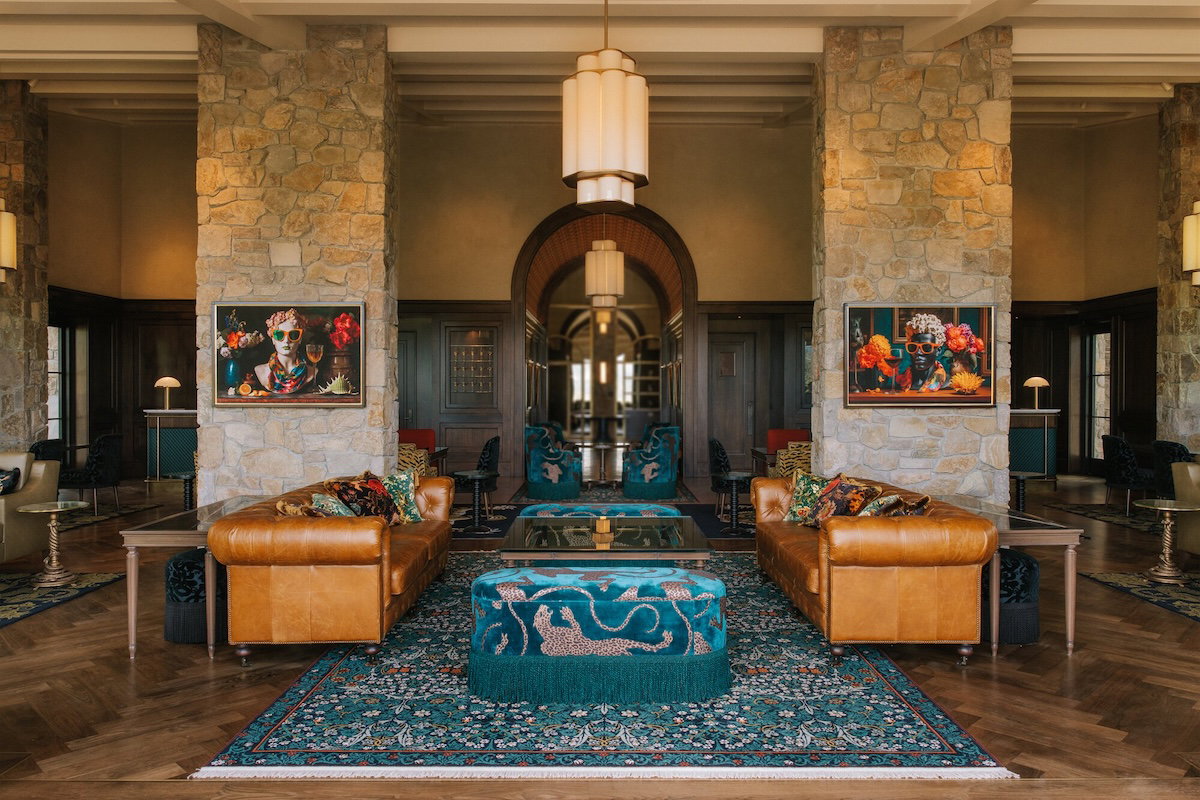
In late 2022 The Wonderful Company purchased the 42-acre property on Silverado Trail that was home to Robert Sinskey Vineyards and, following a two-year comprehensive renovation, Jeffries now has a state-of-the art production facility in which to ply his trade. Visitors can partake in any number of tastings, and the Lewis Cellars restaurant offers several tasting menus.
Lewis Cellars never owned vineyards, and sourced its fruit from areas of Napa Valley including Calistoga, Oak Knoll and Rutherford, but the Resnicks have also changed that. The company now owns the 300-plus-acre Moore Ranch in Conn Valley, and Lewis Cellars is now in possession of a 30-acre vineyard in Calistoga. Fruit from these two properties gives Jeffries more to work with.
Interesting side note: Lewis Cellars made its first vintage at Robert Sinskey Winery in 1992.
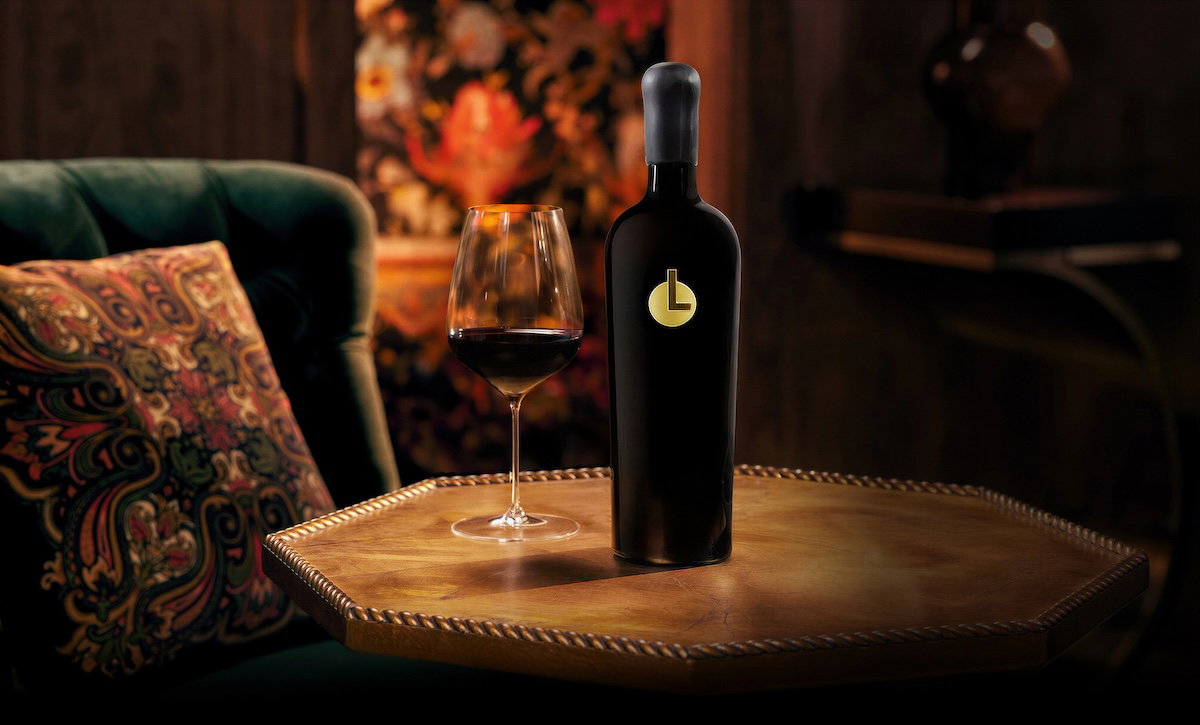
Lewis Cellars wines have big personalities. I recently sampled the 2022 Medallion Reserve, a 100 percent cabernet sauvignon bottling that retails for $275.
“Medallion Reserve is crafted for those who seek Napa Valley at its most extraordinary – structured, powerful, and designed to reveal greater complexity and richness as it matures over time,” Bell says. “This cellar-worthy wine is a testament to our team’s relentless pursuit of craftsmanship and represents the pinnacle of our portfolio.” He’s correct in stating that it’s powerful and structured. How about 16.1 percent alcohol?
Fewer than 300 cases of the Medallion Reserve were made. Each vineyard block used in the wine — 2022 was its inaugural vintage — was fermented separately. And, from a selected 1,500 barrels, 10 were used to make the wine. Clone 337 is the hero clone in the blend, which holds a stricking hue of deep ruby. Lots of leather and cigar box here, along with blueberry and blackberry and a touch of espresso. This is a youngster, and I would like to revisit the vintage in a decade to see how it develops.
My pairing? A rib eye grilled over mesquite.
If I was a winemaker I think I would be happy with Jeffries’ toolkit, both his personal talents and the workspace he has at Lewis Cellars. He’s got a lot to work with, now including fruit from his own properties. Let’s see what he has to say about it all in the latest edition of Wine Talk.
Jordan Jeffries: I really like where our 2019 Lewis Cellars Napa Valley Cabernet Sauvignon is right now. It has the concentration and structure you expect from Napa cabernet, but after a few years in the bottle some of those deeper secondary characteristics are starting to emerge. It still has plenty of fruit and freshness, but there’s more complexity and integration than you get when the wine is young. I’d pair it with a grilled ribeye or a really good burger. Something that can stand up to the wine without overcomplicating things.
With 2019s tasting great right now, the 2019 Vietti Castiglione Barolo is another standout that is drinking well at the moment. I’ve always had a soft spot for nebbiolo, and Barolo is one of those wines that I can get lost in. There’s the red fruit and floral character, but then you get the earthiness, spice and savory notes as the wine opens up. I like wines that make you slow down a little bit and pay attention to what’s happening in the glass.
The 2019 has enough structure to keep it going for a long time. But I think it’s already showing enough complexity to really enjoy. I’d pair it with something like braised short ribs or even a simple pasta with mushrooms and parmesan.
And finally, I’d go in a completely different direction with Billecart-Salmon Champagne. I always like having Champagne around because it doesn’t necessarily need a reason. It can be the start of a great dinner, but it can also be the entire occasion. What I like about Billecart-Salmon is that it has this combination of freshness and elegance, but there’s still enough texture that it doesn’t feel overly delicate.
For me, Champagne is also one of those wines where the food pairing can be incredibly simple. Oysters or shellfish are great, but give me some good potato chips and a cold glass of Champagne and I’m a happy camper.
If cost was no consideration, tell us the one bottle you would add to your personal collection, and why.
JJ: The 1985 Domaine Ramonet Chassagne-Montrachet. There’s something special about drinking a mature white Burgundy when it has reached that point where the fruit has evolved into something much more complex – you get the minerality, texture and acidity. But then all these secondary and tertiary characteristics start to emerge. The 1985 vintage is particularly special to me. It’s the kind of bottle I’d want to open with a great meal and a few people who really appreciate what’s in the glass.
What is your favorite grape, and why? If you don’t have a single favorite, tell me about one that you are especially passionate about.
JJ: I love the range you can get from syrah. It can be dark and structured, but it can also have this really beautiful floral, peppery, and savory side. It’s a grape that can show a real sense of place, and I enjoy how different it can be depending on where it’s grown and how it’s made. It’s also one of those wines that I think gets even more interesting with a little age.
Where is your go-to place when you want to have a glass or bottle (outside your home and workplace)?
JJ: For me, it’s more about the setting and whom I’m with. There’s a great picnic table near a pond where my family and I like to go fishing. And honestly, that’s a pretty great place to enjoy a glass of wine. I spend a lot of time around wine professionally, so when I’m drinking it personally I don’t necessarily need a special occasion or a fancy setting.
Give me a beautiful place, good company, and a little time to slow down, and that’s all I need.
If there was one thing you wish everyone would keep in mind when buying and drinking wine, what is it?
JJ: Remember that you are buying a wine to eventually drink. Too many times, I’ve seen people hold onto wines well past their life because they couldn’t bring themselves to open them.There’s definitely something special about aging a bottle and waiting for the right moment, but at some point, you have to pull the cork.
Wine is meant to be enjoyed, and I’d much rather see someone open a great bottle with the people they care about than have it sit in a cellar forever.
We’ve all read the countless articles and papers devoted to the dire state of the California (and broader) wine industry regarding surplus fruit, ripped-out vines, younger drinkers abandoning wine, climate worries, and the role of alcohol when it comes to human health. What do you think needs to be done to improve the current “state” of wine? Better education? Marketing? How concerned are you about the future of wine?
JJ: There are a lot of different issues happening at the same time, so I don’t think there’s one solution. But I do think we need to make wine feel more approachable and relevant without losing what makes it special.
For a long time, wine has had this reputation of being intimidating. You need to know the regions, producers, right glassware, terminology, etc. That can be fun for people who want to go deep, but it can also create a barrier for someone who just wants to enjoy a good bottle with dinner.
I think we need to spend more time talking about the experience of wine – food, friends, travel, culture, celebration – and less time making people feel like they need to pass a test before they’re allowed to enjoy it.
At the same time, we have to acknowledge the realities facing the industry, from changing consumption habits to climate and vineyard economics. Winemakers and growers have always had to adapt. I’m optimistic that there are opportunities within those challenges, but I think the industry needs to listen more closely to what consumers are telling us and be willing to evolve.
What is your “wine eureka moment,” the incident/taste/encounter that put you and wine on an intimate plane forever?
JJ: Growing up in Oregon, I was surrounded by great wine-growing regions, as well as a strong craft beer culture. When I was thinking about what career path I wanted to pursue, I actually flipped a coin between brewing beer and making wine. Literally. Wine won the toss.
What started as a coin flip turned into something much more meaningful once I got into winemaking and realized how much there is to explore. The vineyards, farming, science, history and, of course, the wines themselves. The more I learned, the more I realized that wine was something I could spend a lifetime learning about and still never know everything.
That was probably my real wine eureka moment – realizing this wasn’t just a career decision, but something I could genuinely be passionate about for the rest of my life.
What has been the strangest moment/incident involving wine that you have experienced in your career?
JJ: I’d have to say this year’s harvest. Every vintage has its surprises, but this one has been unlike anything I’ve experienced. To be finishing harvest by early October is something I honestly never thought I’d see.
Harvest is usually a pretty long, unpredictable process, and you get used to having plans change based on weather, fruit maturity, and a hundred other variables. But this year has really made me stop and think about how much things can change from one vintage to the next. It’s a good reminder that, as winemakers, we can make plans all we want, but ultimately, we’re working with what the vineyard gives us.
JJ: Piedmont, Italy. I love the wines, but I also love the diversity of food in Italy, so Piedmont would be a pretty easy choice. I’d want to plan the trip around harvest and make sure I was there when the truffle festivals were happening. There’s something pretty incredible about being able to experience the wines in the place where they’re made, alongside the food and culture that have evolved with them.
And obviously, you can’t go to Piedmont without drinking a lot of Barolo and barbaresco. I’d want to spend time tasting across producers and vineyards and really dig into how much variation you can find from one site to another.
Your favorite wine reference in a work of literature (fiction, film, poem, music, etc.)?
JJ: The 1970 hit, “Spill the Wine” by Eric Burdon and War. It’s obviously not a wine reference in the traditional sense, but it’s hard to beat. It captures something about wine that I like. It can be a little mysterious, a little unexpected, and tied to an experience rather than just what’s in the glass.
For more from James Brock visit Mise en Place.
Trending
- Francine Ballard’s The Kno Draws Houston’s Most Fashionable Crowd For a Fun Fashion Throwdown
- River Oaks’ Garden Maestro Brings Houston’s Old Guard Power Brokers Out For a Green Celebration
- Conner Weigman Left Utah’s Stadium In a Walking Boot, and He Was Limited In Practice All Week — a PaperCity Exclusive
- Fort Worth’s 14 Most Anticipated New Restaurant Openings This Fall
- Chris Stapleton Headlines Dallas’ Cattle Baron’s Ball at Iconic Southfork Ranch
Part of the Special Series:


