Montrose’s Secret Art Retreat Unveils a Culture Club That Pushes the Envelope — Basket Books Rewards Close Looking
Christopher Cascio Is Not Afraid To Make Art Dangerous
By Joseph Staley //
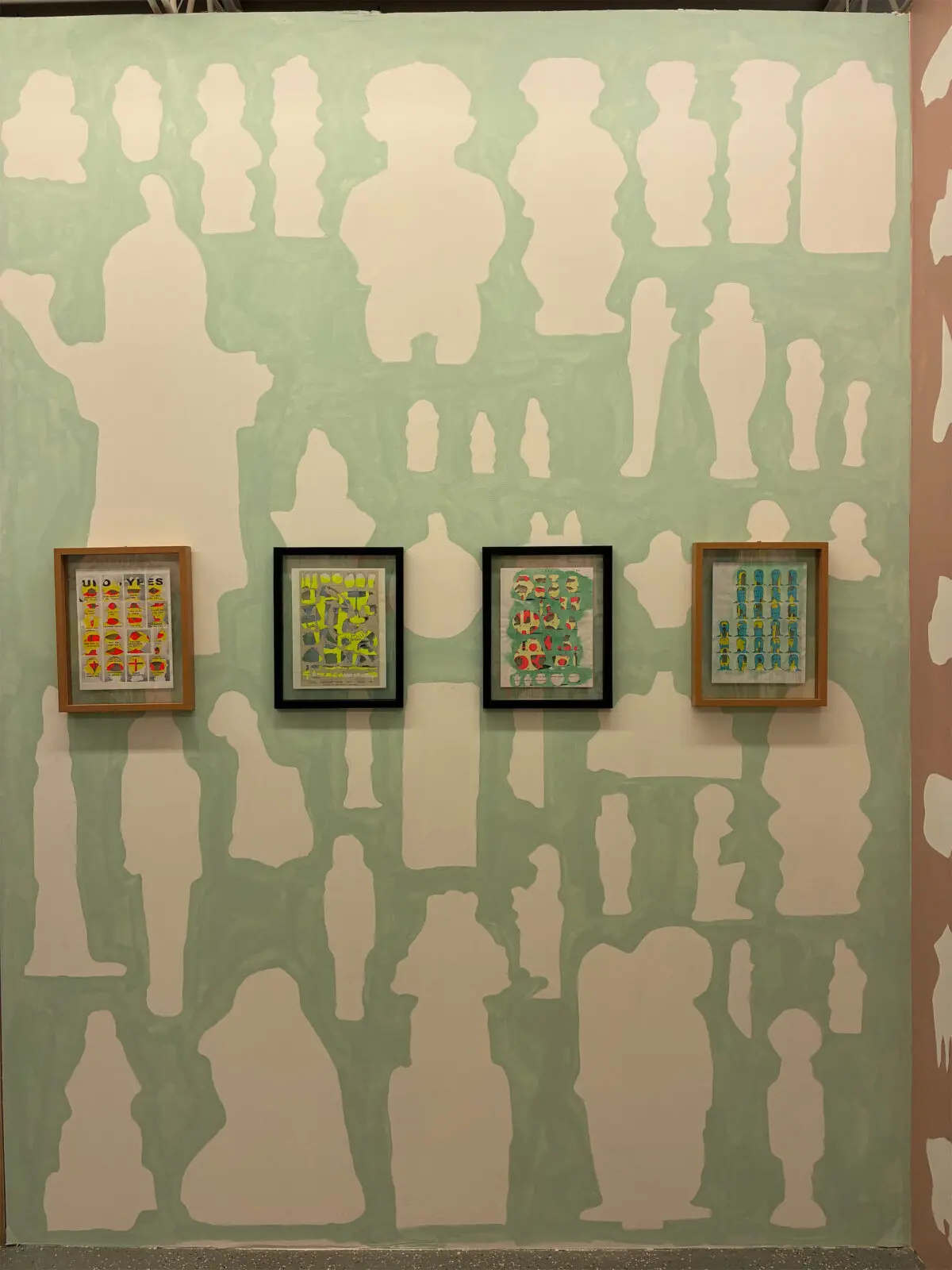
Some of Houston’s most adventurous art exhibitions are happening inside an independent bookstore in the heart of Montrose. Since opening in May of 2022, Basket Books & Art has made an increasingly essential proposition. It is books in one room, contemporary art in the next, with conversation moving freely between them.
Founded by writer Laura Hughes and artist Edwin Smalling, Basket has quietly become one of Houston’s most responsive small spaces — intimate enough to reward close looking, but willing to let ambitious exhibitions overwhelm its modest architecture.
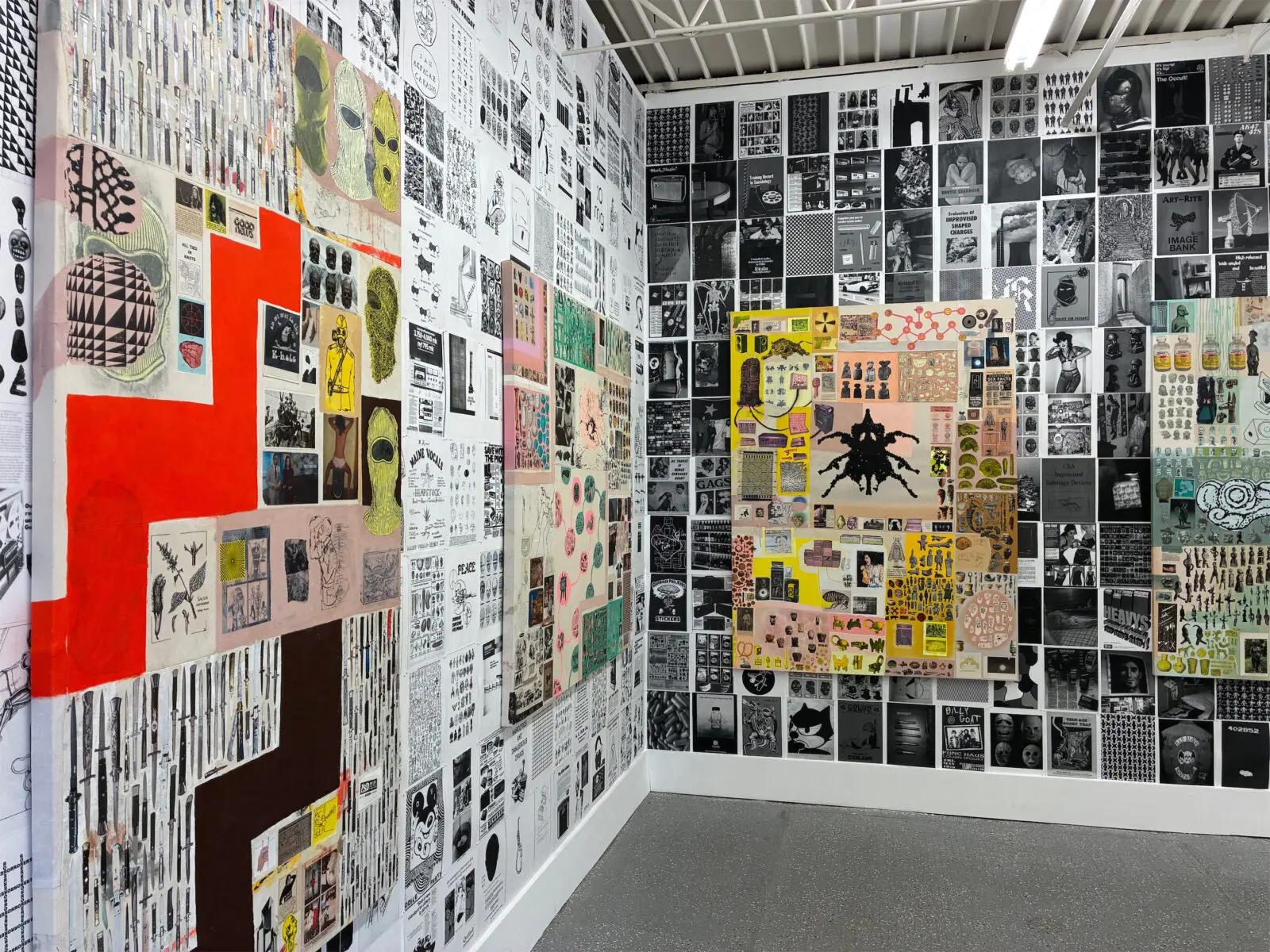
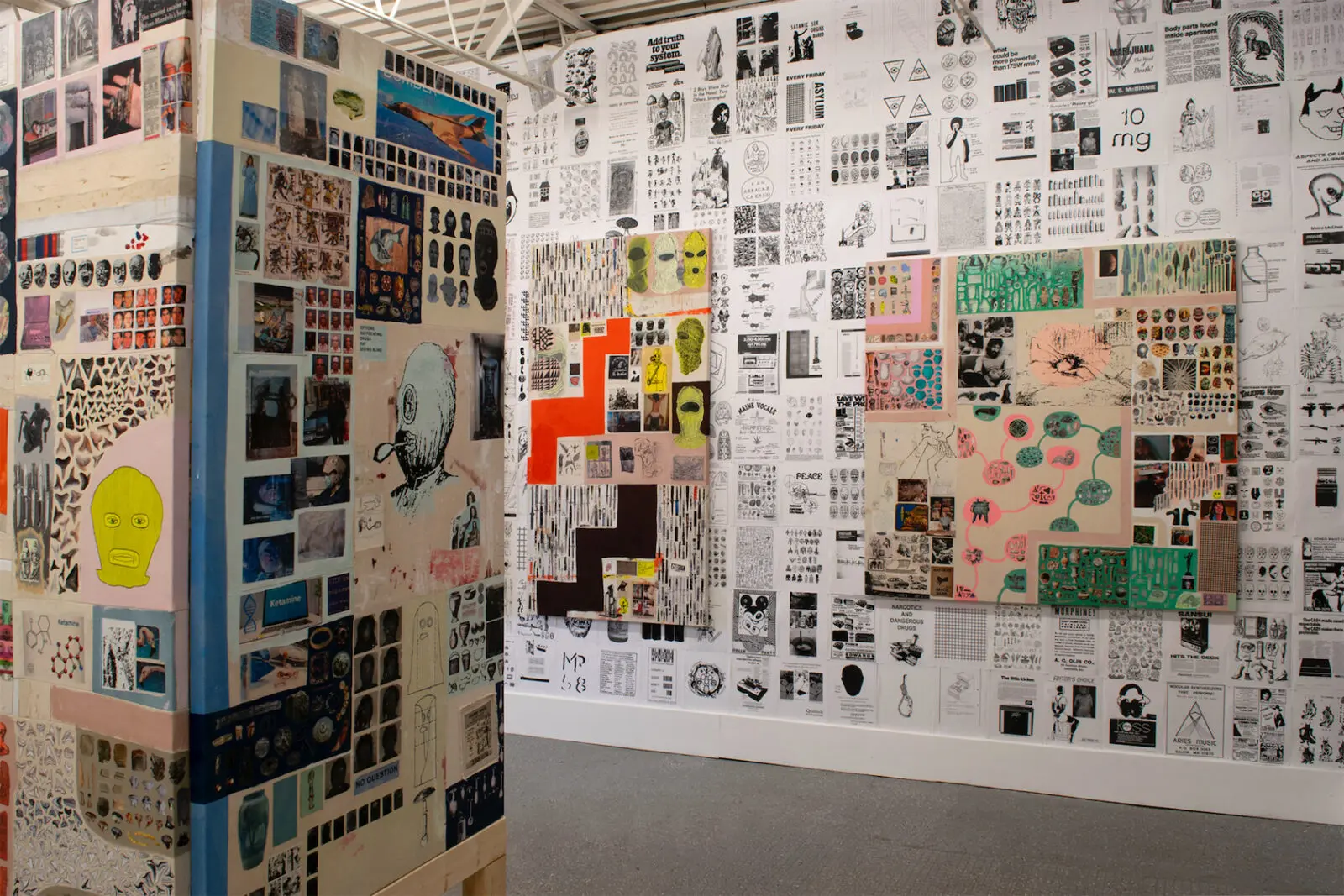
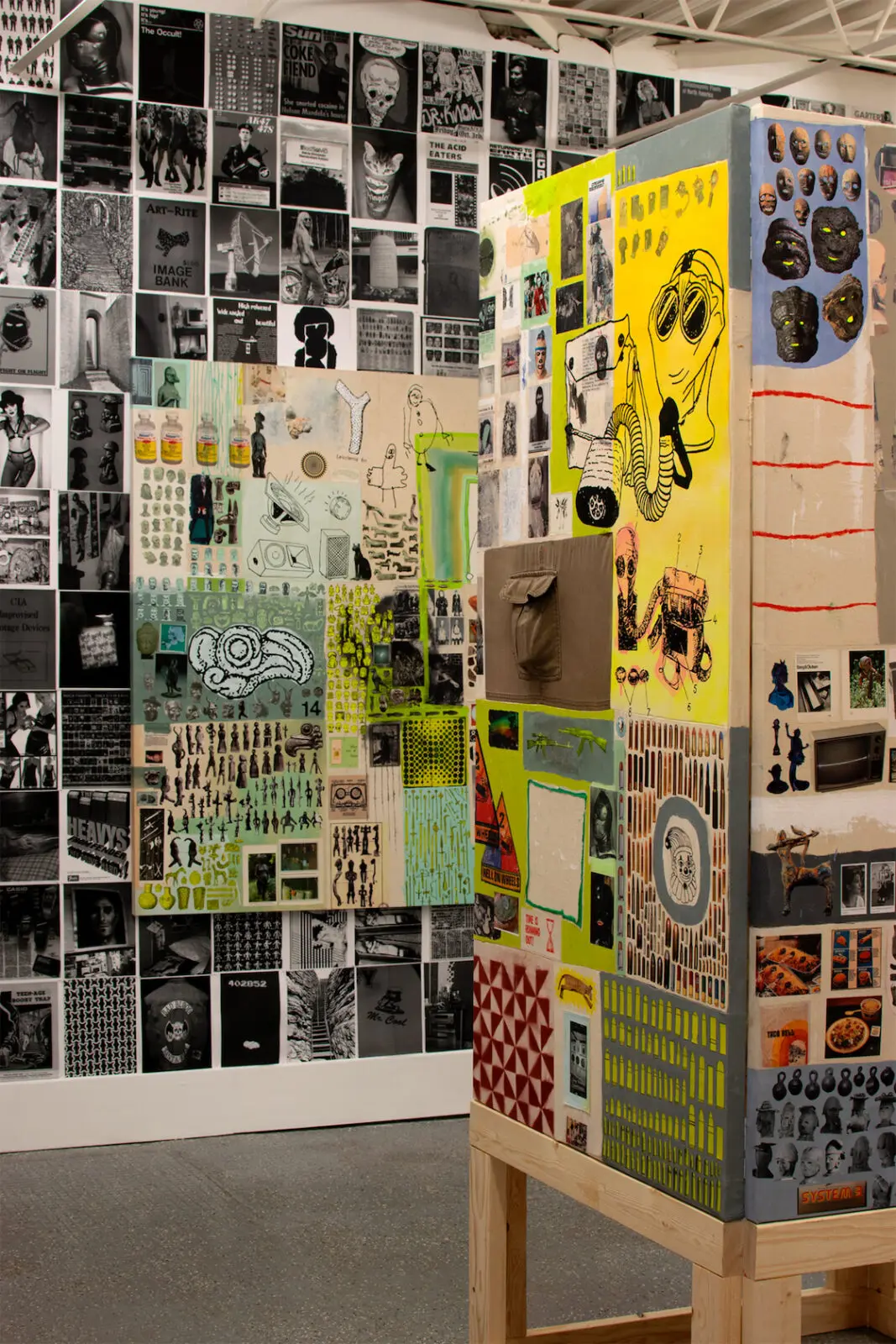
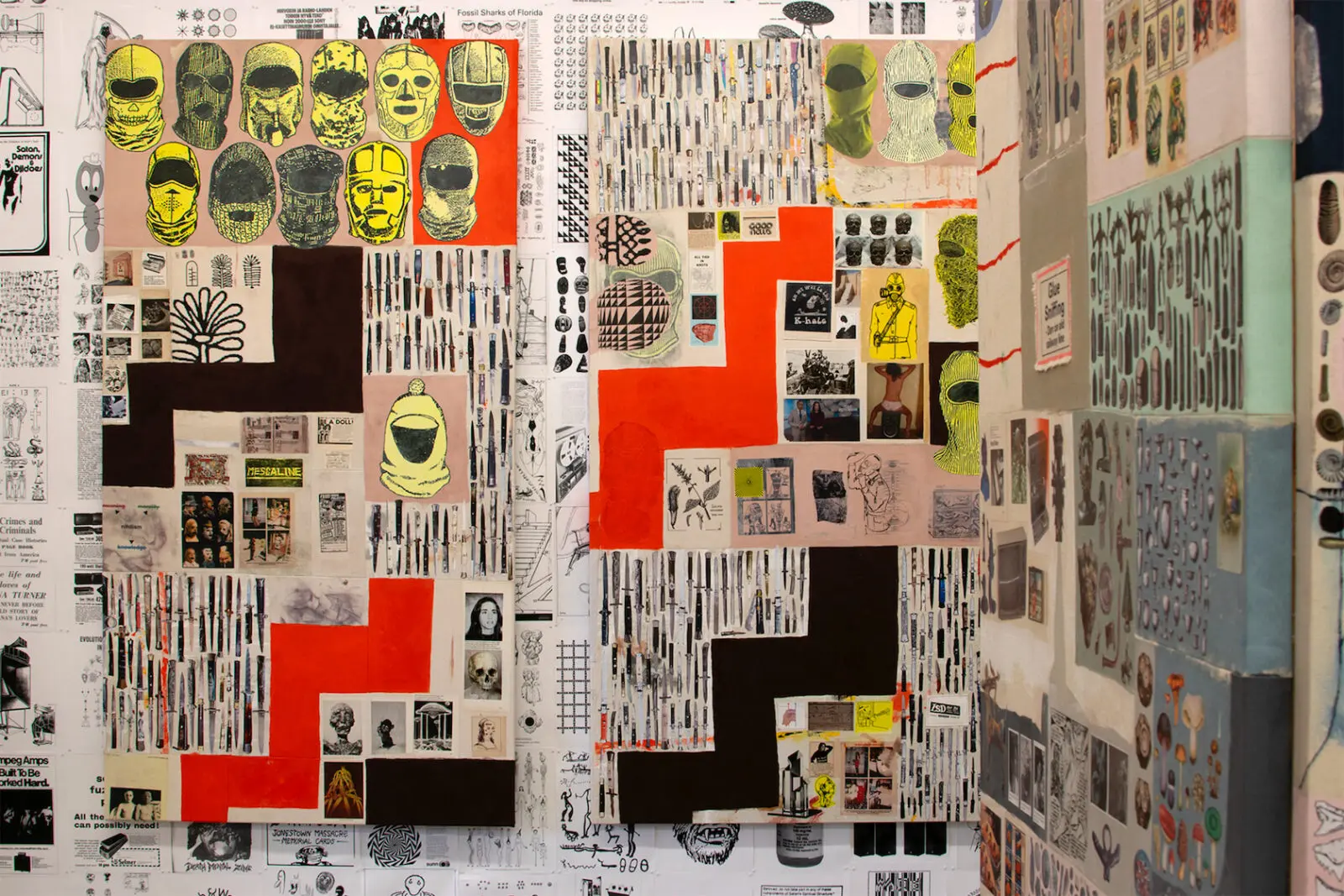
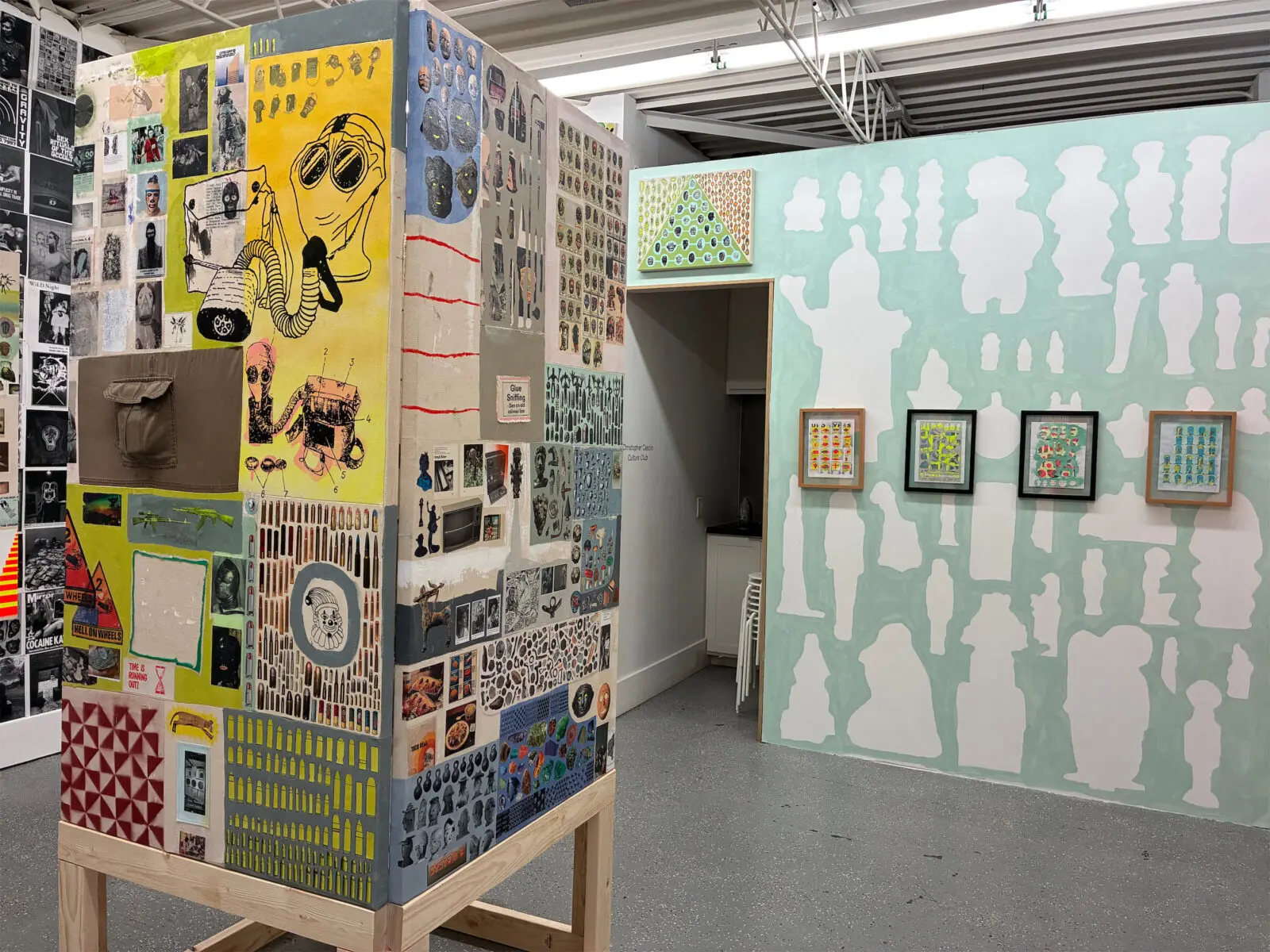
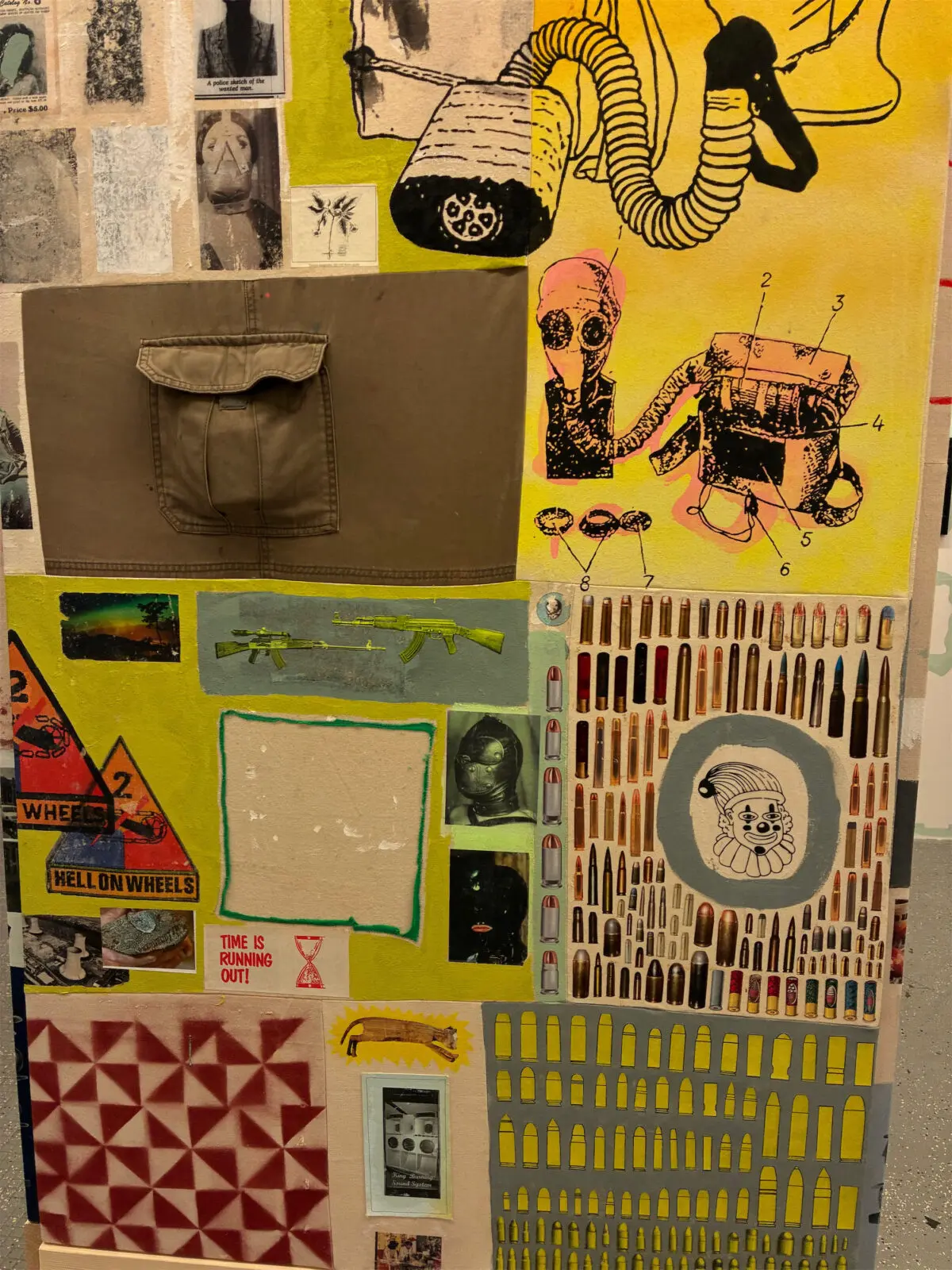
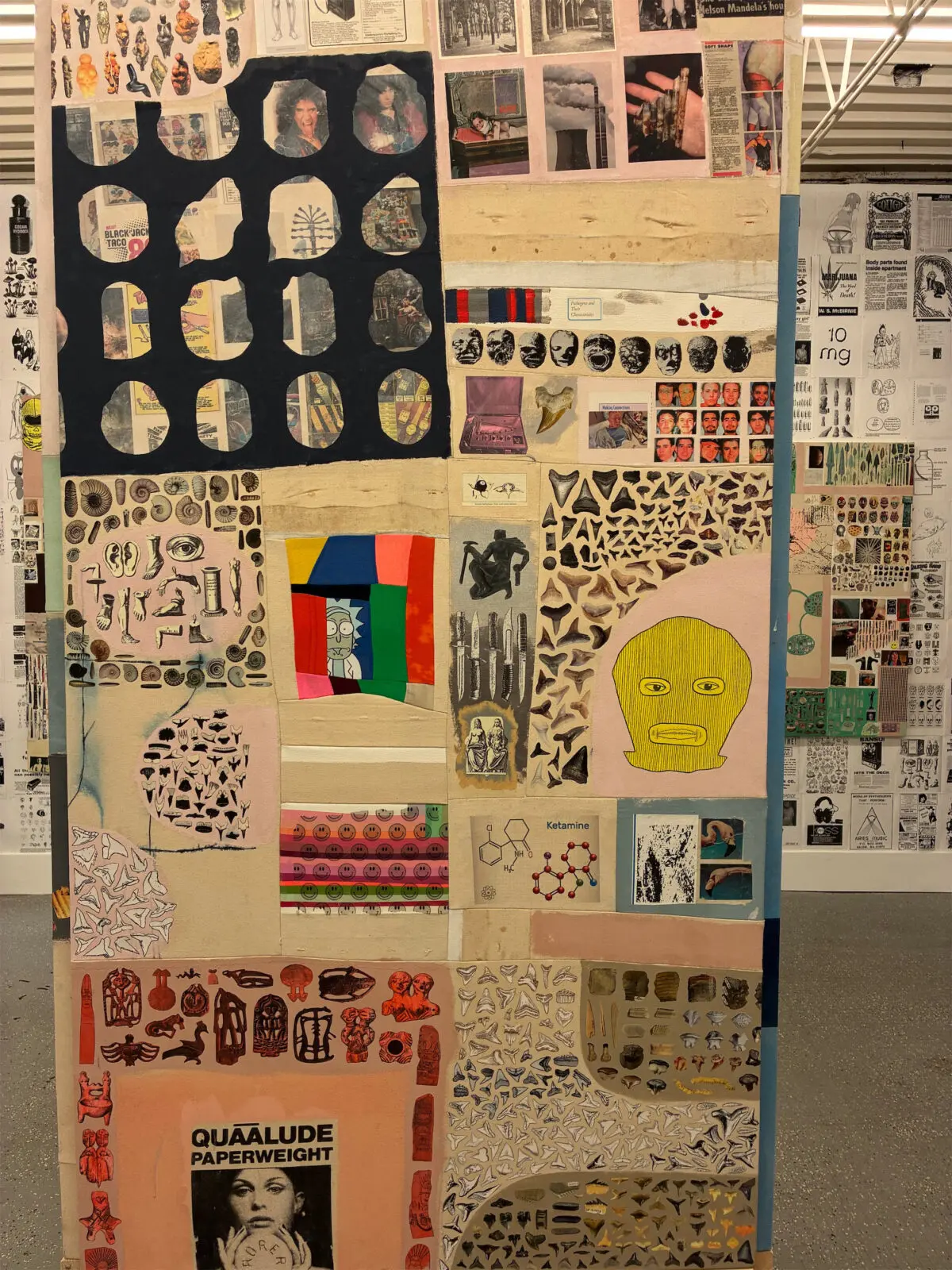
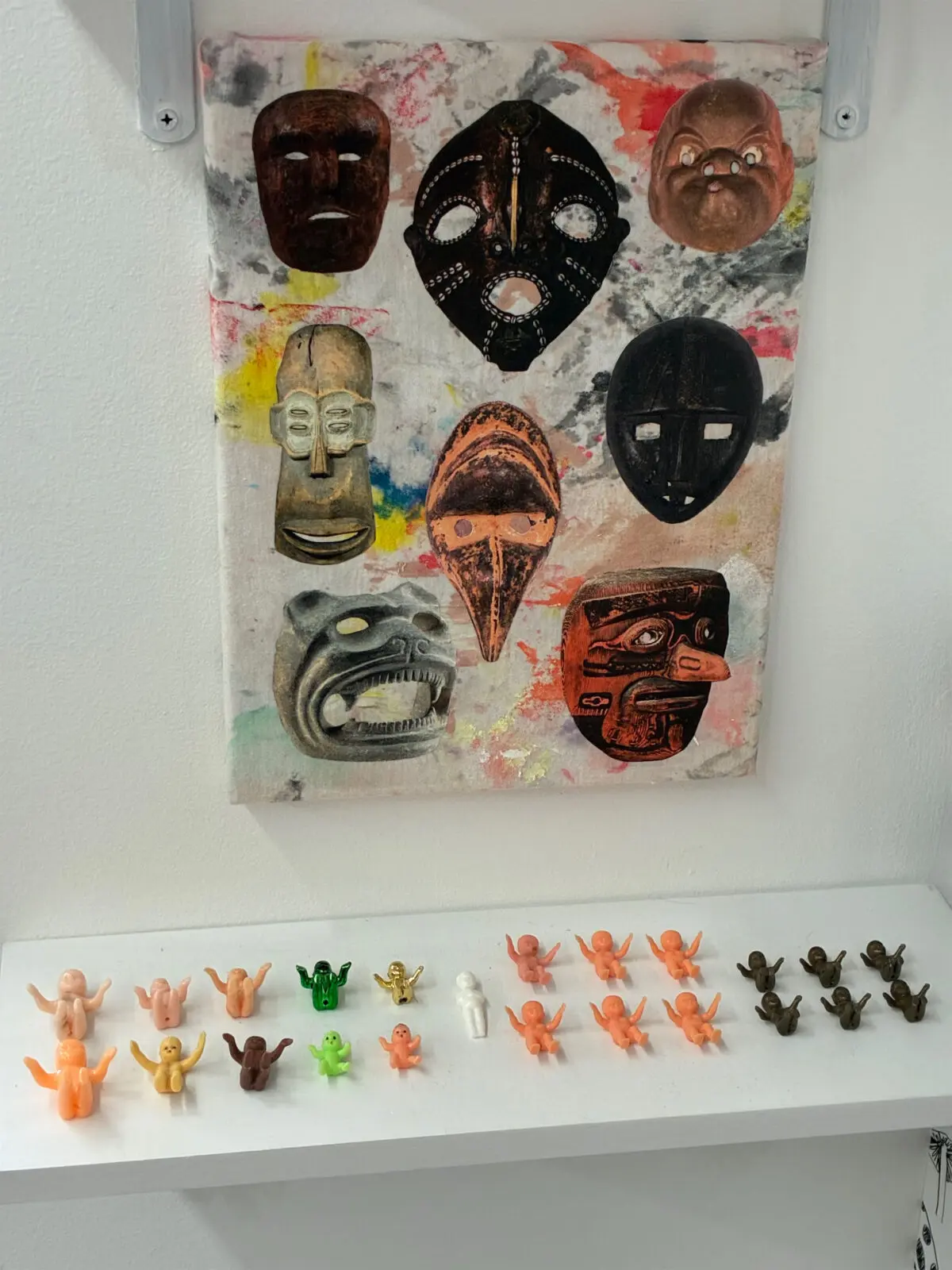
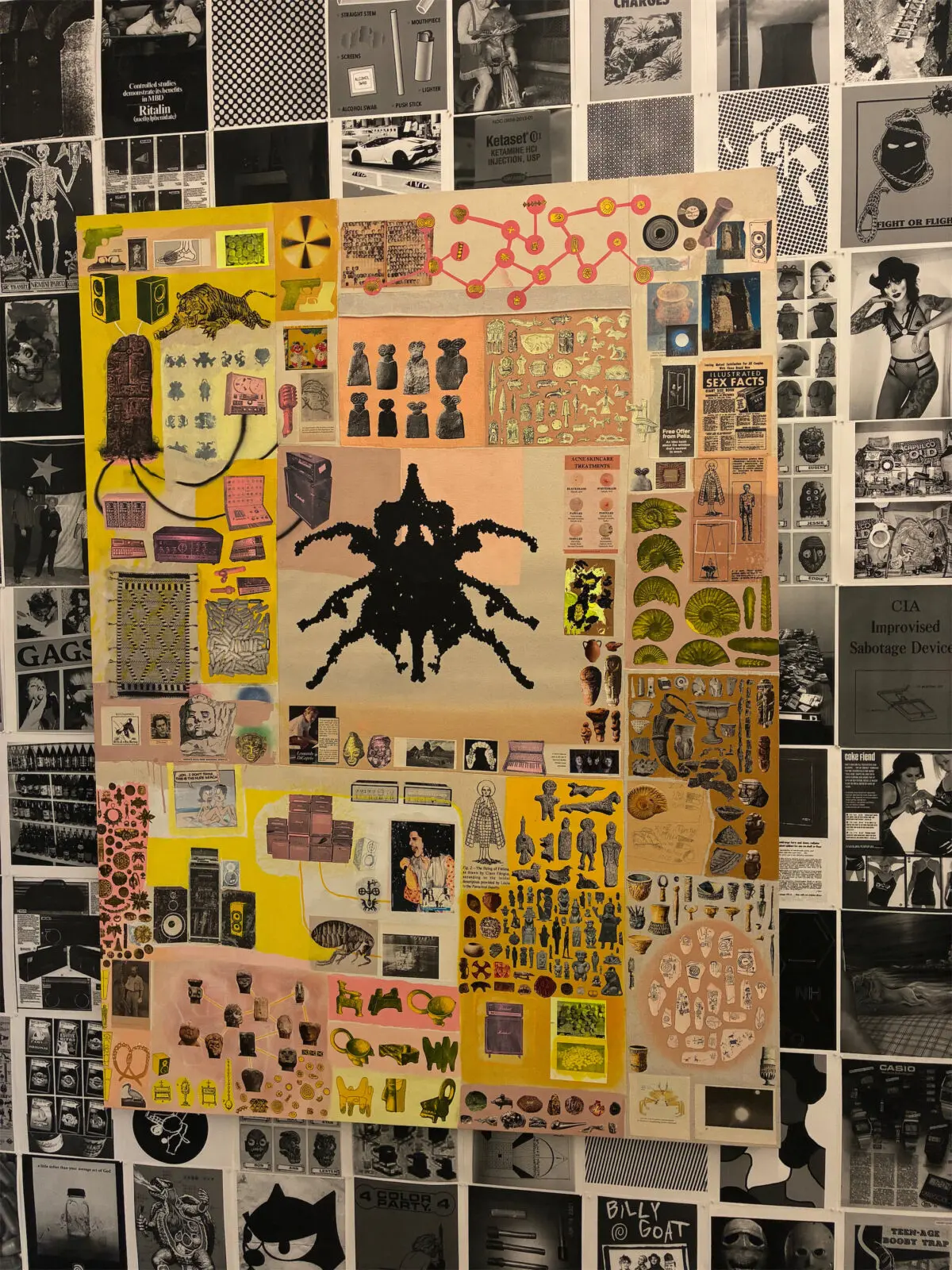
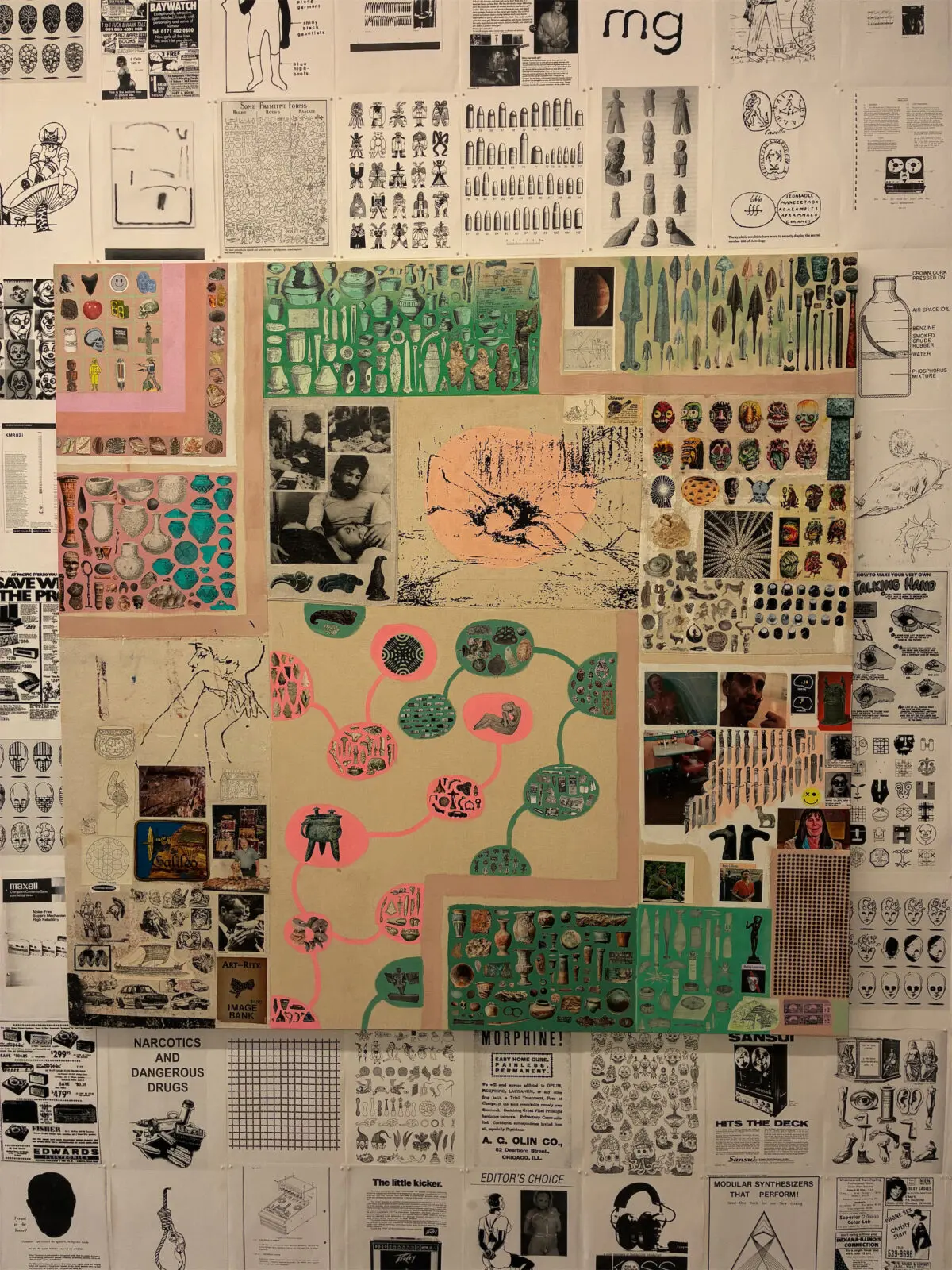
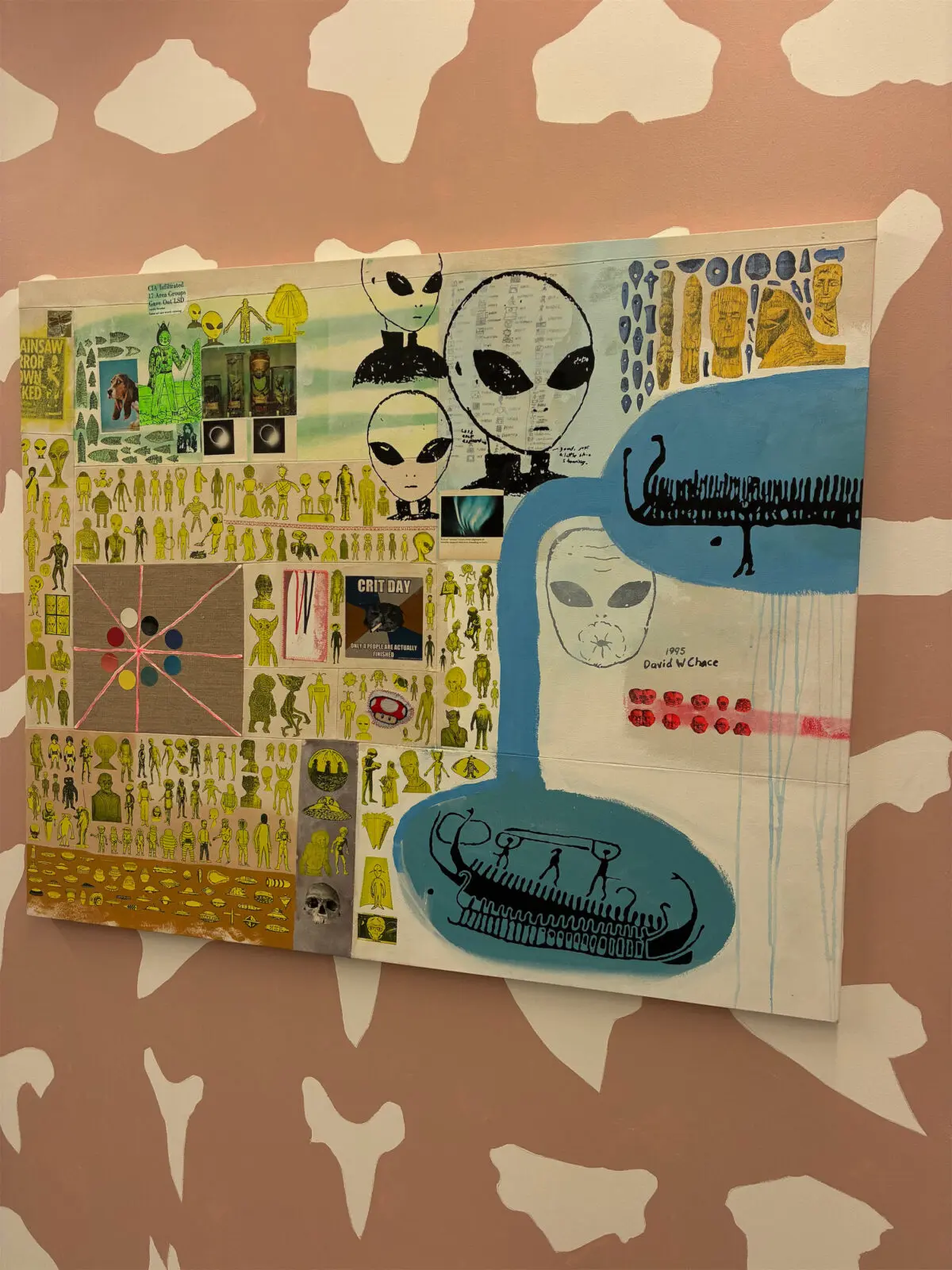
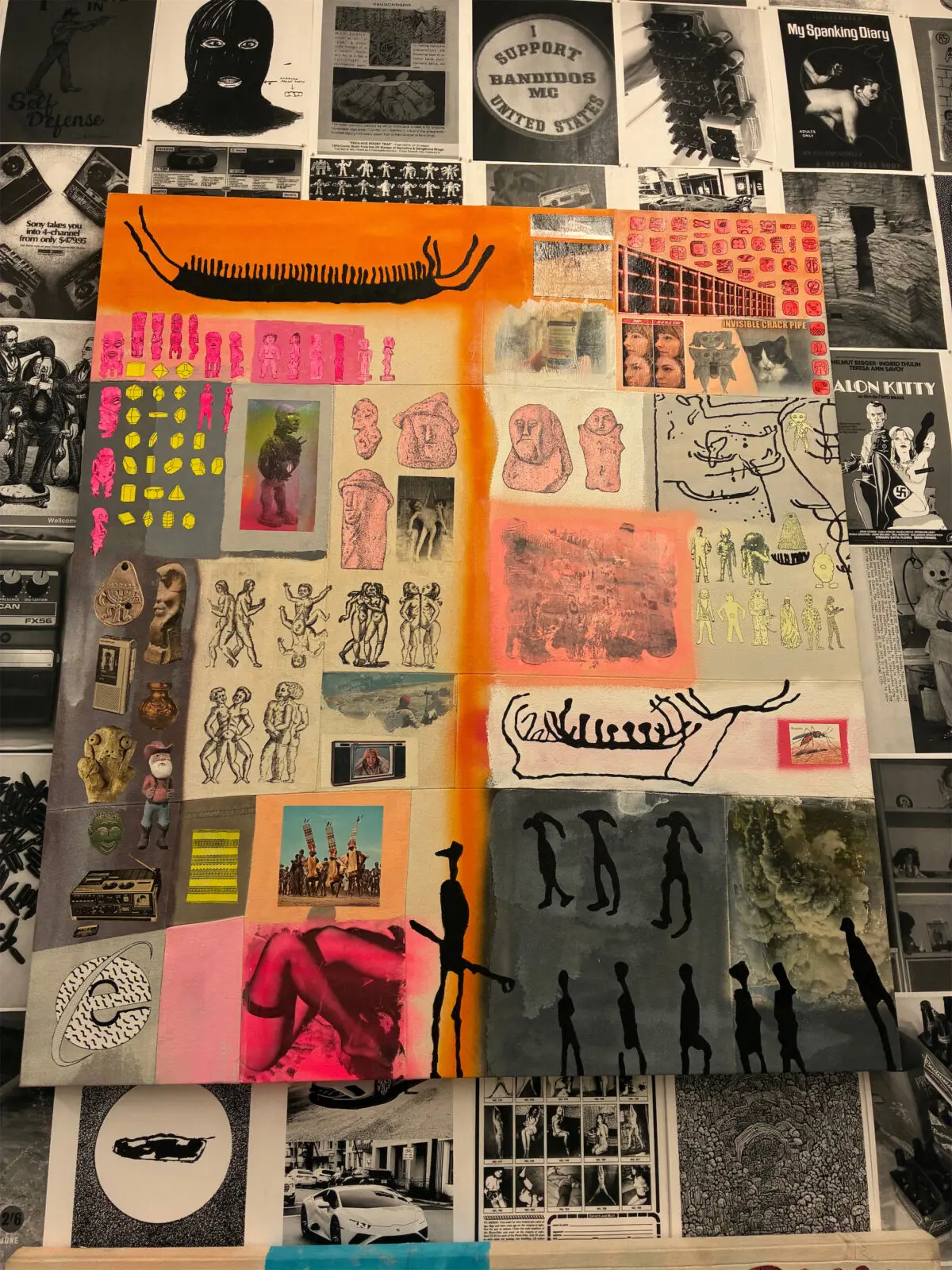
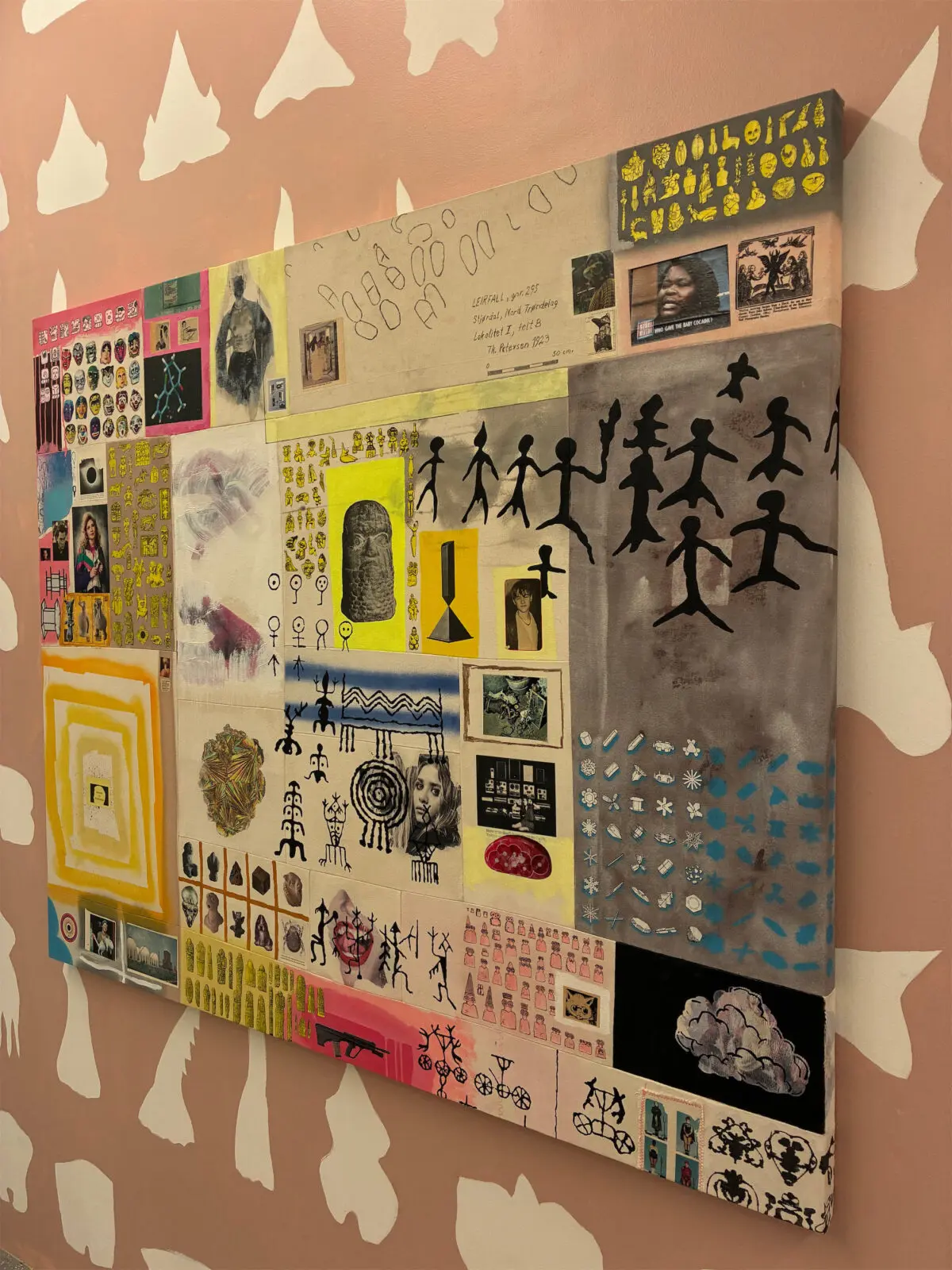
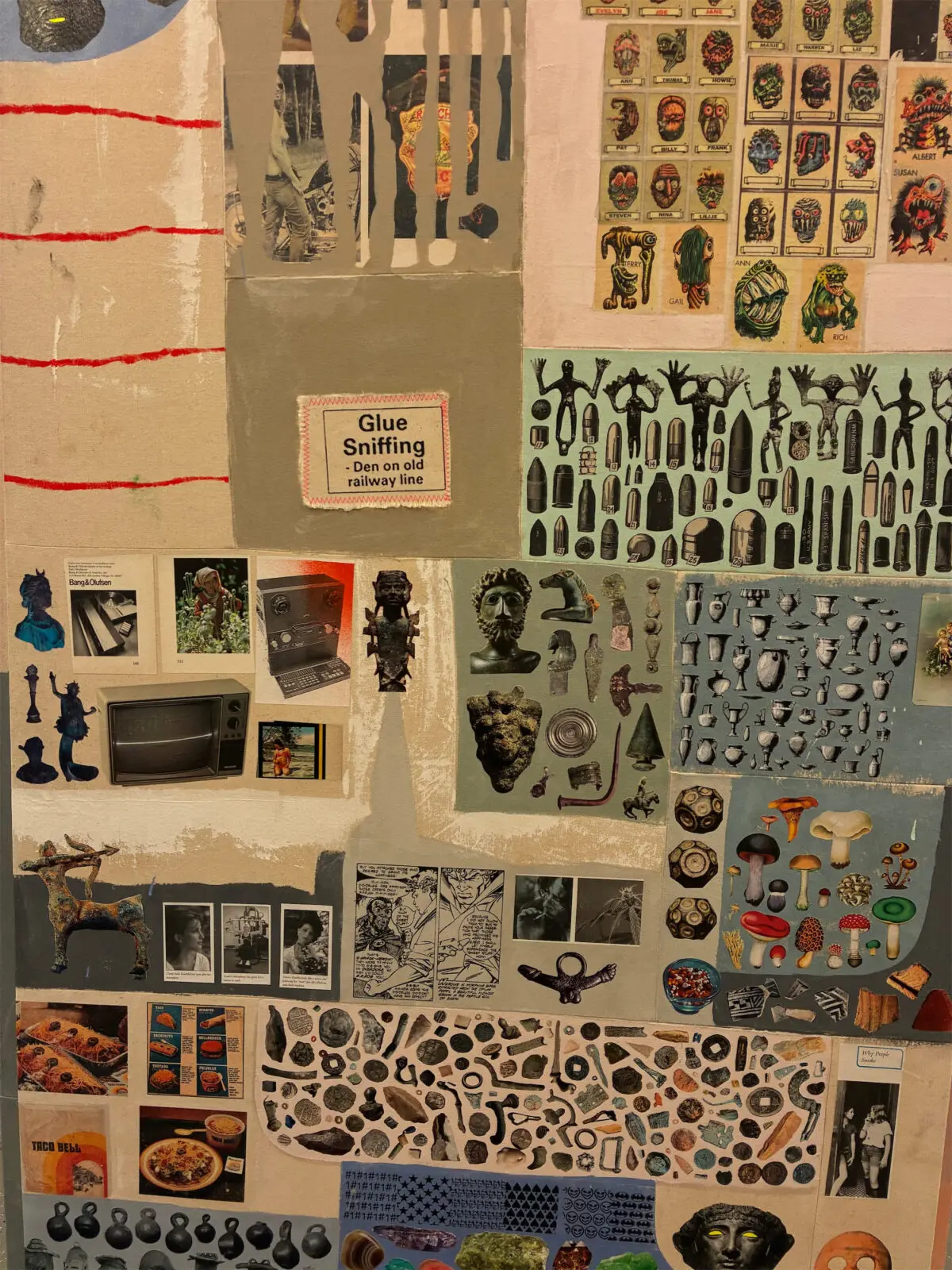
Organized by Smalling, Christopher Cascio’s exhibition “Culture Club” does precisely that. Every wall buckles beneath paintings already crowded with masks, knives, bullets, fossils, medical imagery, sound equipment, ancient vessels, cartoon grotesques and the general debris of a culture producing images faster than anyone could reasonably absorb them.
This exhibition gives Cascio the room and then watches him overrun it.
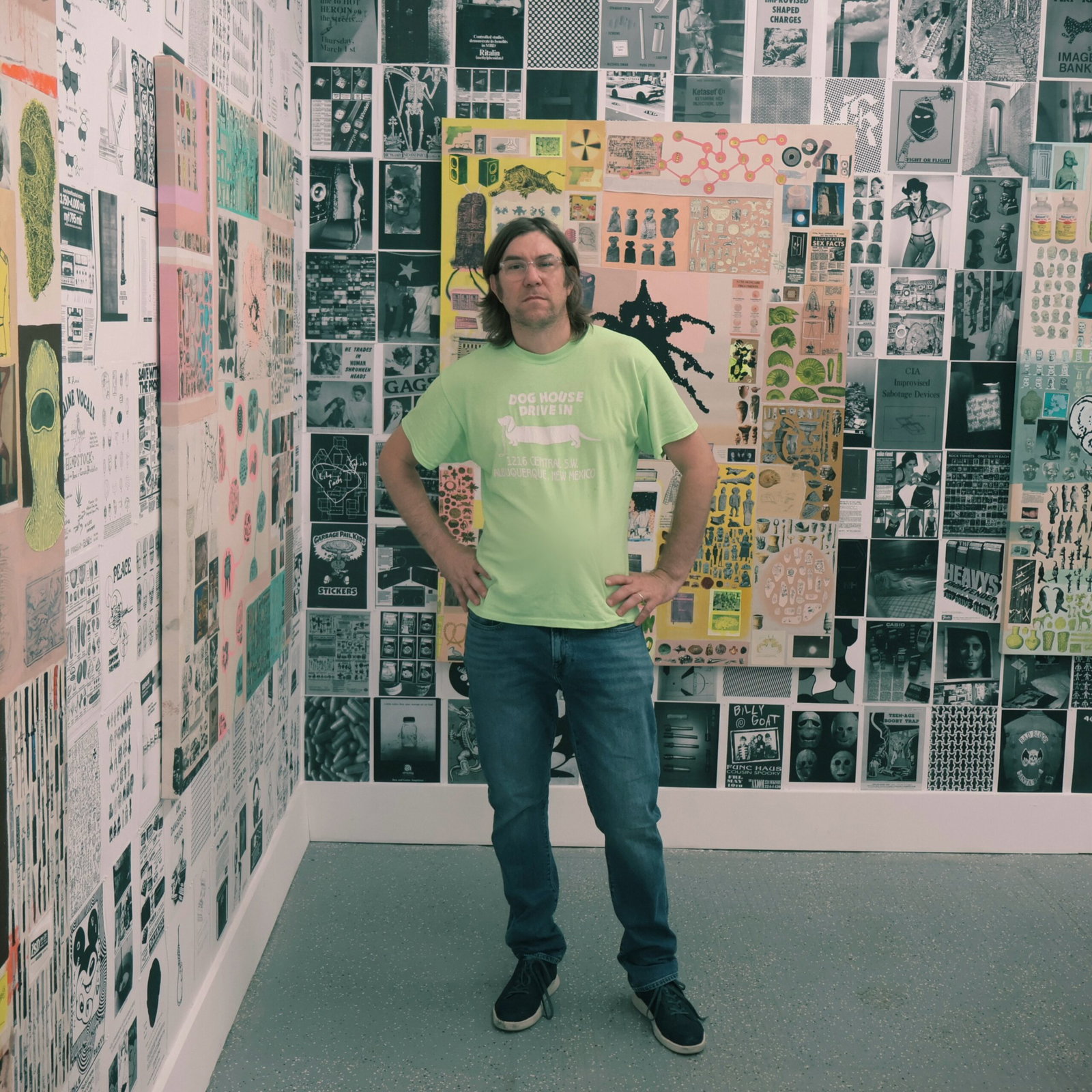
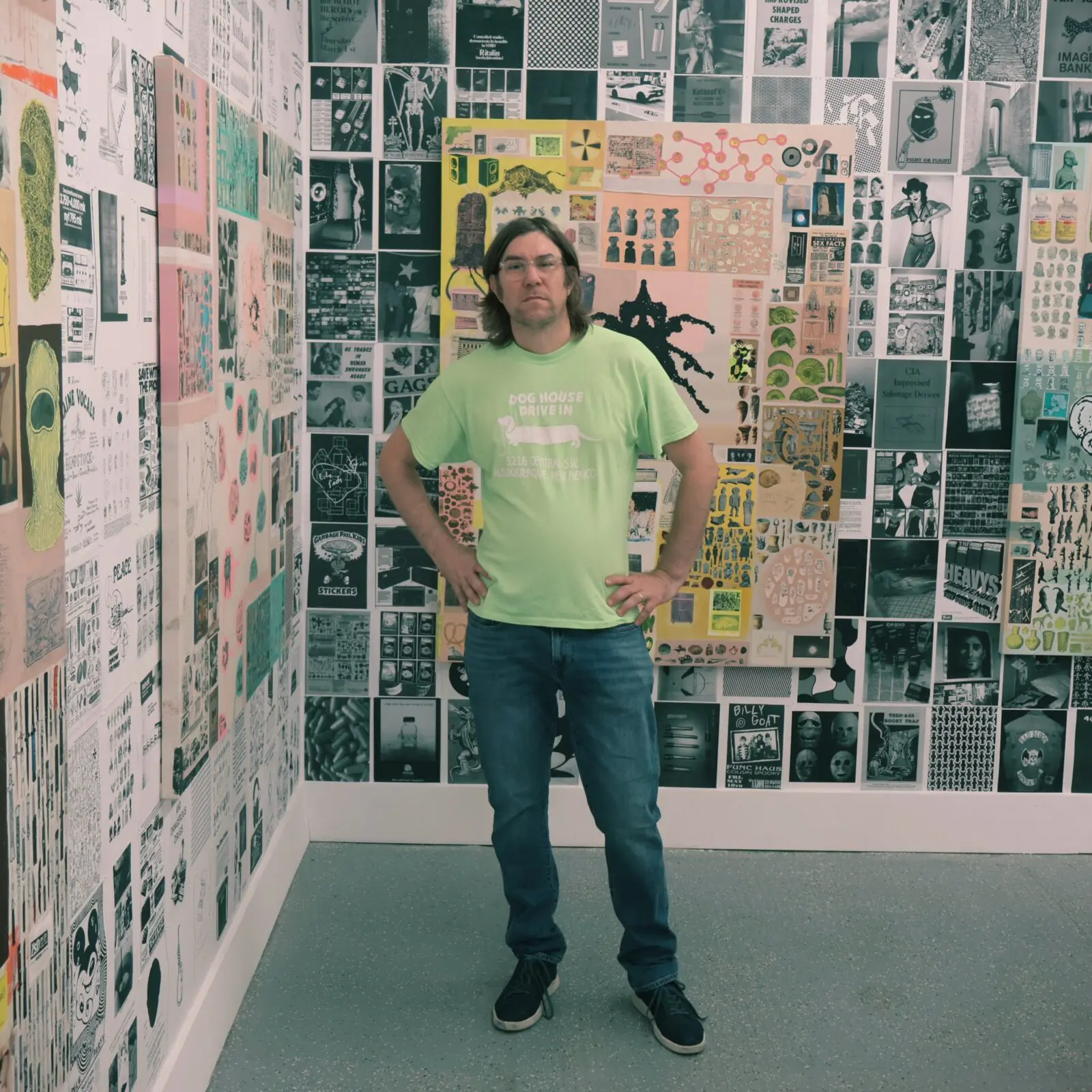
Born in New Orleans and long based in Houston, Cascio earned his BFA in Painting and Drawing from the San Francisco Art Institute and his MFA in Painting from the University of Houston. His work has appeared at Makebish in New York, New Image Art in Los Angeles, and throughout Texas, including exhibitions at the Contemporary Arts Museum Houston, Blaffer Art Museum and Lawndale Art Center.
Yet Cascio still carries the aura of a Houston insider’s artist — locally embedded and never easily reduced to one signature style.
In “Culture Club,” his long-running concerns with obsession, compulsion, collection and ritual reach a fever pitch. Cascio covers the walls until the room stops behaving like a gallery. Paintings press into corners and answer one another across Basket Books & Art. Images recur and cross-contaminate until the installation resembles an encyclopedia undergoing some private neurological event.
Cramming It All In
“Culture Club” delivers maximalism without mistaking abundance for meaning. Faces gather into families. Weapons march into order. Ancient forms enter uneasy congress with medical ones. Yet every category leaks. A mask shifts from ritual object to criminal disguise, then to logo or apparatus. Classification never settles the image. It multiplies the relationships the image might carry.
The room carries the pressure of an archive built by someone who no longer trusts the archive.
Aby Warburg’s 1927 Mnemosyne Atlas project provides the clearest precedent. Warburg crowded cloth-covered panels with reproductions across centuries, allowing adjacency to generate meanings chronology could not. Cascio pushes that method into matter. Paint, transfer, thread and sewn cloth replace the provisional pin.
Associations no longer hover above the support. They penetrate it. The seam carries as much information as the image.
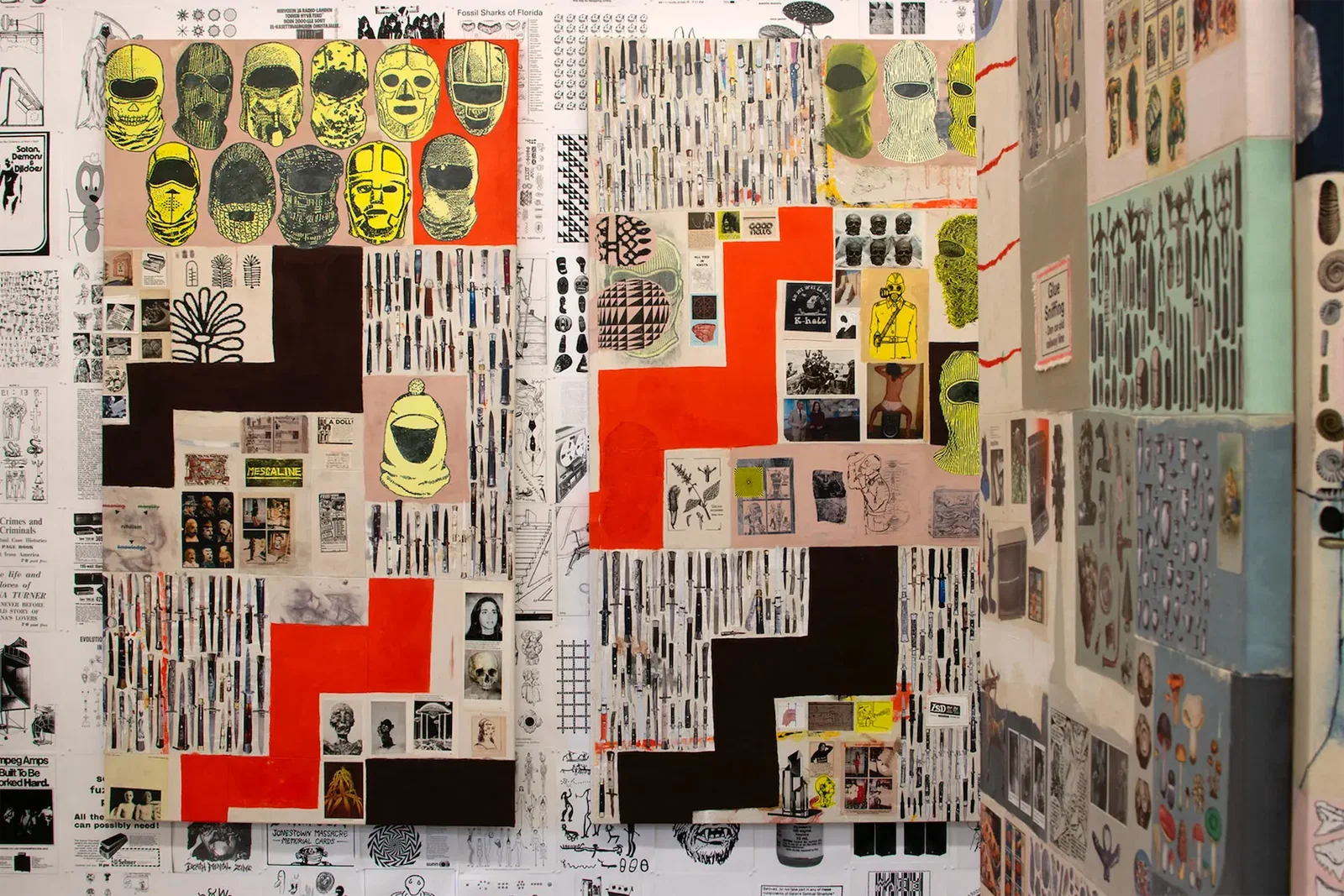
Color promises order. Acid yellow and institutional gray divide the paintings into jurisdictions, then betray their function. Yellow wavers between illumination and contamination. Pink turns bodily and medical at once. Color offers a filing system, but the image turns that system into weather.
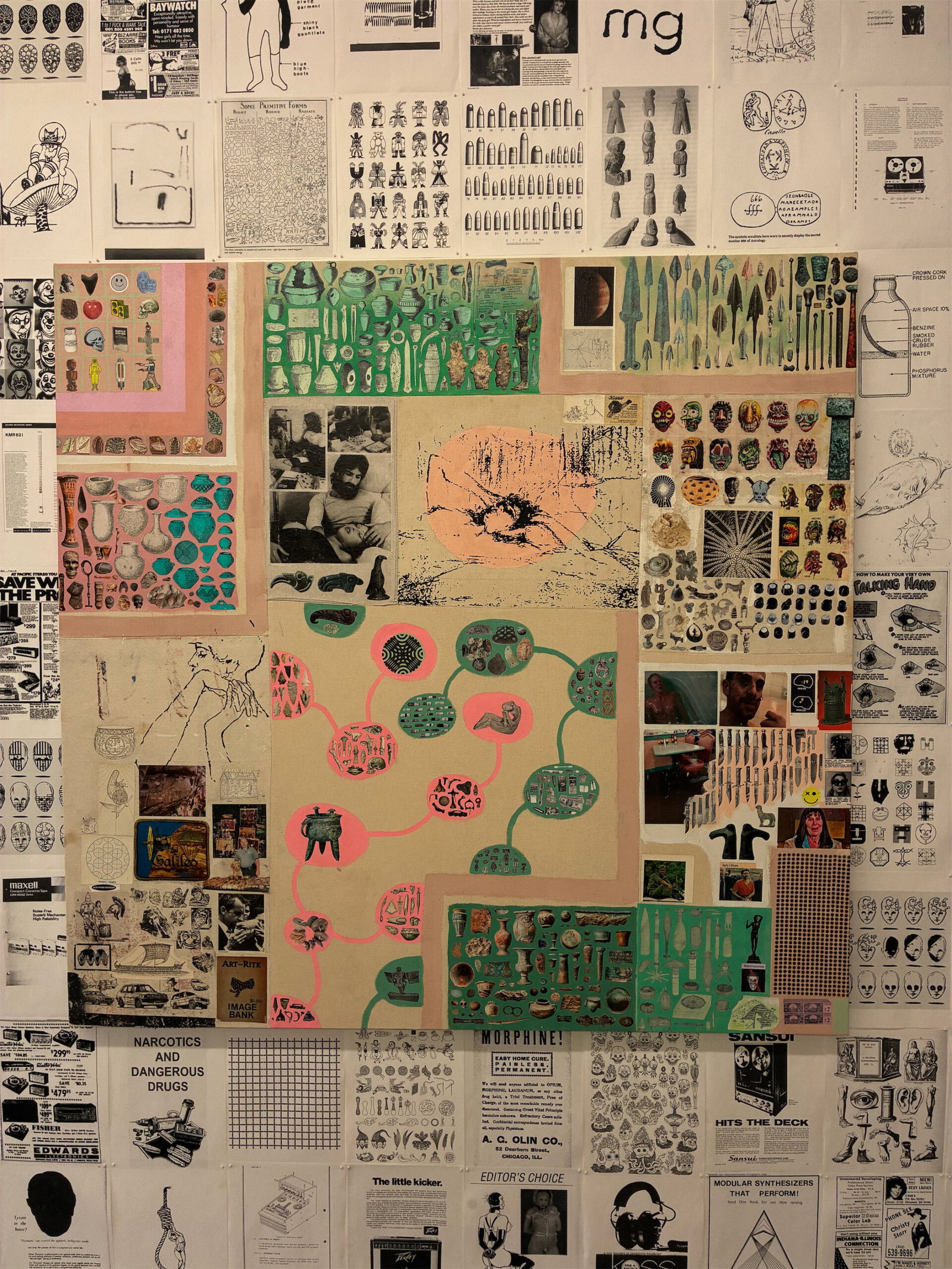
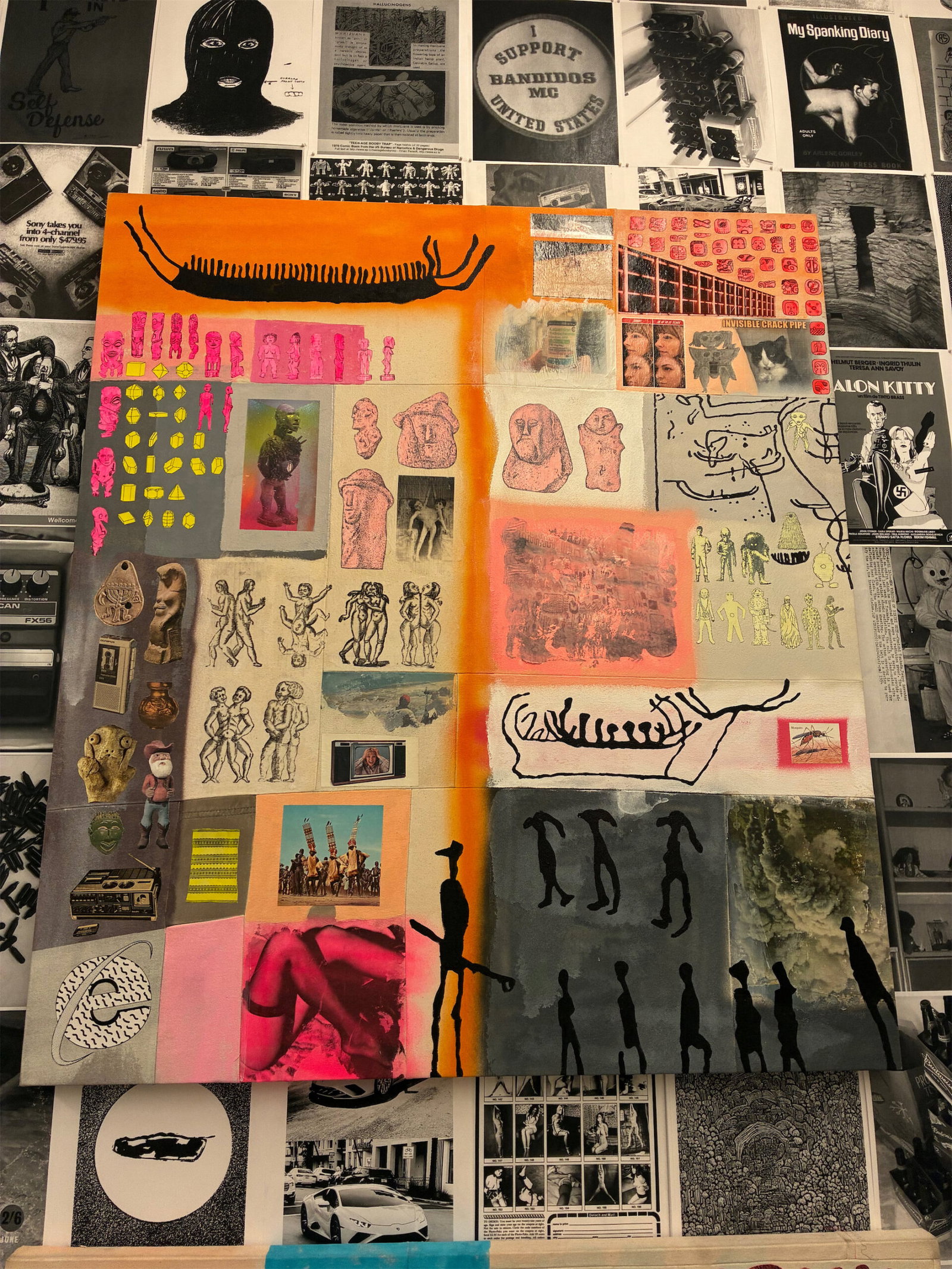
That tension drives Neural Net (2025). A black form spreads across a pale ground, part Rorschach blot, emblem and neurological obstruction. Around it, signs of violence and knowledge enter unstable orbit. A pink network crawls across the edge with textbook confidence. Below, the painting loses confidence. The blot seems to organize the material while threatening to swallow it. Thought no longer unfolds through a line. It spreads through contact.
Uneven transfers, edges and failures of registration return the viewer to construction. A hand cut, moved, joined and misaligned these fragments. Cascio gives the network a body and then allows that body to show stress.
Transient Random Noise Bursts (2026) introduces a colder register. A hooded profile confronts a device that reads as target, mechanical ear and diagnostic instrument. The field glows with the pallor of a hospital corridor after visiting hours. In darkness, passages persist while others vanish.
Darkness does not erase the work. It selects another version. Perception becomes incomplete, vulnerable to residue. The painting behaves like a sensorium trying to stabilize after overload.
Rabbit Holes (2025) turns curiosity into architecture. Grotesque faces descend through a bright diagram whose channels promise order without revealing their rules. The structure recalls genealogy, conspiracy, cosmology and computation without resolving into one system. One image does not explain the previous image, but generates three more.
Cascio makes the structure legible, then fills it with faces that make legibility feel faintly cursed.
Danger and Menace In the Culture Club
The exhibition’s greatest strength is the acknowledgment of its own danger. Removed from history, charged images can flatten into equivalent visual units. Bullets arrive with menace already loaded. Ancient objects risk becoming anonymous evidence of strangeness.
The strongest paintings expose that violence rather than claiming innocence. Seams fracture categories. Hand-drawn marks contaminate printed authority. Blank zones and badly behaved transfers interrupt the fantasy of total access.
“Culture Club” offers no index and no final category broad enough to contain what it gathers. It does, however, possess a nervous system. Images fire across seams. Color reaches the body before recognition catches up. Repetition becomes rhythm, then compulsion. Every painting tries to organize the world. Every image keeps breeding beyond the system designed to hold it.
The viewer advances, retreats, forgets, circles back and still misses things. The room teaches the body to behave like the mind under contemporary image pressure. Search, sort, connect, lose, return.
By the time the viewer leaves Basket Books & Art, the walls have already entered the mind. Forms continue sorting themselves somewhere behind the eyes. The club has no membership list. It has only a wall, and the wall keeps admitting images.
Christopher Cascio’s “Culture Club” remains on view through next Sunday, August 30 at Basket Books & Art, which can be found at 115 Hyde Park Boulevard in Montrose. For gallery hours and additional information, go here.
Trending
- Kelvin Sampson, Fran Fraschilla and More Big Names To Be Part of New H-Town Basketball Tipoff Event — a PaperCity Exclusive
- Bachendorf’s, Dallas’ Beloved Fine Jewelry Emporium, Adds Marina B to Its Enviable Roster of Brands
- This Music Lover and Rice Management President Brings Houston Best Dressed Style — Allison Thacker Embraces the Butterflies
- Inside a $15.5 Million River Oaks Boulevard Mansion With Its Own Indoor Swimming Pool, Beauty Salon and Crystal Chandeliers Galore
- A Lively Uptown Latin Spot Closes, Docent Steakhouse Sets Opening Date in Harwood District, and More Dallas Restaurant News

_md.jpg)