


Conductor Lessons — UH Maestro Jorge Parodi’s Expressive Style Helps Power the University’s Moores School Of Music
How To See Him and His Students Perform
BY Adrienne Jones //

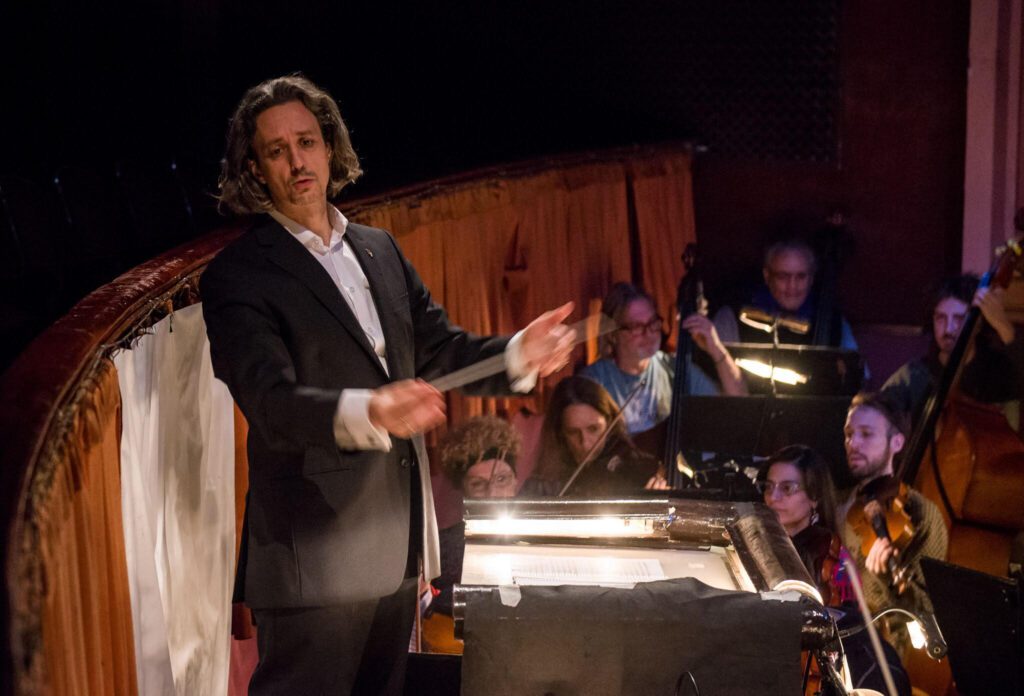
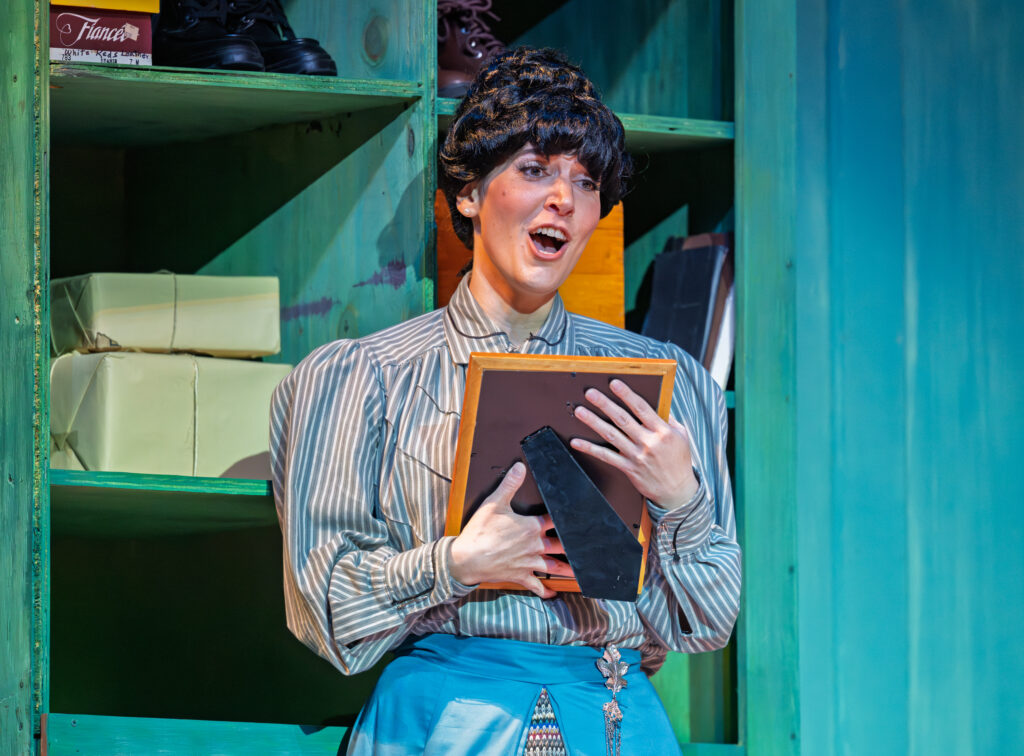
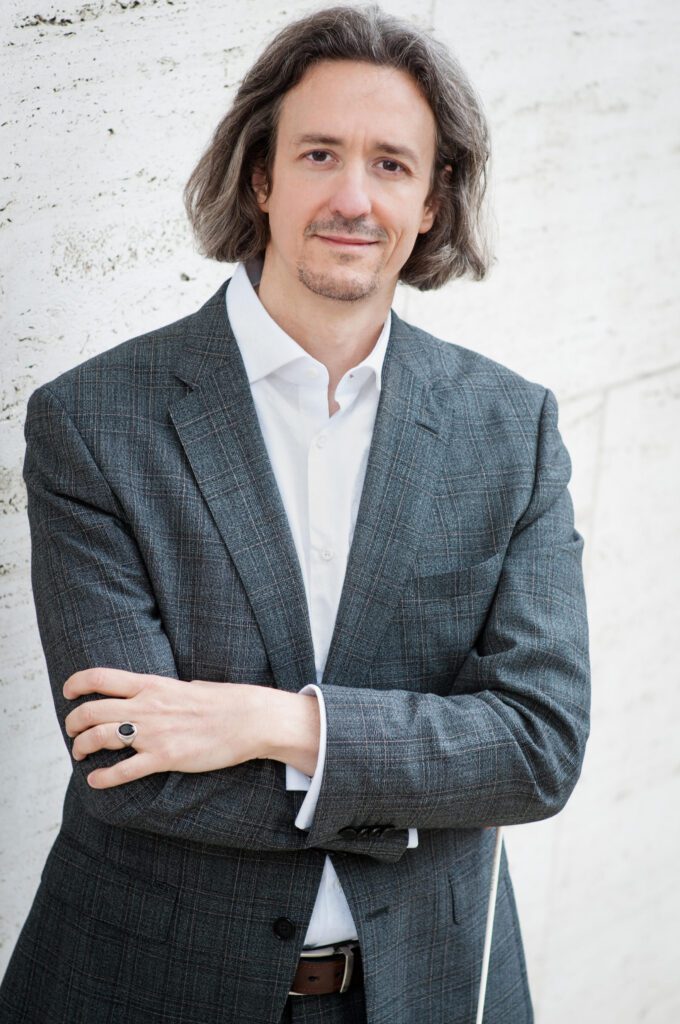


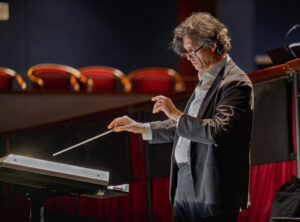
Jorge Parodi conducting at the dress rehearsal for Tom Cipullo's "Hobson's Choice," world premiere at the Moores School of Music
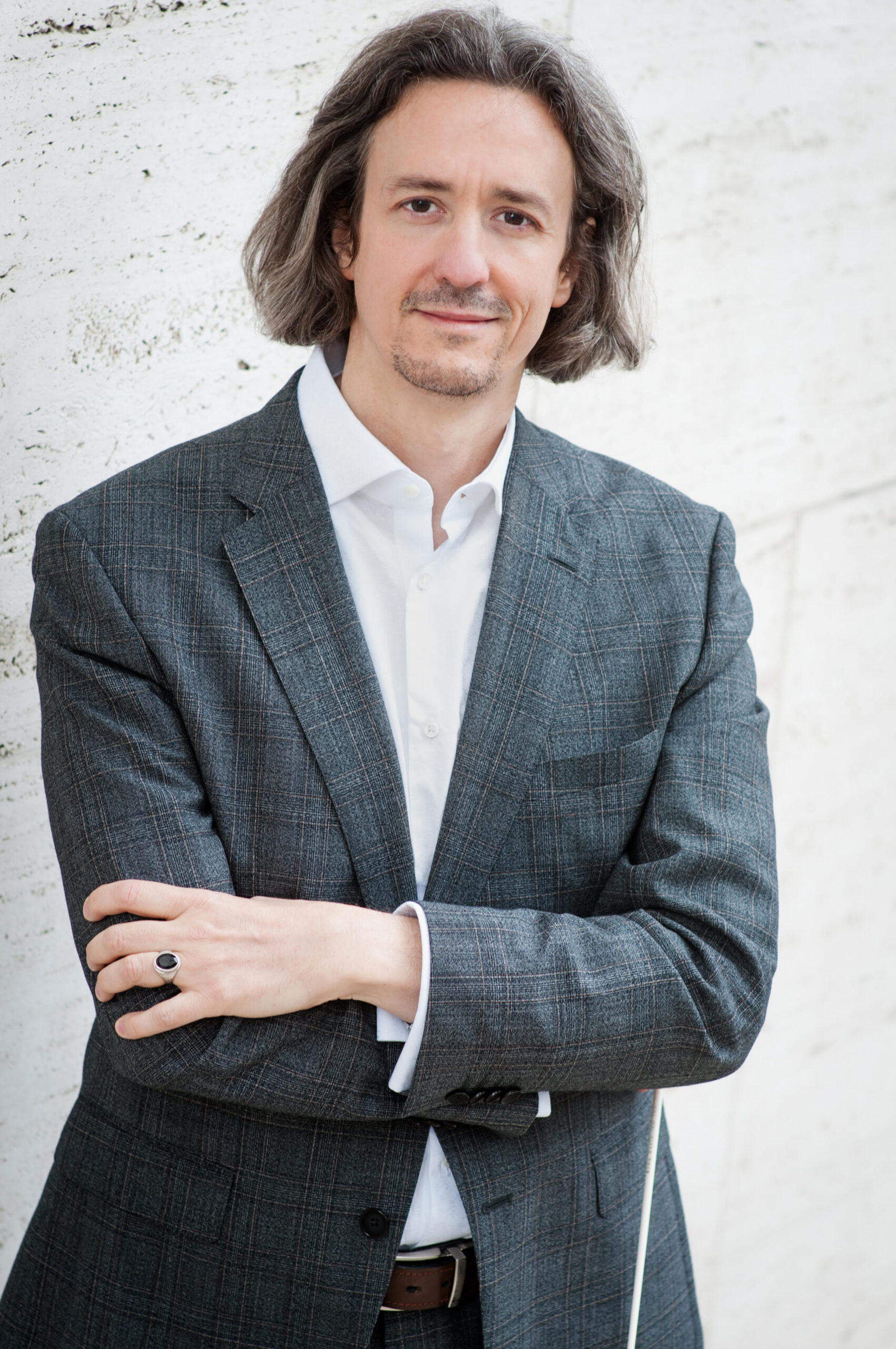
When neutron stars meet, the universe flares in gold and the cosmos sings, bringing something new and even brighter in its wake. Two brilliant earthly forces joined when the Moores School of Music named eminent conductor and educator Jorge Parodi the music director of the Moores Opera Center, professor of conducting and associate director of orchestras — roles that encompass all of the school’s instrumental students.
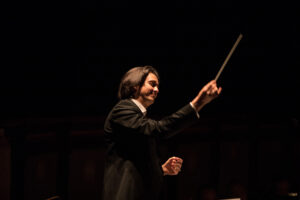
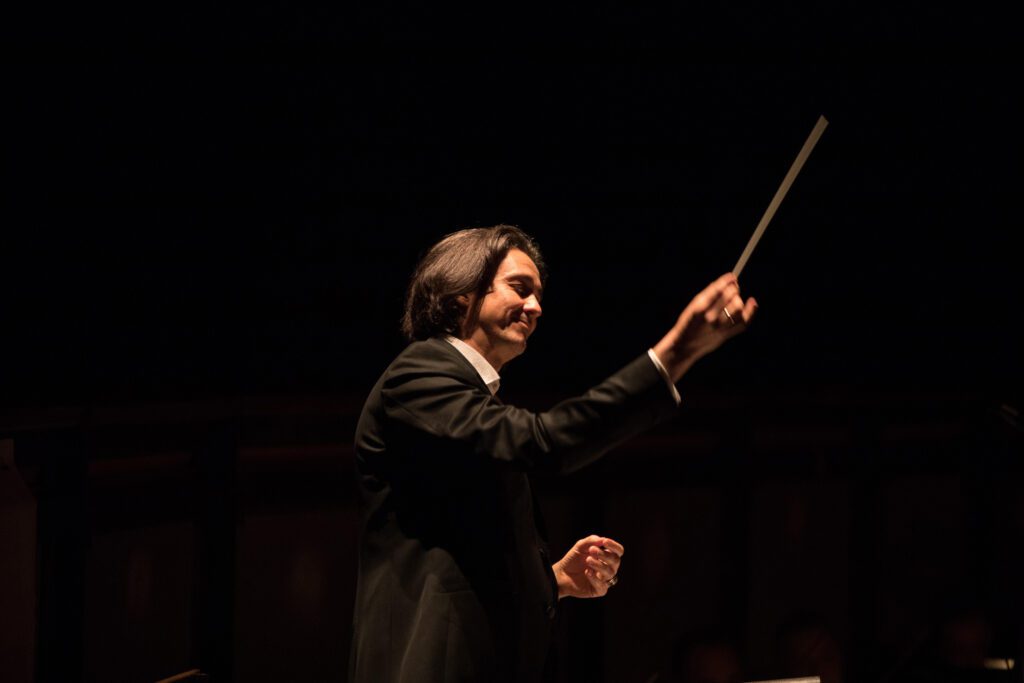
Parodi ‘s extensive resumé includes conducting, teaching and offering master classes across four continents. The New York Daily News called his conducting hands “the most expressive since Stokowski.” Opera News praised his skill at “drawing vivid colors from the orchestra.”
Entering his second year at the University of Houston, Parodi hit full stride earlier this year with Moores’ vibrant production of Tom Cipullo’s comic opera Hobson’s Choice, a triumphant world premiere. Moores also recently won first place in Division VII of The National Opera Association’s Opera Production Competition for its production of Suor Angelica/Gianni Schicchi by Giacomo Puccini and Giovacchino Forzano, which Parodi conducted.
Parodi’s path to the podium is inspiring in many ways. He grew up in Santa Rosa, the Argentine capital of La Pampa, a sparsely populated province known for its fertile soil, sunflowers, wheat, cattle ranching,and Argentina’s famous cowboys — the gauchos.
Even though his small city was missing a culture of classical music, Parodi discovered his parents’ record collection at five years old and fell in love. He started piano lessons at age six, making his way to the neighborhood conservatory 10 years later. The young musician went on to gain a place at the Conservatorio Nacional de Música of Buenos Aires, where he completed studies in conducting and piano performance.
But vocal music has been his love since the beginning. He wrote songs and set texts to music and wanted vocal music to be part of his future.
The Allen





An Unexpected Invitation
Parodi’s path took a serendipitous turn when he went to hear famed American mezzo-soprano Frederica von Stade in recital at Buenos Aires’ Teatro Colón. She was partnered with pianist Martin Katz, one of the most revered accompanists of the day. Katz had chaired the University of Michigan’s program in “collaborative piano” for more than 40 years. The New York Times called him “the gold standard of accompanists.”
Parodi was so struck by the performance, he approached Katz afterward and asked for a lesson. Surprisingly, the pianist agreed. This would be a pivotal moment in Parodi’s life.
“On the spot, he offered to be my teacher,” Parodi recalls. “It was 1996, and he arranged for me to go immediately on a full scholarship.”
Parodi would go on to graduate from the University of Michigan with a master’s degree in accompanying and chamber music. Now, he has been on the faculty of The Juilliard School for more than a decade and serves as music director for Opera in Williamsburg, Virginia and the Senior Opera Theater at the Manhattan School of Music. He is the founder and artistic director of the Tokyo International Vocal Arts Academy and artistic director of New York City’s Opera Hispánica, the premier company in the United States dedicated to Hispanic vocal repertoire.
“At 18, I’d barely heard a violin,” Parodi says. “At 28, I was at Juilliard.”
Becoming a Teacher
Parodi wears his gifts and accomplishments lightly. When asked about the secret to success in the highly competitive field of music performance, he tells his students: “Talent, ability, luck and being in the right place at the right time.”
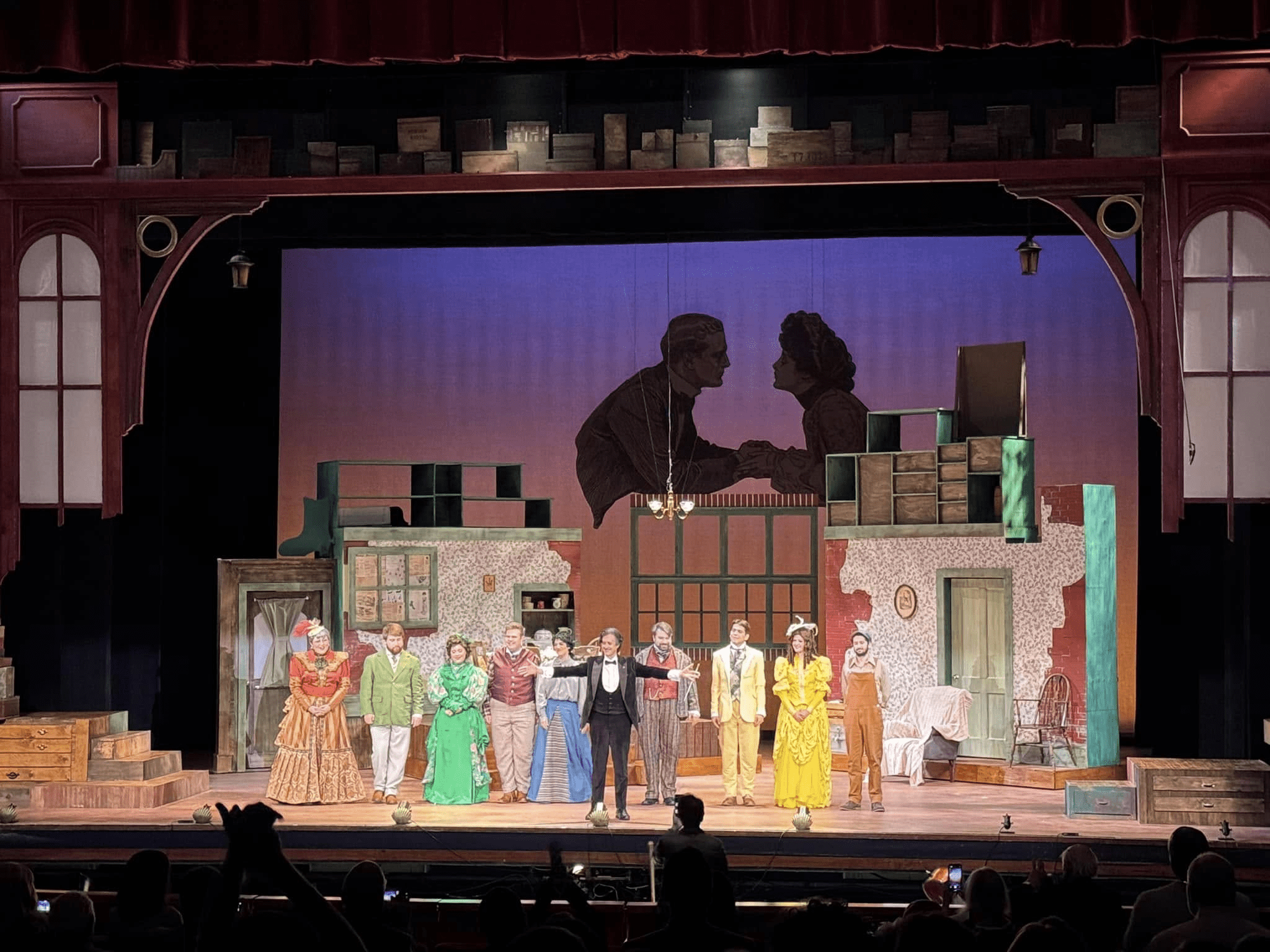
The conductor took his bows to wild applause on opening night of Hobson’s Choice. The foot stomping and bow waving from the orchestra pit were lively expressions of the young musicians’ enthusiasm for their teacher.
At rehearsal, Parodi worked with students to bring out his desired musical effect: sweet melody sprinkled liberally with light-heartedness and impishness, fitting for comedy. He helped students reach for the lush and warmer tones of sweeping lyricism in the somewhat cinematic score, and coaxed the comic elements from the percussion’s array of blocks, drums, triangle and other noise makers in its impressive rhythmic arsenal. The good humor of the trombones and perky pizzicato of the strings could not be overlooked either.
The show’s success was a testimony to the abilities of the students, but also to Parodi’s phrase-by-phrase rehearsal technique and his skill on the podium, yielding perfectly-coordinated timing and dynamics and drawing lots of laughs from the audience.
Listening to Parodi talk, and watching him with students in an orchestra rehearsal, it’s easy to see he truly enjoys teaching.
“Teaching is helping people do what they want to do,” he says. “I’m fortunate to be with students doing this as the main purpose of their lives. They want to do it. My job is to teach them what they want to do most.”
How does he do that? “In any performing art, people skills are very important,” Parodi says. “I’m not here to point out what you do wrong. There’s always an ideal in mind. I want to be a guide as to how something can be made better. How it can be more fabulous.”
A New Degree
One of Parodi’s goals at Moores is to create a named scholarship for a master’s degree in opera conducting.
“There would be an advantage to the student, but it would also give the school the opportunity to choose based on talent — to get the most talented student at that time regardless of ability to pay,” he says.
“It would be an investment that would really shine — a source of pride for the sponsor.”
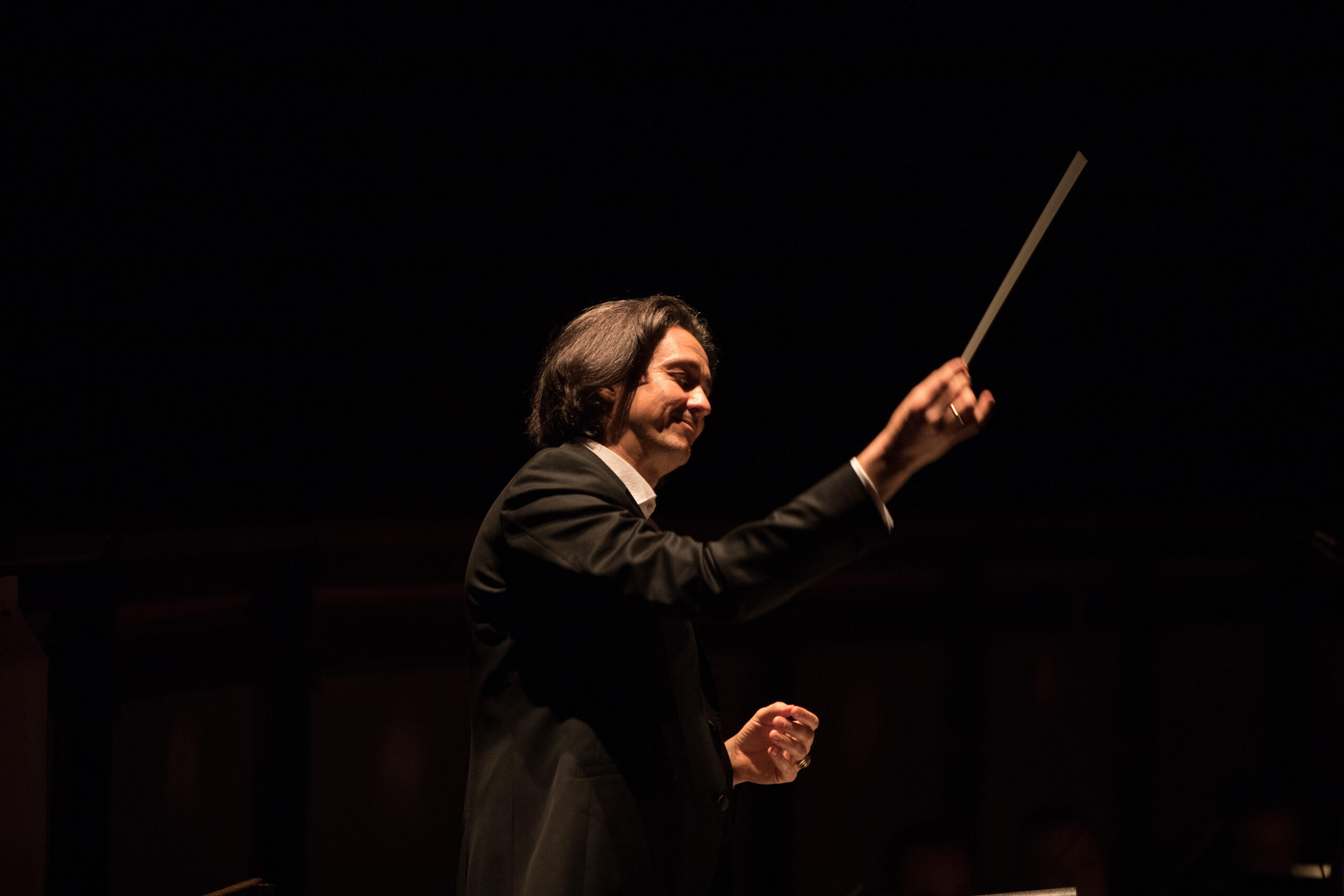
Opera conducting has a unique set of demands.
“It requires constant adjustment to what the music calls for,” Parodi says. “It’s music that’s very flexible and follows a text, so it behaves differently from music without a text. You’re dealing with the stage and the pit at the same time. It takes a lot of planning to cue everything a second before it happens.
“The conductor needs to have a good sense of drama. There are rules to follow. But no matter what you do, it’s your version.”
We hear many rumors about the future of opera. It’s popular and growing, especially with the arrival of contemporary works sung in English with relatable plots. But we also hear about opera companies that are mired in financial difficulty. (Fortunately, Houston Grand Opera is not one of those.)
“It’s important for people of all ages to be exposed to opera,” Parodi says. “They may like it and follow it, or not. The arts are a niche thing, but it’s OK. We don’t expect the kind of draw that sports get.”
Parodi looks at opera from the other side of the curtain: behind it.
“The arts are fueled and directed by artists who want to do it, and we have many who do,” he says. “But the most important thing students need to know is that anyone can do it. Even a little kid from La Pampa.”
Maestro Jorge Parodi is set to conduct Carols on the Green at Discovery Green’s Anheuser Busch Stage this Saturday, December 13 from 7 pm to 8:30 pm. Admission is free. Learn more here. Parodi will conduct Mozart’s The Magic Flute at Moores Opera House from Thursday, February 5 through Saturday, February 7, with a matinee performance set for Sunday, February 8. For more information, go here.

_md.png)