Contemporary Texas Artists Make a Striking Statement at Houston’s Opera Gallery — Paintings That Leave an Impression
Rick Lowe, Mark Flood and Friends Make You Look
By Joseph Staley //
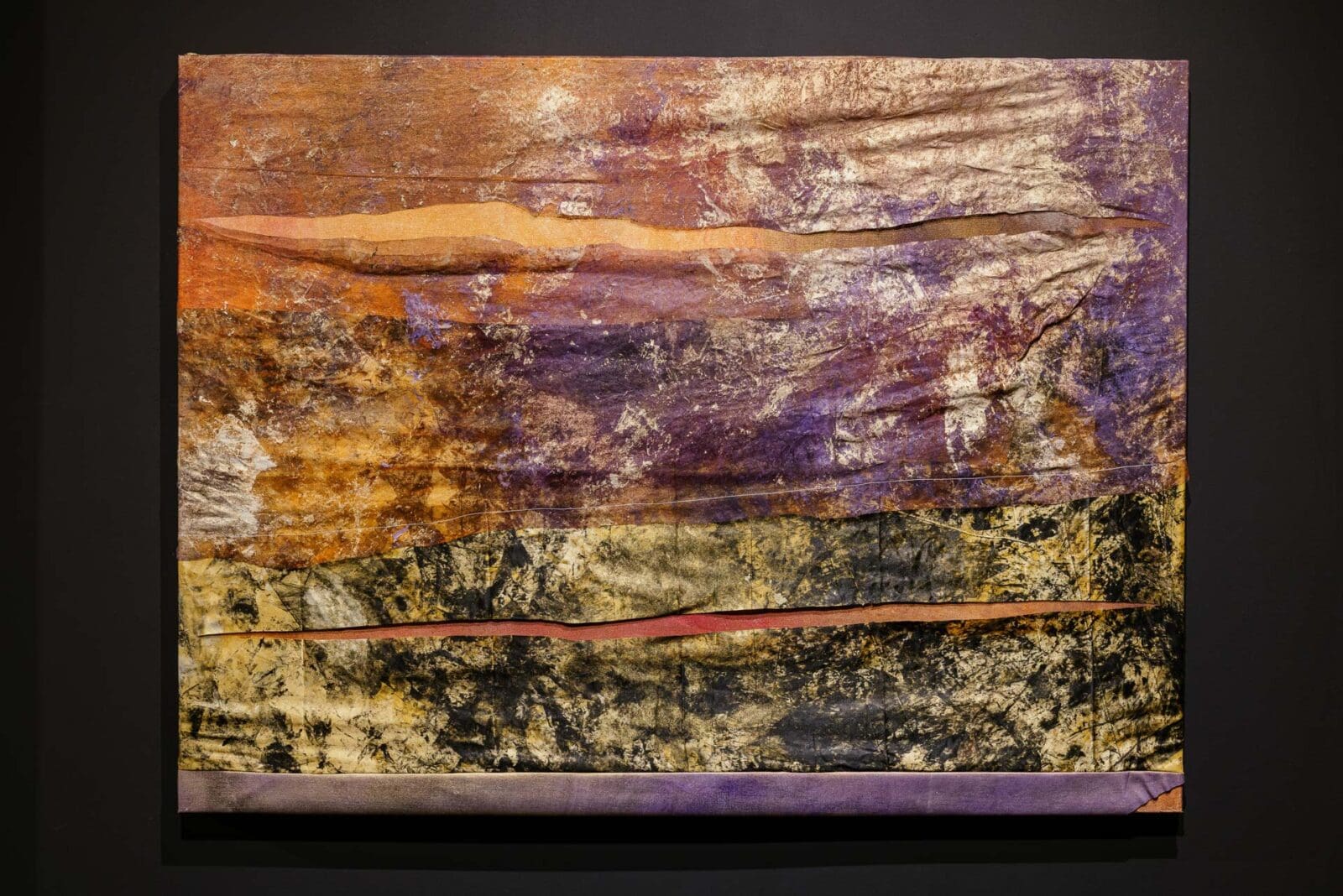
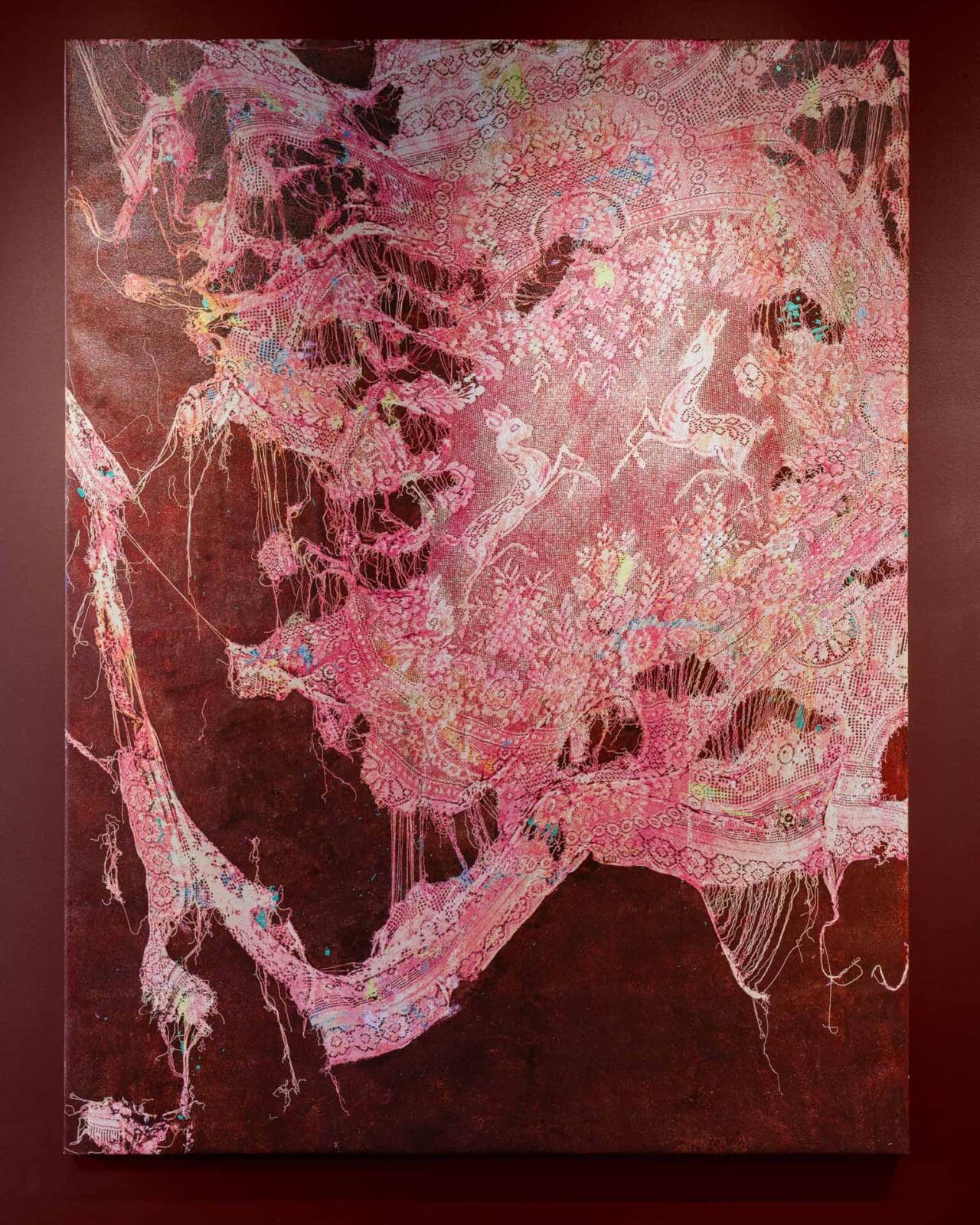
The pink in Mark Flood’s Two Fawns arrives before the damage. Lace spreads across a dark reddish ground, gathering into floral medallions, scalloped edges and threads that seem to have outlived whatever held them together. The eye follows a pattern until it breaks, then picks it up somewhere else.
There is something almost indecent about how beautiful the wreckage looks. Ornament survives its own unraveling and, in the process, becomes more difficult to leave alone.
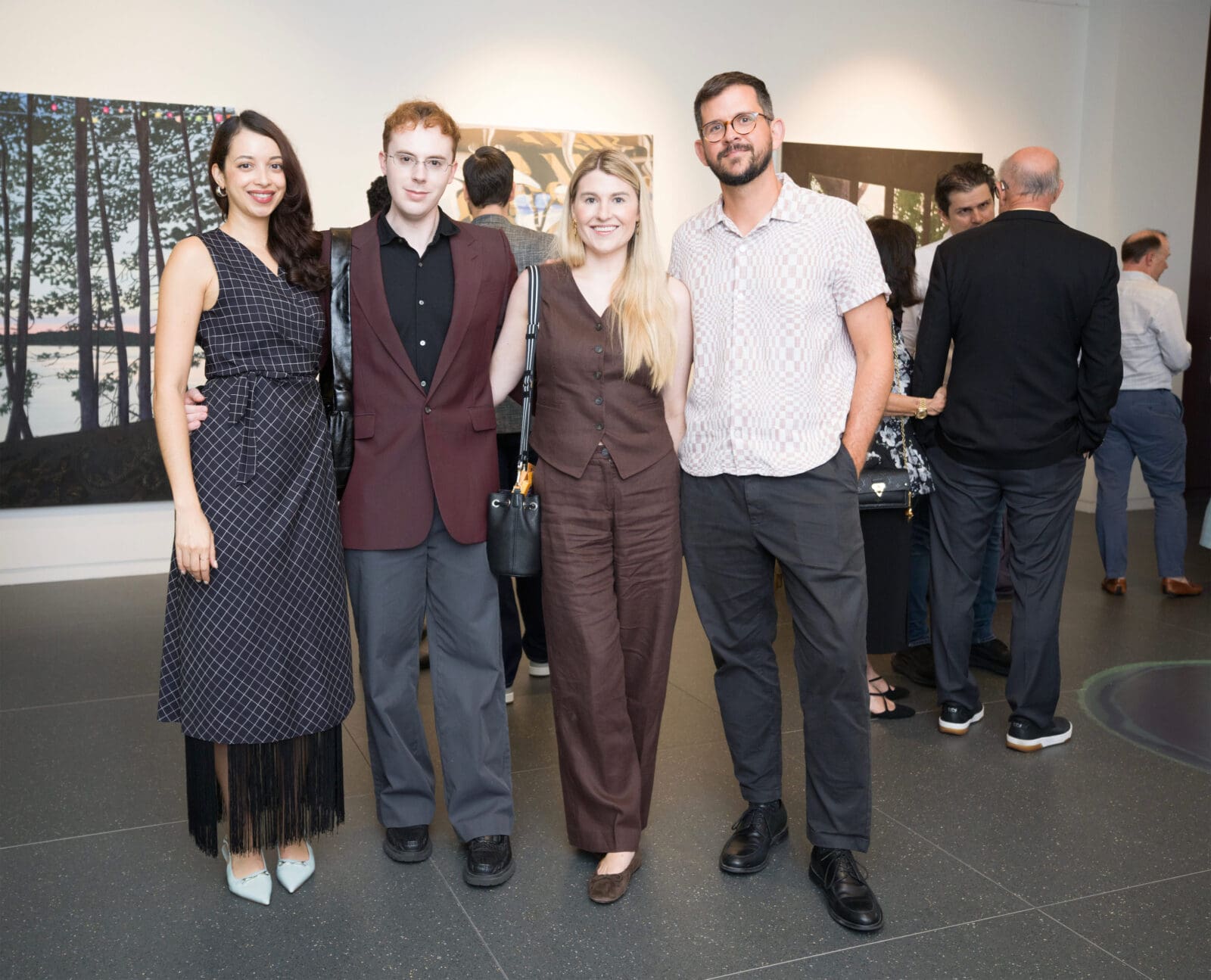
At Opera Gallery Houston, “Texas Contemporary” is bringing together Rick Lowe, Mark Flood, Lovie Olivia, Bradley Kerl, Preston Douglas Boyer, Eric DePan, Virginia L. Montgomery and Reynier Leyva Novo for an art exhibition now on view through this Sunday, October 18 . Texas supplies the occasion, though these artists’ works offer more particular reasons for looking.
Paintings from Flood, Olivia, Kerl, Douglas and Lowe promise the pleasures of entry, recognition and order while quietly interfering with our access. A border takes over. A landscape thickens into a screen. A picture leaves its center behind.
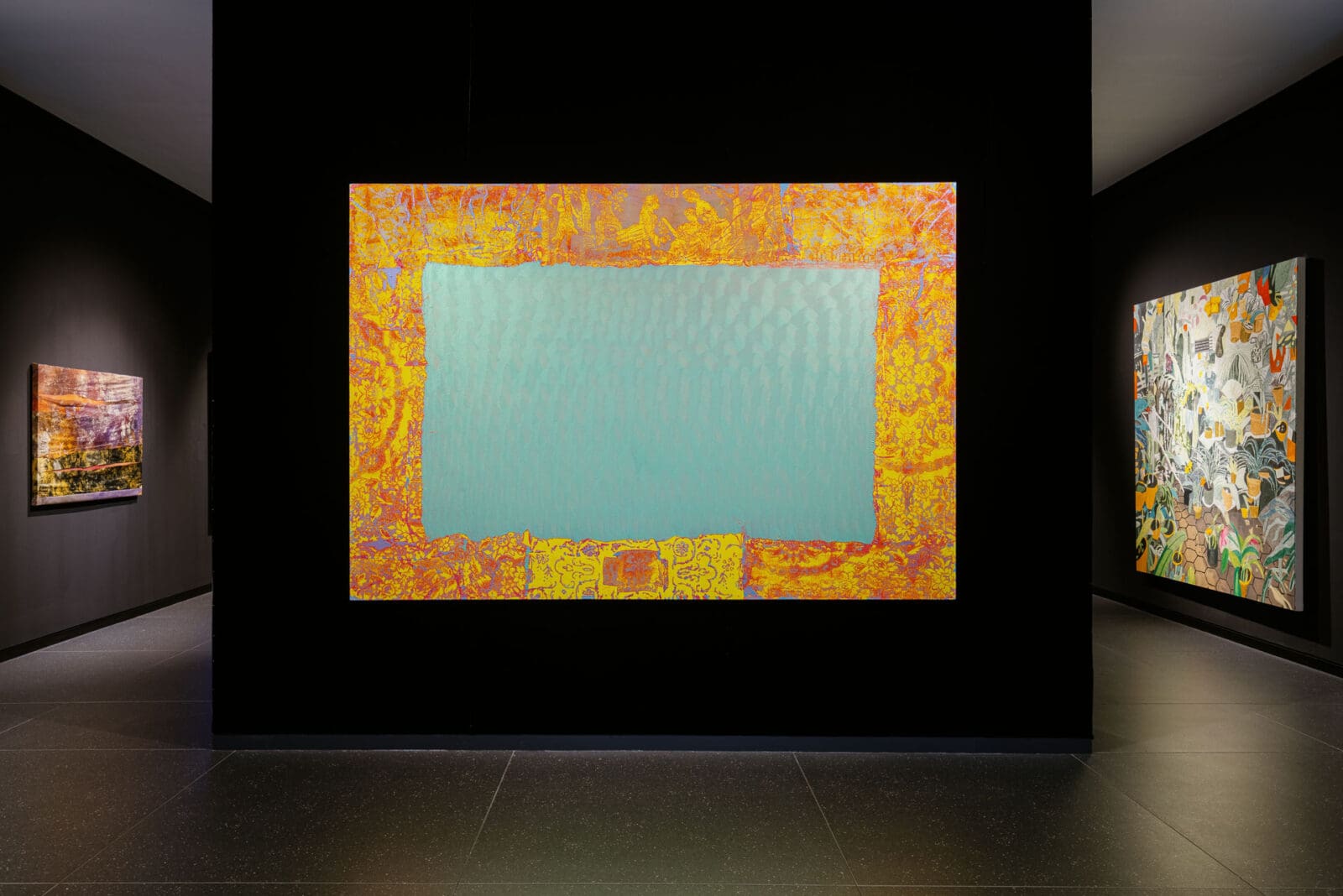
Flood’s Page From A Wanderer’s Scrapbook gives an expanse of turquoise over to the uneasy hospitality of an ornamental frame. Pink and yellow crowd its edges, their intricate repetitions making the center appear almost expectant. Brushwork stirs the turquoise without resolving that expectation. The painting holds open a place where something might arrive, while its border has already supplied more than enough to occupy us. Against the dark gallery wall, the color approaches the artificial brightness of a display.
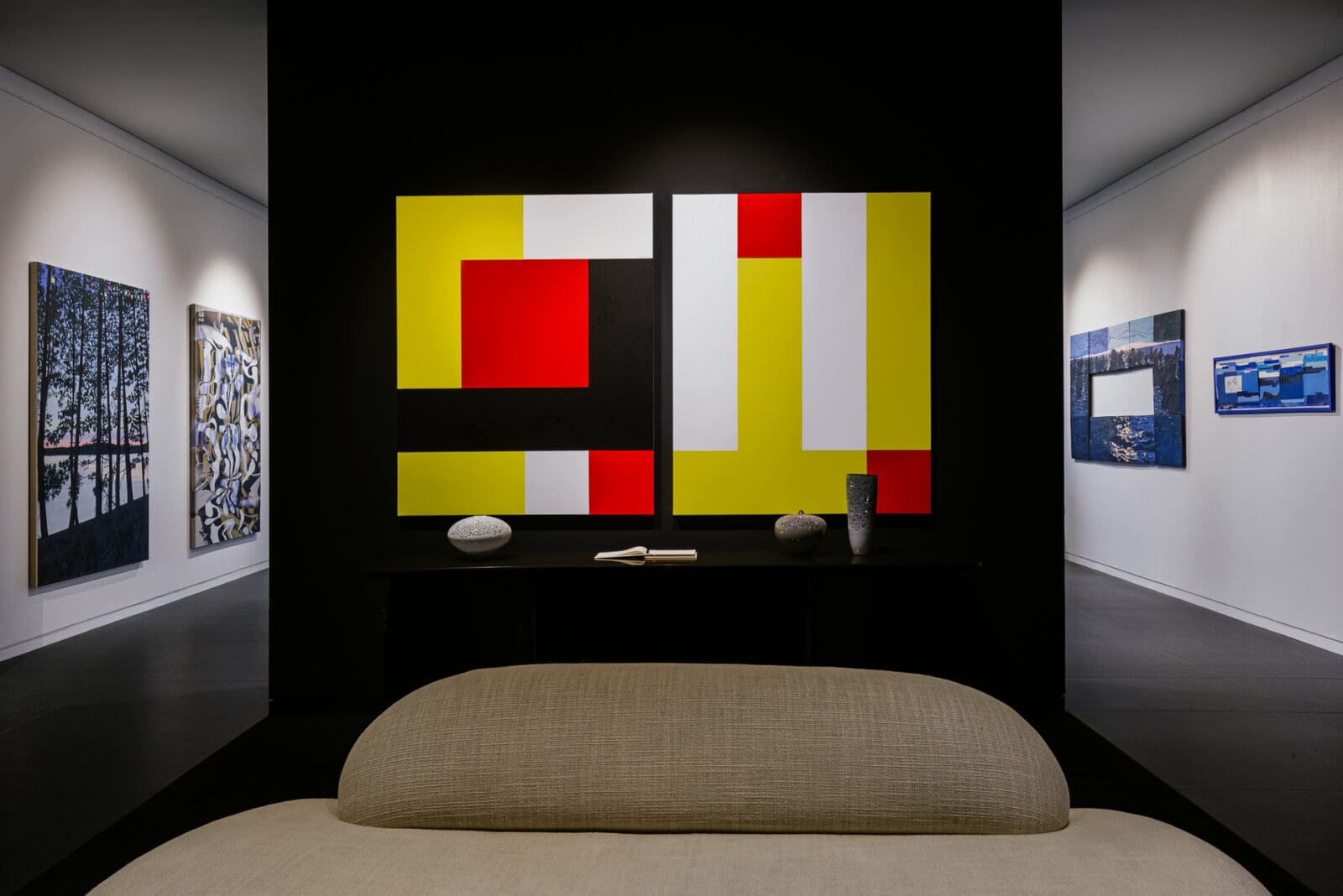
In Reduced Death Anxiety and Written Informed Consent, red, yellow and white settle into rectilinear arrangements. Black cuts through the former. Their composure carries an odd bureaucratic undertone once the titles enter the picture. These are phrases encountered when institutions attempt to manage the unruliness of bodies and consequences. Applied to geometric painting, they suggest an assurance whose terms remain unavailable.
Holiday Decor


Everything looks organized. Whether that should comfort anyone remains another matter.
Can’t Be Washed Away
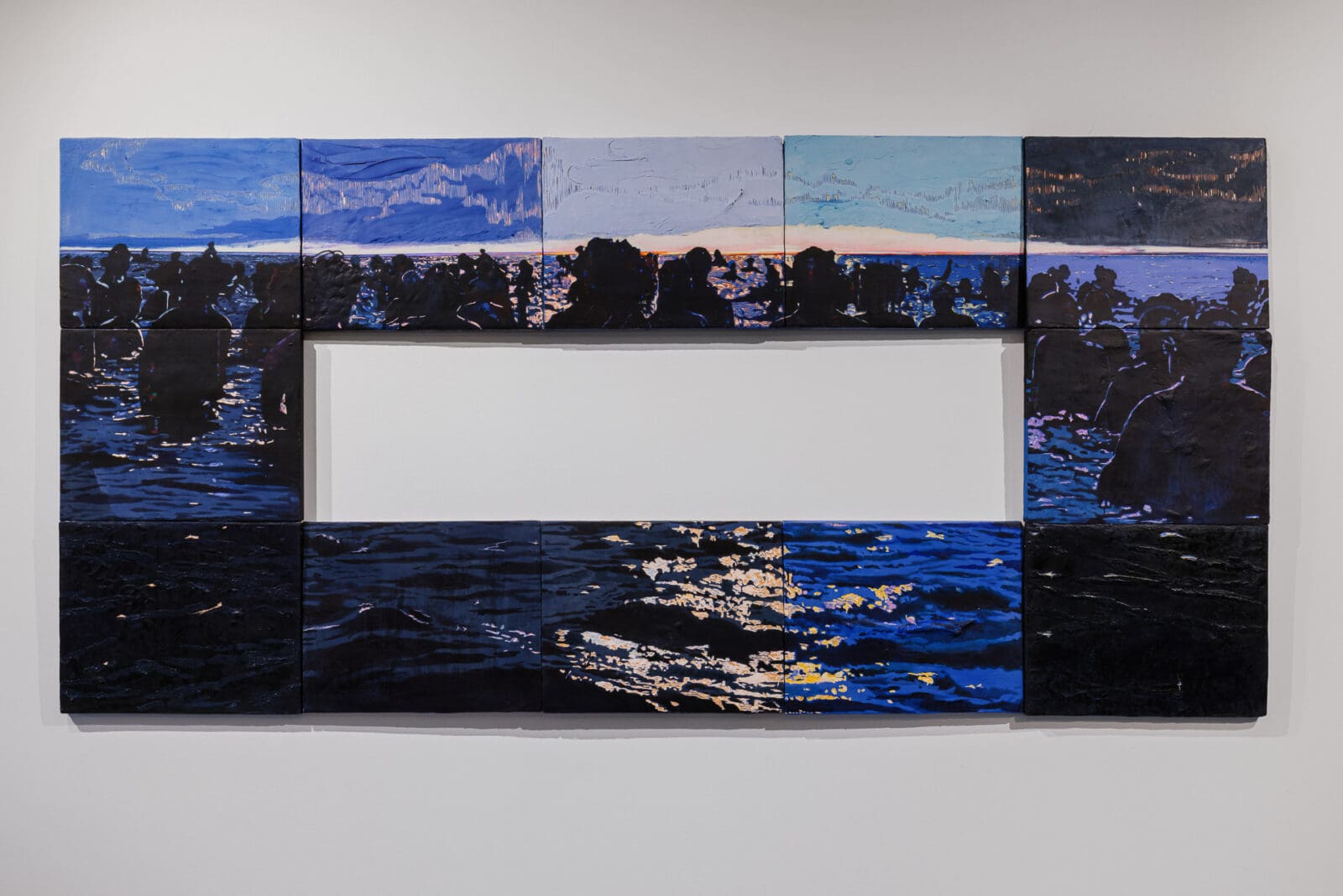
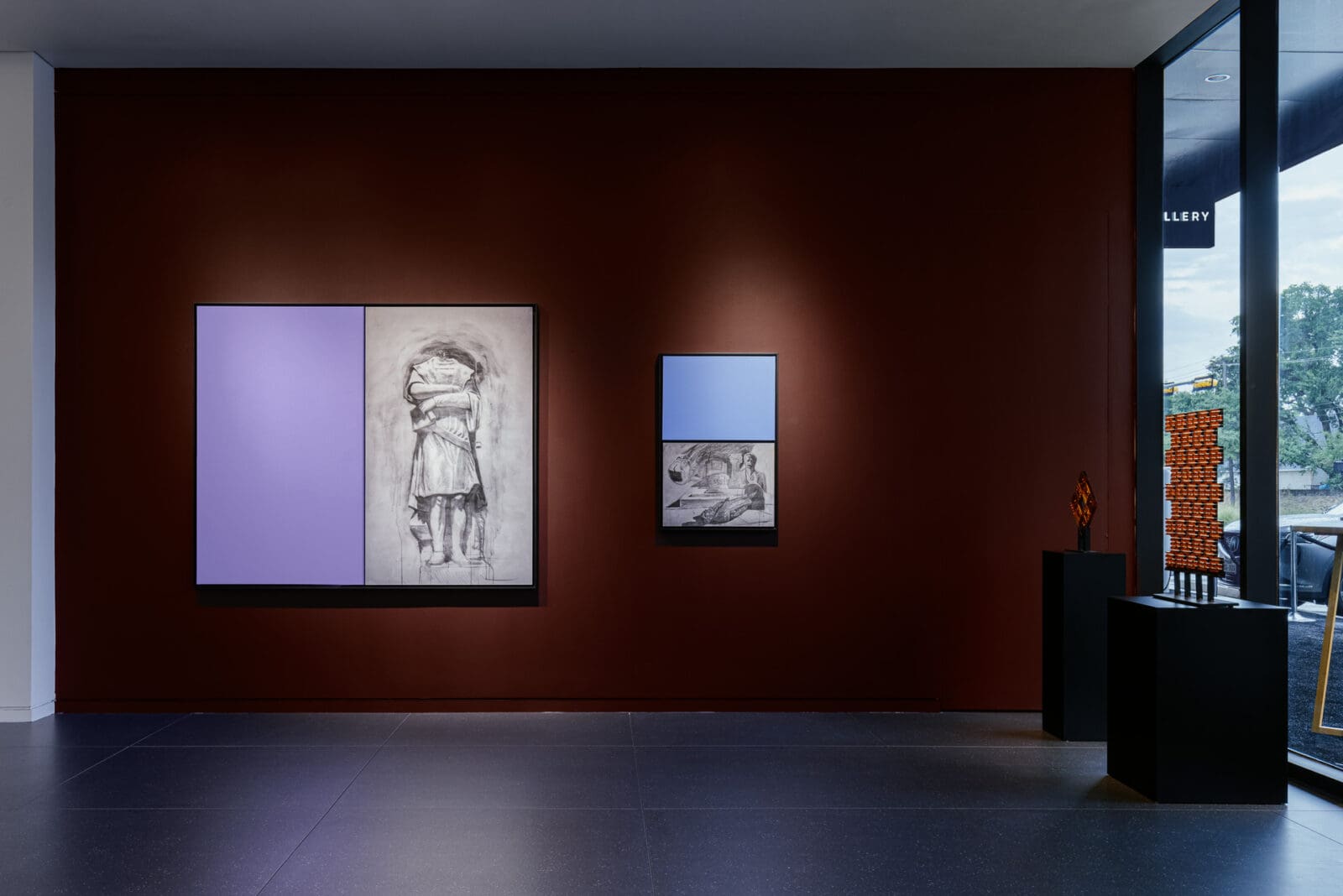
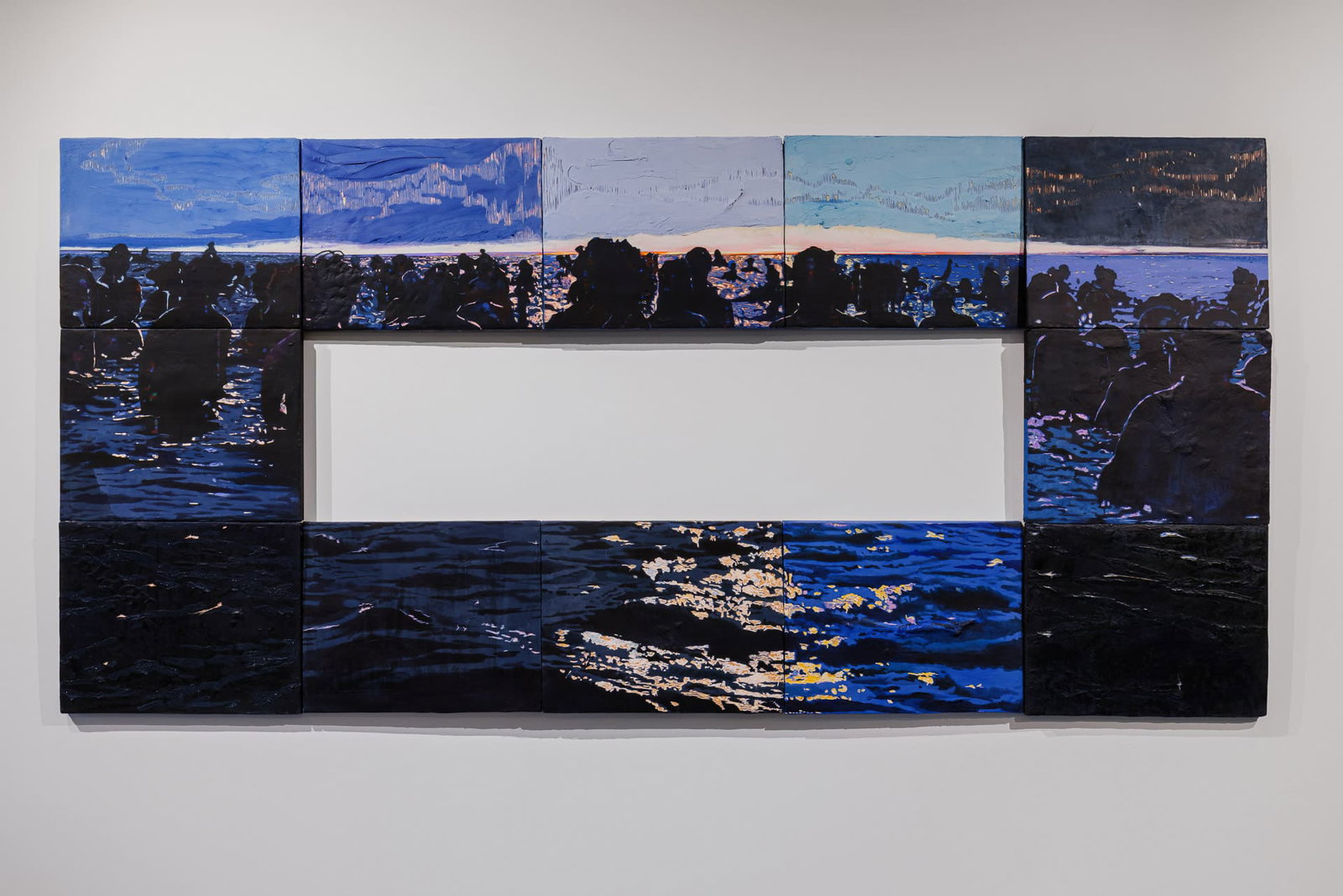
Olivia’s Still Can’t Be Washed Away makes the unavailable center literal. Figures gather in dark water beneath a narrow band of light, their surroundings distributed across panels that enclose a rectangular opening. The gallery wall appears where the scene might continue. A viewer’s eyes can follow the horizon across the upper register, but the larger image requires a reconstruction the work never allows them to finish.
That opening gives the title an especially complicated force. Something persists, although persistence offers no guarantee of arriving intact. Olivia’s marble plaster, gypsum, acrylic, squid ink and wax lend the scene a worked, layered material presence, while the water carries reflected light around the absence.
The effect depends on a peculiar intimacy between what remains and what we supply. We complete enough to recognize a gathering, then encounter the limits of that recognition.
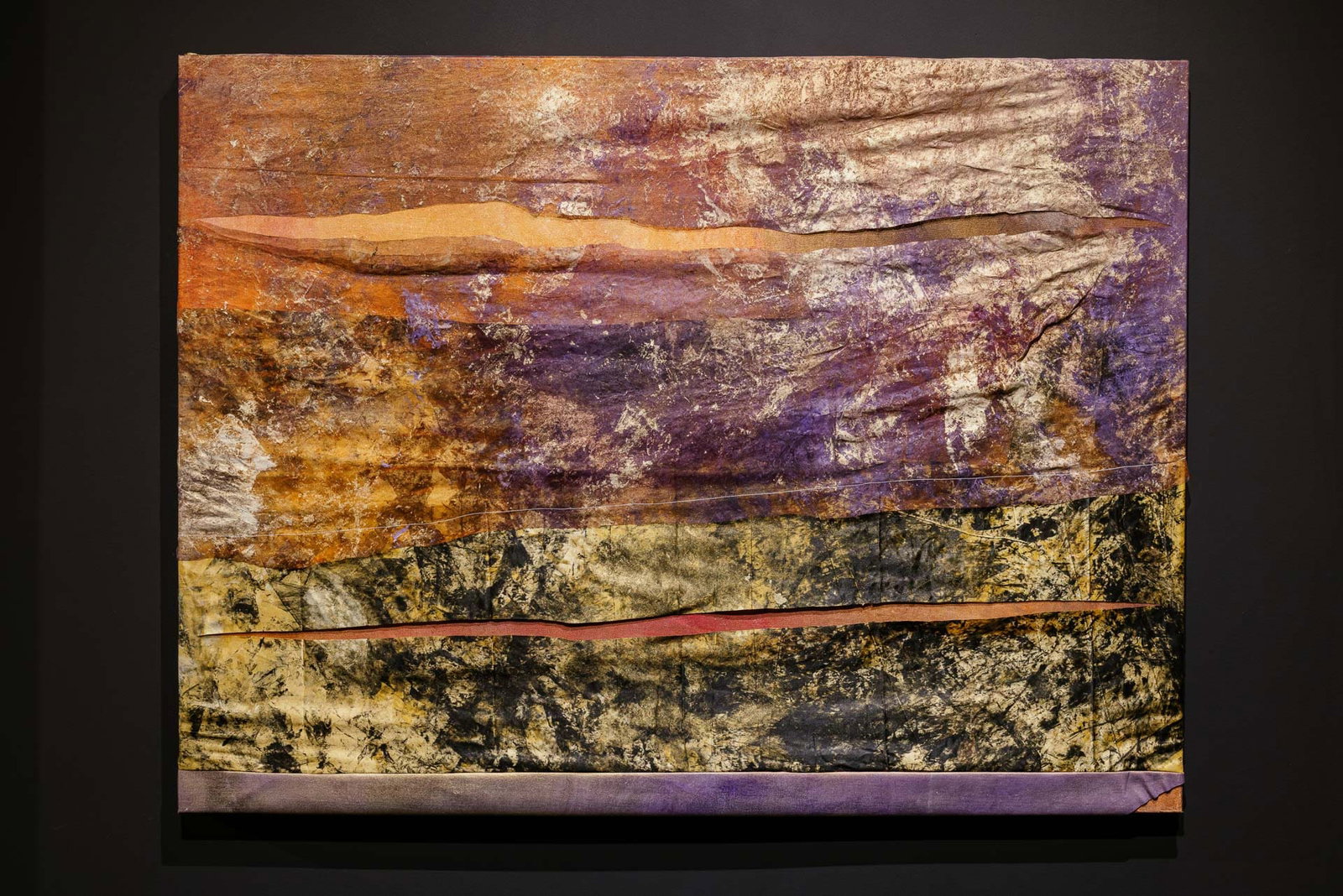
Beside it, Not Even with That Florida Water (2026) arranges overlapping blue folders within a long horizontal frame. Their tabs and pockets retain the familiar architecture of information kept for later. Olivia describes Houston as an archive she continually probes, and these works give that description a physical grammar: layers, divisions, containers, interrupted access. Preservation itself becomes an arrangement through which some things emerge and others recede.
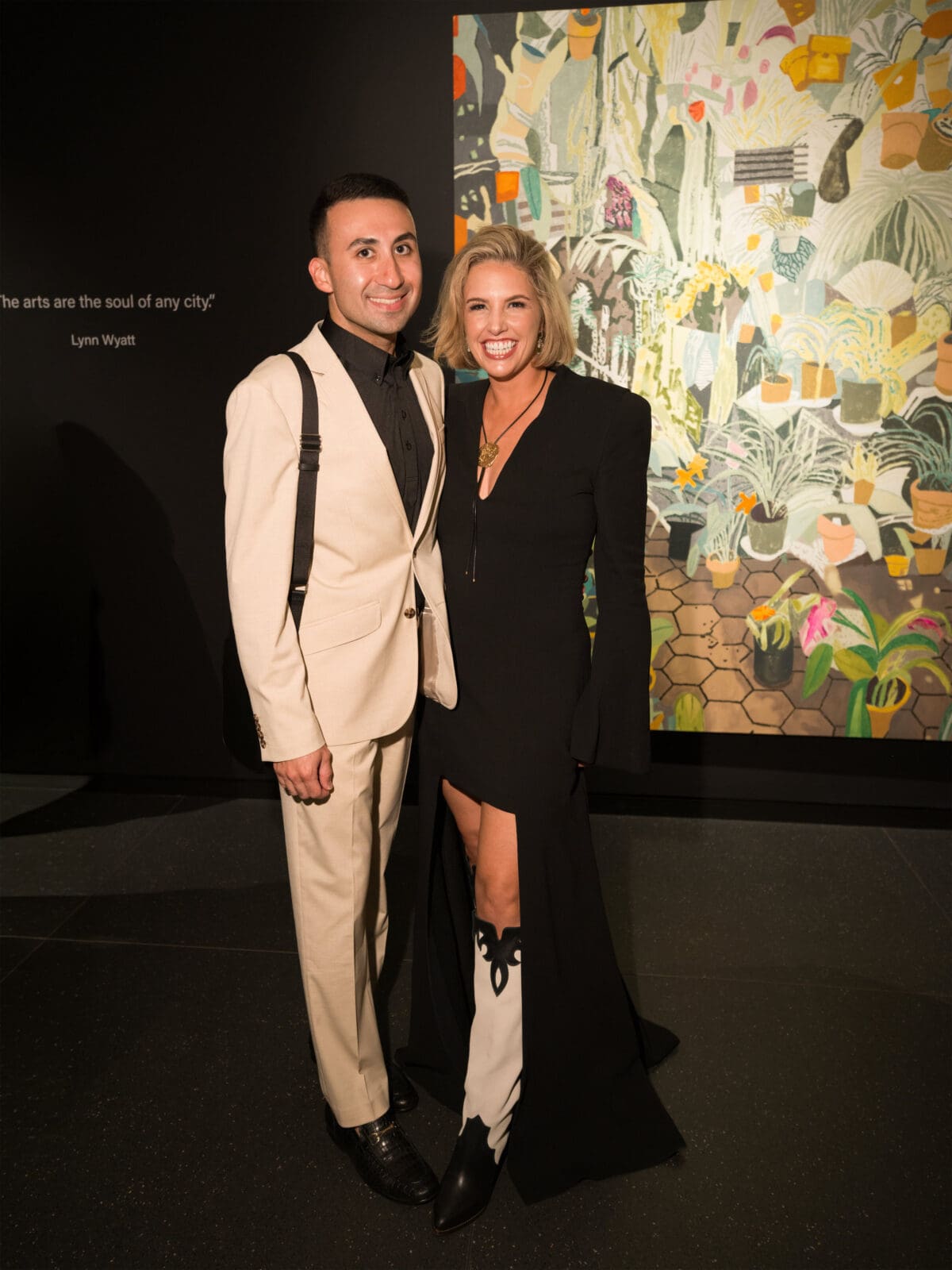
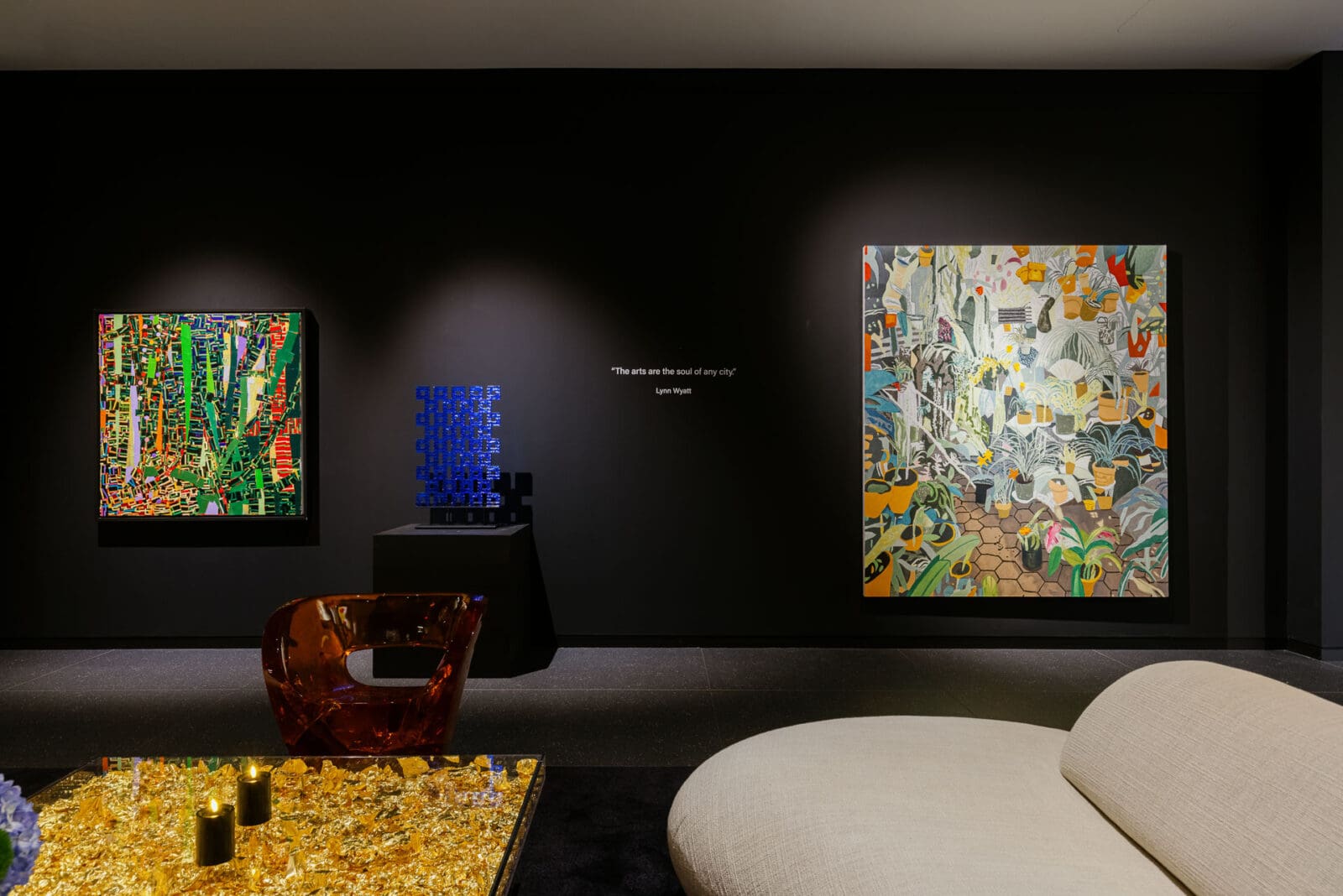
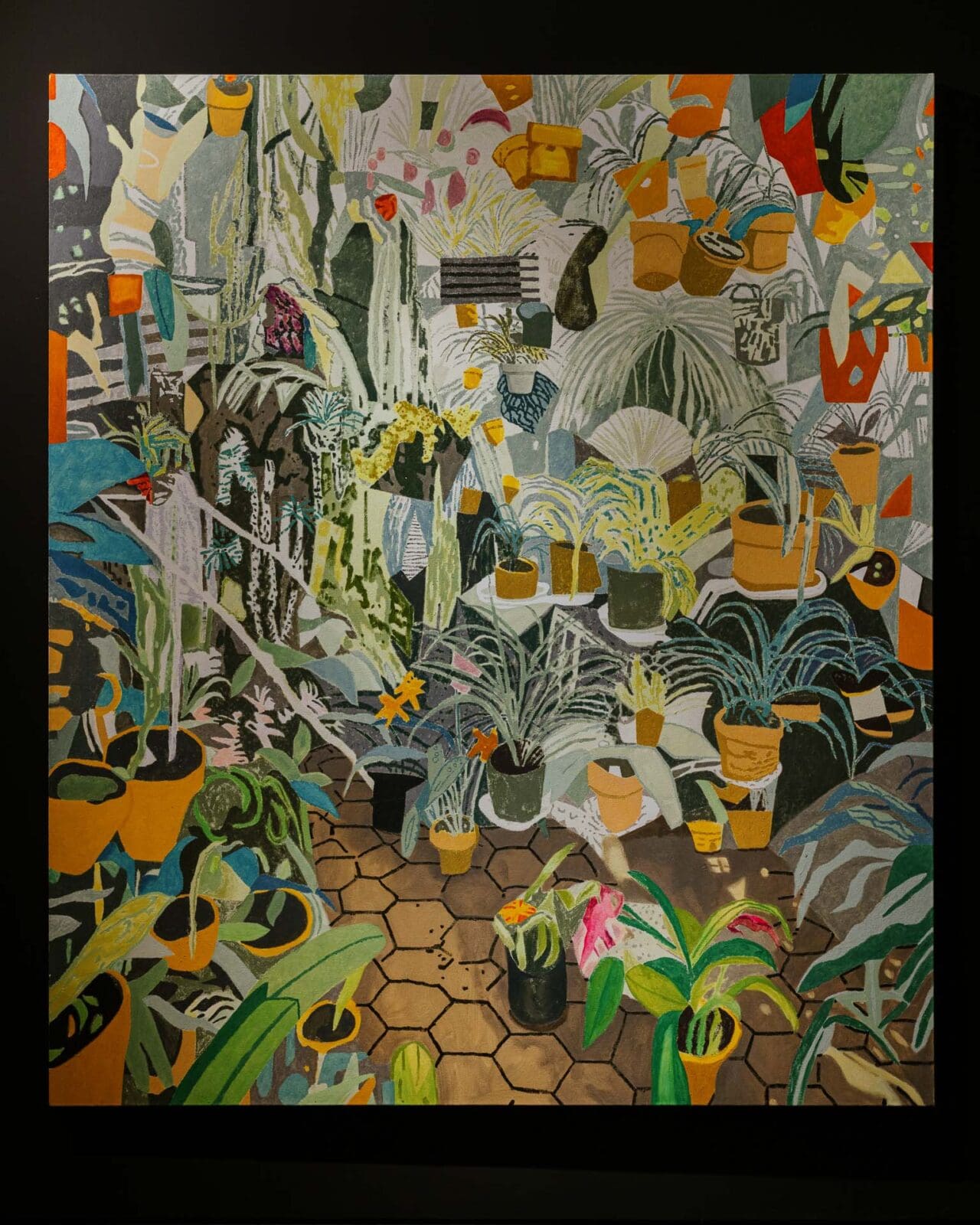
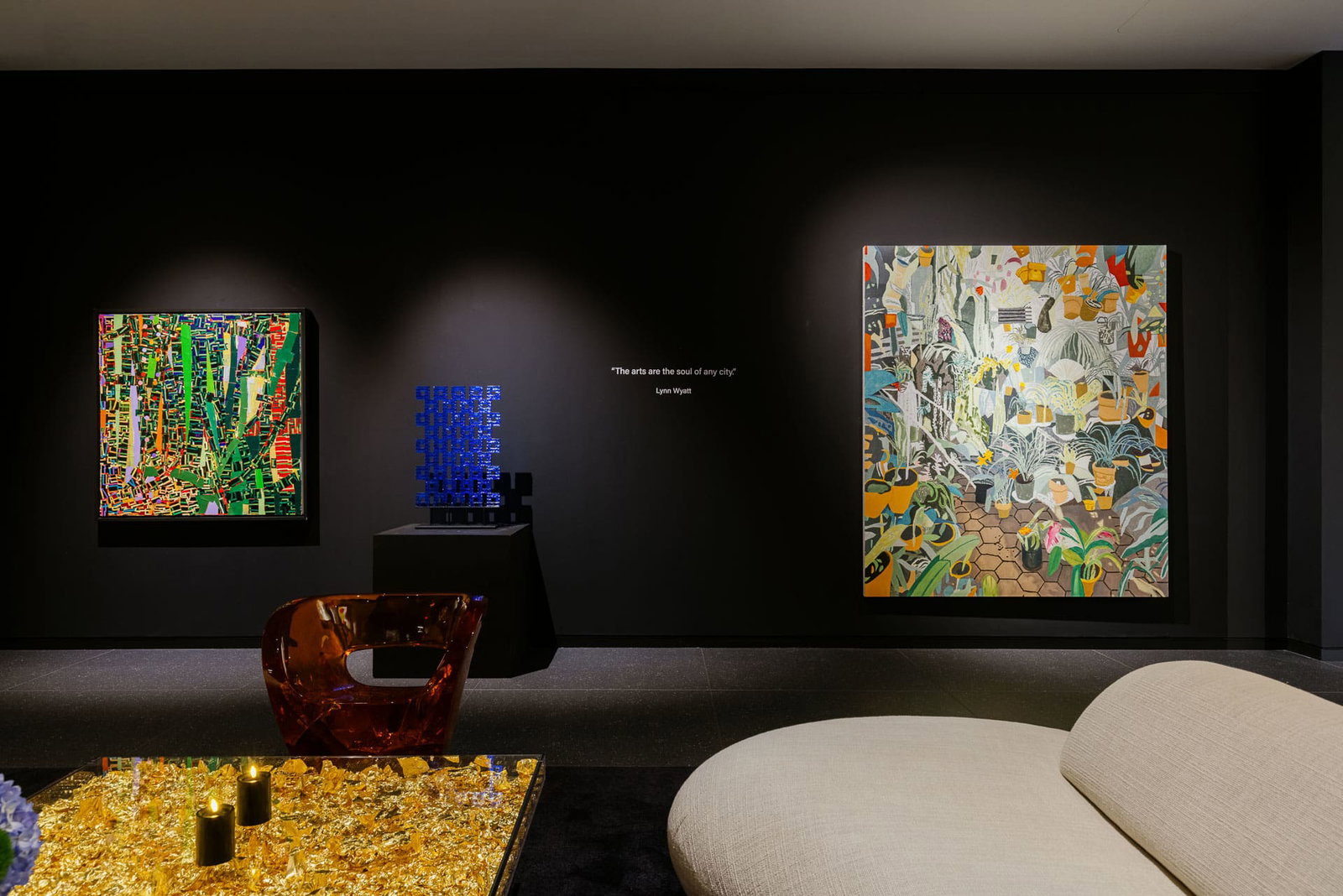
Kerl’s Sunspots (2022) replaces the missing center with an almost unreasonable abundance. Plants occupy pots, crowd shelves, extend leaves across one another, and press against the passage suggested by the tiled floor. The greenhouse recalls the spatial compression of Matisse’s The Red Studio (1911), where the room remains legible even as color draws its contents toward the picture plane. Kerl achieves a related tension through proliferation. Following a stem takes us sideways, into the dense company of other plants. Space keeps flowering into surface.
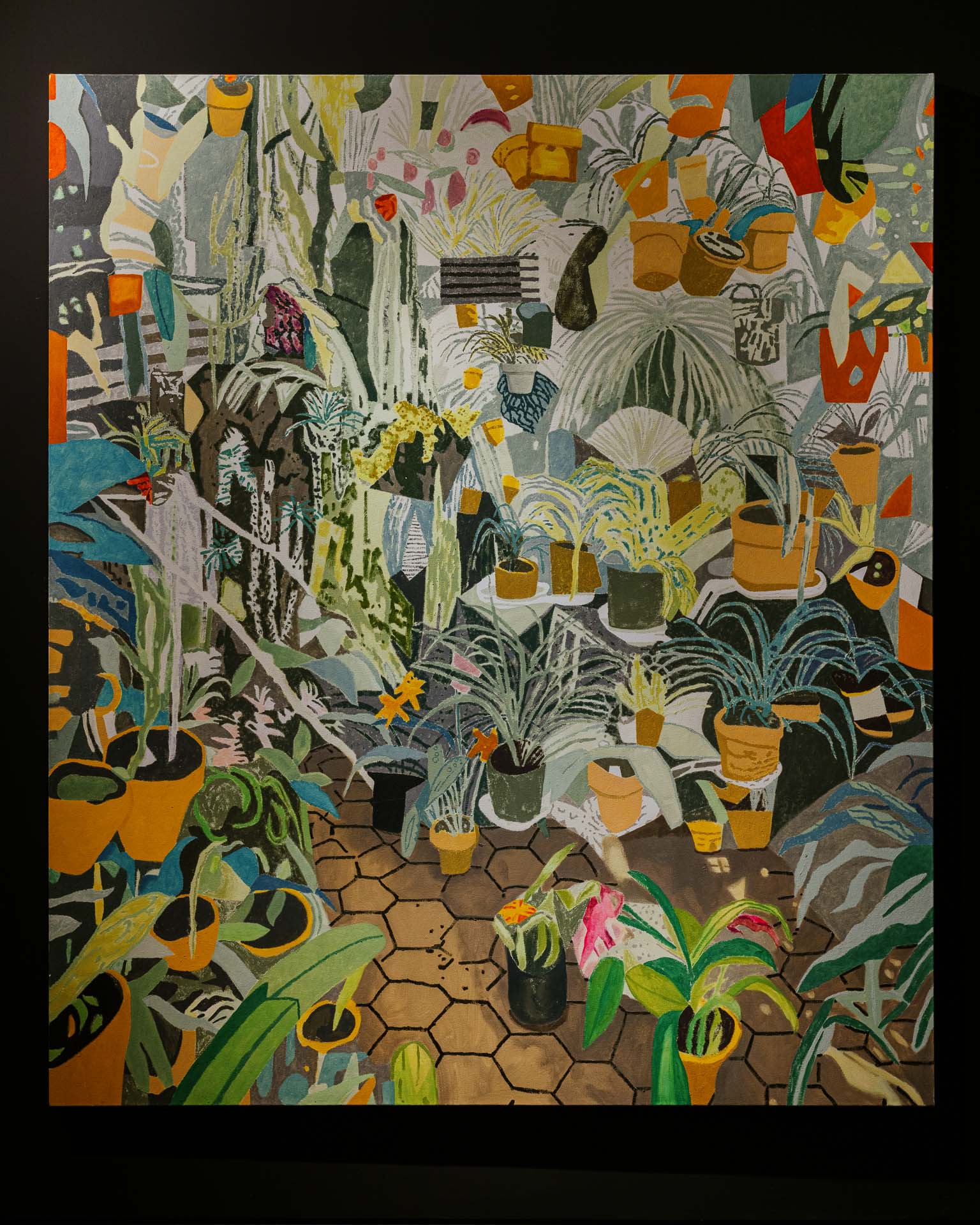
Kerl connects these paintings to new fatherhood and to the greenhouse and studio as places of nurturing. That context gives the congestion tenderness. All this growth requires containers, supports, somebody returning. The painting allows care to accumulate until it becomes an environment. In Night of the Hodag and There’s a Fire, dark vertical divisions similarly complicate luminous views, placing distance just beyond the things nearest us.
Art as Prayer
Between those paintings, Douglas Boyer’s Baptized By Light sends pale blue, white, ocher and dark forms through a rippling field. Contours bend before they can establish a dependable space. Douglas Boyer’s describes making art as part of prayer, and the title invites us to consider illumination as an event capable of altering what receives it.
Here, light appears to unsettle the image. The promise of revelation remains suspended within the pleasure of looking.
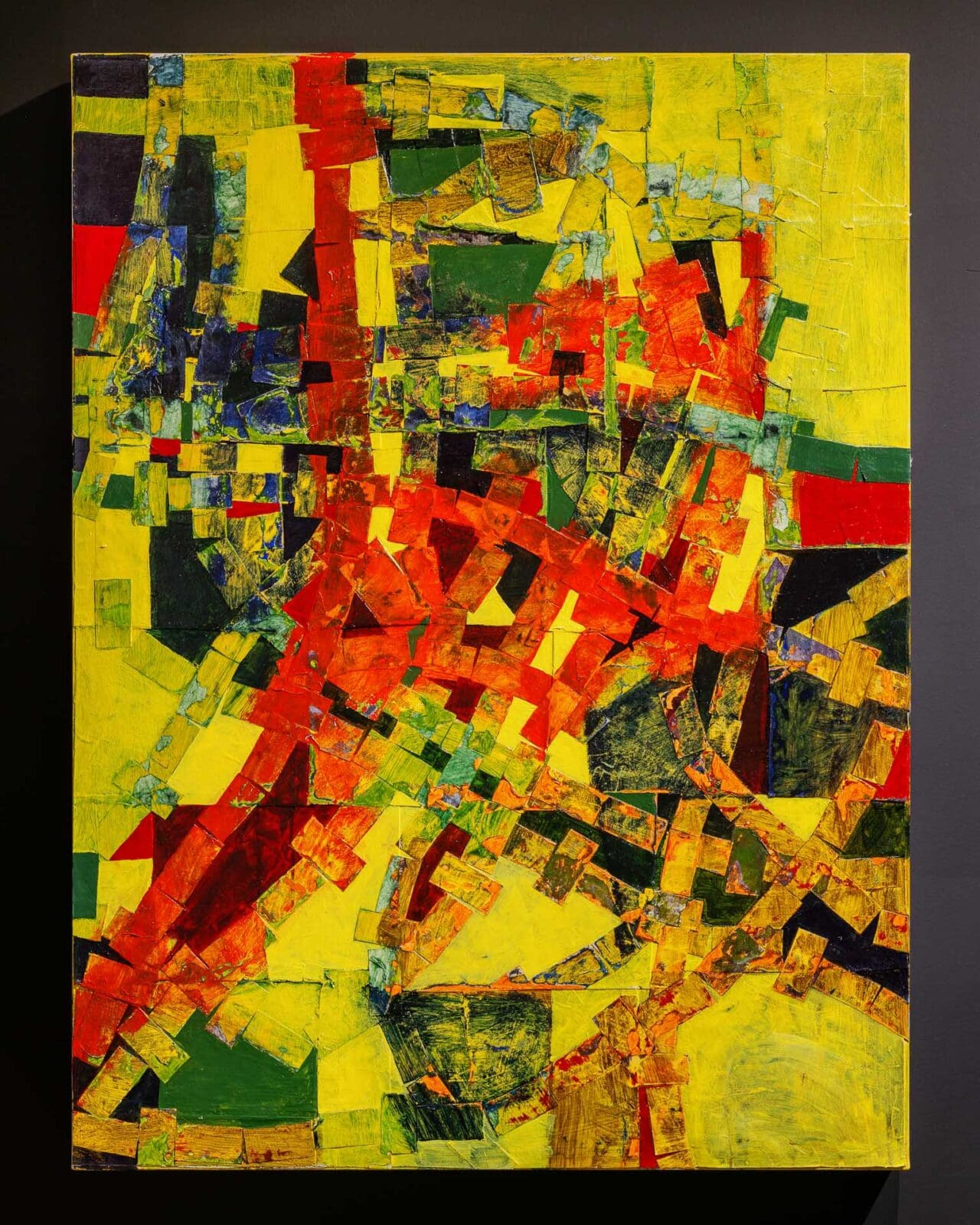
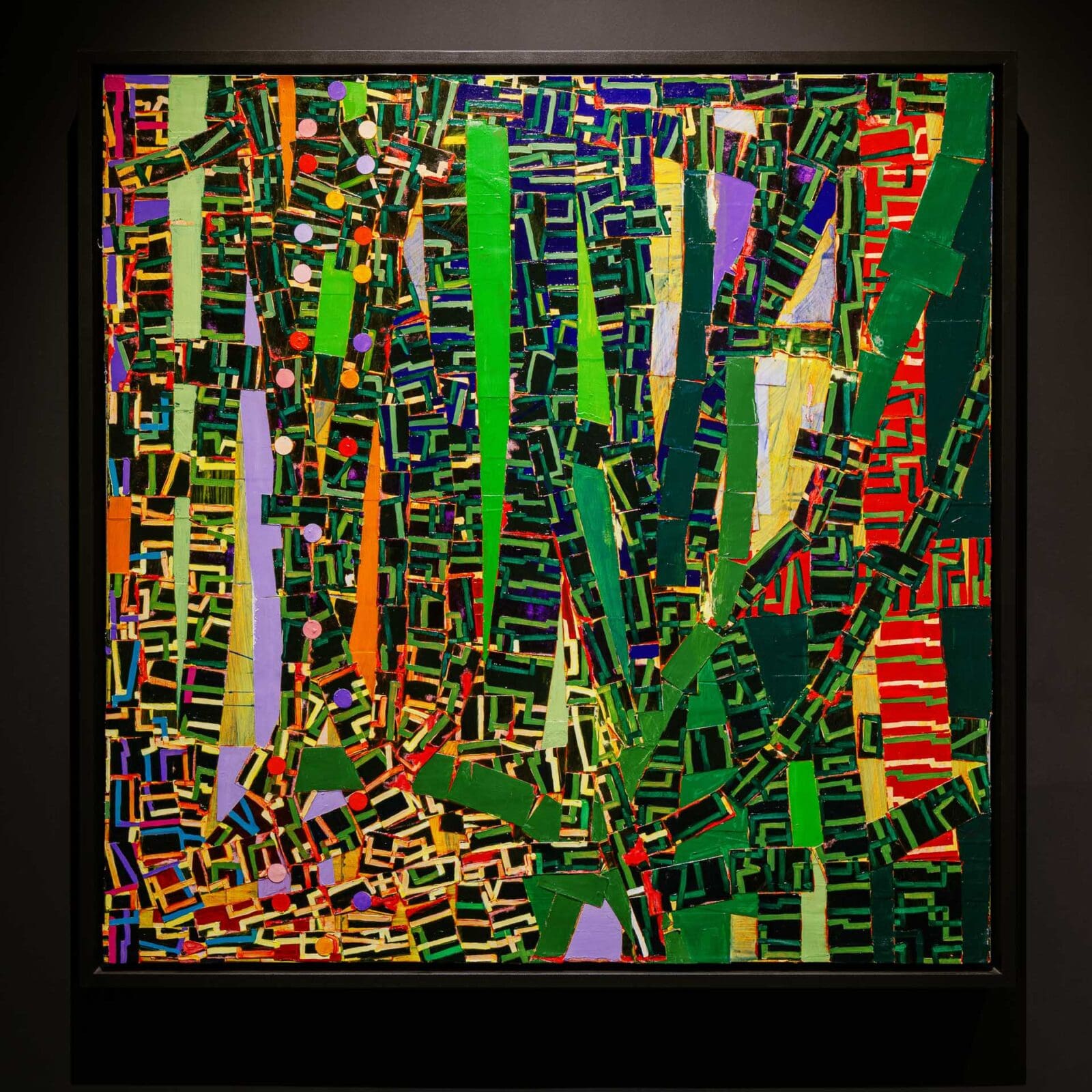
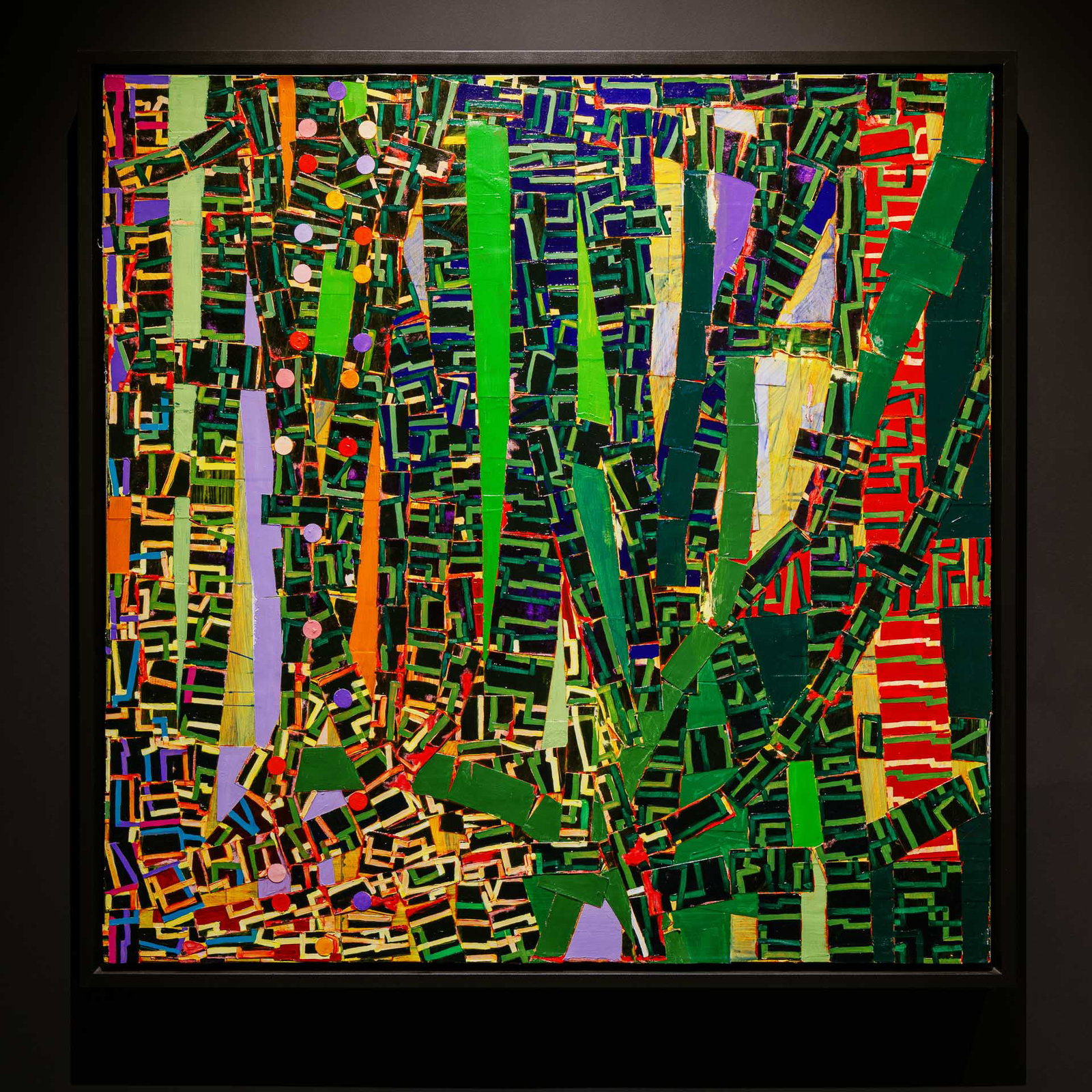
The Gagosian-represented Lowe’s The Harbor Fragment Series: Fragment 8 produces another kind of restless attention. Rectangular units accumulate beneath broader colored bands; circles punctuate their angular traffic. Its map-like structure keeps offering routes that competing directions complicate. In Fire #3 and Untitled, larger areas of color make the joins between fragments more pronounced. Acrylic and paper collage preserve the sense of a whole being negotiated piece by piece.
The surface carries the effort of keeping separate parts in provisional relation. Lowe’s work with Project Row Houses — as co-founder and the face of the internationally renowned social sculpture — gives these relationships special resonance, though the paintings establish their own demanding terms of proximity.
Glass, Dust, and Marble
Elsewhere, the exhibition’s negotiations between surface and depth acquire a material life of their own. Eric DePan’s laminated glass sculptures translate the repetitions of quilting into structures that gather and redistribute light, carrying a familial language of fabric into something harder, luminous, and dependent upon its surroundings.
Virginia L. Montgomery’s marble amoebas in Motion: Arc (2026) brings another productive mismatch into play: the suggestion of cellular movement lodged within carved stone, geological weight given the name of something restless and alive.
Reynier Leyva Novo’s Sacred Dust (Antioch Missionary Baptist Church) (2026) approaches place through the particles it sheds. Dust collected from the church adheres to paper, making contact with the site the substance of the image. What ordinarily disappears beneath the work of maintenance enters the gallery as something worth preserving.
Across these works, glass, marble, and dust complicate the apparent stillness of objects, drawing light, imagined motion, and the residue of a particular place into their surfaces.
The catalogue records how unevenly the artists inhabit the exhibition’s communal language. Kerl describes Houston’s sustaining networks. Asked what community means, Flood calls it “a bullshit catchphrase.” The disagreement helps.
A regional exhibition need not resolve its artists into a collective temperament. Here, the more convincing connections develop through paintings that make room for care, faith, memory and skepticism without smoothing their differences away. Their beauty keeps us looking long enough for the arrangement to become uncertain again.
“Texas Contemporary” has been extended. The exhibition is on view at Opera Gallery Houston through this Sunday, October 18. For more information, go here.
Trending
- Celebrating the Most Striking Houses In Montrose, Bellaire, The Heights and More — This Home Party Knows Design Matters
- Texas Gifts That Will Make Everyone Want To Live Here — Western Wonders, Killer Steaks, Lone Star Sweets and So Much More
- One Of the World’s Rarest Animals Gets a $2.1 Million Houston Zoo Boost — A Reimagined Rhino Habitat Beckons
- The Best Dallas Restaurants for Thanksgiving Dinner or Brunch
- Houston Native’s New Personal Concierge Service Caters To Busy Executives, Families and Power Players — Lauren Gray’s Gray Door Arrives