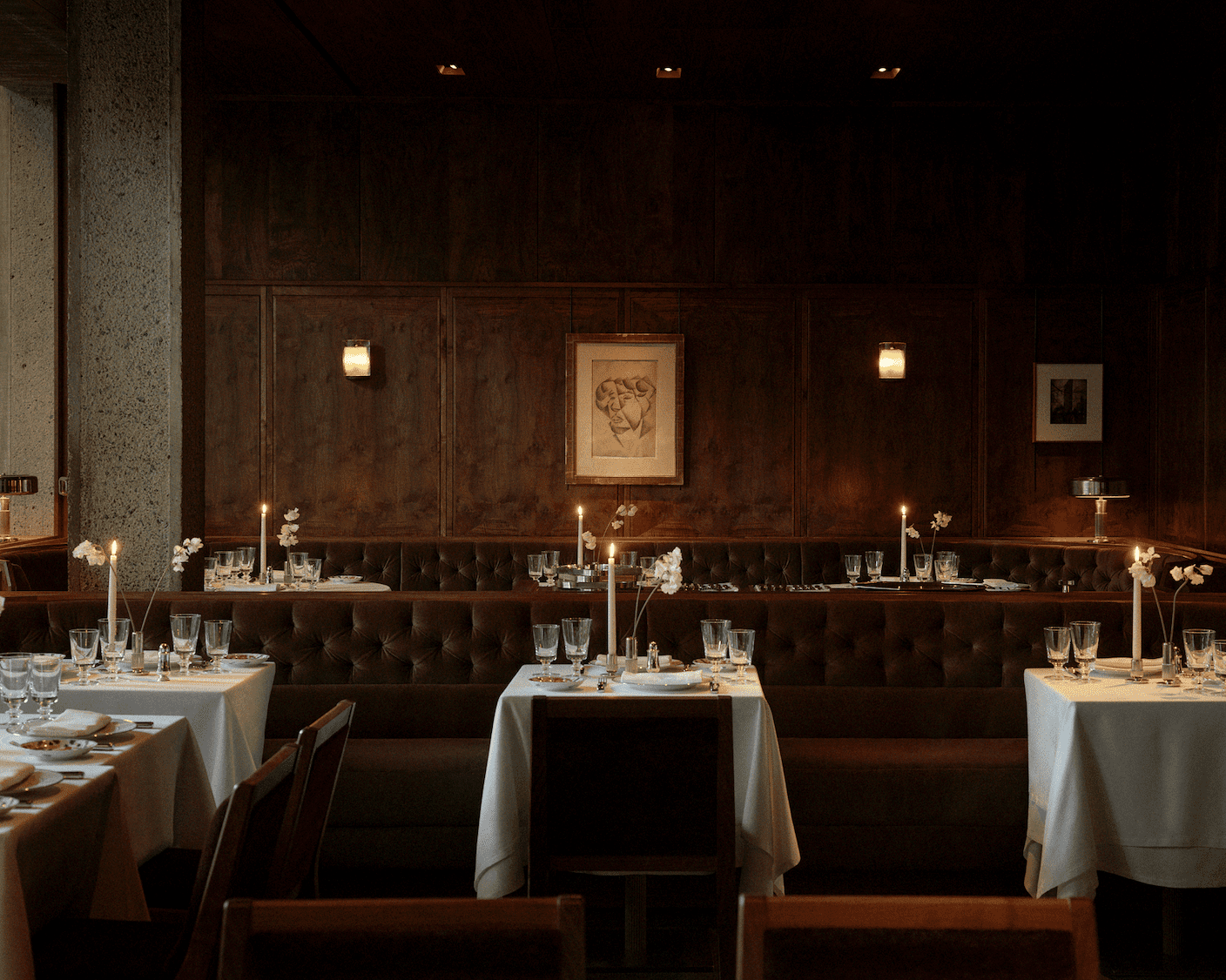
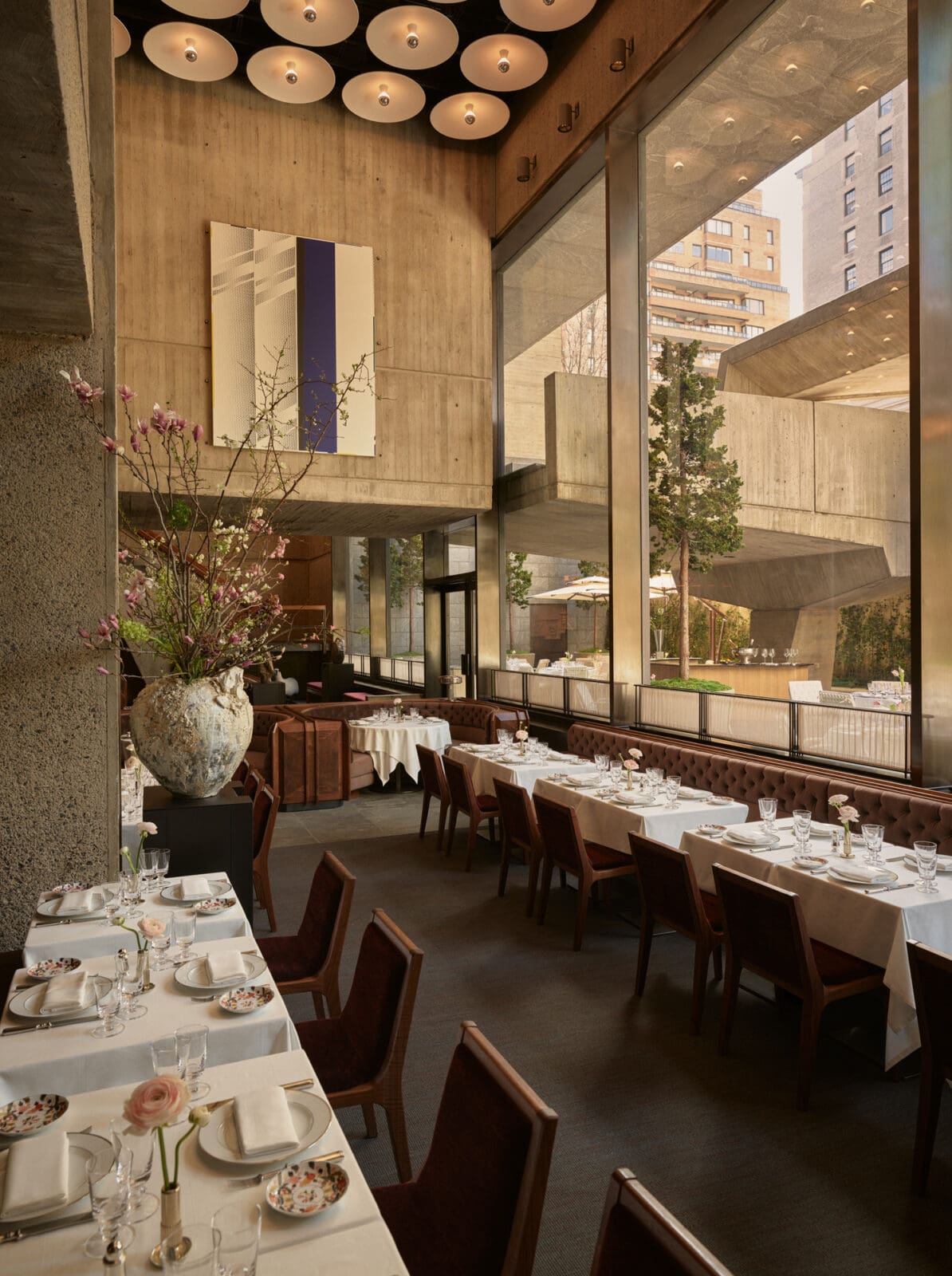
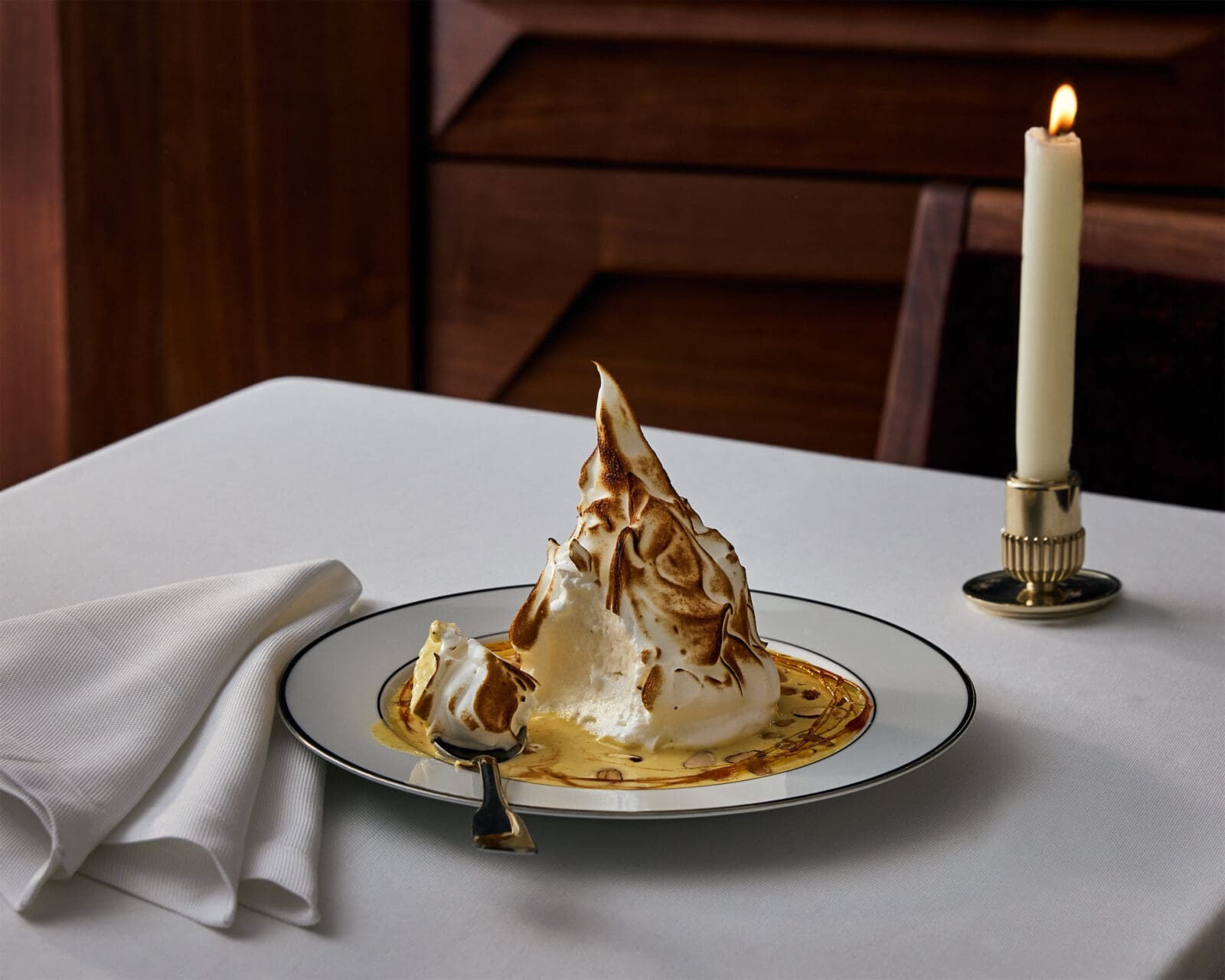
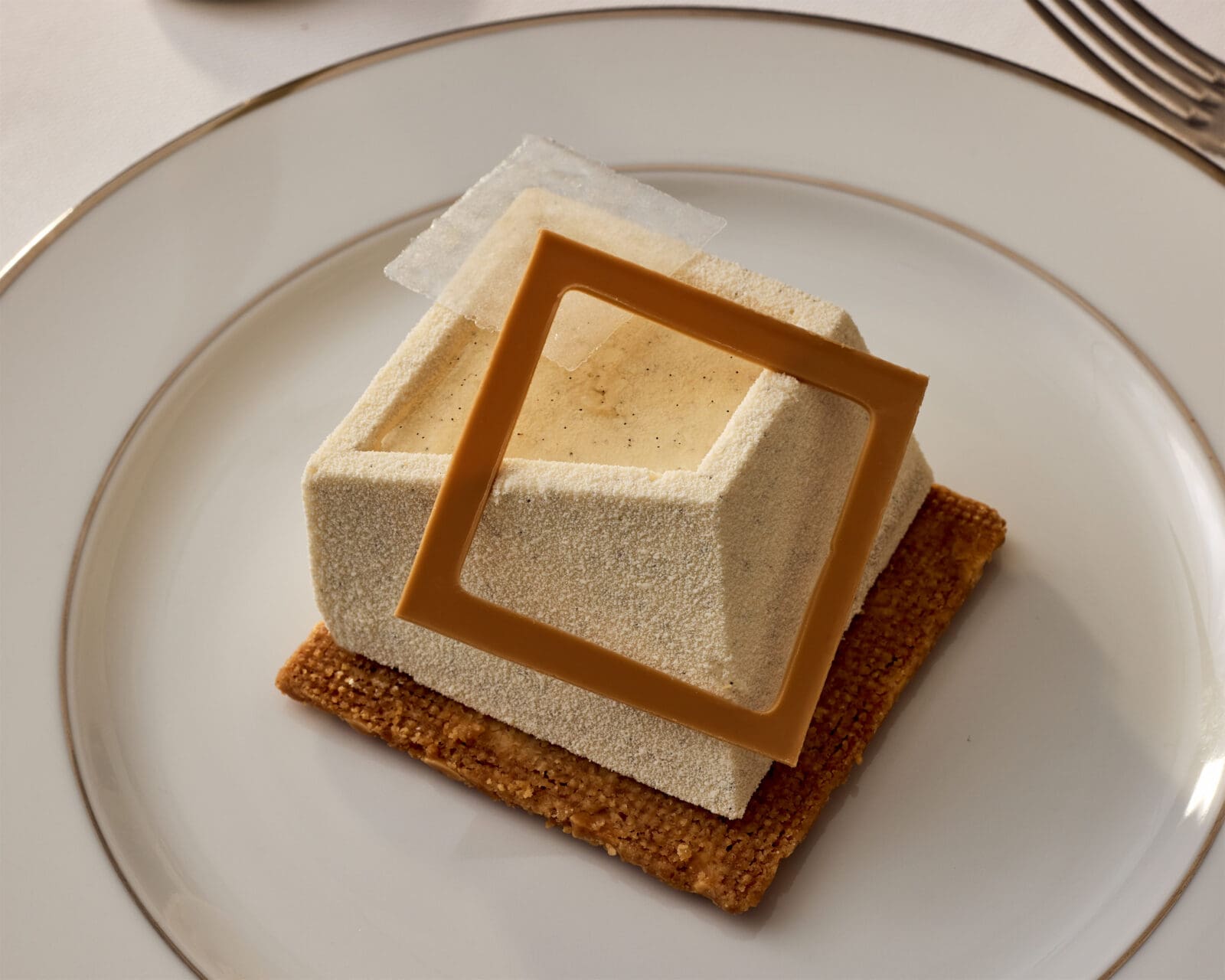
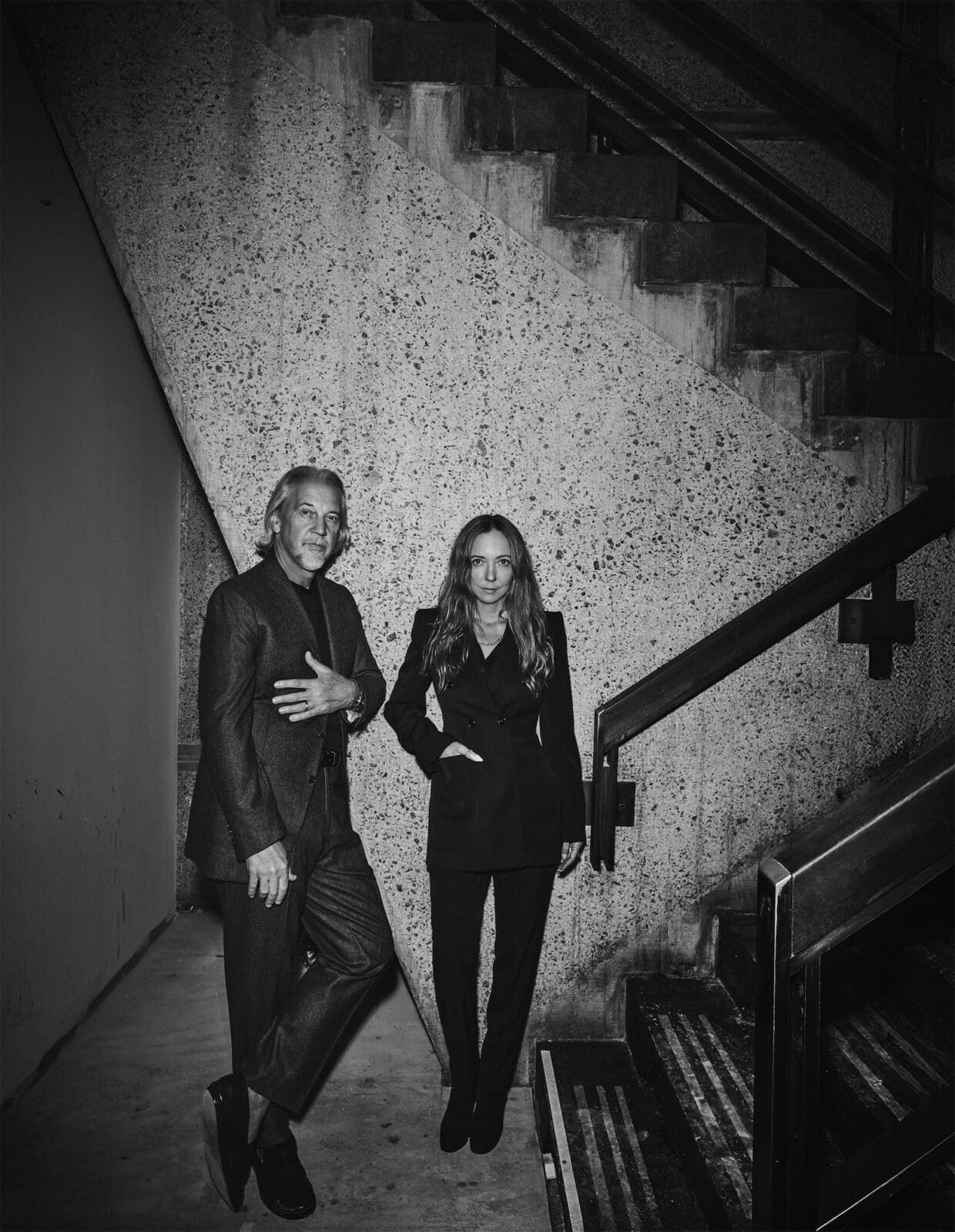
New York City’s latest impossible reservation — the Roman and Williams-designed Marcel in Sotheby’s new Manhattan headquarters — takes the cake. Specifically, a vanilla mousse-and-praline confection shaped like the restaurant’s setting: the 1966 Breuer Building, a modernist masterpiece whose iconic trapezoidal windows are echoed here in layers of chocolate and almond croustillant. In the hands of Robin and Stephen Alesch, the married designers behind Roman and Williams, brutalism has never looked quite so inviting — or delicious.
The Madison Avenue Building is An American Beauty
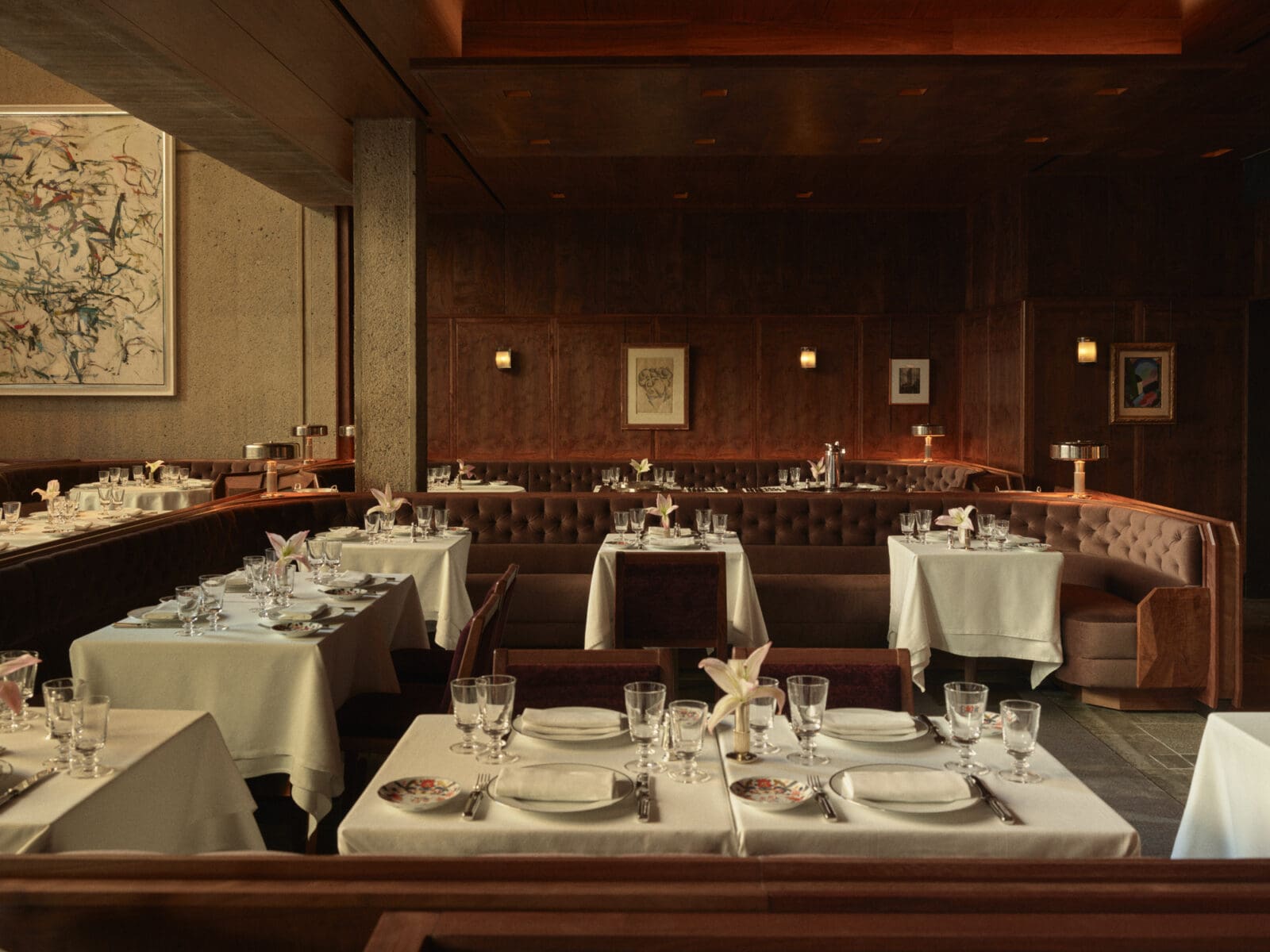
The couple, who created movie sets before founding one of America’s most influential interior design studios, are masters of theatricality. Here, the drama begins as soon as you descend the original staircase created by the architect Marcel Breuer, namesake of both the Madison Avenue building itself and now, the restaurant on its lower level. The railing in walnut and bronze, suspended on a 30-foot drop of bush-hammered concrete, established the language for the designers’ respectful transformation of the space.
“We’ve always thought of the building as an American beauty,” Robin says.

Marcel Goes Beyond Decoration for Roman and Williams
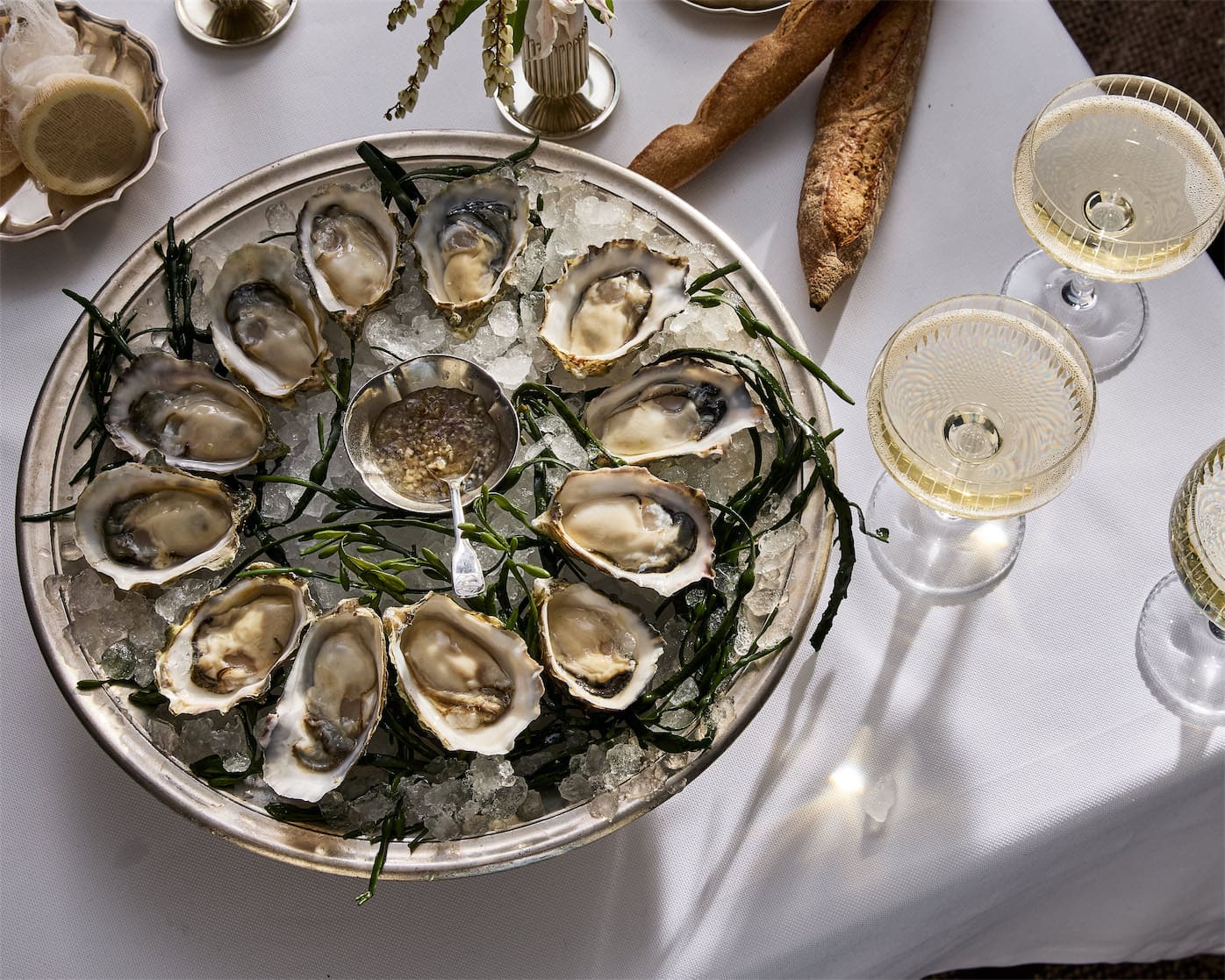
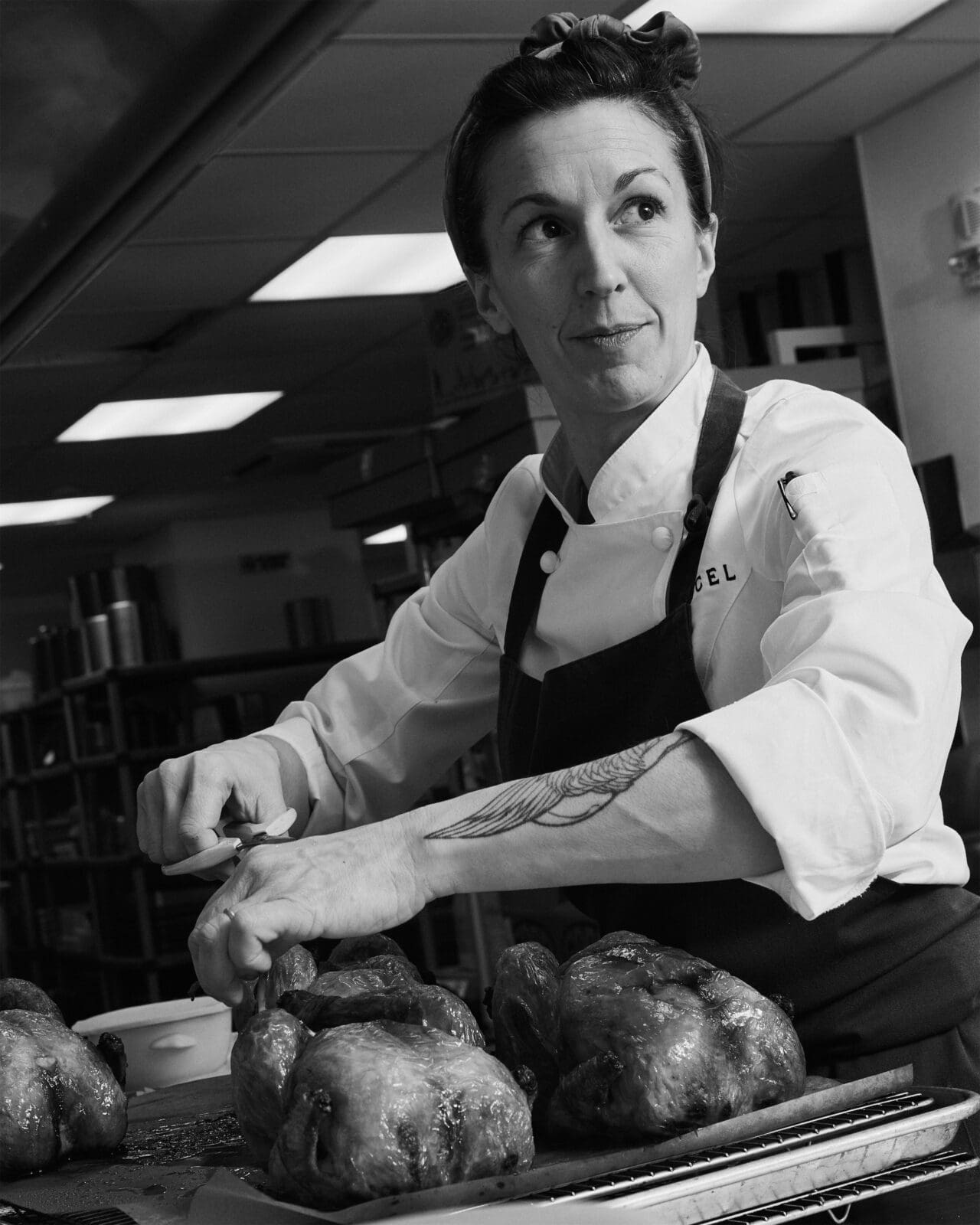
For Roman and Williams, the project went way beyond just decoration. Marcel is designed, owned, and operated by the couple, in partnership with Sotheby’s, which moved into the Breuer Building — the former Whitney Museum of American Art — last fall, after an extensive renovation by Herzog & de Meuron. The project is the designers’ second restaurant; their first, the French eatery La Mercerie, adjoins their SoHo design emporium RW Guild. For Marcel, they teamed up once again with their downtown chef and partner Marie-Aude Rose on a French continental menu that feels like a throwback to a moment when Manhattan see-and-be-seen society was besotted with haute cuisine temples like La Grenouille and La Côte Basque.
A Restaurant and Art Gallery
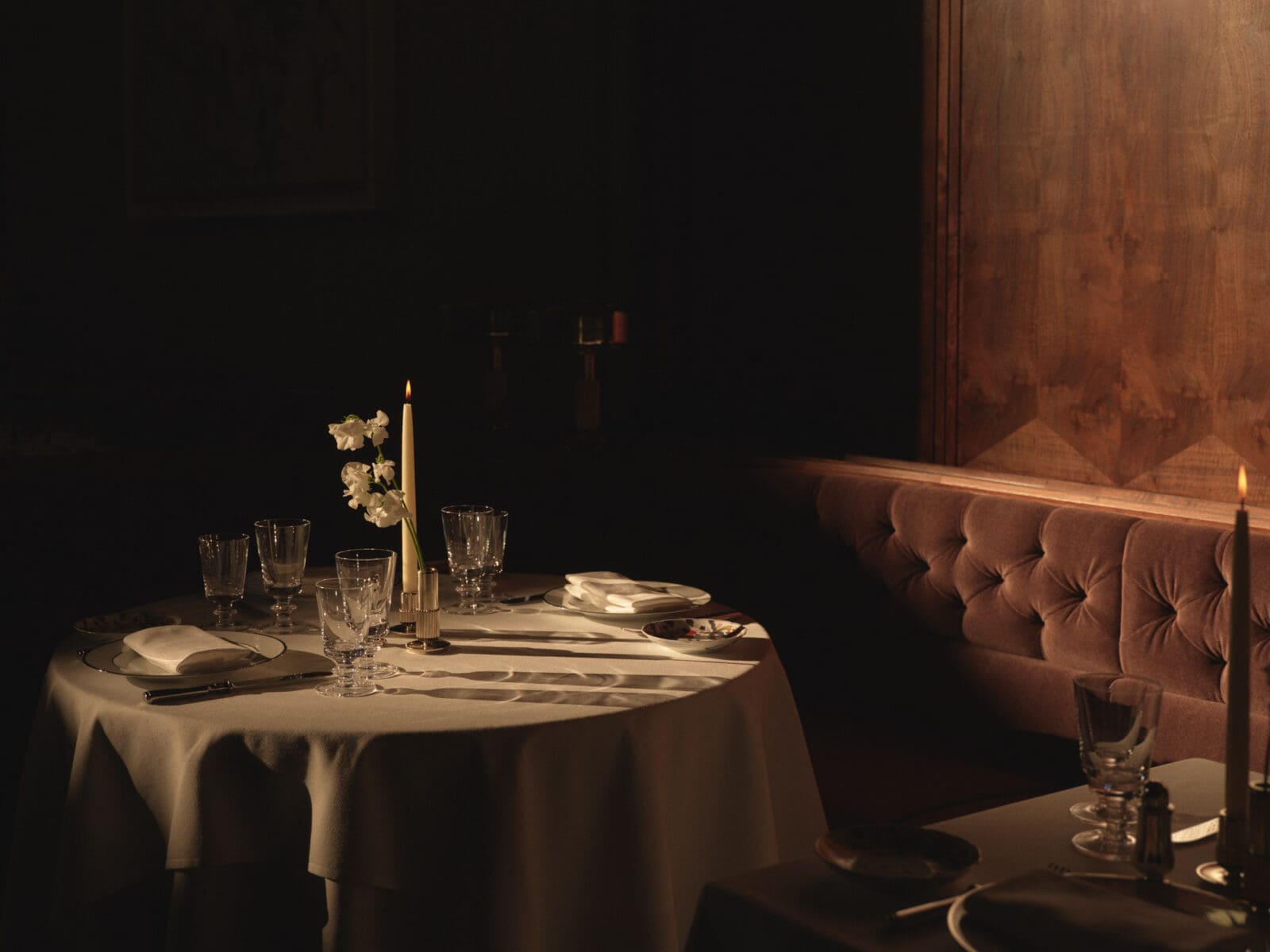
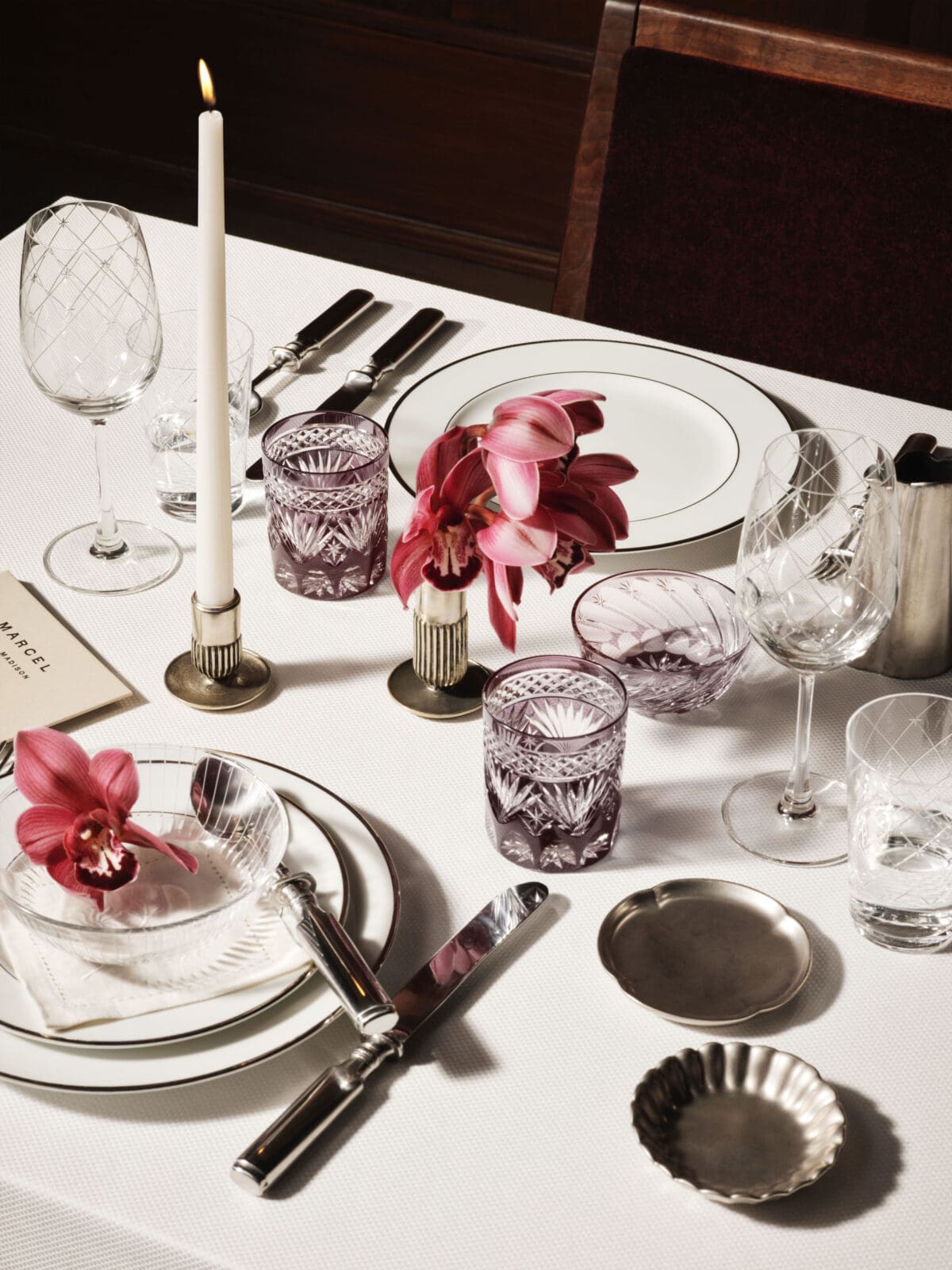
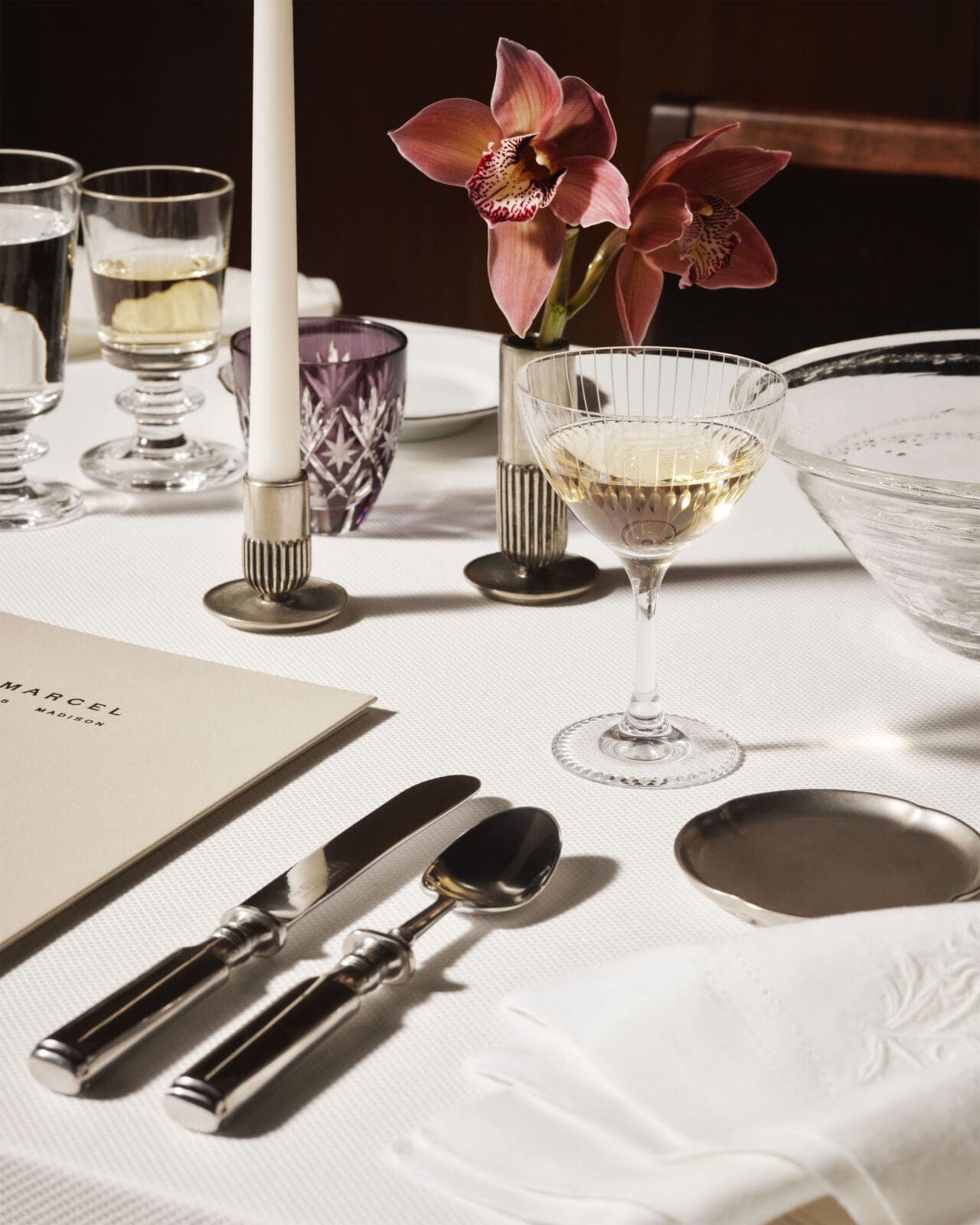
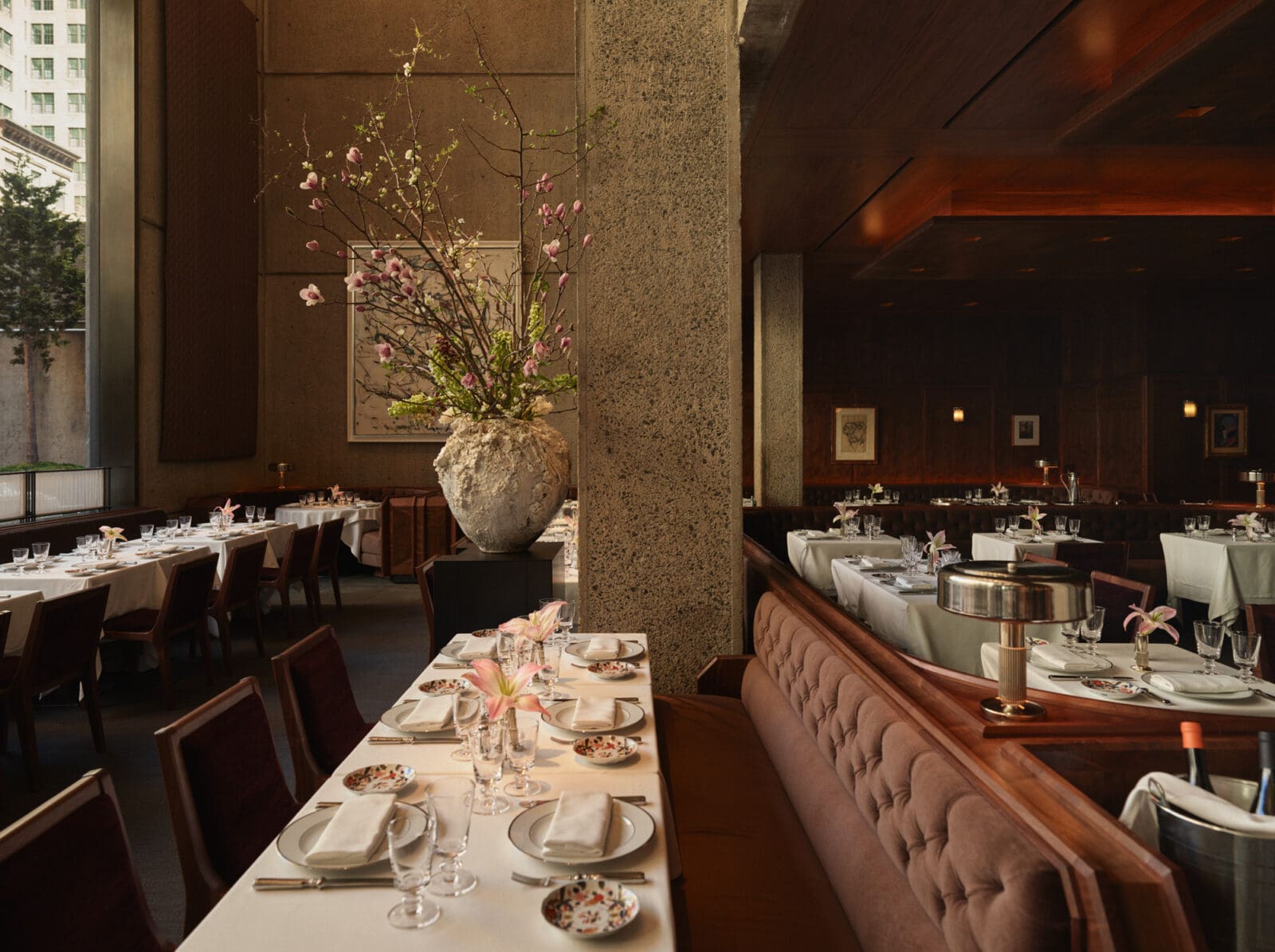
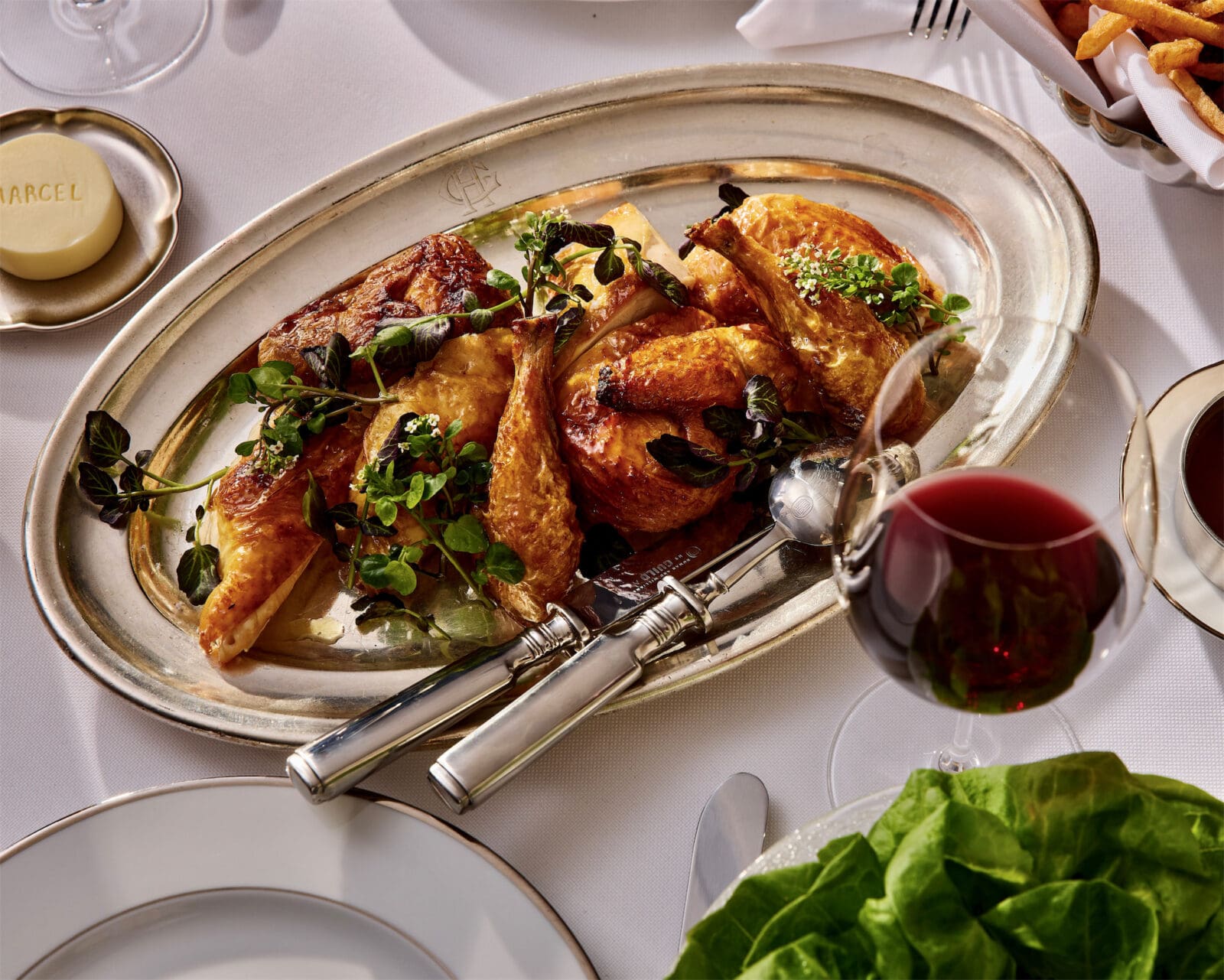
Today, those frog’s legs, Burgundy snails, côte de boeuf, and confit duck legs are served on candlelit tables set with flatware and glassware that not only reflect the designers’ great taste but are also available for purchase. Meanwhile, the soaring cement walls now display art from Sotheby’s rotating inventory of blue-chip works by such artists as Joan Mitchell, Willem de Kooning, Elizabeth Peyton, and John Chamberlain. Diners order drinks with names like The Brutal Martini and can not only take home the cocktail glass — a bespoke hand-cut beauty with a pinstripe motif by Osaka-based artisan Kimiko Yasuda — but also bid on the massive blue, black, and green Ellsworth Kelly hanging in the stairwell.

Mixing Culture, Cuisine, and Commerce at Marcel
For the designers, Marcel is what Robin calls a petri dish of their philosophy of mixing culture, cuisine, and commerce — this time, for an uptown crowd. The Alesches are known for their deep research into a project; when they designed the British Galleries at The Metropolitan Museum of Art in 2020, for example, they delved into the history of the objects on view, then placed them impactfully inside specialized illuminated vitrines by the Milan display-case maker Goppion. Similar vitrines appear throughout Marcel, displaying the full range of what Sotheby’s offers, from Boucheron jewels to a Megalodon shark tooth.
For Marcel, the Alesches began by investigating the history not only of the Brutalist building but of its maker, a Jewish Hungarian modernist who faced persecution in Europe under the Nazi regime and moved to the U.S. in 1937. The designers felt a kinship to the Bauhaus-trained architect who, like them, spanned disciplines and created everything from furniture to lighting, hardware, and interiors along with buildings. To their surprise, they discovered that despite his reputation for austere design, Breuer had a playful side and a genuine fondness for the good life.“ We learned that he was a bon vivant who wore three-piece suits and wingtips, loved a great martini, and cooked chicken paprikash in his drafting room — and we have it on the menu, by the way,” Robin says.
A Two-Part Renovation
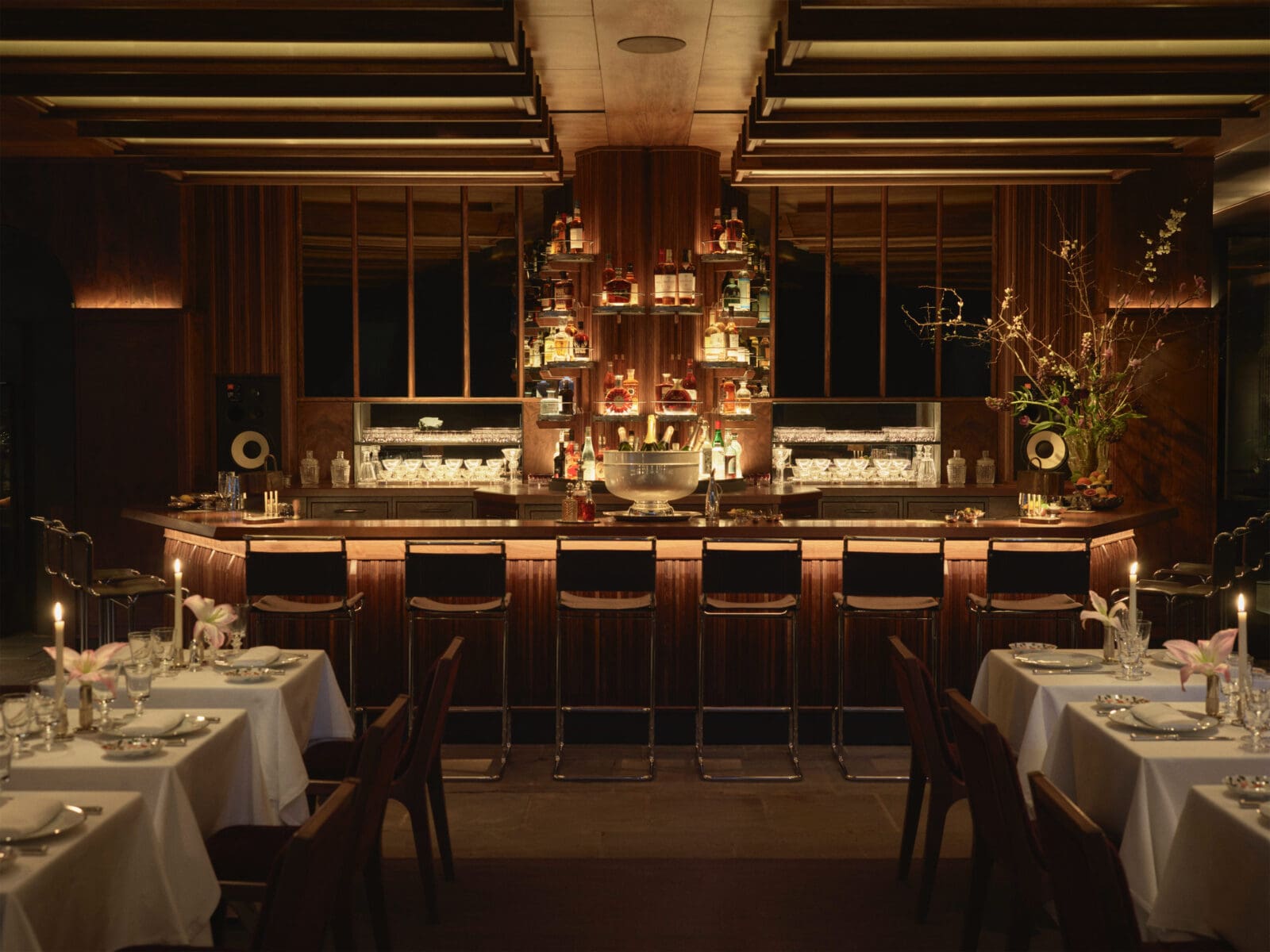
Their renovation of the restaurant space is split into two parts. The landmarked side — with its sober geometry of concrete walls, domed light system, and stairwell that soars to the lobby above — was preserved and softened with seating and banquettes upholstered in a Pierre Frey wine mohair. Meanwhile, an entirely new section clad in Claro and black figured walnut encompasses an open kitchen and a mirrored bar framed by vintage Bauhaus stools. This seamless expansion nods to Breuer’s stair rail while coaxing the whole room into something unexpectedly intimate which they believe is in keeping with Breuer’s original intent.
“There is a warm side to Brutalism that is easy to overlook,” Stephen says.

The Marcel Collection
The designers have launched an extensive new product line for RW Guild, the Marcel Collection, with everything from tableware to furniture and lighting drawn from their research into Breuer. For the first time, they gave a design directive to their collection of outside artisans, including several based in Asia, rather than selecting finished work from them. They found a collection of antique Imari porcelain from Arita, Japan, and display it in the private dining room at Marcel alongside works by Pierre-Auguste Renoir, while commissioning new hand-painted versions of the Arita Ware Collection for the restaurant and the Marcel Collection.

One of Manhattan’s Finest
The Alesches discovered a term that Breuer used to describe his work: heavy lightness. It’s a concept that resonated, a contradictory feeling — the muscularity of concrete and steel mixed with the sensuousness of wood and brass — which melds in a space that is now one of Manhattan’s finest.
“Sometimes I say to Stephen, I feel like I’m in a scene from the film My Dinner with Andre,” Robin says. “It’s like we’re sitting with Breuer and having a conversation — and a collaboration.”
Trending
- Inside a Dated Home In The Woodlands’ Complete Transformation — This Grogan’s Point Renovation Changes Everything
- 11 Unique Valentine’s Day Date Ideas in Dallas
- This Unbelievable Houston Property Is Its Own Hidden Compound In The Heights With a $3.6 Million List Price, and Extra Bedrooms and Porches Galore
- Remembering Houston Real Estate Icon Martha Turner, a True Heroine to Many Women
- Fall Fun In The Woodlands — 50th Fun, Wine Walking, Spooky Pickleball and So Many More Great Things to Do

_md.jpg)


