Houston Grand Opera’s New International Music Man Is Determined To Build Trust With Bayou City Audiences — What James Gaffigan’s Debut Shows
A Rare Opportunity To Grow and Put Down Roots In Houston
By Adrienne Jones //
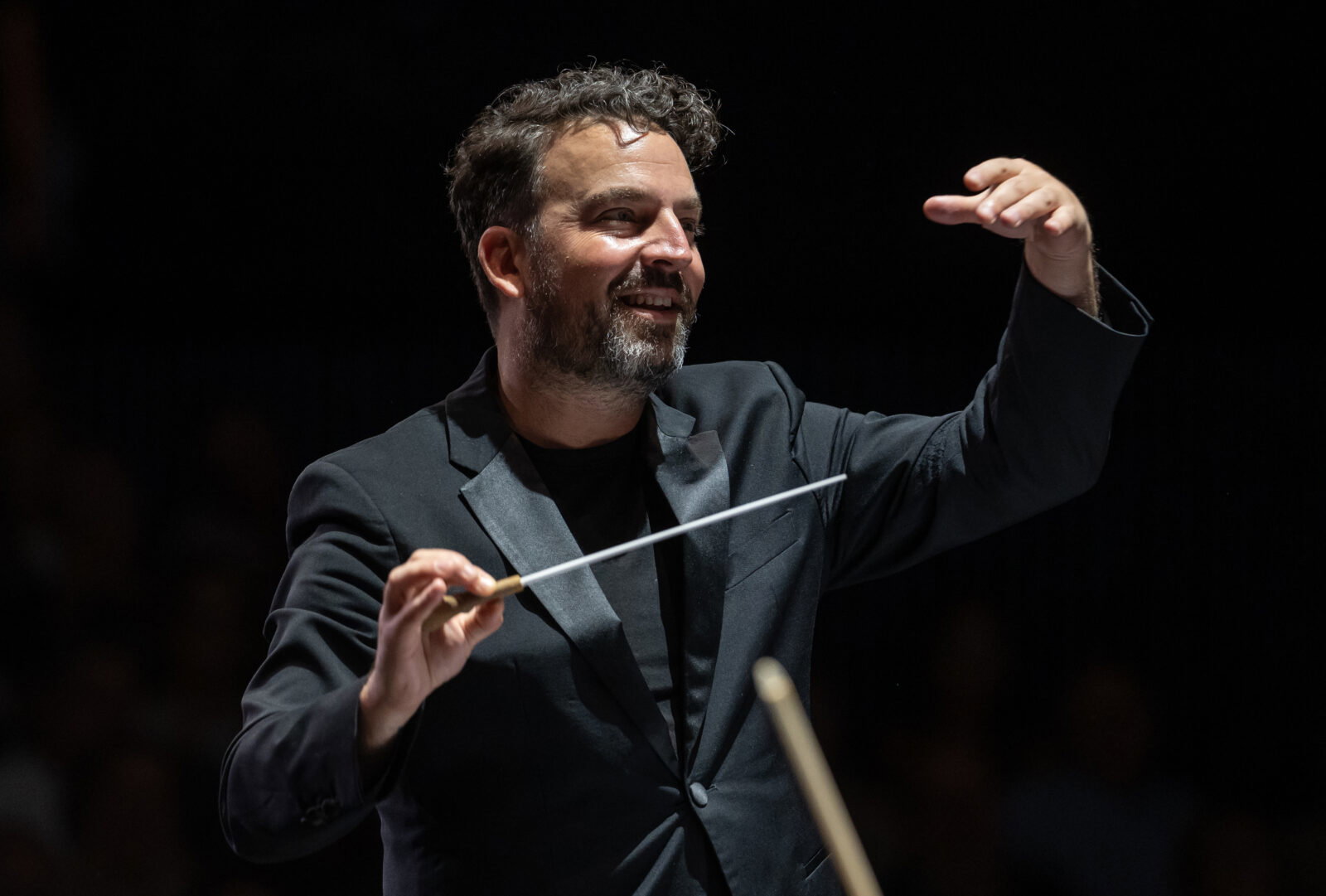
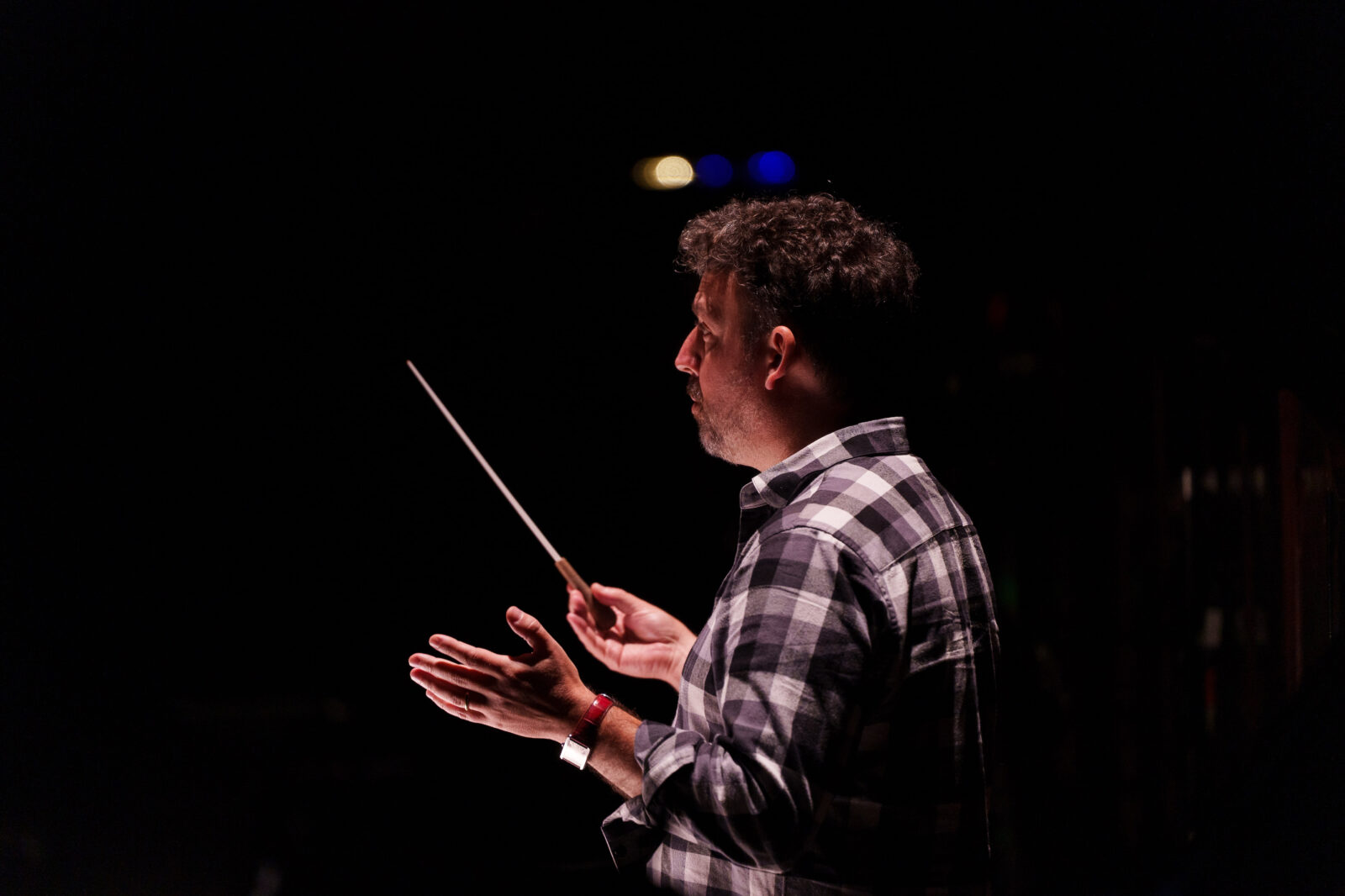
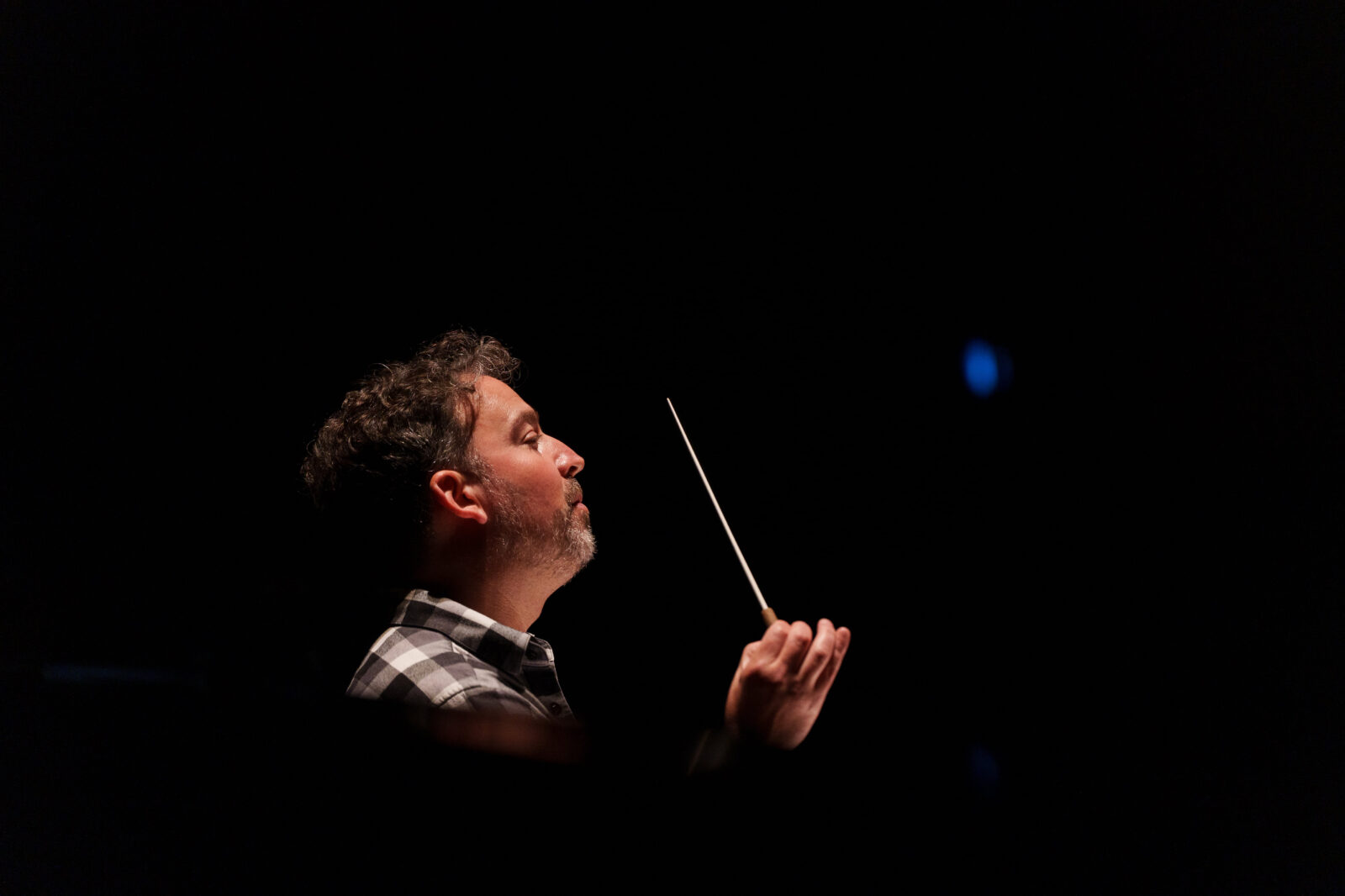
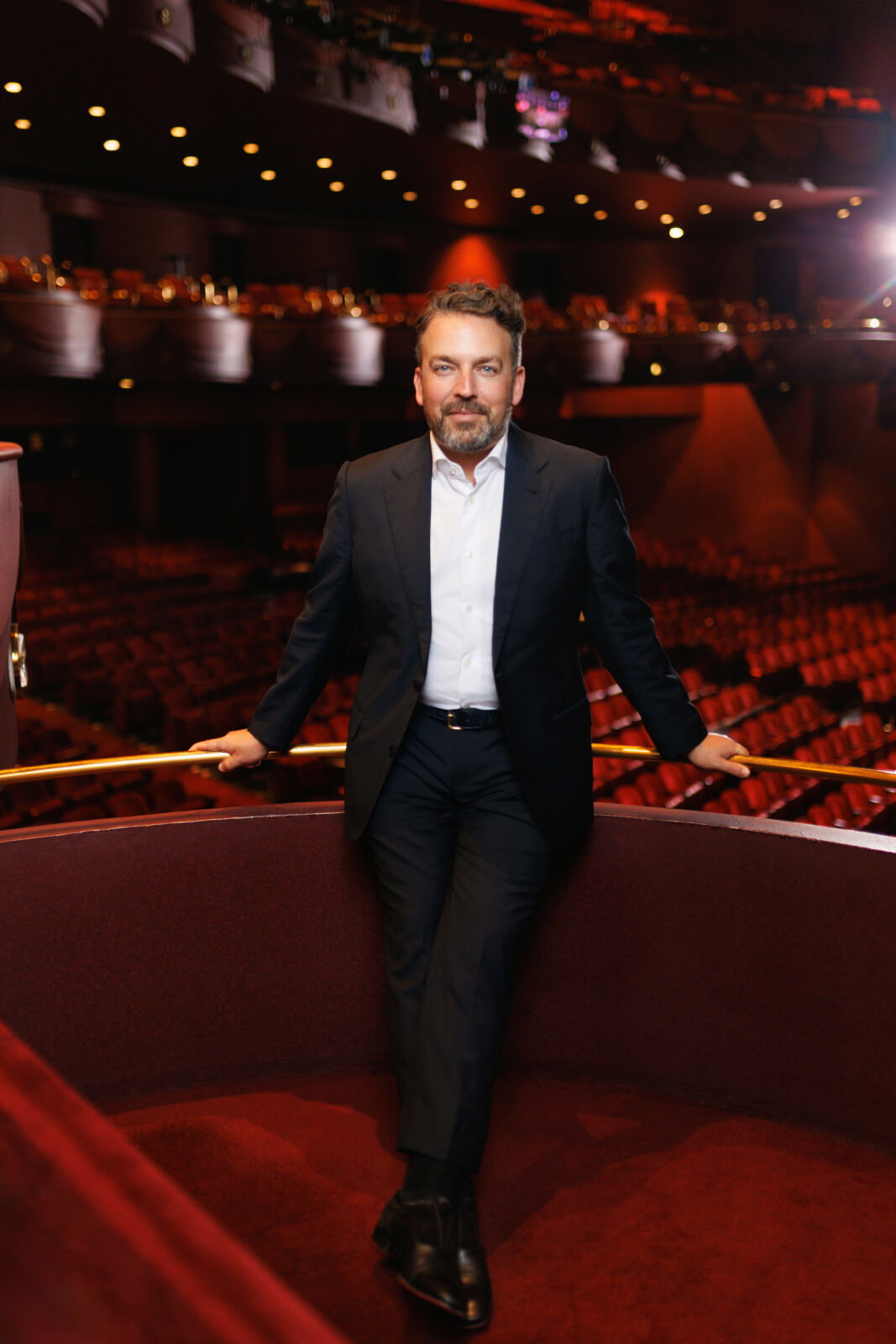
Houston Grand Opera’s new music director designate James Gaffigan is not taking anything for granted. He knows he needs to prove it to Bayou City audiences.
“It’s important that I build the trust of the public,” Gaffigan tells PaperCity. “It’s a dream of mine. I want them to say, ‘Oh, James is conducting. I’m going.’ ”
“I’ve never felt that a company was so strong as I do this company. And I meet all the greatest ones around the world. Everyone’s talking about how to cut costs or how to survive. Here it’s ‘How do we grow?’ And it’s so rare. It is extraordinary.”
Gaffigan emphasizes how much he and his wife Marta are looking forward to “putting down roots” in Houston.
“It’s part of the deal I made with HGO,” the Rice graduate says. “But more so myself. I’ve been running around the planet for the last 47 years. And now I want to settle down somewhere and really have a home.”
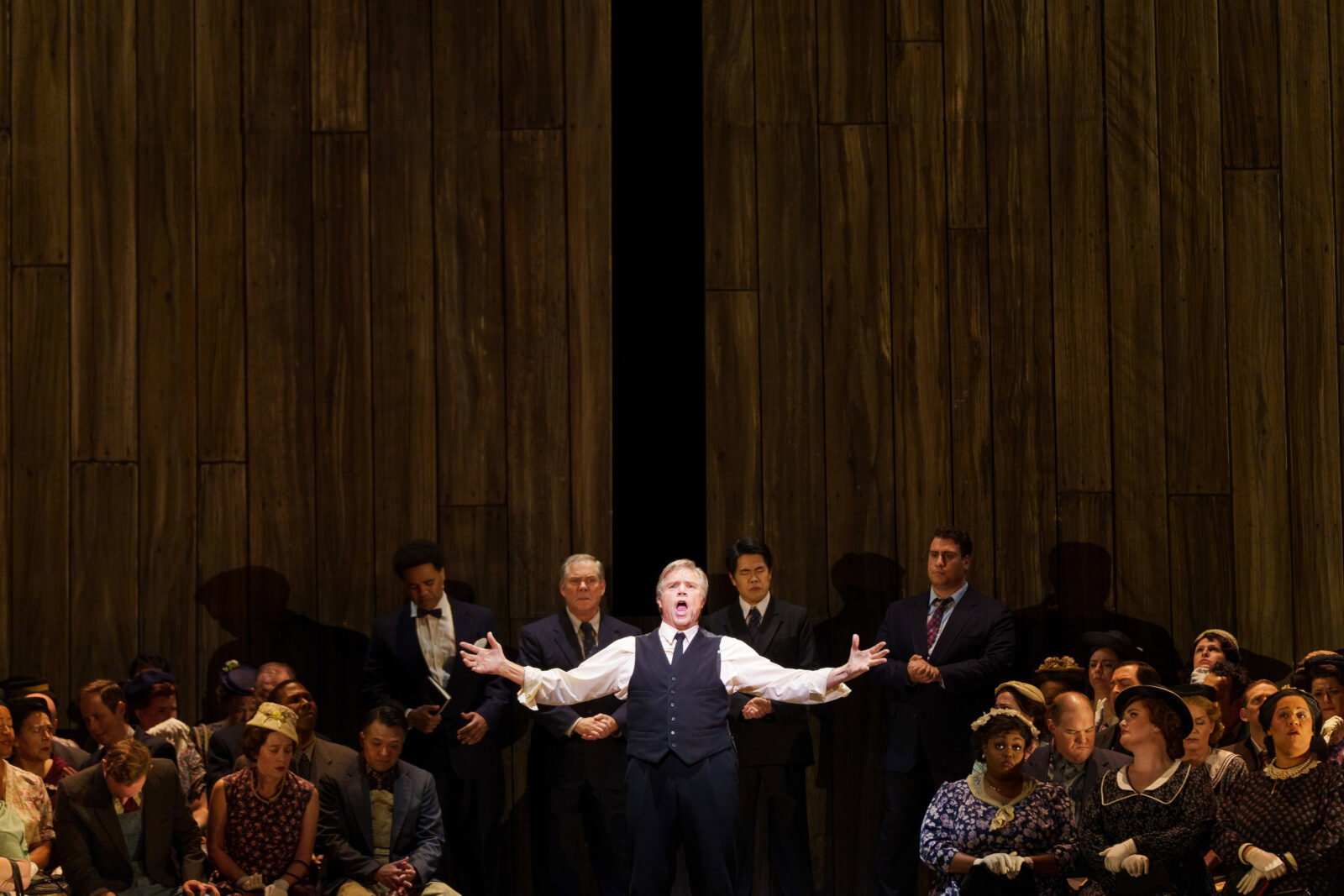
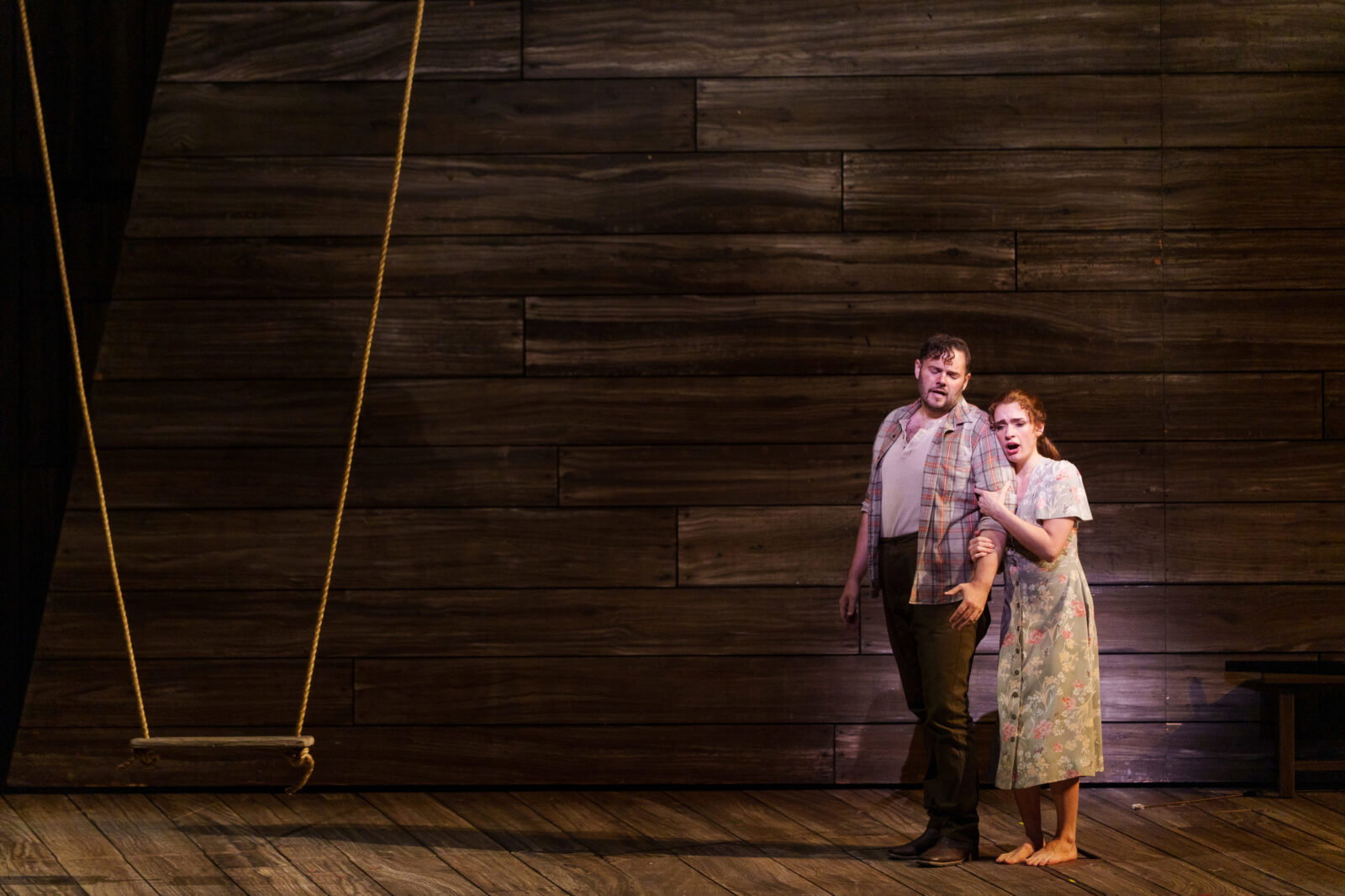
Houston Grand Opera opened its 2026-2027 season with the heartstopping beauty of Susannah by late American composer and librettist Carlisle Floyd. This show marks Gaffigan’s deubt on the podium as he tries to make himself at home in Houston after a decade of living and conducting in Europe. Susannah is the start of his five-year contract with HGO.
Gaffigan’s appointment — heralded nationally and internationally — has stirred a wave of enthusiasm among many Houston opera fans, evident in the roar of approval that greeted him at curtain call following the orchestra’s sensitive performance of Susannah on opening night.

An Opening Statement
Floyd remains one of the most important American opera composers of the 20th century, helping bring contemporary American opera in English into the mainstream. His Houston roots run deep. A former professor at the University of Houston, he also co-founded the Houston Opera Studio in 1976 with HGO general director David Gockley.
Susannah premiered in 1955. Set in Tennessee’s Appalachian Mountains, the music is steeped in the folk music, hymns and vernacular of the rural South in midcentury America. But its plot reaches back more than two millennia, transposed from the story of Susanna and the Elders, found in the Book of Daniel in Catholic and Orthodox Bibles.
Gaffigan calls Susannah an American masterpiece.
“Floyd had an extraordinary voice in American composition,” he says. “In my opinion, he’s up there with Copland, Ives, John Adams, Leonard Bernstein, Gershwin.”

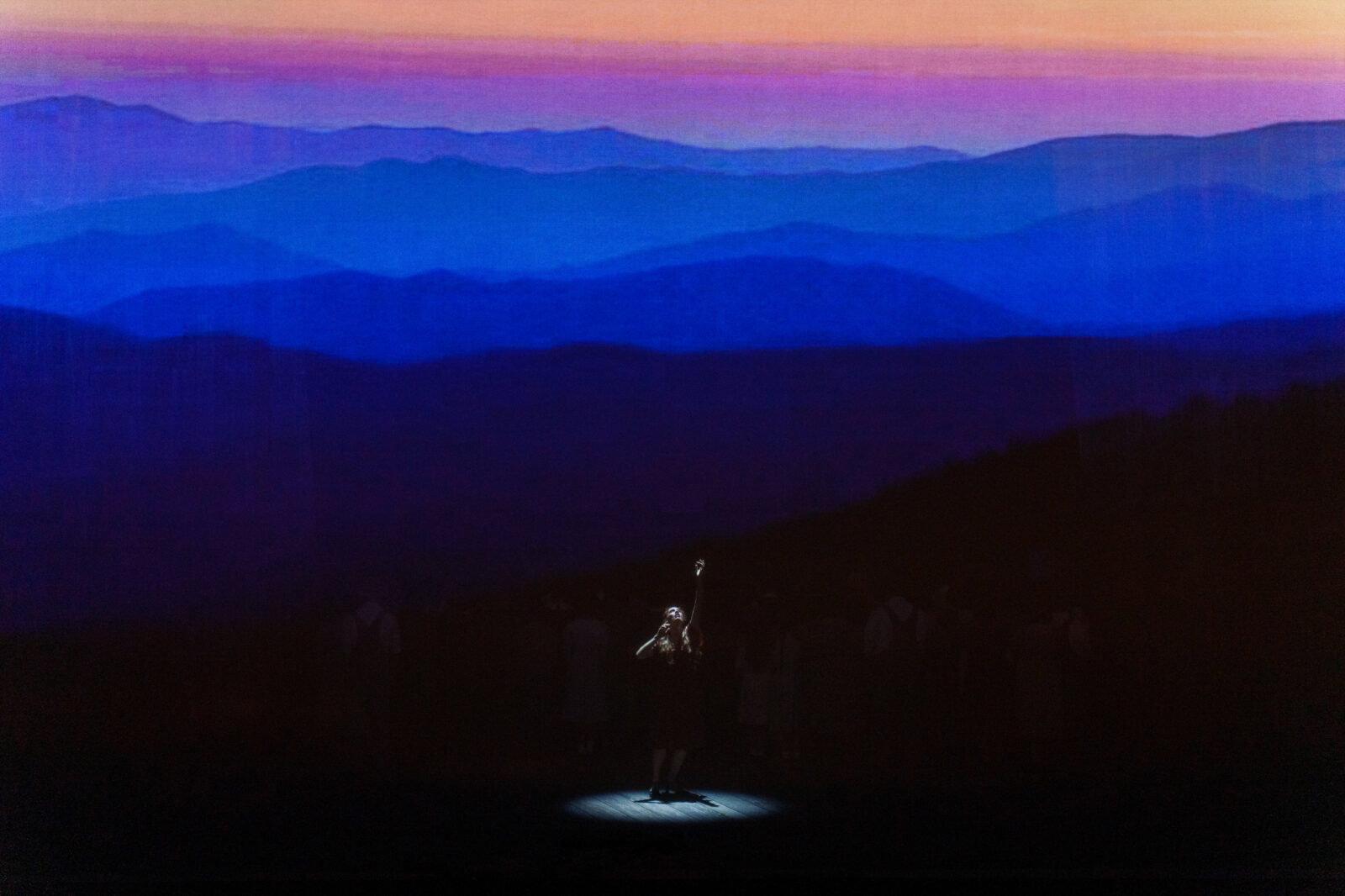
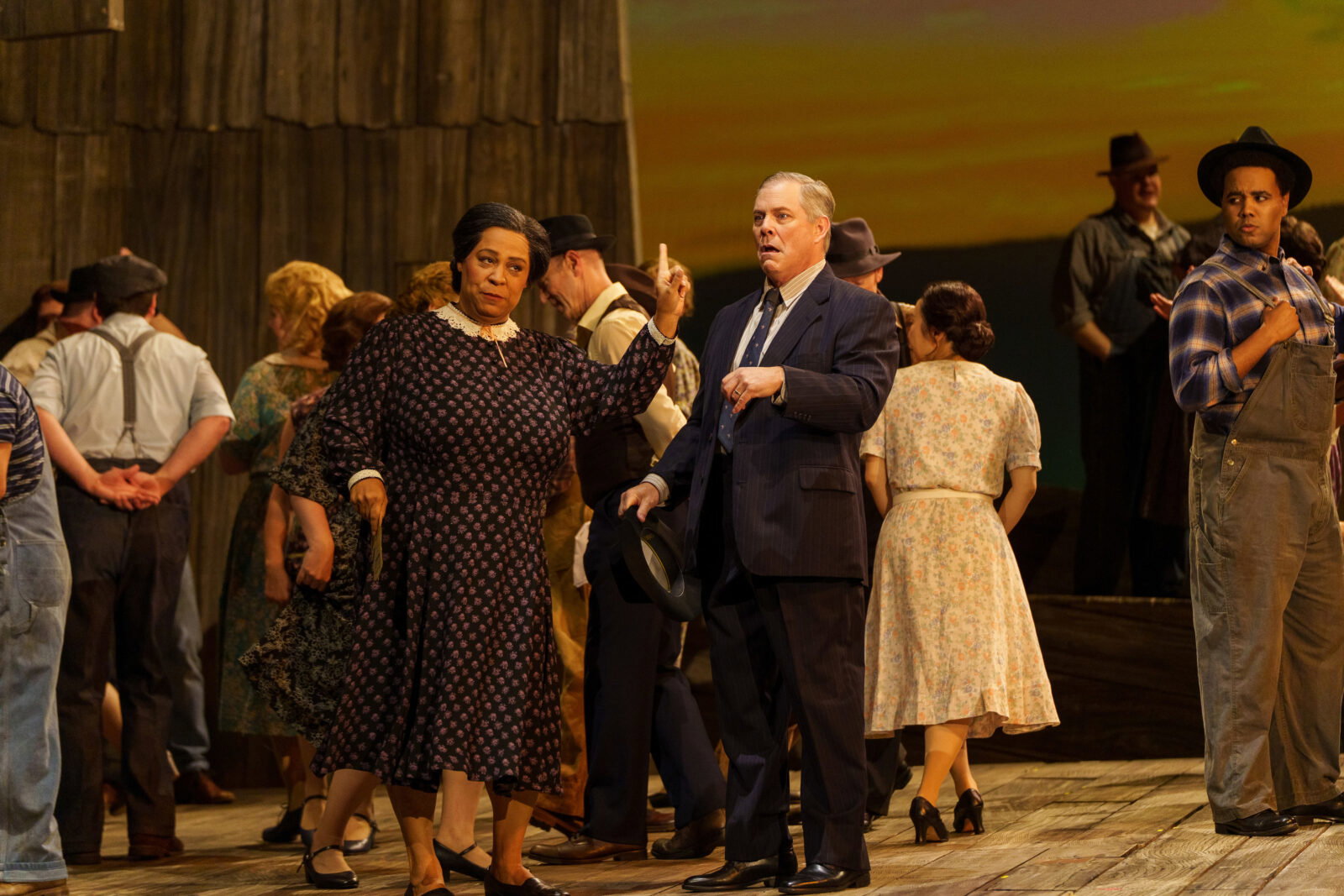
The curtain rises on a panoramic view of the blue-hazed Appalachian Mountains overlooking a distant valley. As the image of the softly rounded mountains dissolves on the scrim, we enter an isolated community, where the would-be gaiety of a square dance is not entirely convincing.
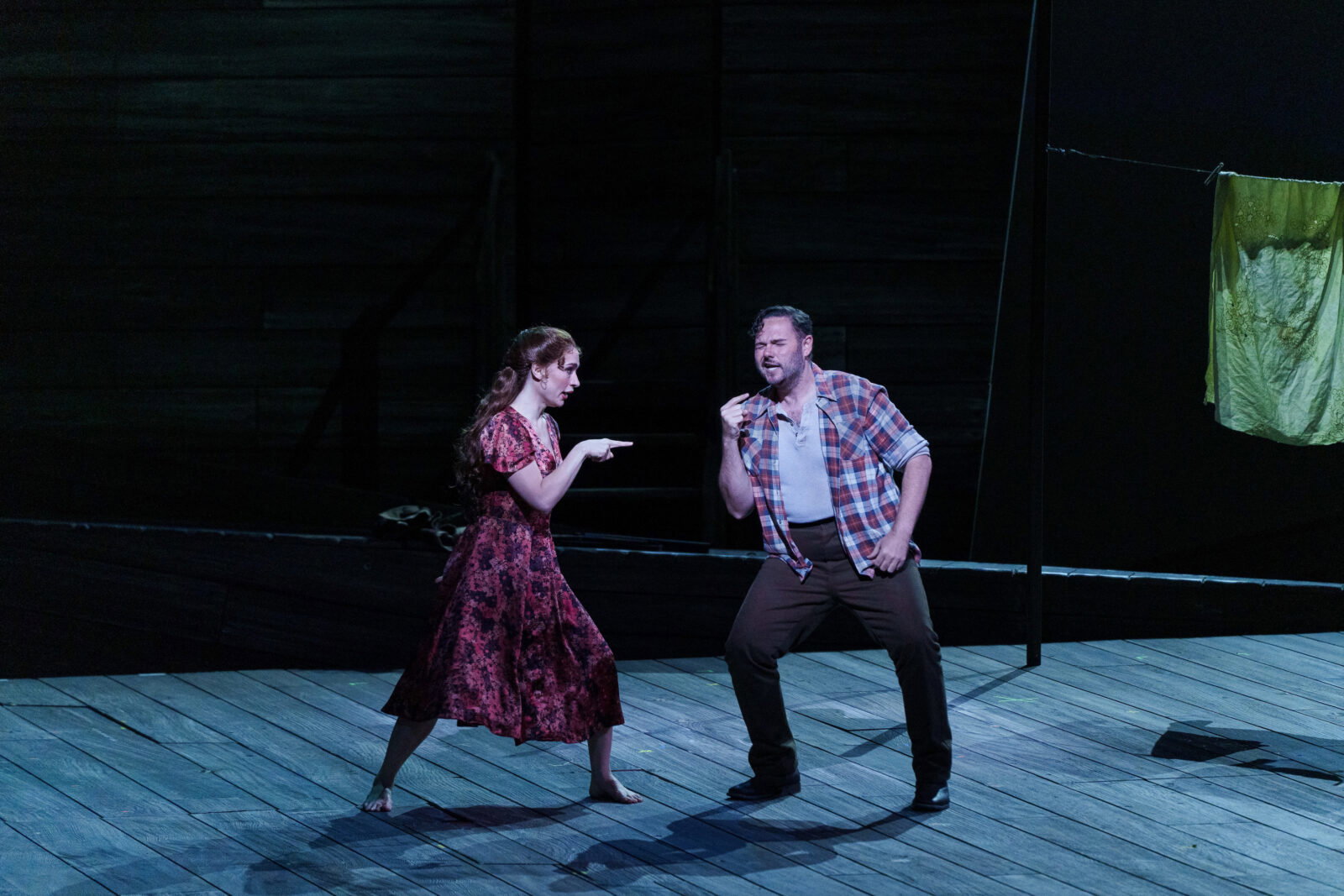
Susannah Polk is a virginal teenager, as much a part of the mountains’ natural beauty as the trees and wildflowers. But orphaned and raised by her hard-drinking brother Sam, she has never quite belonged to this insular community, where some claim she has “bad blood.”
Dancing alone with a youthful grace, she attracts the attention of leering older men, jealous women and the newly arrived itinerant preacher Olin Blitch.
The audience understands that Blitch’s invitation to dance promises nothing good, but Susannah remains oblivious. She sings of her dreams and the life ahead of her in one of Floyd’s best-loved arias, “Ain’t it a pretty night?”
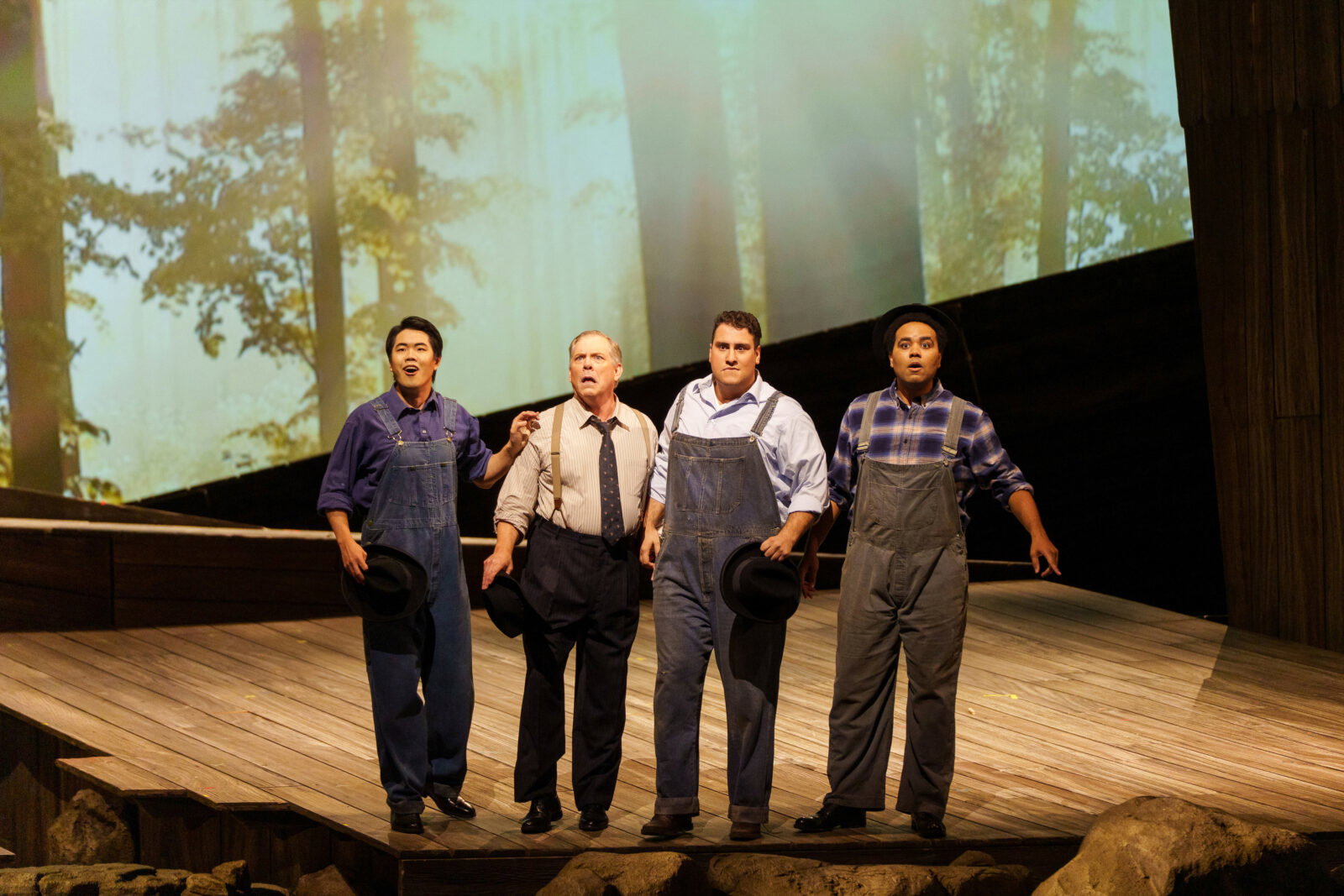
But the cruelty of this isolated, deeply religious community destroys Susannah’s dreams. When church elders discover her bathing naked in a secluded creek, they are unable to confront the shame of their own lust and coax Little Bat McLean, a simple-minded young man into bearing false witness against her by claiming he had “loved her up.”
Pressured to confess her supposed sins at Blitch’s tent revival, Susannah refuses and runs home. Later that night, with Sam away on a hunting trip, Blitch finds Susannah alone and she becomes the victim of his predation until dawn.
When Sam kills Blitch and flees a mob intent on hanging him, Susannah is left alone.

“It is heart wrenching,” Gaffigan says. “She’s innocent and she’s pure, then she gets broken. And that’s very appropriate for today, how people can gang up and bully a person, and things get out of control. And we lose a sense of the truth.”
The Truths Underneath
What is the genius of this captivating work? Probably its deceptive simplicity. Days later, I find my thoughts returning to Susannah’s valley, unraveling the complexities of Floyd’s libretto and the loneliness that lies at its heart — not only Susannah’s, but the loneliness confessed by the Reverend Blitch and Little Bat’s isolation because of his disability.
Much of the production’s lingering impact is due to the skill and restraint of Patricia Racette’s direction. Deftly she avoids the potential traps of melodrama, caricature and stereotyping without sacrificing the story’s emotional power or the humanity of its characters.
Similarly, the seeming simplicity of Floyd’s music conceals the torment beneath the surface.
“The libretto is so well crafted,” Gaffigan says. “Poetic and heartbreaking. The music, although it’s simple and sincere, has the complexity of a Wagner or Strauss opera in its leitmotifs and miniature themes that get developed throughout the piece.
“(Floyd) only composes what he has to compose. He only puts notes there that need to be there. He’s not a fancy composer. He’s taking the music from the past and music we’re familiar with, and using it in a very profound way.”

One of Floyd’s most remarkable achievements, Gaffigan argues, is his unusual use of the major key, traditionally associated with happiness.
“I find myself either smiling through tears or sad in the major music of this opera at times,” Gaffigan says. “You’re still sad, even though you’re hearing major music, happy music. It’s very confusing and beautiful.”
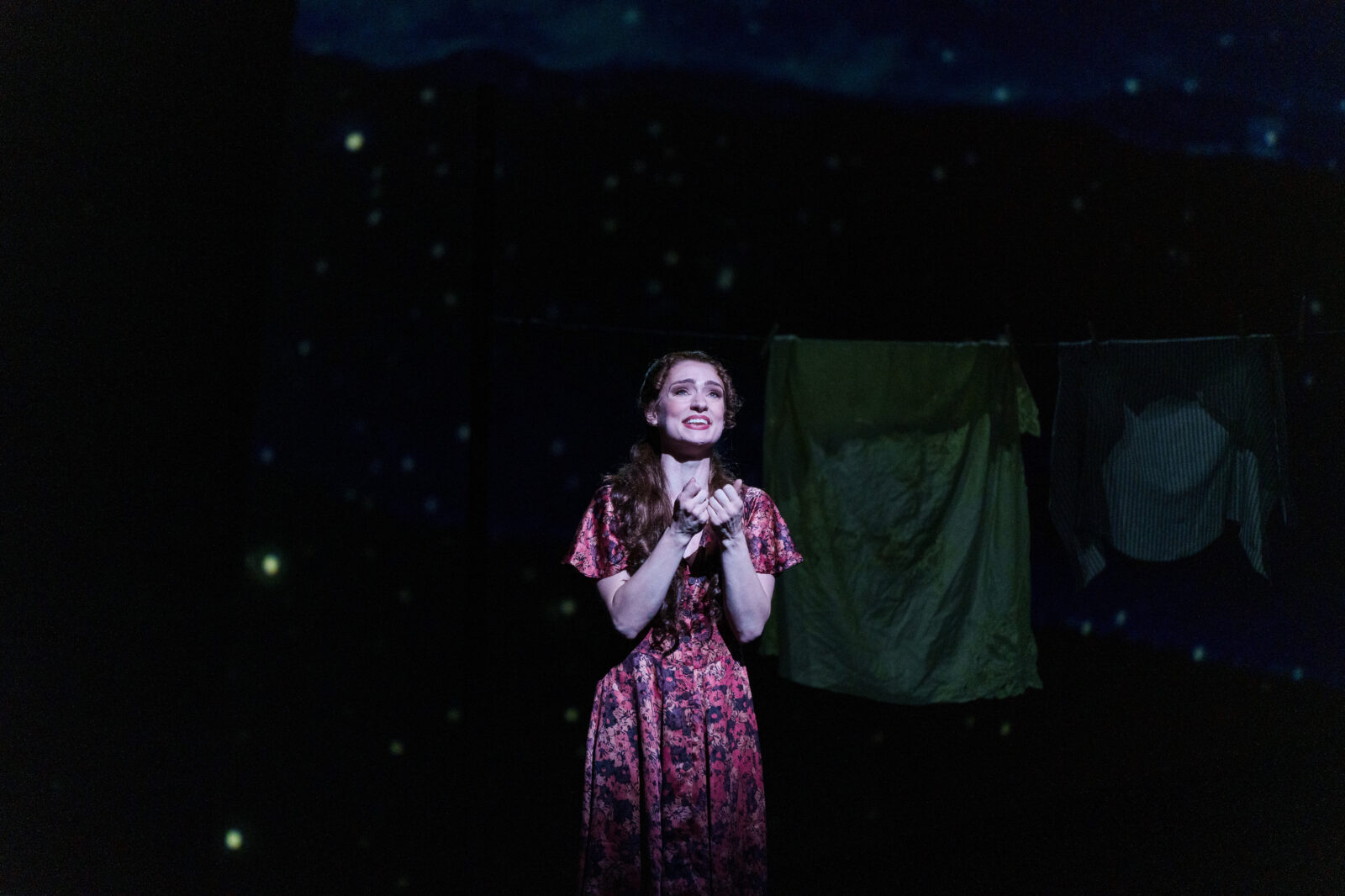
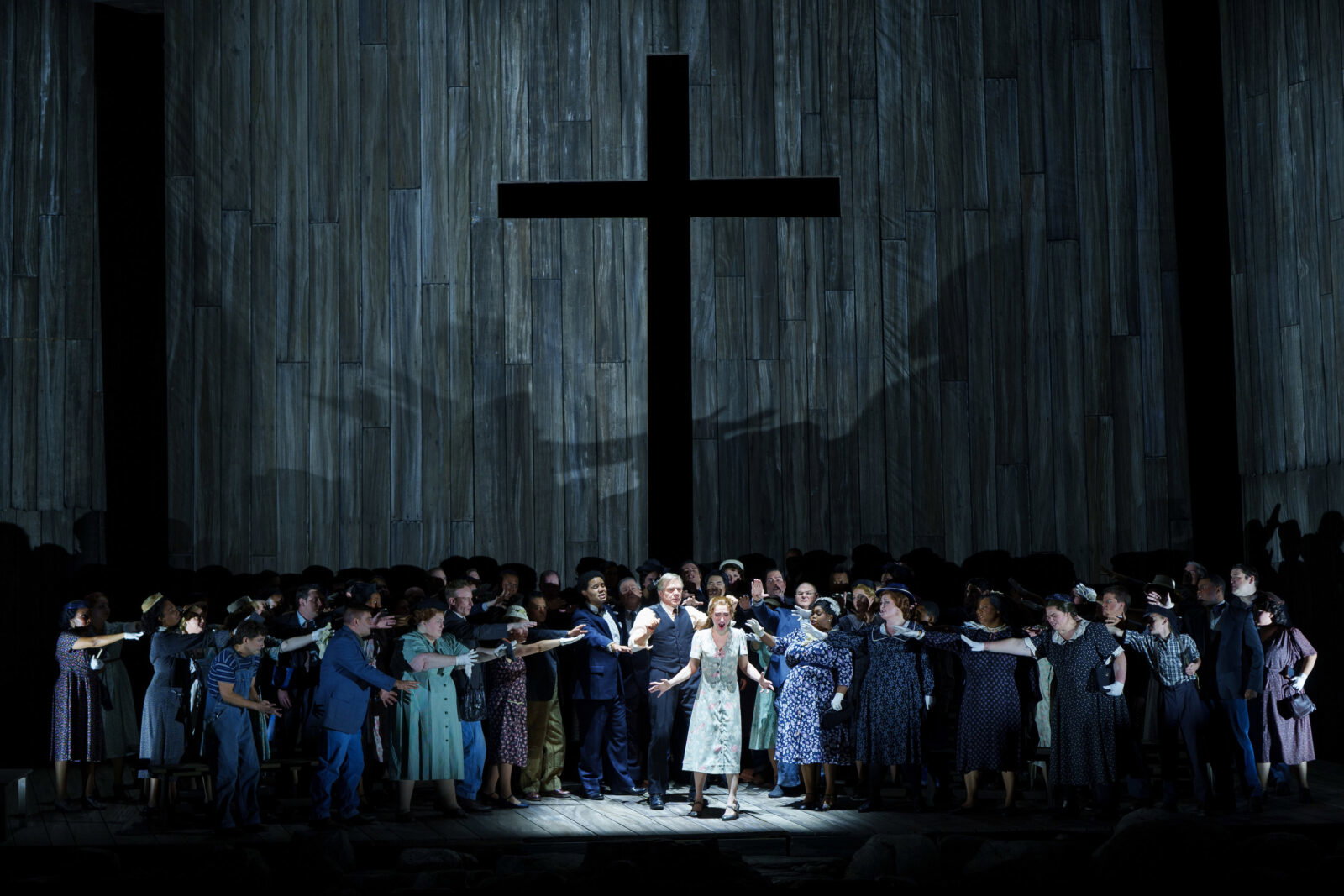
Scenery and projection designer Erhard Rom and lighting designer Eric Southern illuminate the stage with a carpet of stars above the mountains, and with shimmering light. It makes audience members feel as if they are walking through the rippling creek that once brought Susannah so much happiness.
Ultimately, it’s the singers onstage and musicians in the pit who bring Floyd’s creative genius to life. The Houston Grand Opera chorus sings with brilliant gusto, while tenor Aaron Blake breaks hearts as vulnerable Little Bat.
But it is the artistry of soprano Sylvia D’Eramo as Susannah that carries the production. Her beautiful voice, with its extraordinary range, is as pure as the stream where Susannah bathed, and her graceful presence onstage is magnetic.
And what of Susannah’s dream of leaving her valley to discover what lay beyond, then returning to the home she loved? Cruelty and injustice have shattered her dream, and the only world she knew has become a place to which she can never return.
James Gaffigan believes he can come back to where he studied music and make himself a home.
Houston Grand Opera’s Susannah runs through this Sunday, November 8 at the Wortham Center. For more information on HGO’s upcoming season, go here.
Trending
- Patty and Craig Biggio’s Four Decade Mission Helps Power Sunshine Kids On a Boot Scootin’ Night
- Houston Native’s New Personal Concierge Service Caters To Busy Executives, Families and Power Players — Lauren Gray’s Gray Door Arrives
- Tory Burch Shines at An Intimate Dallas Dinner
- Texas Artist of the Year Revealed In a Rollicking Houston Art Night With 400 A-Listers, Collectors and a Hometown Star
- A New Music-Inspired Coffee Shop Near SMU, Café Olivia Spinoff in Plano, and An Austin-Based Social Dining Concept To Debut in Dallas This Month







_md.jpg)








_md.jpg)