
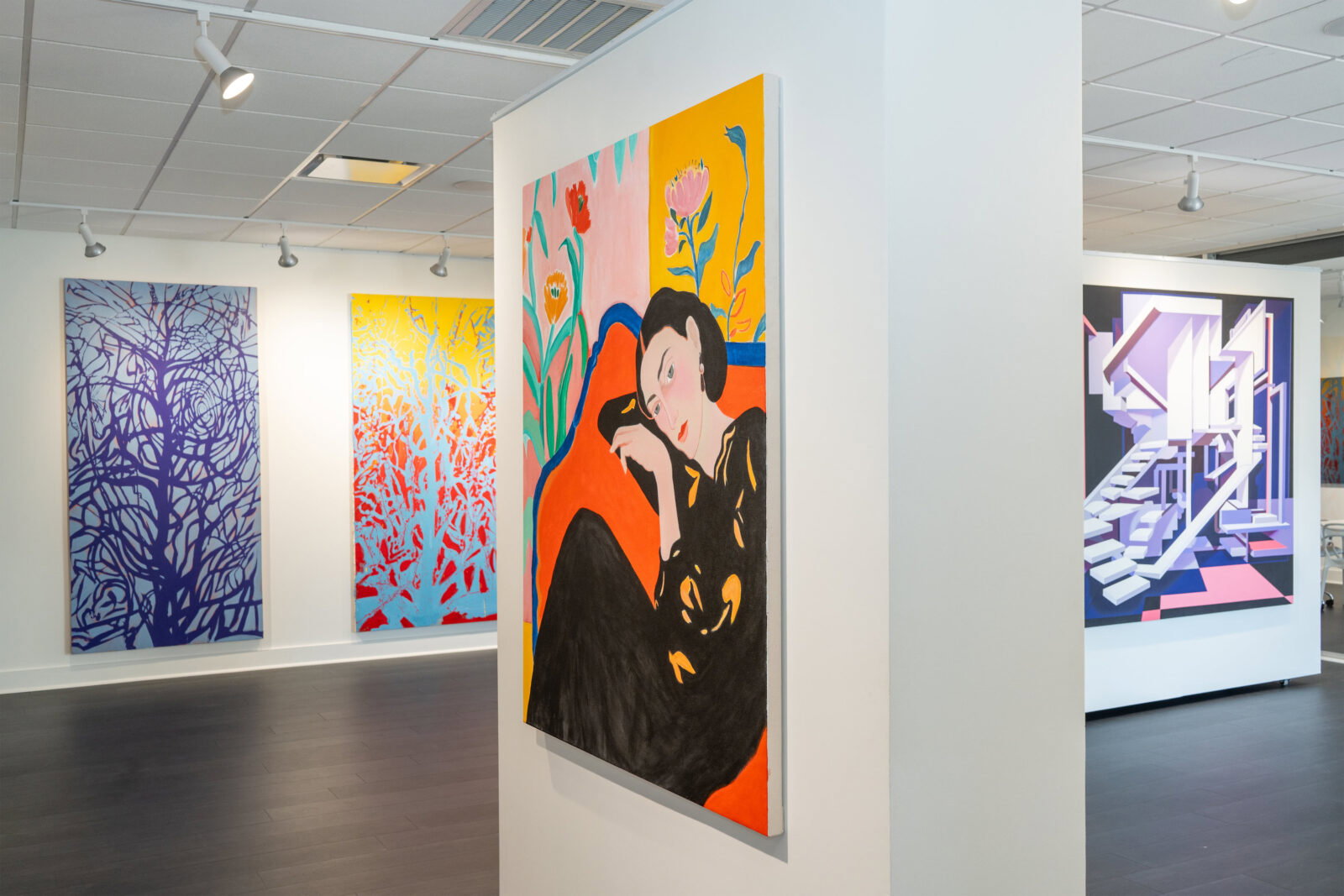
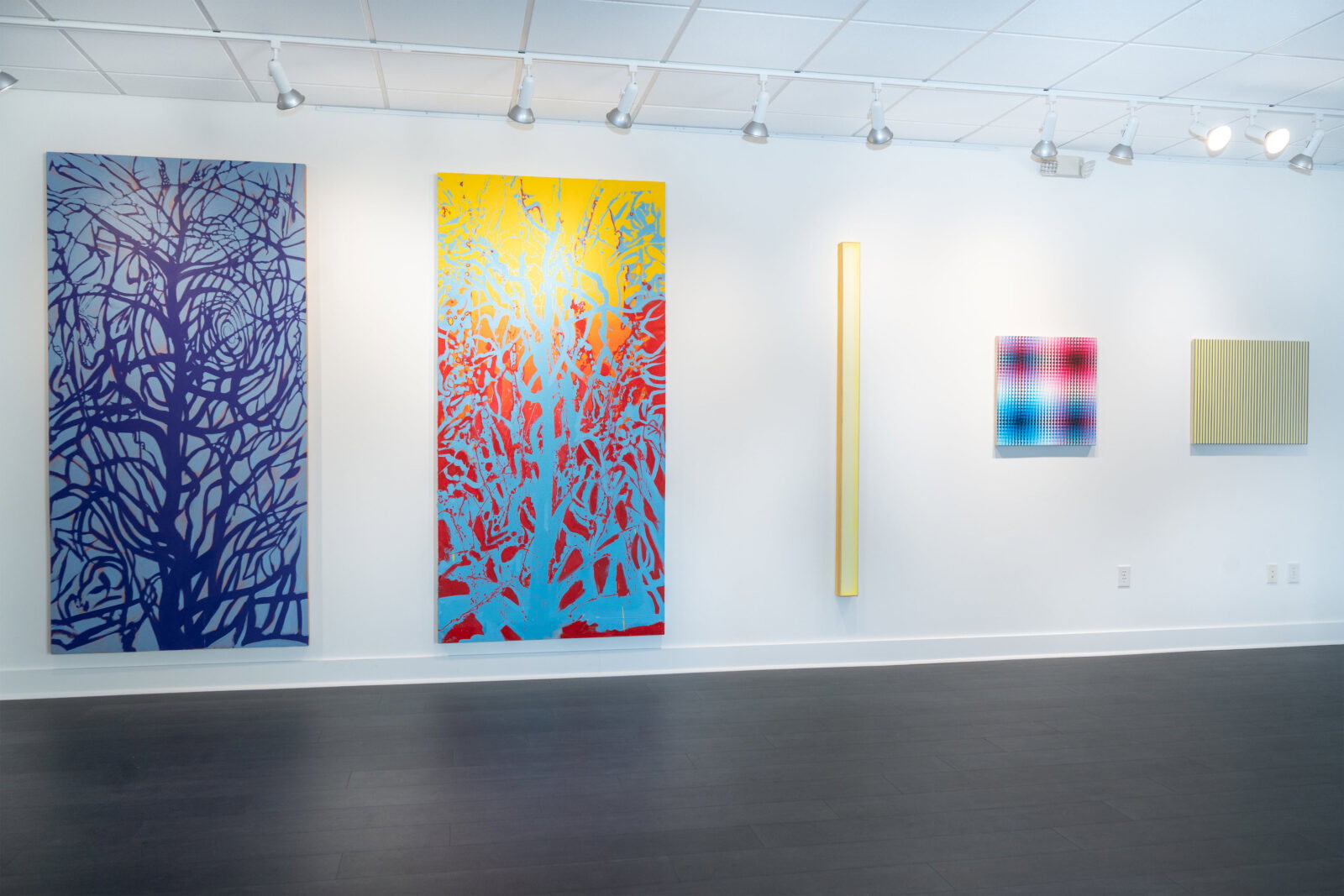
A family tree flatters history with the appearance of order. Its branches emerge from a common trunk, each division preserving the logic of descent. Artistic influence rarely behaves so politely. In Adrian Jimenez’s Merry Go Round (2026), a pale blue tree erupts across a feverish expanse of yellow and red, its branches multiplying until botanical description gives way to pictorial congestion. In Butterfly (2026), purple limbs tangle against a quieter ground, the image approaching a diagram of its own dissolution.
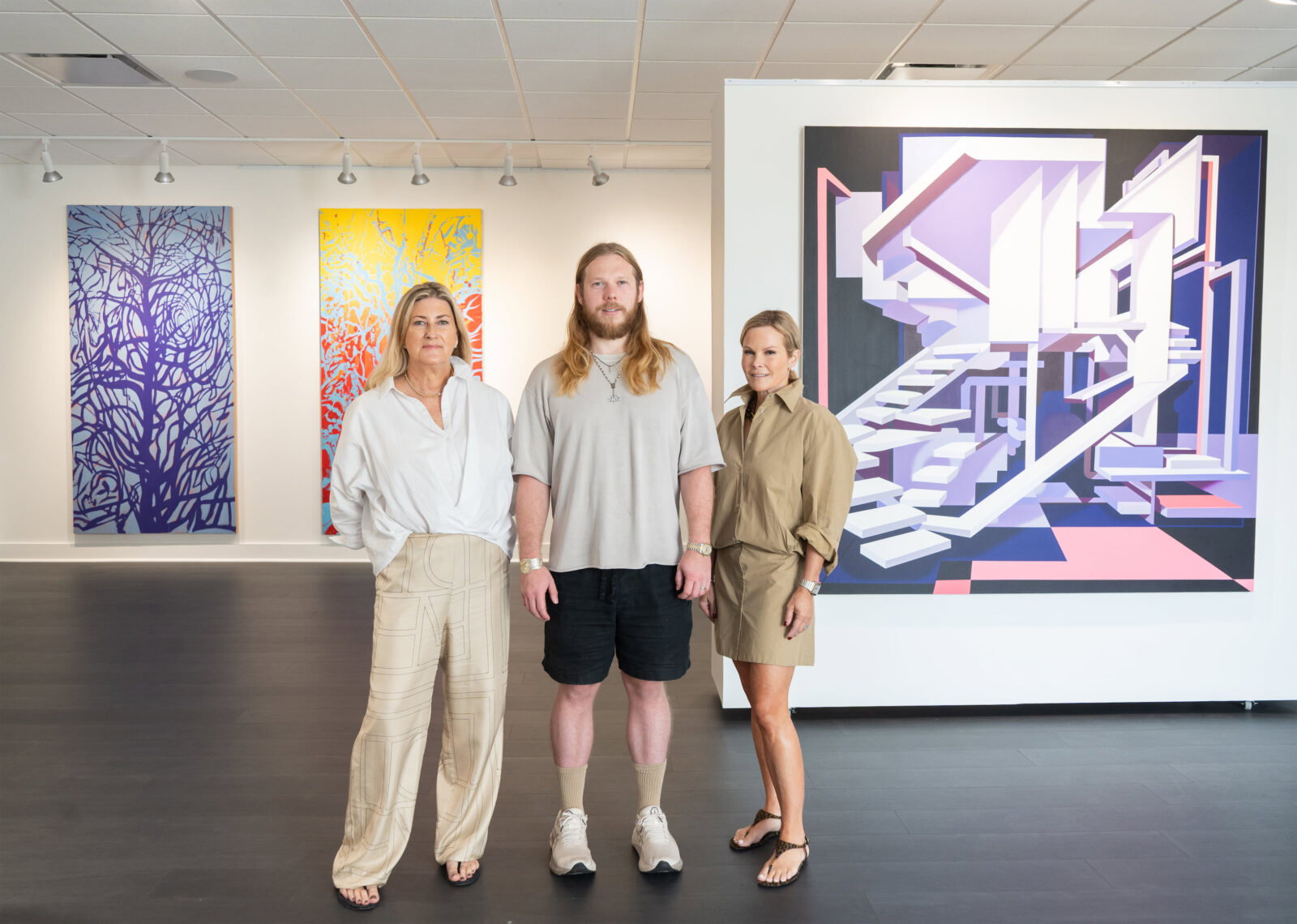
Both offer an apt introduction to “A Lineage of Instinct,” organized by Los Angeles-based indie curator/artist Preston Douglas Boyer at Houston’s Japhet Bates gallery, marking a history of Bayou City art whose connections grow increasingly difficult to separate from the surrounding noise.
Gallery owners Lisa Bates and Juli Japhet hatched the idea of this show to coincide with Houston Arts Month, commissioning Douglas Boyer due to his curatorial chops, homegrown history in the city, and his cool kid connection to the legendary Houston artist Mark Flood.
Flood even made a cameo on opening night of “A Lineage of Instinct,” a rare if unprecedented sighting of the private art star who assiduously avoids his own openings.
OG Plus Emerging Talents
Houston’s artistic culture owes much to institutions willing to entertain the unfamiliar, from The Menil’s collecting to Walter Hopps’s adventurous exhibitions. Yet its history also travels through less permanent arrangements: studios, friendships, shared labor, a collector’s curiosity, one artist’s insistence that another deserves attention.
With Texas Gallery’s announced retreat from its physical Houston space earlier this year, Douglas Boyer’s stated ambition to continue something of its cross-generational conversation acquires particular urgency. What survives when the rooms that once gathered an artistic community begin to disappear?

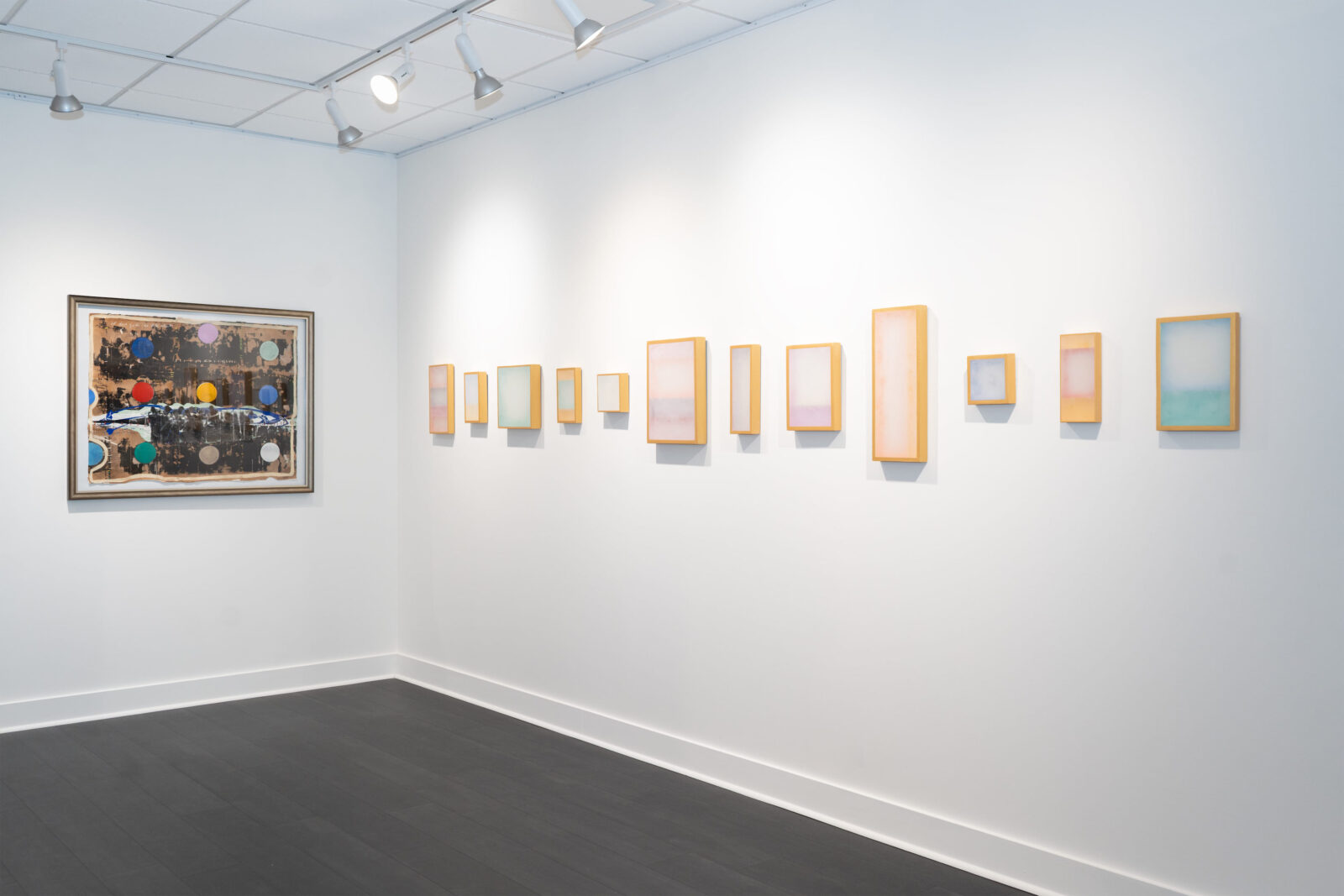
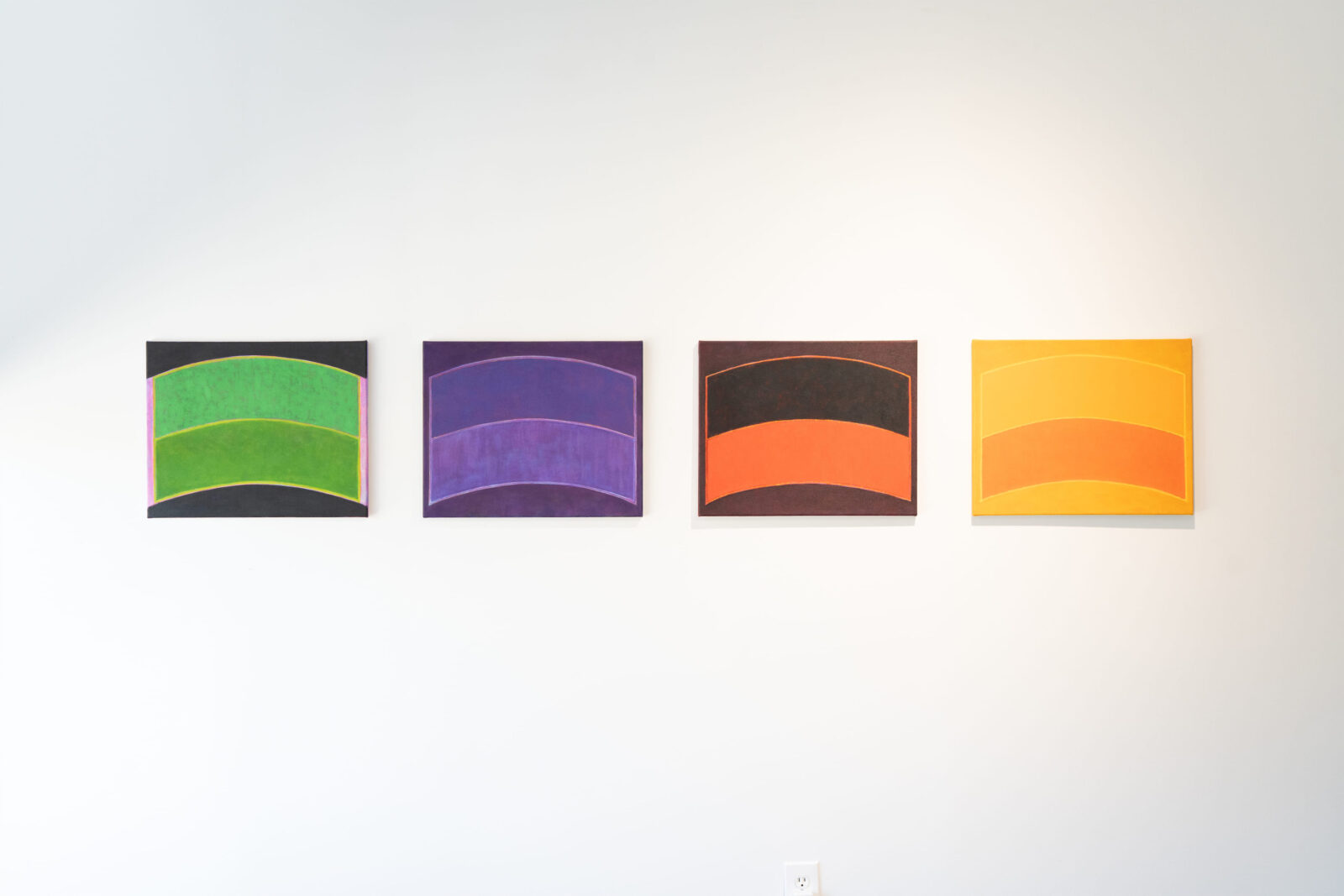
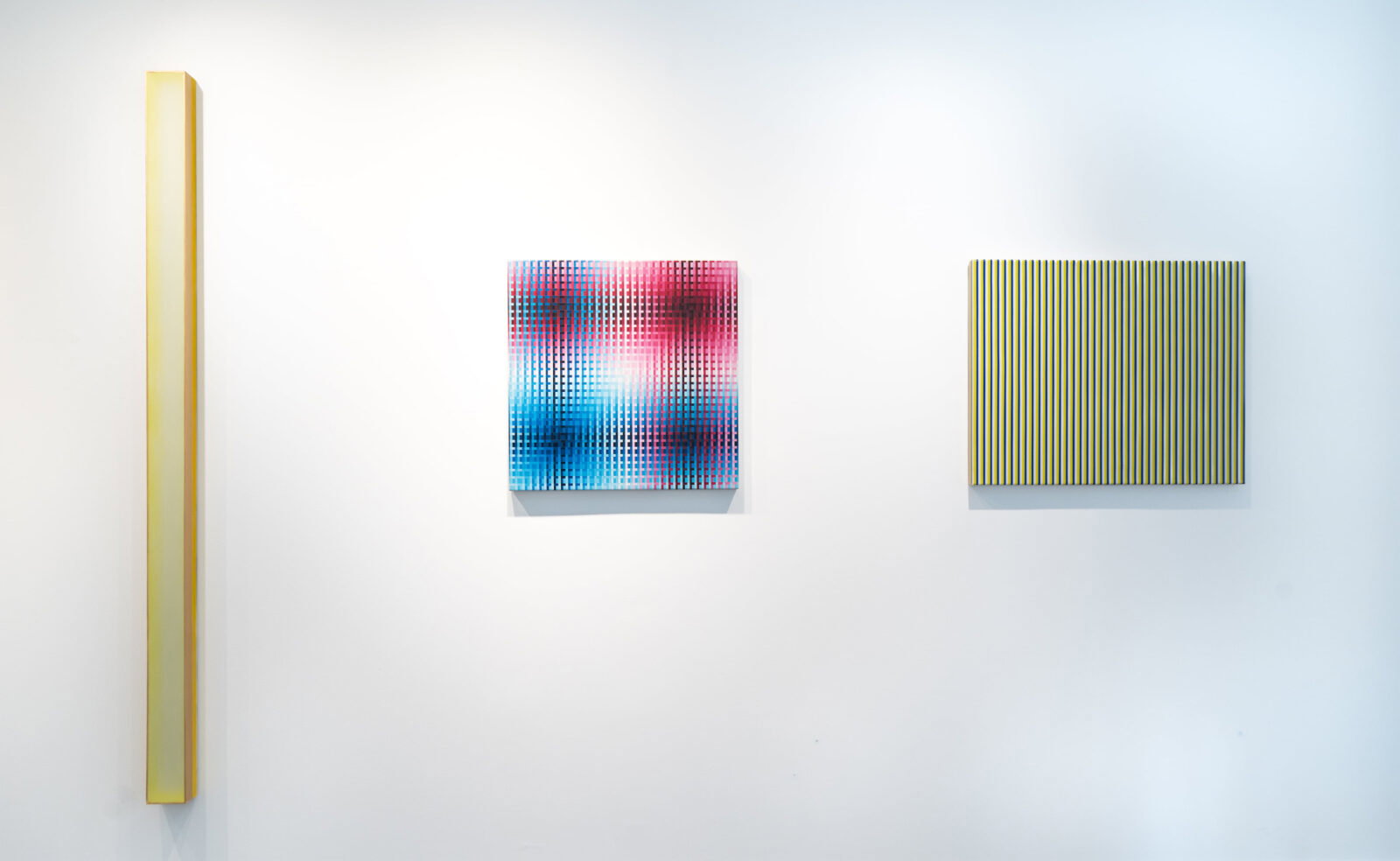
Boyer’s pairing of Jimenez’s trees with McKay Otto’s narrow works supplies one of the exhibition’s sharpest formal arguments. Jimenez sends the eye racing along innumerable crossings; Otto arrests it. In Ever As Now Ever (2026), a pale turquoise field floats between warm bands of peach and yellow. Ever So Far Ever (2026) lets blue drift almost imperceptibly toward green. Their gold-colored frames establish firm borders around color that seems perpetually ready to evaporate.
Otto’s Ever Light Beam Line Ever, seventy-five inches tall and only four wide, reduces painting almost to an architectural punctuation mark. One artist proliferates the line; the other pares it down to a luminous trace. Neither offers the viewer a settled place to stand.
Rosmarin + Suprean
Susie Rosmarin approaches instability through discipline. The repeated units of #167 (2000) organize pink, blue and black into an optical field whose apparent movement exceeds its geometry.
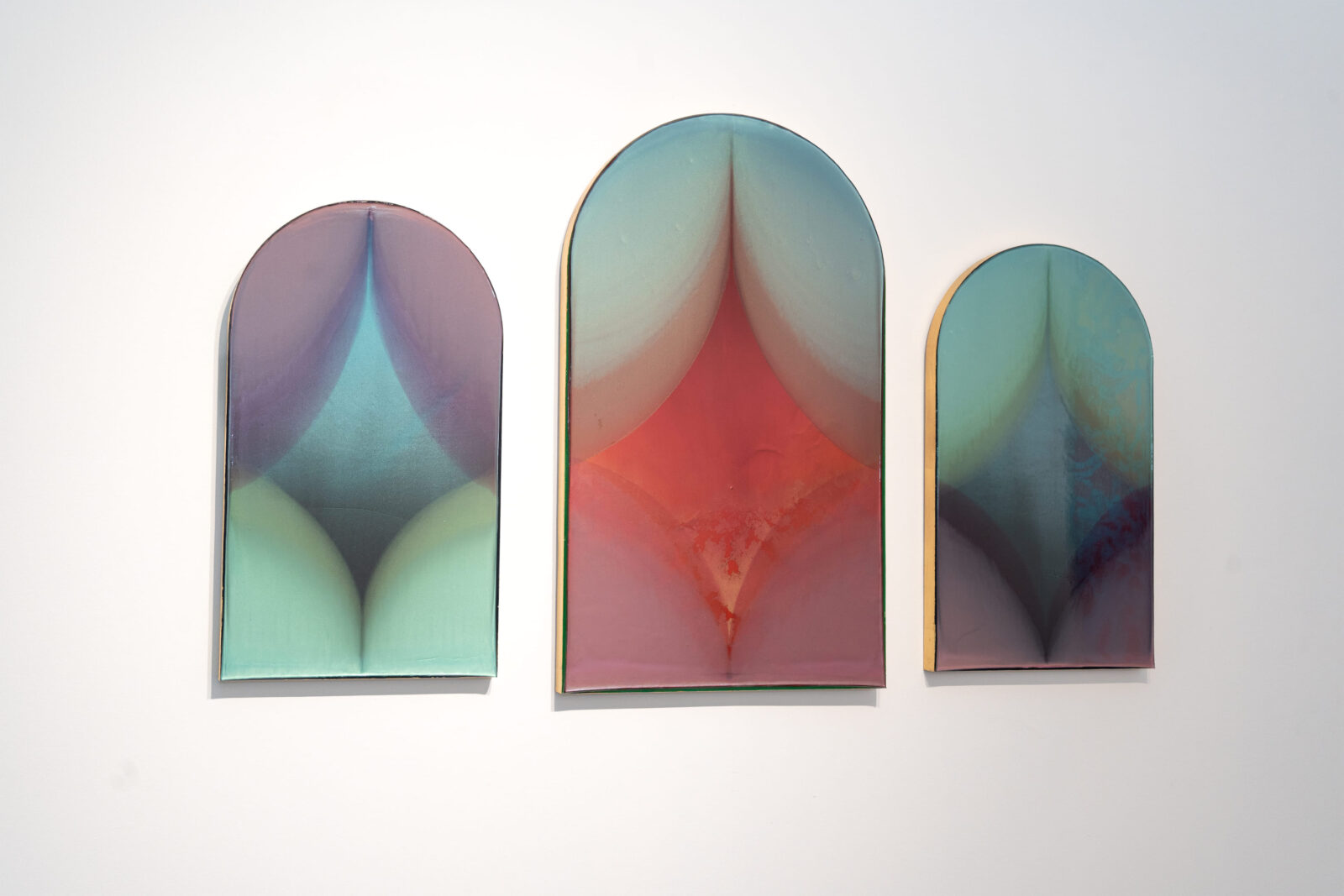
Terry Suprean’s three-part Field Interruption 7.21.24 (2024) likewise concentrates color into symmetrical, almost bodily forms. Both turn exacting structure into an unexpectedly volatile encounter, complicating any easy division between rigorous abstraction and sensual excess.

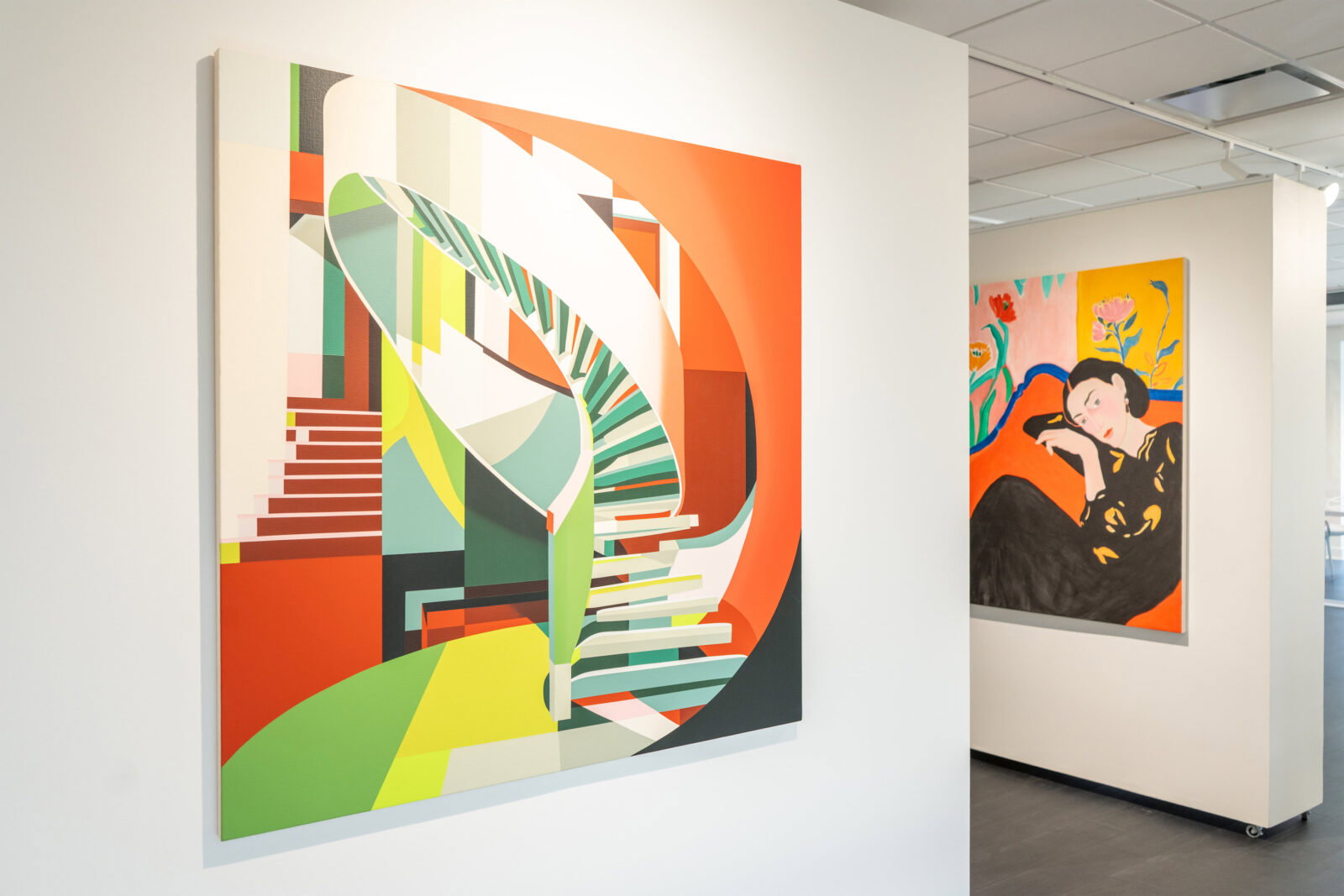
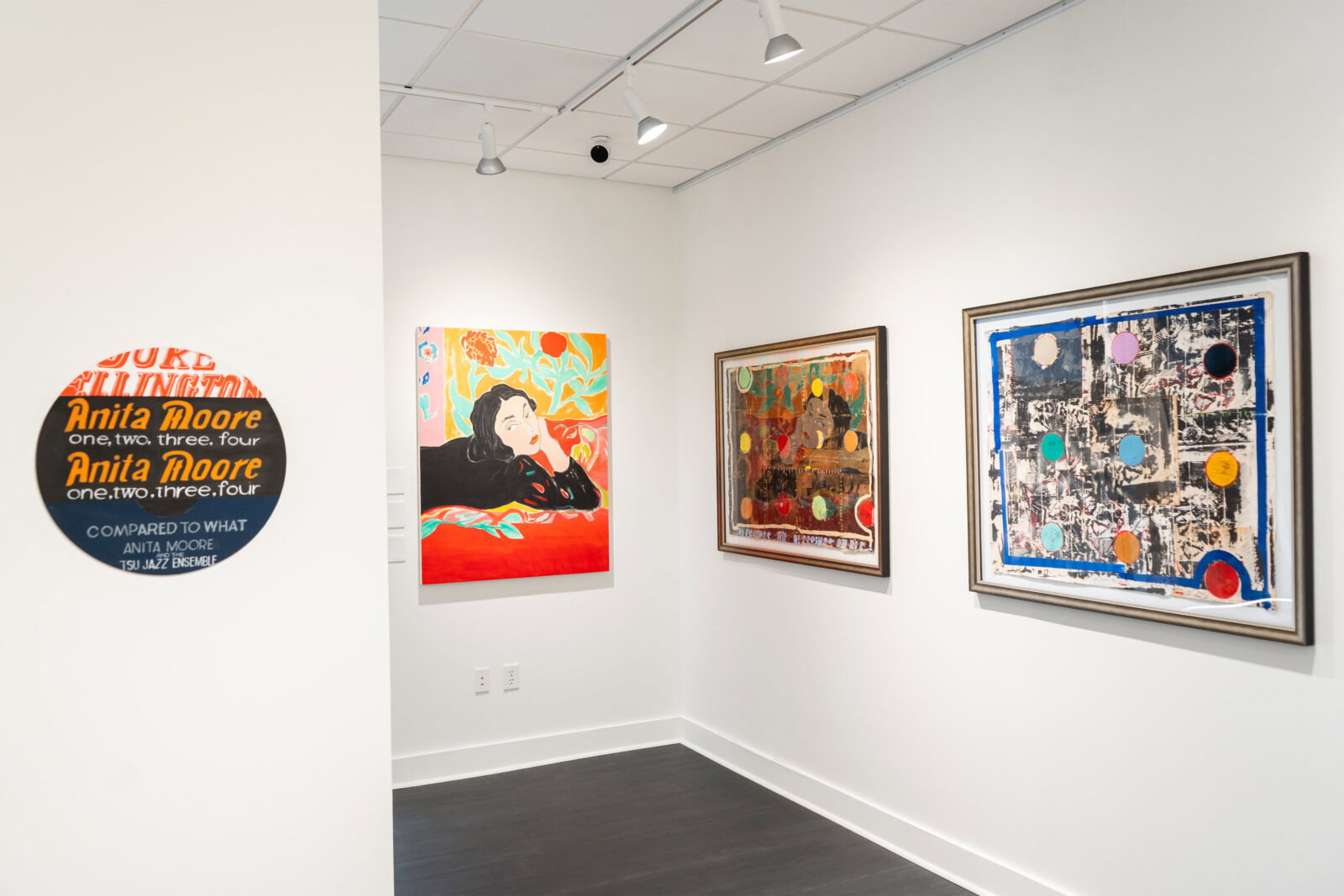
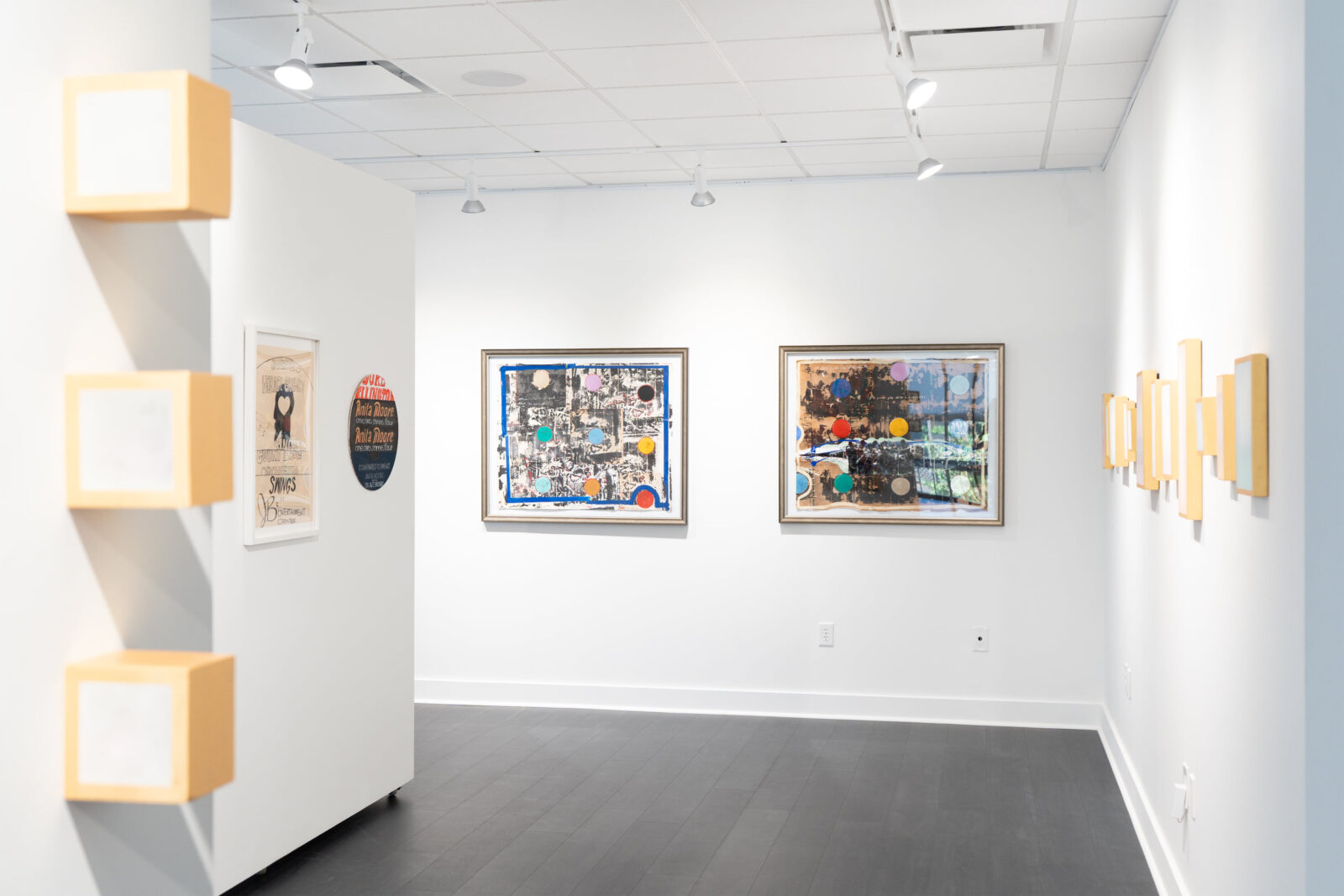
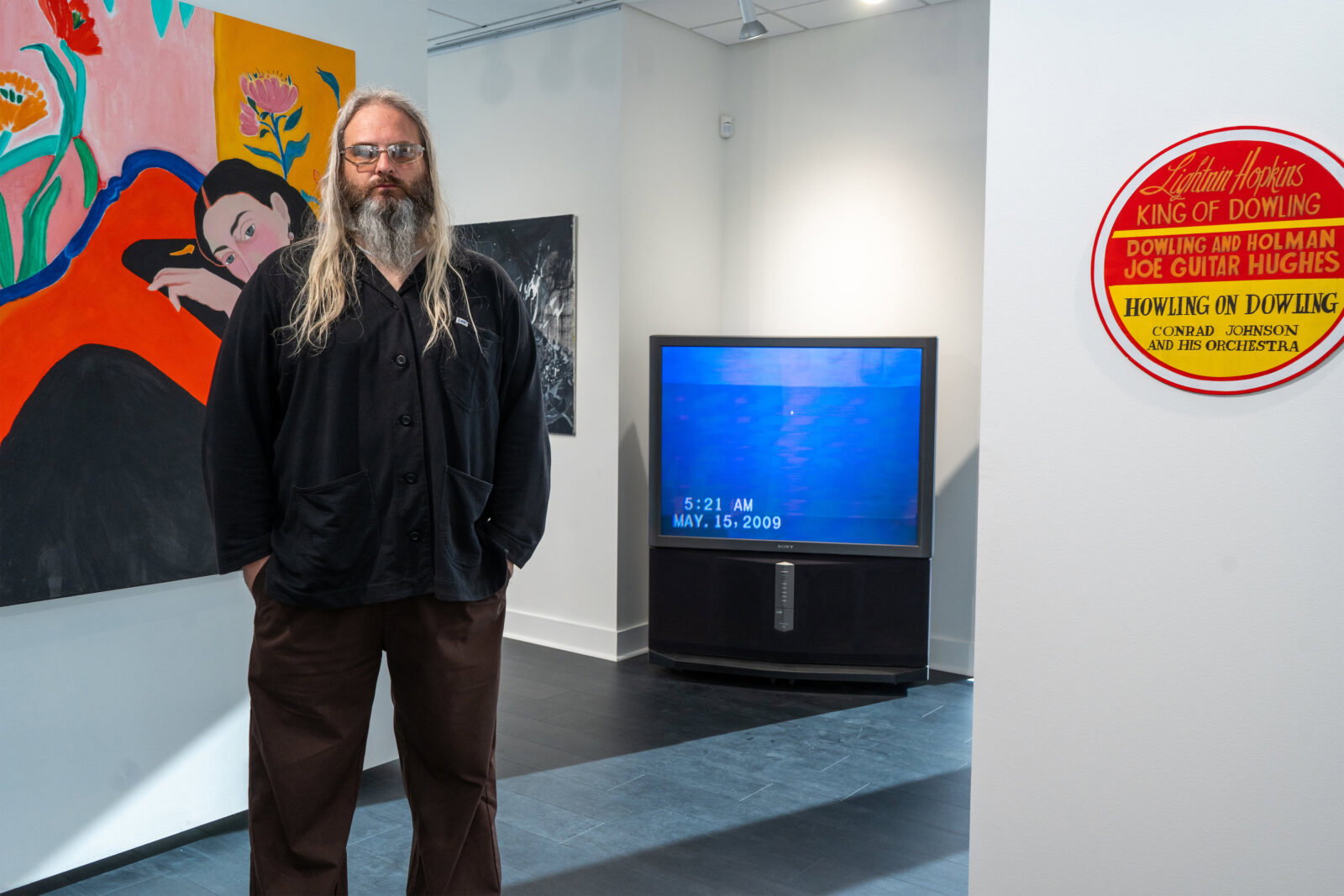
Among the younger painters, Brandon Araujo makes that division especially difficult to sustain. Girl With Red Flowers (2025) presents a reclining figure within an aggressively saturated environment of floral ornament, its sitter almost swallowed by the surrounding decoration. The small Block paintings of 2026 abandon figuration for curved bands of concentrated color, suggesting shields or architectural fragments. Their proximity reveals less a conversion to abstraction than a continuing fascination with how composition contains unruly sensation.
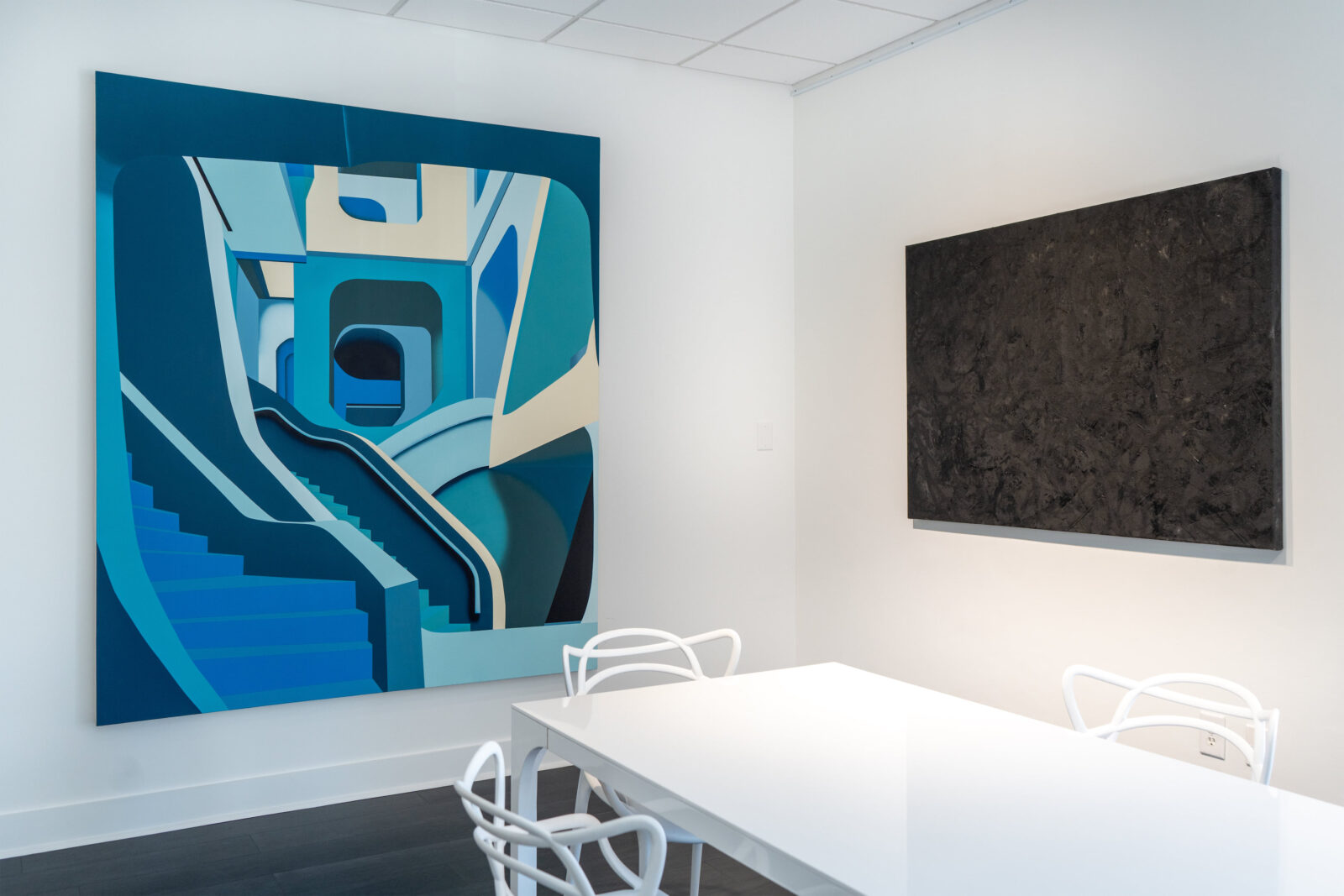
Josh Litos stages another kind of containment. In Blue in the Face and Twitching and Turning (both 2024), staircases and corridors promise navigable architecture before their competing perspectives undermine the route. These buildings behave like puzzles whose solutions keep receding.

Erica Reed Lee makes the support itself unstable. Bissonnet (2025) interrupts the expected rectangle of canvas with a dark geometric form. Washington Avenue (2025) uses stitching and surface irregularity to give painting an almost bodily resistance.
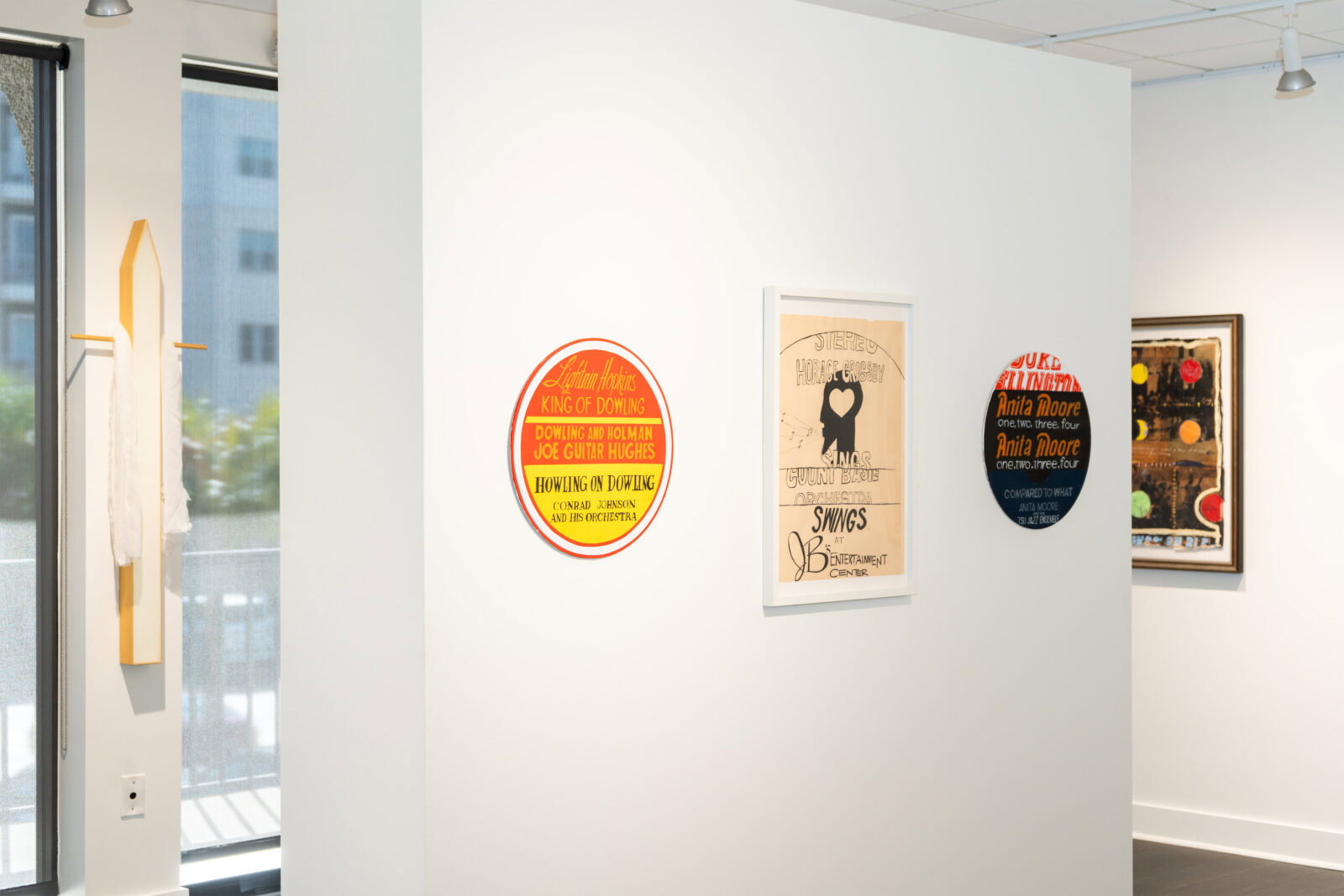
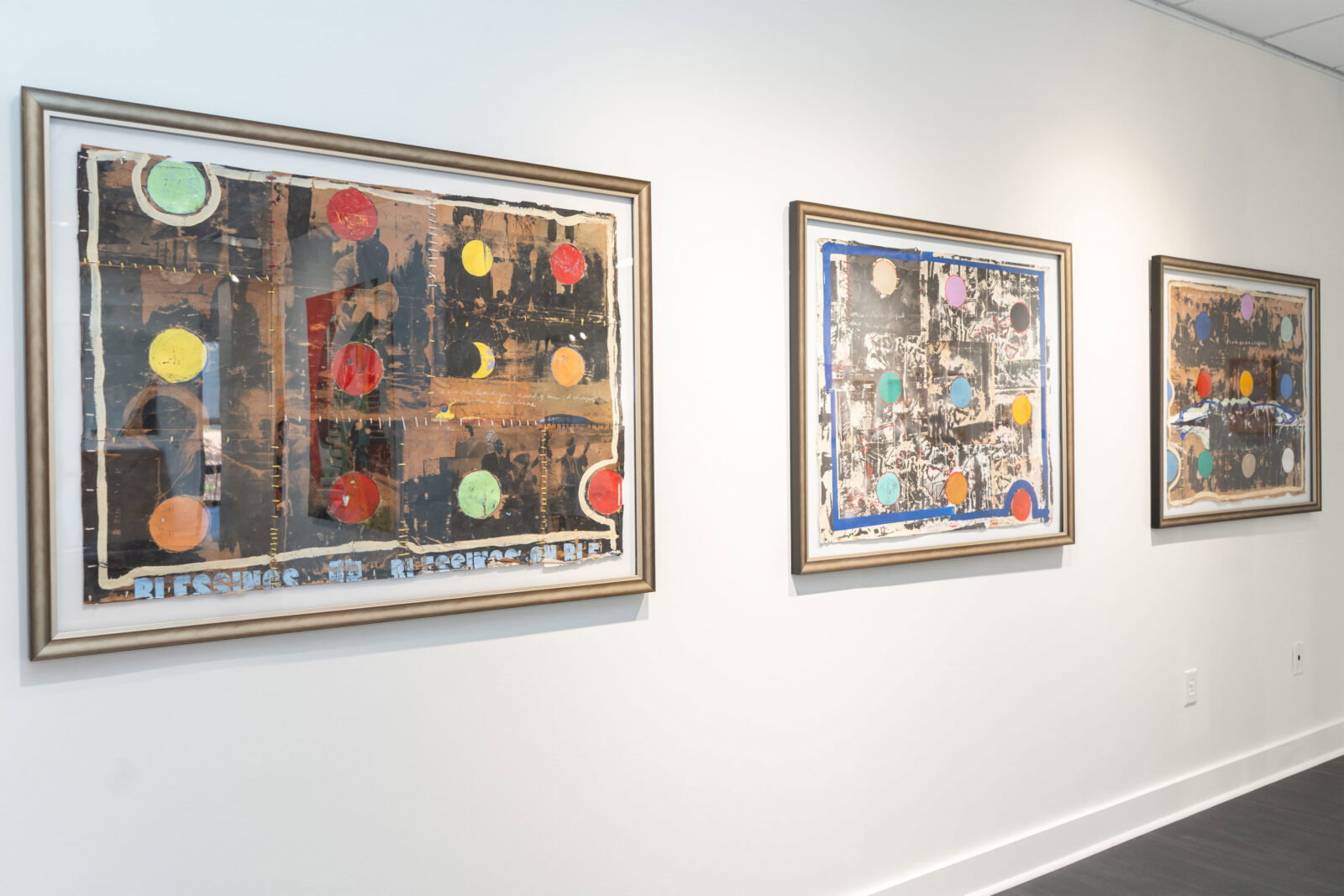
Robert Hodge’s Baptism works, assembled from reclaimed record sleeves and layered materials, similarly refuse the pristine picture plane. Their weathered surfaces preserve evidence of another circulation, when images wrapped sound rather than hung on walls.
Tierney Malone’s Down on Dowling (2024), borrowing the graphic vocabulary of a record label and invoking Houston musicians, extends this argument into local musical memory. Here, lineage travels by ear as readily as by eye.
The Great El Franco Lee II
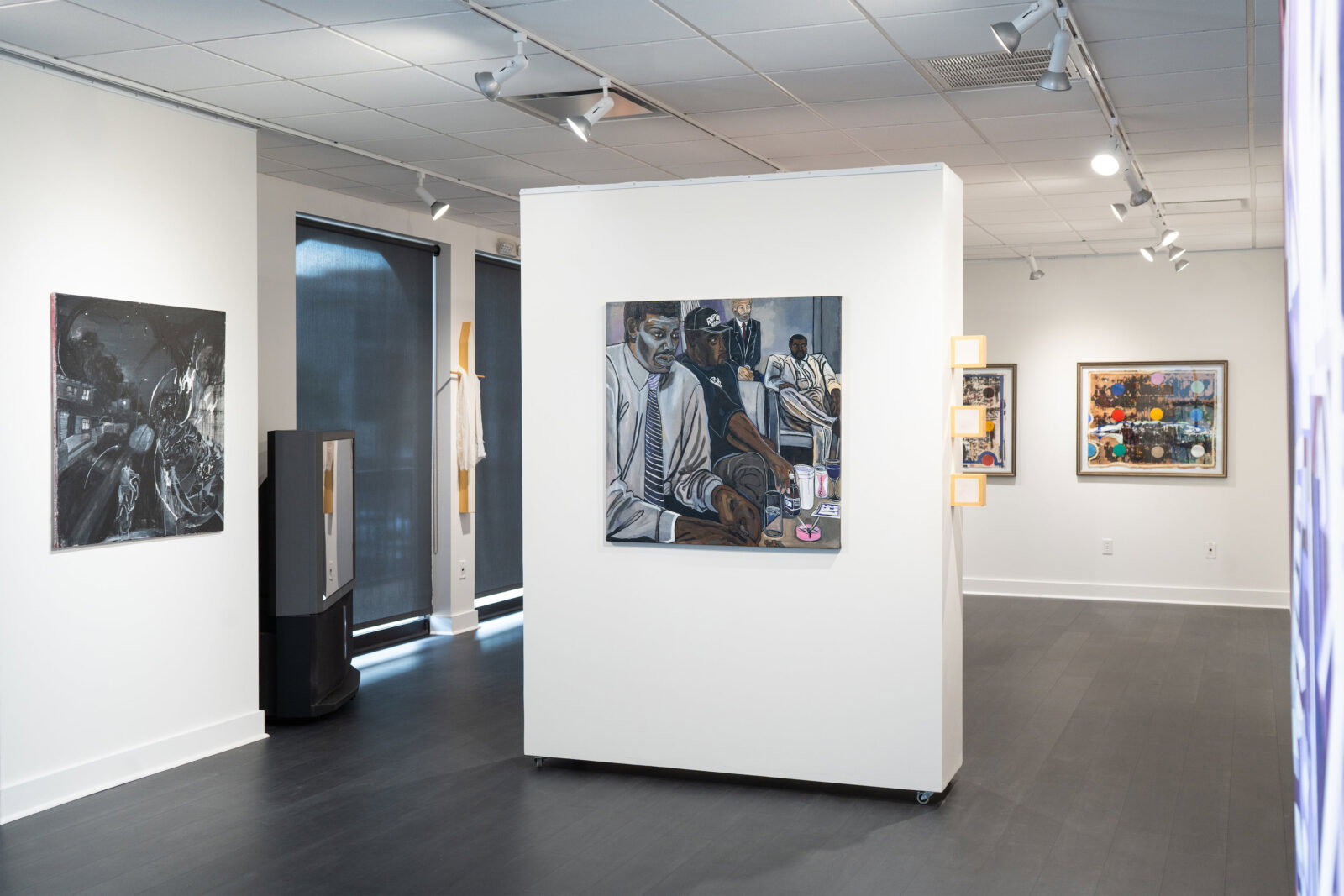
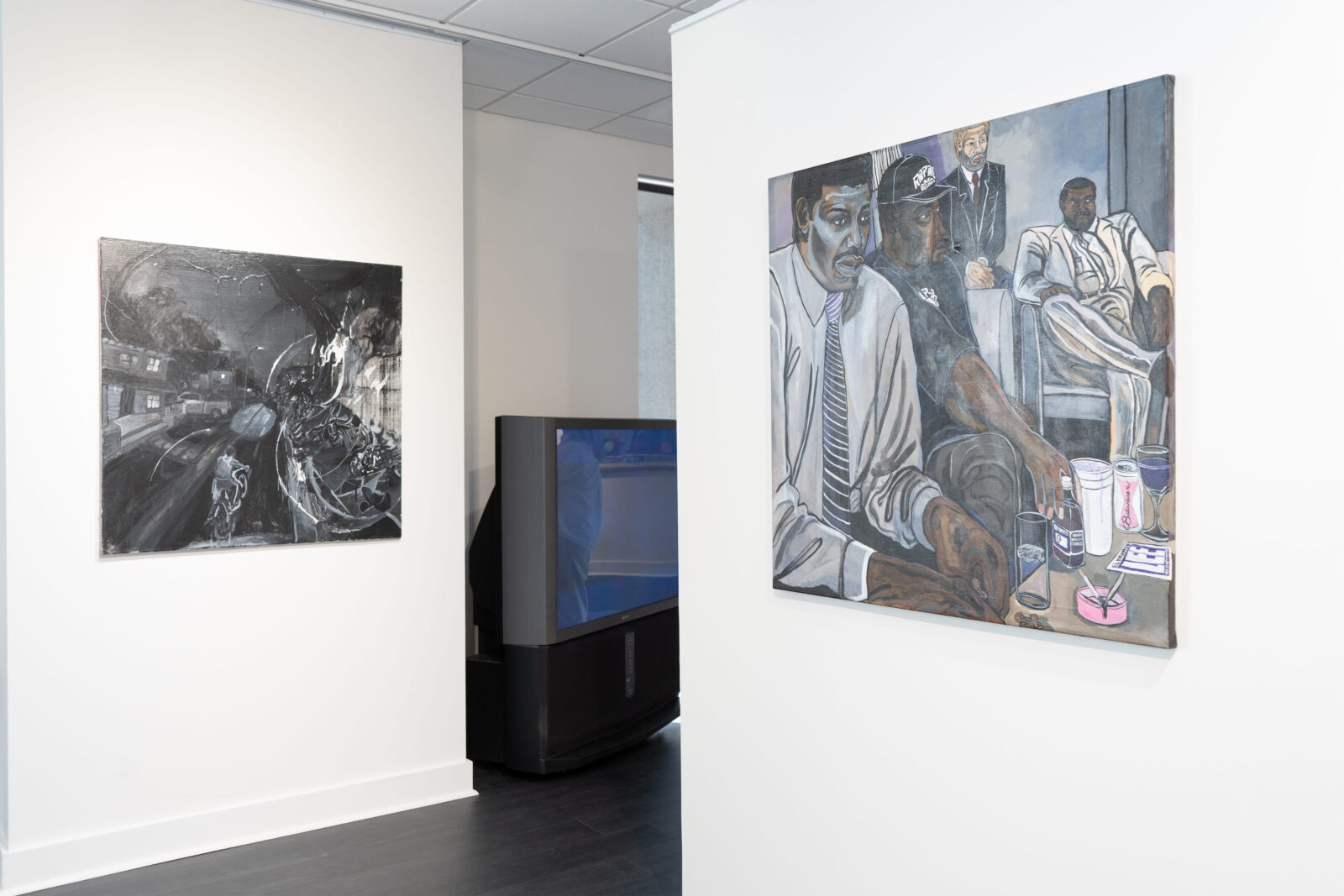
El Franco Lee II’s Campaign Night ’84 (2026) changes the exhibition’s register again, gathering figures in an interior animated by political and social observation. That difference matters. A genealogy broad enough to embrace optical abstraction, painted architecture, musical archives and narrative figuration risks becoming a category without edges. Friendship establishes a relationship between artists, not automatically between artworks.
Boyer’s strongest pairings acknowledge the distinction. Elsewhere, the exhibition asks its social history to do more explanatory work than the objects themselves.

Mark Flood provides a useful precedent. His 2016 The Future Is Ow brought fellow Houston artists into an unruly New York gallery installation, converting his visibility into room for others. During the tour, Boyer recalled encountering Litos stretching canvases in Flood’s studio. The story matters less as evidence of stylistic inheritance than as a glimpse of the labor through which an art world maintains itself.
A Lineage of Instinct succeeds where those two histories — the aesthetic and the social — interfere rather than coincide neatly. Its artists share no single vocabulary. What passes between them resembles permission. To experiment, to disagree, to recognize possibility in another person’s work.
A lineage requires more than ancestors. Someone has to keep the conversation alive.
“A Lineage of Instinct” on view at Japhet Bates, 3637 W. Alabama, Suite 200 (Second Floor), through this Saturday, October 24. Find all the intel here.
Additional reporting for this story came from Catherine D. Anspon
Trending
- A 50 Cent Surprise, a Generous Blake Shelton Performance and a Remarkable $13.2 Million — Houston Children’s Charity Soars On Its 30th Anniversary
- Houston Firefighter Hunks Joined By a Strong Firefighter Woman In the Calendar Show, Turning This Red Hot Gala Even More Fiery
- Giorgetti Jumps Into a New Home In Houston With a Maserati Twist — BeDESIGN Keeps Upping the Chic Ante
- Conner Weigman Wants His Respect, Houston Football Earns It On a National College GameDay Level and Willie Fritz Loves the “90 Percent Houston” Crowd Fever
- 14 Buzzy New Dallas Retail Openings To Know — Exciting Fashion, Wellness, and Home Furnishings Brands Head to Henderson Avenue and Inwood Village
















_md.jpeg)


