Rotating Houses and Making Unfinished Business Art — Houston Force Mary Ellen Carroll Keeps Everyone Guessing
An Artist Who Isn't Easily Categorized Gets a CAMH Moment
By Alison Medley //
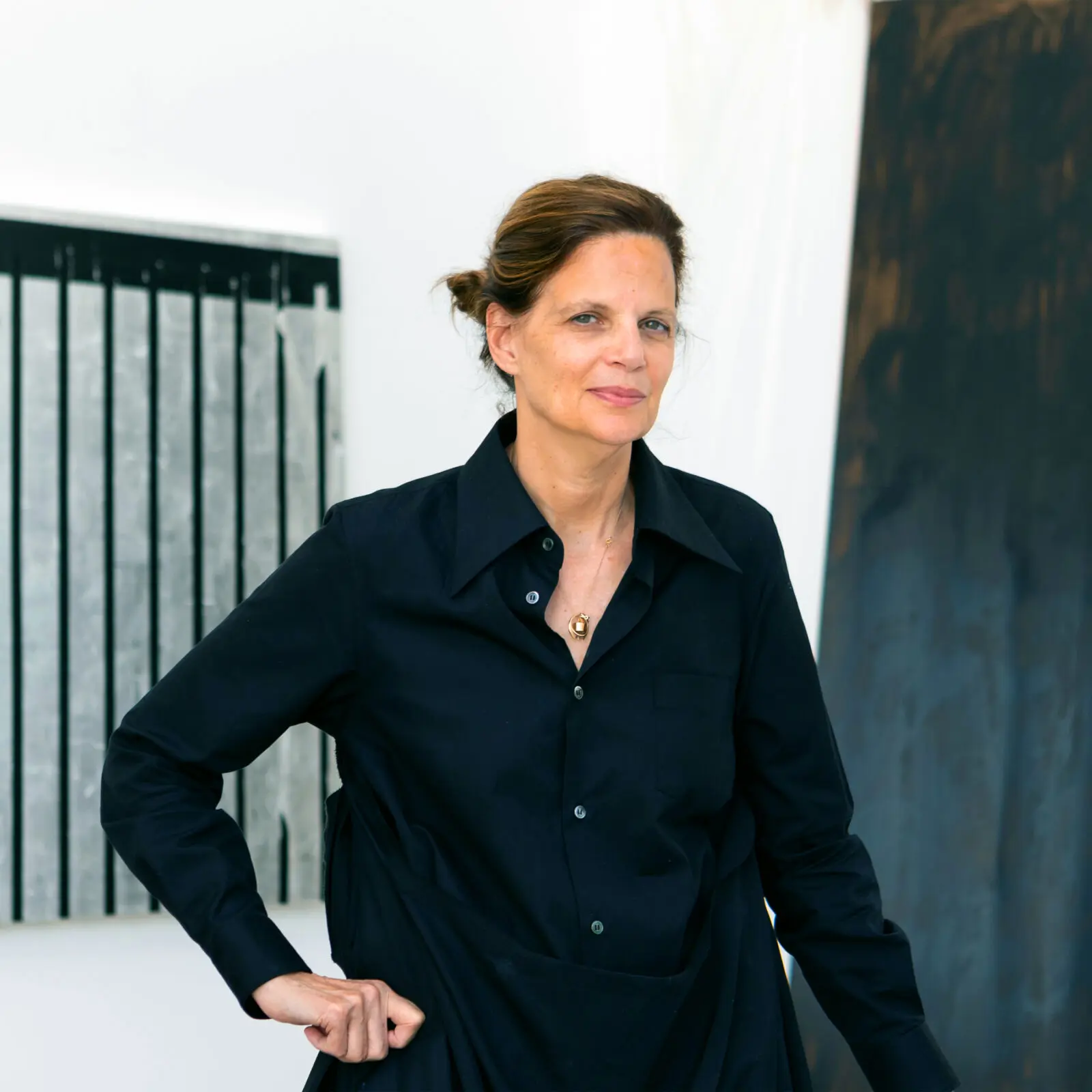
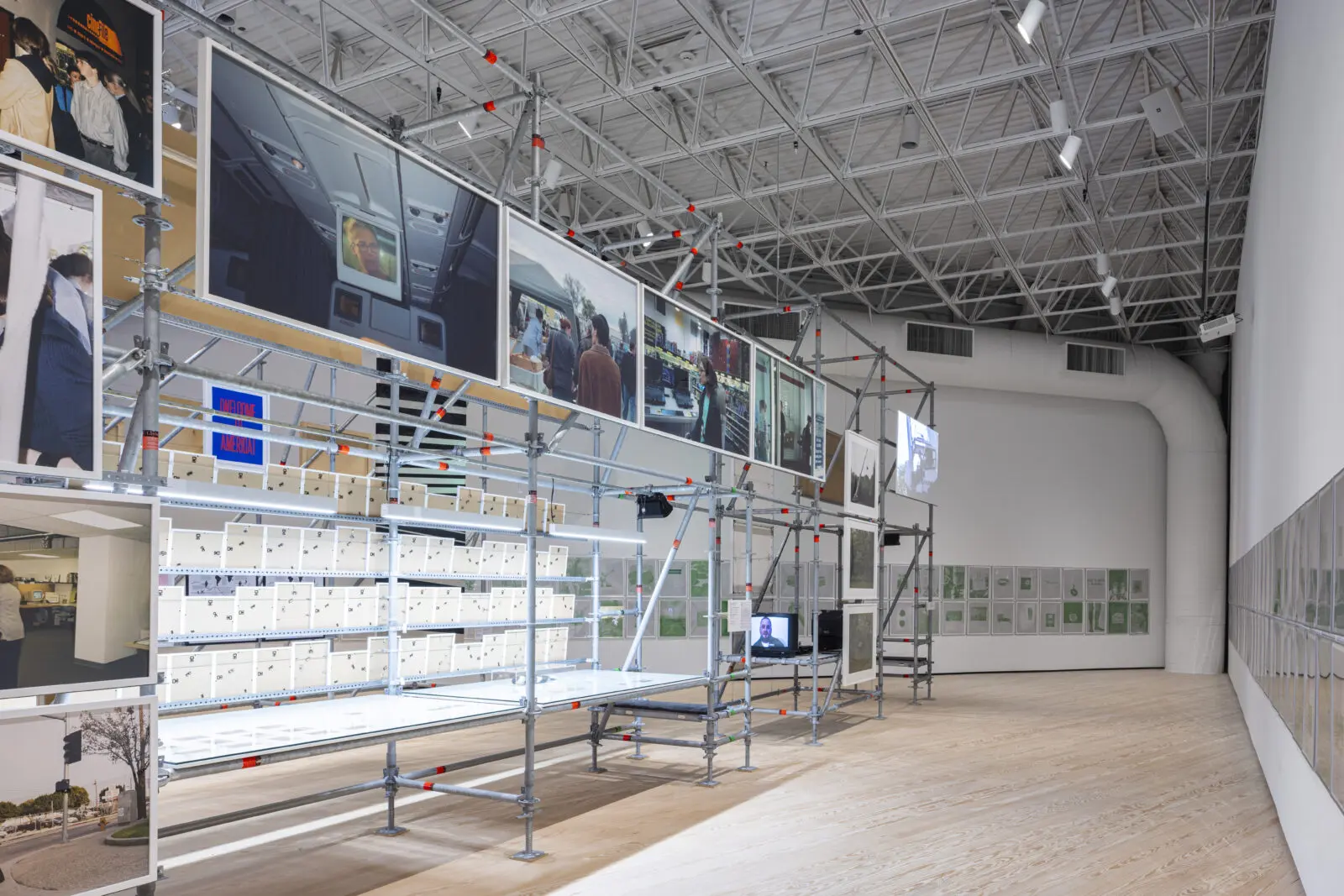
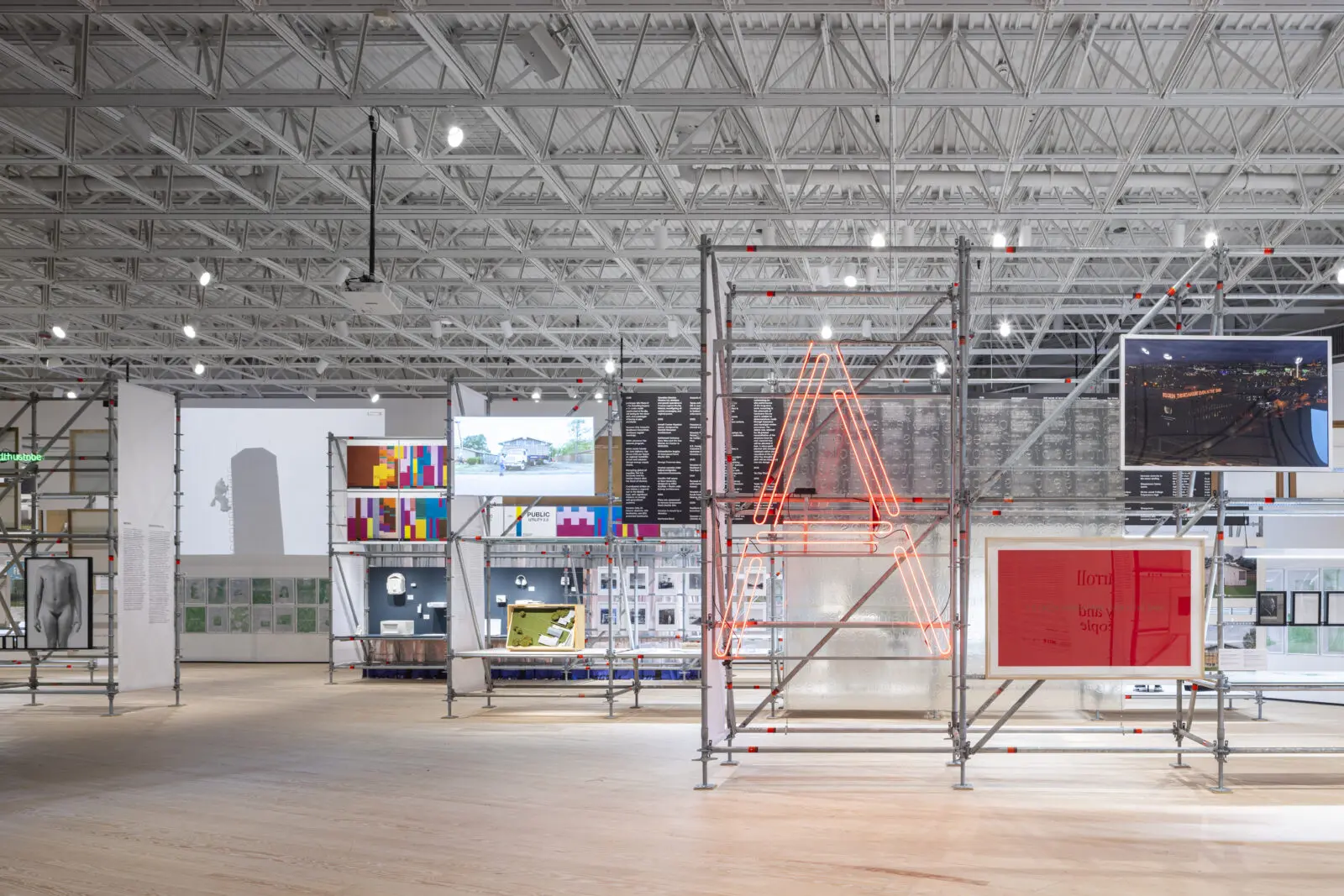
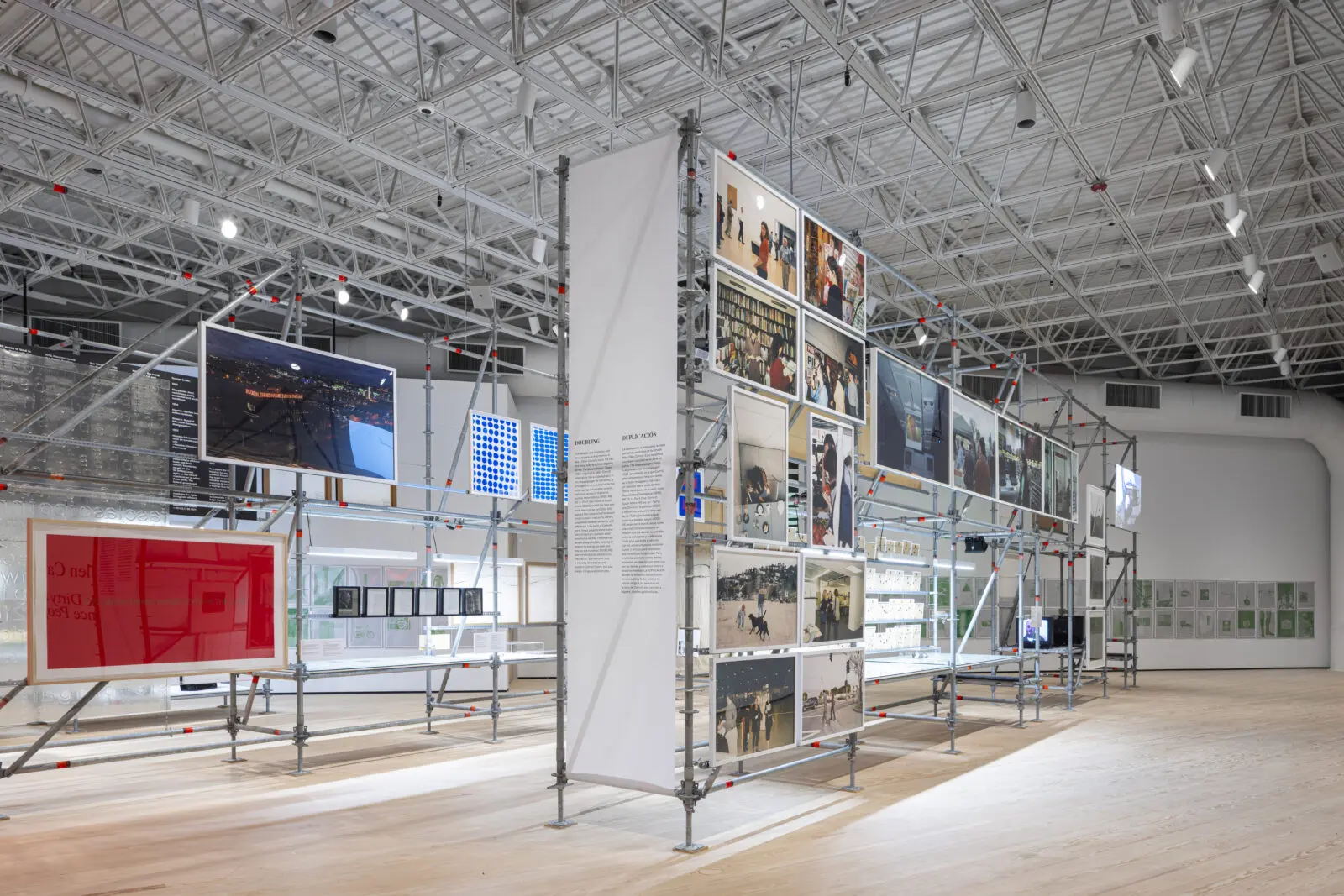
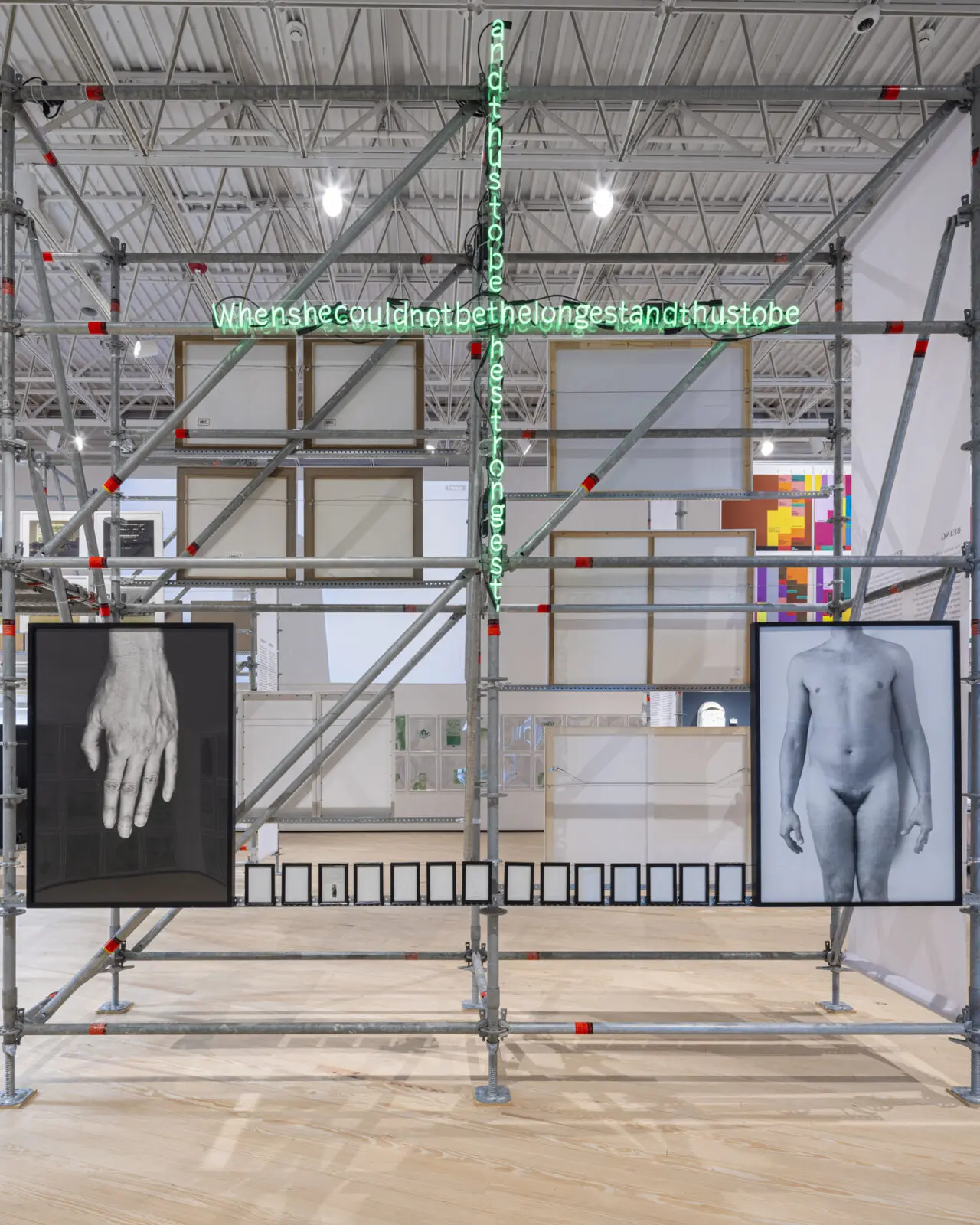
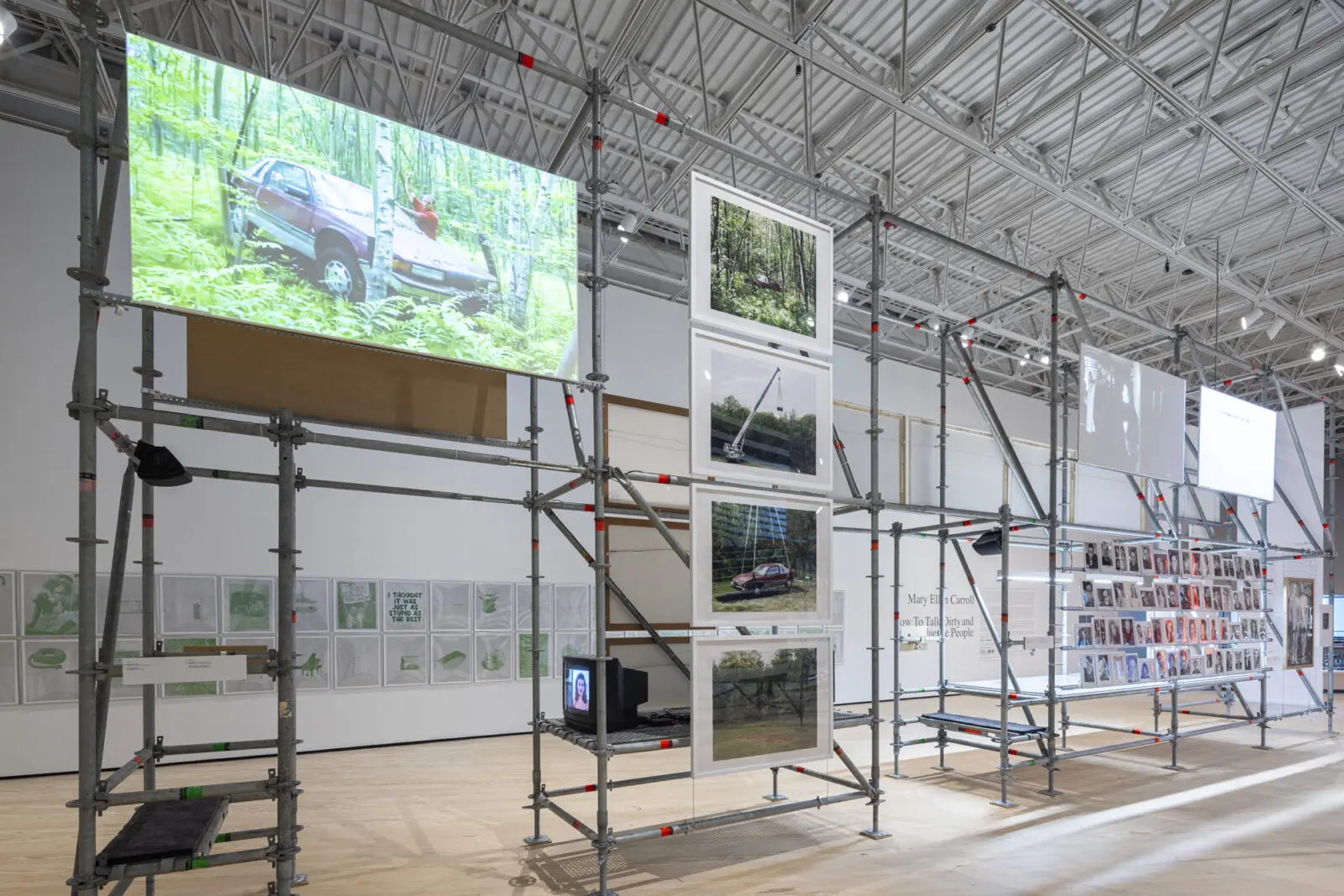
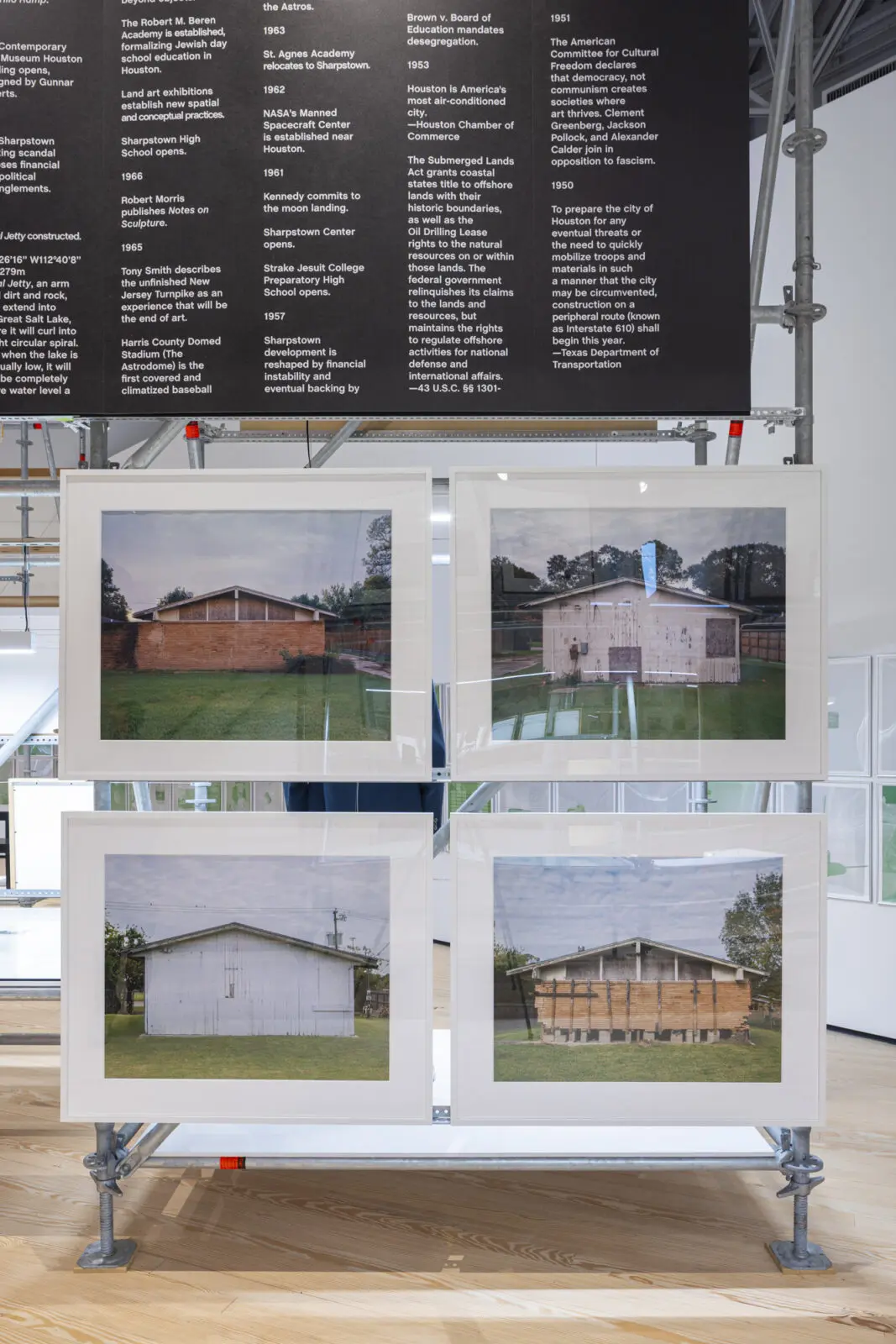
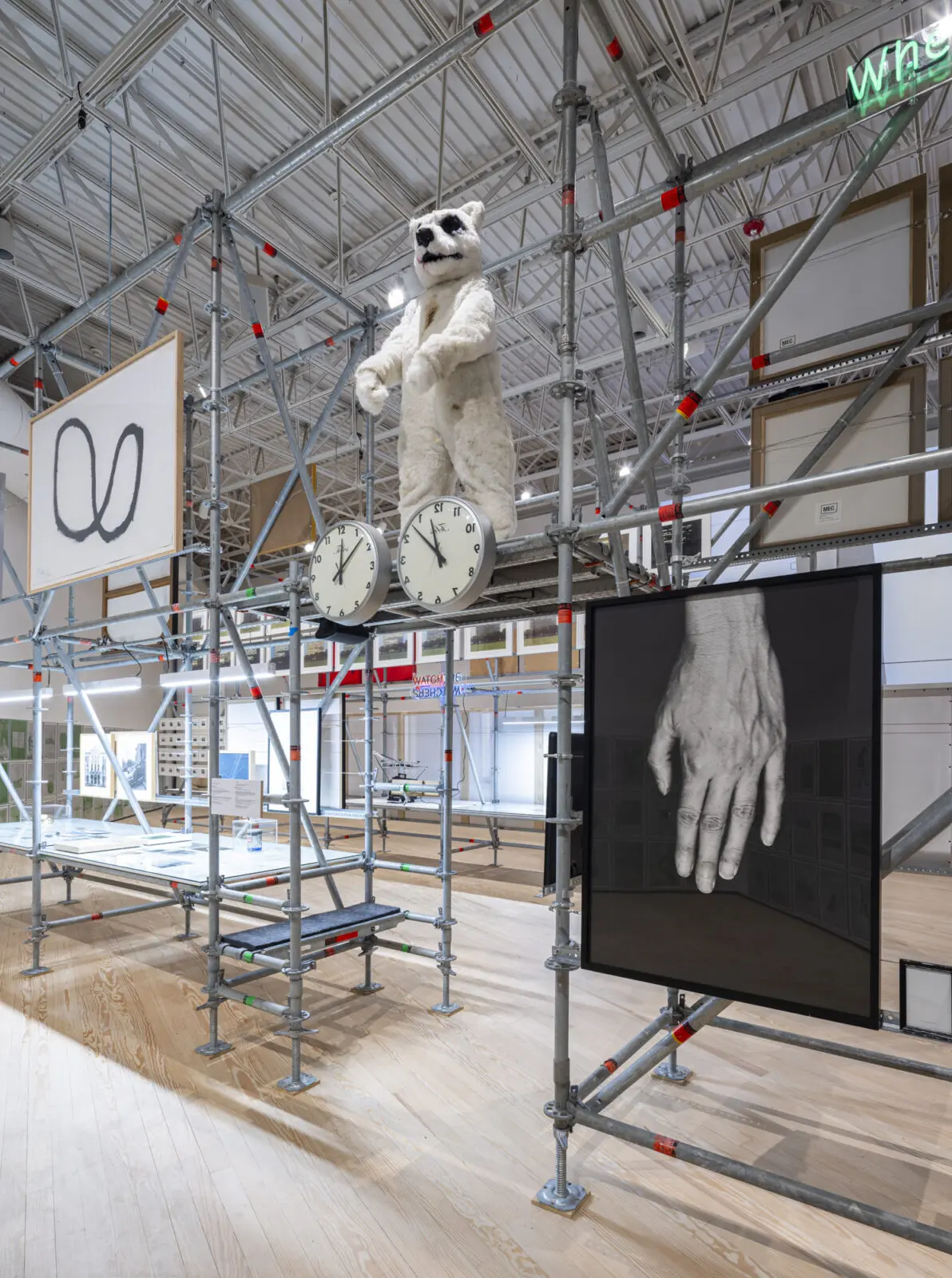
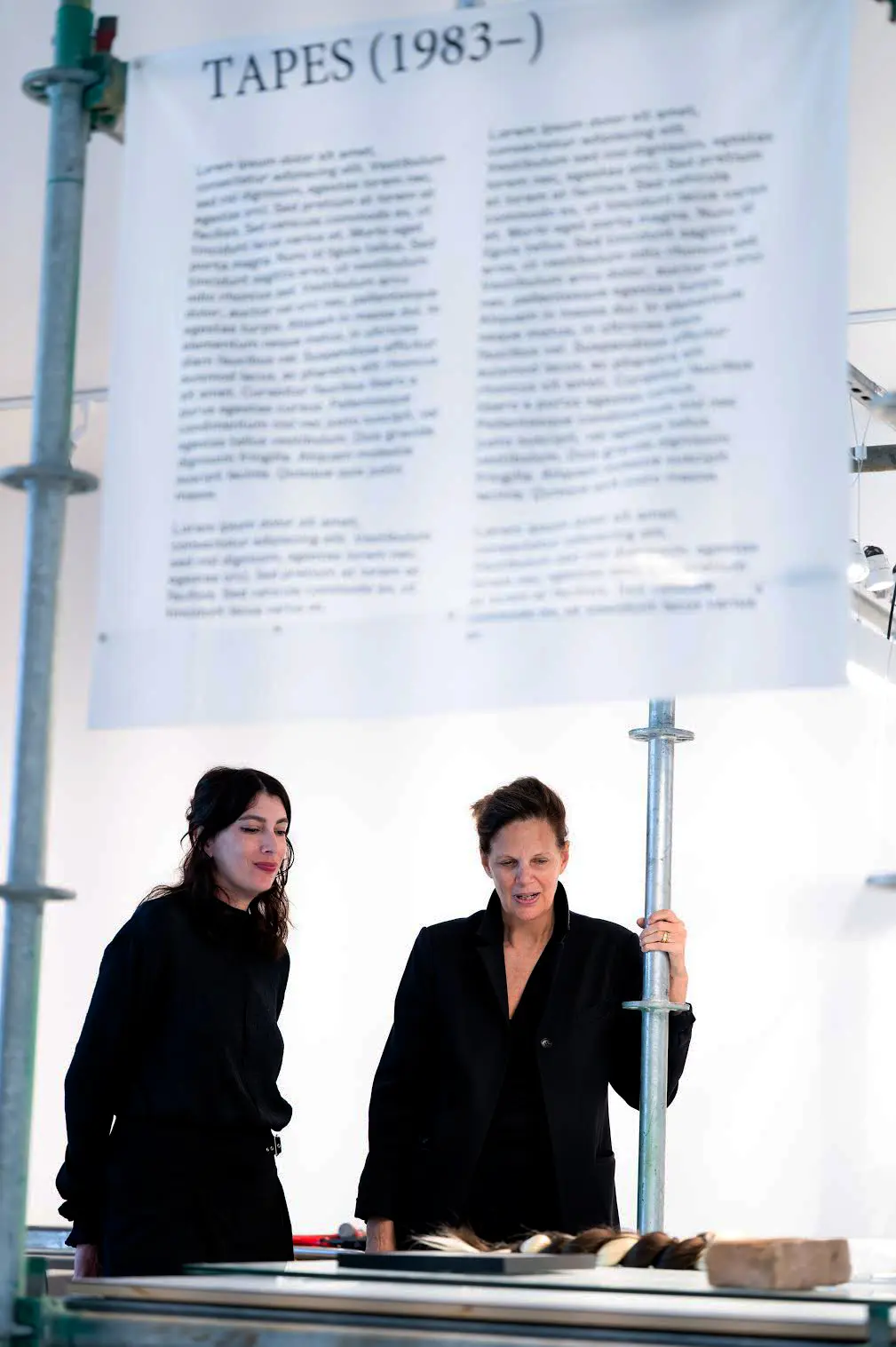
Walking through Mary Ellen Carroll’s Houston retrospective feels less like retracing an artist’s career than entering a constellation of ideas that is ever expanding. A sweeping Contemporary Arts Museum Houston retrospective explores Carroll’s lifelong belief that the most enduring works of art remain open, evolving and alive. The exhibition, on view through November 1, unfolds like a journey inside the landscape of Carroll’s imagination.
“As the artist, you can know whatever you want, but that’s not really the point,” Carroll tells PaperCity. “The work is about freedom. About allowing things to continue moving forward rather than arriving at fixed conclusions.”
Carroll’s philosophy is encapsulated in the title of the CAMH retrospective — “How to Talk Dirty and Influence People.” At first glance, the title sounds mischievous, even slightly irreverent. It is a title borrowing the cadence of a self-help manual while quietly subverting its promise.
The exhibition’s title offers a provocative echo of Lenny Bruce’s 1965 autobiography. But, it also reveals something essential about Carroll’s practice.
For Carroll, “dirty” is not vulgarity but the messy terrain of the real world. Law, politics, zoning codes, bureaucracy, architecture, language, economics and power. Rather than standing outside those systems, Carroll’s work enters them, revealing the hidden structures that govern how we move through the world.
To “influence people,” in Carroll’s view, is not to persuade them toward a single conclusion. It is to alter perception—to unsettle assumptions, expose invisible frameworks, and leave viewers seeing the world with newly sharpened eyes.
SHOP


“There was an earlier working title, but this one felt right because it creates curiosity,” Carroll notes. “It’s really about questioning what we consider material, language and ultimately what constitutes a work of art.”
At the retrospective’s center is an expansive card catalogue — a living archive where ideas are filed alongside questions, observations, research, instructions and unrealized possibilities. For nearly four decades, Carroll has added to this vast intellectual map, creating thousands of entries under deceptively simple headings such as boredom, pleasure, taxes and nothing. Language is not merely a tool in her practice; it is one of Carroll’s primary materials.
“People often think language should be some kind of declarative statement,” Carroll says. “Poetry isn’t that.”
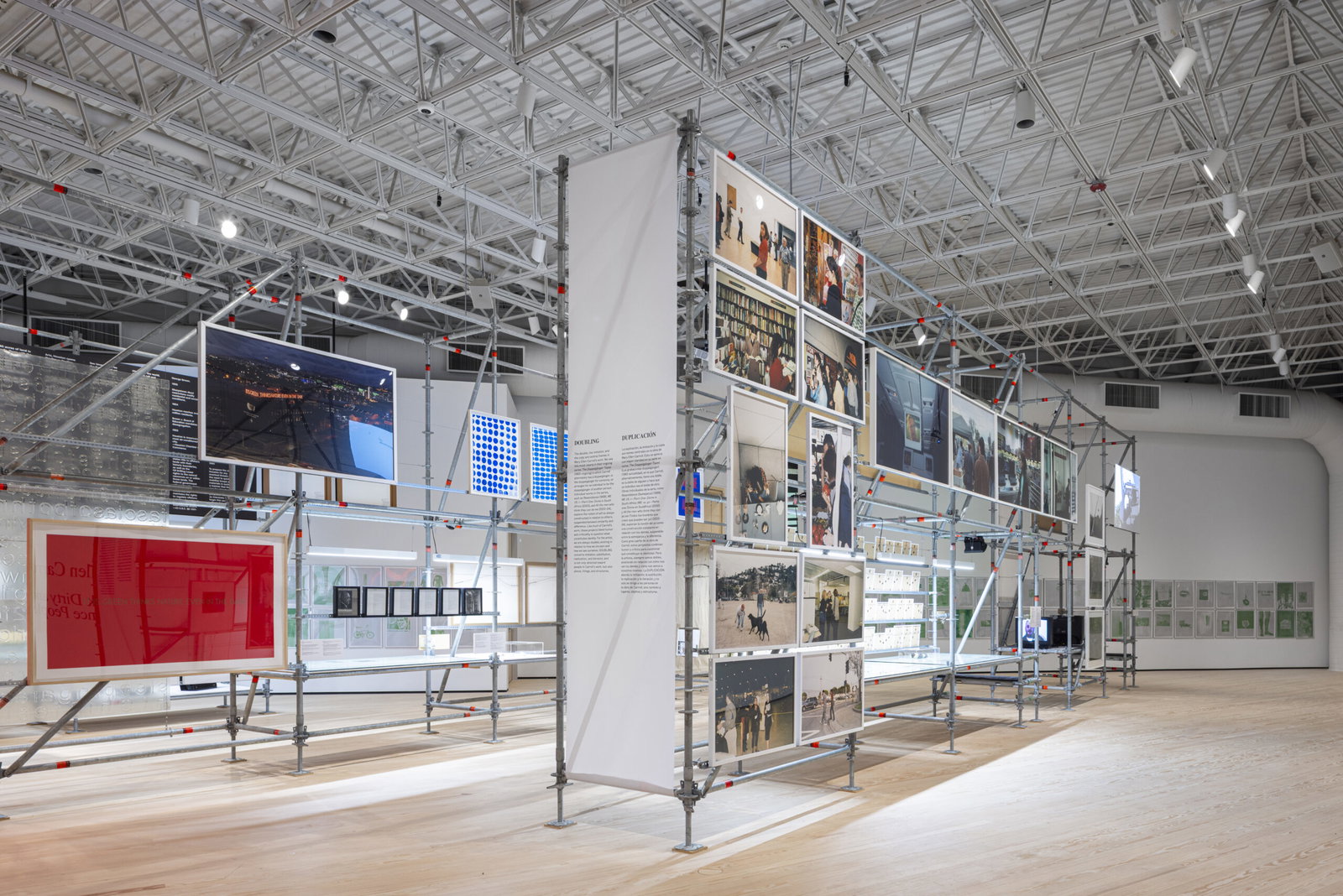
From this archive emerge the six thematic realms that shape the exhibition — Doubling, Climate, Policy, Media, Sovereignty and Being. Rather than following a chronological path, these ideas allow works created years — even decades — apart to speak across time. Series such as The Doppelganger Tapes, My Death is Pending. . . Because., prototype 180, FEDERAL, indestructible language, and PUBLIC UTILITY reveal themselves not as isolated projects, but as recurring investigations into perception, language, power and the invisible systems that organize everyday life.
The most consequential architecture in our lives is often the part we never see. It lives inside legal language and zoning codes. Inside museum walls, telecommunications networks and bureaucracies. It quietly shapes how cities grow, how institutions behave, how people move through public space and even how we understand one another. We inherit these invisible structures so completely that they eventually disappear from view.
Carroll has spent more than four decades making these invisible structures visible. The artist has never been interested in producing art that merely occupies a gallery. Instead, Carroll has treated law, architecture, language, public infrastructure and institutional systems as artistic material, creating one of the most intellectually adventurous bodies of work in contemporary American art.
The medium is rarely an object. More often, it is an idea quietly embedded inside the machinery of everyday life.
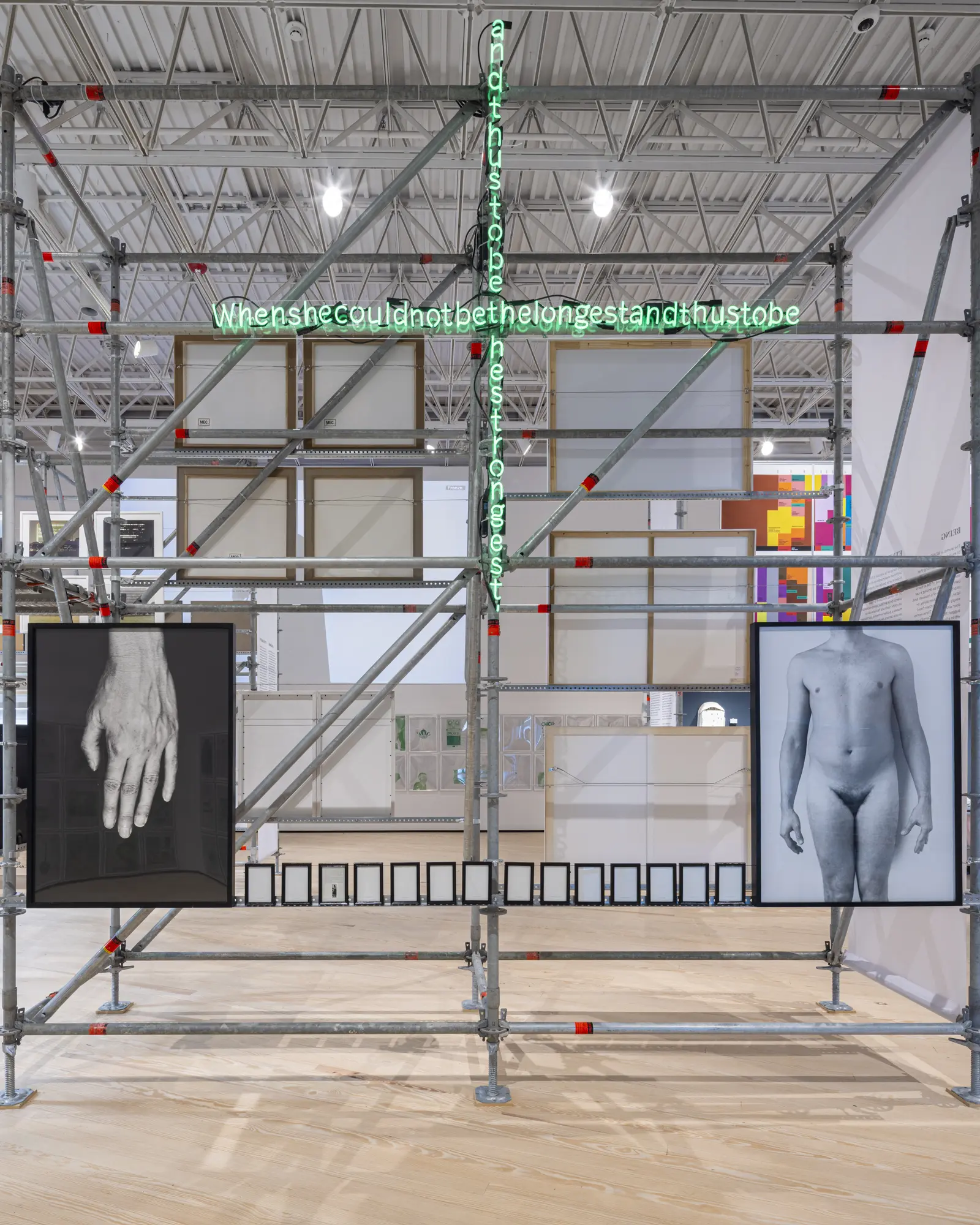
(Photo by Sean Fleming)
The artwork, in Carroll’s universe, is often not the thing itself. It is the moment your perception changes. That act of reorientation runs through every corner of Carroll’s first career survey at CAMH, where more than 40 years of work unfolds like an ongoing conversation — one that refuses the tidy comfort of conclusions.
“Why do things have to be finished?” Carroll asks. “Things need to continue.”
It is difficult to imagine a more elegant description of the artist’s practice. Carroll’s singular vision earned one of the art world’s highest distinctions — the 2021-22 Rome Prize for Design — recognizing the originality of work that reimagines architecture and language as living materials for conceptual art.
Long before artists regularly spoke about invisible infrastructure, institutional critique or systems thinking, Carroll was asking a deceptively simple question that continues to animate nearly everything she makes:
“What do we consider work?” she says. “What do we consider to be a work of art ?” The answer, it turns out, is almost never confined to the gallery.
Nothing is ever finished in Mary Ellen Carroll’s world. Not a sentence. Not a building. Not a legal document. Not a radio frequency. Not even an ordinary Houston house, quietly rotated 90 degrees until the familiar becomes strange again. Carroll has transformed each into the raw material of conceptual art, expanding the definition of what an artwork can be while insisting that its meaning is never fixed.
“The idea that we can point to something and agree that it means the same thing is phenomenal,” Carroll says “The fact that language works at all is incredible.”
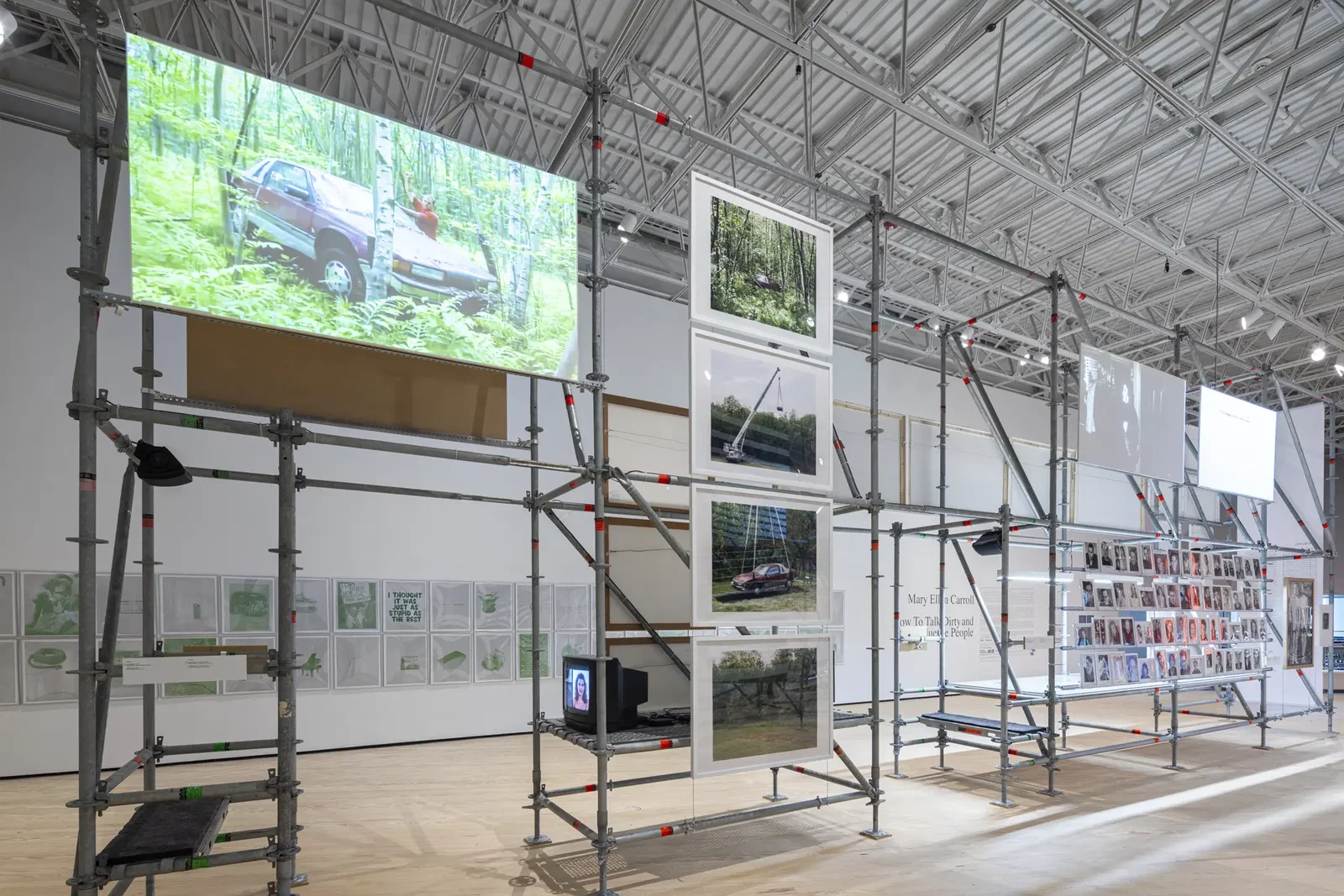
That astonishment — not certainty — has become one of the defining characteristics of Carroll’s work. Where others seek declarations, Carroll embraces possibility. Her work expands meaning rather than narrowing it, inviting viewers into uncertainty instead of resolving it. That philosophy feels almost prophetic today.
From Newspapers To Misinformation
When Carroll created Corrections nearly 20 years ago, newspapers still occupied an important place in public life. The Internet was only beginning to reshape the way information moved through culture. Looking back, the artist now sees the work as anticipating something much larger than Carroll could have imagined.
Today’s challenge is no longer simply misinformation in Carroll’s view.
“People aren’t necessarily searching for truth,” she says. “They’re searching for what they already want to hear.”
It is one of those observations that lands quietly before revealing its full weight. Her response, however, is not cynicism.
“If everything is being destroyed,” Carroll says of the series Indestructible Language. “We’ll still have language through which we can talk about whatever remains.”
Even language possesses remarkable resilience.
“There will always be ways language continues to expand,” Carroll argues. “There will be new meanings — more of what it needs to become, not less.”
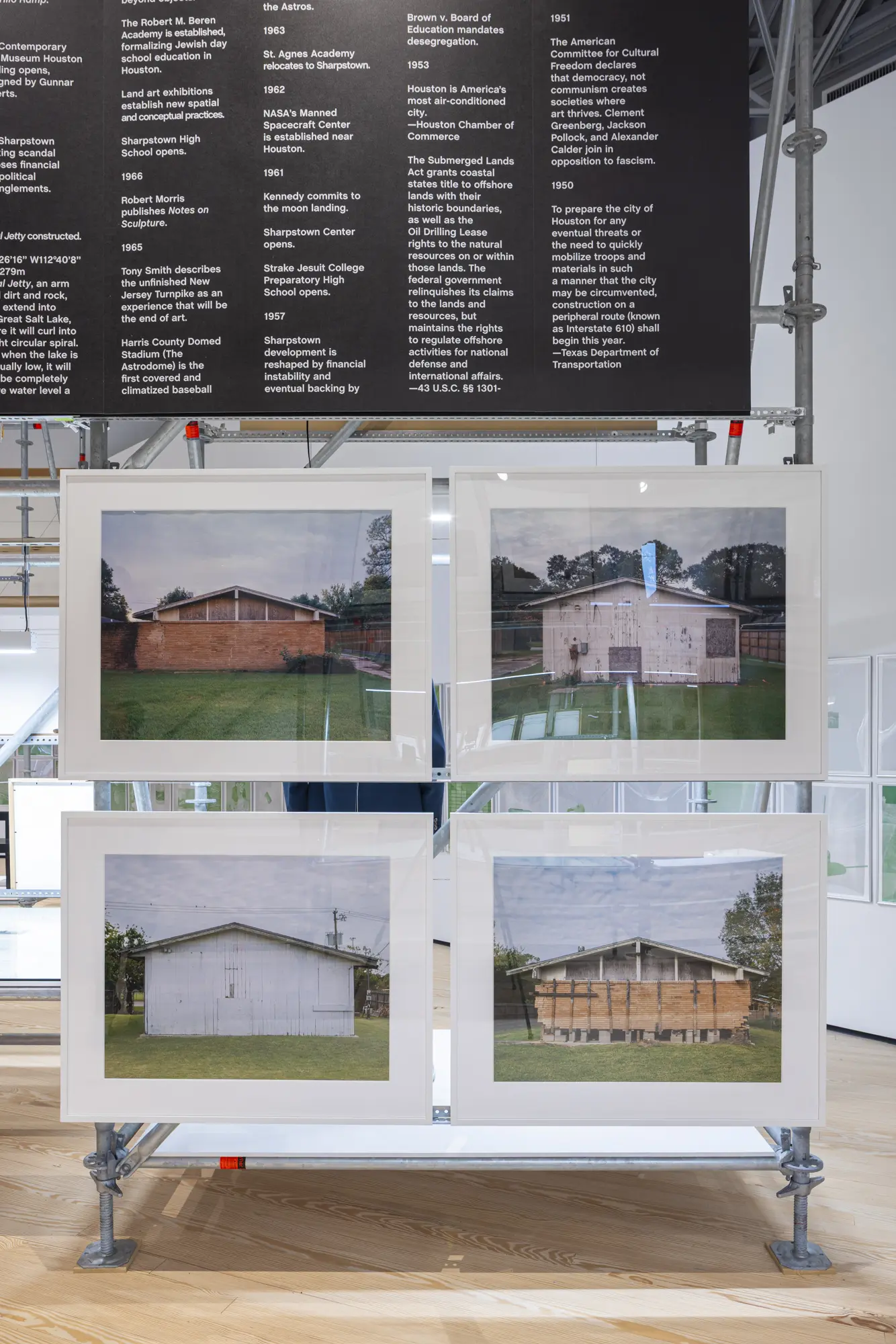
That insistence on continuation appears again and again throughout the exhibition. If there is one work that reveals Mary Ellen Carroll’s extraordinary way of seeing the world, it is prototype 180.
Most of us pass an ordinary postwar Houston house and see shelter, nostalgia or perhaps a fixer-upper. Carroll saw an unanswered question. What if architecture itself could become a living work of conceptual art? What if public policy could become its medium?
The idea first arrived not in Houston, but while Carroll sat motionless in traffic on California’s 405 Freeway in 1999. From that unlikely moment emerged an audacious proposition: to create a work in which architecture would perform and policy itself would become a ready-made. Years later, after an exhaustive search, she found the modest Sharpstown home beside Bayland Park that would become one of Houston’s most quietly radical works of art.
Then the real artwork began.
Mary Ellen Carroll’s Rotating House
Over nearly two decades, the house refused to remain a house. Carroll rotated it 180 degrees, transforming a familiar suburban structure into something at once recognizable and profoundly disorienting. With a 180-degree turn, the house abandoned its lifelong conversation with the street and began a new one with Bayland Park — its front porch now welcoming trees, sky and light. It became a laboratory for architects, artists and students.
Eventually, rather than preserving the building as a monument, the Carroll carefully dismantled it, allowing the work to evolve once again. At CAMH, fragments of the original structure, planning documents, photographs, video of the astonishing rotation and eventual “unbuilding,” even garments Carroll wore during the project, bear witness to a work of art that has never existed as a single object but as an unfolding sequence of ideas.
“We were exposing underlying structures — land, policy, development. Rotating the house made those invisible systems visible,” Carroll notes. “The work wasn’t really about the building itself. It was about revealing the framework beneath it. Architecture is public knowledge. It’s something everyone lives inside.”
Perhaps that is why prototype 180 still feels so alive. In a city famous for its absence of zoning, Carroll transformed an ordinary Houston house into a meditation on architecture, civic policy and time itself. Few works embody Carroll’s enduring belief that “things need to continue” more completely than prototype 180.
This philosophy also appears in Doppelgänger, where identity becomes less a fixed condition than an ongoing performance.
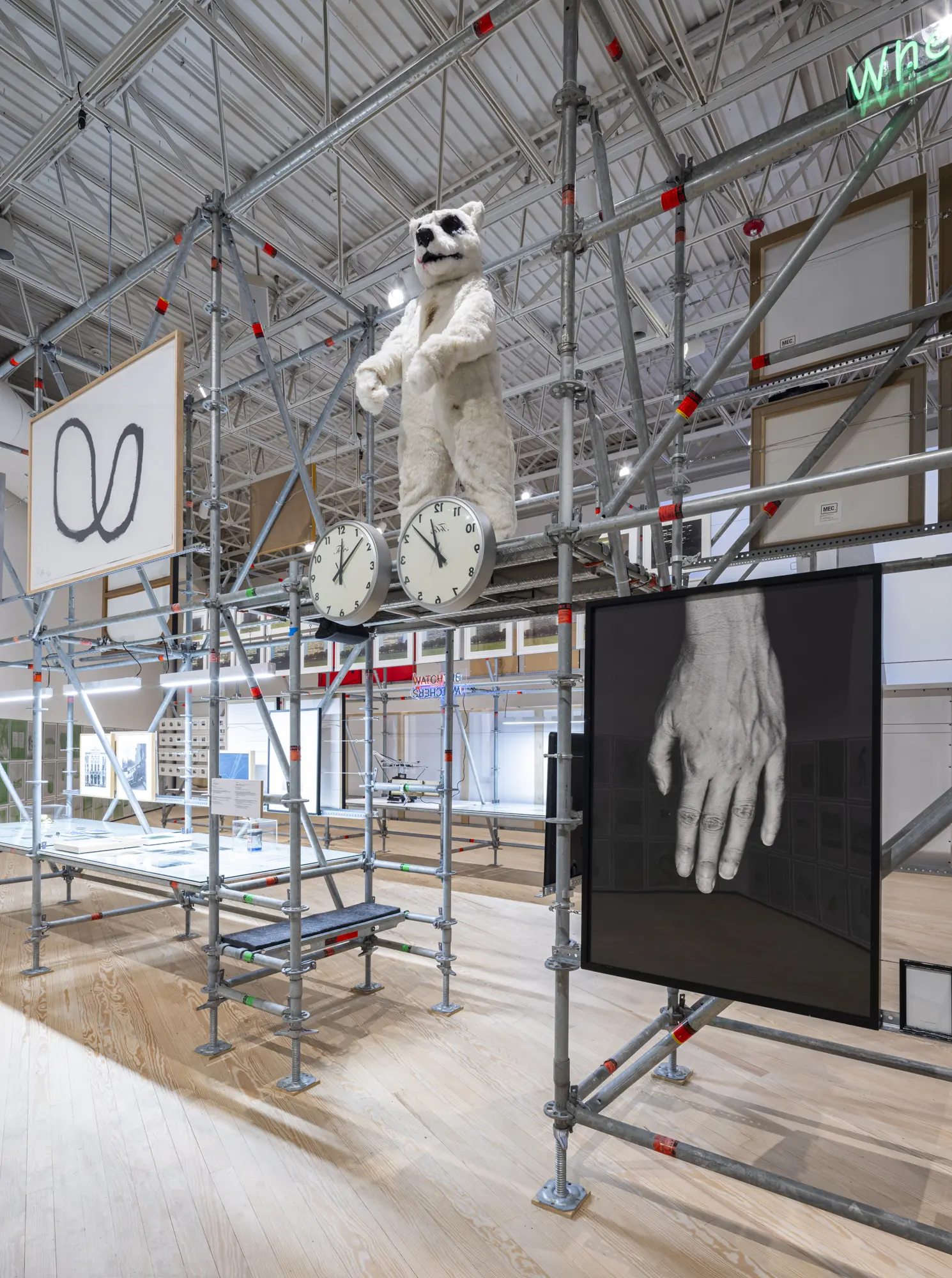
It appears in Shall, whose elegant scaffolding transformed the exhibition architecture itself into a work of art while eliminating the disposable drywall that museums routinely throw away.
“We’re not going to do drywall,” Carroll recalls deciding years before the exhibition opened. “We’re going to come as close as possible to creating zero waste.”
Even the exhibition refuses to become static. Like her ideas, it remains modular, adaptable, unfinished. Climate change receives the same treatment. Many artists depict melting glaciers or burning forests. Carroll chooses instead to investigate the structures producing those realities.
“We no longer need to depict the destruction,” Carroll quietly says. “We’re living it.”
(Photo by Sean Fleming)
Awareness, Carroll suggests, has reached its limit.
“It’s now a time for action,” Carroll says.
Perhaps that is why Carroll’s work feels unusually hopeful despite confronting bureaucracy, climate change, political institutions and the fragility of language.
Hope is not optimism. Hope is participation.
“There is always an ability to act,” Carroll insists. “And things are always going to change. That’s the gift.”
By the time a viewer leaves the exhibition, it becomes clear that Mary Ellen Carroll has never really been making sculptures, installations or conceptual artworks.
“I don’t want to dictate a particular response. I want people to encounter uncertainty. That’s an important place for the work,” Carroll notes. “Every viewer arrives differently. I don’t want to determine how people feel. Confusion can be an important place for the work to exist.”
For more than four decades, Carroll has been quietly expanding the boundaries of perception and challenging how we see things. Her work is not about changing the world itself. But rotating it, ever so slightly, until the invisible suddenly comes into view.
“Mary Ellen Carroll: How to Talk Dirty and Influence People” will be on view at Contemporary Arts Museum Houston through Sunday, November 1. Learn more here.
Trending
- The Ultimate Swan Song, The Ten Best Dressed Women of Dallas Bid Adieu to Neiman Marcus’ Iconic Downtown Flagship
- At Home In Houston With Two of America’s Most Celebrated Painters — Artists Sarah Lamb and David Larned Embrace the Realism
- Jim Nantz To Present Kelvin Sampson Into the Hall of Honor, Altering His NFL Travel Schedule To Be There for UH’s Biggest Night — a PaperCity Exclusive
- Brute, a Bold New Restaurant From Dallas Chef Aubrey Murphy, Will Open in Lower Greenville This Fall
- All Aboard as Dallas Contemporary Commences Its Gala Weekend with an Exclusive Belmond Dinner
_md.png)
_md.jpeg)





_md.jpeg)