


The Woodlands’ Lauded John Cooper School Draws a Best-Selling Author Who Proves It’s Never Too Late To Start
Former Actress Turned Journalist Turned Book Writer Fiona Davis Shares Her Story
BY Laura Landsbaum //

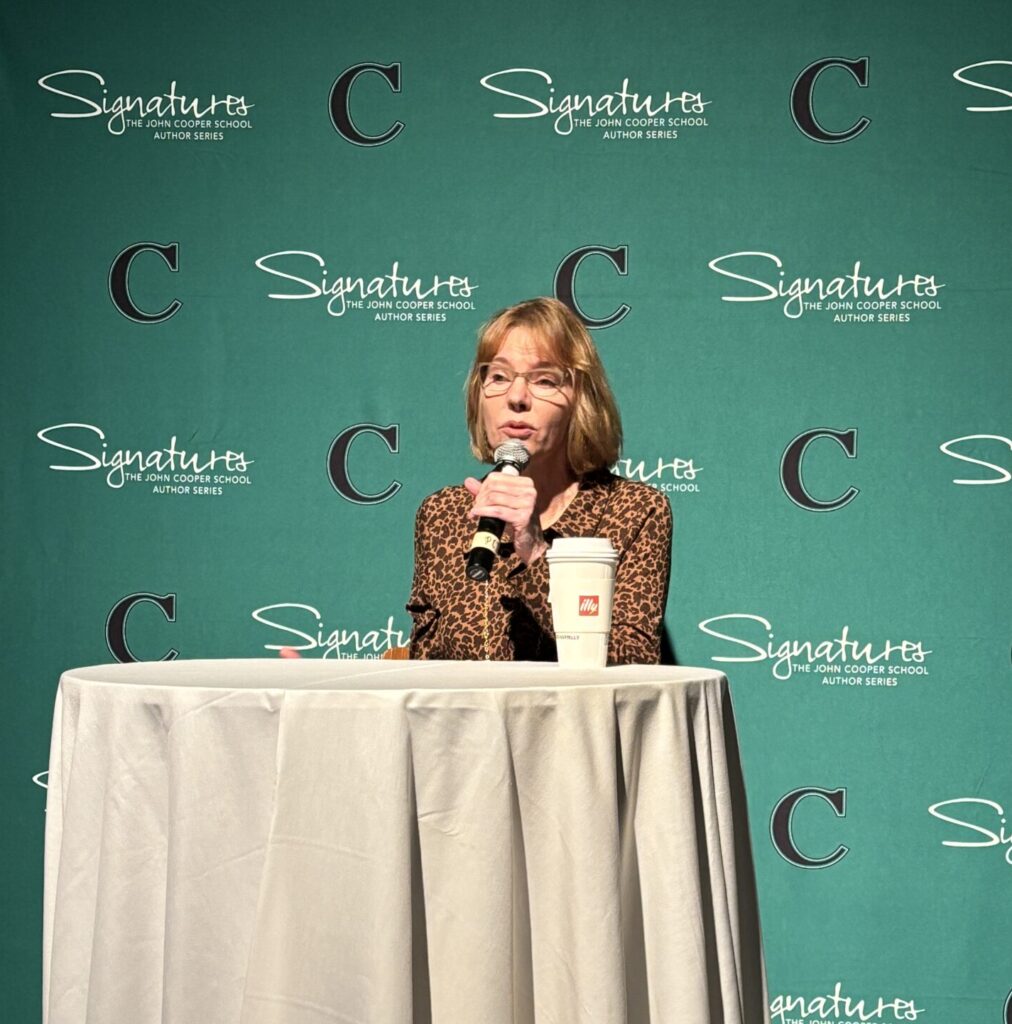

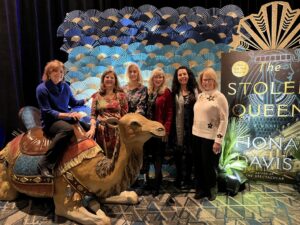
Author Fiona Davis signs copies of her books and visits with guests during the John Cooper School Signatures Author Series event. (Photo courtesy Fiona Davis)
New York Times bestselling author Fiona Davis didn’t follow a straight path to publishing success — and that’s exactly the point. That perspective anchored her role as the keynote author for this year’s John Cooper School Signatures Author Series luncheon in The Woodlands.
Now in its 21st year, the annual event benefits The Woodlands private school’s fine arts council. The gathering included visiting authors, book sales and signings, a luncheon, a book signing with the keynote author, a Signatures-themed drawing and a private VIP reception for sponsors.
Over the past 20 years, the event has raised more than $75,000 for local literacy organizations. This year’s beneficiary was Books Alive! and its mission is to inspire creativity, nurture a love of reading and share the magic of theater.
Past keynote speakers for the John Cooper School Signatures Author Series include Anthony Bourdain, Jodi Picoult, Gillian Flynn, Cheryl Strayed, Kevin Kwan, Taylor Jenkins Reid and Lisa Jewell.
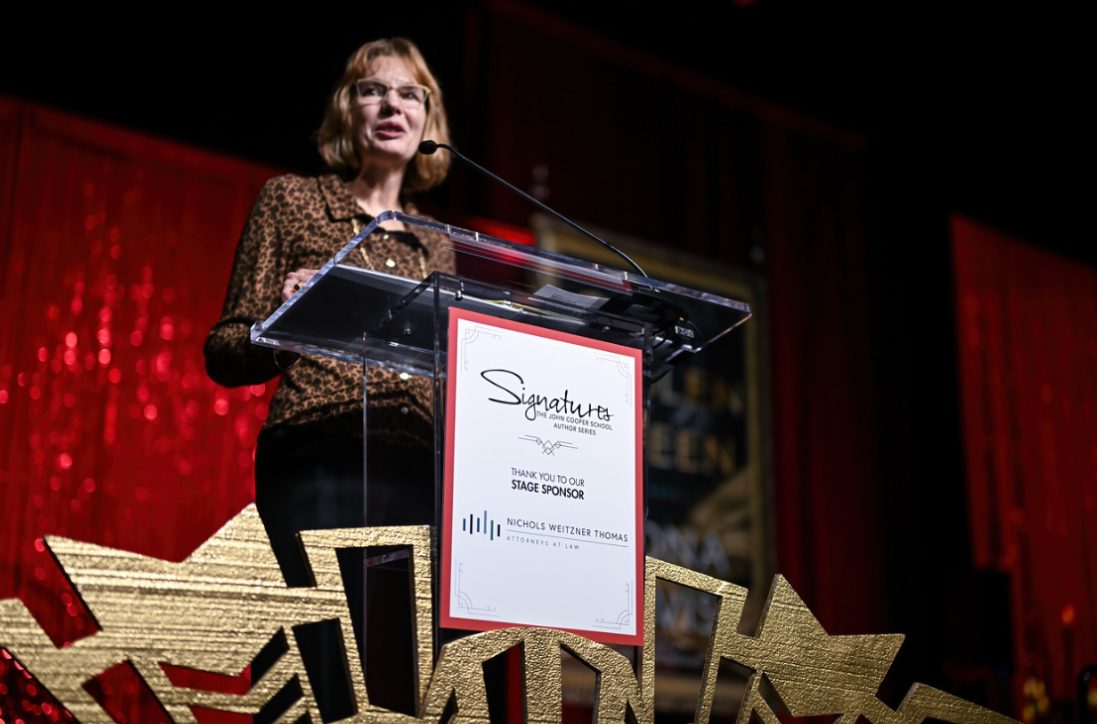
Davis is the author of eight novels. She’s known for setting her stories in iconic New York City buildings. Her work often uses dual timelines and explores women’s lives across different eras.
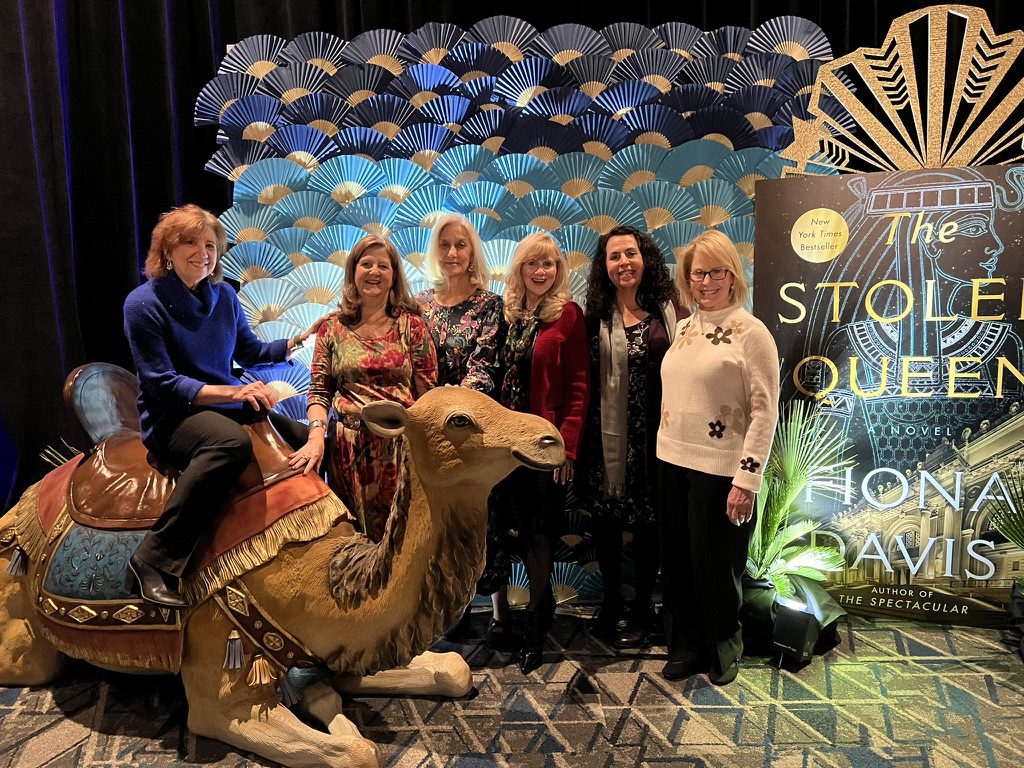
She began her career as an actress in New York City. She later turned to writing after earning a master’s degree from Columbia Journalism School. Her most recent novel, The Stolen Queen, was released last January.
Spring at Bering's









Fiona Davis Finds Her Way to Fiction
Davis published her first book later in life. She’s candid about how long it took to get there.
“You should change your career every 10 years,” Davis says. “Eventually, you end up where you should be.”
She moved to New York and worked as an actress for nearly a decade. Her experience included Broadway, off-Broadway and regional theater. Many of those roles were in productions of Three Tall Women. The casting suited her height of 5-foot-10.
By her late twenties, Davis began questioning her long-term direction. She applied and was accepted to Columbia Journalism School. “Suddenly it was, ‘All right, let’s see how this journalism thing works out,’ ” she says.
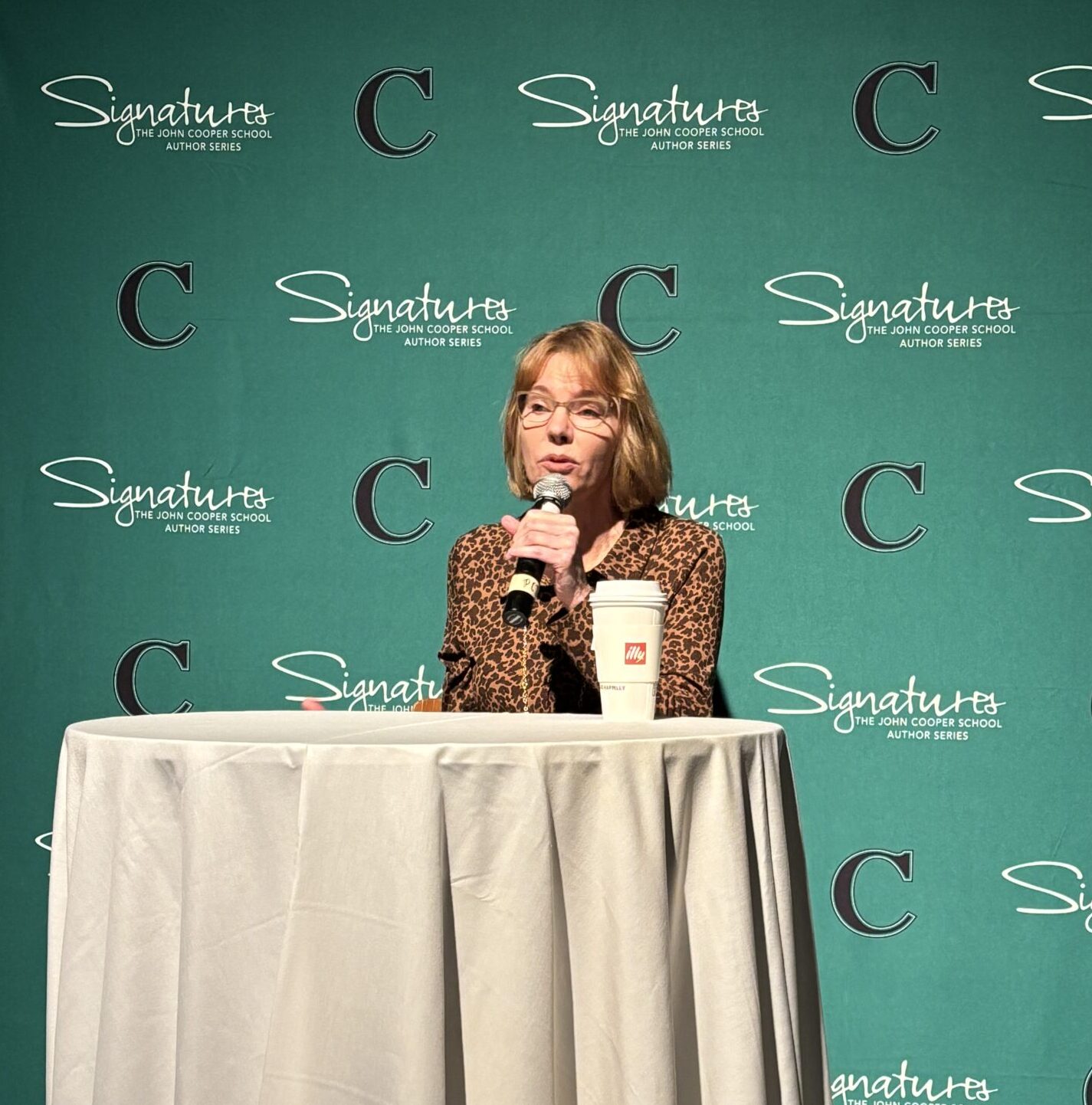
The program proved demanding but formative. After graduating, Davis worked for Channel 13, a New York PBS station. She also wrote for a theater magazine and freelanced. Then, in her mid-forties, she stumbled upon an idea that would change everything.
That idea became her first book The Dollhouse. The novel was published when Davis was 49.
“I couldn’t have written that story in my twenties,” Davis says. “I hadn’t lived enough yet.”
Where Research Meets Storytelling
Davis credits her journalism background and life experience with giving her confidence as a novelist.
“I knew how to research,” she says. “I knew how to find the right person to talk to.”
That foundation proved especially useful when she turned to historical fiction. Davis spends the first several months of each project immersed in research. She focuses on understanding the era, identifying real figures who inspire her characters and shaping the historical framework of the story.
“The research is intense during those first three or four months,” Davis says. “I’m assembling what happened in the past and figuring out who I can draw from.”
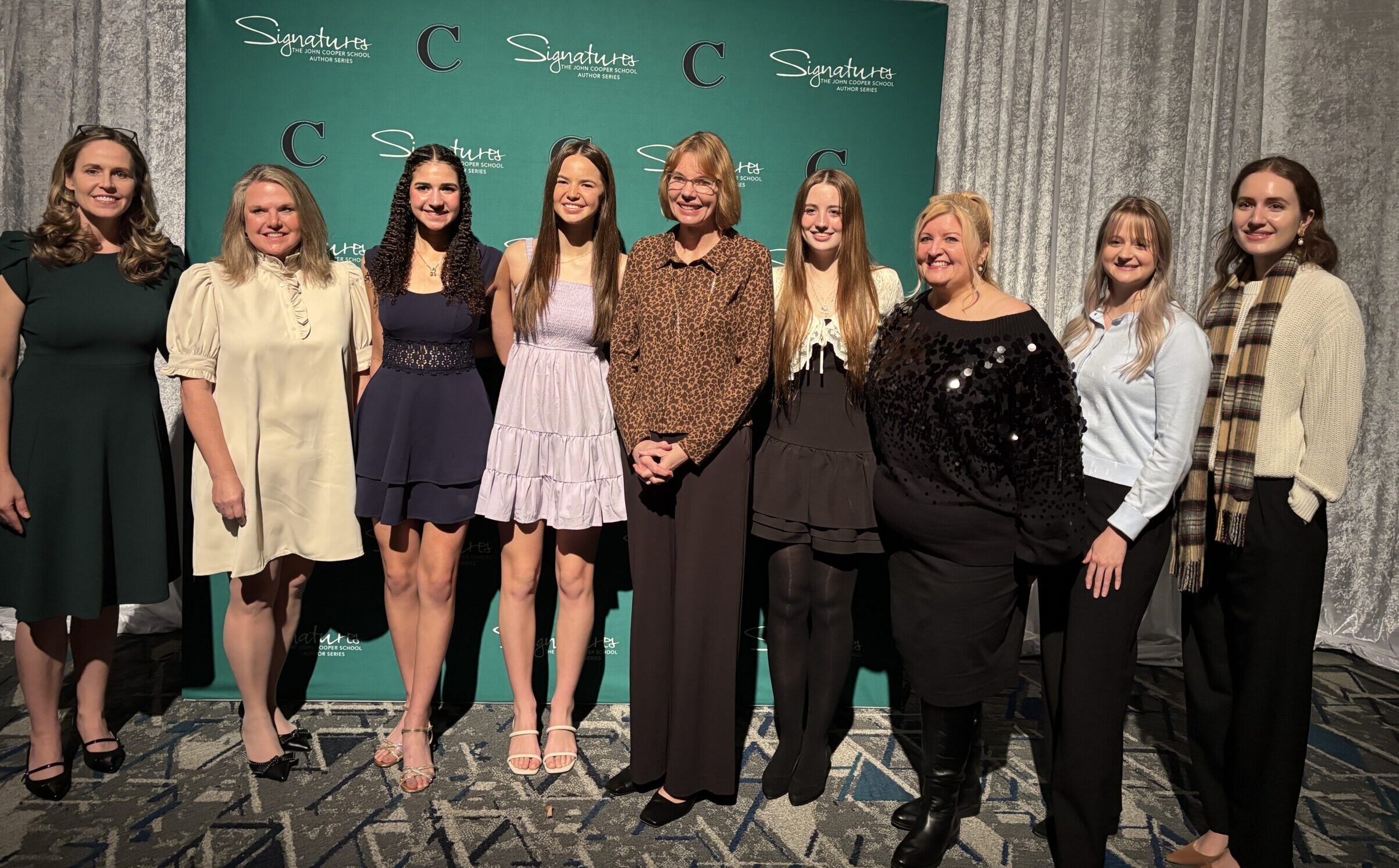
For The Stolen Queen, Davis’ inspiration came from nonfiction. She read Empress of the Nile by Lynn Olsen. The book chronicles the life of Christiane Deroches Noblecourt, a pioneering French archaeologist during World War II.
“She worked at the Louvre and helped save artwork from the Germans by hiding it,” Davis says. “Later, she went to Egypt and became a very well-known archaeologist.”
Noblecourt faced resistance early in her career, particularly in the 1930s, when few women worked in the field. Davis also drew from moments when others took credit for Noblecourt’s discoveries.
“It’s a great book,” Davis says. “Reading it made writing about Egypt in the 1930s feel less intimidating.”
She adds that research helps demystify her potential topics. “As an author, you must become an expert in whatever subject you’re writing about,” Davis says. “That can be pretty daunting.”

A Texas Connection Brought Fiona Davis Back
Davis’ visit to The Woodlands also carried personal significance.
While she attended the College of William & Mary, her British parents made a surprising announcement. “They told me, ‘Oh, by the way, we’re moving to Texas,’ ” Davis says.
That summer, she joined them in Beaumont. They later moved to Bellaire and then to Manvel. Davis’ parents ultimately spent more than two decades living in the Houston area.”They loved it here,” she says. “It’s been really nice to come back.”
For Davis, returning to Texas offered more than a professional stop on a book tour. It reflected the winding personal and creative path that shaped her career.
Her message to aspiring writers is simple. Davis believes that there’s no single timeline for success. Sometimes, the long way around is exactly where you are meant to go.

_md.jpg)


