
Houston’s Own Wes Anderson and Richard Linklater Jump Into the Fight to Save the City’s Historic Garden Oaks Theater — a PaperCity Exclusive
Can Another Doomed Movie Palace Be Rescued From the Demolition Ball With the Clock Ticking?
By Alison Medley //
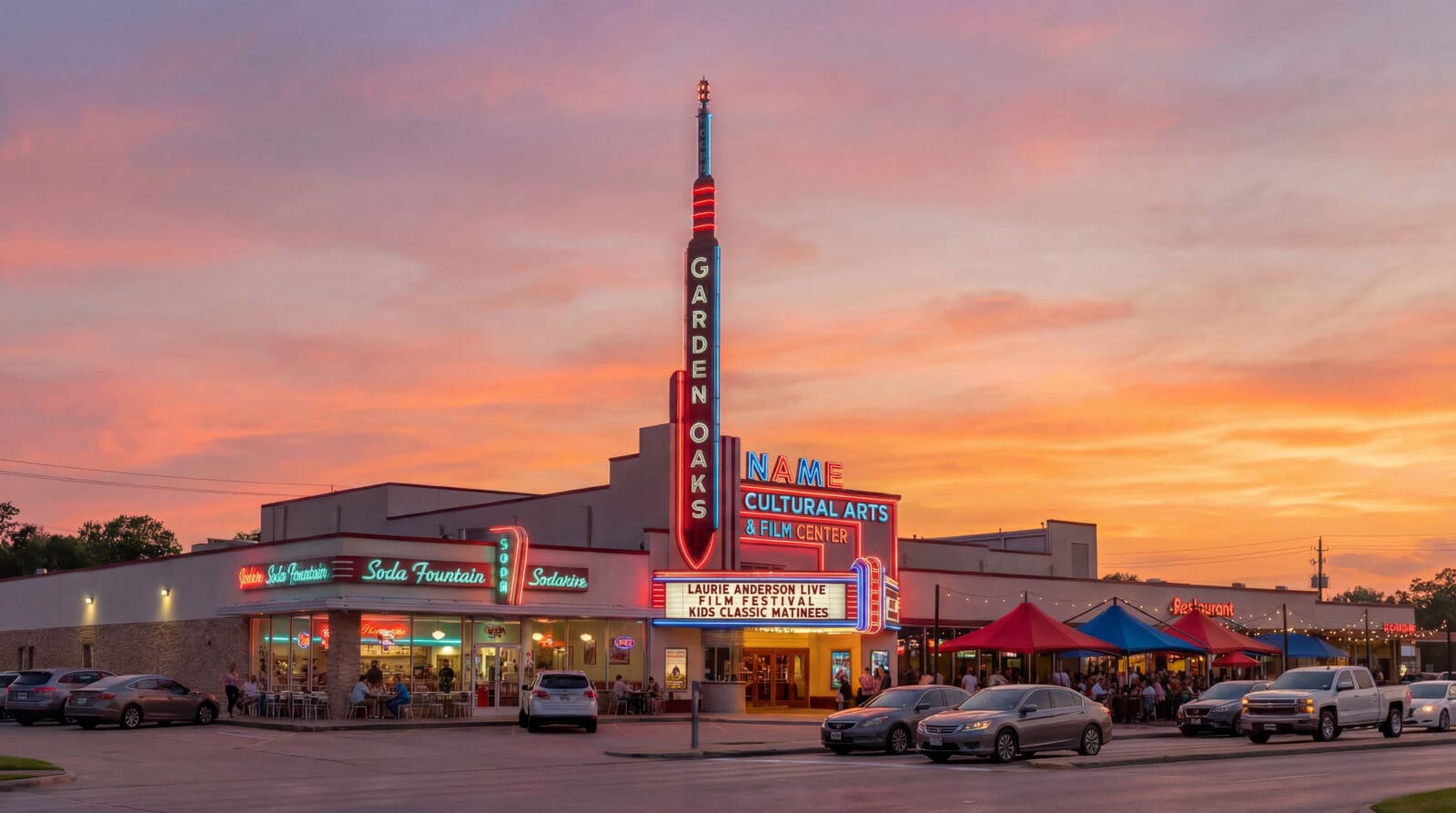
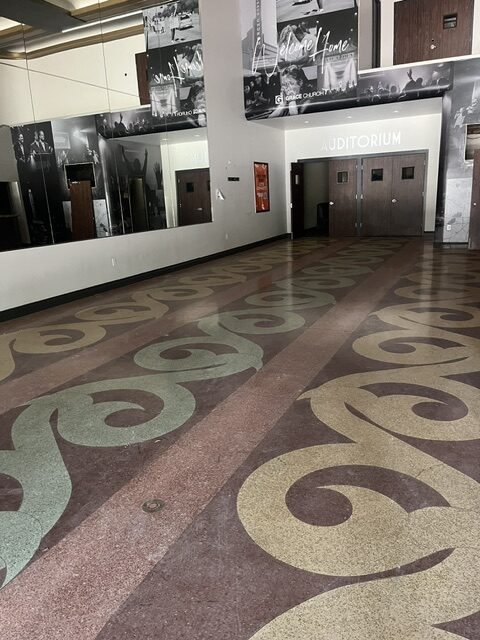
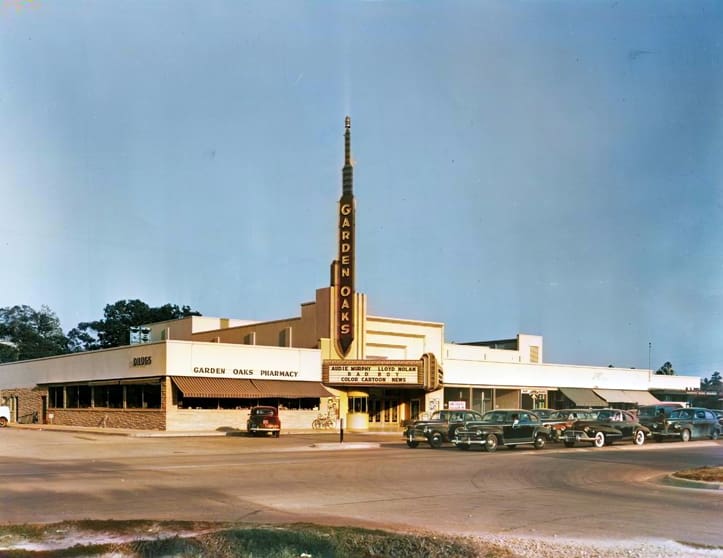

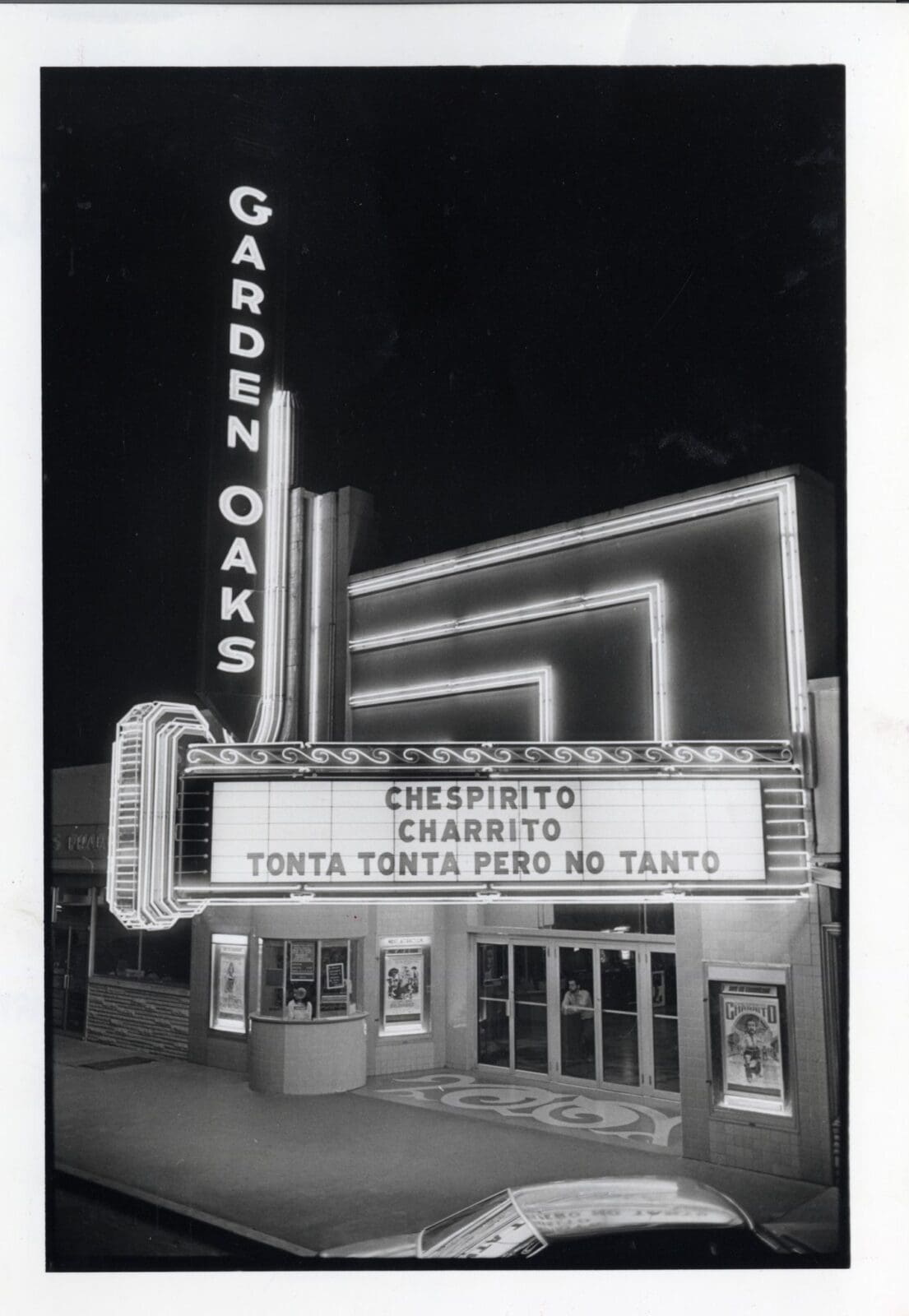
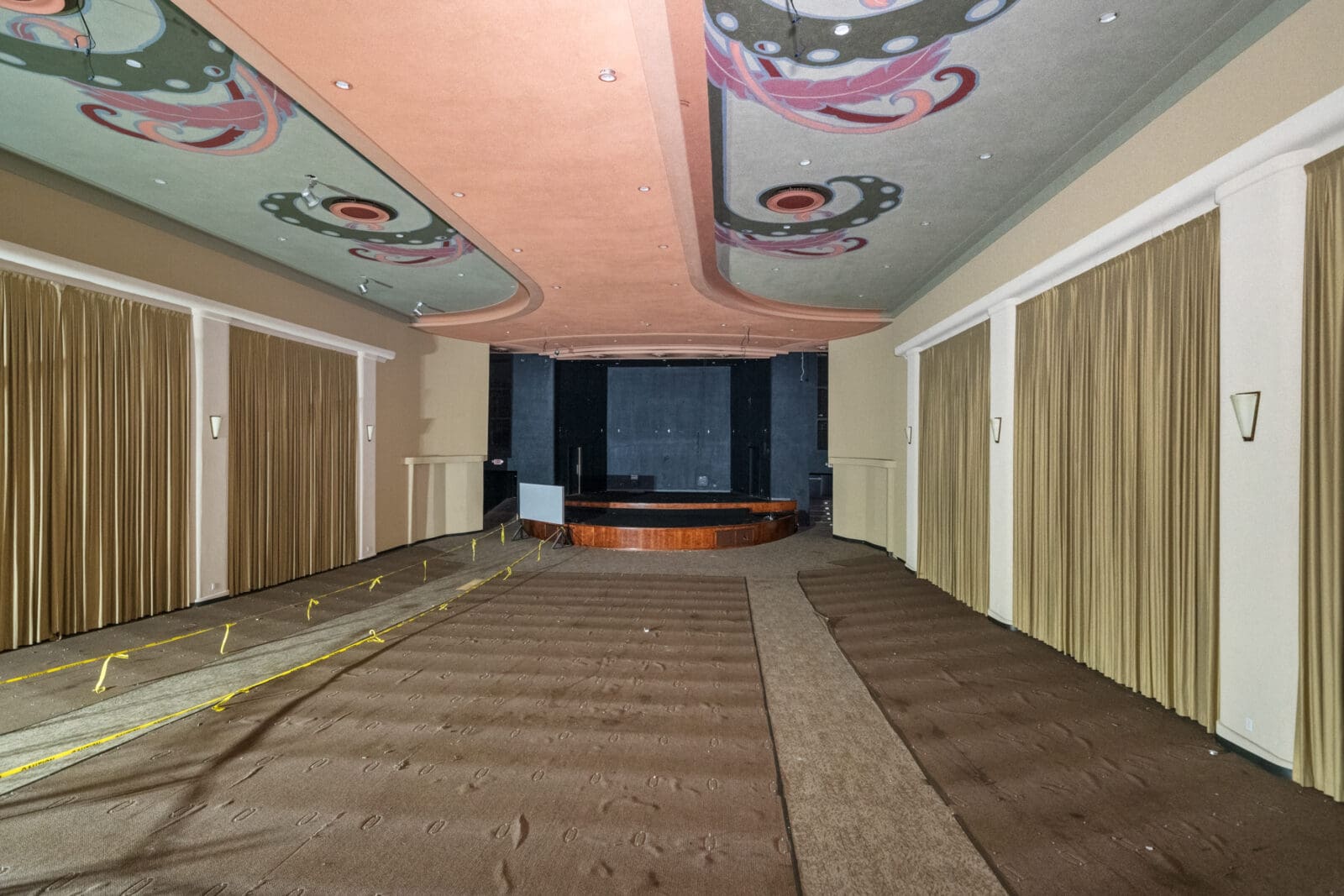
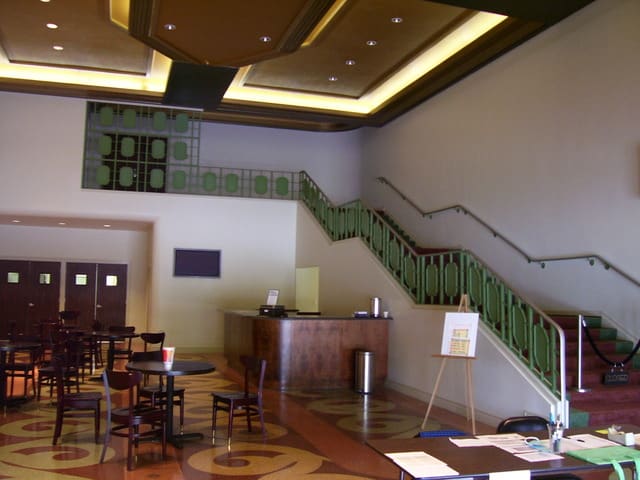
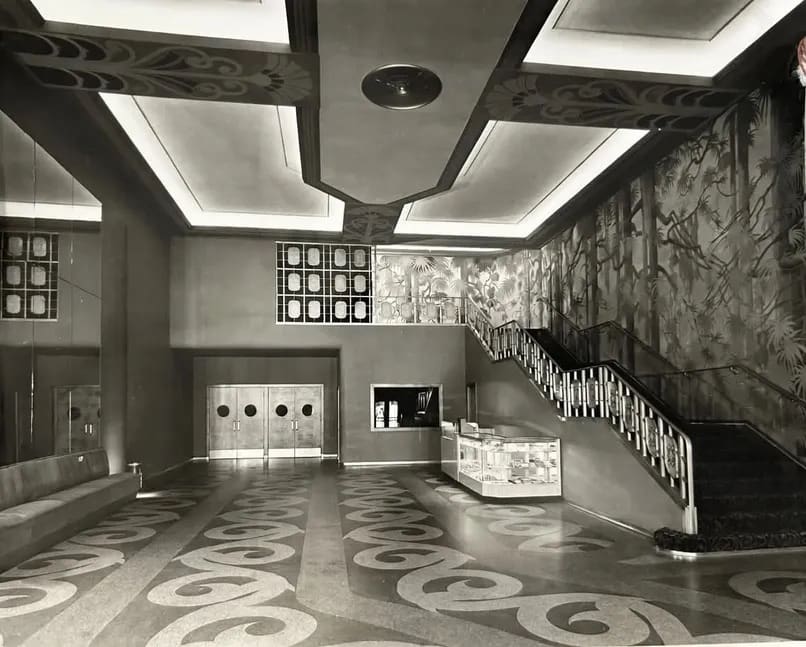

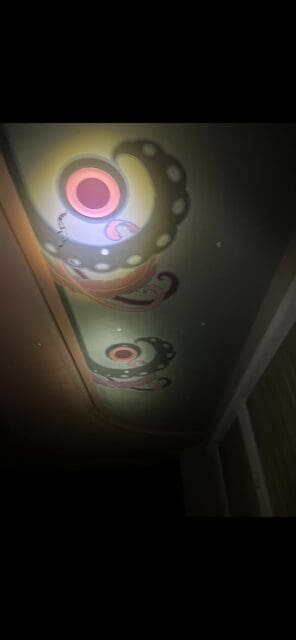
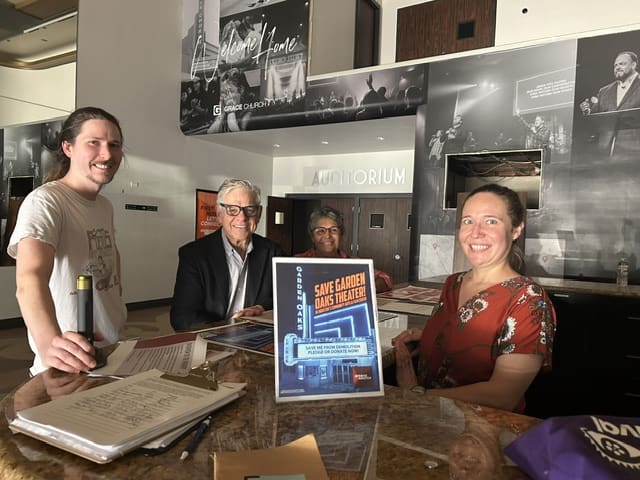
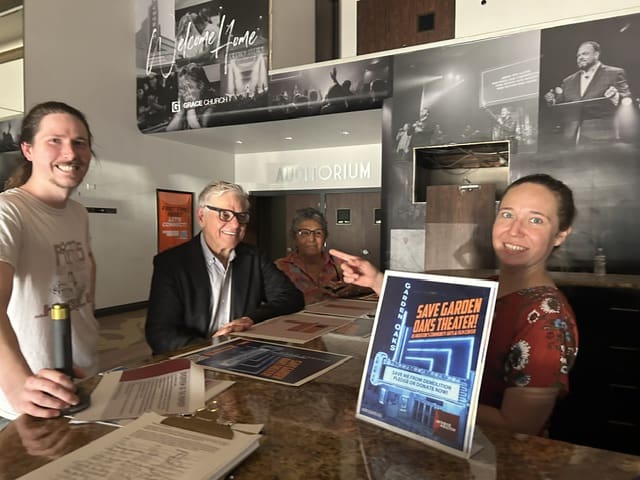
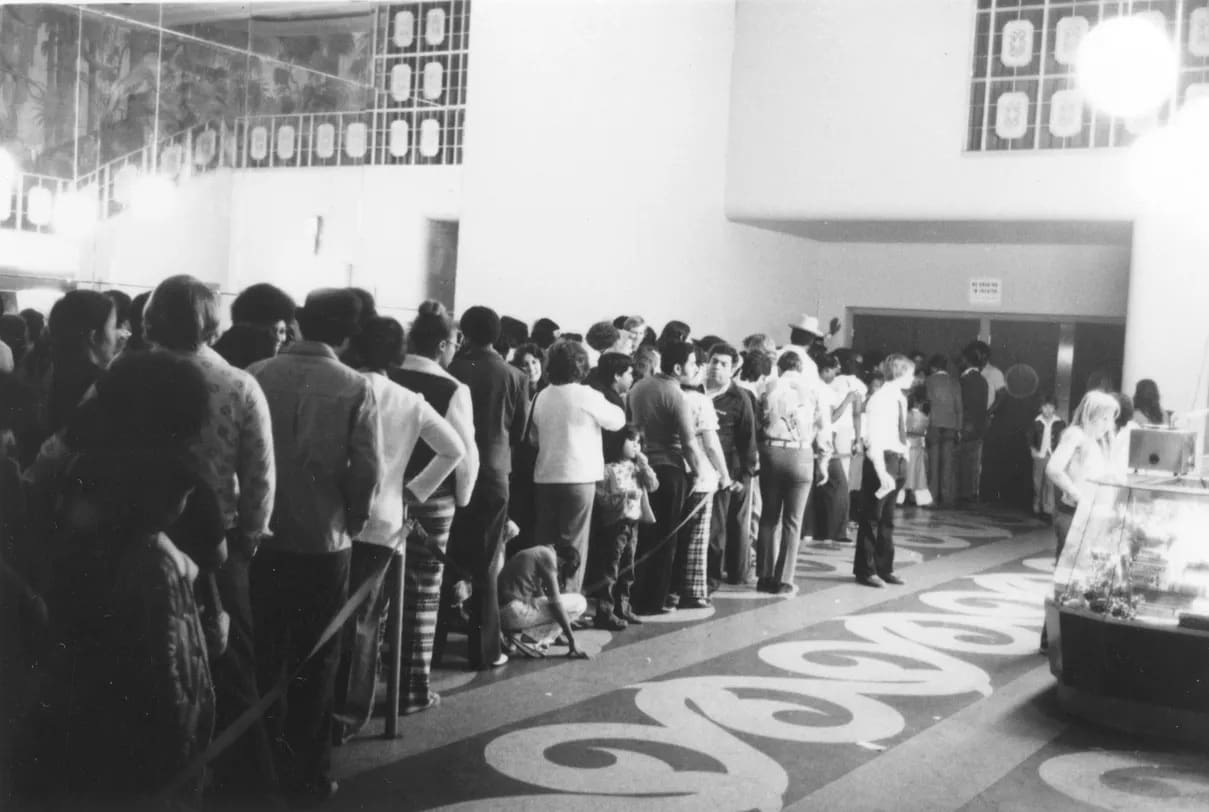
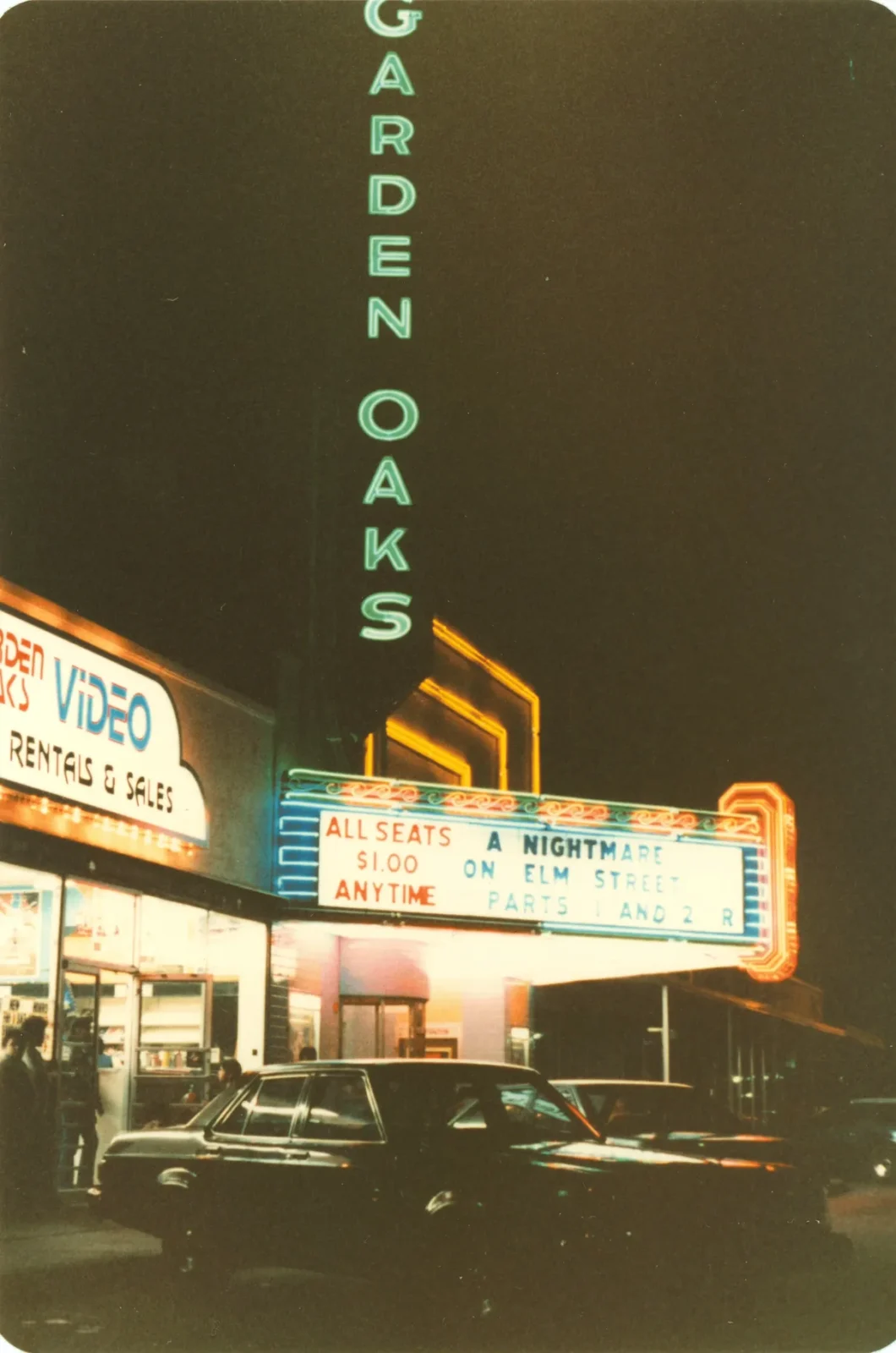
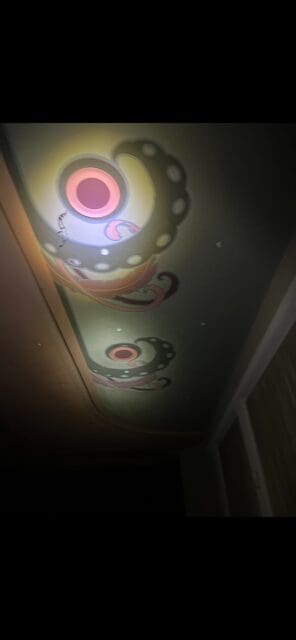
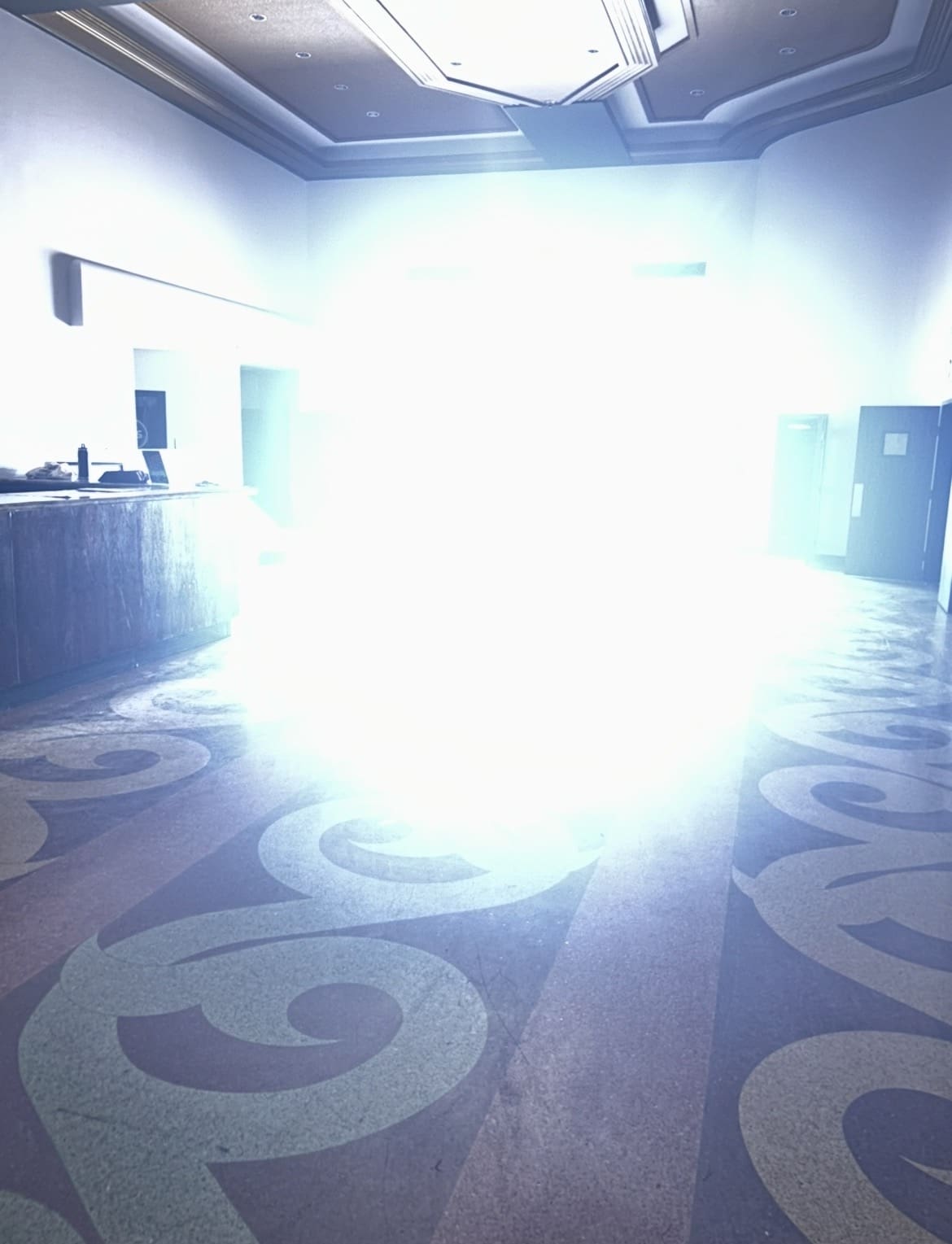
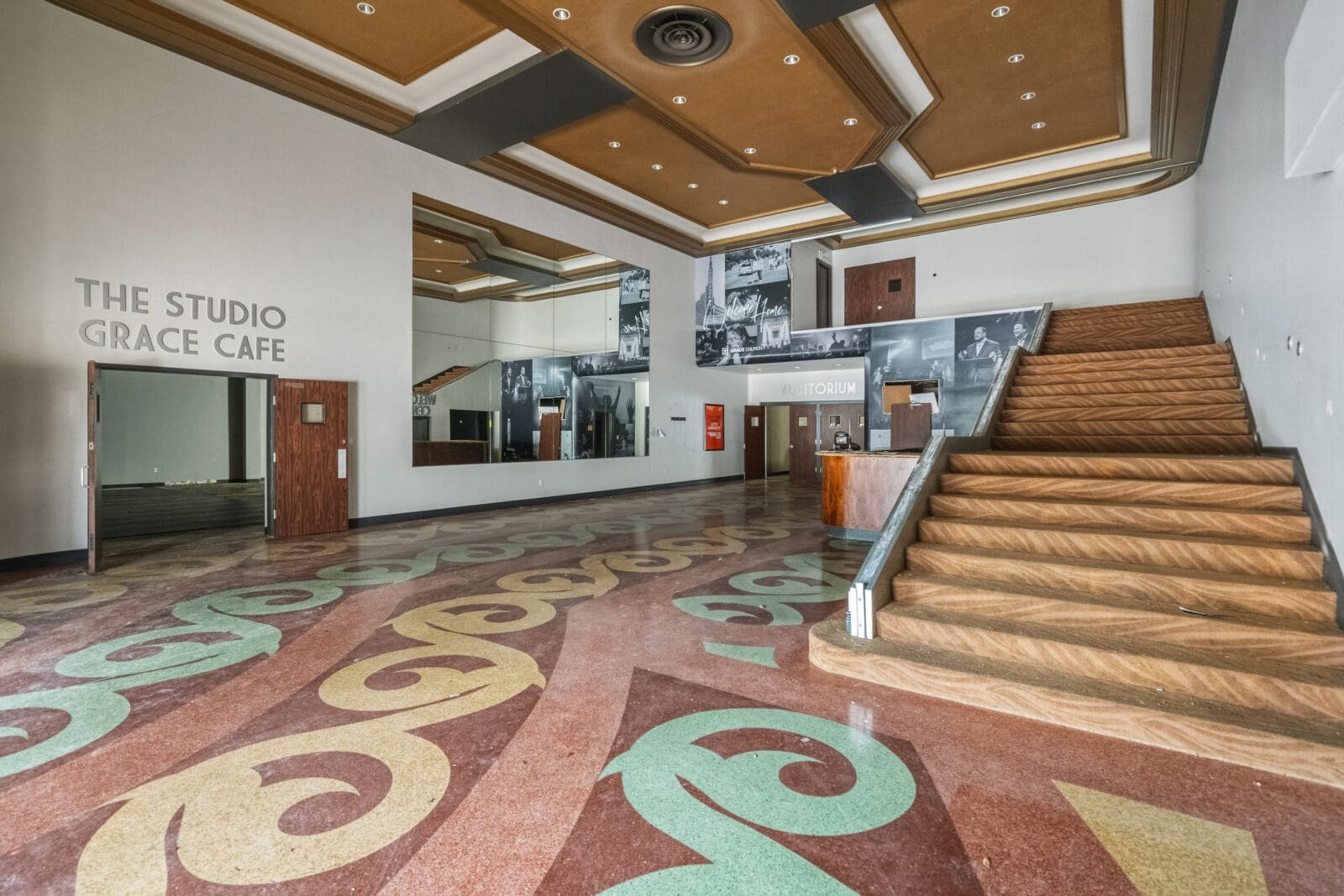
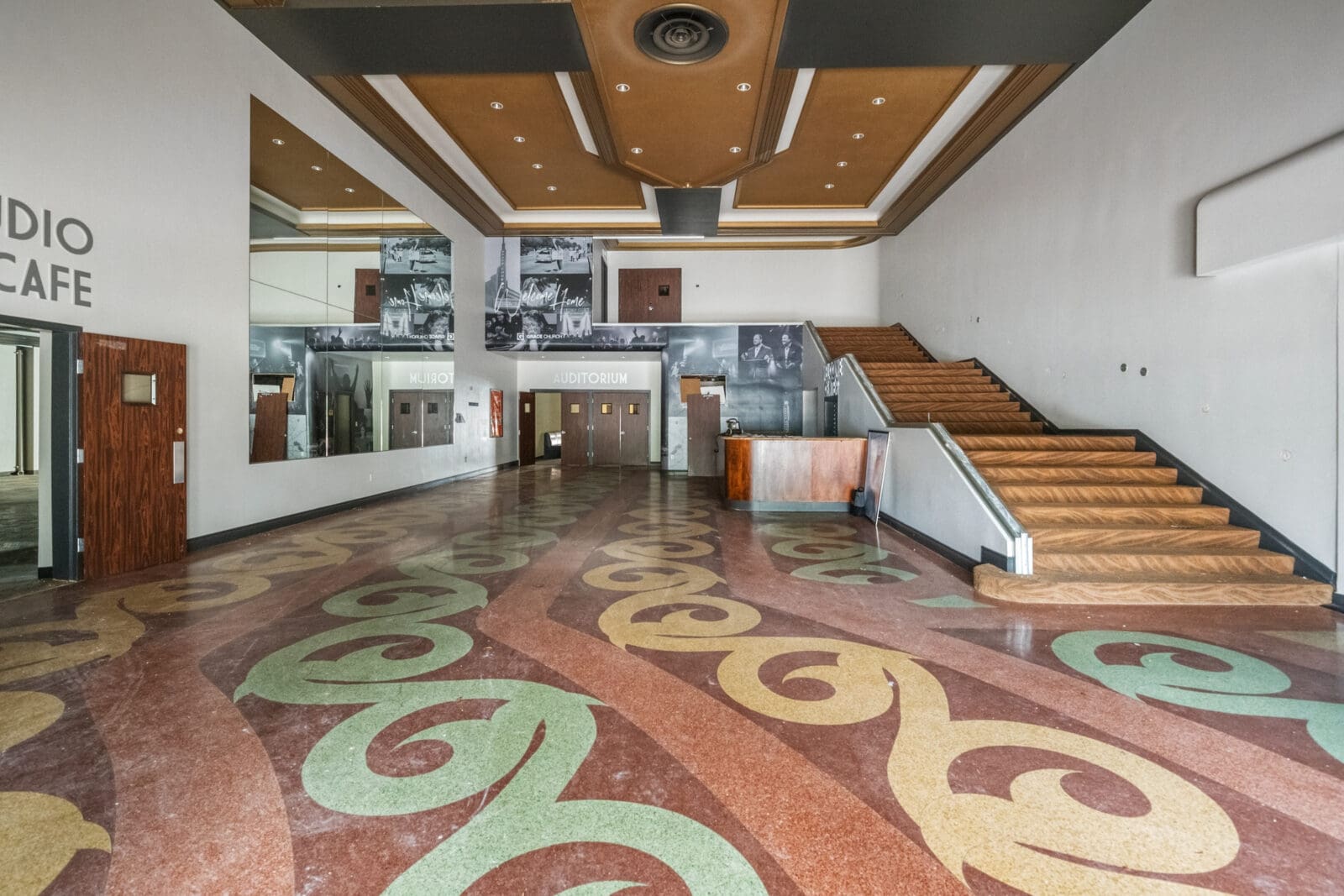
Stepping into Garden Oaks Theater lobby feels less like entering a building than crossing a threshold into another time. Outside is Houston — restless, ambitious, with a relentless appetite for the new. Inside the walls of this historic and endangered Houston theater on Shepherd Drive in The Heights area, the ethereal beauty of another era unfolds.
Beyond the lobby doors, the building stops feeling like real estate and starts feeling like memory.
“People design and build wonderful new buildings all the time,” famed director Wes Anderson, a Houston kid turned worldly international voice, tells PaperCity. “But you can’t build an old building.”
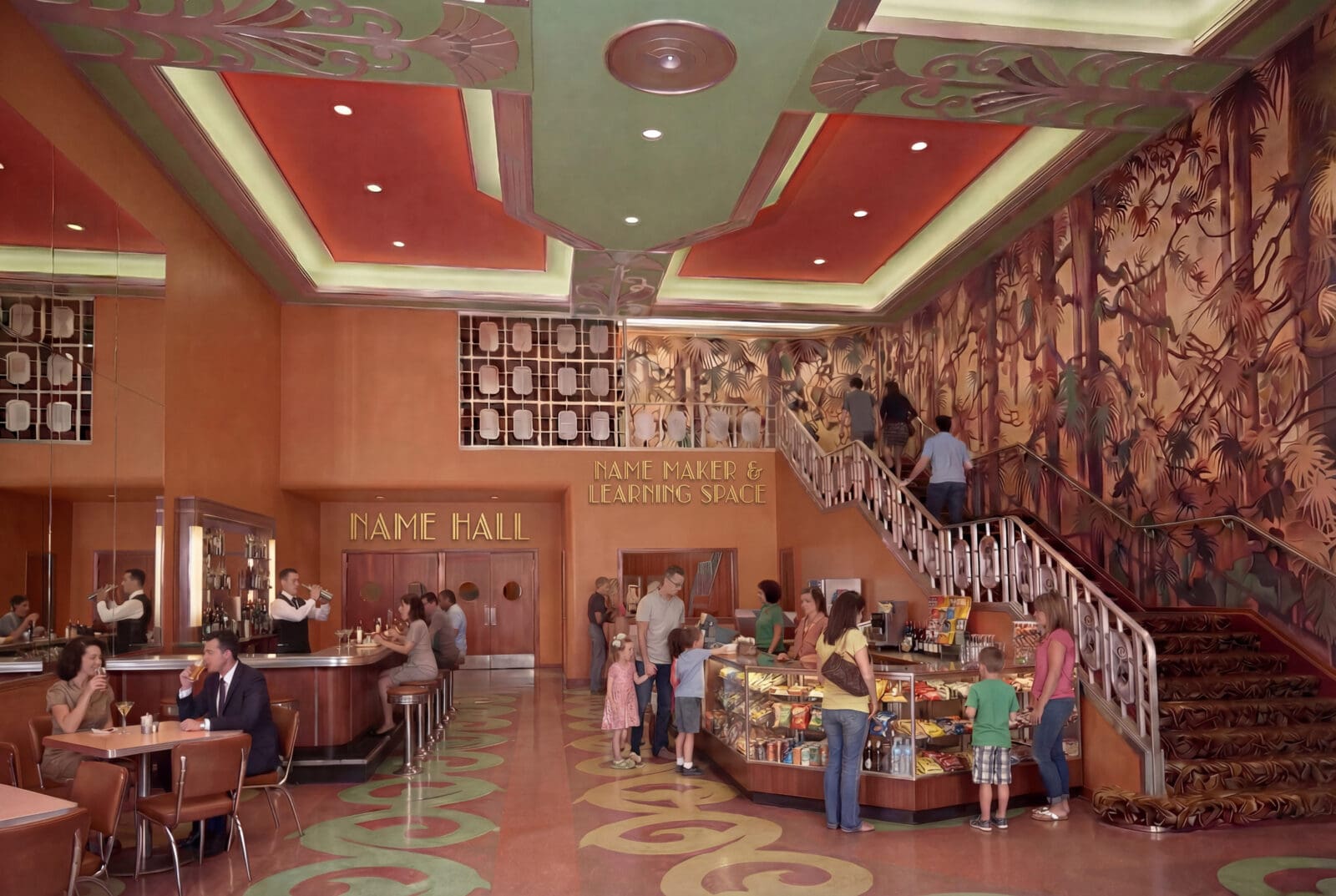
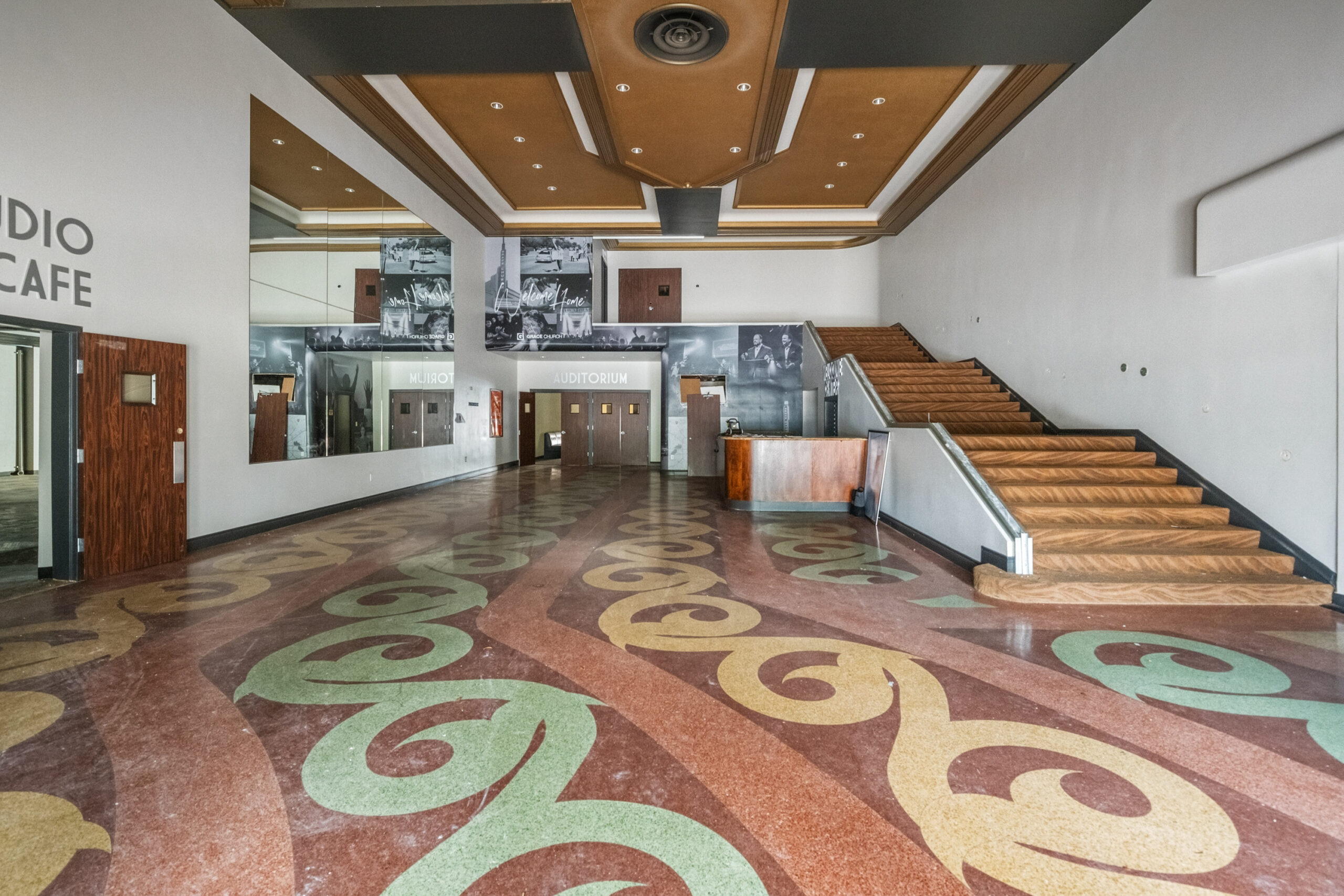
The terrazzo lobby floor unfurls beneath your feet in swirling ribbons of sage green, cream and oxblood, like a garden coming into bloom. Its sweeping Streamline Moderne patterns suggesting vines, blossoms, and new growth frozen forever in stone. Today, such details would likely be value engineered out of existence. In 1947, someone believed the beauty was worth the trouble.
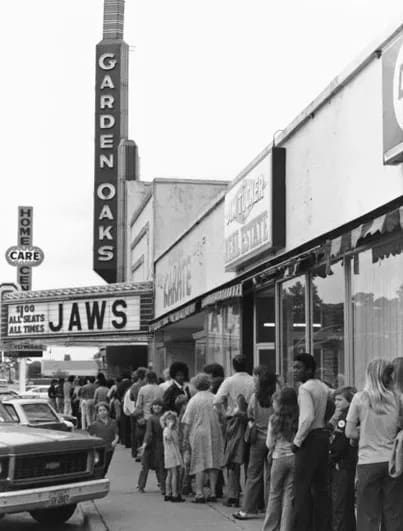
The storied movie palace sits on North Shepherd with the poise of a grand dame. Weathered perhaps, but still unmistakably regal, still capable of commanding a room. Freshly minted in 1947, as America emerged from the shadow of war and looked hopefully toward the future, the movie palace has stood witness to Houston’s evolution for nearly eight decades.
But the future of the grand old theater is far from certain. What remains when memory itself is bulldozed?
SHOP


That truth hangs heavily over a desperate, last-minute effort to save the nearly 80-year-old Garden Oaks Theater, a once beloved neighborhood cinema that later operated as a church before quietly slipping from public consciousness. The theater’s current owner Heights Equity Trust and Sage Equity Partners has offered to sell the theater to Arthouse Houston — an outgrowth of the Friends of the River Oaks Theatre nonprofit that helped successfully save that historic Houston movie palace — for the $7.1 million it purchased the theater for in 2025.
But if the $7.1 million to cover that purchase price is not raised by June 30, Garden Oaks Theater faces demolition.
This reporter reached out to Heights Equity Trust and Sage Equity Partners, seeking clearer answers regarding the future of the Garden Oaks Theater. Multiple attempts were made to contact the Jay Williams, the project lead with Sage Equity Partners, but they proved unsuccessful.
Houston preservationists, filmmakers, philanthropists and arts leaders now find themselves in an urgent race against time to save the historic building’s before redevelopment pressures erase yet another piece of Houston’s architectural and cultural heritage.
“In a place like Houston, where there is history, but so much of it has already been erased,” Wes Anderson tells PaperCity. “There isn’t really a tradition of protecting old buildings. So when you have an opportunity like this, it’s very good to see a group rally together around a place and try to protect it. And to protect it in the context of its original purpose.”
This is what makes Garden Oaks more than a real estate story. It has become a referendum on what kind of city Houston wishes to be.

That sentiment is echoed by Academy Award-winning director and Houston native Richard Linklater, who helped galvanize the successful effort to save Houston’s historic River Oaks Theatre.
“You learn that when the community speaks up, it matters,” Linklater tells PaperCity. “This almost 80-year-old theater had a long life. And it has a future if we allow it to have one.”
Linklater speaks about old theaters the way preservationists speak about cathedrals — as sacred communal spaces where collective memory accumulates over generations.
“Those losses chip away at the soul of a place,” Linklater says. “They chip away at its spirit.”
The cathedral comparison is not accidental. Neighborhood movie palaces were cinematic jewels that once served as democratic temples of imagination. They were places where strangers gathered in darkness to laugh, cry, dream and occasionally leave transformed.
In an increasingly digital culture with decisions dictated more and more by streaming algorithms and isolated scrolling, independent movie theaters feel almost radical in their insistence on shared experience.
“It’s the heartbeat,” Linklater says.“People are more isolated than ever through social media and technology. Yet they’re also hungry for communal experiences.”

Garden Oaks Theater’s Historic Run and Possible Future
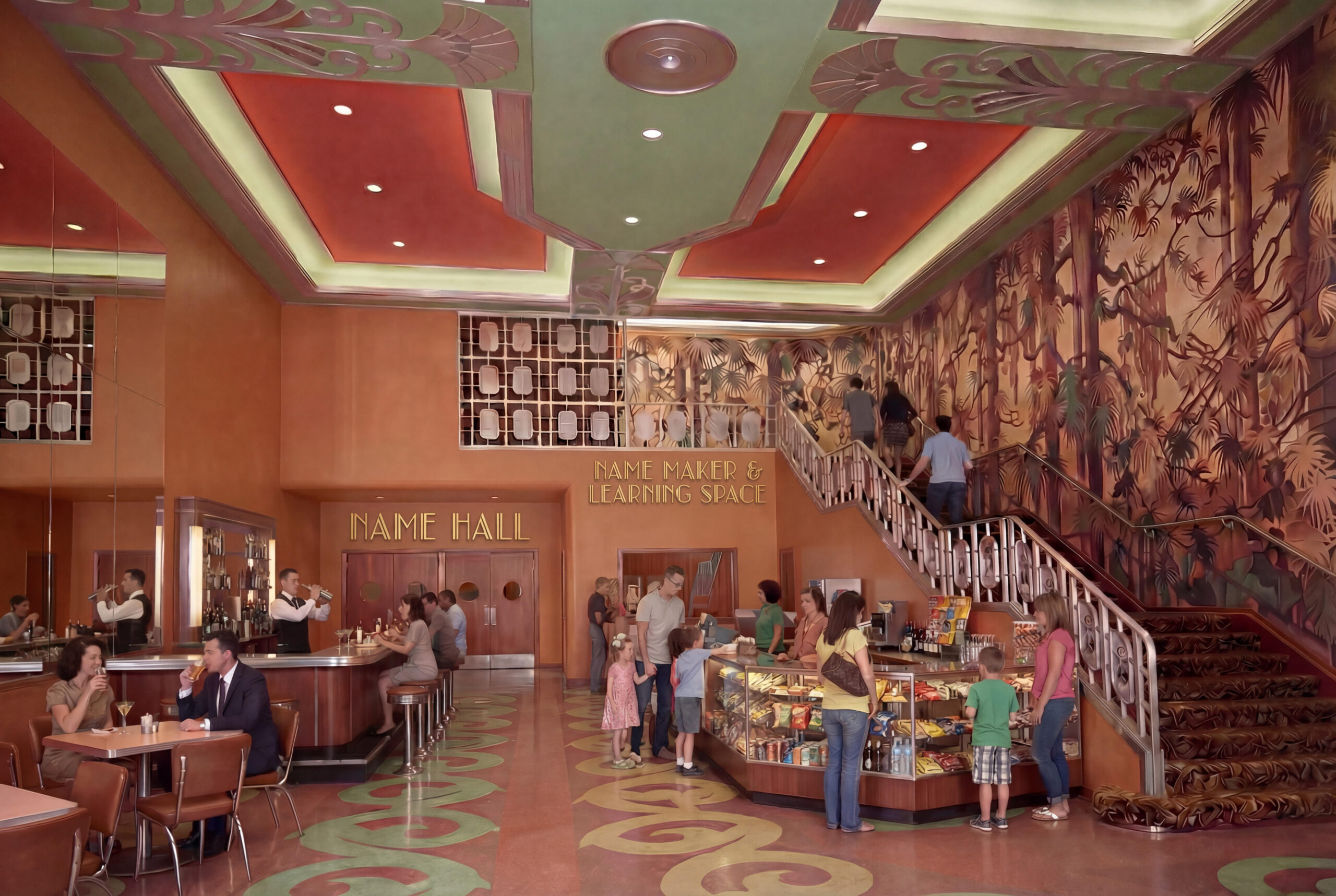
Designed by Dallas architectural firm Pettigrew & Worley, Garden Oaks Theater emerged during the golden age of American movie palaces. Like its celebrated sister River Oaks Theatre, also designed by Pettigrew & Worley, Garden Oaks was conceived not merely as a place to watch movies, but as a civic gathering place. One where architecture itself elevated the experience.
The bones are still there. The geometric terrazzo patterns grace the lobby floor like a meticulously composed film set, as if visionary filmmaker Wes Anderson himself had wandered into postwar Houston and art directed the lobby.
New construction can imitate style. It can borrow decorative details. What it cannot replicate is accumulated memory and genuine nostalgia. The first dates. The Saturday matinees. The church services. The neighborhood rituals. The generations of Houstonians who passed through these doors and unknowingly left part of themselves behind.

Now a coalition of filmmakers, preservationists, arts leaders and philanthropists are working together to try and ensure Garden Oaks gets another act.
Among them is Maureen McNamara, director of Arthouse Houston, who sees the theater not as a relic frozen in nostalgia but as future infrastructure for Houston’s creative economy. Supporters envision Garden Oaks Theater as a year-round cultural hub where film, arts education, live performances and community programming converge.
“I would love to see 365 days a year of programming,” McNamara says. “Live performance, film festivals, up-and-coming filmmakers’ work, award-worthy films.”
Her vision stretches beyond repertory screenings. McNamara imagines artist mentorships, educational programs, writing workshops, summer camps, media labs and film incubators operating beneath Garden Oaks Theater’s historic roofline.
“We can really build a workforce of strong, passionate people who go on to make amazing work,” McNamara says.
McNamara believes Houston already possesses the creative energy. What it lacks are enough spaces worthy of that energy.
“People want spaces with legacy,” she says. “Elegance. Timelessness.”
That observation resonates deeply with Houston preservationist and philanthropist Phoebe Tudor, one of Houston’s most influential advocates for historic preservation.
“Old buildings are the soul of a city,” Tudor says.
The phrase has become something of a preservation mantra in Houston, but Tudor means it literally. Historic places, she argues, provide the anchors that help communities understand themselves.
“Without anchors to the past, people lose a sense of where they came from,” Tudor notes. “And that affects where they’re going.”
Phoebe Tudor is known for helping transform preservation dreams into reality — from the restoration of the Julia Ideson Library to her pivotal role in helping save River Oaks Theatre. Tudor sees Garden Oaks as part of a larger conversation about Houston’s cultural maturity.
“I’m always urging people to think bigger,” she says. “Think beyond next month. Think legacy.”
If Houston hopes to become a truly serious international film city, it needs more than ambition, Phoebe Tudor argues. It needs its sacred spaces.
“If Houston truly wants to position itself internationally — to host major film festivals, to become a true film city — then we need beautiful legacy venues to anchor that vision,” Tudor says. “You don’t bring international guests to a generic multiplex.”
Houston philanthropist Franci Neely, founder of Houston Cinema Arts Society and a longtime champion of the city’s arts community, echoes this vision.
“We see great value in there being a center for film in Houston,” Neely says. “That’s what Houston Cinema Arts Society is about —helping make Houston a film-centric city.”
For Neely, film is not merely artistic enrichment. It is civic infrastructure.
“Film is not only a valuable art form,” she says. “It’s also vital to the economy.”
The argument increasingly shapes preservation discussions nationwide. Cities that invest in cultural institutions can attract talent, tourism, creative industries and longterm vitality in ways generic redevelopment rarely are able to do.
Not Just Another Old Building
Garden Oaks Theater represents something less measurable too, though. A feeling, an atmosphere, an elegance.
“When I walked into Garden Oaks, I immediately felt it,” Linklater tells PaperCity. “There’s an elegance to it. There’s that 1940s atmosphere. There’s a certain grandeur. It lifts the spirit.”

“You immediately see the bones of something stately and elegant,” Tudor says. “It feels like a neighborhood jewel.”
McNamara feels a similar sentiment.
“Some places survive simply because people love them deeply,” she says. “Sometimes they even seem impractical. And yet they survive because they matter emotionally.”
McNamara often finds herself returning to the same question. “How do we hold onto places with soul?” she asks.
That question may ultimately define this preservation battle. Because Houston is no longer the adolescent boomtown it once was. It is a global city now — wealthy, ambitious, diverse and increasingly aware of what it has already lost.
“Houston has historically made it too easy to replace the old with the new,” Linklater says. “But Houston is old and established enough now. It should be proud of its own heritage.”
Tudor echoes that concern.
“Older buildings enrich Houston in a way that cookie-cutter new construction simply cannot,” she notes.
The successful rescue of River Oaks Theatre marked a turning point for many Houstonians. It demonstrated what can happen when artists, preservationists, philanthropists and ordinary residents rally around a shared cause.
Garden Oaks presents a different challenge, a more daunting, difficult one in many ways. For years, the building functioned primarily as Grace Church rather than a movie theater. Its core identity gradually faded from public memory.
“The River Oaks had this deeply emotional connection for so many people,” McNamara says. “Garden Oaks is different. A lot of people have never actually been inside it. Or haven’t been there in decades.”
Yet, those who do enter often emerge visibly moved.
“What I’ve found is that when I physically walk people through the building, they suddenly get it,” McNamara says. “They become wide eyed. They see the possibilities.”

Historic theaters possess that power. Linklater calls it “a cumulative spirit to a place.”
“That’s what historic spaces do,” McNamara says. “They hold memory.”
And perhaps that is what this fight is really about. Not merely preserving a building, but preserving a way of remembering. In Houston, a city often obsessed with what comes next, Garden Oaks Theater has become a test of whether memory itself still carries value.
Or whether the wrecking ball remains H-Town’s most enduring architectural style.
“I hope people remember that the wrecking ball was at the door,” Linklater says of the future of Garden Oaks Theater. “And that people stepped forward and fought to preserve it.”

Tudor believes the outcome will depend on whether Houstonians see themselves as participants in the city’s future rather than passive observers.
“People need to know they can play a role in making Houston better,” she says. “That’s how cities change.”
For Wes Anderson, the equation is simpler.
“A place like Garden Oaks Theater — it’s impossible to build a place like that now.” Anderson says. “Of course, that’s because of the history it has. But beyond that, the way a place like that was made, people aren’t capable of building that way (now).
“And once it goes, it’s gone.”
For now, this historic Houston theater remains standing.
Its terrazzo floors still gleam beneath decades of footsteps. Its grand staircase still rises toward possibility. And overhead, the theater’s botanical flourishes continue their quiet dance across the walls and ceiling. At once celestial and organic, like vines reaching for distant stars. It’s a final reminder that Garden Oaks Theater was built in an era when beauty was considered essential, and some places are worth saving simply because they inspire wonder.
Whether Garden Oaks Theater becomes another Houston preservation success story — or another chapter in the city’s long history of demolition and regret — remains to be seen. But time is not on its side.
Trending
- Inside Wes and Willie Fritz’s Next Level Houston Roster Building — How a Young Son’s Never-Ending Questions Grew Into a Rising College Football Power
- Fairy Tales Come To Life On an Enchanting $1.3 Million Houston Night — Princesses Galore, Little Red Riding Hood and Snow White Step Up
- BSH’s Post Oak Showroom Brings Interior Designers, PaperCity Mavens, Fashionistas and Power Players Together For a Glittering Issue Launch
- Houston Grillz Master Johnny Dang and His World Of Bling — One of Texas’ True Over-the-Top Characters
- Conner Weigman Wants His Respect, Houston Football Earns It On a National College GameDay Level and Willie Fritz Loves the “90 Percent Houston” Crowd Fever

_md.jpg)


_md.jpeg)