The Wine Man Who Helps Keep Legendary Houston Restaurateur Tony Vallone’s Legacy Alive — Carlos Luján Brings Understated Excellence
From Marfa With Wine
By James Brock //
I love talking about wine with people who share my passion for it. We open bottles, we trade stories about travel and soil types, terroir and residual sugar, and we talk of taste and food and restaurants. We recommend wines to one another, we drink, and we learn a lot.
In Wine Talk, I introduce you to friends, acquaintances, and people I encounter as I make my way around the world, from Houston to Mexico City, Los Angeles to Burgundy, and other locales far and near, individuals who love and respect wine as much as I do, who live to taste, who farm and make wine. Whether my subject is a collector, a winemaker, a chef, a sommelier, a buyer, a grower, or simply an avid drinker of wine, you’ll appreciate their insight, and I hope you’ll learn something from them as well.
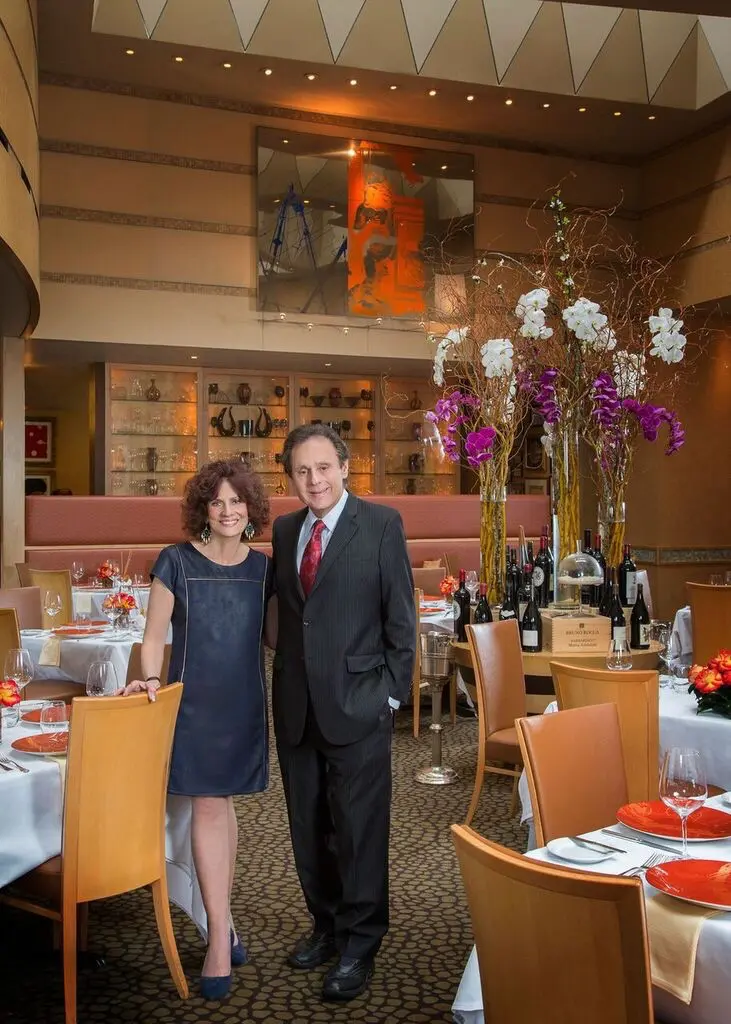
Iconic Houston restauranteur Tony Vallone meant, and still means, a lot to me. Our relationship began formally, I a journalist, he a Houston restaurateur. I wrote about his iconic restaurant, about him and his life for PaperCity, and we became friends. Vallone passed away in September of 2020, and I miss him.
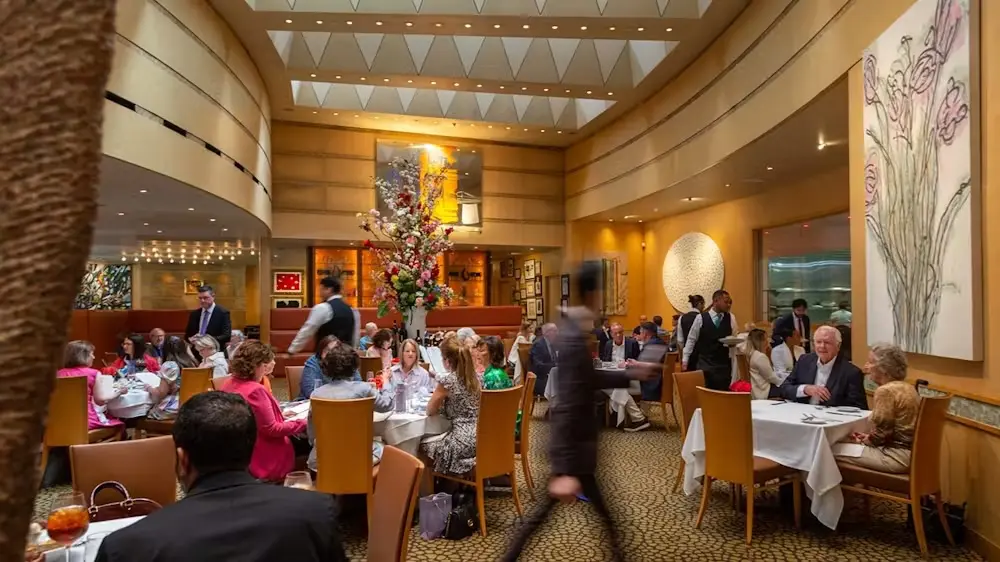
Tony’s restaurant is still open and his wife Donna is there. And that’s a good thing. What’s more, a group of local investors took a majority stake in Tony’s last year and an extensive interior redesign and overall renovation and improvement program is underway as PaperCity previously first reported. I like to think that Tony Vallone himself would be pleased.
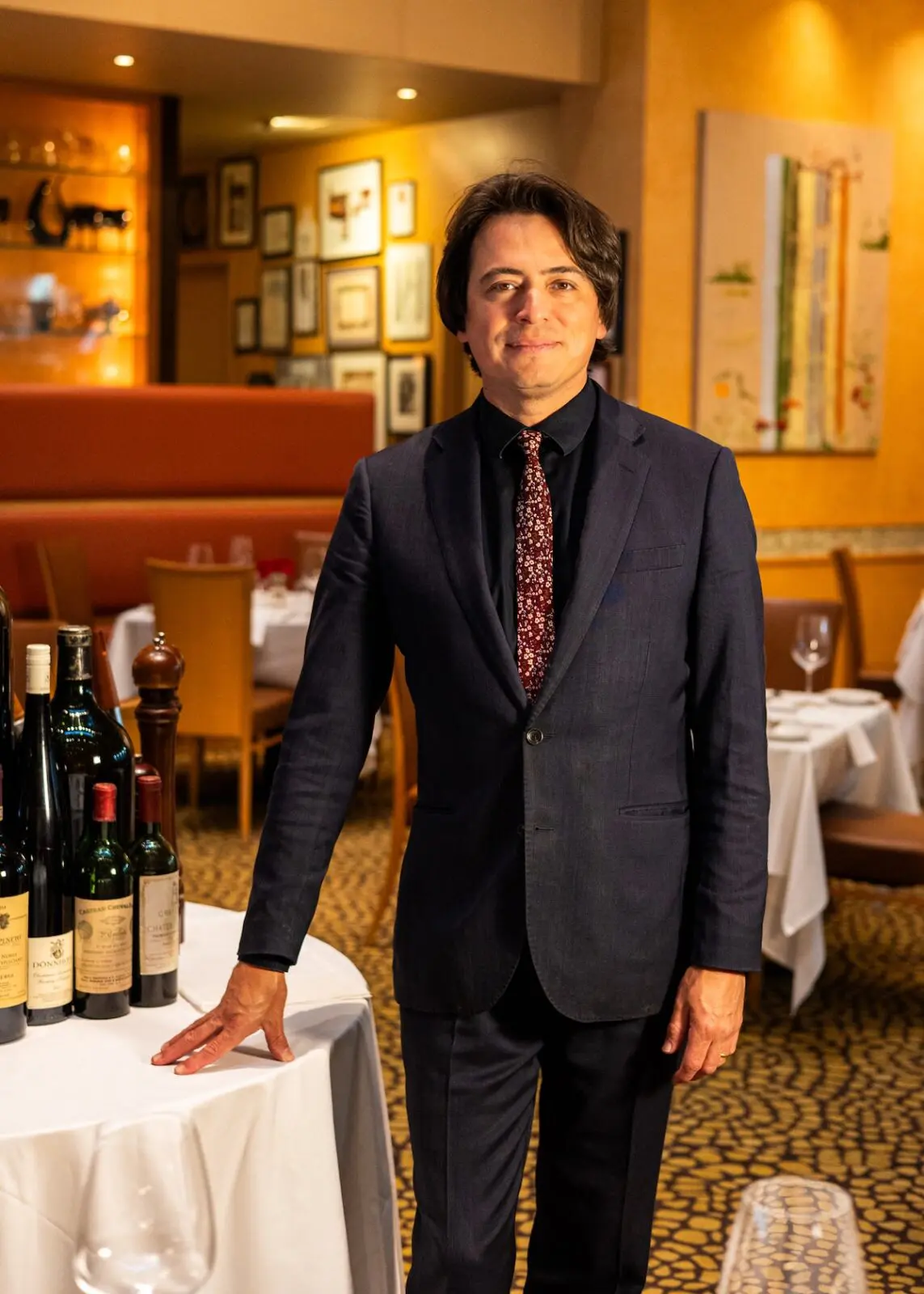
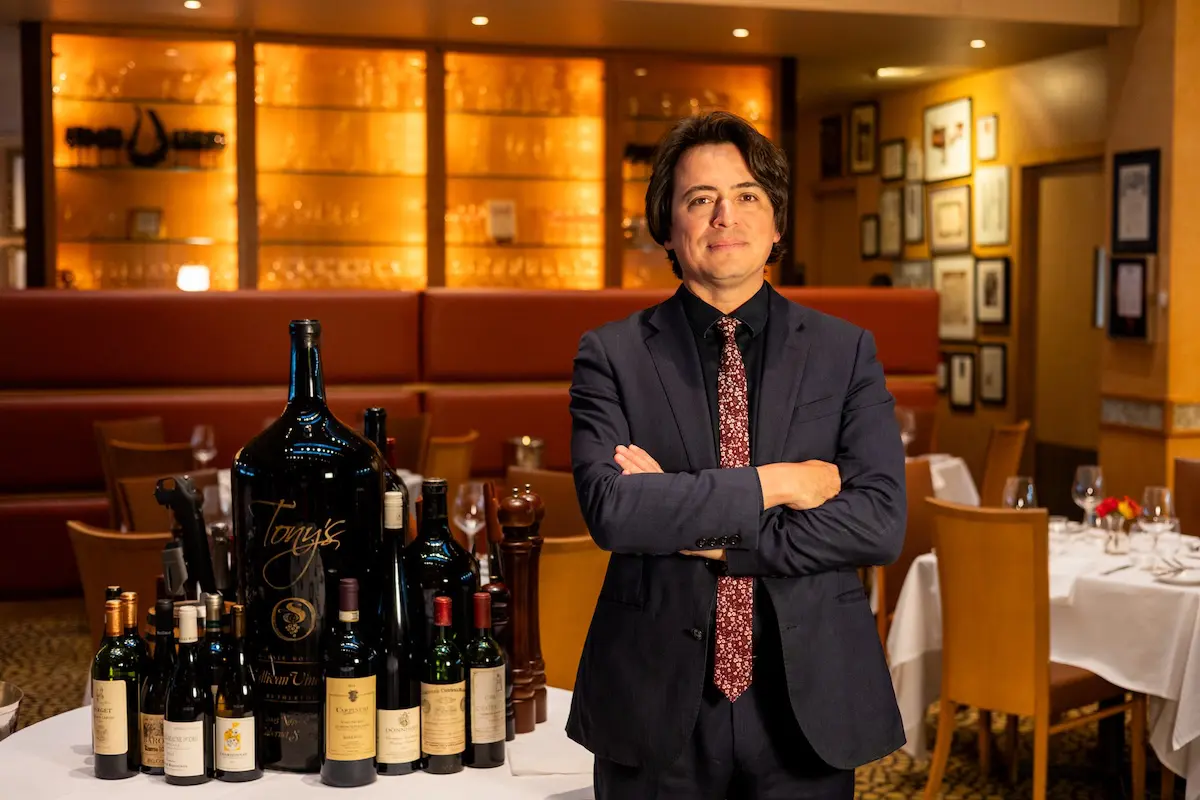
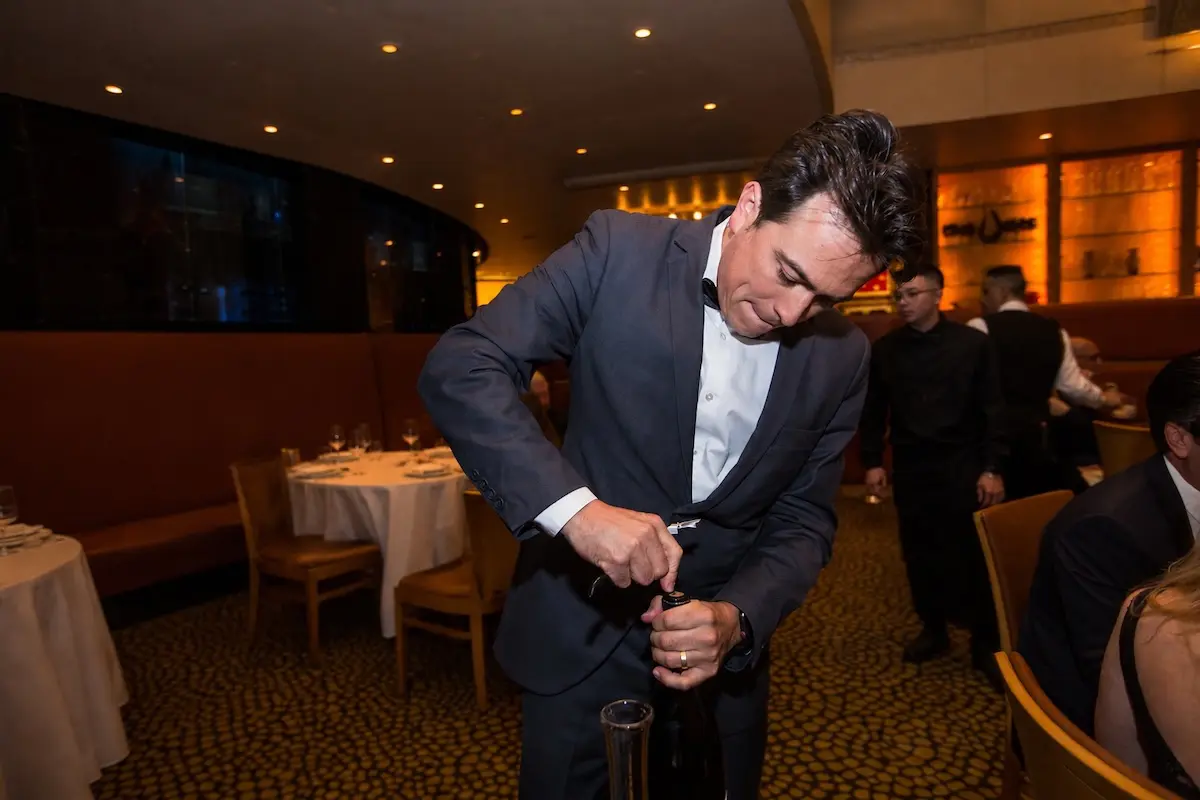
And Carlos Luján has the restaurant’s wine program in a great place. I first encountered Luján when he was a server, and his professional demeanor impressed me. His was an understated grace. He never lingered too long at the table, and knew exactly what was required, and when.
His talent for reading the room is one he shares with Tony Vallone, and it’s a skill in short supply. I am glad Luján, as wine director at the restaurant, is helping keep Vallone’s legacy alive.
SHOP


Luján, who began working at Tony’s in 2014, spent his early years in California’s Bay Area, and has considerable experience living in Marfa as well. It is in that small Texas city that his hospitality aesthetic was formed. He brings to a dining room his vision of a holistic experience, and that vision becomes reality for diners, who remember their meals long after the final bite and sip.
Food well cooked, excellent service and a diverse wine list. What more could one desire at the table?
Let’s see what Carlos Luján has to say in Wine Talk.
James Brock: Tell us about three wines you think are drinking well at the moment. What makes them worthwhile?
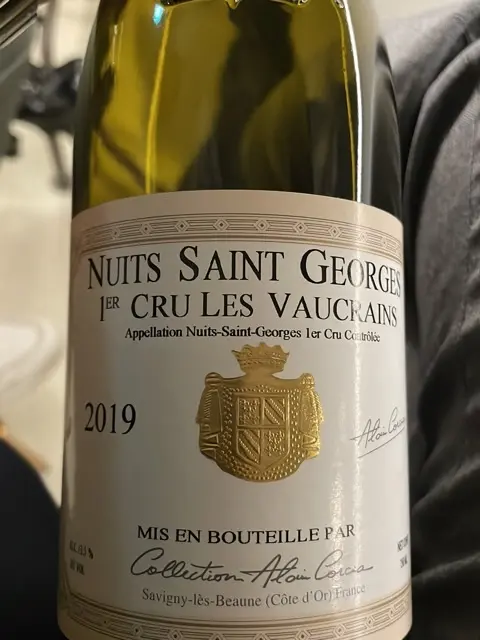
Carlos Luján: I have been frequently visiting Nuits-Saint-Georges ‘Les Vaucrains’ 1er Cru by Alain Corcia. This one falls on the more affordable side of Burgundies. The tartness has rounded out and there is some freshness lingering. At the same time that dark cherry and earth is kicking in from a muscular wine from the world-renowned plot.
We’ve been pairing that pinot with our whole roasted duck with cherry sauce. (Find the wine here.)
I also recently had the pleasure of tasting a 2018 Guiberteau ‘Clos de Carmes’ from the Brézé commune in the Loire Valley. There’s something magical about that wine at this age where it’s truly showing elegance. I think any great chenin blanc that has the ability to age has lured me over the other age-worthy whites.
The acidity, florals and faint nuttiness of the chenin pair with our crispy squash blossoms on a Meyer lemon-sauced spaghetti in a very appealing way. Guiberteau is known for low intervention in their winemaking. (Find the wine here.)
Finally, 10-plus-year-old Pomerols, specifically for a mean cut of ribeye. I like the merlot dominance from Right Bank blends, which are far more affordable on a regular drinking basis. Easy ones are Château La Croix and Château Barde-Haut.
JB: If cost was no consideration, tell us the one bottle you would add to your personal collection, and why.
CL: One bottle I would add to my personal collection if cost were no consideration is a 15 to 20-year-old Oddero ‘Vignarionda.’ Vignarionda is a specific site in Serralunga d’Alba that produces some powerful and age-worthy Barolos. Thanks to Tony’s allocations from the past, I’ve been able to dabble in some of this from a generous clientele, which has created a high benchmark for my expectations of a quality Barolo.
These older Oddero vintages are getting harder to find. (Find the wine here.) Once in a while there’s a vertical (same wine but of different sequential vintages) offering from one of my favorite wine distributors. That’s a hard one to say no to. I am definitely eyeing those for our clients when available.
JB: What is your favorite grape, and why? If you don’t have a single favorite, tell me about one that you are especially passionate about.
CL: After tasting wine for more than 20 years and going through endless varietals, I find myself going back to white Burgundy and California chardonnay. There’s no avoiding these here at Tony’s. I really like what’s happening in Central California winemaking, which is a distinct move away from big barrel oaky flavor and a return to brighter acidity, sunshiny examples. Therefore allowing other nuances of the whole flavor profile to shine through.
Others on my radar are mencía and aligoté.
JB: How about one bottle that our readers should buy now to cellar for 10 years, to celebrate a birth, anniversary, or other red-letter day?
CL: I am with a red Burgundy, somewhere from a grand cru plot, may it be the producers of Chevillon, Noëllat, or even Joseph Drouhin. Grand crus from Clos de Vougeot or Charmes-Chambertin. Drink those guys in a 10-year range. Then try another in the 15-year range.
JB: Where is your go-to place when you want to have a glass or bottle (outside your home and workplace)?
CL: Nobie’s is my go-to place. The conversation about wine can continue there outside of work with other friends and aficionados. On occasion you might find winemakers, reps and friends rocking the place. It always makes for great conversation, along with my favorite music on vinyl.
JB: If there was one thing you wish everyone would keep in mind when buying and drinking wine, what is it?
CL: I encourage everyone to keep in mind a couple of requisites when they go shopping: knowing how much fruit presence you want, and tannin. If you can get a couple of these questions covered, you’ll always be satisfied with what you’ll go home with.
Go talk with the guys at Houston Wine Merchant, or George at Central Market. Both are well versed in making excellent recommendations.
JB: We’ve all read the countless articles and papers devoted to the dire state of the wine world and industry, the stories of surplus fruit, ripped-out vines, younger drinkers abandoning wine, climate worries, and the role of alcohol in human health. What do you think needs to be done to improve the current state of wine? Better education? Marketing? How concerned are you about the future of the industry?
CL: There is concern with all these killing factors listed above. I’m of the opinion that American culture needs to invite back the long lunch and dinner sit-ins. I think this ‘work and grind’ world that we’re living in right now dissolves the lengthier times at the table and thus eliminates the conversation and the opening of a bottle.
Wine has its place to spark conversation and more meaningful engagement. Like all things regarding music and social media content, we’ve definitely sped up our lifestyles, and that leaves little room for attention towards one another in person.
JB: What is your wine eureka moment, the incident/taste/encounter that put you and wine on an intimate plane forever?
CL: A couple of elements led to the eureka moment. Growing up in Marfa all those years ago, I managed a tiny restaurant called Cochineal. The owners moved down there from the upper east side of New York with their wine collection. It was there that I was first introduced to aged Alsatian and Austrian rieslings, classic French whites and other remarkable European wines from the 1990s.
Regular tastings with the owners opened my eyes to the depth, history and emotion that great wine can convey. The lovely French minimal setting of this restaurant, the lighting, the wine cellar just past the kitchen in the adobe-lined rooms sparked this idea of environment and libations singing together.
CL: Maybe a disgruntled guest complaining about a broken cork in my early days, but nothing too strange in the wine world. . . yet.
JB: If you could journey to one destination (or region) tomorrow to explore its wines, where would you go?
CL: I think covering the Piedmont region for a week or two would be tops, but if I was looking for something so familiar and a bit closer, I would go with the Sonoma Coast while chilling in a town like Guerneville for stayovers.
JB: Your favorite wine reference in a work of literature (fiction, film, poem)?
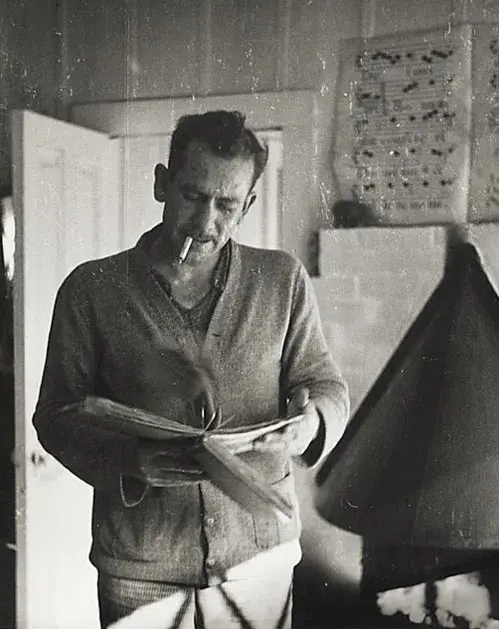
CL: I look back on my upbringing in the Bay Area and Monterey Bay and always recall John Steinbeck’s Tortilla Flat. ‘Love and fighting, and a little wine. Then you are always young, always happy.’ I see winemakers using this and it represents my fighting spirit.
For more from James Brock visit Mise en Place.
Trending
- The 20 Designers Chosen For the 2026 Kips Bay Decorator Show House Dallas
- Houston’s Most Fashionable Affair Draws a Hot Crowd Dressed To Thrill — Why Best Dressed Goes Far Beyond the Runway
- 5 Buzzy New Dallas Restaurants to Try Right Now
- Conner Weigman Wants a Texas Tech Rematch After His Guts-Out QB Show Comes Up Inches Short, But Houston Can’t Keep Putting Everything On Him
- Casa de Ondas in Preston Hollow Hits the Dallas Market for $45 Million
Part of the Special Series:







_md.jpg)