An Underknown Wine You Need To Try — Don’t Sleep On Seyval Blanc Or This Virginia Wine Find
This Grape Doesn't Get Much North American Love, But It Should
By James Brock //
Seyval blanc. Heard of it? If not, you are not to feel badly. While it is a grape that has been around for a while that has proven its place in the wine world, it is not widely planted in North America. Estimates hover between just 700 and 900 acres of seyval blanc in the United States and Canada. For comparison, upwards of 75,000 acres of pinot noir and more than 115,000 of cabernet sauvignon are planted in the two countries.
Seyval blanc is a hybrid, and was developed by Bertille Seyve and his father-in-law Victor Villard in their nursery in France in 1921. For those who appreciate such information, it is a cross of 50 percent Vitis vinifera, 37 percent Vitis rupestris and 13 percent Vitis licencumii. It is a high-acid grape and it tends to ripen early, which makes it particularly suited to cooler climates. As an interesting aside, the European Union does not allow the grape to be used for “quality wine” production because it does not have 100 percent vinifera genes.
Cooler regions is where it shines, including England, where makers of sparkling wine are using it to great effect; the Finger Lakes region of New York state; Canada; and the Lake Erie AVA.
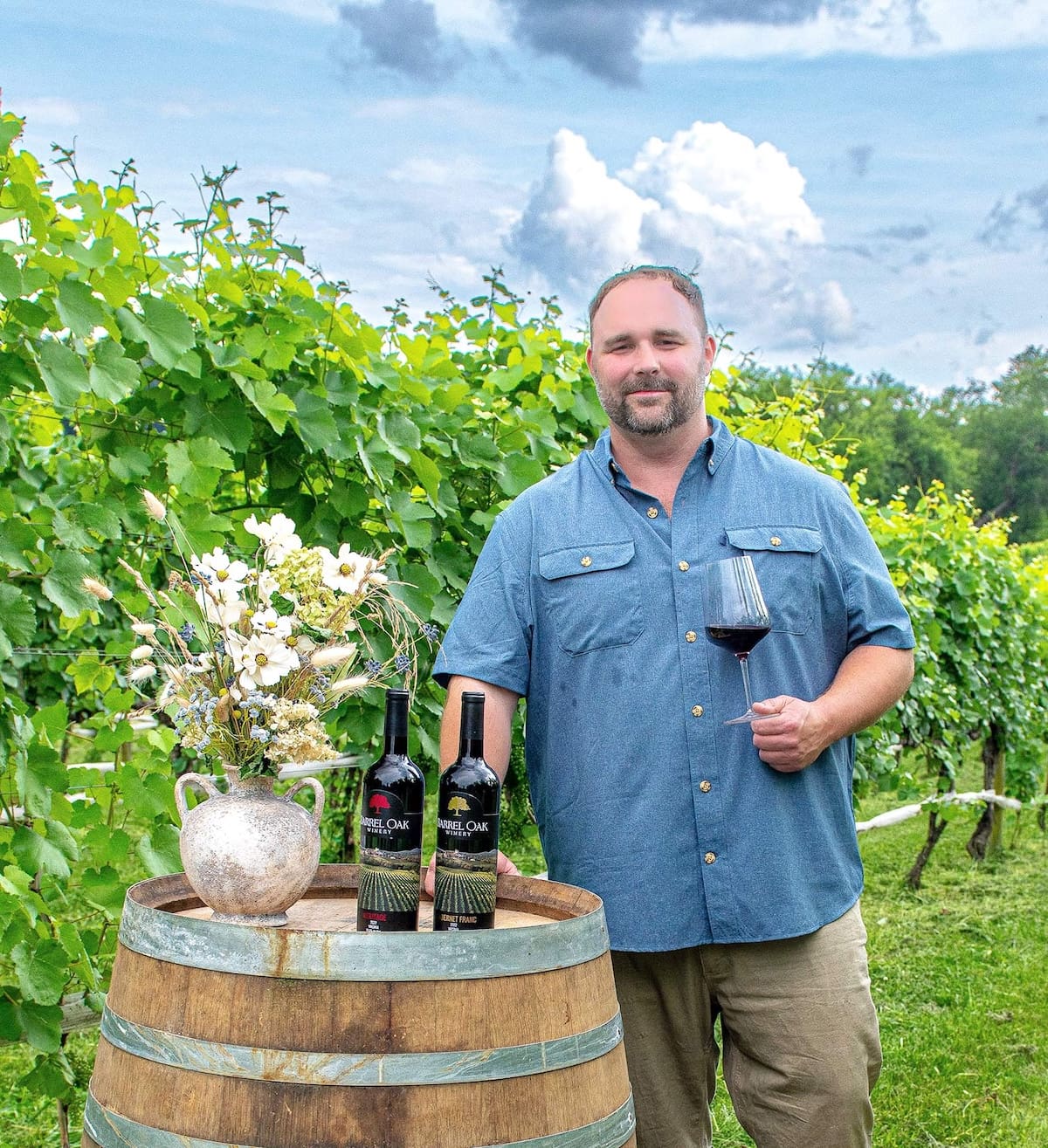
Virginia is also a player here, a state in which recent statistics indicate that about 40 acres of seyval blanc are planted. It is produced by myriad wineries there, including Barrel Oak Winery & Brewery, a 78-acre estate responsible for my wine of the day.
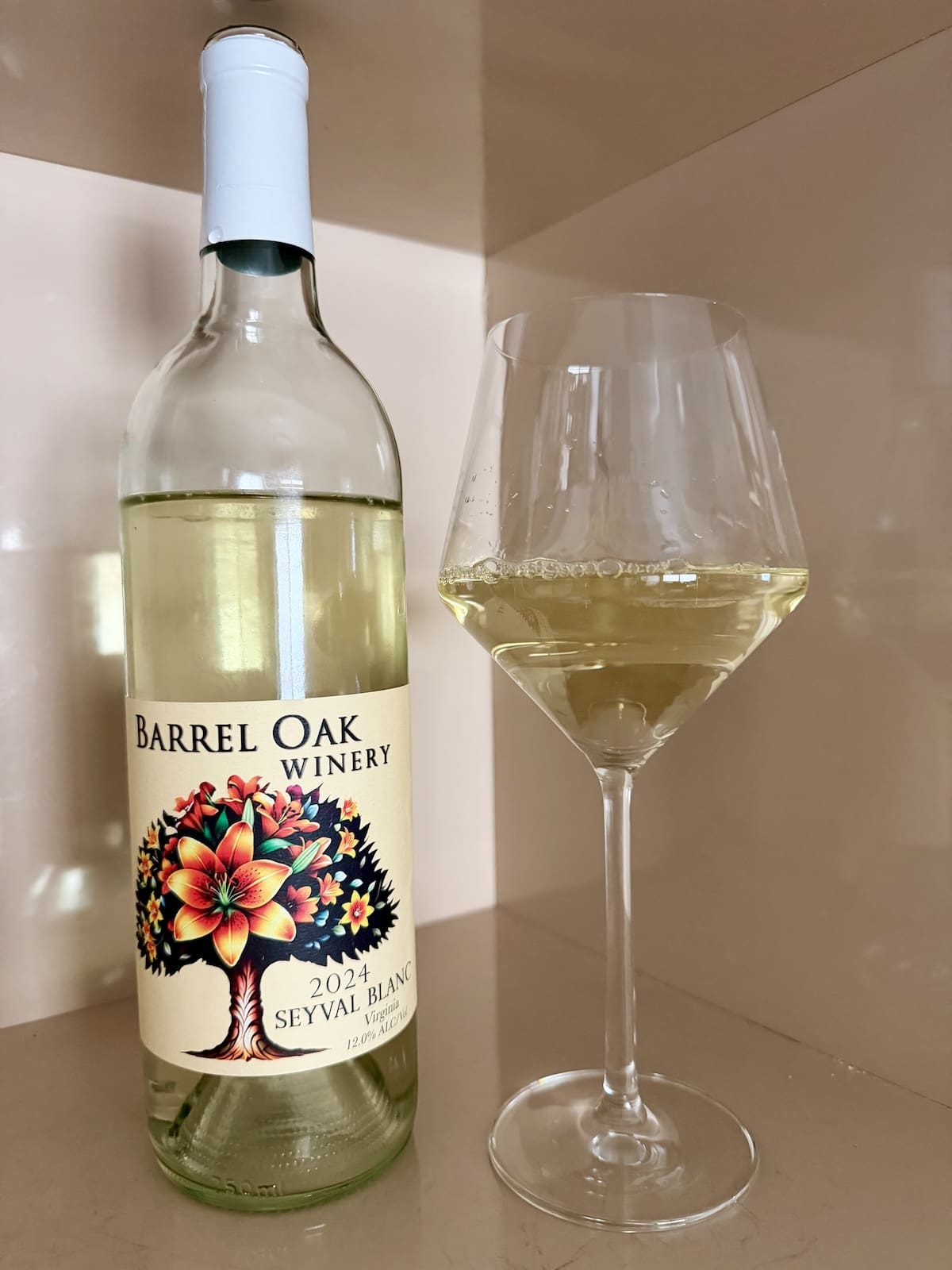
The 2024 Barrel Oak Seyval Blanc is a cork-closure wine whose fruit is grown in the estate’s B-Block plot, which is situated between 500 and 700 feet above sea level in the Middleburg AVA. Soils are marked by clay with deposits of gneiss and granite, a composition that gives this wine an appealing minerality on the palate. Alcohol is 11.25 percent, 353 cases were produced and it did not go through malolactic conversion.
This is an all-stainless steel creation, crisp, bright and lively.
SHOP


In the glass, the wine is a pale, soft yellow and the body is light to light-plus. Harvest brix of 22.0 should leave us with ample acidity, and a first taste of the wine makes that evident. Orange flower is definitely in the aroma and on the palate, along with bright apple, perhaps Granny Smith. I served this bottle with sautéed crayfish and angel hair pasta, and the winemaker team, led by Jeremy Ligon, suggests seared trout with lemon and capers, which I’ll try next time I drink this wine.
It carries a suggested retail price of $30. You can purchase it from the producer or find it here.

I’m working on a profile of Barrel Oak that will include a discussion with Ligon, and I’ll soon be sampling the estate’s 2022 Chocolate Lab, a port-style bottling, and the 2023 Vidal Blanc. Keep your eye on Virginia, a state with more than 300 wineries in its borders.
It is a land of some underrated wines.
For more from James Brock visit Mise en Place.
Trending
- A Tearful Last $100,000 Pushes Houston’s Best Dressed To $1.5 Million, the Junior League Kicks Off and Camp Gets a Boost
- Willie Fritz and Conner Weigman Believe UH Can Push For a National Championship This Season — Why Is So Much Of Houston Still Sleeping On This Team
- Houston’s Big Western Night Puts Mothers and Daughters In the Spotlight, Heralding a Dec My Room Leadership Change
- Dallas’ Best Holiday Tea Services — From The Nutcracker-Themed to Storied Mansion Experiences
- Storied River Oaks Boulevard Mansion That Used To Be the Party Palace Of An Italian Baron Hits the Market — $21.9 Million For a Historic Treasure With 007 Vibes
Part of the Special Series:



_md.png)
















_md.jpeg)


