

![0013 gg_naked_enlarge[1]](/wp-content/uploads/2026/01/0013-gg_naked_enlarge1-300x118.jpg)

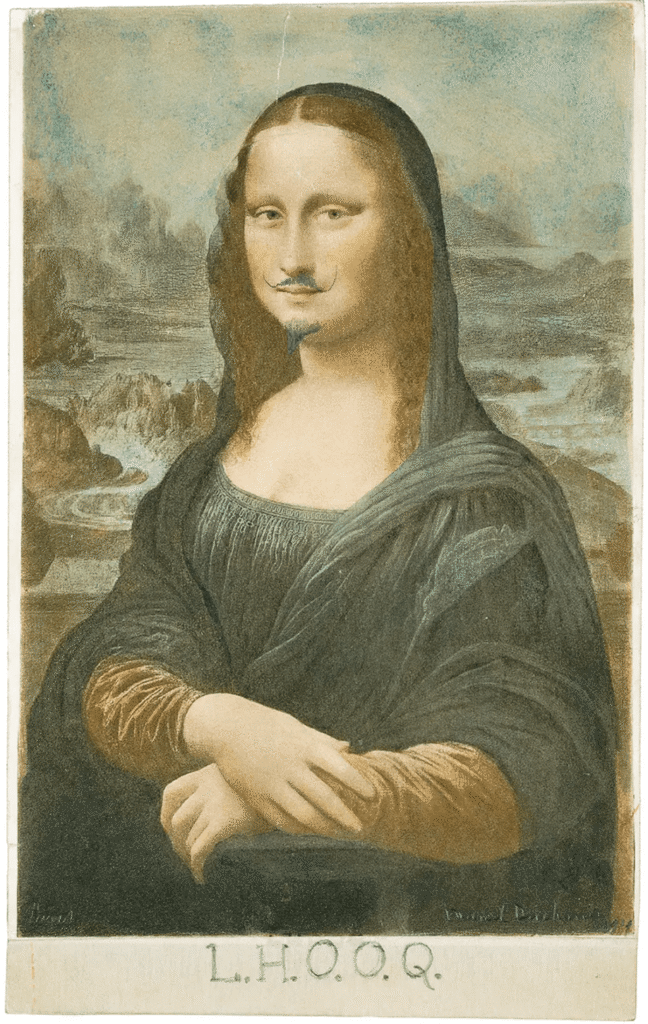



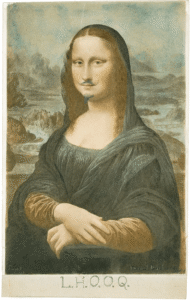
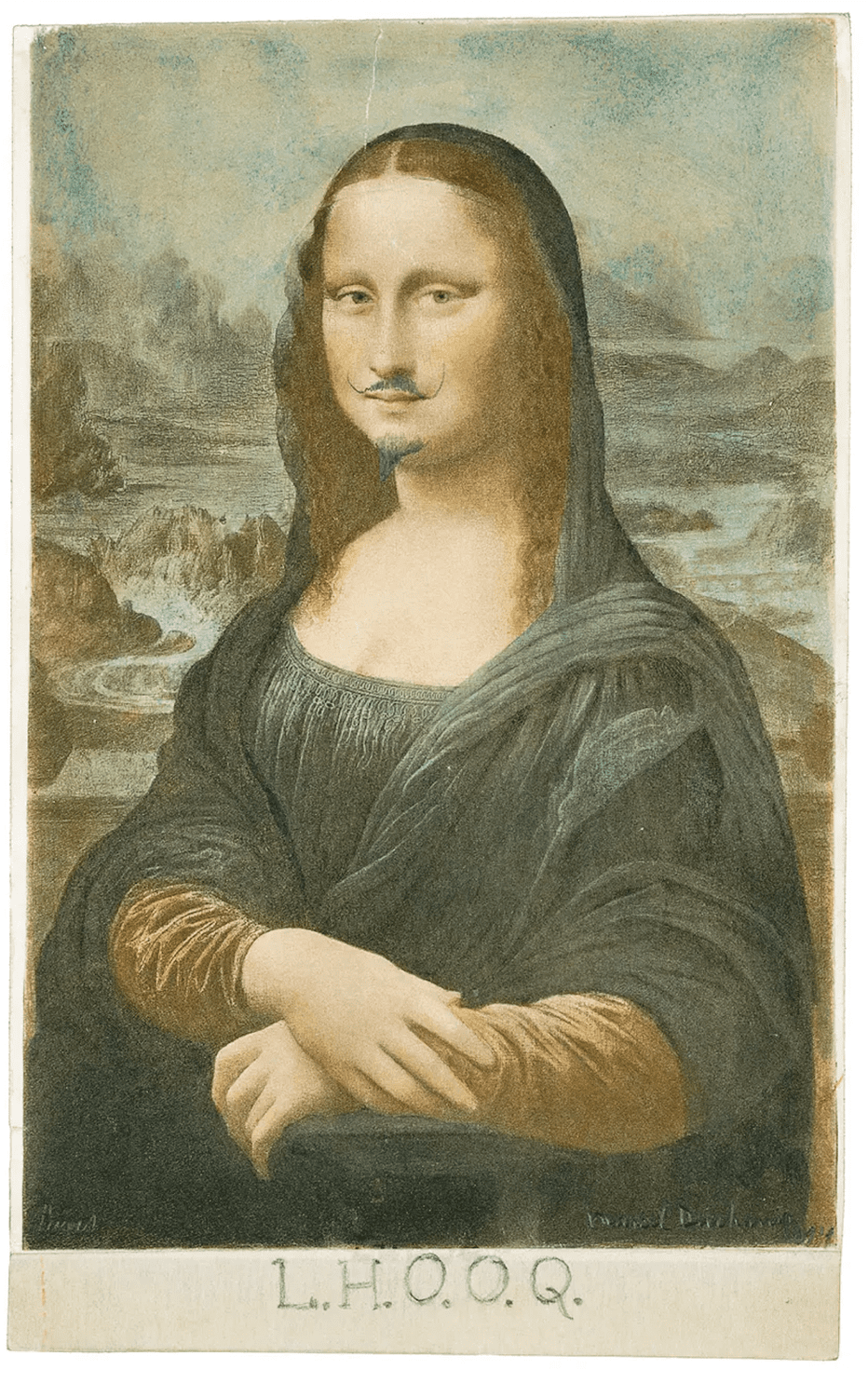
Marcel Duchamp’s "LHOOQ," 1919, in the exhibition "Marcel Duchamp" at The Museum of Modern Art
PaperCity tapped Elaine de Kooning House founder Chris Byrne to sleuth top shows in the global museum world in 2026. Byrne — graphic novelist of Library of Congress-collected The Magician and co-editor of the cult-fave Frank Johnson, Secret Pioneer of American Comics Vol. 1 (Fantagraphics) — casts a wide net, across four continents, to discover 14 destination-worthy exhibitions.
Marcel Duchamp at MoMA, NYC
April 12 – August 22
Incredibly, the ultimate artist influencer Marcel Duchamp hasn’t had a North American retrospective in more than half a century (by contrast, Jasper Johns weighs in with seven surveys, and Andy Warhol tallies four major museum mountings). The previous deep dive into Duchamp’s work opened when Nixon held court in the Oval Office; the year was 1973.
MoMA’s fresh take culls nearly 300 works across six decades — painting, sculpture, film, photography, drawings, and printed matter, including four icons of modernism that set the establishment ablaze a century ago: the artist’s mustached Mona Lisa (LHOOQ, 1919); the world’s first readymade, formed from a bicycle wheel and stool, in 1913; the jaunty cubistic canvas Nude Descending a Staircase, No. 2, 1912; and that infamous urinal signed R. Mutt 1917. Why Duchamp matters: The artist almost single-handedly intuited every 20th century Ism.
Traveling to Philadelphia Museum of Art (October 10, 2026 – January 31, 2027) and Grand Palais, Paris (Spring 2027).
Raphael at The Met, Manhattan
March 29 – June 28
The Allen
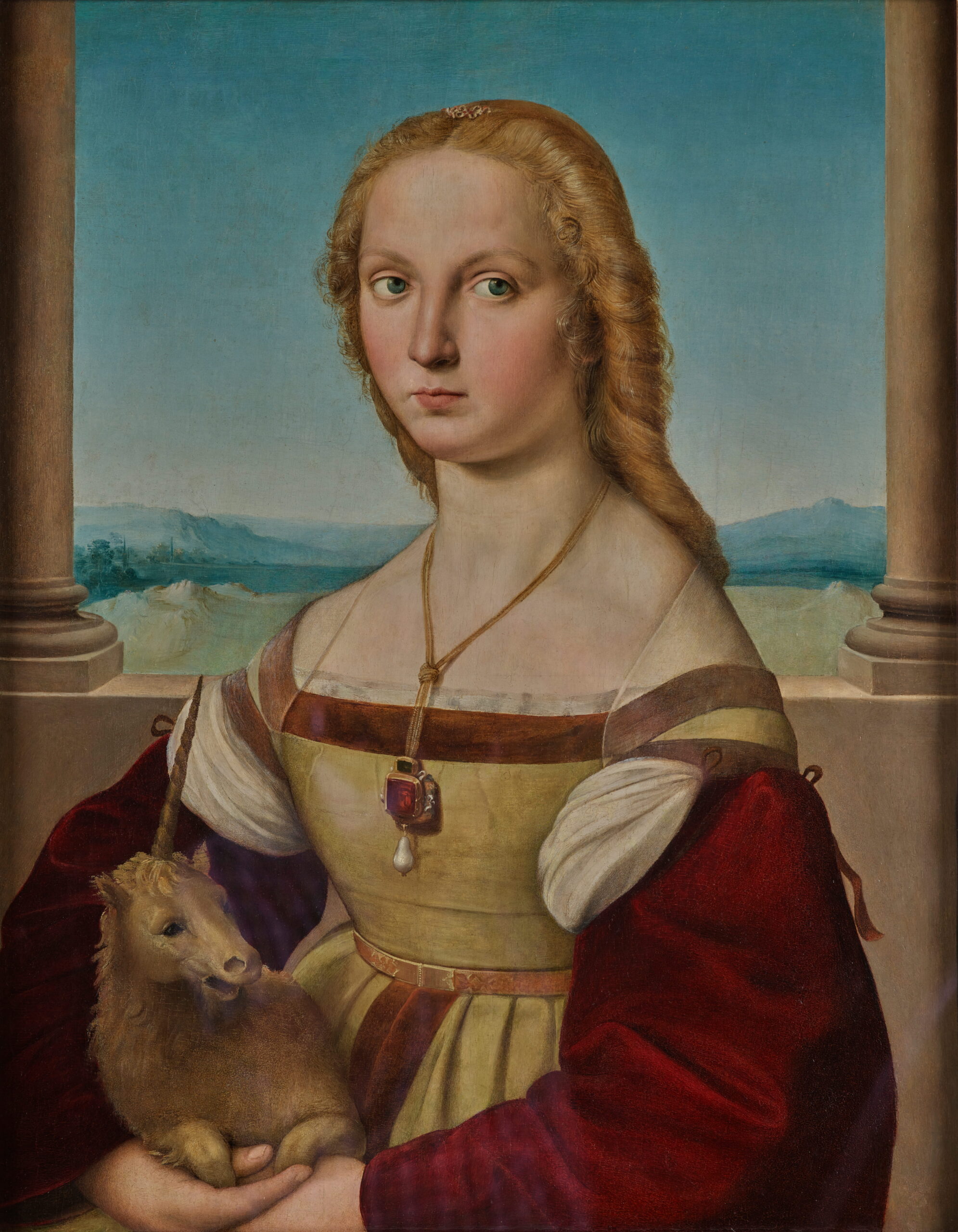
In a 1966 interview, French art historian Pierre Cabanne asked Marcel Duchamp about his preferences in art. Duchamp expressed an affinity for the “medieval primitives” but found artists like Raphael difficult to accept, saying, “One senses that they’ve been put there, and that classes of society have kept them there.” Despite Duchamp’s reservations, the work of Raffaello di Giovanni Santi (1483–1520), a contemporary of Leonardo and Michelangelo, embodies the pinnacle of the Italian Renaissance.
This landmark presentation, “Raphael: Sublime Poetry,” marks the painter’s first ever comprehensive U.S. exhibition; it brims with 200 glorious drawings, paintings, and tapestries gathered from global private and public collections. Organized chronologically, “Sublime Poetry” spans the artist’s origins in Urbino to prolific years in Florence, through his final decade at the papal court in Rome.
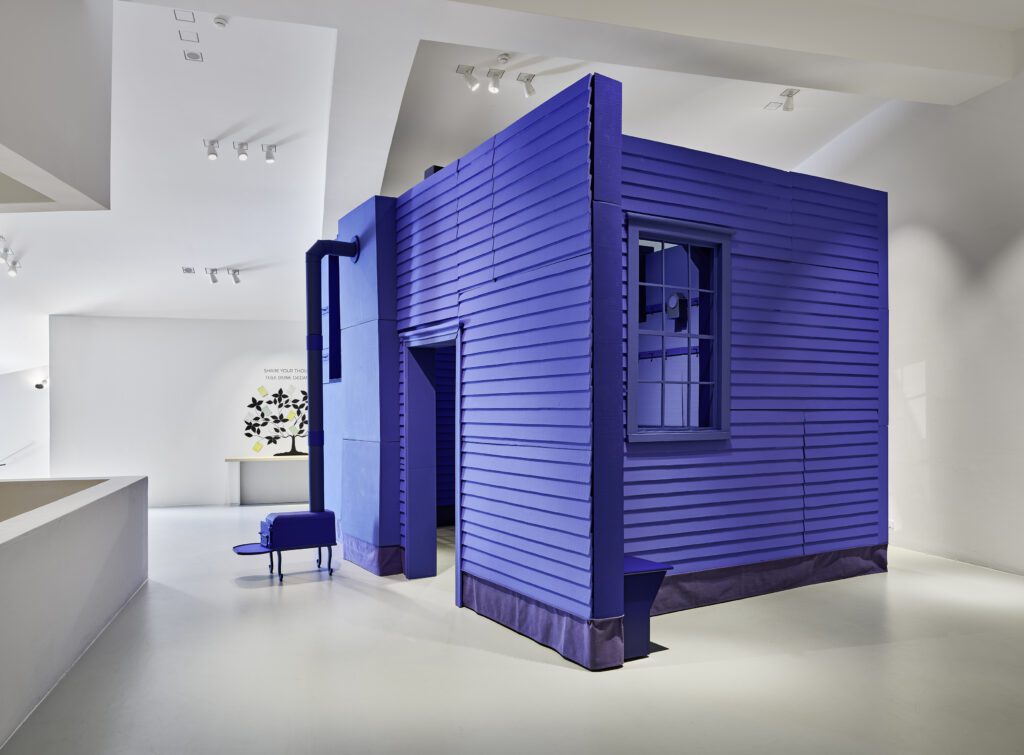
The Shakers, at ICA Philadelphia
January 31 – August 9
Is our looming bicentennial ushering in a new age of minimalism. If so, “A World in the Making: The Shakers” might just be its calling card. This design-focused exhibition co-organized by the Institute of Contemporary Art Philadelphia spans the centuries, exploring the legacy of the Shakers, an ascetic Christian Protestant sect founded in England during the mid-18th century, which arrived on American shores right before the Revolutionary War.
The values of community, labor, and equality defined their monastic approach to architecture and everyday objects, allowing the Shakers to develop a unique visual vocabulary characterized by simplicity and purpose. The exhibition contrasts original Shaker-made pieces — some 150 functional objects dating back as early as 250 years — with contemporary works from seven international talents channeling and challenging the sect’s distinct aesthetic. Marcel approved!

Guerrilla Girls Roar at Getty Center, L.A.
Through April 12
Who knew four decades ago an anonymous band of women in rubber gorilla masks would upend the macho art world. Flash forward: Aligned with the Guerrilla Girls’ 40th anniversary, Getty Center’s “How to Be a Guerrilla Girl” posits an in-depth look at this activist feminist art collective’s brilliantly subservice and extremely effective methodology.
Mining the group’s extensive archive, the exhibition documents renowned satirical public demonstrations, provocative ad campaigns, and rallying cries for equity and fairness for women and artists of color; included are the circa 1989 print bearing the unforgettable headline “Do women have to be naked to get into the Met. Museum? Less than 5 percent of the artists in the Modern Art sections are women, but 85% of the nudes are female.” Bonus: Watch for the Guerrilla Girls latest, a new Getty-commissioned creation unveiling here.
![0013 gg_naked_enlarge[1]](https://www.papercitymag.com/wp-content/uploads/2026/01/0013-gg_naked_enlarge1.jpg)
Nature’s Intelligence at Potter Museum of Art, Melbourne
February 19 – June 6
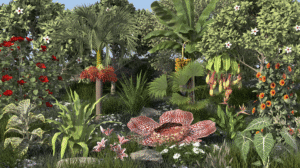
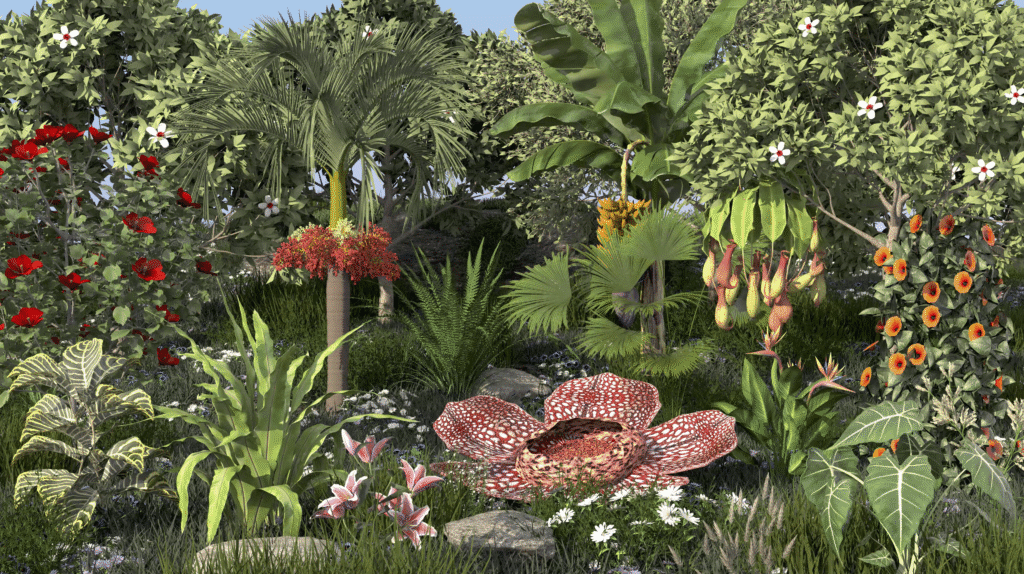
Flora and fauna serve as inspiration for the poetically titled “A Velvet Ant, a Flower, and a Bird: Telling Intelligence Otherwise”; organized by Basel-based curator and Venice Biennale veteran Chus Martínez, this unexpected group show brilliantly probes the concept of intelligence beyond our human perspective. Expect an art-meets-science exploration of the interconnectedness of natural and artificial intelligence within the biosphere, a species-focused look at complex behaviors as well as symbiotic relationships in nature.
In her curatorial statement, Martinez says, “This exhibition can be seen as a garden of knowledge, structured around three familiar figures from nature — a velvet ant, a flower, and a bird. These figures represent a parliament of beings, each carrying symbolic and metaphorical weight that encourage us to reimagine what intelligence means.”
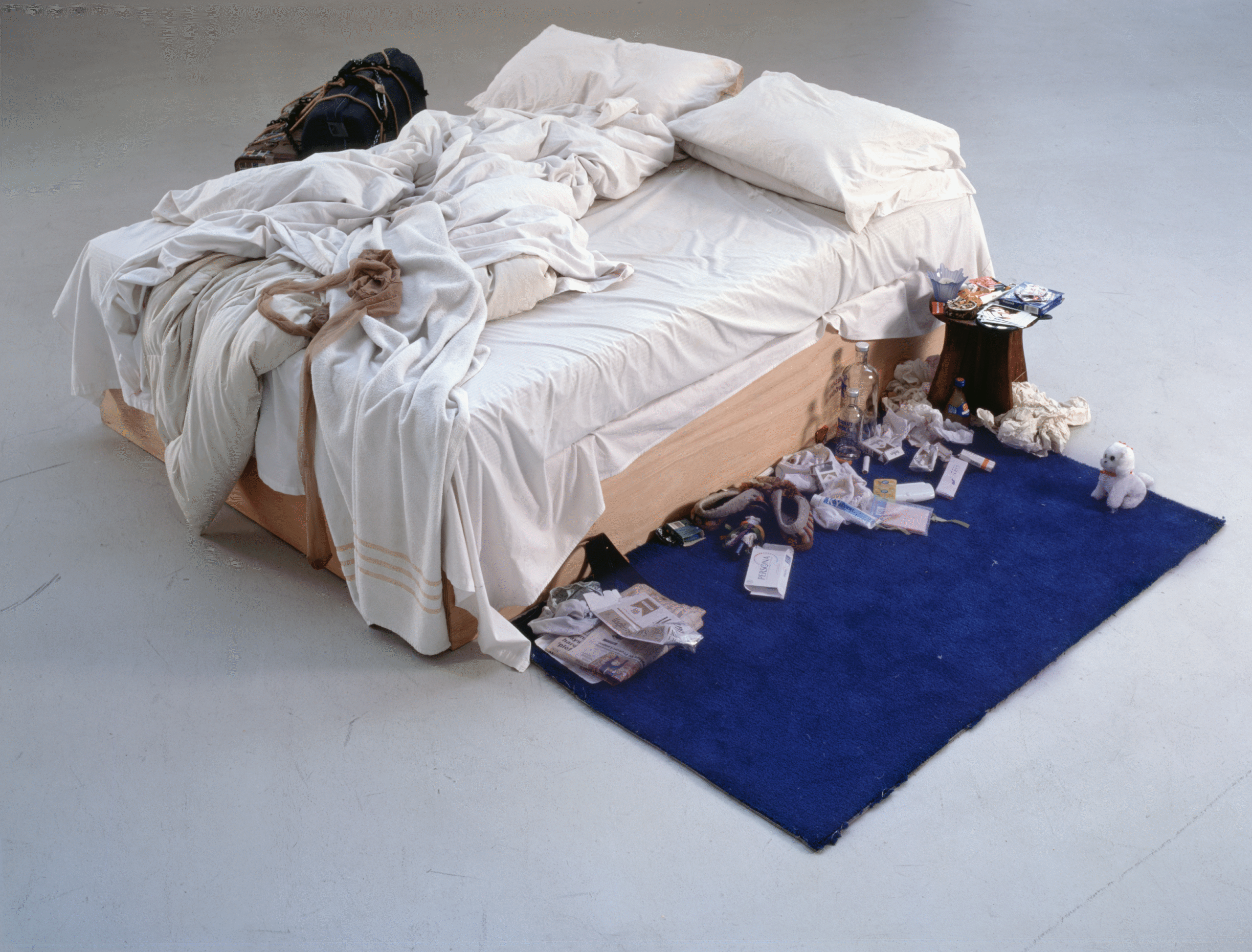
Tracey Emin at Tate Modern, London
February 27 – August 31,
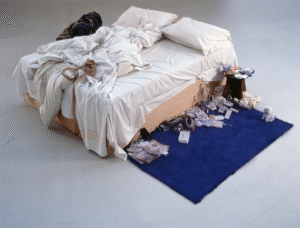
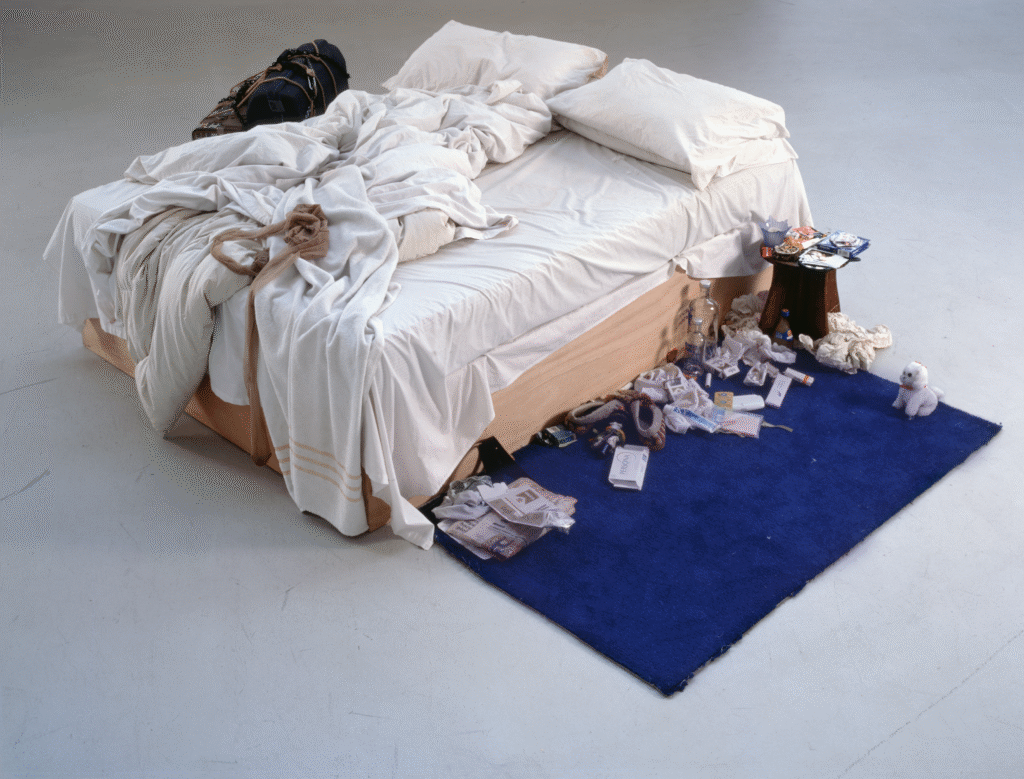
In 1993, Tracey Emin’s installation at London’s White Cube — which displayed shockingly personal items from her life — was titled My Major Retrospective 1963–1993. The future Dame later recounted the self-conscious reasoning: “I thought it would be my one and only exhibition, so I decided to call it My Major Retrospective.” The undisputed Bad (yet brave) Girl of the British scene, Emin next gained widespread attention with her 1998 installation, My Bed, which was nominated for the Turner Prize and sparked intense critical and public debate.
A leading figure among the YBAs, the artist is known for her unfiltered autobiographical approach that confronts themes of loss, trauma, and the female body. Her provocative practice encompasses painting, sculpture, neon, textiles, and installation. This exhibition traces 40 years of artmaking including the infamous My Bed, underscoring Emin’s staunch commitment to channeling personal experiences into unapologetic, fearless self-expression.
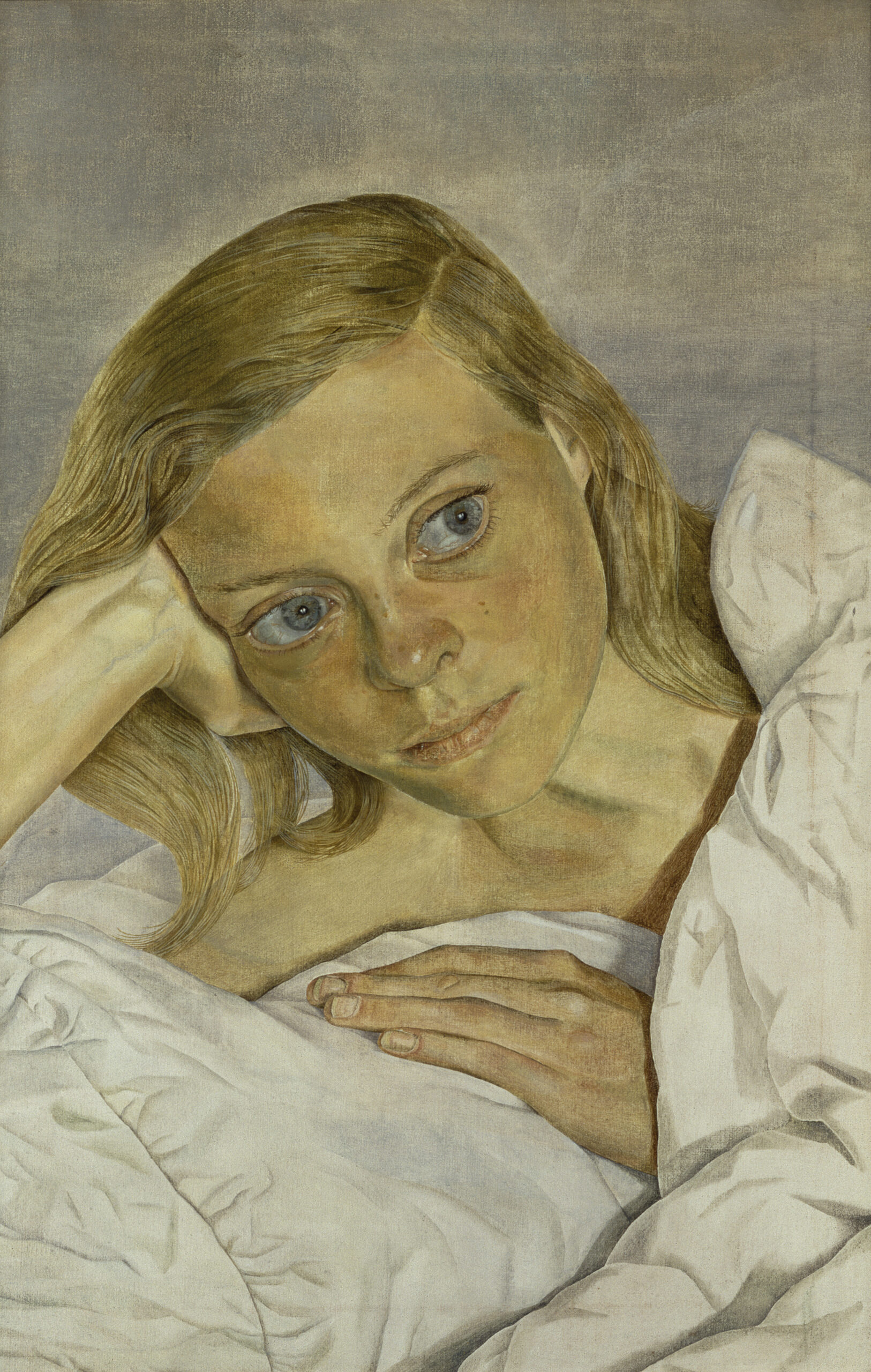
Lucian Freud at National Portrait Gallery, London
February 12 – May 4
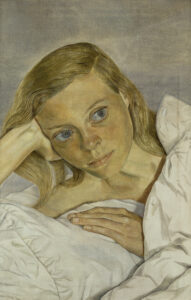
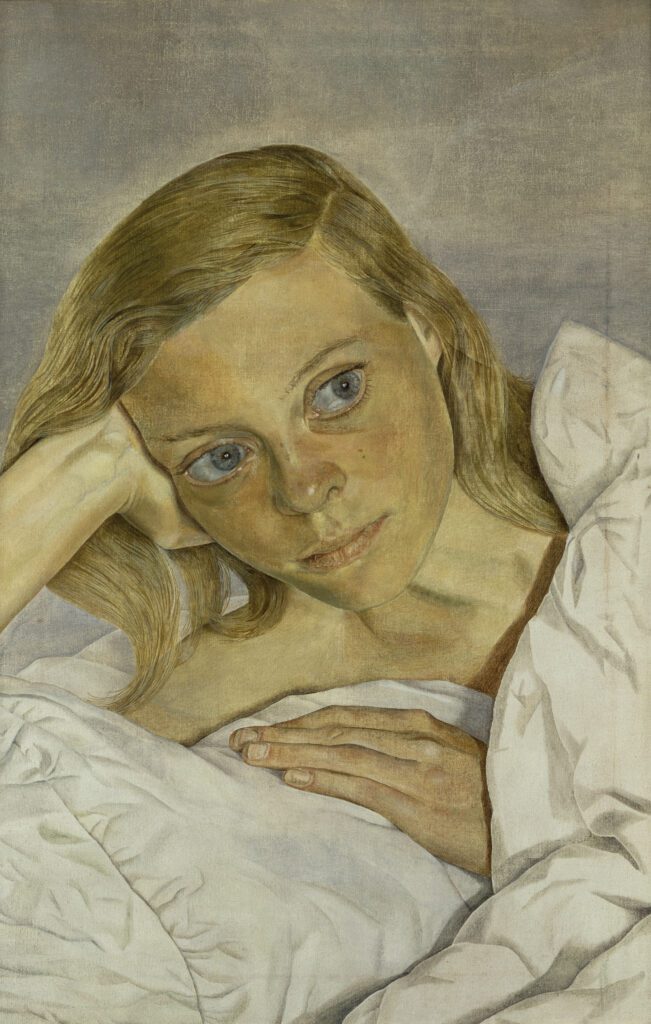
One of the titans of 20th-century portraiture, British artist Lucian Freud is in the limelight in a blockbuster that merits a spring London excursion. The National Portrait Gallery’s “Lucian Freud: Drawing into Painting” serves up a fresh take on the artist’s lifelong, unflinching focus on human face and form, demonstrating his facility as a draftsman in various mediums, including charcoal, graphite, and ink.
Works spanning seven decades are showcased, from childhood drawings of the 1930s to works made in the early 21st century, many culled from Freud’s rich NPG archive boasting sketchbooks, letters, and unfinished drawings. What’s unique — an important selection of paintings reveals the direct relationship between Freud’s works on paper and those on canvas. In late 2008, the artist looked back on his early years stating, “I would have thought I did 200 drawings to every painting in those early days. I very much prided myself on my drawing.”
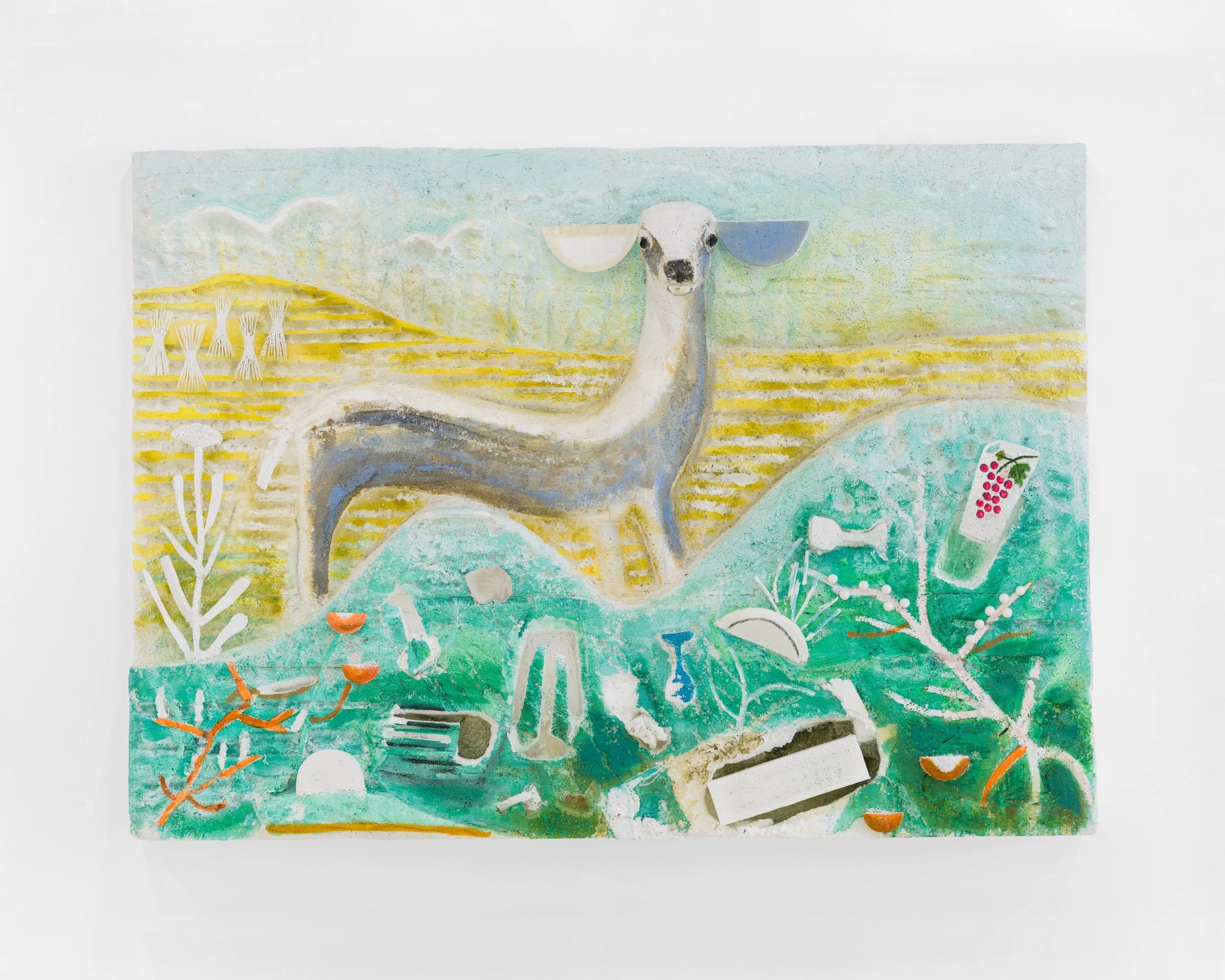
Lin May Saeed at Kunsthalle Bern
March 6 – May 10
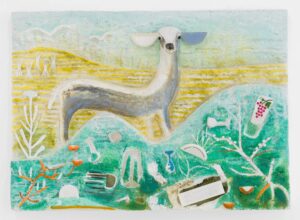
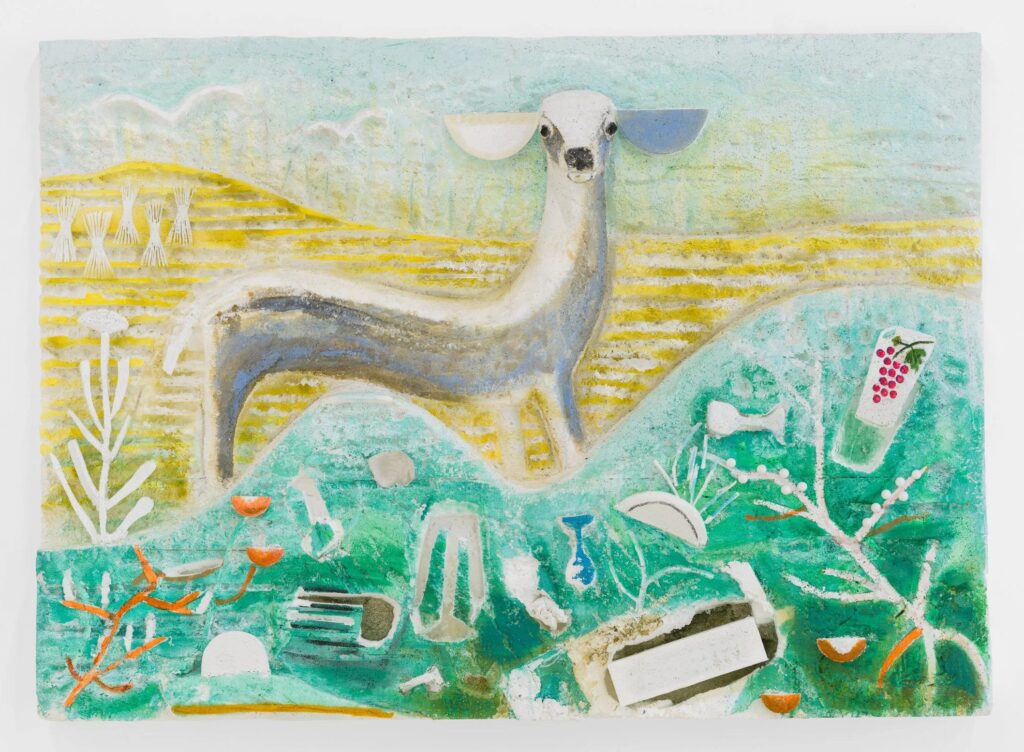
Underknown to U.S. audiences Berlin-based artist Lin May Saeed (1973-2023) was nonetheless renowned for carving out a bold stance with her niche sculptures, often crafted from prosaic materials such as Styrofoam and polystyrene and celebrating diverse species. Rooted in animal rights, interwoven mythologies, and activist narratives, Saeed’s work casts light upon the complex relationship between humans and animals, envisioning a more compassionate coexistence between both. Her career cut short by brain cancer at the age of 50, the artist’s legacy lives on.
In her Art in America obit, Emily Watlington writes, “The Iraqi-German sculptor dedicated her life and her art to advocating for animals: their care, their liberation. With her sculptures, she wanted to give us a new iconography for human-animal relations.”
Lee Bul at M+, Hong Kong
March 14 – August 9
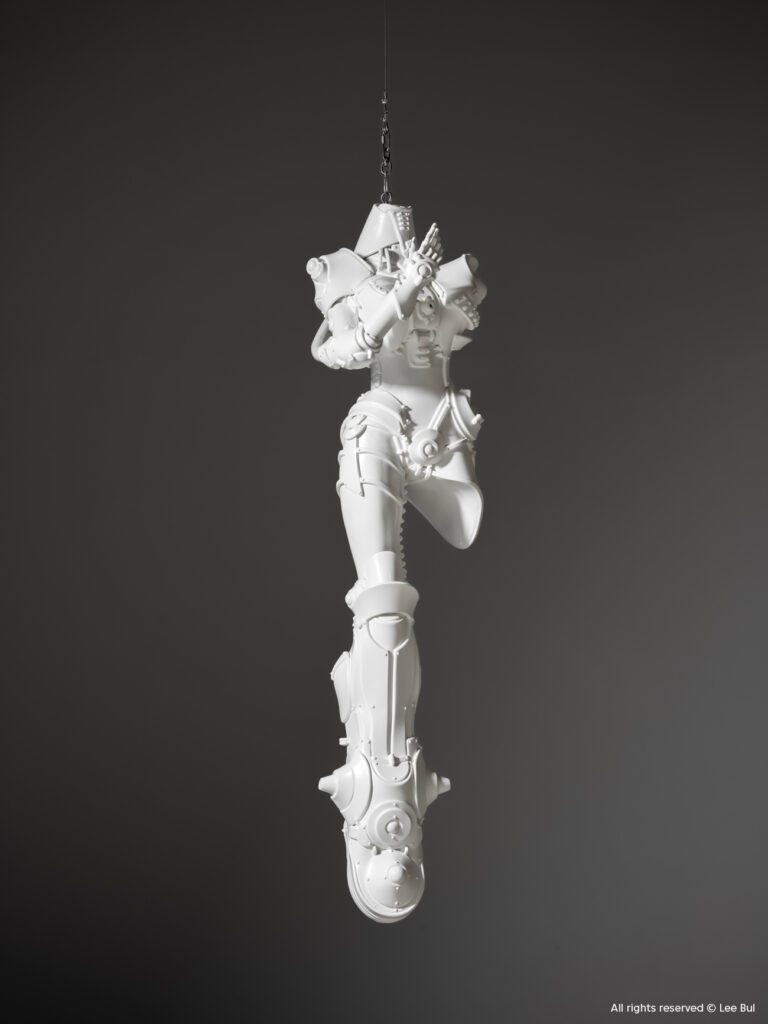
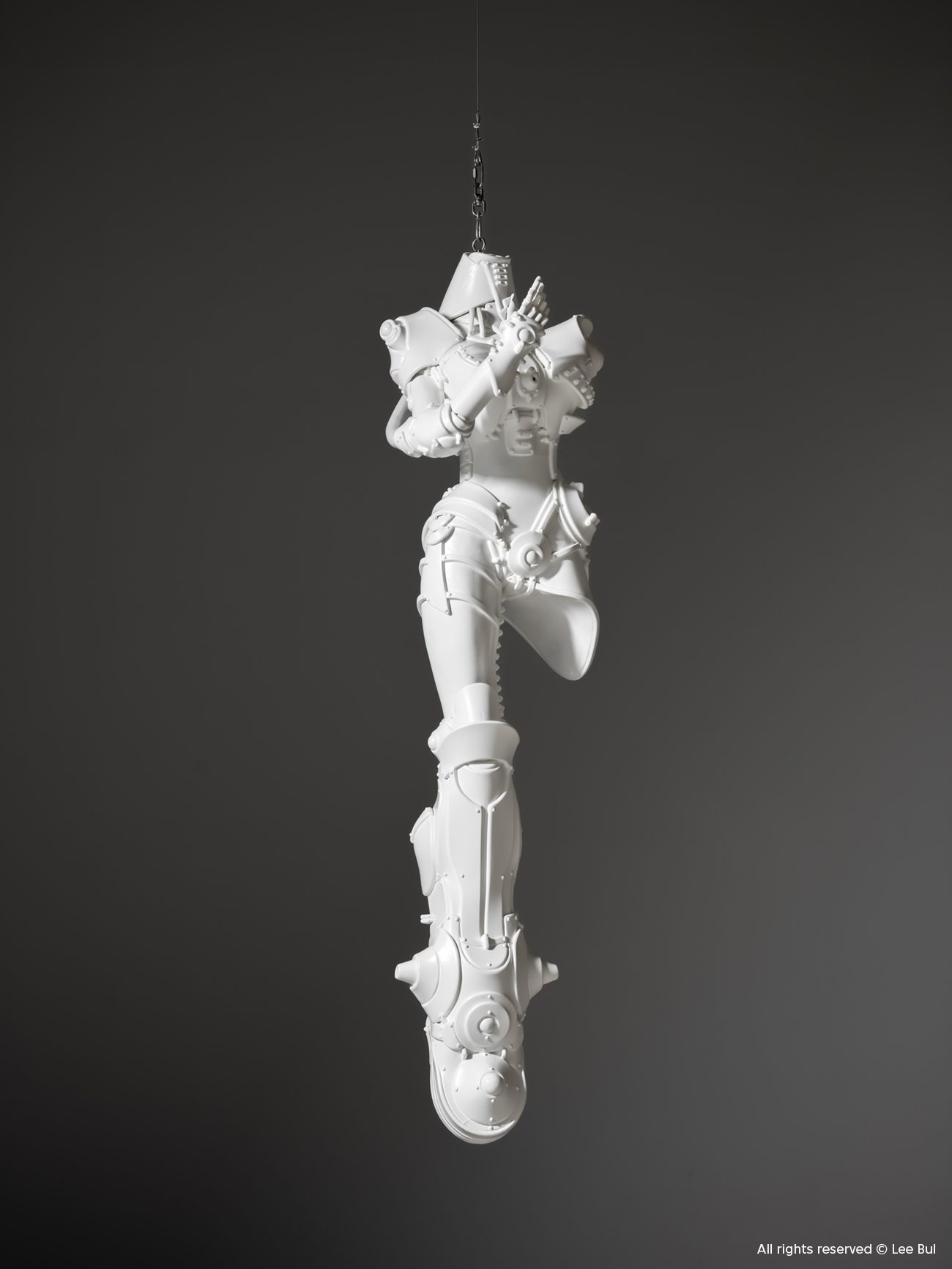
Hong Kong’s outpost of the avant-garde, M+, billed as “Asia’s global museum of contemporary visual culture” is an alluring venue for “Lee Bul: From 1998 to Now.” This comprehensive survey of the prominent South Korean artist’s career arrives after her high-profile commission to place heroic sculpture in niches of The Met’s façade (Long Tail Halo, 2024). M+’s mid-career retrospective pulls back the curtain on Lee’s practice via three distinct sections. Showcased are grand architectural installations alongside the iconic Cyborg and Anagram series from the late 1990s and early 2000s. To offer insight into her process, the show also includes related drawings and maquettes.
The exhibition originally debuted at the Leeum Museum of Art in the artist’s hometown, Seoul, in September 2025 and is scheduled for a multi-year museum tour across Europe and North America following Hong Kong.
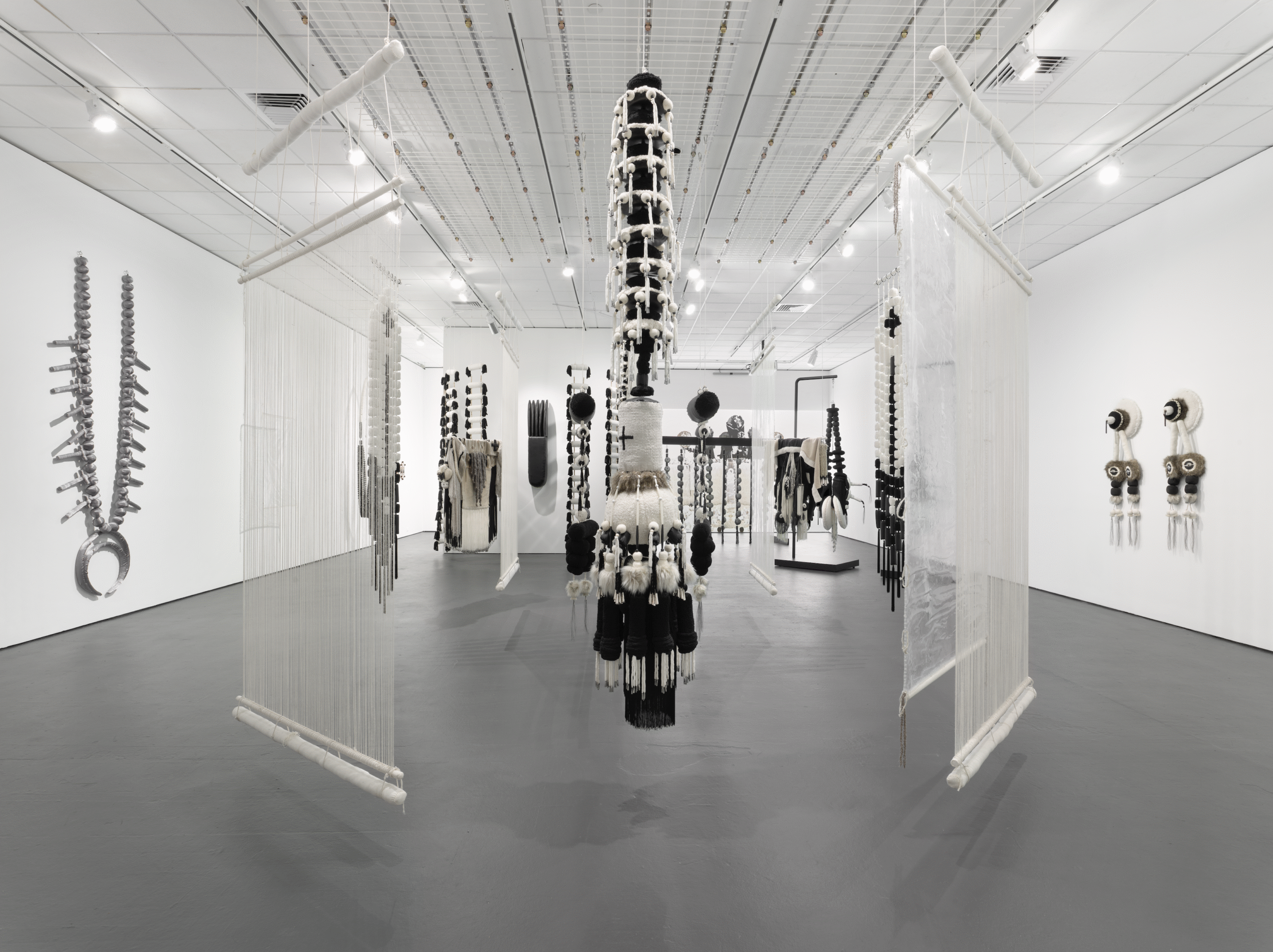
“Eric-Paul Riege: ojo|-|ólǫ́” at Henry Art Gallery, Seattle
March 14 –October 25
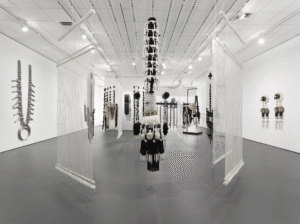
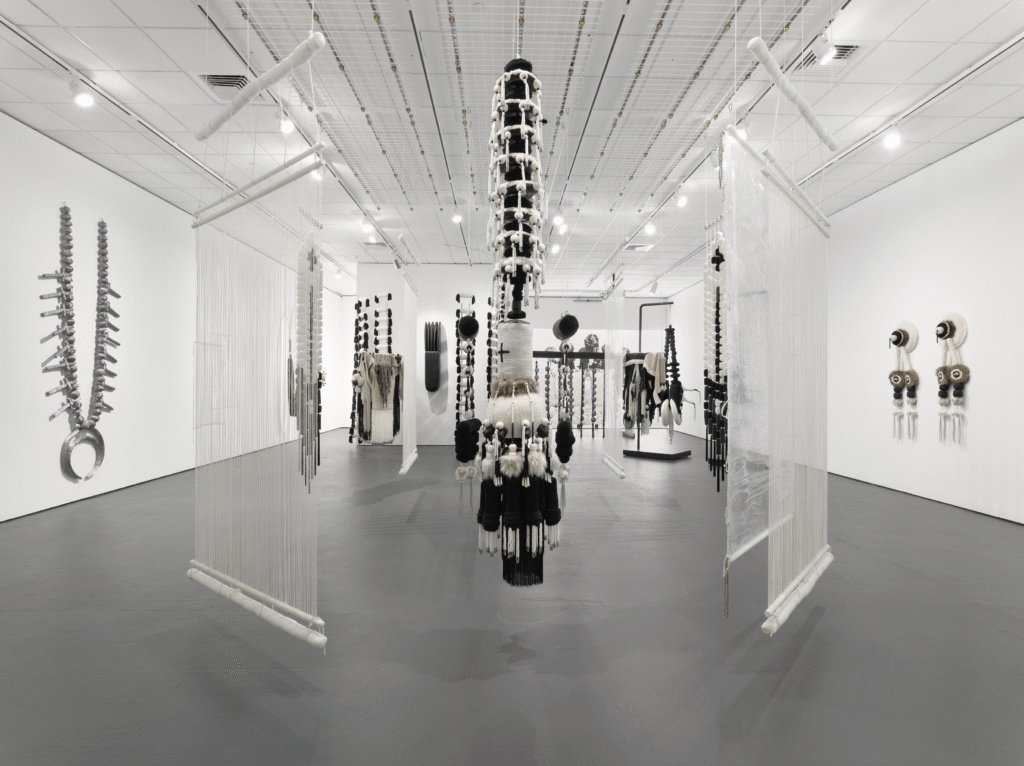
Informed by material research and engagement with the Navajo collections held by Brown University’s Haffenreffer Museum of Anthropology and the University of Washington’s Burke Museum of Natural History and Culture, “ojo|-|ólǫ́” assembles Diné artist Eric-Paul Riege’s work across diverse media in his largest exhibition to date.
This 2025 Joan Mitchell Fellow/rising art star pairs traditional techniques, such as weaving and silversmithing, with contemporary cultural forms, highlighting connections between Diné mythology and the history of Euro-American trading posts in the Navajo Nation, the largest Native American group in the U.S. today. As an extension of Riege’s collage-based work, this University of Washington exhibition places objects from the Burke Museum’s permanent collection in dialogue with jewelry, regalia, and ephemera plucked from the artist’s source imagery, sketches, and own domestic space.
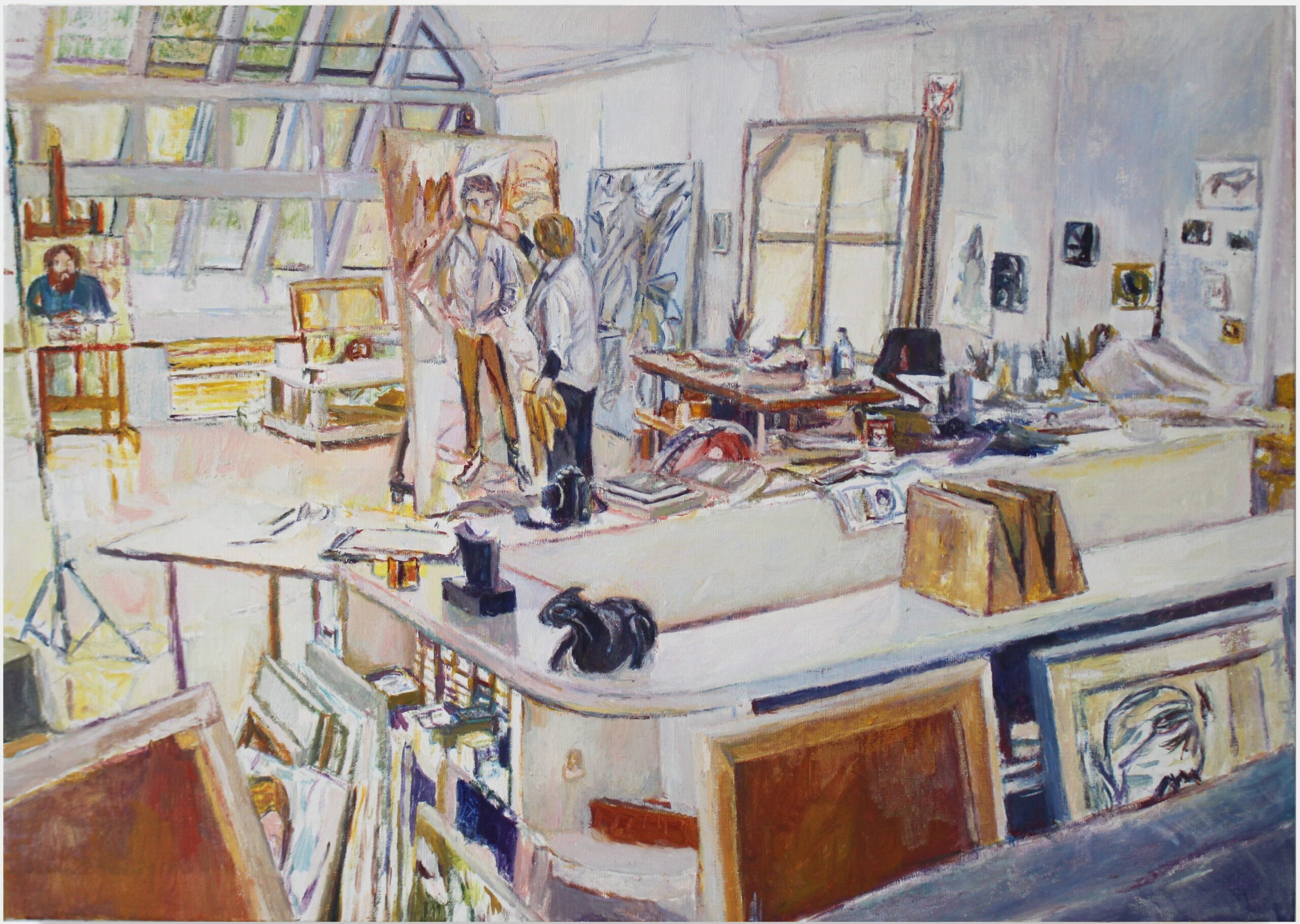
Keith Mayerson Takes on Elaine de Kooning and Friends at Pollock-Krasner House and Study Center, East Hampton
April 16 – June 14
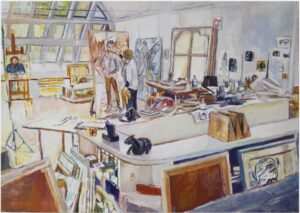
In the summer of 2019, Keith Mayerson immersed himself in the former home and studio of Elaine de Kooning in East Hampton, channeling her spirit during an artist residency. [Note: The author is the founder of the Elaine de Kooning House residency]. This experience inspired a new chapter in his long-running, non-linear narrative series, My American Dream, which broadly captures American culture through its diverse landscapes, politics, and art history.
“My American Dream: A Glimpse of Elaine de Kooning and Her Circle” includes paintings of de Kooning in her studio and Hans Namuth’s famous depictions of Jackson Pollock and Lee Krasner, as well as plein air paintings of the Pollock-Krasner property. The artist sought to “pay tribute to these great masters of art, most of all the women,” and memorialize their history through his work.
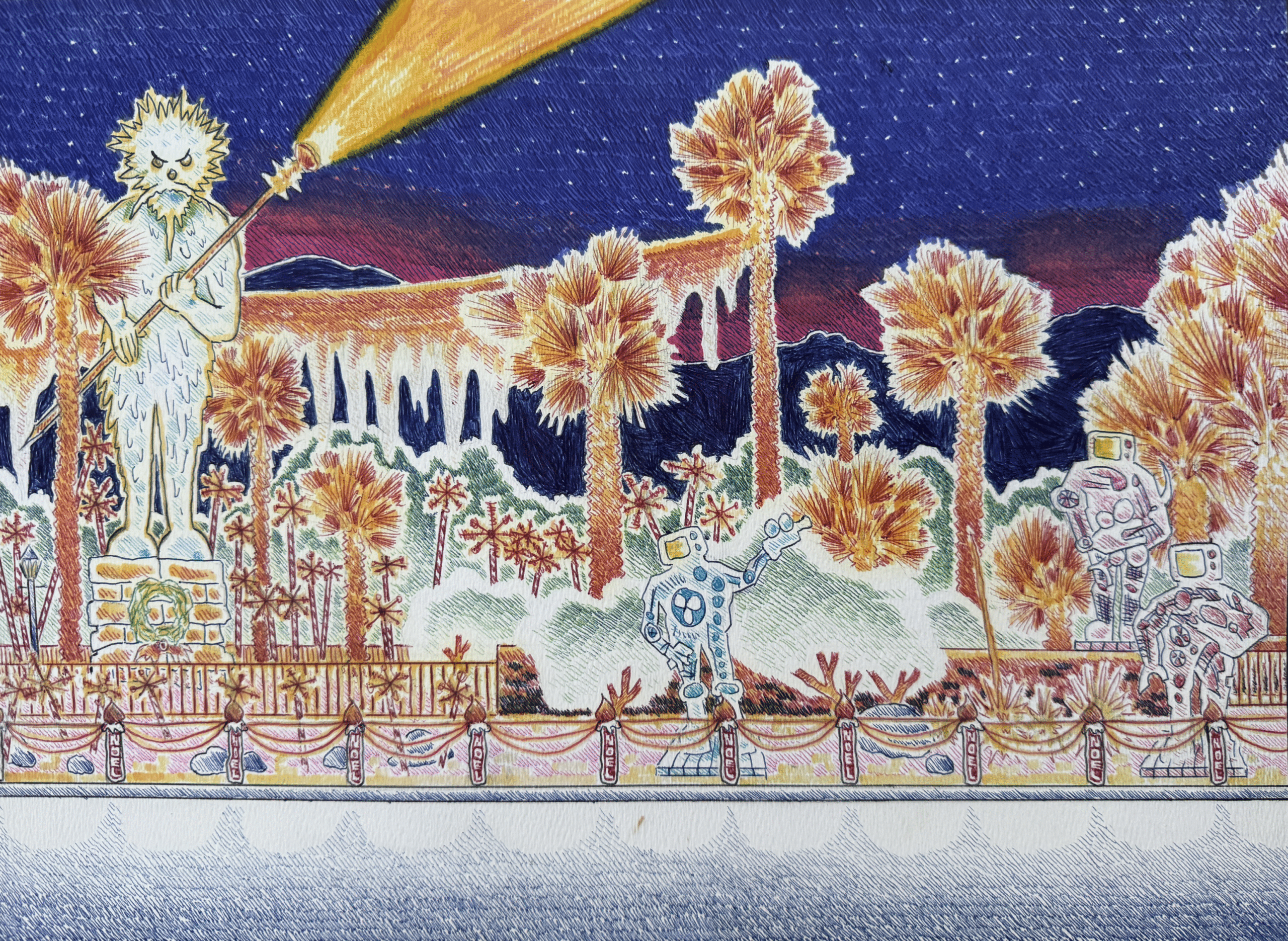
Fantastic Realities at American Visionary Art Museum, Baltimore
Through September 6
The American Visionary Art Museum (AVAM) celebrates its 30th anniversary with the year-long exhibition “Fantastic Realities: Truth Stranger Than Fiction” stocked with a cornucopia of some 130 artworks. The exhibit features vibrant, otherworldly paintings and creations that reveal profound truths about our world, often offering insights beyond ordinary perceptions. Through these vividly imagined universes, viewers can explore both the enchanted and the absurd, ultimately bringing us closer to our shared reality.
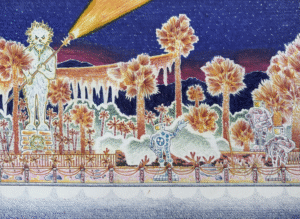
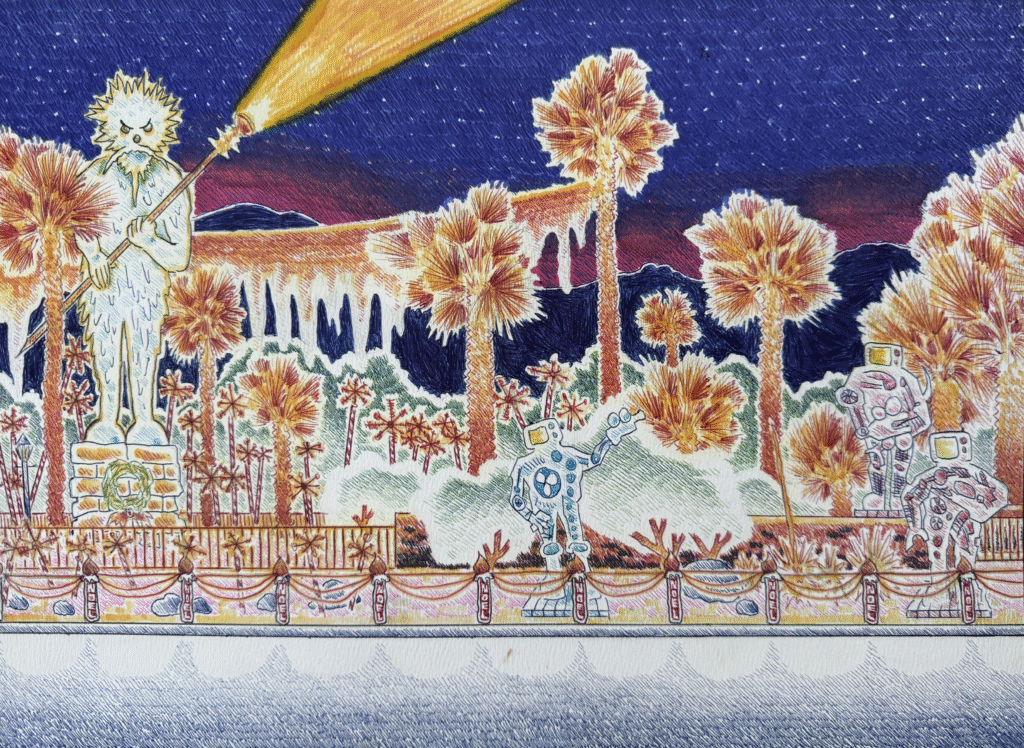
Of note: The show stars Kenny Irwin Jr.’s 12-foot panoramic drawing, Annual Art & Light Display Futuristic Vision, 1998, a depiction of his ongoing, obsessive, yet acclaimed site-specific sculpture installation, RoboLights, located in Palm Springs, California.
Possible Worlds at Syracuse University Art Museum
January 20 – May 9
Organized by Daniel Fuller, an alum and former curator at Atlanta Contemporary, this gem of an exhibition commemorates the 20th anniversary of the Wynn Newhouse Award, a prize established to honor excellence in contemporary art by artists with disabilities. By including a selected group of past recipients, “Possible Worlds” provides a dynamic exploration of how artists navigate both the art world and society at large, creating a portrait of the diversity of aesthetics and narratives the award has championed over two decades.
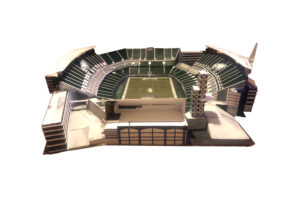
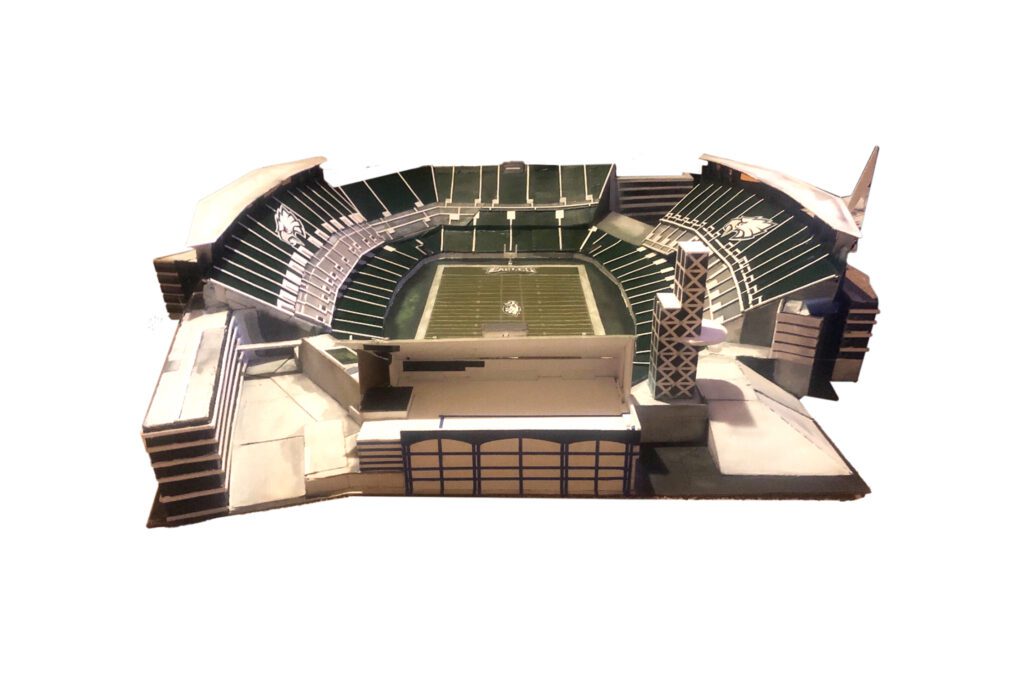
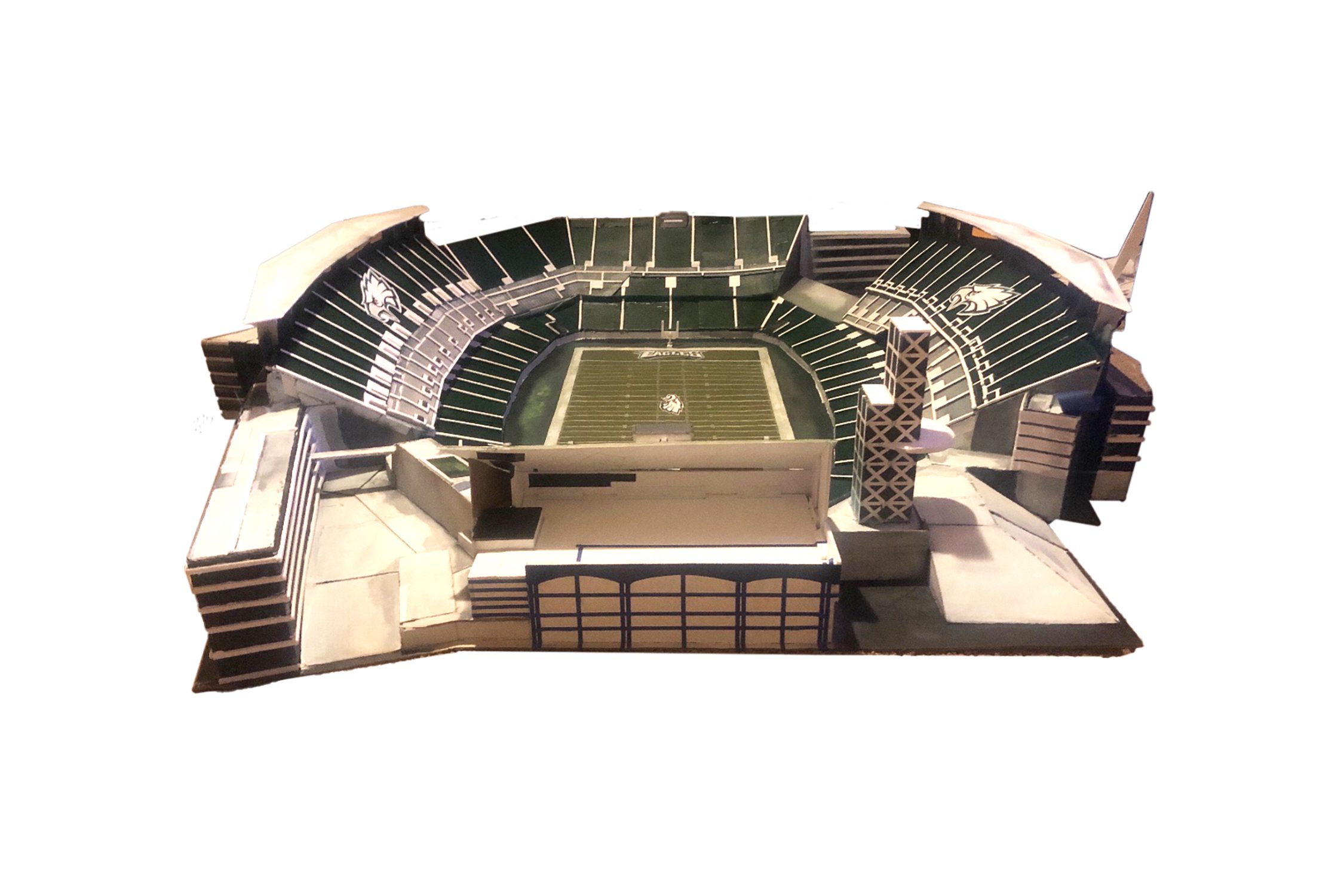
One highlight —Philadelphia-based Kambel Smith’s sculpture Lincoln Financial Field, 2019, an uncanny to-scale rendition on the of the Eagles’ stadium, conjured in cardboard, presented directly after its inclusion in the American Visionary Art Museum’s 2024-2025 mega-exhibition, “Good Sports: The Wisdom & Fun of Fair Play.”
Theresa Hak Kyung Cha at Berkeley Art Museum and Pacific Film Archive
January 24 –April 19
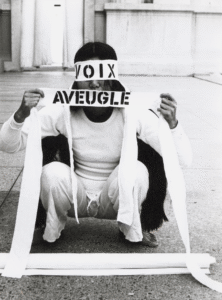
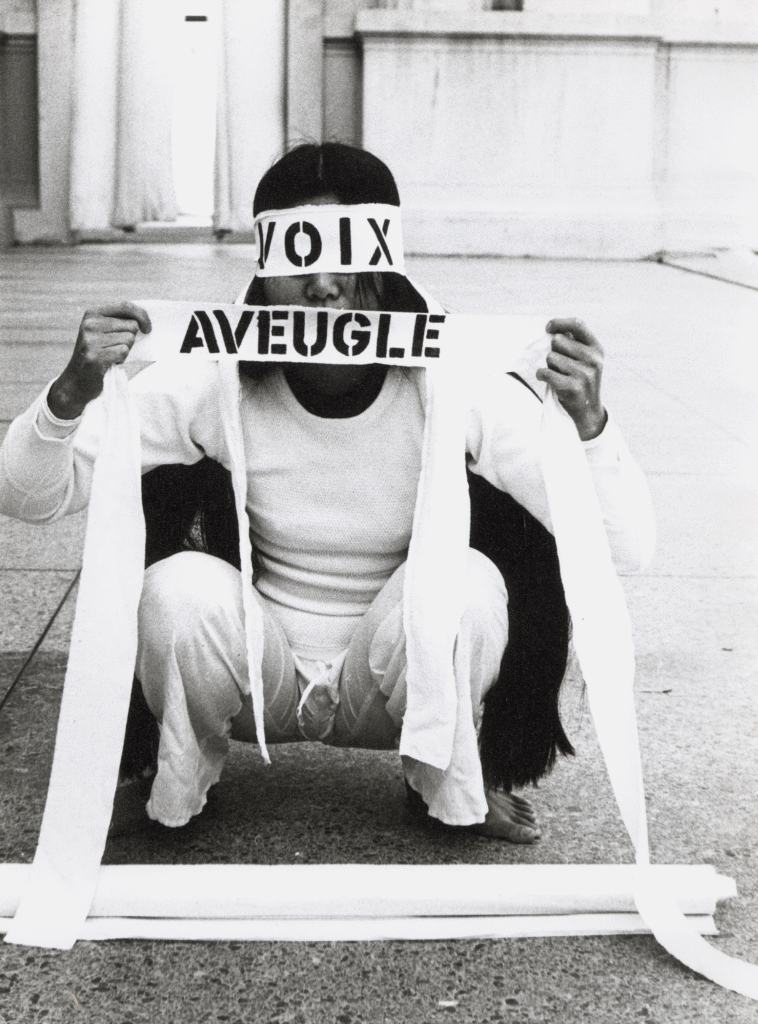
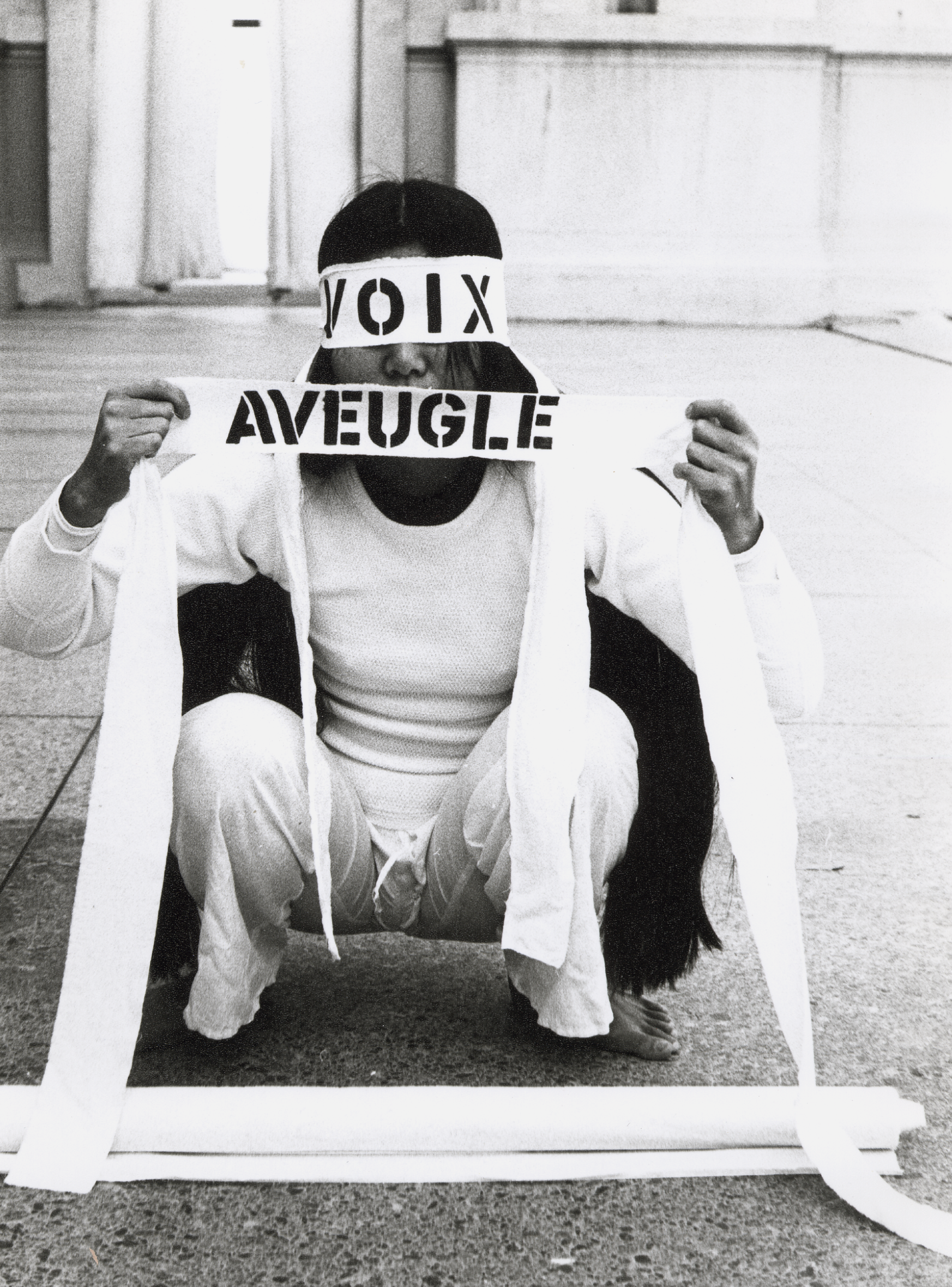
“Theresa Hak Kyung Cha: Multiple Offerings” introduces a new generation to this late Korean-American talent (1951 – 1982), a groundbreaker asserting identity and the voice of the immigrant.
While best known for her influential 1982 feminist novel Dictée — Cha was murdered two months after its publication — the exhibition assembles more than 100 multimedia works and archival materials, displayed alongside selected loans from fellow artists. The show identifies the inventive, playful, and meditative process of Cha’s visionary interdisciplinary and conceptual practice — including video, performance, and text-based media — while situating her contributions within a context of influences and subsequent generations of artists.
Additional reporting by Catherine D. Anspon.





_md.jpg)
_md.jpeg)