Two Provocative Paintings of Beheadings Create a Duel Scene at MFAH — Gentileschi and Wiley Both Tackle Judith
Two Artists Centuries Apart Are Inspired by an Ancient Legend Of Women Power
By Ericka Schiche //

Italian Baroque artist Artemisia Gentileschi and 21st century portraitist Kehinde Wiley — with Wiley famous for his acclaimed portrait of President Obama — both explored the captivating story of Judith in paintings. The exhibit “Portrait of Courage: Gentileschi, Wiley and the Story of Judith” presents the two dramatic paintings together at the Museum of Fine Arts, Houston and is on view through this Sunday, April 16.
An apocryphal legend, the story of Judith surreptitiously defeating Assyrian general Holofernes speaks to ascribed gender roles. It also addresses power differentials existing between men and women. Hailing from the Jewish town of Bethulia, Judith saved Bethulia from destruction at the hands of Holofernes. A Jewish widow, she slayed a drunk sleeping Holofernes with his own sword, decapitating him. This act thwarted his plan to attack the town’s residents.
As a result, Judith functions as both leader and quintessential heroine, much like Artemisia Gentileschi herself.
A 17th Century Baroque painter, Gentileschi’s works survived four centuries, wars, obscurity and an explosion in Beirut. A feminist before the term’s coinage, Gentileschi overcame numerous obstacles and tragic moments in her lifetime. She was raped at a young age by landscape painter Agostino Tassi, who was eventually convicted. She endured torture and humiliation during the trial.
Later, several of her children died untimely deaths. Yet within her art, she championed strong liberated women who challenged artistic conventions.
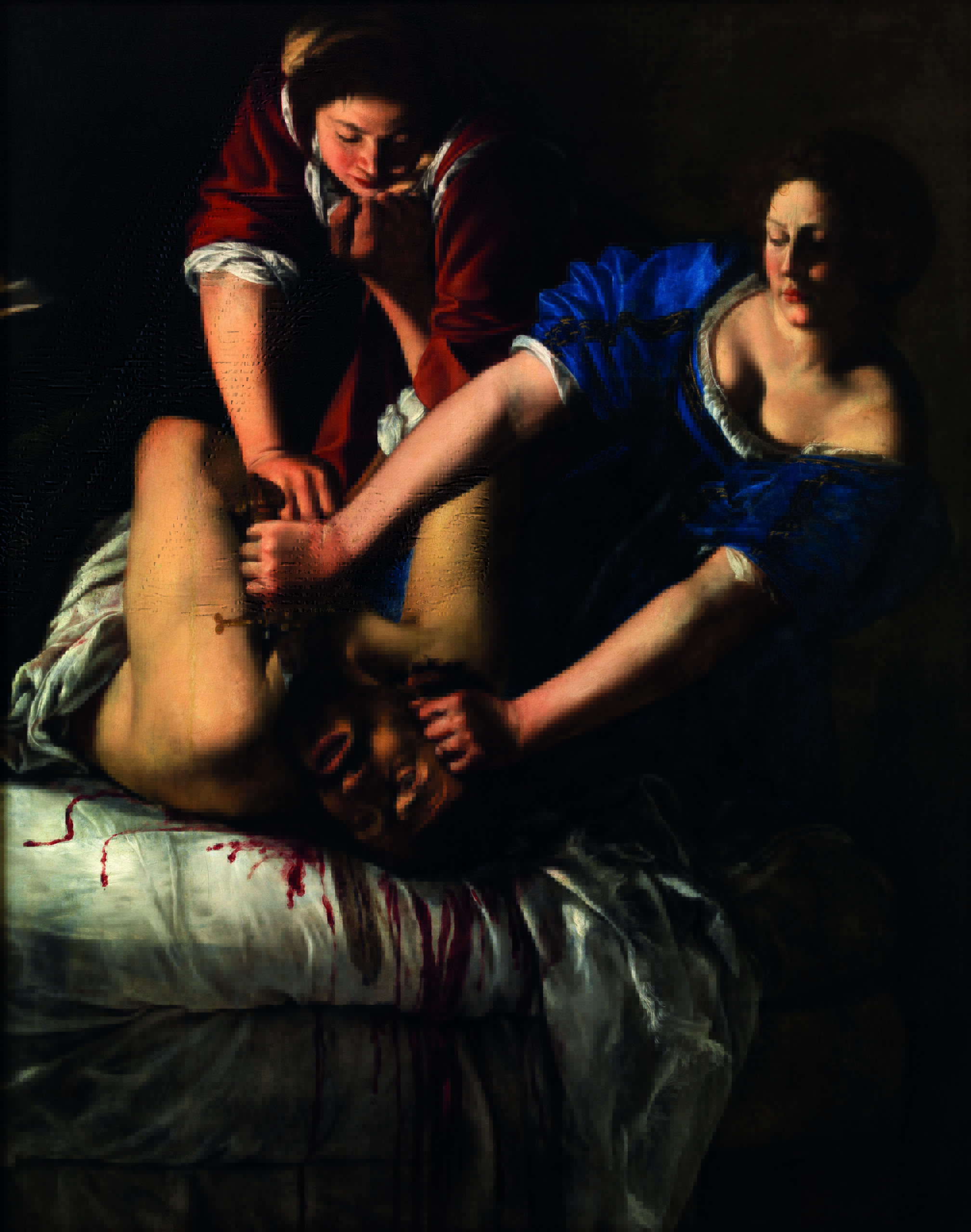
Establishing theatricality, Gentileschi, like Caravaggio, employed Baroque aesthetic elements like chiaroscuro and tenebrism to capture interplay between darkness and light. Although not adept at reading or writing, she was a cultured woman who knew Galileo and referenced Ovid’s Metamorphoses in letters and artwork. Gentileschi’s Judith and Holofernes (circa 1612 to 1617) highlights a woman’s agency, perseverance and determination. Although the scene is jarring and grotesque, the violence displayed is not gratuitous.
SHOP


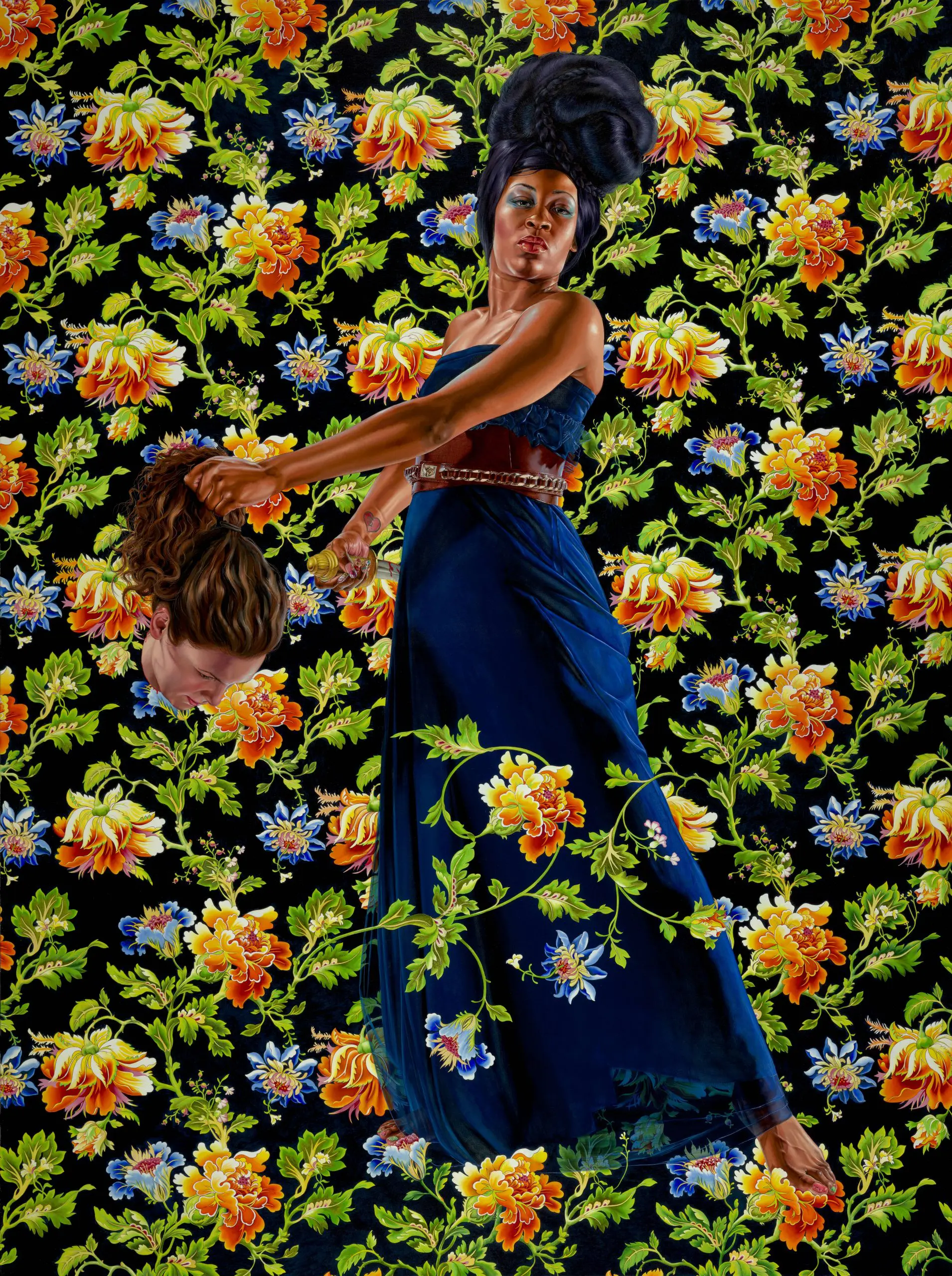
Kehinde Wiley’s version of Judith and Holofernes reflects an artistic-sartorial collaboration between Wiley and then Givenchy designer Riccardo Tisci. Inspired by Giovanni Baglione’s painting Judith and the Head of Holofernes (circa 1608), Wiley’s painting makes a dramatic post facto statement. Wiley’s Judith and Holofernes (2012) painting debuted in his “An Economy of Grace” (2012) solo show at Sean Kelly Gallery in New York City.
Wiley’s reinterpretation of the iconic Judith legend turns gender upside down. His version features a Black woman protagonist wearing a blue Tisci-designed Givenchy gown. In this controversial painting, Judith holds the head of a white woman.
The two paintings — placed on opposing walls rather than juxtaposed — create a deep artistic dialogue. The possibilities for conversation around gender, race, feminism, a woman’s agency, violence and even geopolitics are endless.
“Portrait of Courage: Gentileschi, Wiley and the Story of Judith” is on view at MFAH through this Sunday, April 16. Learn more here.
Trending
- Must-Have Fashion Accessories For Houston’s Fall Social Season — When the Party Demands Dressing To Impress
- Our 6 Most Anticipated New Books of Fall — A Big Little Lies Sequel, a Texas Author’s Latest Memoir, and More Must-Reads
- Boots & Bubbles Announces Late Fall Opening, Emilia’s To Host Clase Azul Tequila Dinner, and More Fort Worth Restaurant News
- Golf Carts, Tabletop Wows & Mahjong Mania Make This Woodlands Night Anything But an Ordinary Ball — The Chairman’s Invitational Keeps It Country Club Chic
- A Tuscan Estate Tucked in Dallas’ Old Preston Hollow Hits the Market for $10.9 Million






















_md.jpg)





_md.jpg)





_md.jpg)