Masterpieces From a Legendary Collector Tempt Art Lovers In Houston — Picasso, Klee and Matisse Through the Eyes of Heinz Berggruen
A German Champion For Artistic Geniuses
By Leslie Loddeke //
A blockbuster new exhibition at the Museum of Fine Arts, Houston tempts art lovers with nearly 100 works from luminaries of the postwar European avant-garde that drew the cognoscenti to a special gallery in Paris. Picasso-Klee-Matisse: Masterpieces from the Museum Berggruen” is anything but just another art show.
Houstonians are the beneficiaries of a highly discerning collector’s eye in this 20th century exhibition that spans the careers of Pablo Picasso and Paul Klee, as well as works from other stellar names. Including Henri Matisse and Alberto Giacometti.
The MFAH show centers around the colorful life of gallerist and collector Heinz Berggruen (1914 to 2007), who started his career as a journalist writing about culture and art. Berggruen’s passion for collecting grew as a gallerist to include relationships with artists like Picasso in post-World War II Paris. One can only imagine the stimulating conversations at that pivotal time and place among art connoisseurs in the Berggruen & Cie gallery at 70 rue de l’Universite.
The masterpieces currently showing in the MFAH Beck Building derive from the collection now housed in the Museum Berggruen in Berlin-Charlottenburg, which has been closed for renovation since late 2022. During this time, its collection has been touring internationally. Paris’ Musee de l’Orangerie displayed the collection in late 2024/early 2025 in a show that Forbes dubbed a “blockbuster.”
“Later I came to feel that my gallery was only a pretext to enlarge my collection,” Berggruen once memorably said. “Little by little, I became my best customer.”
Masters Of New Perspectives
The collection’s first United States stop offers Houstonians the opportunity to view a large selection of modern artworks against a contrasting color scheme. For example, a soft pastel interior scene is set against a bold primary color such as red, yellow or blue, offering a different point of view. That’s a key trait of each artist. A propensity to move the eye to create a new perspective, often by a sharp change from the prevailing style.
Baobab Classique Scented Candles


Picasso and his contemporary Georges Braque introduced the revolutionary movement of Cubism, a theme which runs through many of the art works in this exhibition, encompassing pieces collected by Berggruen from the 1940s through 1990s.
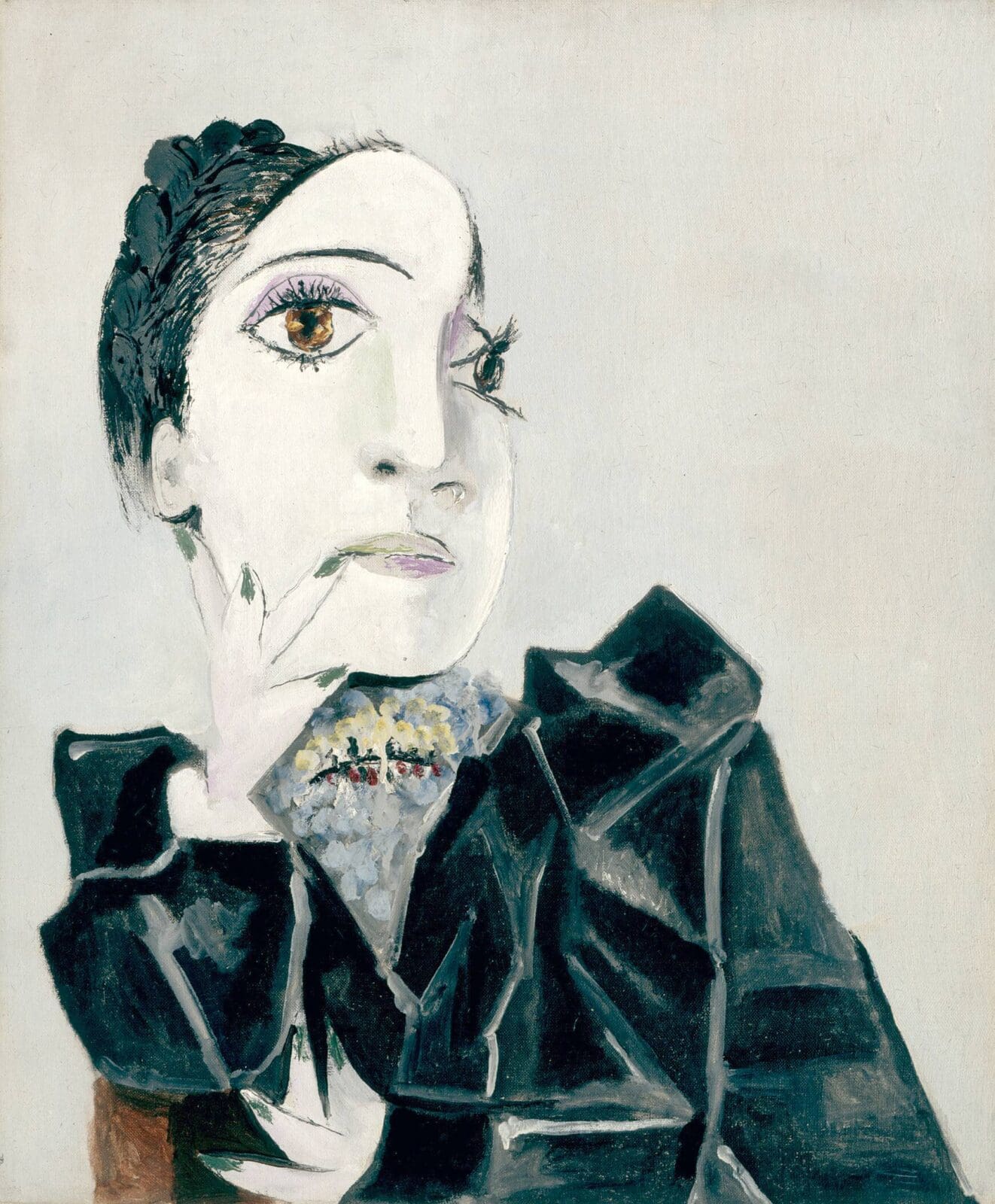
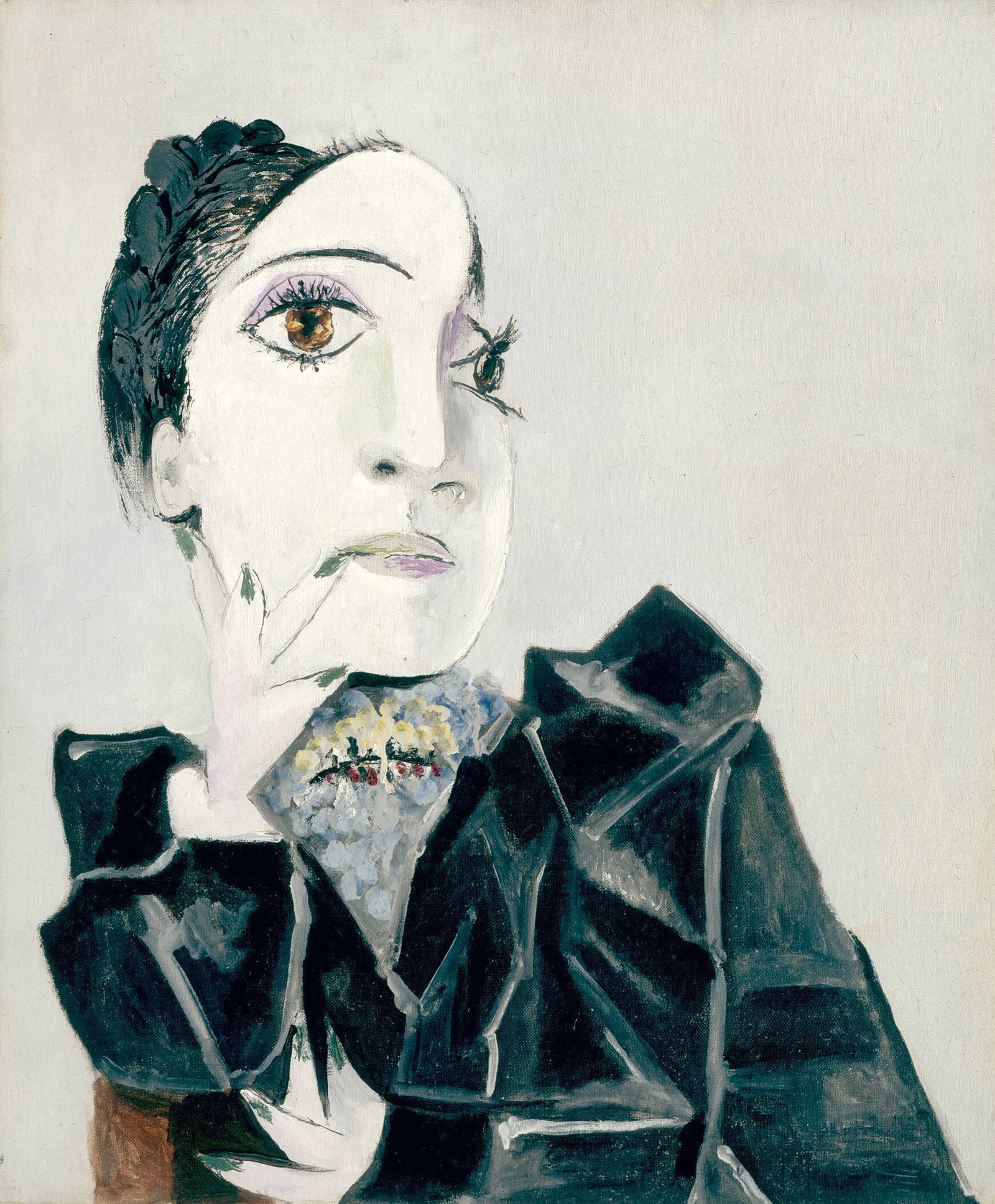
Picasso often shifted the observer’s perspective with an unsettling, double-faced or disjointed figure. Note the Cubist distortion of the face of his longtime lover “Dora Maar with Green Fingernails” (1936.) On the same wall is a photo of Maar in profile, looking pensive, seated near one of Picasso’s many portraits of her hanging above a fireplace. While her role as muse to an art superstar is well known today, Dora Maar was recognized in her lifetime as a successful, innovative photographer and painter.
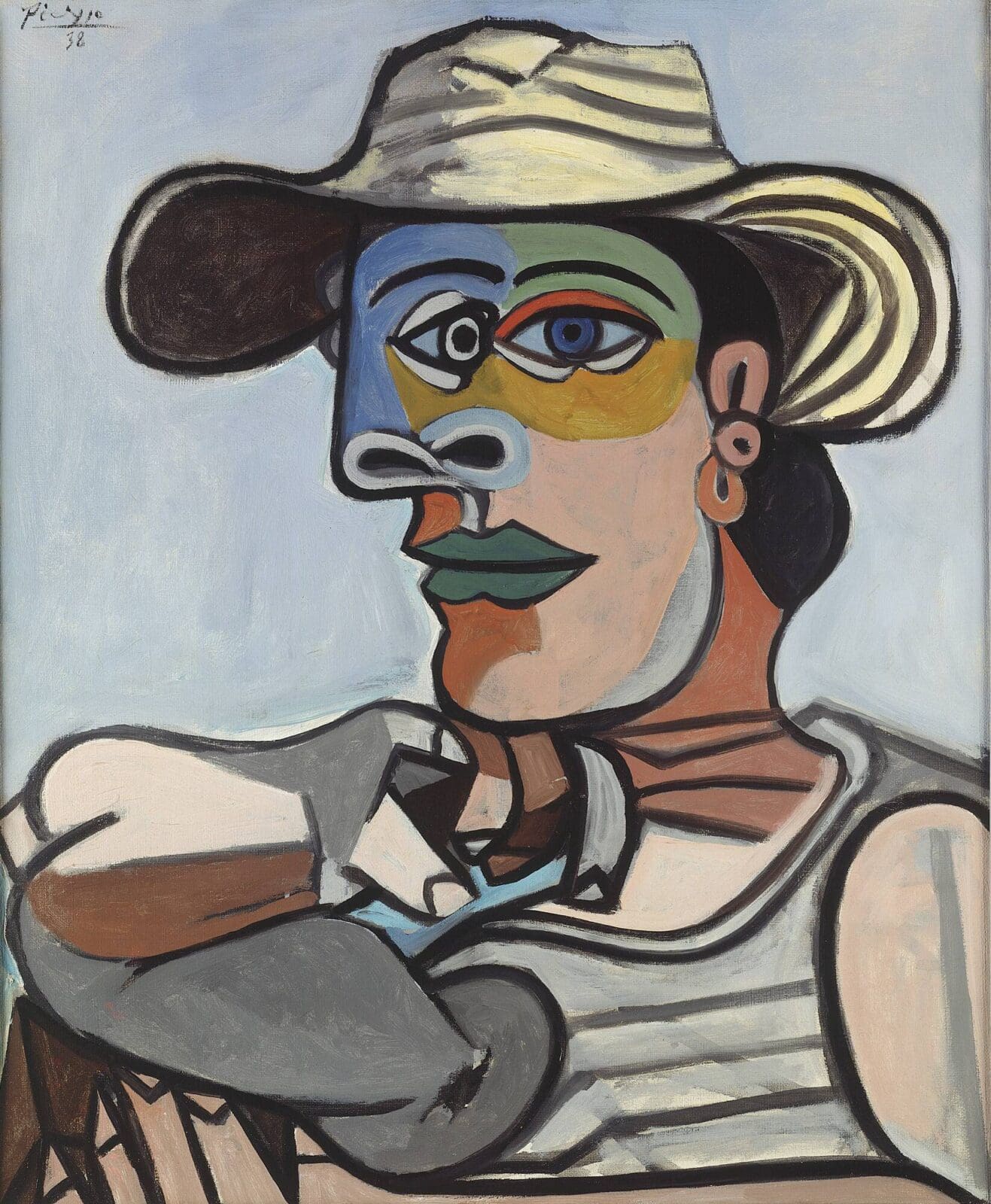
Picasso’s “The Sailor” (1938) further emphasizes his Surrealistic presentation of distorted faces forcing altered perspectives by the viewer.
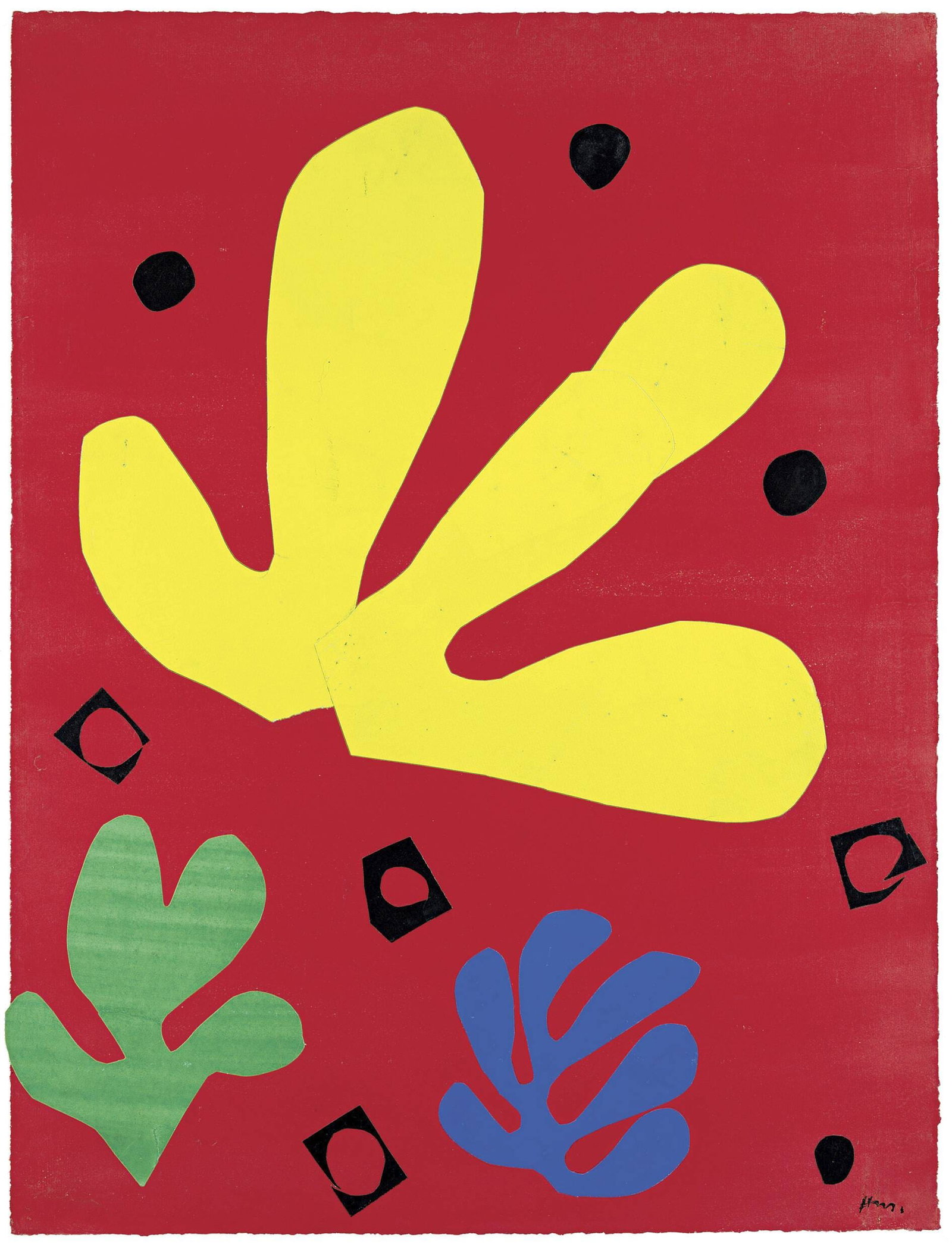
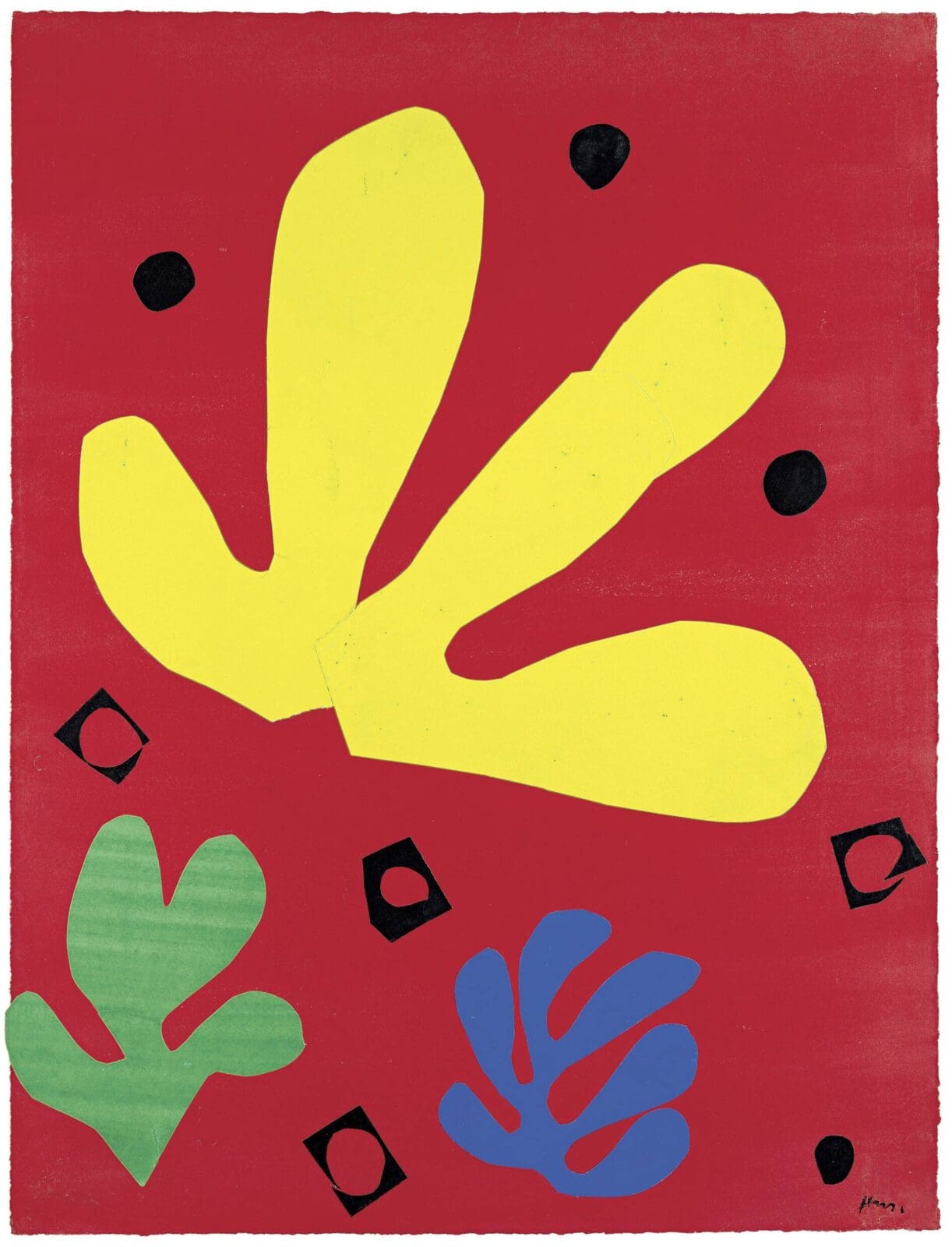
Matisse jolted the critics of his time by pioneering the Fauvist (wild beast) movement, which many initially rejected but later embraced. Late in life, Matisse countered poor post-surgical health problems and wheelchair restrictions via a novel working method called cutouts. He used scissors to cut painted paper into shapes like the bright splashes of yellow, green and blue against a vivid red backdrop in “Vegetal Elements” (1947.)
Berggruen championed Matisse’s daring cutouts, which became hugely successful.
Warm, intimate representations of interiors, suffused with rich color, generate a sense of well-being in many art lovers who have come to recognize and relish a Matisse.
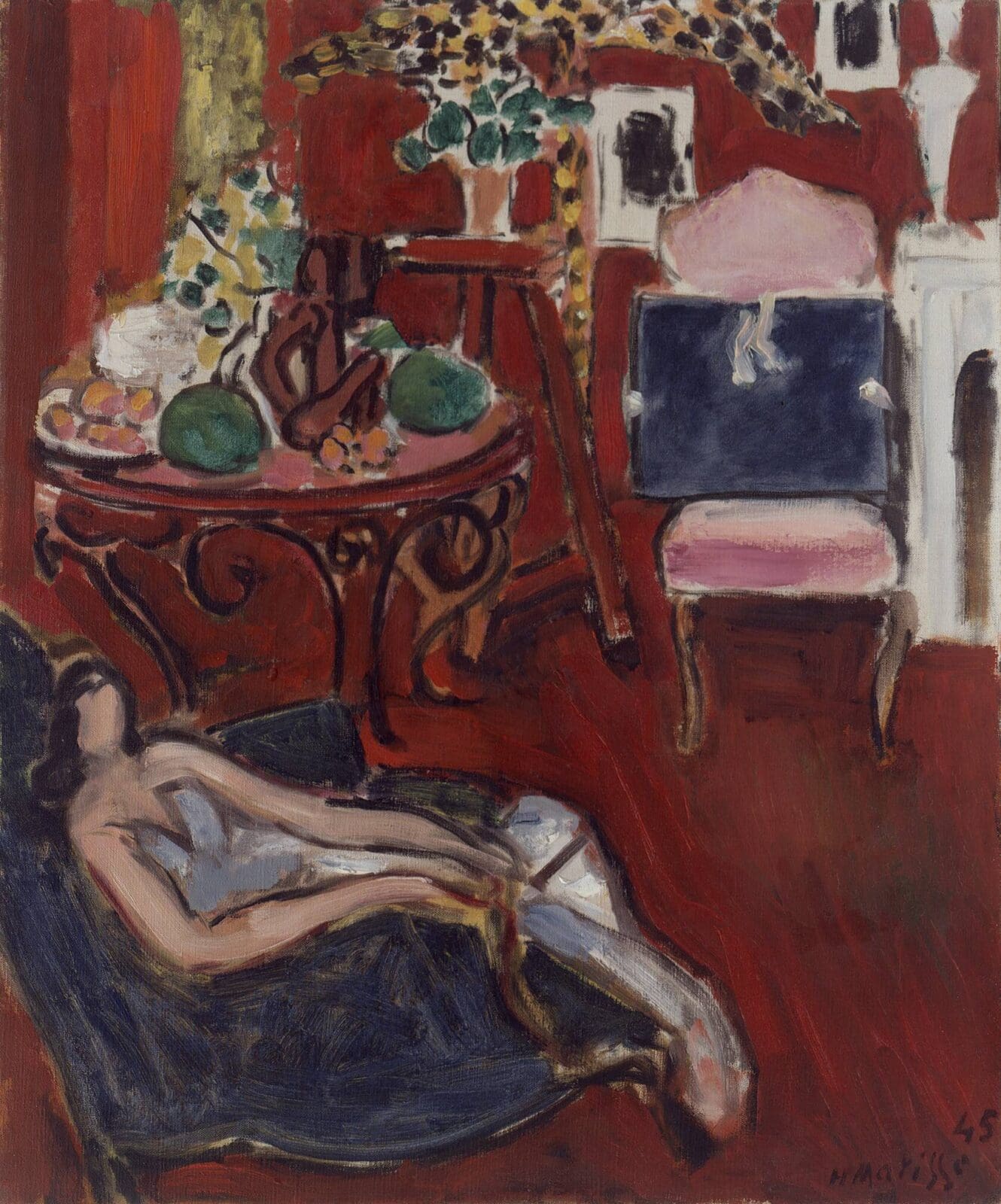
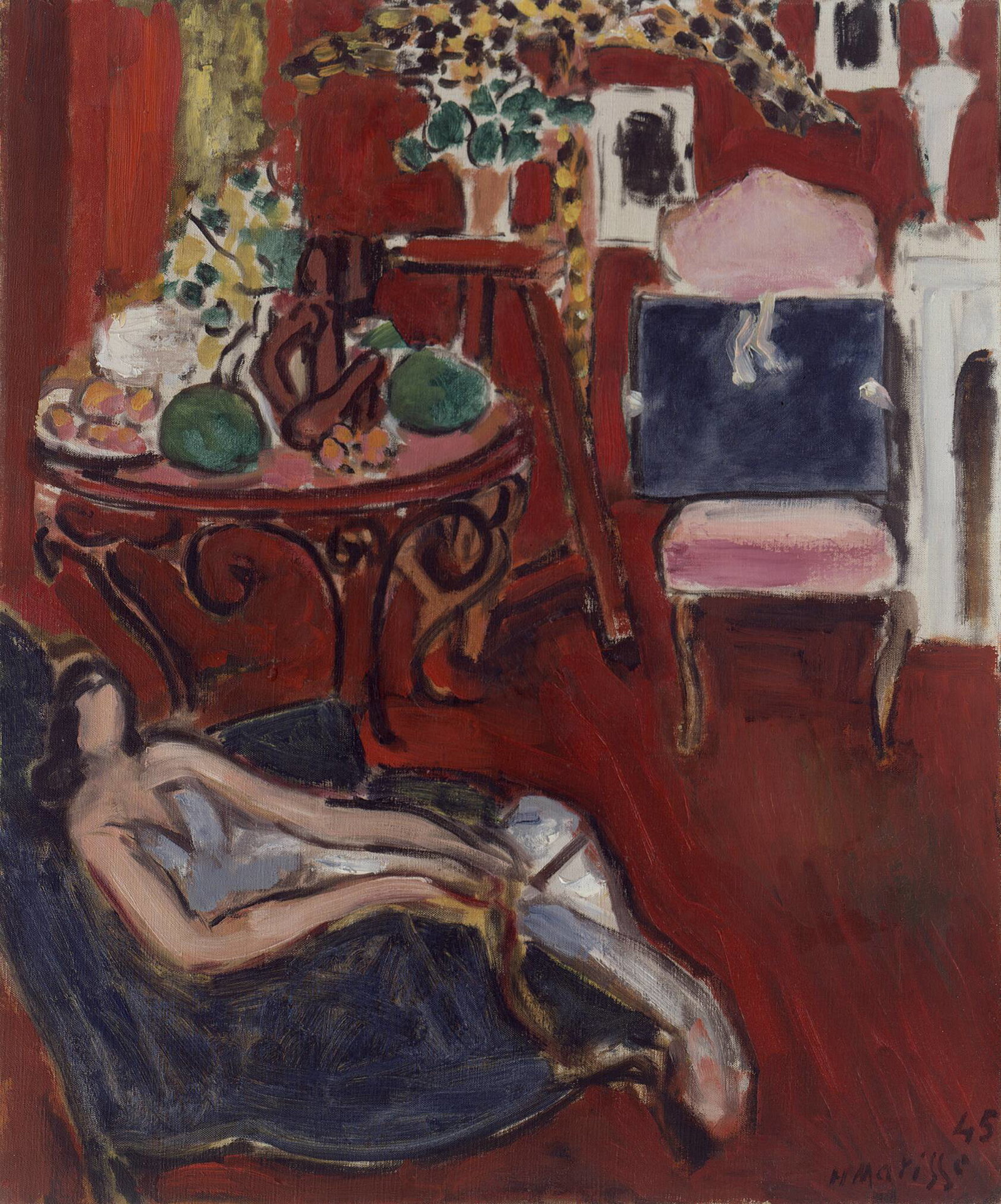
“The Blue Portfolio” (1945) is one such painting. Here, Matisse drenches a delightful scene of an interior in lush, velvety red, accented by the blue of a beribboned portfolio propped against a pink upholstered chair. In the forefront, a model is draped across an armchair in the busily decorated room. There is much to charm the eye.
Ann Dumas, MFAH consulting curator of European art, quotes Berggruen’s enthusiasm for the great artist in a must-read booklet linked on the exhibition website page: “I love Matisse. For me he is the greatest French painter of our time.”
Dumas calls Matisse “a towering figure in 20th century art” who is celebrated above all for his use of color, as seen in his works throughout this exhibition.
Berggruen Museum curator Natalie Zimmer cites Berggruen as among the many contemporaries who were captivated by Picasso’s work, to the extent that Berggruen assembled a collection spanning the entirety of Picasso’s long career. The collection traces the artist’s continuous reinvention, Zimmer notes.
Berggruen viewed Picasso and Klee as “ ‘the most important creative minds of the first half of the century, allowing viewers to look afresh at the modern world,” MFAH curator of prints and drawing Dena Woodall says.
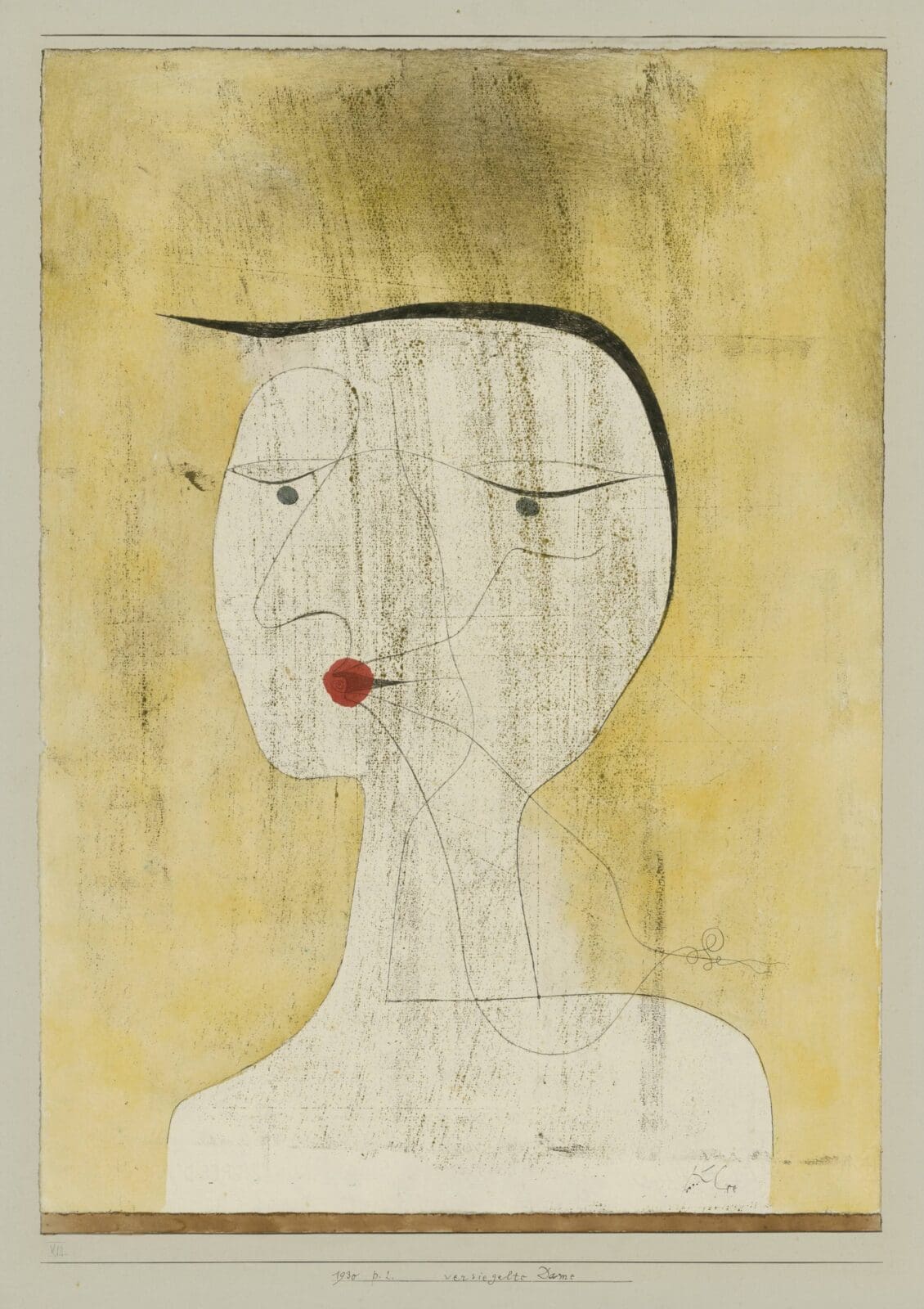
Klee’s art is “steeped in personal, mysterious and metaphysical symbolism” Woodall notes. His “Sealed Lady” (1930) invites inspection of the minimalist line work of the young woman’s face against a blonde background. An empty word balloon seeps from her pursed red lips as her expression remains opaque.
Given the painting’s year, one wonders if she is presenting herself as sealed from the deepening global Great Depression following the 1929 stock market crash and tariff-triggered trade wars.
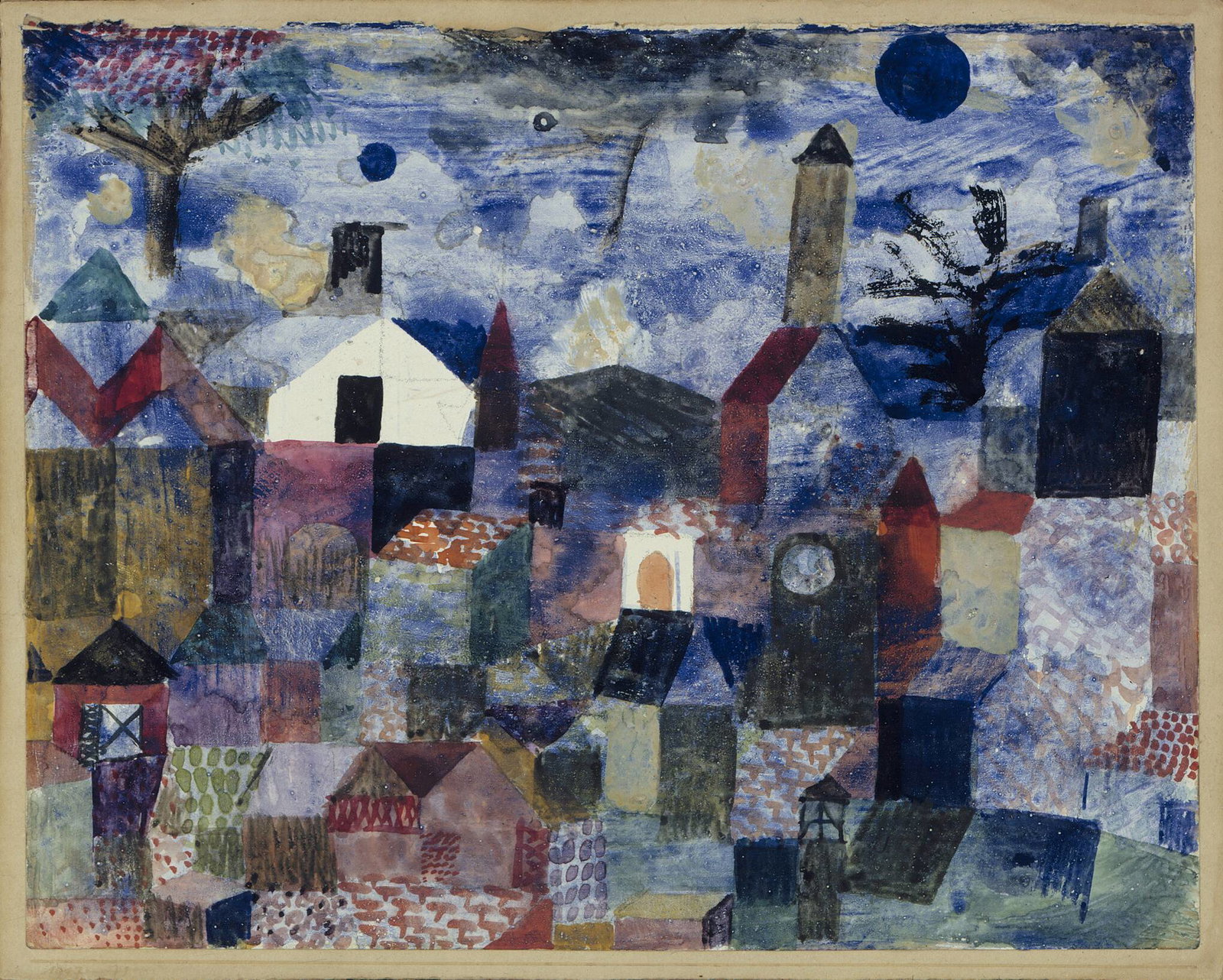
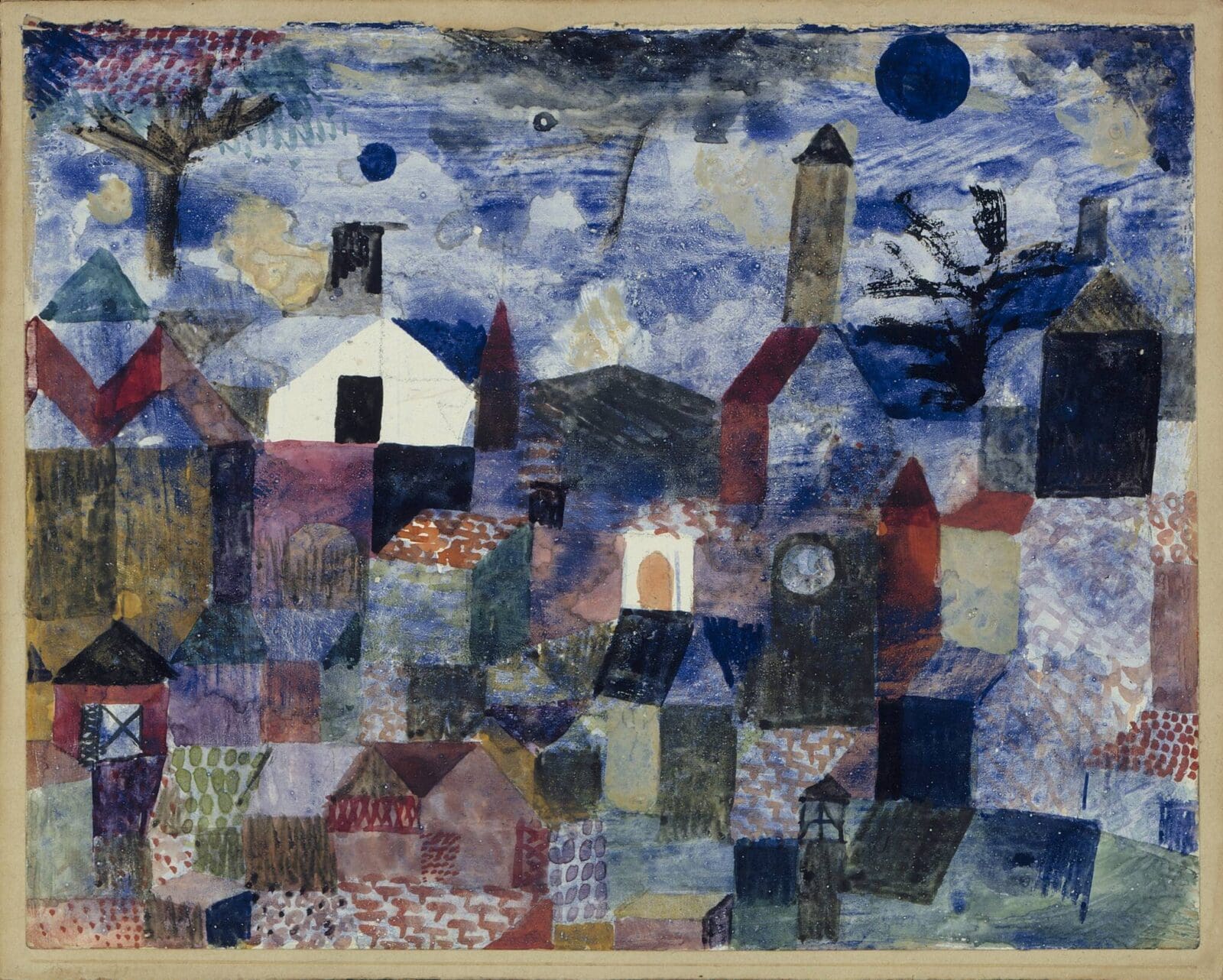
In contrast, Klee’s “Landscape in Blue” (1917) seems to re-order a turbulent world into a multitude of geometric shapes bathed in deep blue in its abstract depiction of a moonlit village. On April 6, 1917, the United States declared war on Germany, entering the First World War. Klee was drafted into the German army in 1916, serving two years in administrative positions in which the Bauhaus master found spare time to work on his art.
Berggruen had a special appreciation of Klee, who is well represented in this exhibition by a big room full of Klee works, giving visitors a rare opportunity to study his complicated abstract work.
Berggruen’s Own Journey
The sprawling show of paintings, watercolors, drawings and sculptures includes several elongated, reed-thin female figures sculpted by Giacometti, whose studio Berggruen was known to visit. The figures are often taken to represent bleak expressions of the human condition in the years after World War II, as indicated by the wall text.
MFAH director Gary Tinterow pays tribute to Berggruen in the exhibition booklet: “Heinz Berggruen represented an ideal of art world sophistication – an adventurous spirit, a sensitivity to beauty, and an openness to new discoveries while cultivating knowledge and appreciation of the history of human creativity.”
Tinterow’s assessment is well informed. He met Berggruen in 1979 in Paris as a graduate student preparing “Master Drawings by Picasso” for several museums and remembers Berggruen’s exceptional generosity in that endeavor. Subsequently the two formed a thriving professional collaboration and lasting friendship.
When Berggruen died at age 93 in 2007, The Guardian ran a long obituary calling him “one of the most prominent German art collectors of the 20th century;” a friend of leading artists including Picasso, Miro and Ernst; and a journalist, author and art patron.
The obituary suggests a lifelong theme of eagerness to learn and share his love of art. Born in Berlin, Berggruen was employed in the mid 1930s by a Frankfurt newspaper that compressed his byline into his initials because of his Jewish name. In 1936, he managed to leave Nazi Germany thanks to a scholarship from the University of California, Berkeley. He later worked as an art critic for the San Francisco Chronicle. He became a curator at the San Francisco Museum of Art (before the addition of “Modern”), then served in the U.S. Army in Britain and Germany.
Returning to Berlin after the war to find the city in ruins and his family home destroyed, Berggruen moved to Paris. There, he worked in the fine arts division of UNESCO, then opened his own bookshop. After he began collecting, he became “as fascinated with Klee as with Picasso.” So much so that decades later, after resigning his post as director of his Paris gallery on rue de l’Universite in 1980, he gave the New York Metropolitan Museum of Art more than 90 Klees.
In 1996, Berggruen moved back to Berlin and several years later gave much of his collection to the German state as a gesture of reconciliation, selling it for a fraction of its value. The Guardian notes that besides his sentimental attraction to his hometown, Berggruen wanted to expose the German people to art that the Nazis had banned as degenerate
“Berggruen’s most notable legacy, the Berlin Berggruen Museum, with its emphasis on Picasso, is widely seen as one of the most representative private collections of classic modern art in the world,” The Guardian story reads.
“Picasso-Klee-Matisse: Masterpieces from the Museum Berggruen” will be on view at the Museum of Fine Arts, Houston through September 13. Learn more here.
Trending
- Conner Weigman Left Utah’s Stadium In a Walking Boot, and He Was Limited In Practice All Week — a PaperCity Exclusive
- Fort Worth’s 14 Most Anticipated New Restaurant Openings This Fall
- Fairy Tales Come To Life On an Enchanting $1.3 Million Houston Night — Princesses Galore, Little Red Riding Hood and Snow White Step Up
- This Unbelievable Houston Property Is Its Own Hidden Compound In The Heights With a $3.6 Million List Price, and Extra Bedrooms and Porches Galore
- A 50 Cent Surprise, a Generous Blake Shelton Performance and a Remarkable $13.2 Million — Houston Children’s Charity Soars On Its 30th Anniversary

_md.png)
_md.jpeg)