Houston’s Ismaili Center Continues To Welcome Everyone With Free World Class Art Exhibitions, Shows and Wonders Galore
The Bayou City's Long-Awaited Cultural Hub Is For All
By Jon Hopson //
I watched the Ismaili Center Houston rise from Allen Parkway for years during construction, curious but uncertain whether the space was meant for someone like me. It is.
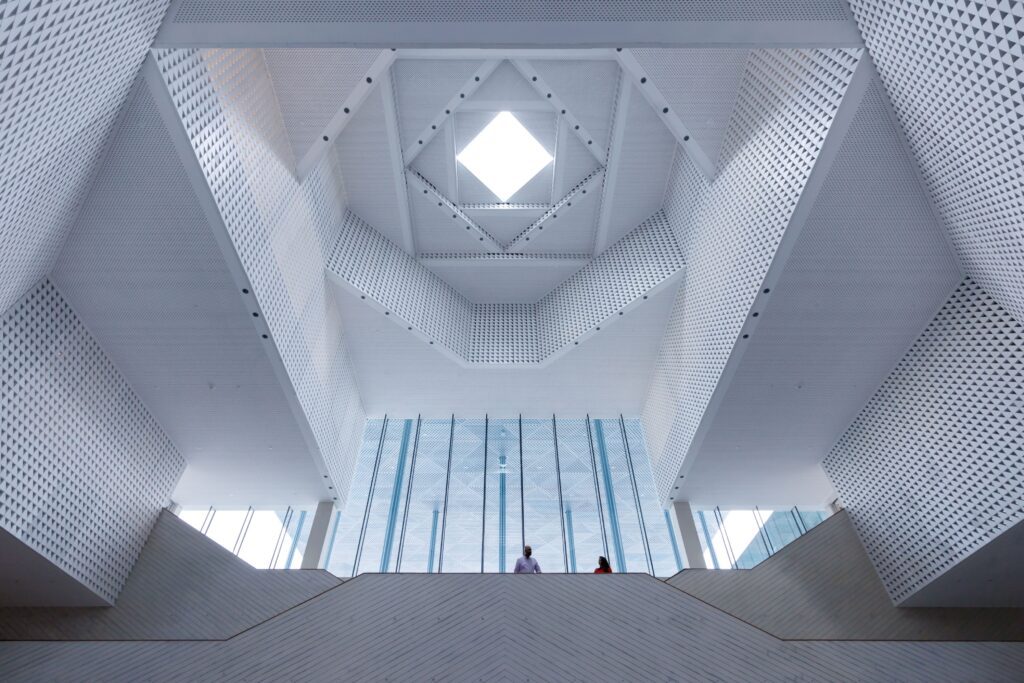
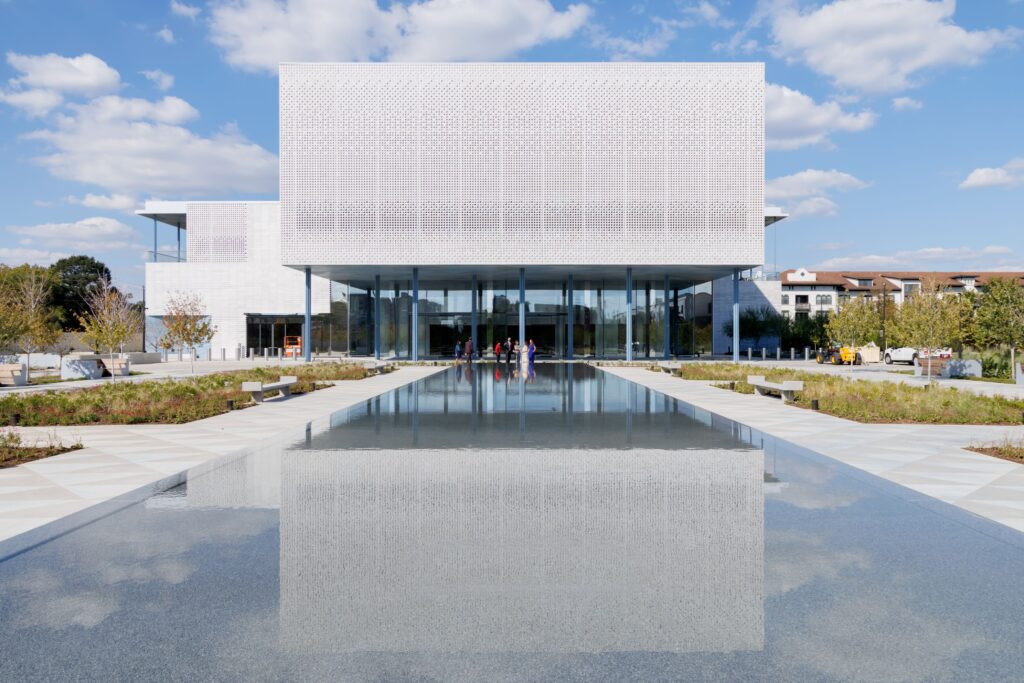
The five-story building overlooking Buffalo Bayou Park, designed by Farshid Moussavi Architecture, has been welcoming since it first opened to the public six months ago. Friendly staff greet visitors at the door and encourage free exploration throughout the common areas. Admission and underground parking are both completely free.
A cafe, dedicated library and nine acres of landscaped gardens complete a complex that Ismaili Center arts and culture lead Ruhee Maknojia calls “a gift to the city.”
Beyond serving as a gathering place for Houston’s Ismaili Muslim community, the center functions as a cultural hub with dedicated exhibition and performance spaces. In fact, this is the first Ismaili Center in the world to have both. Maknojia notes that the programming isn’t limited to Muslim artists.
“It’s more about the value structure of what the artists are creating and whether there’s alignment with the values the community wants to showcase,” she says.
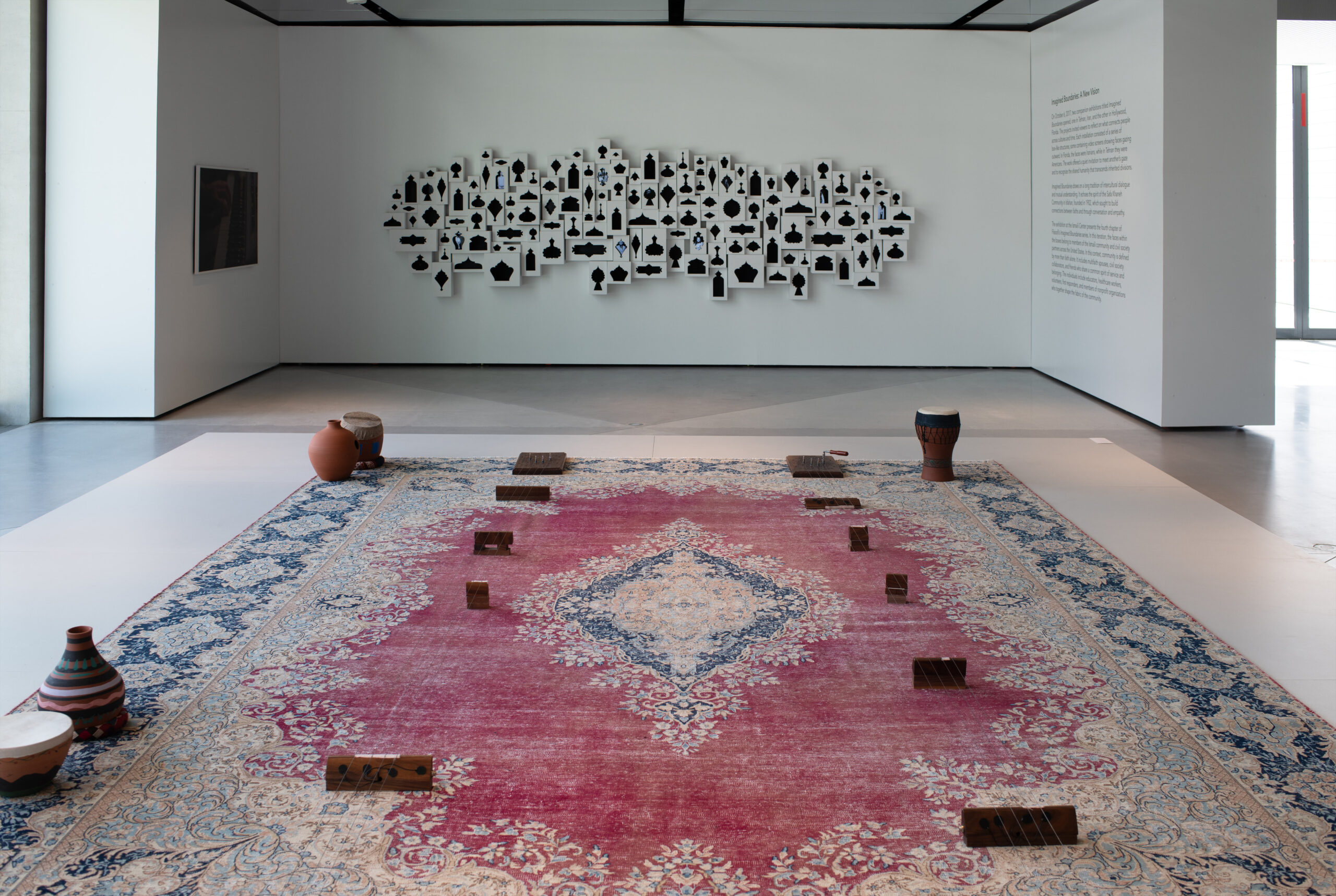
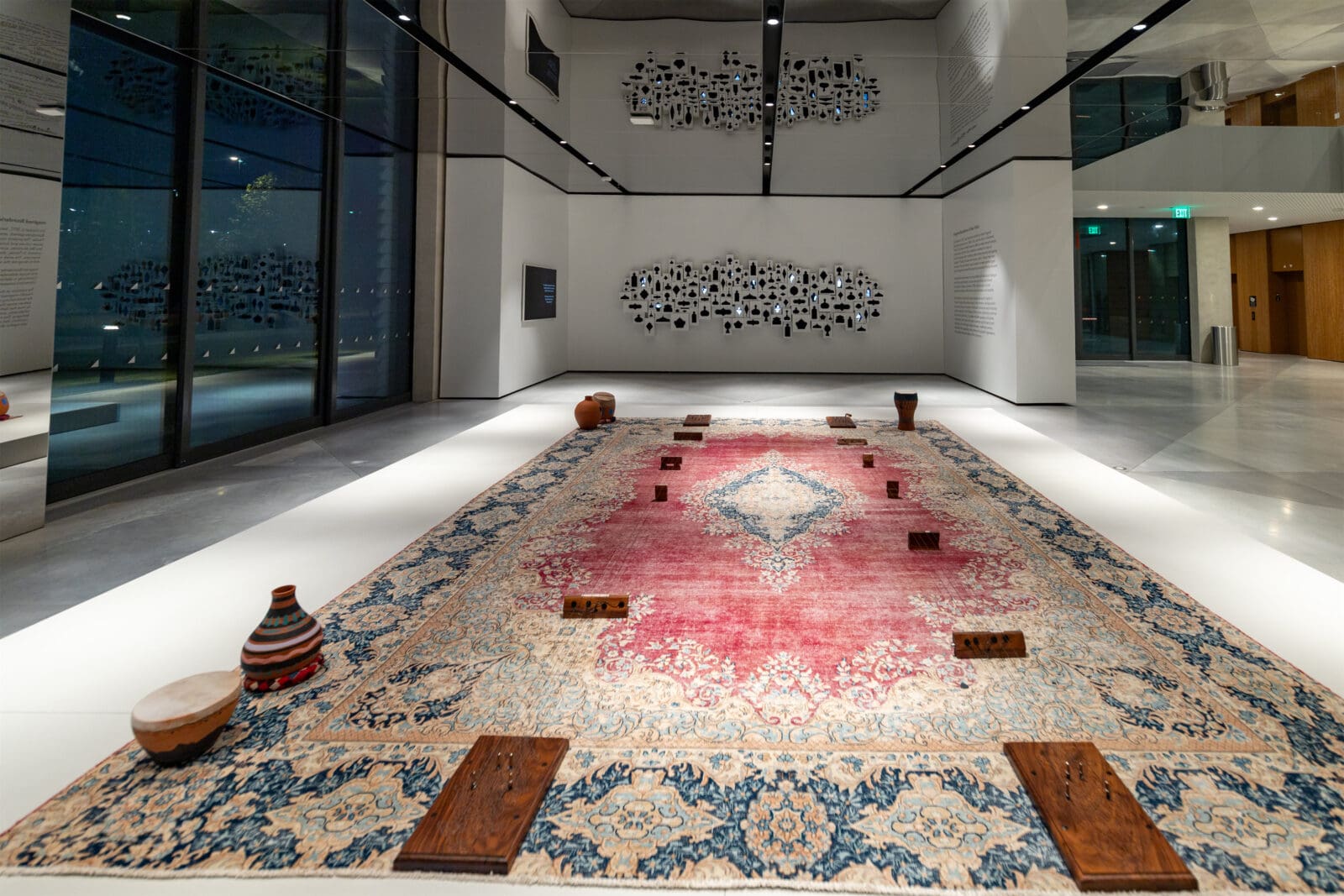
The inaugural exhibition dubbed “Deep Listening” runs through Friday, July 31 in the ground-floor gallery, where floor-to-ceiling windows along the east wall flood the room with natural light and a mirrored ceiling doubles everything below — a reference to the Iranian architectural tradition of the ground meeting the sky.
SHOP


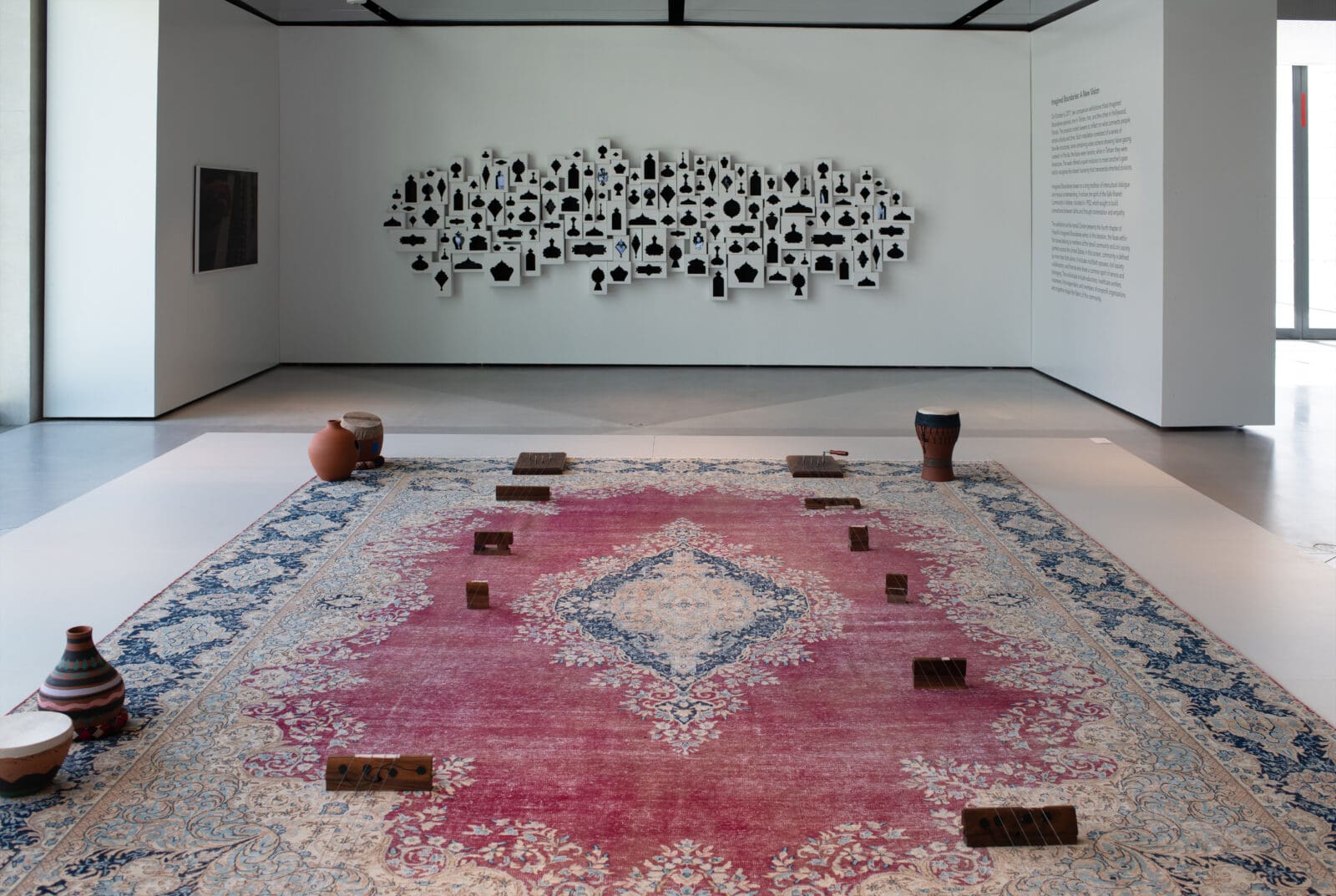
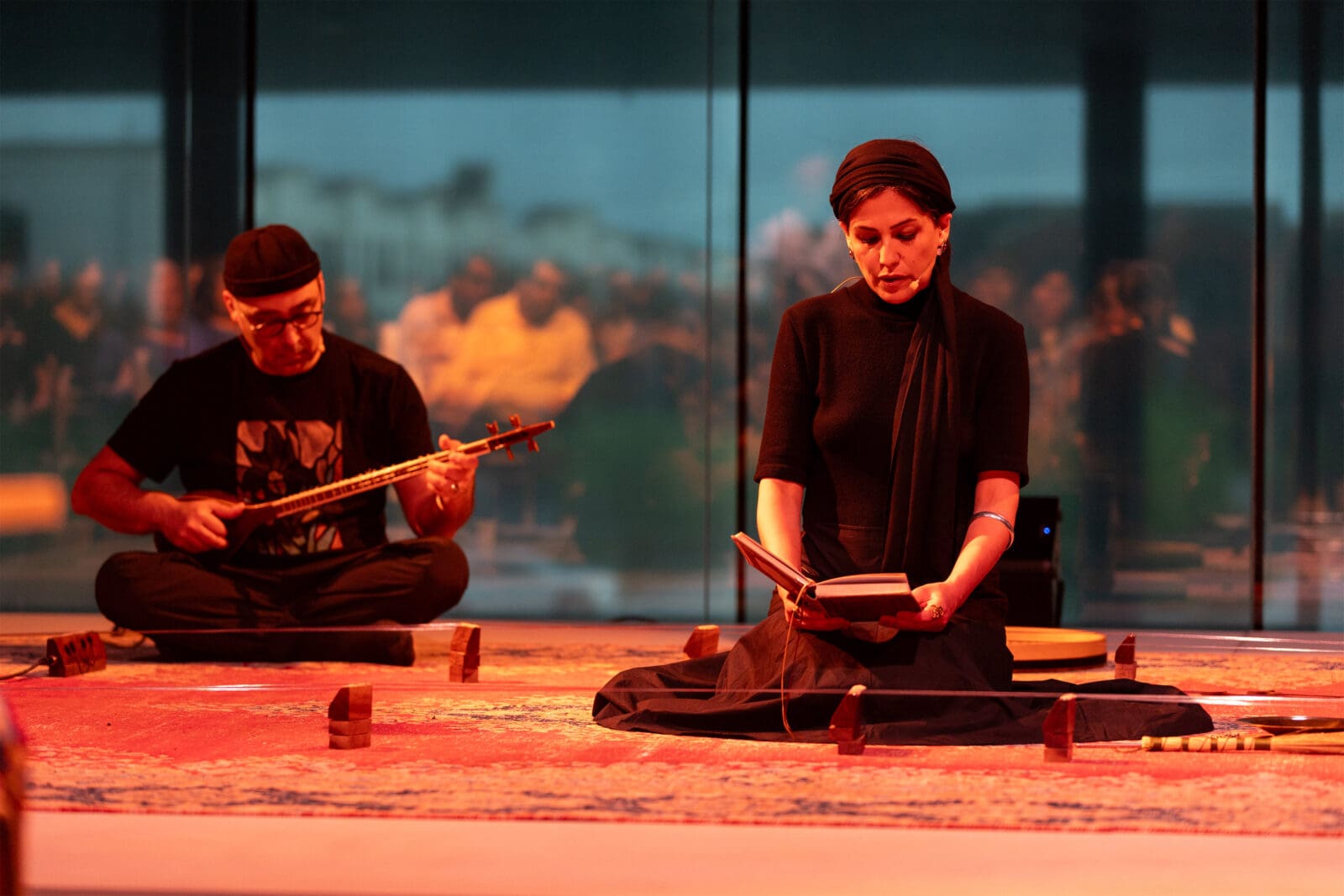
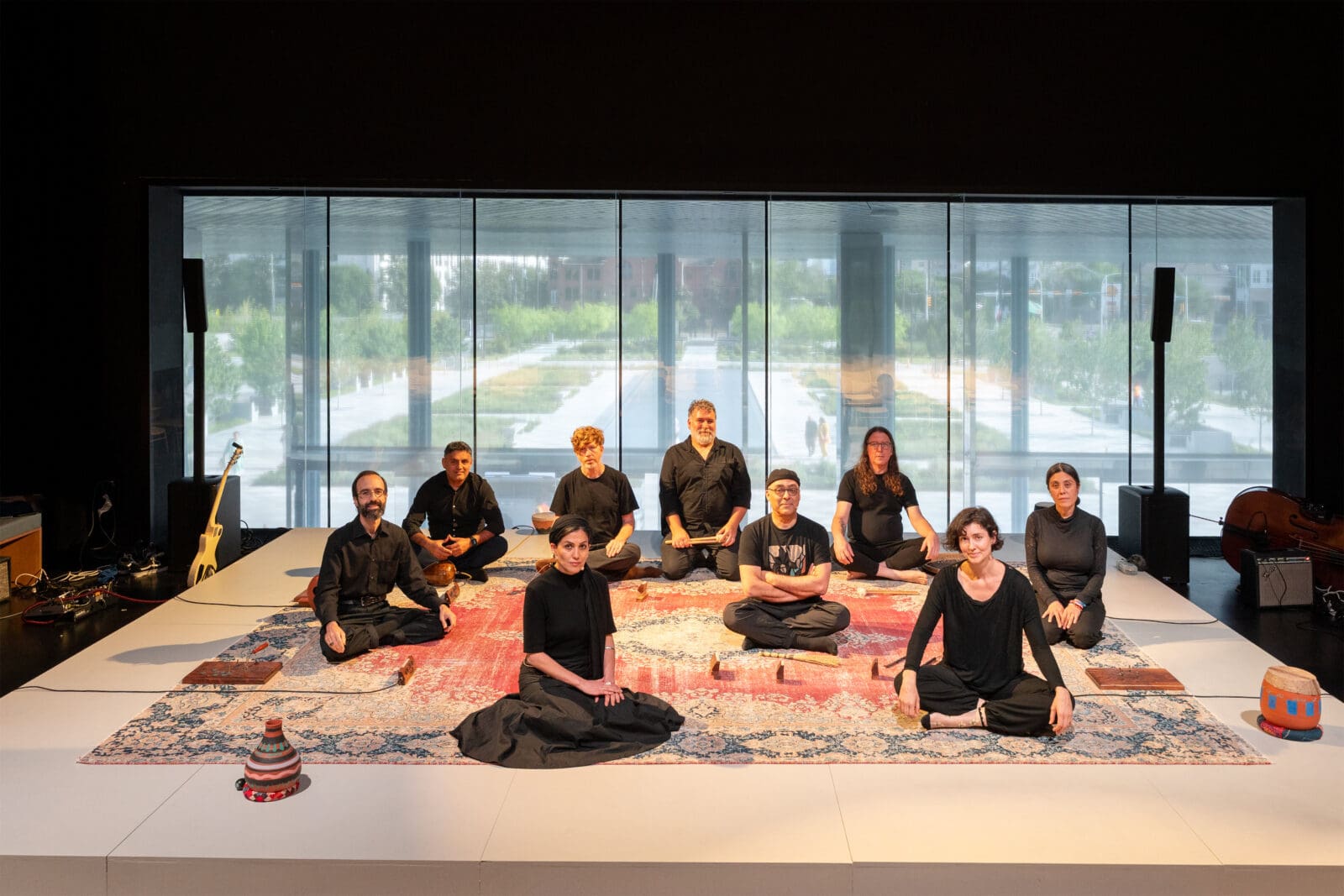
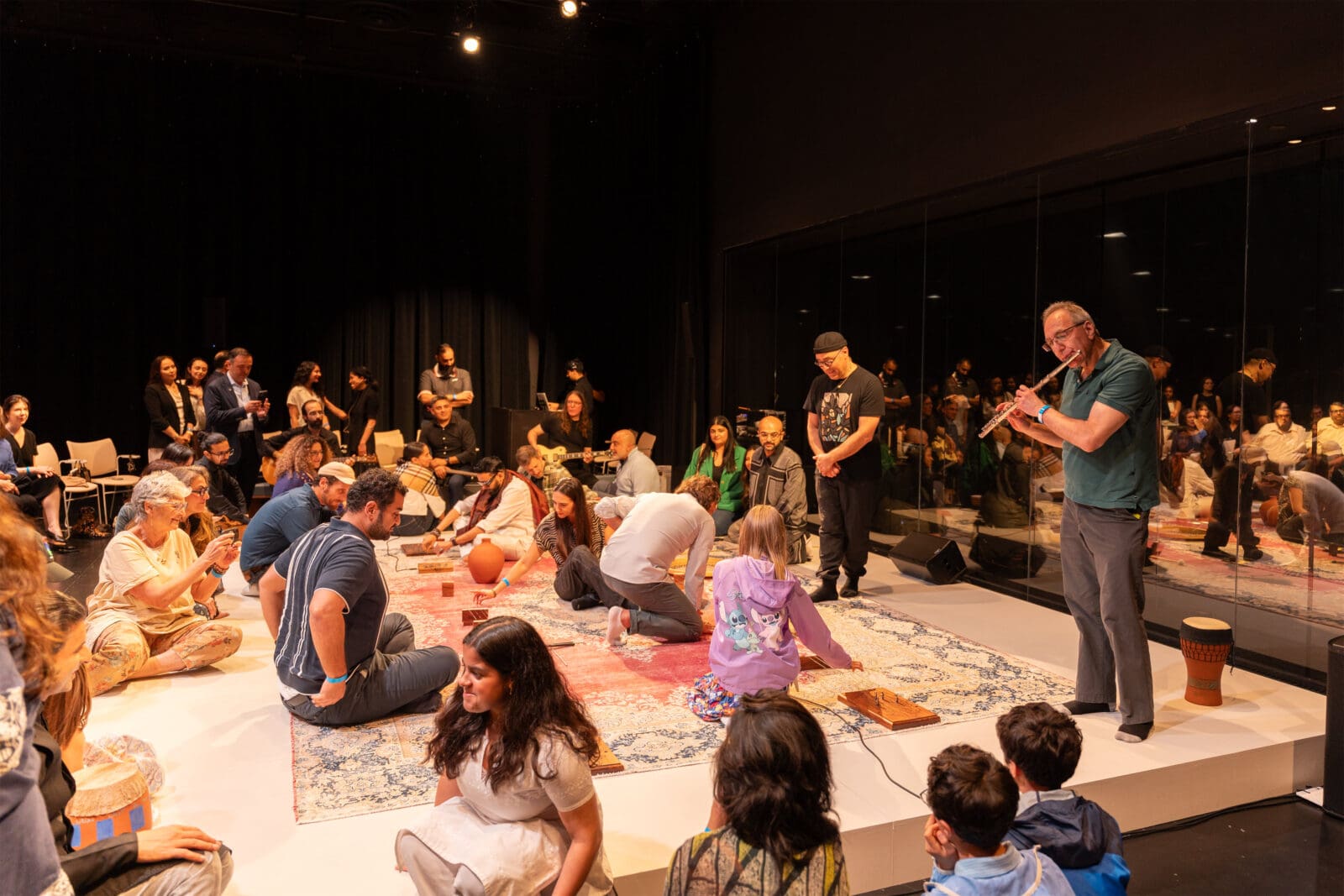
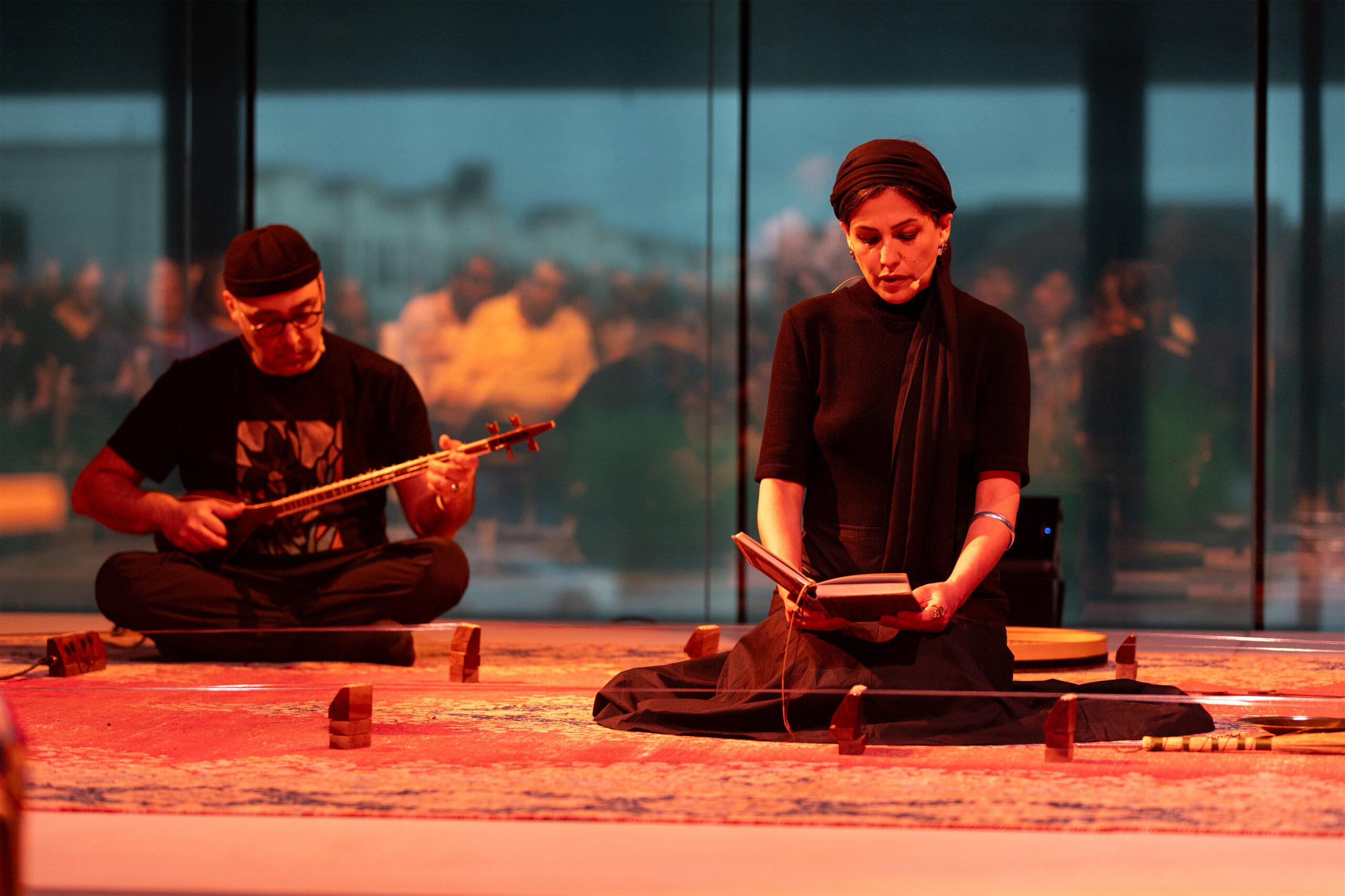
The show features two works from Raheleh Filsoofi. Her ShahTár (شهتار), 2022, a collaboration with musician Reza Filsoofi, takes up most of the gallery floor. A traditional Kermani rug has been rebuilt as a four-string instrument and communal platform large enough for several people to sit on. The work pays tribute to Moshtagh Ali Shah, an 18th century Iranian musician and Sufi mystic whose innovations were suppressed in his lifetime. And, as Filsoofi explains, to the many artists who have created important work under similar pressures without recognition.
What strikes you in the room is the inversion. This isn’t an instrument a musician holds. It’s an instrument that holds the musician. During public hours, docents are present and visitors are welcome to sit on the platform and make sound themselves.
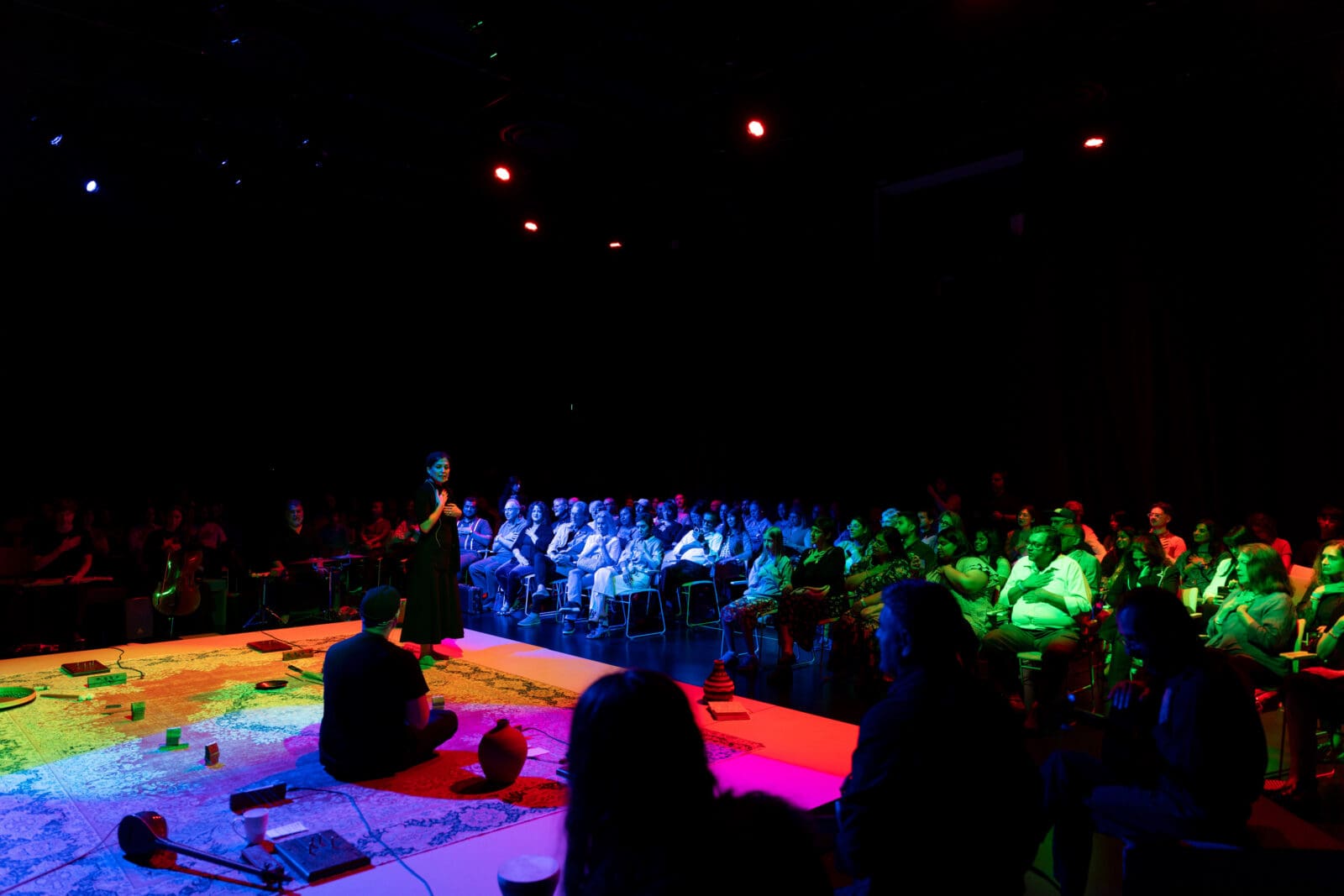
I was lucky enough to catch a live activation of ShahTár in the center’s black box theater. By the end of the performance, the boundary between audience and musicians had dissolved. People moved to the stage on invitation, sat on the rug and began creating sound together.
It was Houston’s Ismaili Center’s ethos of participation and exchange made audible.
On the gallery’s south wall, Filsoofi’s Imagined Boundaries, 2025, presents a cluster of small white boxes with shaped openings. Peer through one and you find a lit screen showing a face gazing back at you. The project started in 2017 as simultaneous exhibitions in Tehran and Hollywood, Florida. It’s Iranian faces shown to Americans, American faces to Iranians, with a quiet dare to meet a stranger’s eyes across geopolitical lines.
This fourth iteration features members and partners of the Ismaili community across the United States: educators, health care workers, volunteers, firefighters. The faces aren’t all Ismaili. The circle drawn here is wider than faith. It is shaped by service.
The permanent collection reveals itself gradually as you move through the building, with works placed in common areas rather than sequestered behind gallery walls. Maknojia’s team spent six years building the collection in deliberate conversation with the architecture — and the pairings show.
Hidden Treasures
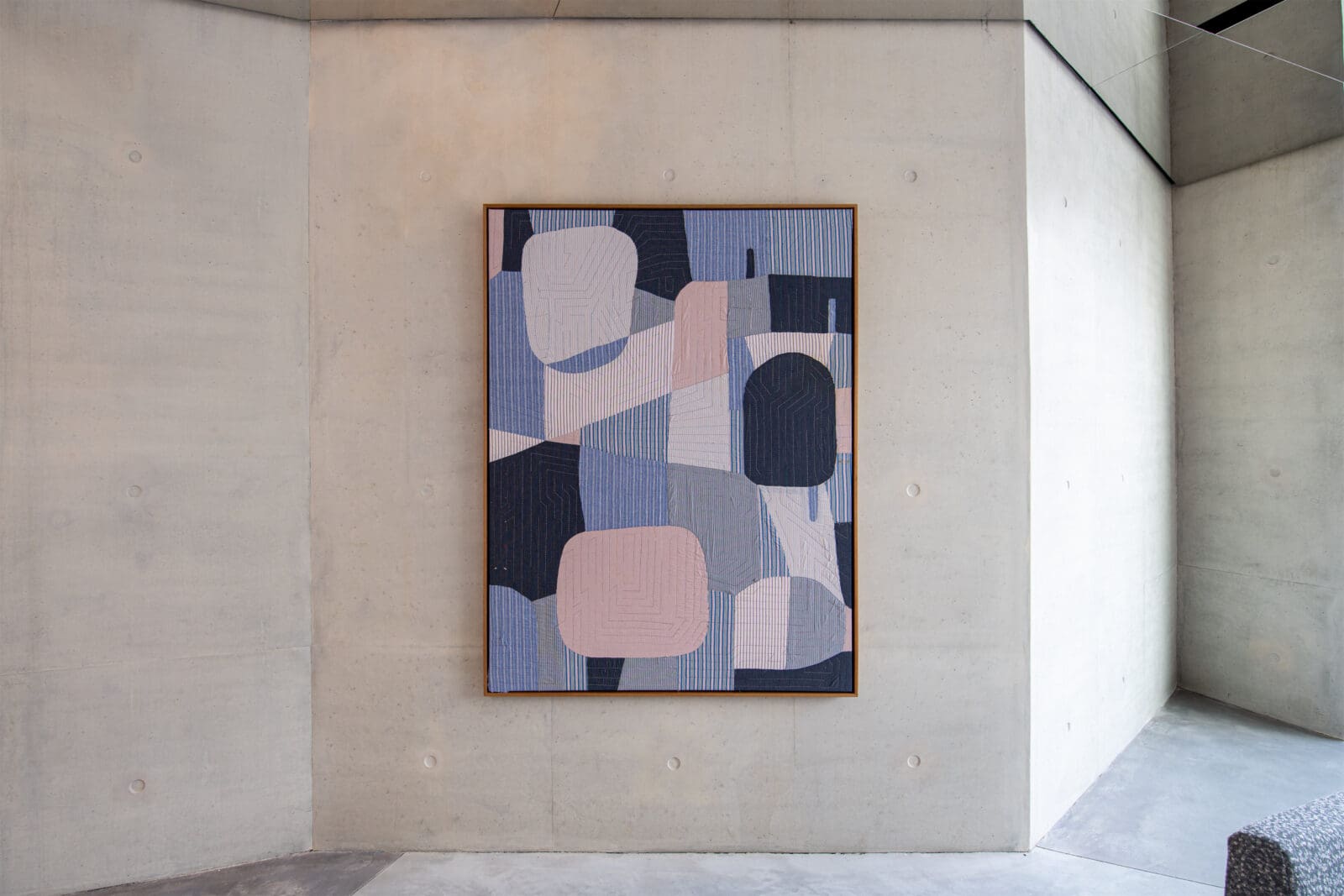
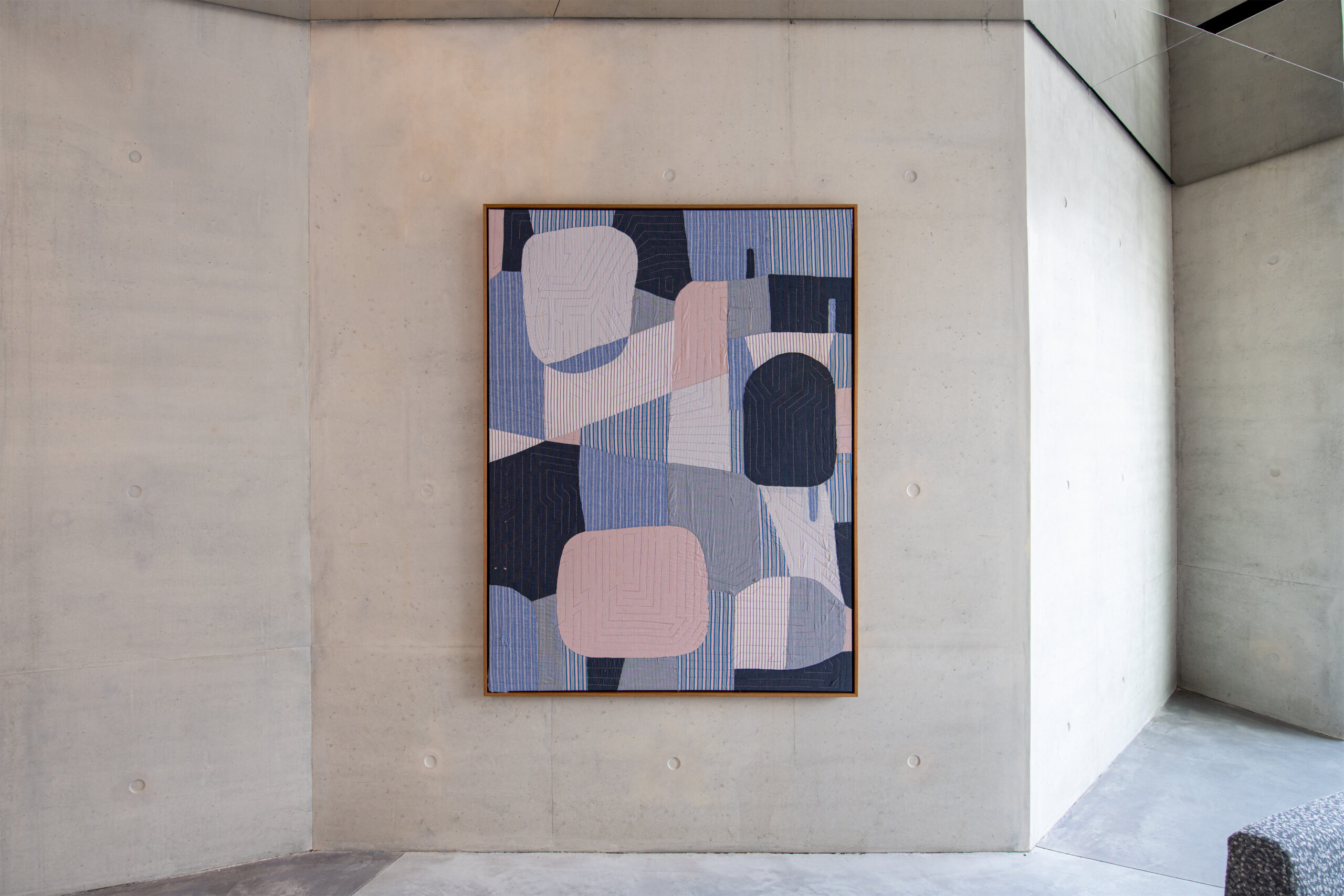
In a sitting nook off the west entrance, Houston artist Gabriel Martinez’s Beneath the Shadow of the Fig Leaf hangs above custom-made couches. Martinez pulled discarded clothing from city streets and hand-stitched the found fabrics into a quilt-painting — every stitch placed without a sewing machine.
You notice the color and pattern first, then start thinking about what came before. The factory workers who spun and dyed yarn, wove fabric and assembled garments that wound up as street trash before Martinez gave them another life through his own painstaking handiwork.
Up the west stairs, Ismail Gulgee’s monumental calligraphic diptych stops you at the second level: Surah al-Rahman, 1985, and 99 Names of Allah. Each canvas stretches over six feet tall, sacred texts rendered in Gulgee’s painterly, searching modernist hand. These aren’t classical calligraphy. They’re meditations.
In Surah al-Rahman, each verse is marked with a large gold disk of applied leaf, setting up an almost abstract rhythm of reflected light. The 99 Names painting evokes the feeling of devotional recitation, each divine name moving across the canvas like prayer beads against fingers.
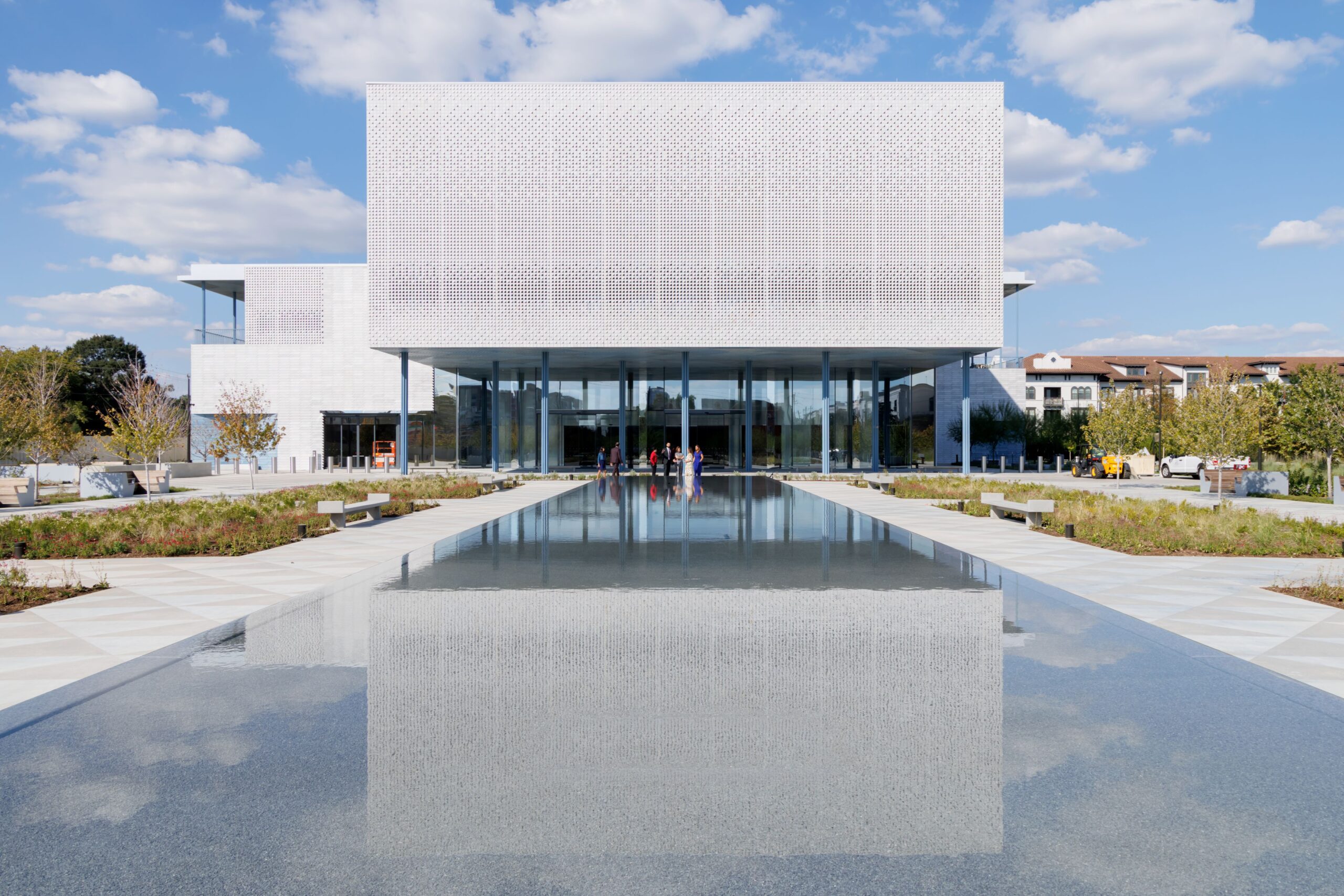
Near the east stairs, Noor Ali Chagani’s Life Line quietly astonishes. The Lahore-based artist, trained in miniature painting, has made rigid terracotta brick look soft — woven, folded, draped like cloth. Each small uniform unit connects into an organic form that seems to breathe. Walking between Chagani’s delicate brickwork and the building’s stone facade — which the architect calls a tapestry of stone, individual blocks cut and perforated, woven together like textile — you start to sense how carefully the collection was chosen.
Chagani builds walls that collapse. The center was built to bring people through them — a gift that only works if you accept the invitation.
What’s Next at Ismaili Center
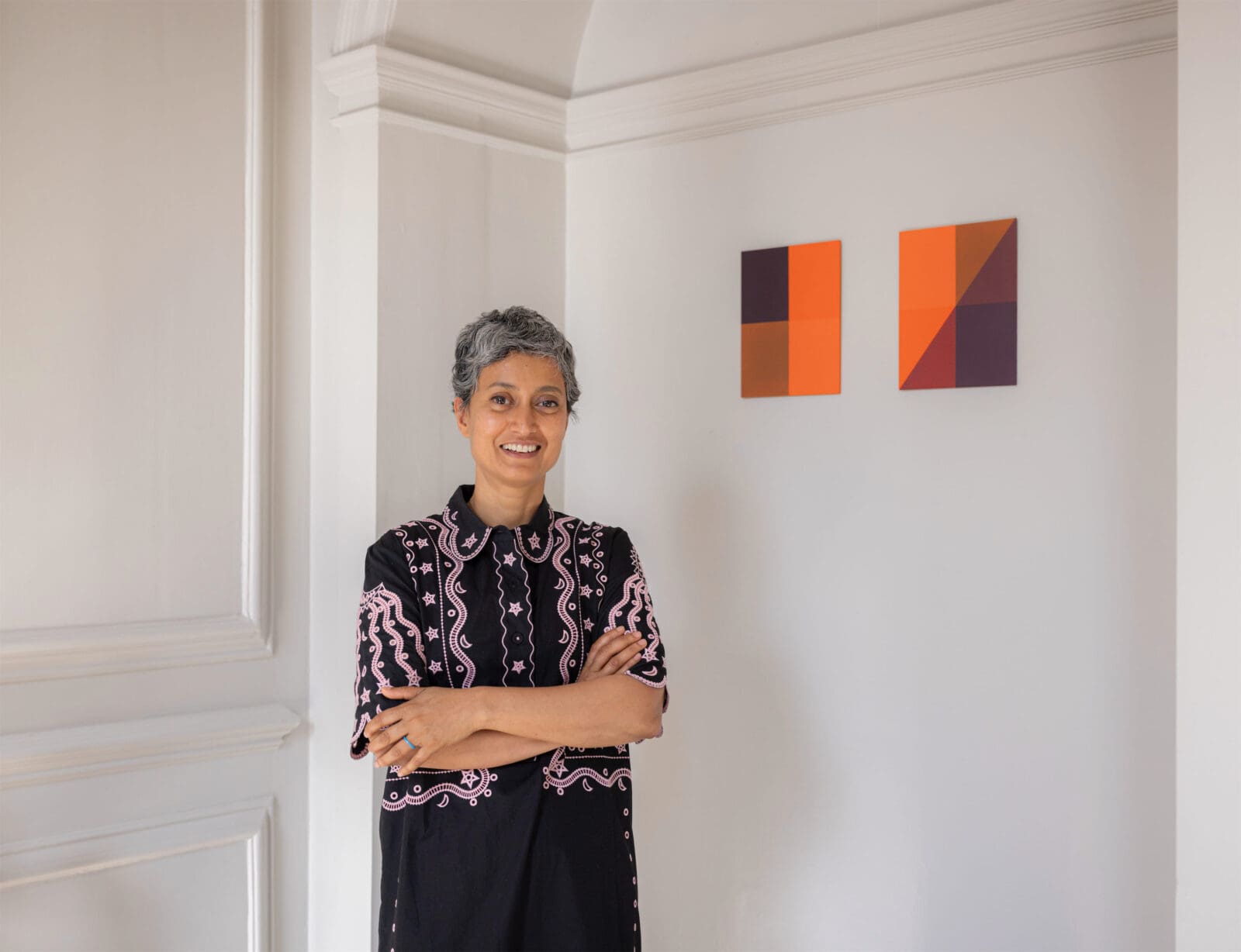
Ismaili Center Houston has commissioned Bangladeshi-British artist Rana Begum to create a nearly-20-foot-tall site-specific installation. Begum will present No. 1573 Reflectors in early fall. A solo exhibition titled “Article” by Gabriel Martinez is scheduled to open on August 15 and run through January 10, 2027.
Ismaili Center Houston is located at 2323 Allen Parkway. It is open Tuesdays, Thursdays, Saturdays and Sundays from 10 am to 4 pm. For more information, go here.
Trending
- A Tearful Last $100,000 Pushes Houston’s Best Dressed To $1.5 Million, the Junior League Kicks Off and Camp Gets a Boost
- Dallas’ Best Holiday Tea Services — From The Nutcracker-Themed to Storied Mansion Experiences
- Houston’s Big Western Night Puts Mothers and Daughters In the Spotlight, Heralding a Dec My Room Leadership Change
- Willie Fritz and Conner Weigman Believe UH Can Push For a National Championship This Season — Why Is So Much Of Houston Still Sleeping On This Team
- Stunning Houses In Bellaire, Montrose, Timbergrove, The Heights and More That Any Houston Home Lover Can Tour