
Journeying Beneath Houston — the Underground Cistern Brings Subterranean Art With a Mexican-Canadian Rebel
Rafael Lozano-Hemmer Channels Into the Bayou City's Undercurrents
By Alison Medley //



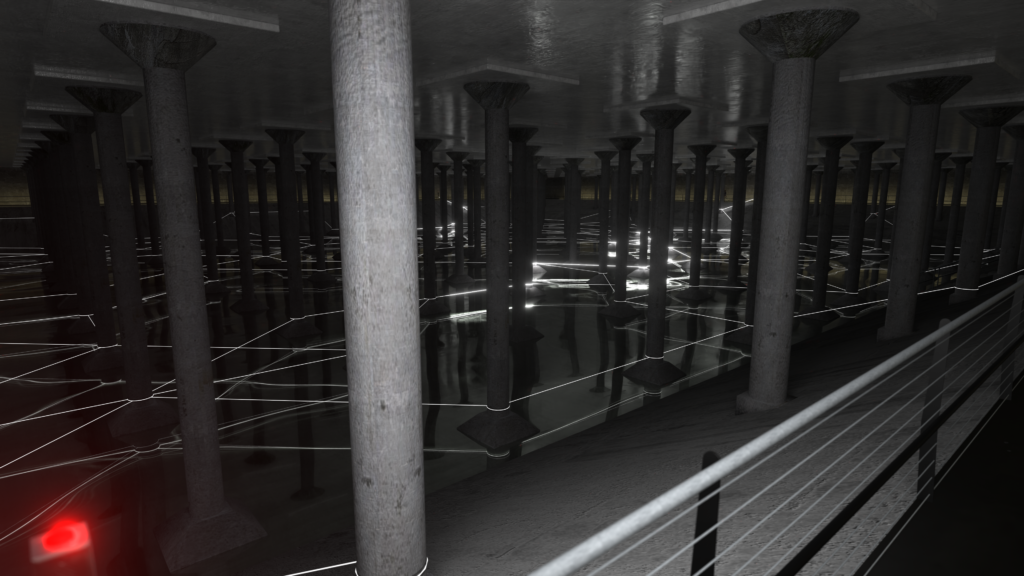
Some spaces ask nothing of you but to look. Others breathe with you — and insist on your presence. Houston’s Buffalo Bayou Park Cistern makes that demand immediately.
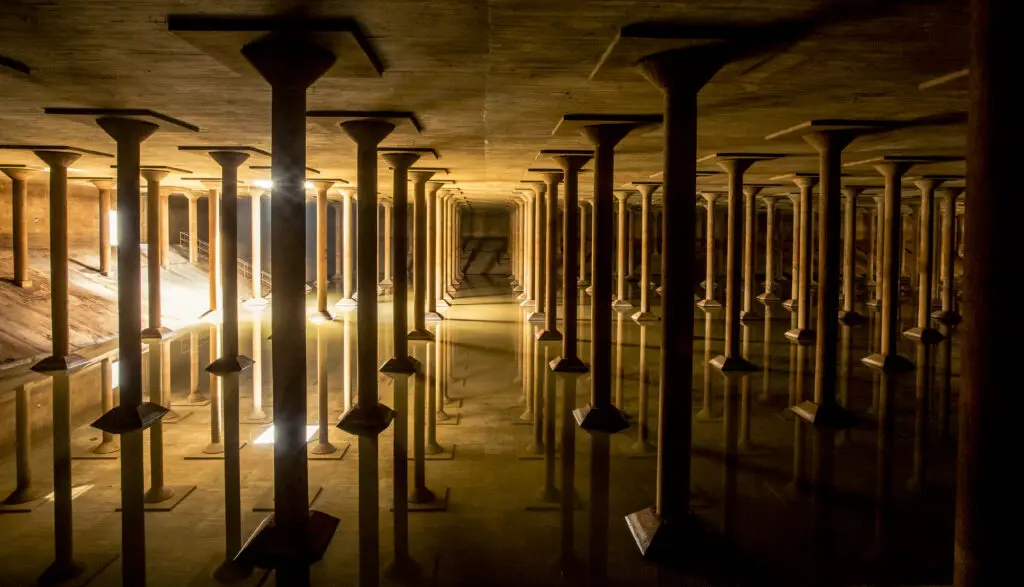
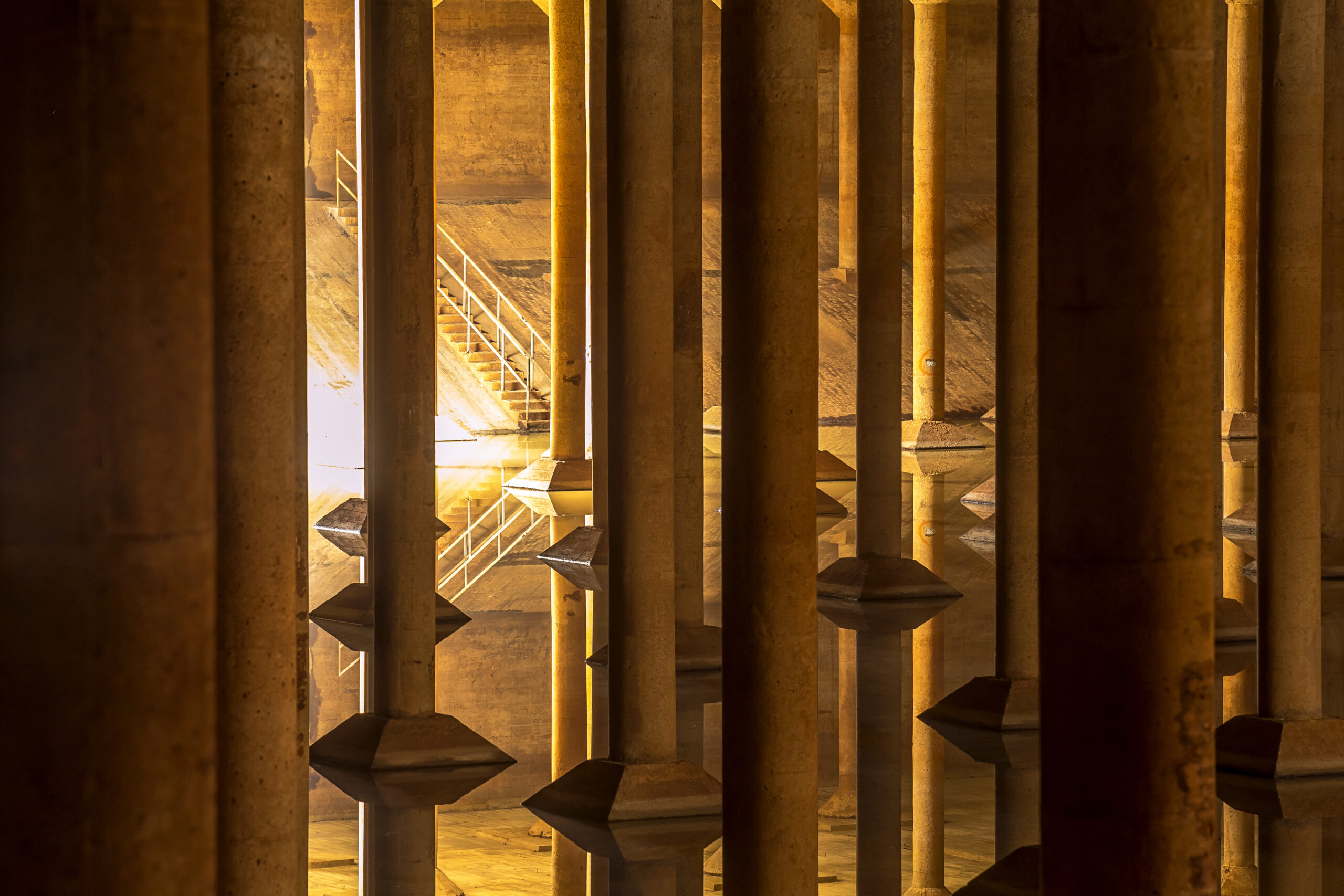
In the former reservoir buried beneath Houston’s shifting light and weather, that insistence feels almost elemental. The air is cool, humid and quietly immense. Its 221 columns stretch into vanishing points, their reflections dissolving the boundary between structure and illusion.
You descend into the Cistern, into a space that hovers between civic structure and subconscious, where Houston’s hidden systems almost begin to feel sentient.
The otherworldly installation, “Undercurrents,” opening this Friday, April 24, showcases the imaginative work of Mexican-Canadian electronic artist Rafael Lozano-Hemmer. His practice responds to the space instead of filling it. He asks the public to do the same.
Lozano-Hemmer describes the experience as romantic, colossal and enigmatic — one that is meant to be shared. “The great American composer Frederic Rzewski said that the most important objective of art is to bring people together,” he says. “That’s what I want people to do.
“To participate, feel included and personalize the artwork.”
SHOP


Where Space and Participation Meet
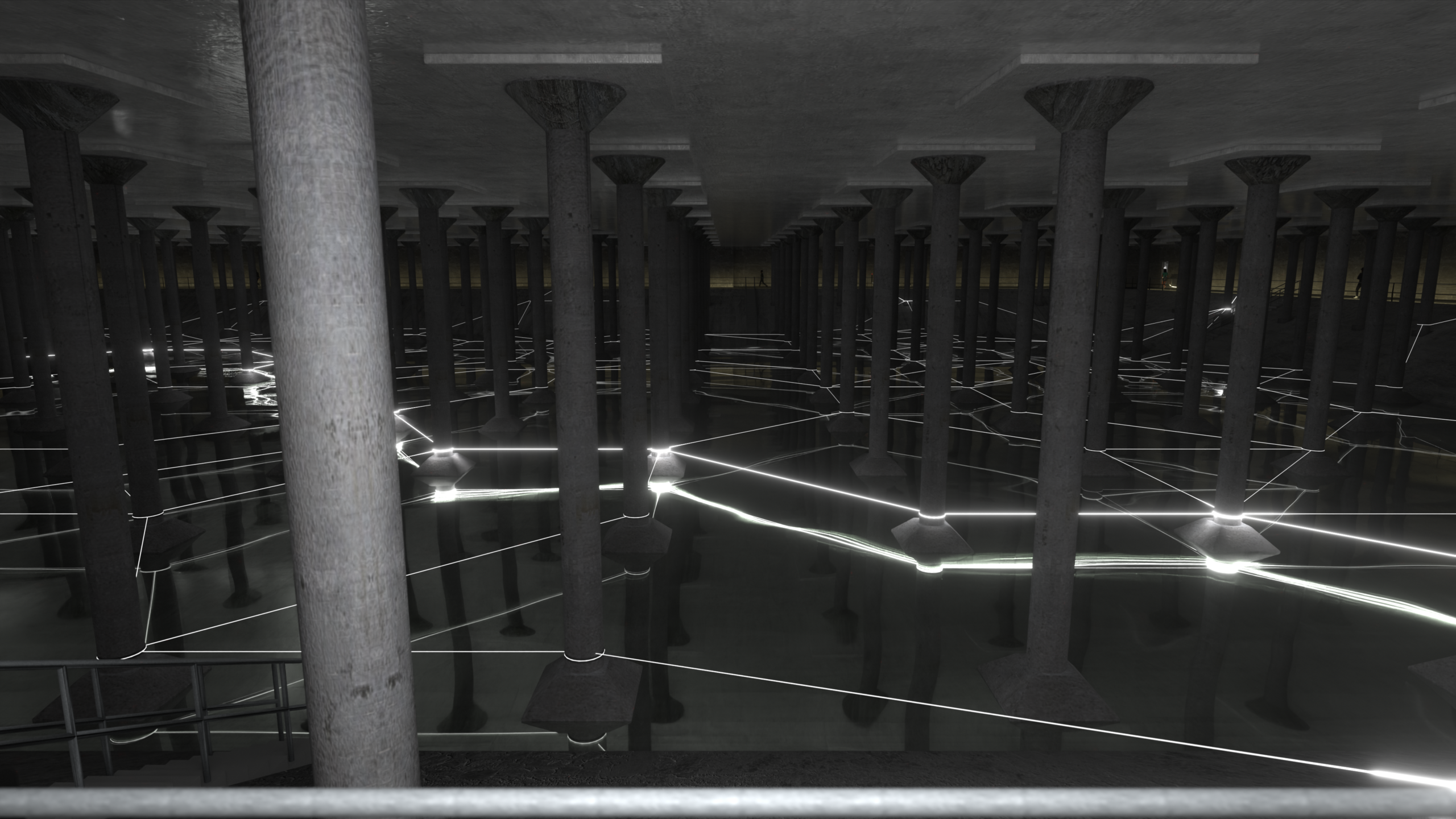
Since reopening the century-old reservoir to the public in 2016, the Buffalo Bayou Partnership has treated the Cistern as a site of perception. It recalibrates how visitors experience space, sound and time.
Originally built to store water for a growing city, the structure reflects what Lozano-Hemmer calls “our desire to control nature — and our need to.” In its current afterlife, stripped of utility, it becomes something else: an ethereal art space.
“People often say that when they come back up, it feels like emerging from the underworld,” Buffalo Bayou Partnership vice president Karen Farber says.
The metaphor holds. In practice, the Cistern disorients before it clarifies. It asks the body to register what the mind has yet to name.
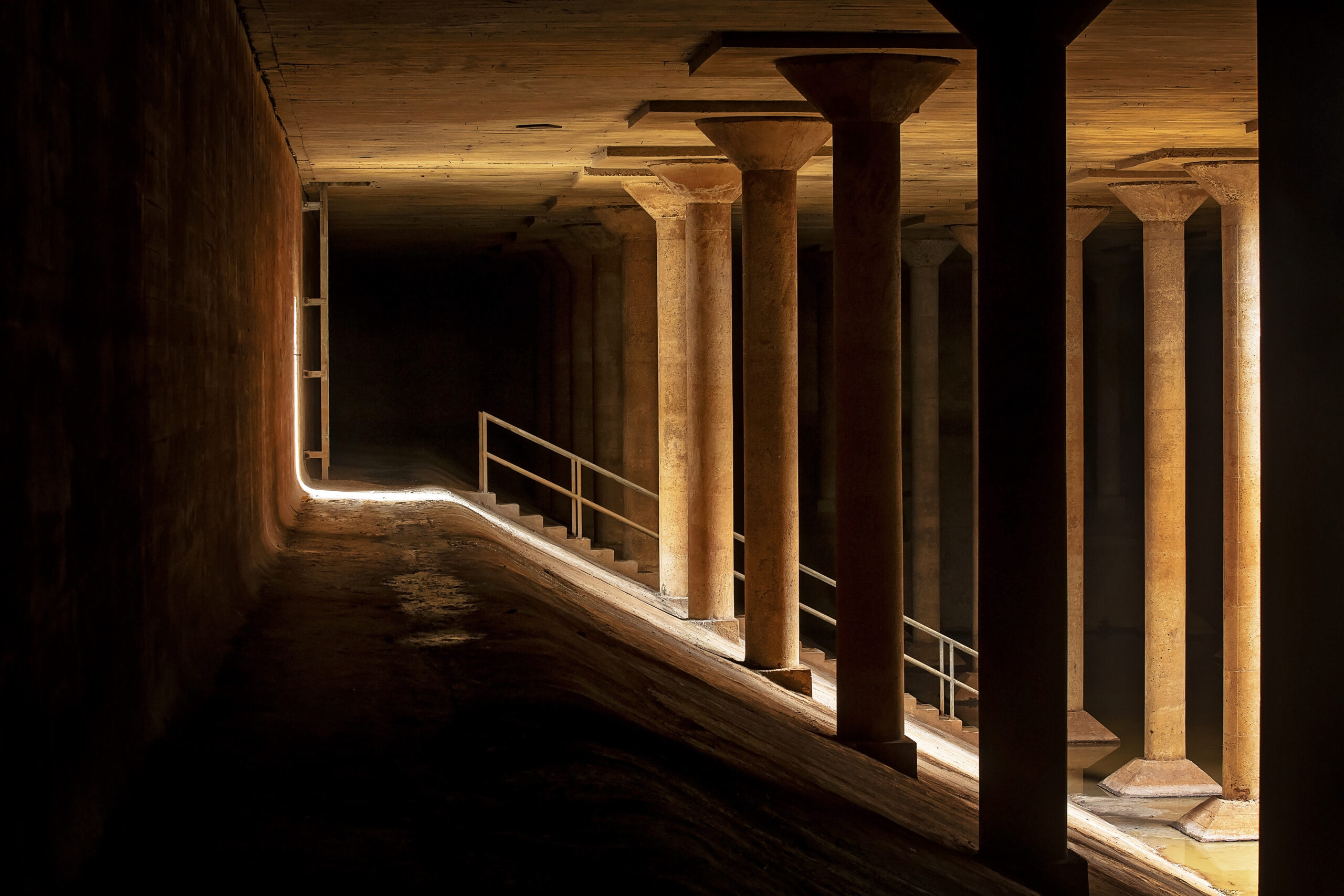
Lozano-Hemmer, known for large-scale interactive works that translate biometric data, voice and presence into light and sound, approaches the Cistern as both a physical and civic organism. The Montreal-based multimedia artist creates works that depend on participation.
“It invites you to think about going into the subconscious of the city,” Lozano-Hemmer says. “It’s an installation made specifically for the Bayou and for the Cistern.”
That approach is consistent across his previous work, where participation drives the experience. In “Pulse Room,” a forest of 300 suspended bulbs flickers to the rhythm of each visitor’s heartbeat. “Speaking Willow” turns a living tree into an intimate listening device. It whispers fragments of recorded voices only when one leans in close. In “Thermal Drift Density Map,” heat-sensing technology captures the invisible traces of human presence.
A System That Listens
That feeling — subterranean, collective, slightly off-kilter — anchors “Undercurrents.”
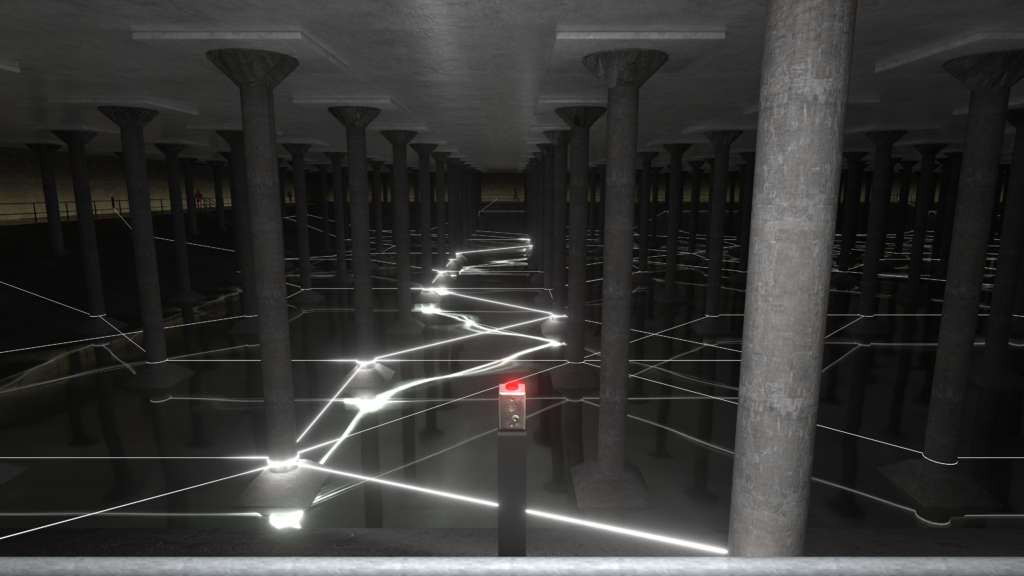
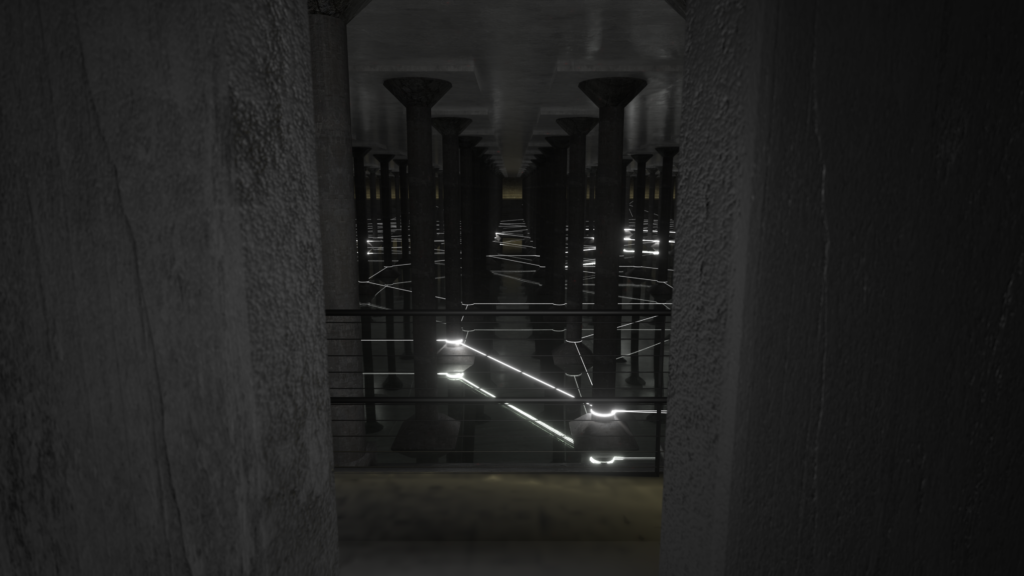
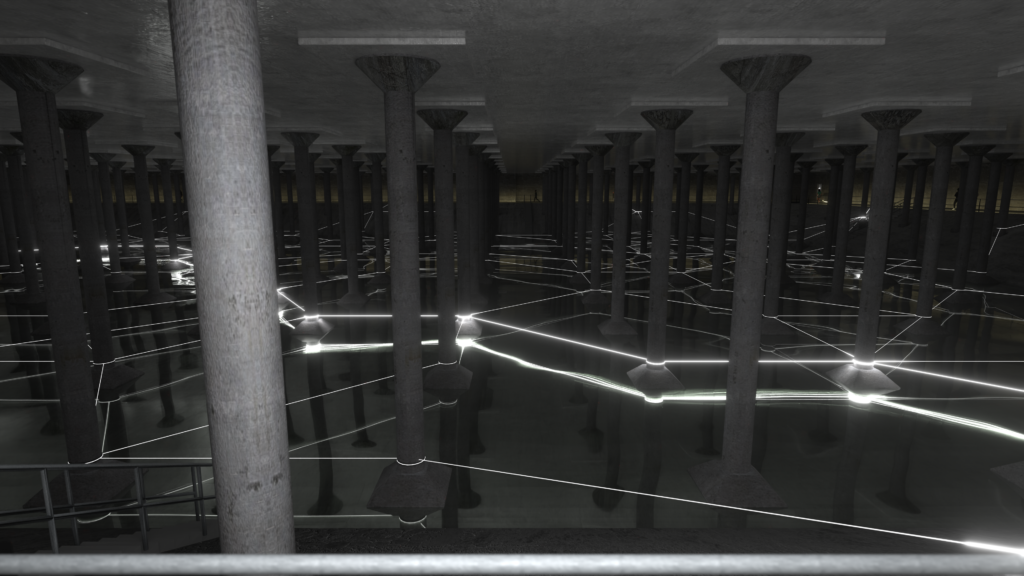
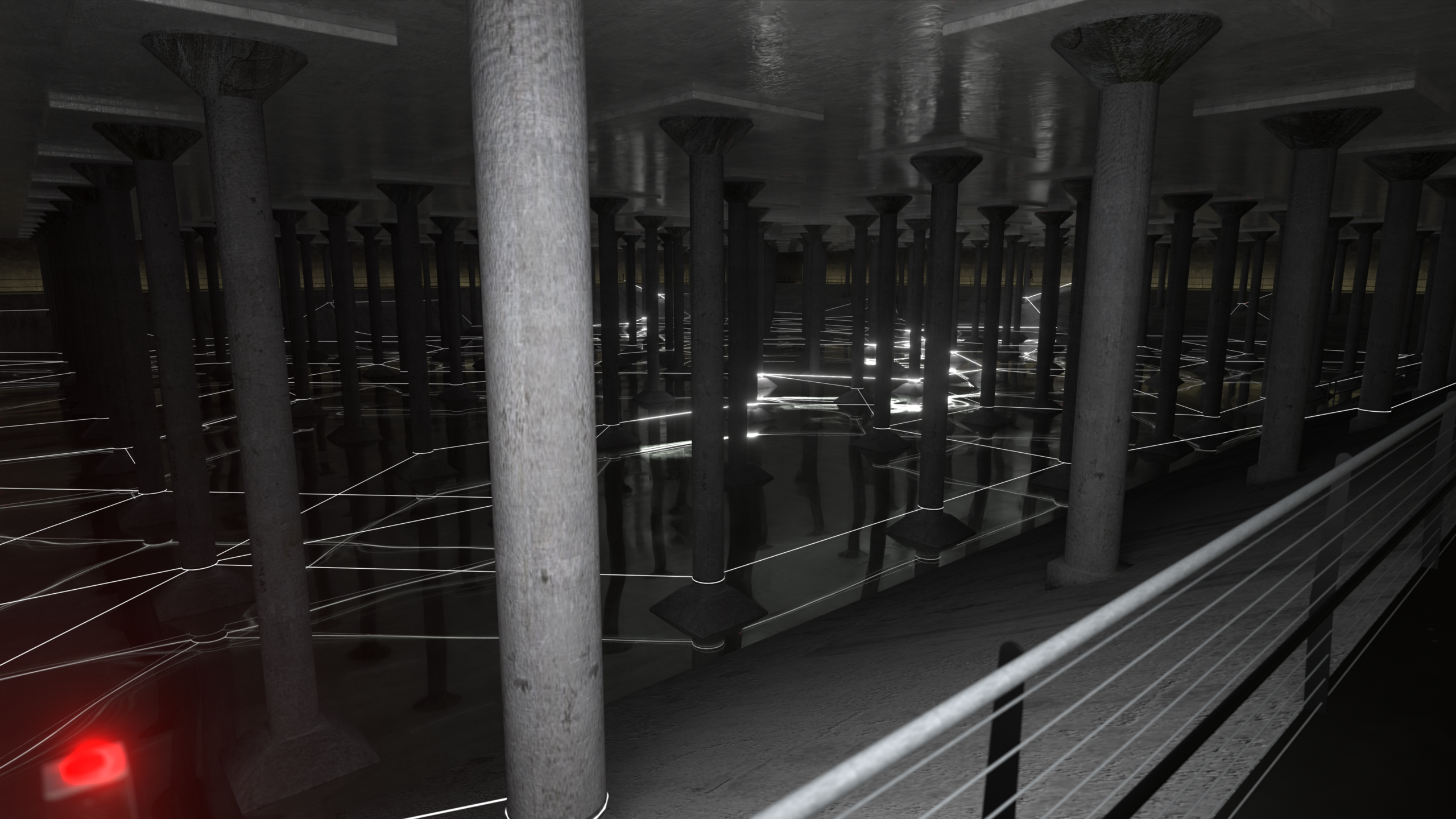
The installation is structured around a network of eight intercoms dispersed throughout the Buffalo Bayou Park Cistern. Visitors press a button and speak. Their voice becomes light. Pulses travel through the cavernous darkness, ricocheting across the columns until they resolve at another point in the space.
There, the message returns — not alone, but entangled with other voices.
“Think of an intercom as that push-button message-receiving device: microphone and loudspeaker,” Lozano-Hemmer says. “You push a button, you say something into it and your voice becomes light.”
The sequences begin to move from there. “Then these light sequences start flashing, emitting from the location where you spoke,” he says. “They bounce around until they find one of the other eight intercoms, at which point you hear the person on the other side.”
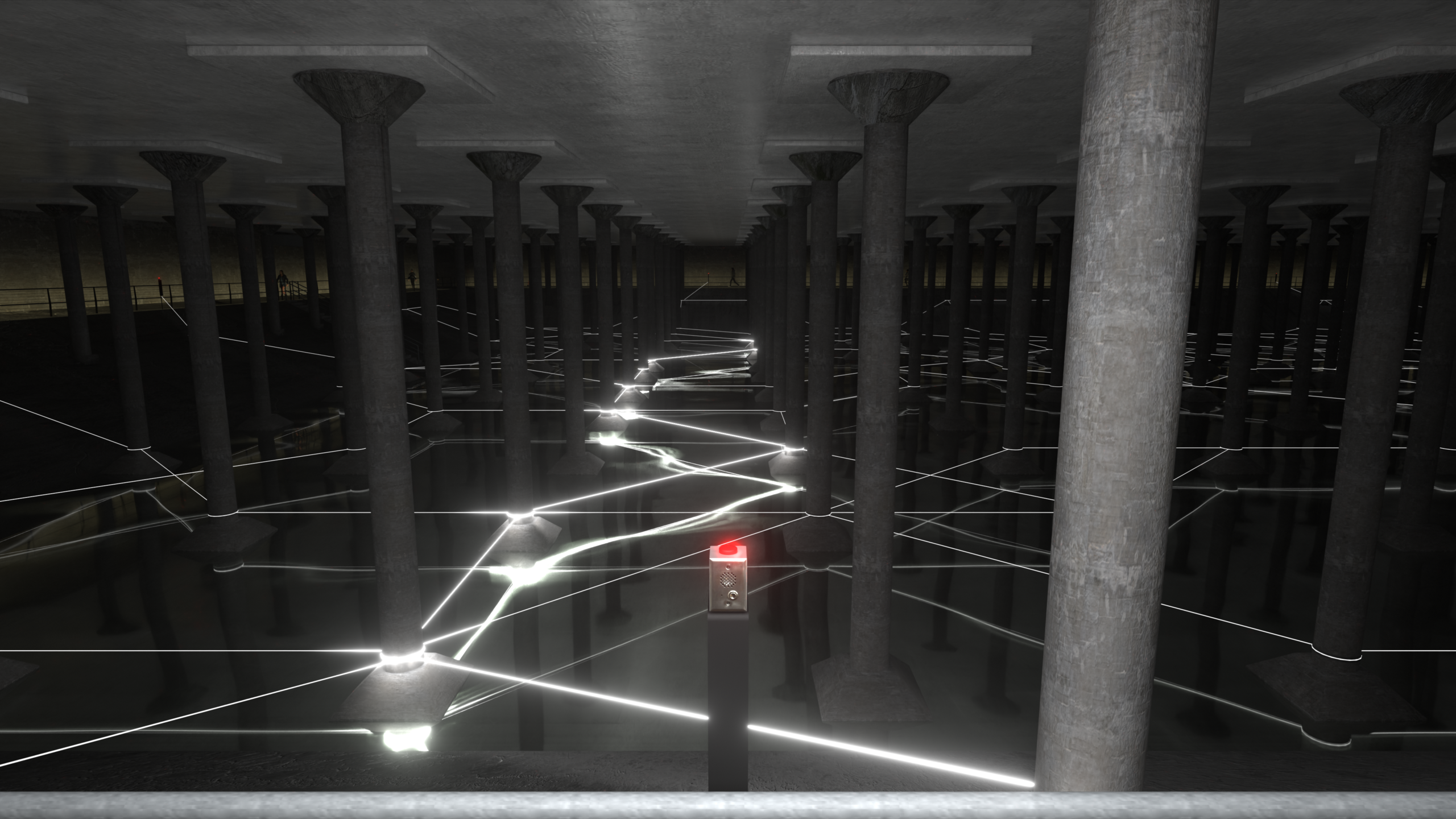
What comes back, in turn, is an echo composed of multiple layers. Your own words mix with fragments of previous visitors’ voices and commissioned poetry written for the site. The effect feels like your voice refracted through a collective memory.
Lozano-Hemmer calls it a “switchboard of communication.” It is also something stranger — part séance, part archive, part social experiment.
For Buffalo Bayou Partnership, that layering of meaning is the point. Here, public art is activated through the conditions of the site itself.
“The space alone is powerful,” Farber says. “When you add artwork, it deepens that experience.”
Lozano-Hemmer’s work, with its reliance on darkness, sound and water, acts as an extension of what already exists.
“You can photograph it, but you can’t truly capture it,” Farber says. “You have to experience it in person.”
Echo, Memory and Voice
The Cistern, with its prolonged reverberation and engineered geometry, functions as an acoustic instrument. Sound lingers longer than expected, bending spatial perception. Visitors begin to orient themselves by sight and by echo, like navigating a canyon or a cathedral.
Lozano-Hemmer leans into this instability. Silence and darkness are the ground from which the work emerges.
“I’m very mindful and respectful of darkness and silence,” Lozano-Hemmer says. “If you go in there and there’s no light and no sound, you already have a very interesting experience.”
His work often operates at the intersection of agency and surveillance. The invitation to engage is shadowed by the awareness of being recorded. In “Undercurrents,” that tension is explicit.
The system listens. It stores, recombines and erases. The archive, capped at a finite number of recordings, continuously overwrites itself.
Unlike the invisible data extraction that defines much of contemporary digital life, this system is local, contained and transparent. If you choose to speak, your voice becomes part of the work’s evolving memory. If you remain silent, the piece still unfolds around you.
Lozano-Hemmer carefully frames the work as a civic gesture rather than a technological spectacle. The inclusion of Houston-based poets — voices not typically amplified in dominant cultural or political spheres — extends the work beyond the individual interaction. It becomes a platform, one in which language circulates laterally rather than hierarchically.
“We’ve commissioned poets — including Houston- and Texas-based poets — to create poems specifically for the Cistern,” Lozano-Hemmer says. “Sometimes the echo you hear back is the echo of other participants, including yourself. Sometimes what you hear is the voice of these poets, creating this poetic experience.”
Among them are Nick Flynn, Aris Kian, Martha Serpas, Jennifer Teets and Roberto Tejada. Their recorded works are woven directly into the installation’s sonic and visual system. Their voices move through the work as active elements. They shape the same light patterns as the public’s contributions.
What Lingers
Poetry moves alongside you here, interrupted and occasionally completed by strangers.
Who gets to be heard, the piece quietly asks — and under what conditions?
Farber suggests the metaphor runs deeper. “Water is a hidden resource flowing beneath the city, and communication is something similar — circulating, unseen, connecting us.”
In that sense, “Undercurrents” reveals what the Cistern already holds. Echo becomes memory. The city, briefly, becomes audible to itself.
In a moment saturated with broadcast and opinion, “Undercurrents” turns toward active, relational listening.

Farber also notes that the enduring power of the Cistern lies in its paradox.
“The space feels magical, almost sacred — but it was built purely as infrastructure,” she says. “That tension between utility and wonder, hidden system and shared experience, is what gives ‘Undercurrents’ its charge.”
It offers something increasingly rare: a public artwork that insists on being inhabited. Or more precisely, one that waits — quietly, attentively — for someone to speak.
“Undercurrents” at the Buffalo Bayou Park Cistern is set to open this Friday, April 24 and run through January 24, 2027. Tours are available Wednesdays through Sundays. For more information, go here.
Trending
- 4 Best New TV Shows to Watch Right Now — A Green Lantern Mystery Drama, Jon Hamm Returns to the ’70s, and More Must-See Series
- Houston’s Massive New Restaurant Brings Old Hollywood Glamour and a Real Dress Code To Post Oak — Mack Allen’s Lives Large
- Conner Weigman Wants a Texas Tech Rematch After His Guts-Out QB Show Comes Up Inches Short, But Houston Can’t Keep Putting Everything On Him
- Casa de Ondas in Preston Hollow Hits the Dallas Market for $45 Million
- The 21 Designers Chosen For the 2026 Kips Bay Decorator Show House Dallas




_md.jpg)